How to Experience Authentic Kanazawa Samurai and Geisha Traditions in 2026
Discover how to experience authentic Kanazawa samurai and geisha traditions in 2026. From Nagamachi villas to exclusive geigi shows, plan your cultural journey here.
On this page
How to Experience Authentic Kanazawa Samurai and Geisha Traditions in 2026
Kanazawa offers a rare window into Japan's feudal past through its perfectly preserved samurai and geisha districts. The city remained largely untouched by modern conflicts, allowing its ancient wooden structures and narrow stone streets to survive intact. Travelers can explore the deep cultural heritage of the Maeda clan while walking through these historic neighborhoods today. Understanding how to experience authentic Kanazawa samurai and geisha traditions in 2026 requires looking beyond the standard tourist paths.
Local residents often refer to their professional entertainers as geigi rather than the more common term geisha. This subtle distinction reflects the high level of artistic skill and local pride found in the city's three tea districts: Higashi Chaya, Nishi Chaya, and Kazuemachi. You can discover hidden teahouses and warrior residences that still maintain the strict etiquette of the Edo period. Planning a visit to this cultural capital allows you to witness a living history that few other cities can provide.
Finding truly authentic Japan travel activities involves connecting with local masters and licensed guides. Many elite teahouses still follow traditional rules that limit access to first-time visitors without a proper introduction. This guide explains how to navigate these cultural barriers to ensure a respectful and immersive experience in 2026. Prepare to step back in time as you discover the spiritual and physical traditions of Kanazawa — and explore our full Kanazawa attractions guide to plan your complete itinerary.
Explore the Nagamachi Samurai District and Nomura-ke Samurai Residence
The Nagamachi district sits at the foot of the former Kanazawa Castle and served as the home for high-ranking warriors loyal to the Maeda clan. Walking through these cobblestone streets and winding alleys reveals the iconic yellow mud walls that protect private gardens and historic villas. These earthen structures are covered with straw mats during the winter months to prevent damage from freezing moisture — a centuries-old conservation practice still observed today. The atmosphere in the early morning provides a quiet glimpse into the daily life of the samurai class before tour groups arrive.
The Nomura-ke Samurai Residence (Nomura Clan House) stands as the most impressive residence open to the public in this area. Inside, visitors find exquisite painted screen panels and a stunning tiered stone garden that features a winding stream fed by a natural spring. The architecture reflects the status of the Nomura family, who served the Maeda clan as horse guard group leaders and shogunate administrators since 1583. Spend time on the wooden veranda to appreciate the balance between the indoor and outdoor garden spaces. In 2026 the Nomura-ke charges ¥550 admission and is open 8:30–17:30 (April–September) and 8:30–16:30 (October–March).
For deeper samurai context, stop at the Maeda Tosanokami-ke Shiryokan Museum on your way through the district. This collection preserves samurai armor, swords, calligraphy, and arts passed down through Maeda retainer families. The Takada Family House nearby offers a free look at the lives of mid-level samurai officers — its restored gatehouse includes a stable and a modest canal-front garden. Most residences in Nagamachi are still private homes, so travelers must stay on the designated paths and keep noise to a minimum.
- Nomura-ke Samurai Residence
- Admission (2026): ¥550
- Hours: 8:30–17:30 (Apr–Sep) / 8:30–16:30 (Oct–Mar)
- Best for: World-class garden, painted screens
- Location: Central Nagamachi
- Takada Family House
- Admission: Free
- Hours: 9:30–17:00
- Best for: Stable architecture, canal views
- Location: Near the Nagamachi canal
- Maeda Tosanokami-ke Shiryokan Museum
- Best for: Samurai armor, weapons, and calligraphy
- Location: Nagamachi district entrance
A recommended Nagamachi walking route takes roughly 90 minutes: start at the museum, loop south through the main canal alley to the Nomura-ke, then continue west to the Takada House before exiting at the Korinbo bus stop. The route is entirely flat and well-signed in English. If you have a full day, pair it with the adjacent Kanazawa Castle Park, which sits just a 10-minute walk east.
Wear Samurai Armor and Master Martial Arts in Kanazawa
Authentic samurai culture involves more than viewing old houses and historical artifacts in a museum. True enthusiasts can dress in full traditional armor at Samurai Yakata, located minutes from Kenroku-en and Kanazawa Castle. The experience includes a complete Tosei-gusoku suit — kabuto helmet, chest armor (do), armored sleeves (kote), thigh guards (haidate), and calf protection (suneate) — plus a professional photographer who shoots three studio-quality images and prints one for you to keep. Staff speak English and walk guests through proper wearing etiquette and historical context. Prices in 2026 start from approximately ¥5,000 per person and sessions run 30–40 minutes.
For martial arts training, workshops teaching Kendo swordsmanship basics are available at local dojos near the Nagamachi district. These sessions focus on correct stance, footwork, and the mental discipline of Bushido — the warrior's code that emphasizes honor, loyalty, and self-control. Shijimaya Honpo, a historic cultural shop in downtown Kanazawa, displays genuine Japanese swords passed down through generations and offers English-language explanations of sword-making history and warrior philosophy.
Kyudo (Japanese archery) provides a more meditative experience for those seeking a slower, contemplative practice. The emphasis in Kyudo is on the grace and precision of each movement rather than hitting the target itself. Many martial arts centers in the city offer introductory classes for international guests throughout 2026. Check schedules and booking requirements with your hotel concierge or the Kanazawa tourism office at Kanazawa Station.
Walk All Three Geisha Districts: Higashi Chaya, Nishi Chaya, and Kazuemachi
Kanazawa is the only city in Japan outside Kyoto with three active, historically preserved chaya (teahouse) districts — each with its own character and atmosphere. Together they form the living stage for the city's geigi culture, which continues to thrive into 2026. Our dedicated Higashi Chaya District guide covers the largest quarter in full detail, including the best cafes, gold leaf shops, and photo spots.
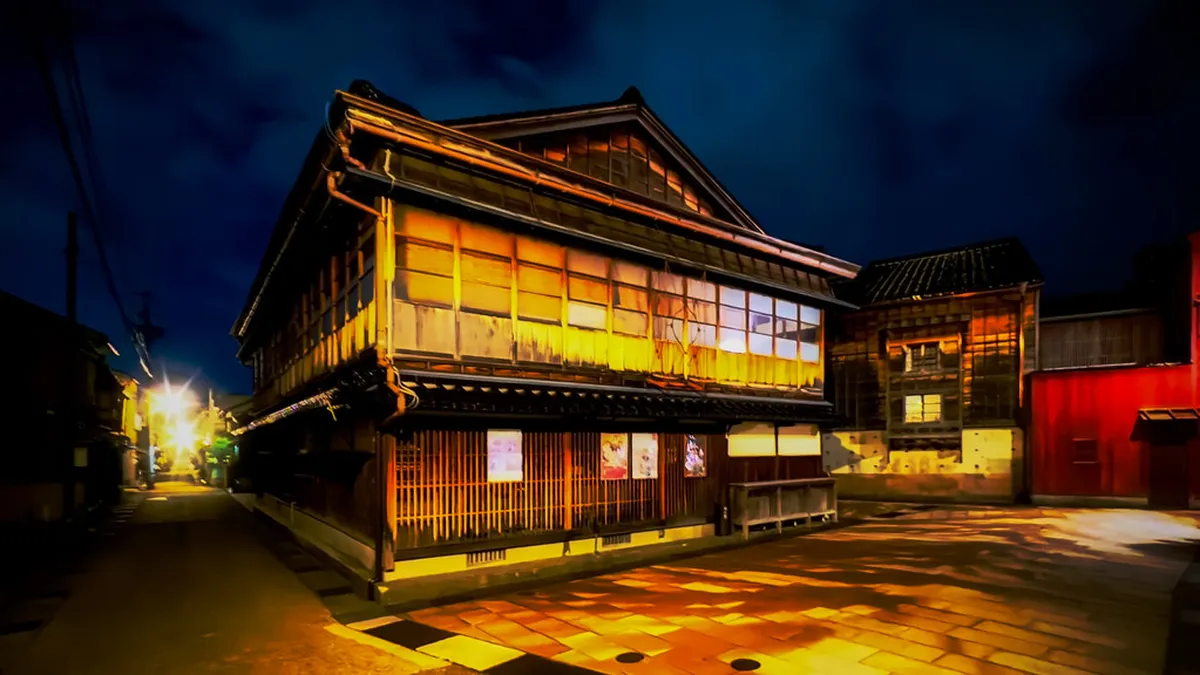
Higashi Chaya is the largest and most famous area, known for its beautiful two-story wooden teahouses lining a single main street. The lattice windows, known as kimusuko, allow those inside to see out while keeping the interior private from passersby. Visiting this area at dusk offers a magical atmosphere as lanterns begin to glow along the street. Geisha House Shima, now a public museum, is open 9:30–17:30 (December–February: 9:30–17:00), closed Thursdays, with ¥500 admission. The nearby Kaikaro Teahouse opens its gold-leaf tea room to daytime visitors for matcha and wagashi.
Nishi Chaya (Nishi Chayagai) is Kanazawa's quietest geisha district, located southwest of the city center. Free to explore at any time, it features Edo-period streetscapes with far fewer tourists than Higashi Chaya. The Nishi Chaya Shiryokan (District Museum) is open 9:00–17:00 with no regular closing days and no admission fee — it displays traditional geigi instruments, costumes, and furnishings. From Kanazawa Station, take the Kanazawa Loop Bus (Left Loop) and alight at Hirokoji or Nishi Chaya Shiryokan Mae stop.
Kazuemachi is the smallest and most intimate district, draped along the banks of the Asano River. The narrow pathways and hidden staircases make it a favorite for travelers seeking a quieter, more romantic experience. You can often hear the distant sound of shamisen music from the upper floors of active teahouses in the evening. Kazuemachi retains the strongest sense of a working geigi community and feels the least commercial of the three districts. It is widely regarded as the most romantic chaya quarter in all of Kanazawa.
- Higashi Chaya — largest, most photogenic; Shima museum ¥500 (9:30–17:30)
- Nishi Chaya — quietest; Shiryokan museum free (9:00–17:00, no closure days)
- Kazuemachi — most romantic; riverside, working community
Book a Geigi Performance, Tea Ceremony, or Ozashiki Experience in 2026
Experiencing a private performance by Kanazawa's geigi is the pinnacle of local cultural travel. These highly trained artists spend years mastering traditional dance, music, and the art of conversation. The performances usually take place in exclusive teahouses that are not typically open to the general public. Guests can enjoy seasonal songs and dances that reflect the natural beauty of the Ishikawa region — for a complete look at this experience, see our Kanazawa tea ceremony experience guide.
The traditional rule of Ichigensan Okotowari means teahouses usually refuse guests without a personal referral. However, modern platforms such as Geisha Evenings (geisha-evenings.jp), Deeper Japan, and Magical Trip now help international travelers secure reservations for these elite experiences. A typical private session in 2026 includes a formal tea ceremony followed by a dance and music performance and runs 90–120 minutes. Pricing is high-end (typically ¥20,000–¥40,000 per person) but the cultural depth is unmatched.
A more accessible public option runs through 2026 via the official "Ozashiki Asobi Experience: A Journey to Touch the Authentic Arts of Kanazawa Geiko" event, held across all three chaya districts. On Saturdays during the event period, tourists can meet real geiko and participate in ozashiki banquet games. Additional dates are offered on Tuesdays in January–February, and Tuesdays, Thursdays, and Saturdays from March onwards. Book through visitkanazawa.jp for the latest schedule and ticket prices.
During an ozashiki session you may be invited to play traditional geisha games (Ozashiki-asobi) involving rhythm, hand gestures, and friendly competition. These activities break the ice naturally and create a genuine connection with the performers. The gold-leaf tea room at Kaikaro is a popular daytime complement — accessible without a referral for a matcha-and-wagashi experience.
- Private Geigi Evening
- Providers: Geisha Evenings, Deeper Japan, Magical Trip
- Includes: Dance, music, ozashiki games
- Duration: 90–120 minutes
- Cost (2026): ¥20,000–¥40,000 per person (approx.)
- Public Ozashiki Asobi Event
- Schedule: Saturdays + selected weekdays year-round
- Booking: visitkanazawa.jp
- Districts: All three chaya (Higashi, Nishi, Kazuemachi)
- Kaikaro Teahouse (daytime)
- Access: Open to public, no referral needed
- Highlight: Gold-leaf tea room
- Experience: Matcha and wagashi
Visit Kanazawa Castle and Kenroku-en Garden for Feudal Context
Kanazawa Castle Park is the seat of the Maeda clan and an essential stop for understanding the feudal power that shaped the city's samurai and geisha culture. The castle was rebuilt using traditional methods that avoid modern nails or bolts, with massive stone walls and watchtowers showcasing the engineering skill of the warriors who defended it. Walking through the Hishi Yagura turret offers a clear view of the defensive layout of the grounds. Our detailed guide to Kanazawa's historical landmarks covers the castle alongside its wider context in the city's Edo-period heritage.
Kenroku-en Garden stands adjacent to the castle and is ranked as one of the three finest gardens in Japan. It was designed over several centuries to embody the six attributes of a perfect landscape: spaciousness, seclusion, artifice, antiquity, water, and sweeping views. The garden features large ponds, winding streams, and ancient pine trees that require careful year-round maintenance by specialist gardeners. Samurai lords used this space for private reflection and to host important guests from across the country.
Winter visitors will notice the famous Yuki-tsuri ropes that support the branches of the oldest pine trees. These conical rope structures protect the trees from the heavy, wet snow common in this region. The geometric patterns of the ropes against fresh snow have become one of Kanazawa's most iconic visual symbols. This seasonal detail highlights the deep connection between the local environment and the traditional arts of the samurai period.
Try a Samurai or Geisha-Themed Cultural Workshop
Beyond observation, hands-on workshops let you embody the traditions directly. Kanazawa's gold leaf craft is inseparably linked to samurai patronage — the Maeda lords monopolized gold leaf production outside of Kyoto and Edo, making the city the source of more than 99% of Japan's gold leaf for centuries. A dedicated gold leaf workshop connects this history to tactile practice: participants apply 0.0001 mm-thin gold leaf to lacquerware, ceramics, or cosmetics under the guidance of certified craftspeople. See our Kanazawa gold leaf experience guide for recommended studios, prices, and what to expect in 2026.
For geisha-related cultural skills, tea ceremony workshops are widely available across the city's three chaya districts. Kanazawa's tea culture traces directly to the Maeda lords, who were passionate patrons of Urasenke and Omotesenke tea schools. A standard 45-minute ceremony workshop in 2026 costs ¥1,500–¥2,500 and includes matcha preparation instruction and seasonal wagashi sweets. Our tea ceremony experience guide lists the top venues ranked by authenticity and accessibility for international visitors.
Ikebana (traditional flower arranging) and Japanese calligraphy workshops are also offered at several cultural centers near the Higashi Chaya district. These arts were considered essential accomplishments for both samurai households and geigi, making them a natural complement to a district walking tour. Most workshops accept walk-ins, but booking 24 hours ahead is advisable during peak spring and autumn seasons.
Savor Traditional Kaga Cuisine and Local Sake
Kaga-ryori is the refined culinary tradition that developed to serve the wealthy samurai and merchant classes of the Maeda domain. This style of cooking emphasizes fresh seafood from the Sea of Japan — including snow crab, yellowtail, and sweet shrimp — combined with seasonal mountain vegetables from the Hakusan foothills. Dishes are served on Kutani porcelain or Wajima lacquerware to heighten the visual experience. A formal Kaiseki meal in Kanazawa runs 8–14 courses and follows a strict seasonal theme that changes monthly throughout 2026.
Local sake production has flourished in the Ishikawa region for centuries, supported by high-quality Koshi Hikari rice and pure snowmelt water. Many of the city's breweries still operate and offer tastings of their premium Junmai Ginjo and Junmai Daiginjo varieties. Pairing local sake with Kaga cuisine brings out the umami depth of the fresh ingredients. The Higashi Chaya district in the evening is the best area to find sophisticated sake bars and counter-seat restaurants where chefs prepare dishes to order.
Kanazawa is also famous for its use of gold leaf as a food garnish — a tradition stemming from the city's history as a luxury crafts center. You can find gold leaf on soft-serve ice cream, premium sushi, and ceremonial wagashi sweets throughout the city. This edible gold reflects the opulence of the former samurai capital and makes for an unmistakable souvenir photo.
Plan Your 2026 Kanazawa Visit: Best Time, Getting Around, and Booking Tips
Spring (late March–May) and autumn (October–November) are the most popular times to visit Kanazawa for pleasant weather and vivid scenery. Cherry blossoms fill Kenroku-en in April and vibrant foliage colors the castle grounds in November. Winter offers a unique and quieter atmosphere ideal for exploring samurai history with fewer crowds, plus the striking Yuki-tsuri ropes in the garden. For a structured multi-day plan, our 2-day Kanazawa cultural itinerary maps out the most efficient route through all the samurai and geisha highlights.
Most major attractions in Kanazawa are within walking distance or a short bus ride from the central station. The Kanazawa Loop Bus runs two circular routes — the Right Loop covers Kenroku-en, Nagamachi, and Higashi Chaya; the Left Loop reaches Nishi Chaya and Myoryuji (Ninja Temple). A 1-day bus pass costs ¥600 and covers unlimited rides. Hiring a professional local guide is the best way to access deeper layers of the city's history and secure introductions to private venues.
Always verify entry fees and opening hours on the official sites (visitkanazawa.jp) before arriving, as seasonal adjustments are common. Book private geigi experiences at least 2–4 weeks in advance during peak seasons. Combine your cultural planning with our overview of all Kanazawa attractions to ensure you do not miss any key sites across your trip.
Frequently Asked Questions
What is the difference between a geisha and a geigi in Kanazawa?
Geigi is the specific local term used in Kanazawa to describe their professional performing artists. While the roles are similar to Kyoto's geisha, the term geigi emphasizes their high level of training in traditional music and dance. Kanazawa maintains three active chaya districts — Higashi Chaya, Nishi Chaya, and Kazuemachi — where geigi continue to practice their craft today.
Can tourists enter a geisha teahouse in Kanazawa?
Most active teahouses are private and require a referral from a regular patron, but several are open to the public during the day. Geisha House Shima (Higashi Chaya) and the Nishi Chaya Shiryokan museum both welcome walk-in visitors. Private evening performances must be booked through platforms such as Geisha Evenings, Deeper Japan, or Magical Trip, or via the official Ozashiki Asobi events on visitkanazawa.jp.
How much does it cost to visit Nomura-ke Samurai Residence in 2026?
The Nomura-ke Samurai Residence charges ¥550 admission in 2026. It is open 8:30–17:30 from April to September and 8:30–16:30 from October to March. The residence features a stunning tiered stone garden, painted screen panels, and original samurai-period furnishings, and is the top cultural site in the Nagamachi Samurai District.
Is the Ninja Temple (Myoryuji) related to samurai history?
Yes, Myoryuji was built by the Maeda lords as a disguised military outpost rather than a place for actual ninjas. It features hidden stairs, trap doors, and secret passages designed to protect samurai retainers during an attack. Entry is by pre-booked guided tour only; advance reservations through the official Myoryuji website are essential as walk-ins are not permitted.
What is the best samurai armor experience in Kanazawa?
Samurai Yakata, located near Kenroku-en and Kanazawa Castle, offers a full Tosei-gusoku armor dressing experience with English-speaking staff and professional photography included. Prices start from approximately ¥5,000 per person for a 30–40 minute session. For sword culture, Shijimaya Honpo in downtown Kanazawa displays genuine antique blades and provides English-language explanations of Bushido philosophy.
What are Kanazawa's three geisha (chaya) districts?
Kanazawa has three preserved chaya districts: Higashi Chaya (largest, most famous, with the Shima museum), Nishi Chaya (quietest, with a free museum), and Kazuemachi (smallest, most romantic, along the Asano River). Kanazawa is unique as the only city outside Kyoto with three active and historically significant geisha quarters. All three are accessible by the Kanazawa Loop Bus.
Experiencing the authentic samurai and geigi traditions of Kanazawa in 2026 rewards careful planning and a respectful approach. By walking all three chaya districts, visiting the Nomura-ke in Nagamachi, attending an ozashiki performance, and trying a hands-on cultural workshop, you connect with a preserved piece of Japanese history unlike anywhere else. Use our 2-day Kanazawa itinerary to sequence these experiences efficiently, and browse the full Kanazawa attractions guide to complete your planning.