25 Best Things To Do in Kyoto (2026 Guide)
Discover the 25 best things to do in Kyoto, Japan in 2026. From iconic temples and hidden gems to budget tips, seasonal festivals, and local food — your complete Kyoto guide.
On this page
TL;DR — Top 5 quick picks: Fushimi Inari at sunrise (free), Arashiyama Bamboo Grove + Monkey Park combo (JPY 550), a matcha tea ceremony in Gion (from JPY 2,500), Nishiki Market street-food crawl (budget JPY 2,000), and the Philosopher's Path cherry-blossom walk (free, peak late March–early April). Nara, Osaka, and Tokyo travelers frame Kyoto as the cultural centerpiece. Read on for the full 25.
Kyoto is where ancient Japan lives and breathes in 2026. With 17 UNESCO World Heritage Sites, over 2,000 temples and shrines, and a food scene that earned the city a UNESCO Creative City of Gastronomy designation, there is no shortage of things to do in Kyoto — whether you have one day or one week.
This guide covers the best things to do in Kyoto across temples, cultural experiences, food, nightlife, day trips, and seasonal events. Every entry includes practical details — admission costs, opening hours, and how to get there — so you can plan efficiently and spend more time exploring. For a day-by-day plan, see our Kyoto itinerary.
1. Fushimi Inari Shrine — Thousands of Vermilion Gates
Fushimi Inari Taisha is Kyoto's most visited attraction and one of the most photographed sites in Japan. Dedicated to Inari, the Shinto god of rice and prosperity, the shrine is famous for its roughly 10,000 vermilion torii gates that wind 4 km up Mount Inari (233 m elevation). Each gate was donated by a business or individual seeking good fortune.
Why go? The visual spectacle of the seemingly endless tunnel of red gates is breathtaking. The full hike to the summit takes about 2–3 hours round trip and rewards you with panoramic views over southern Kyoto. Along the way, smaller sub-shrines, fox statues (Inari's messengers), and tea houses with amazake or kitsune udon dot the route.
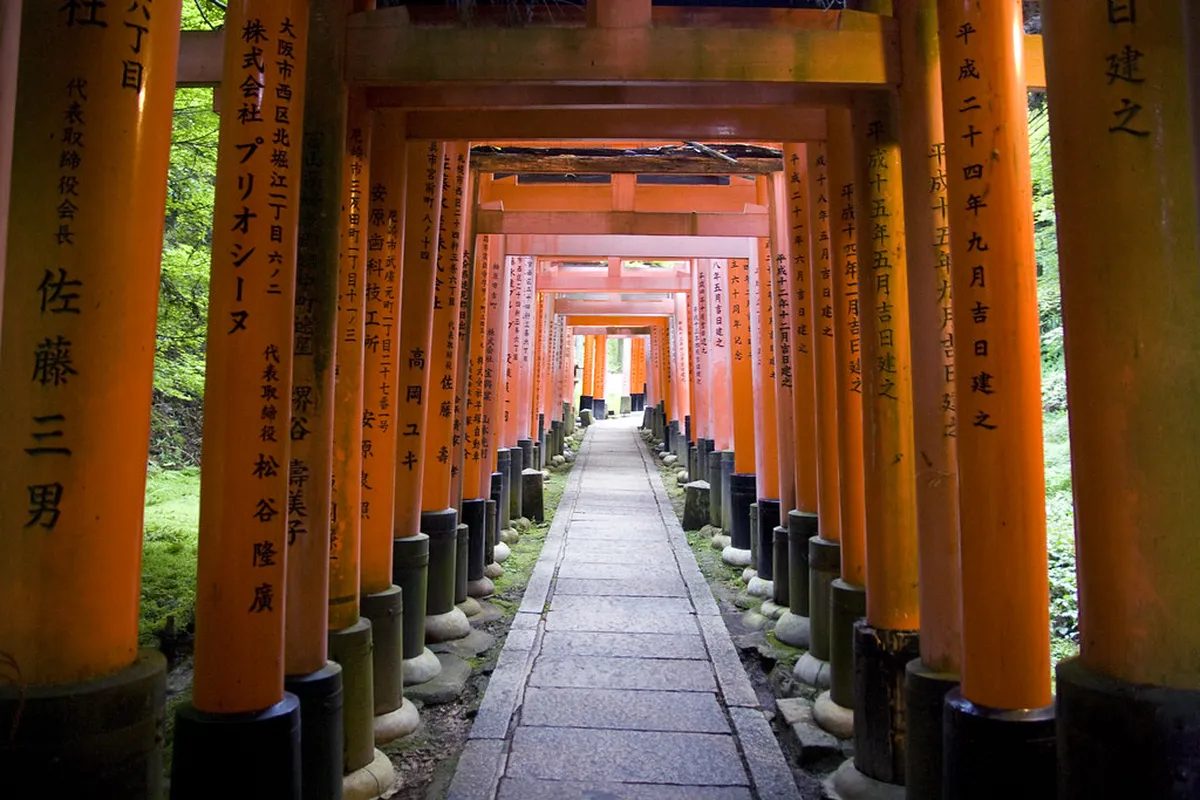
Practical info: Open 24/7. Admission is free. Take the JR Nara Line to Inari Station (5 min from Kyoto Station, JPY 150). Arrive before 7:00 AM to have the lower gates nearly to yourself.
Insider tip: The Okusha Hohaisho at the halfway point is where you'll find the famous "heavy/light" wishing stones — lift one and if it feels lighter than expected, your wish will come true.
Fushimi Inari Taisha is open 24/7 and free to enter. Arrive before 7:00 AM on weekdays to have the lower torii gates almost entirely to yourself — the crowds build quickly from mid-morning onward.
2. Kinkaku-ji (Golden Pavilion) — A Glimmering Icon
Kinkaku-ji is a Zen Buddhist temple whose top two floors are covered entirely in gold leaf. Originally built in 1397 as a retirement villa for Shogun Ashikaga Yoshimitsu, it was converted into a temple after his death. The pavilion overlooks Kyoko-chi (Mirror Pond), and on clear days the golden reflection on the water is unforgettable.
Why go? Beyond the sheer beauty, the surrounding strolling garden is a designated Special Historic Site and Special Place of Scenic Beauty — one of only three locations in Japan with both designations. The Sekkatei Teahouse within the grounds offers matcha (JPY 500) with a view.
Practical info: Open 9:00–17:00. Admission JPY 500 (adults). Take Bus 101 or 205 from Kyoto Station to Kinkaku-ji-michi (about 40 min). Visit early morning or late afternoon for the best light.
Insider tip: Walk the full loop — the rear garden is uncrowded and reveals angles tourists miss.
3. Arashiyama Bamboo Grove — Nature's Towering Pathway
The Arashiyama Bamboo Grove is a dense forest of soaring bamboo stalks that create a cathedral-like canopy. Sunlight filters through the green columns, and the rustling sound has been designated one of Japan's "100 Soundscapes" by the Ministry of Environment.
Why go? It is one of the most iconic natural sights in Kyoto, and the surrounding Arashiyama district offers a full day of activities: Tenryu-ji Temple (UNESCO), the Togetsukyo Bridge, rickshaw rides, and the Monkey Park Iwatayama (see #21).
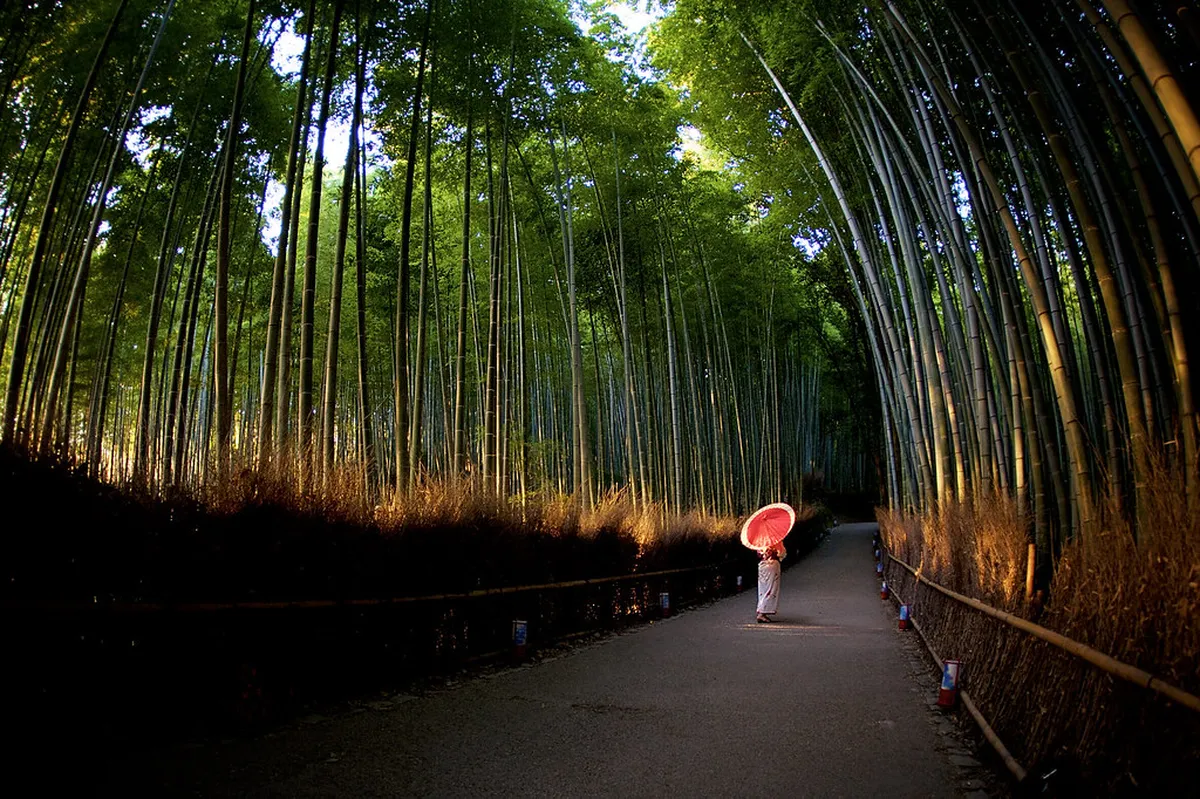
Practical info: Open 24/7 and free. Take the JR Sagano Line to Saga-Arashiyama Station (16 min from Kyoto Station, JPY 240). Arrive by 7:00 AM for crowd-free photos.
4. Kiyomizu-dera Temple — A Wooden Wonder on the Hillside
Kiyomizu-dera is a UNESCO World Heritage Site founded in 778, famous for its massive wooden stage that extends 13 meters over the hillside without a single nail. The stage offers sweeping views over Kyoto's eastern mountains, and the Otowa Waterfall at the base channels three streams — said to grant longevity, success in studies, or luck in love.
Practical info: Open 6:00–18:00 (extended hours during illumination seasons). Admission JPY 400. Walk up the charming Higashiyama shopping streets (Matsubara-dori and Sannen-zaka) from Gojo-zaka bus stop. Drinking from all three waterfall streams is considered greedy — choose wisely.
5. Gion District — Geishas and Traditional Streets
Gion is Kyoto's most famous geisha district. Preserved wooden machiya townhouses line the streets, and in the evening you may spot geiko (Kyoto geisha) or maiko (apprentices) gliding between teahouses. The district centers on Hanamikoji Street and extends along the Shirakawa Canal with its photogenic willow trees.
Why go? Gion offers a living window into traditional Japanese entertainment culture. Gion Corner (JPY 5,500) hosts nightly performances of seven traditional arts, including tea ceremony, flower arrangement, gagaku court music, and kyomai dance.
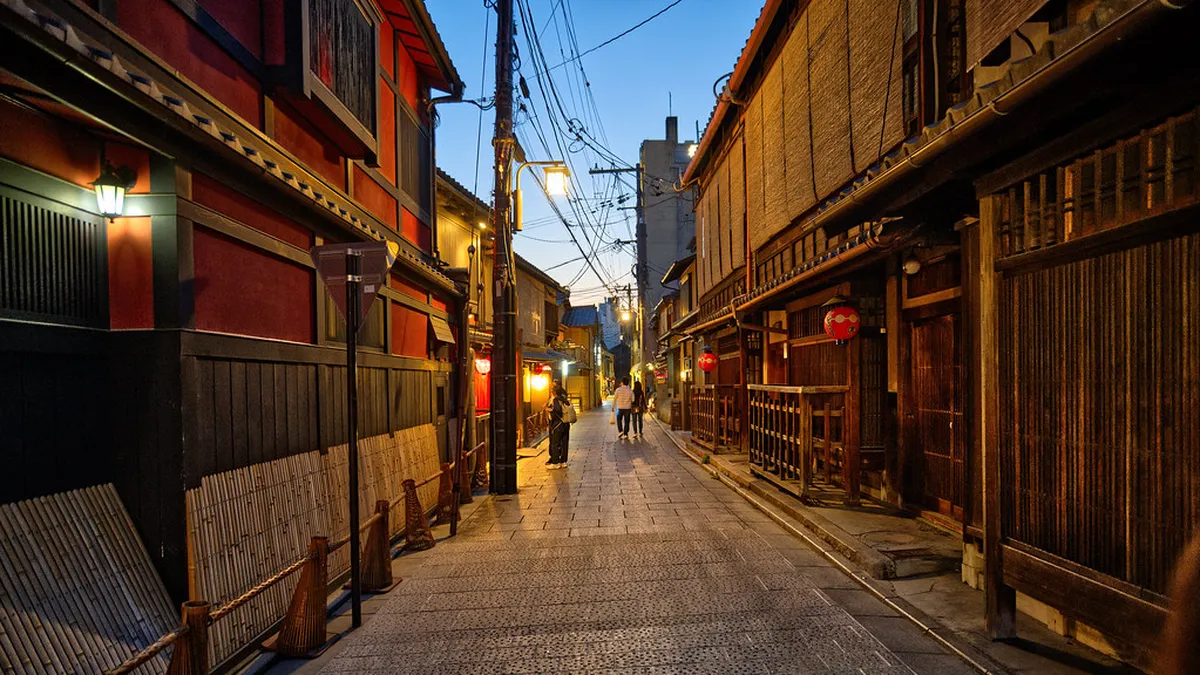
Practical info: Walk from Gion-Shijo Station (Keihan Line) or take Bus 100/206 to Gion. Free to stroll. Best in the evening when lanterns illuminate the streets. Be respectful — do not block or follow geiko/maiko for photos.
6. Nijo Castle — Shogun's Nightingale Floors
Nijo Castle (Nijo-jo) was built in 1603 as the Kyoto residence of Tokugawa Ieyasu, the first Tokugawa shogun. The Ninomaru Palace inside features the famous "nightingale floors" — wooden corridors engineered to chirp when walked upon, serving as an intruder alarm. The palace walls are adorned with over 3,000 paintings by the Kano school, and the surrounding gardens transition beautifully through each season.
Practical info: Open 8:45–16:00 (closed some Tuesdays). Admission JPY 1,300 (palace + garden). Walk 3 min from Nijo-jo-mae Station (Tozai Line). Audio guide available in English (JPY 500).
Insider tip: Visit during the spring illumination event (late March–mid April 2026) when the castle gardens are lit up with over 200 cherry trees in bloom.
Nijo Castle is closed on some Tuesdays and during certain periods in late December and late January. Check the official schedule before visiting, especially if you plan to see the Ninomaru Palace interior.
7. Participate in a Traditional Tea Ceremony
A traditional tea ceremony (chado) is a choreographed ritual of preparing and serving matcha. Every movement — from the fold of the silk cloth to the rotation of the bowl — embodies harmony (wa), respect (kei), purity (sei), and tranquility (jaku). Kyoto, as the birthplace of the major tea schools (Urasenke, Omotesenke, Mushakoji-senke), is the best place in the world to experience this.
Practical info: Experiences range from JPY 2,000 (casual, 30 min) to JPY 8,000+ (formal, 90 min with kaiseki). Popular venues include Camellia Garden (Gion), En Tea Ceremony (Higashiyama), and Tai An at Myoki-an Temple (advance reservation required). Many offer English explanation.
Participating in a tea ceremony is one of the most culturally enriching Kyoto cultural experiences you can have.
8. Nishiki Market — Kyoto's Kitchen
Nishiki Market is a 400-meter covered shopping street with over 130 stalls and shops, many family-run for generations. Known as "Kyoto's Kitchen," it specializes in Kyoto-specific ingredients: yuba (tofu skin), Kyoto pickles (tsukemono), fu (wheat gluten), namafu sweets, and seasonal produce.
Why go? This is the single best place to eat your way through Kyoto's food culture in one morning. Must-try street food includes grilled mochi on a stick (JPY 200), dashimaki tamago (Japanese omelette, JPY 350), soy milk doughnuts (JPY 150), and seasonal seafood skewers.
Practical info: Most stalls open 9:00–17:00. Closed some Wednesdays and New Year's. Walk 3 min from Shijo Station (Karasuma Line). Budget JPY 2,000–3,000 for a proper food crawl.
Insider tip: Visit before 11:00 AM for the freshest produce and smallest crowds. The market gets shoulder-to-shoulder by early afternoon.
9. Philosopher's Path — Cherry Blossoms and Canal-Side Calm
The Philosopher's Path (Tetsugaku no Michi) is a 2 km stone walkway that follows a canal lined with hundreds of cherry trees between Ginkaku-ji (Silver Pavilion) and Nanzen-ji Temple. Named after philosopher Nishida Kitaro, who used it for daily meditation walks, the path is serene year-round but spectacular during cherry blossom season (late March–early April).
Why go? It connects several major attractions — Ginkaku-ji, Honen-in Temple, Eikan-do (famous for autumn foliage), and Nanzen-ji — into a single scenic walk. Small cafes, boutique shops, and cat-friendly gardens line the route.
Practical info: Open 24/7. Free. Start at Ginkaku-ji-michi bus stop (Bus 17 or 100 from Kyoto Station). Walk south. Allow 1.5–2 hours including temple stops.
10. Kyoto Imperial Palace — History of Emperors
The Kyoto Imperial Palace (Kyoto Gosho) served as the residence of Japan's Imperial Family for over 1,000 years until the capital moved to Tokyo in 1868. The palace grounds span 11 hectares within the larger Kyoto Gyoen National Garden and feature the Shishinden ceremonial hall, the Seiryoden residential hall, and exquisite landscape gardens.
Practical info: Open 9:00–16:30 (closed Mondays). Free admission — no reservation needed since 2016. Free English guided tours at 10:00 and 14:00. Walk 8 min from Imadegawa Station (Karasuma Line).
11. Ryoan-ji Temple — The World's Most Famous Zen Garden
Ryoan-ji houses Japan's most celebrated karesansui (dry landscape) garden: 15 rocks arranged on raked white gravel within a walled enclosure. The design ensures that from any seated vantage point, at least one rock is always hidden — a puzzle that has inspired philosophical debate for over 500 years.
Practical info: Open 8:00–17:00 (8:30–16:30 Dec–Feb). Admission JPY 500. Take Bus 59 from Kyoto Station to Ryoan-ji-mae. Combine with nearby Kinkaku-ji (15 min walk). For more, explore other Kyoto landmarks.
12. Take a Kyoto Cooking Class
Kyoto is the home of kaiseki haute cuisine, shojin ryori (Zen Buddhist temple food), and obanzai (Kyoto-style home cooking). A hands-on cooking class teaches you techniques that define Japanese gastronomy — knife skills, dashi-making, and the art of seasonal presentation.
Practical info: Popular classes include Hana Cooking Class (from JPY 5,500, includes market tour), WAK Japan (JPY 8,800, kaiseki focus), and Uzuki Cooking Class (JPY 6,000, English-friendly). Book 1–2 weeks ahead in peak season. Most classes run 2.5–3.5 hours and include a full meal of what you prepare.
13. Samurai and Ninja Museum — Hands-On Feudal Japan
This interactive museum in central Kyoto displays authentic samurai armor, katana swords, and ninja tools. Beyond static exhibits, you can try on replica armor, handle training swords, throw shuriken, and watch live demonstrations of samurai sword techniques.
Practical info: Open 10:00–18:00. Admission from JPY 3,300 (adults). Walk 5 min from Karasuma-Oike Station. Book demonstrations in advance during peak season (Mar–May, Oct–Nov). A great rainy-day activity and fun for all ages.
14. Kyoto International Manga Museum
Housed in a former elementary school, this museum holds over 300,000 manga items — one of the world's largest collections. Visitors can pull volumes off open shelves and read in the building or on the lawn. Rotating exhibitions cover manga history, anime art, and global comics culture.
Practical info: Open 10:00–17:30 (closed Wednesdays). Admission JPY 900. Walk 2 min from Karasuma-Oike Station. Allow 2–3 hours. Portrait-drawing artists create manga-style caricatures on-site (from JPY 1,500).
15. Pontocho Alley — Riverside Dining
Pontocho is a narrow, atmospheric alley running parallel to the Kamogawa River, packed with restaurants, bars, and traditional teahouses. In summer (May–September), many restaurants set up yuka — open-air wooden platforms extending over the river — creating one of Kyoto's most memorable dining settings.
Practical info: Restaurants open from 17:00. Walk from Gion-Shijo or Kawaramachi Station. Reserve ahead for riverside yuka seating (expect JPY 5,000–15,000 per person for dinner). Pontocho connects to the broader Kyoto nightlife scene — izakayas, sake bars, and cocktail spots are all within a 5-minute walk.
16. Sanjusangen-do Temple — 1,001 Kannon Statues
Sanjusangen-do's main hall is 120 meters long — the longest wooden structure in Japan — and contains 1,001 life-size gilded statues of Kannon, the goddess of mercy, carved in the 12th and 13th centuries. No two faces are identical. The 28 guardian deity statues flanking the hall are national treasures.
Practical info: Open 8:00–17:00 (9:00–16:00 Nov–Mar). Admission JPY 600. Walk 7 min from Shichijo Station (Keihan Line). Photography is prohibited inside. Every January, the Toshiya archery contest takes place along the length of the hall — a dramatic event open to spectators.
17. Explore Kyoto's Nightlife
Kyoto's after-dark scene is more intimate than Tokyo's or Osaka's, but no less rewarding. Pontocho Alley and Kiyamachi Street form the nightlife spine, with everything from standing sake bars and whisky lounges to live jazz clubs and craft beer taprooms.
What to try: A sake-tasting flight at Fushimi Sake District bars (3 pours from JPY 800), a cocktail at Bar Cordon Noir (consistently ranked among Kyoto's best), or a guided izakaya-hopping tour (from JPY 8,000, includes food). For the adventurous, some ryotei in Gion offer private geiko entertainment dinners (from JPY 30,000 per person, reservation only). If you're exploring Japan's wider nightlife, the izakaya culture of Matsumoto nightlife offers a quieter, more local alternative worth adding to your itinerary.
18. Gekkeikan Okura Sake Museum
Located in the Fushimi district — Kyoto's historic brewing quarter — this museum traces 380+ years of sake production. Fushimi's natural spring water is prized for its softness, producing a distinctively smooth sake style. The museum displays traditional brewing tools, explains the rice-to-sake process, and ends with a tasting of three varieties.
Practical info: Open 9:30–16:30 (closed Obon and New Year's). Admission JPY 600 (includes tasting and souvenir sake cup). Walk 5 min from Chushojima Station (Keihan Line). Combine with a stroll along the Jikkokubune canal, where you can take a 55-minute boat ride (JPY 1,200) past willow-lined waterways.
19. Day Trip to Nara — Sacred Deer and Giant Buddha
Nara, Japan's first permanent capital (710–784 CE), is just 45 minutes from Kyoto by train. Nara Park is home to over 1,200 wild sika deer, considered sacred messengers of the gods. Todai-ji Temple houses a 15-meter bronze Buddha — the world's largest bronze statue — inside the world's largest wooden building.
Practical info: Take the Kintetsu Limited Express from Kyoto Station (35 min, JPY 760) or JR Nara Line (45 min, JPY 720, covered by JR Pass). Deer crackers cost JPY 200. Todai-ji admission JPY 600. Also visit Kasuga Taisha (3,000 stone and bronze lanterns) and Isuien Garden. A full day trip is possible but a half-day covers the highlights.
20. Uji — Matcha Heartland and Byodo-in Temple
Uji, 20 minutes south of Kyoto, is Japan's premier matcha-producing region with a tea-growing history spanning 800 years. Byodo-in Temple's Phoenix Hall — featured on the 10-yen coin — is a UNESCO World Heritage Site built in 1053. The surrounding Uji River area offers scenic walks and traditional tea houses.
Practical info: JR Nara Line to Uji (17 min from Kyoto Station, JPY 240). Byodo-in admission JPY 700 (museum included). Try Tsuen Tea, operating since 1160 — Japan's oldest tea house. Matcha parfaits on Uji's tea street run JPY 800–1,200.
21. Monkey Park Iwatayama — Feed Snow Monkeys Over Kyoto
Perched on a hillside in Arashiyama, this park is home to roughly 120 Japanese macaques that roam freely in the open. After a 20-minute uphill walk, you reach an observation deck with panoramic views over Kyoto — and can feed the monkeys peanuts and apples through a wire fence from inside a sheltered hut.
Practical info: Open 9:00–16:30 (until 16:00 in winter). Admission JPY 550. Walk 5 min from Togetsukyo Bridge in Arashiyama. Combine with the Bamboo Grove (#3) for a half-day Arashiyama itinerary.
22. Hike Mount Daimonji — Best Viewpoint Over Kyoto
Mount Daimonji (466 m) is the peak behind the famous Gozan no Okuribi "Daimonji" bonfire character. The hike from Ginkaku-ji takes about 30–45 minutes and rewards you with what many locals consider the single best panoramic view over the entire Kyoto basin — from the city grid to the surrounding mountains.
Practical info: Free. Trailhead at the north end of the Philosopher's Path behind Ginkaku-ji. Wear sturdy shoes. Best at sunset. On August 16 each year, the mountain's giant "dai" (large) character is set ablaze during the Gozan no Okuribi festival — viewable from Kamogawa River banks citywide.
23. Experience Gion Matsuri — Japan's Greatest Festival
Gion Matsuri, held throughout July, is one of Japan's three great festivals and has been celebrated for over 1,150 years. The highlight is the Yamahoko Junko parade (July 17 and 24), when massive, elaborately decorated floats — some weighing 12 tons — are pulled through central Kyoto streets. The evenings before (Yoiyama, July 14–16) feature street food stalls, lantern-lit floats, and a carnival atmosphere.
Practical info: Free to watch. Best viewing spots are along Shijo-dori and Kawaramachi-dori. Arrive by 8:00 AM on parade days for front-row positions. Hotels book months in advance — reserve early for July 2026.
24. Try Shojin Ryori — Zen Buddhist Temple Cuisine
Shojin ryori is the vegetarian cuisine developed in Zen Buddhist monasteries. Meals feature seasonal vegetables, tofu, yuba, pickles, and rice — no meat, fish, garlic, or onion. Kyoto is the best city in Japan to experience this centuries-old tradition, as several temples open their kitchens to visitors.
Where to try: Shigetsu at Tenryu-ji Temple (from JPY 3,300, garden views), Izusen at Daitoku-ji (from JPY 3,500, served in nested lacquer bowls), or Ajiro Honten near Kennin-ji (from JPY 4,400, 400+ year history). Reservations recommended.
25. Experience a Maiko Makeover in Gion
Transform into a maiko (apprentice geisha) with full white-face makeup, traditional wig, and silk kimono. Professional studios handle the entire process — it takes about 90 minutes — and include an indoor photoshoot. Some packages let you walk through Gion in costume for outdoor photos.
Practical info: Studios cluster around Gion and Higashiyama. Prices range from JPY 5,500 (studio photos only) to JPY 15,000+ (outdoor stroll package). Popular studios: Maica, Shiki Kyoto, AYA. Book 3–7 days ahead in cherry blossom and autumn seasons. This is one of the most memorable Kyoto activities for visitors of all backgrounds.
| Attraction | Admission | Hours |
|---|---|---|
| Fushimi Inari Taisha | Free | Open 24/7 |
| Kinkaku-ji (Golden Pavilion) | JPY 500 | 9:00–17:00 |
| Kiyomizu-dera | JPY 400 | 6:00–18:00 |
| Nijo Castle | JPY 1,300 | 8:45–16:00 |
| Ryoan-ji | JPY 500 | 8:00–17:00 (8:30–16:30 Dec–Feb) |
| Sanjusangen-do | JPY 600 | 8:00–17:00 (9:00–16:00 Nov–Mar) |
| Arashiyama Bamboo Grove | Free | Open 24/7 |
| Monkey Park Iwatayama | JPY 550 | 9:00–16:30 |
Budget Tips for Visiting Kyoto in 2026
Kyoto can be surprisingly affordable with the right approach:
- Transport: The Kyoto City Bus 1-Day Pass costs JPY 700 and covers most major attractions. The JR Kansai Area Pass (1 day JPY 2,400) covers trips to Nara, Uji, and Osaka.
- Free attractions: Fushimi Inari, Arashiyama Bamboo Grove, Kyoto Imperial Palace, Philosopher's Path, and many shrine grounds are free.
- Meals: Convenience stores (7-Eleven, Lawson) offer quality bento from JPY 400. Nishiki Market street food averages JPY 200–500 per item. Lunch sets at restaurants are 30–50% cheaper than dinner.
- Accommodation: Guesthouses and hostels in the Kyoto Station area start from JPY 3,000/night. Traditional machiya stays (renovated townhouses) offer a unique Kyoto experience from JPY 8,000/night.
- Timing: Shoulder seasons (late May–June, late October–mid November) offer pleasant weather and smaller crowds than peak cherry blossom (late March–early April) or autumn foliage (mid November–early December).
When Is the Best Time to Visit Kyoto?
Kyoto has distinct seasons, each with its own appeal:
- Spring (March–May): Cherry blossom season peaks late March to early April. Temperatures 10–22 C. The city is at its most beautiful but also most crowded.
- Summer (June–August): Hot and humid (30–35 C). Gion Matsuri in July is the highlight. River dining (yuka) season on the Kamogawa.
- Autumn (September–November): Autumn foliage peaks mid-November. Temperatures 12–25 C. Temple illumination events (Eikan-do, Kiyomizu-dera, Kodai-ji) are spectacular.
- Winter (December–February): Quiet and cold (1–9 C). Occasional snow transforms temples into scenes from a woodblock print. Fewest tourists and lowest prices.
Going deeper on this theme? Our 20 Best Kyoto Attractions in 2026 guide covers it in detail, with the practical planning this page leaves out.
Frequently Asked Questions About Kyoto
How many days do you need in Kyoto?
Three full days is the sweet spot for first-time visitors, covering the major temples, a food experience, and one day trip. Five days lets you explore at a relaxed pace and add hiking, cooking classes, and seasonal events. If you only have one day, focus on the Higashiyama district (Kiyomizu-dera, Gion, and Fushimi Inari).
What is the best way to get around Kyoto?
The Kyoto City Bus system covers most attractions and the 1-Day Pass (JPY 700) offers unlimited rides. For the eastern side, the Keihan and Tozai subway lines are efficient. Renting a bicycle (JPY 1,000–1,500/day) is excellent for the flat central grid and Philosopher's Path area. Taxis start at JPY 500 and are useful for late-night returns.
Is Kyoto expensive to visit?
Kyoto is moderate by Japanese standards. Budget travelers can manage JPY 8,000–12,000/day (hostel, bus pass, street food, free attractions). Mid-range travelers should budget JPY 20,000–30,000/day (ryokan, restaurant meals, paid attractions). See the Budget Tips section above for specific savings strategies.
What should I not miss on a first visit to Kyoto?
The five cannot-miss experiences are: Fushimi Inari Shrine at sunrise, Kinkaku-ji, a walk through the Arashiyama Bamboo Grove, the Gion district at dusk, and a tea ceremony. These give you the iconic temple-shrine-nature-culture-food spectrum that defines Kyoto.
Can you visit Kyoto as a day trip from Osaka or Tokyo?
From Osaka, absolutely — it is only 15 minutes by Shinkansen or 40 minutes by Hankyu/Keihan train. From Tokyo, the Shinkansen takes 2 hours 15 minutes (JPY 13,320). A day trip from Tokyo is feasible but a one-night stay is recommended to experience the evening atmosphere in Gion and Pontocho.
What seasonal festivals should I plan around?
The top three: cherry blossom season (late March–early April) for the Philosopher's Path and Maruyama Park hanami, Gion Matsuri in July (Japan's biggest festival), and autumn illuminations in November at Eikan-do and Kiyomizu-dera. In 2026, the Aoi Matsuri procession (May 15) is also a must-see — one of Kyoto's three great festivals.
Kyoto offers an extraordinary range of experiences — from serene temple gardens and centuries-old tea traditions to vibrant street markets and world-class festivals. Whether you are visiting for the first time or returning in 2026, this ancient capital continues to reveal new layers with every trip. Start planning your Kyoto itinerary today, explore deeper Kyoto cultural experiences, or browse our full guide to Kyoto activities for more inspiration.
Explore More Kyoto Guides
Plan every part of your Kyoto trip — when to go, where to stay and eat, seasonal highlights, and the experiences and day trips that make the old capital unforgettable.
Seasonal & When to Go
Food, Shopping & Stays
Experiences & Hidden Gems
Day Trips
Free: The Kyoto Essentials guide
Top things to do, where to stay, a perfect day plan, getting around, and the best time to go — a Kyoto mini-guide you can take offline.
You might also like


Continue reading
More guides you'll find useful