
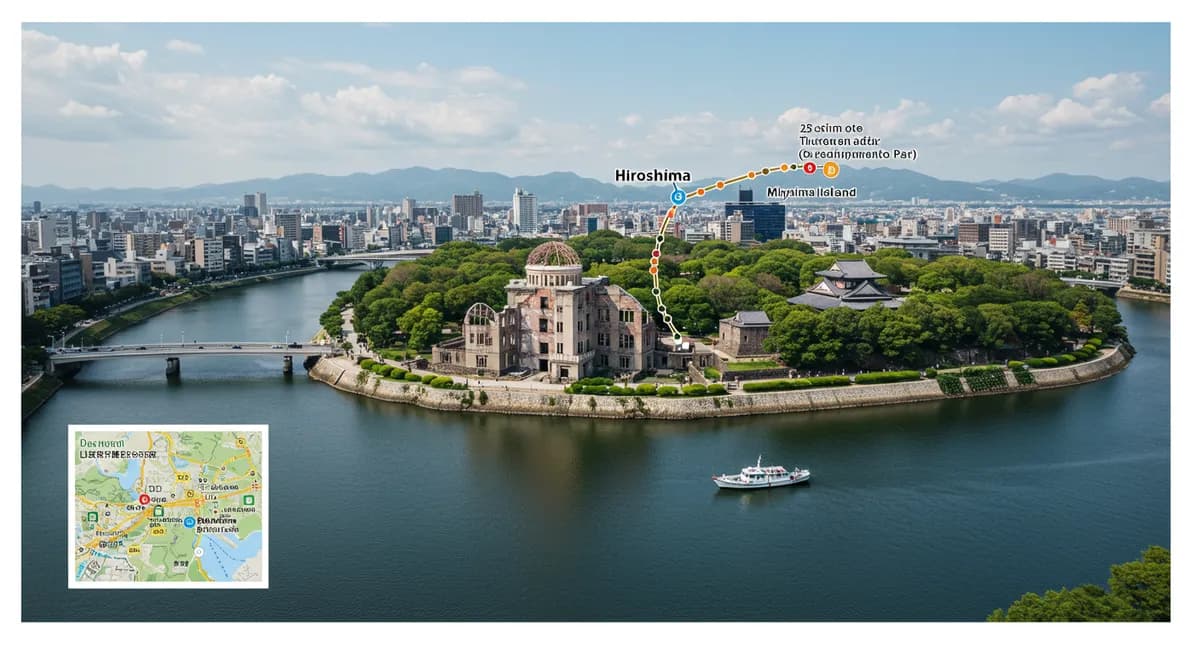
Hiroshima Itinerary 2026: Choose 1, 2, or 3 Days (Hub Guide)
Pick your Hiroshima itinerary for 2026: choose between a focused 1-day plan, a balanced 2-day route with Miyajima, or an immersive 3-day adventure. Compare each option and jump to the full guide.
On this page
Hiroshima rewards travelers who plan around their available time. With one focused day you can pay respects at the Peace Memorial and still cross to Miyajima; with two days you add Hiroshima Castle, Shukkei-en Garden, and a deeper Miyajima loop; with three days you fold in Okunoshima (Rabbit Island), the Shimanami Kaido coastline, the Iwakuni Kintaikyo bridge, or a slow morning at Mitaki-dera Temple. This 2026 hub article helps you pick the right length, then sends you to the full day-by-day guide for that plan.
How Long Should You Spend in Hiroshima?
For most travelers, two days in Hiroshima is the sweet spot — one day for the Peace Memorial Park, Museum, and downtown, and a second day for Miyajima Island and Itsukushima Shrine. One day is enough if you are based in Osaka or Kyoto and only want to hit the major landmarks. Three days unlocks Okunoshima, Shimanami Kaido cycling, the Iwakuni Kintaikyo bridge area, or slower neighborhood exploration around Hondori and Nagarekawa. Tokyo day-trippers can pair Hiroshima with Osaka on a single Shinkansen pass.
A practical filter: if Peace Memorial Park is your reason for coming, give it at minimum half a day, ideally with a 90-minute museum slot and another 60 minutes for the outdoor monuments. Anything less and you will feel rushed through the most emotionally significant part of the trip. Miyajima needs at least 4 hours including the ferry; a half-day is more honest, and an overnight transforms it.
Quick Comparison: 1 vs 2 vs 3 Days in Hiroshima
| Length | Best for | Key sights |
|---|---|---|
| 1 day | Day-trippers from Osaka or Kyoto | Peace Park + Museum, or brief Miyajima afternoon |
| 2 days | First-time visitors | Peace Park + Castle + Shukkei-en; full Miyajima loop |
| 3 days | Repeat visitors or slower pace | Adds Okunoshima, Iwakuni, Mitaki-dera, or Shimanami |
- 1 day — Peace Memorial Park + Atomic Bomb Dome + Museum, or a Peace Park morning paired with a Miyajima afternoon. Best for day-trippers from Osaka or Kyoto.
- 2 days — Day 1 Peace Park + Hiroshima Castle + Shukkei-en + Hondori dinner; Day 2 full Miyajima loop with Mount Misen and the floating torii gate. Best for first-time visitors.
- 3 days — Adds Okunoshima (Rabbit Island), Iwakuni Kintaikyo bridge, Mitaki-dera Temple, or a Shimanami Kaido cycling segment. Best for repeat visitors or travelers who like a slower pace.
Hiroshima 1-Day Itinerary
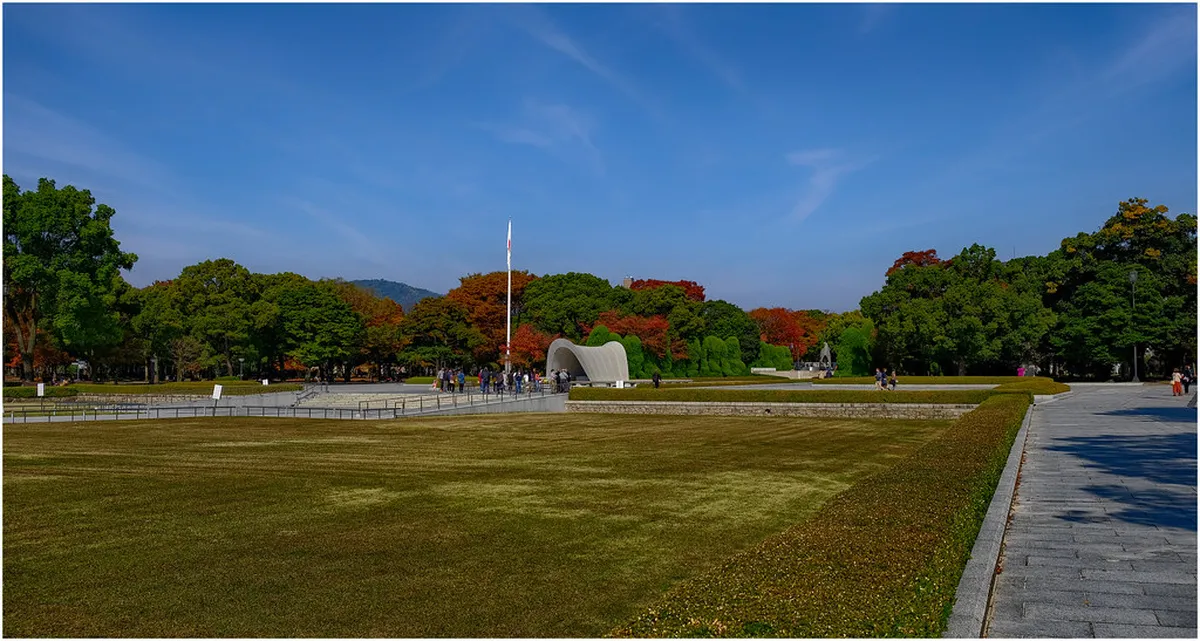
A single day in Hiroshima is enough to cover the city's most important landmarks if you start early and stay focused. Begin at Hiroshima Peace Memorial Park by 9:00 AM, walk through the museum (allow 90 minutes), then pause at the Atomic Bomb Dome and Children's Peace Monument. Have lunch at Okonomimura for Hiroshima-style okonomiyaki, then ride the JR Sanyo Line to Miyajimaguchi (about 25 minutes) and ferry across to Miyajima for late-afternoon photos of the floating torii gate at high tide. Return to Hiroshima Station by 8:00 PM.
If you are arriving from Kansai for a day trip, the train logistics matter most: the Nozomi Shinkansen reaches Hiroshima from Shin-Osaka in about 90 minutes. For the full hour-by-hour breakdown of a Peace Park focused day, see our dedicated Hiroshima 1-day landmarks itinerary. If you want the day trip framing instead, our Hiroshima 1-day itinerary from Osaka and Kyoto covers train transfers, IC card use, and how to fit Miyajima in alongside Peace Park.
One-day visitors sometimes wonder whether to skip Miyajima — don't. Even 90 minutes on the island, timed for high tide, delivers the postcard view that defines the region. Just check the tide schedule before you go, and budget the 100 JPY Miyajima visitor tax described further down.
Hiroshima 2-Day Itinerary
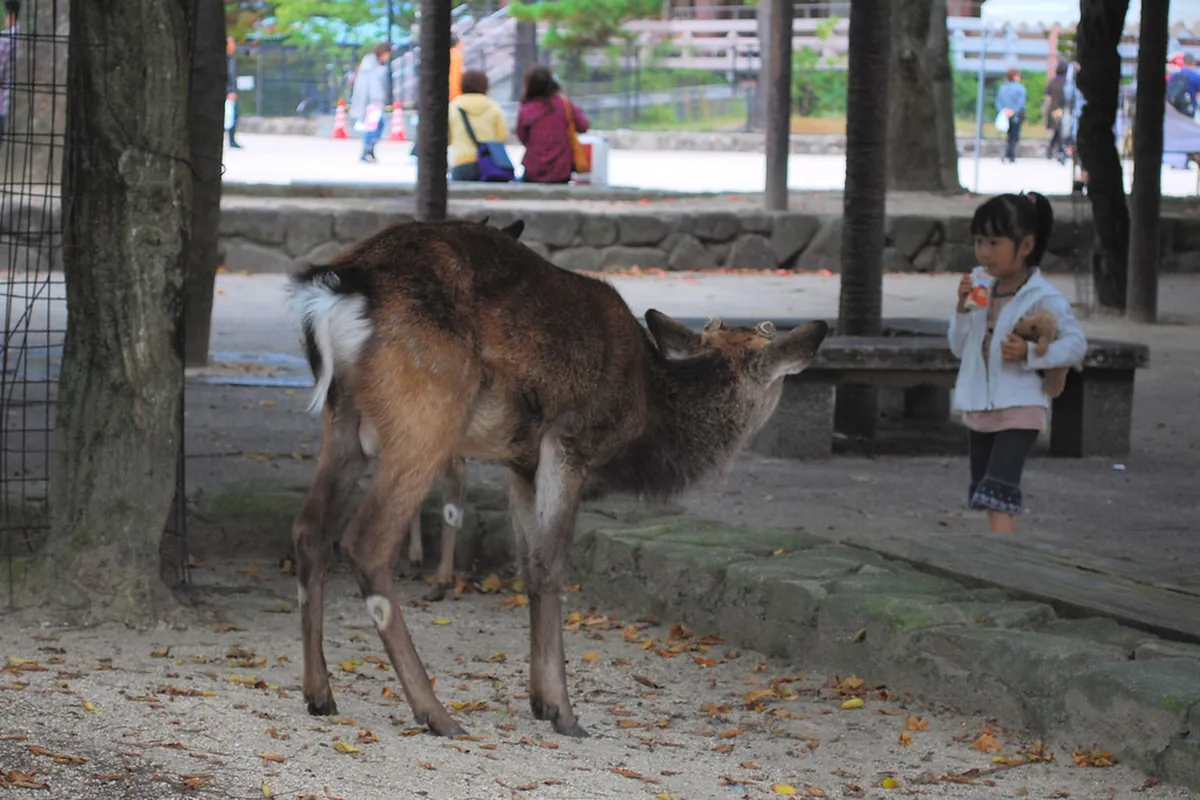
Two days lets you split the city and the island so neither feels rushed. Day 1 is downtown Hiroshima: Peace Memorial Park and Museum in the morning, lunch at Okonomimura, then Hiroshima Castle and Shukkei-en Garden in the afternoon, ending with dinner along Hondori Street or a drink in the Nagarekawa nightlife district. Day 2 is a full Miyajima day: morning ferry, Itsukushima Shrine at high tide, lunch of grilled oysters and momiji manju, then either a Mount Misen ropeway trip or a hike through the island's wooded inland trails before returning at sunset.
This is the plan most first-time visitors should book. It pairs heavy historical reflection with a lighter, scenic day on Miyajima — a deliberate emotional rhythm that prevents the trip from feeling one-note. For the full hour-by-hour breakdown including hotel area picks, transit passes, and dinner reservations, see our complete Hiroshima 2-day itinerary.
Two days also works well if you are connecting onward to Kyushu or back to Osaka — Hiroshima Station is on the Sanyo Shinkansen line, and a third night here is rarely necessary unless you want Okunoshima, Iwakuni, or Shimanami.
The Peace Memorial Museum is at its quietest in the first 90 minutes after opening (8:30 AM) and in the final 90 minutes before close. Avoid the 10:00–13:00 window on weekdays when school groups dominate the lower floor.
Hiroshima 3-Day Itinerary
Three days gives you space for one of Hiroshima's quieter day trips. After spending Day 1 on Peace Memorial Park and downtown and Day 2 on Miyajima (same outline as the 2-day plan), Day 3 opens up several options. The most popular is Okunoshima, the "Rabbit Island" reached by train to Tadanoumi Port and a short ferry — bring rabbit food, plan around 4 hours on the island, and pair it with the Poison Gas Museum for historical context. Alternative Day 3 options include cycling a stretch of the Shimanami Kaido, visiting Mitaki-dera Temple in the wooded hills above the city, or returning for a slower revisit of the Peace Memorial Museum and Orizuru Tower.
Three days suits travelers who like one "adventure day" in their itinerary, repeat visitors who already know Peace Park, or anyone basing themselves in Hiroshima while exploring western Japan. For the complete adventure-focused breakdown including Rabbit Island ferry timing and the Shimanami alternative, see our full 3-day Hiroshima adventure itinerary.
If your interest is specifically the cycling route, our Shimanami Kaido cycling guide compares e-bike and road bike logistics for a single-day ride or a longer crossing.
Iwakuni and Kintaikyo Bridge: The Day Trip Most Itineraries Skip
English-language Hiroshima itineraries almost universally fixate on Miyajima and Okunoshima while ignoring Iwakuni — a 45-minute Sanyo Line ride that delivers one of Japan's three great bridges. The Kintaikyo Bridge, a five-arched wooden span built in 1673 and rebuilt with traditional joinery techniques, is the centerpiece. Pair it with the Iwakuni Castle ropeway for elevated views of the Seto Inland Sea, and the white snake exhibit if you have kids who tolerate slow museums.
Iwakuni works as either a half-day add-on to a 2-day Hiroshima visit (after a morning at the castle, take a 13:30 train and be back by 18:00) or as a full Day 3 if you also want to stop at the Iwakuni Art Museum and lunch on iwakuni-zushi pressed sushi. Tickets for the bridge crossing run 310 JPY; a combo ticket including the ropeway and castle is 970 JPY in 2026. JR Pass holders ride the local Sanyo Line free of additional charge.
Peace Memorial Museum: 2026 Timed Entry and Renovation Notes
The Peace Memorial Museum has tightened its entry flow since the 2024-2025 main building refurbishment, and most existing itinerary articles online have not caught up. During peak season (cherry blossom in early April, the August 6th Memorial period, and late-November foliage), the museum now strongly advises booking a timed-entry slot online in advance to avoid 60-90 minute queues. Walk-in entry is still possible outside peak weeks, but you should expect 20-30 minute waits at midday.
Practical tactics for a smooth visit: enter at 8:30 AM (opening time) or after 16:00 to dodge tour-group surges, allocate the full 90 minutes inside, and leave the East Building's testimony archives for last because they are emotionally heaviest. Photography rules tightened in 2025 — flash and tripod use are prohibited throughout, and a few exhibit zones are no-photo entirely. Admission remains 200 JPY for adults, with audio guides at 400 JPY in eight languages including English, Korean, and simplified Chinese.
How to Get to Hiroshima
Most international visitors reach Hiroshima from Tokyo or Osaka by Shinkansen. The Nozomi from Tokyo takes about 4 hours; from Shin-Osaka roughly 90 minutes. JR Pass holders should ride the Hikari or Sakura instead since Nozomi is excluded. Hiroshima Airport handles domestic flights from Tokyo Haneda, Sapporo, and Okinawa, with a 50-minute limousine bus connection to Hiroshima Station. Highway buses from Tokyo (12-13 hours) and Osaka (5-6 hours) are the budget option. For full route details and 2026 ticket prices, see our how to get to Hiroshima from Tokyo and Osaka guide.
How to Get Around Hiroshima
The Hiroshima Electric Railway (Hiroden) streetcars cover almost every major sight — Peace Memorial Park, Hiroshima Station, Hondori, and the Atomic Bomb Dome are all on the network. A one-day streetcar pass costs 700 JPY in 2026 and pays off after three rides. For Miyajima, take the JR Sanyo Line to Miyajimaguchi Station, then the JR ferry across (covered by JR Pass). The Maple Loop sightseeing bus is useful if you want a hop-on-hop-off circuit of the major landmarks with audio commentary. Detailed route maps live in our Hiroshima streetcar and bus guide.
Luggage logistics matter more than most articles admit. Coin lockers at Hiroshima Station fill by 10:00 AM during peak weekends, and the 700-JPY large lockers go fastest. The Crosta Hiroshima counter on the south concourse offers same-day storage for 700 JPY per bag and is rarely full. On Miyajima, lockers near the ferry terminal are limited; either travel light or leave bags in Hiroshima.
Miyajima Visitor Tax and Tide Planning
Avoid booking hotels near the Peace Park for 4–7 August: rooms triple in price for the Peace Memorial Ceremony. Check the JMA tide table for Miyajima before your visit — the "floating" torii effect only works within 90 minutes of high tide.
Two operational details trip up first-timers. First, since October 2023 every adult ferry passenger to Miyajima pays a 100 JPY Itsukushima Visitor Tax on top of the regular 200 JPY ferry fare — it is collected automatically with your ticket on both the JR ferry and the Matsudai ferry, no separate counter, but you should account for it in your budget. Children under 6 are exempt; a 500 JPY annual pass exists for repeat visitors.
Second, Miyajima's signature view depends entirely on the tide. The "floating" torii effect appears within roughly 90 minutes of peak high tide; at low tide you can walk out to the gate's base on the exposed seabed. Both versions photograph beautifully but are completely different shots. Check the JMA tide table for Miyajima before you book your day, and time your ferry crossing to land within the high-tide window. Our Itsukushima Shrine tide times guide covers the 2026 tide schedule and best photo spots.
When to Visit Hiroshima
Spring (late March to early April) brings cherry blossoms to Peace Memorial Park and Hiroshima Castle, with crowds and higher hotel prices. Summer is festival season — most notably the August 6th Peace Memorial Ceremony — but expect humidity. Autumn (mid-November) delivers brilliant maple foliage on Miyajima and around Mitaki-dera Temple, and is arguably the best season overall. Winter is quietest and cheapest, with occasional illumination events through the city. For the calendar of festivals, ceremonies, and seasonal events, see our Hiroshima 2026 events calendar.
Where to Stay
Three areas cover most travelers' needs. Hiroshima Station area is best for short stays and onward Shinkansen travel, with reliable business hotels and easy luggage logistics. Hondori / Peace Park area is best for first-time visitors, putting most major sights within walking distance and offering livelier dinner options. Hiroshima Bay or Miyajima itself works for travelers who want a slower, scenic stay and don't mind a longer commute to downtown sights. Book at least 6-8 weeks ahead during cherry blossom (early April) and the August 6 Peace Memorial Ceremony.
Sample Budget for a 2-Day Hiroshima Trip
Hiroshima is cheaper than Tokyo or Kyoto on every line item except premium ryokan stays on Miyajima. A realistic 2026 mid-range budget for two days, excluding Shinkansen to and from Hiroshima, looks like this per person:
- Accommodation — 9,000-13,000 JPY/night for a Hiroshima Station business hotel; 25,000-45,000 JPY/night for a Miyajima ryokan with kaiseki dinner.
- Transit — 700 JPY streetcar day pass + 600 JPY return JR ferry + 100 JPY Miyajima visitor tax = roughly 1,400 JPY/day.
- Attractions — Peace Museum 200 JPY, Hiroshima Castle 370 JPY, Shukkei-en 260 JPY, Mount Misen ropeway 2,000 JPY return.
- Food — okonomiyaki lunch 1,000-1,500 JPY, mid-range dinner 2,500-4,000 JPY, oysters on Miyajima 400-600 JPY each.
A backpacker willing to use hostels and convenience-store breakfasts can run the trip for around 9,000 JPY/day excluding the Shinkansen. A mid-range traveler should plan 18,000-22,000 JPY/day; a Miyajima ryokan night pushes a single day past 50,000 JPY but is the most memorable splurge in the prefecture.
FAQ: Planning Your Hiroshima Itinerary
Is one day enough for Hiroshima?
One day is enough to cover Peace Memorial Park, the Museum, and the Atomic Bomb Dome, and you can squeeze in a brief Miyajima visit if you start early. It is the right choice for day-trippers from Osaka or Kyoto, but two days is more comfortable and gives Miyajima the time it deserves.
Do I need a JR Pass for Hiroshima?
If you are coming from Tokyo or Kyoto and plan to ride the Shinkansen both directions, a 7-day JR Pass usually pays off. The pass also covers the JR Sanyo Line to Miyajimaguchi and the JR ferry to Miyajima Island, so you save on those legs too. If you fly directly into Hiroshima Airport and don't ride other Shinkansen lines, skip the pass.
What time should I visit Miyajima for the floating torii gate?
Visit at high tide for the postcard "floating" effect and at low tide if you want to walk out to the gate's base. Tide tables for Miyajima are published online — plan to be at Itsukushima Shrine within 90 minutes of peak high tide for the best photos. Our Itsukushima Shrine tide times guide covers the 2026 tide schedule and best photo spots.
Is Hiroshima safe and family-friendly?
Yes. Hiroshima is among Japan's safest cities, with low crime, clean public transport, and excellent signage in English. The Peace Memorial Museum content is intense and worth previewing with children before visiting; everything else — Miyajima deer, Hiroshima Castle grounds, Shukkei-en Garden — is family-friendly.
Should I visit Peace Memorial Park or Miyajima first?
Peace Memorial Park first if your trip is two days or longer. The emotional weight of the museum pairs better with a fresh start, and Miyajima's lighter mood works well as a contrast on Day 2. On a single-day visit, do Peace Park in the morning and Miyajima in the afternoon for the same reason.
What food should I try in Hiroshima?
Hiroshima-style okonomiyaki — layered with noodles rather than mixed — is the city's signature dish, best eaten at Okonomimura or a neighborhood teppan counter. Grilled oysters and momiji manju (maple leaf cakes) are Miyajima specialties. For a deeper dive into okonomiyaki ordering and the regional variations, see our how to eat Hiroshima-style okonomiyaki like a local guide.
Can I do Hiroshima as a day trip from Osaka or Kyoto?
Yes, and it is one of the most popular day trips from Kansai. The Shinkansen makes it logistically simple. Plan around 11-12 hours door-to-door with Peace Park and Miyajima both included. The dedicated Hiroshima 1-day itinerary from Osaka and Kyoto walks through the morning train, key timings, and which return Shinkansen to book.
Pick Your Plan
Hiroshima is one of the few destinations where the "right" trip length really does depend on your priorities. If you only have a day, focus tightly on Peace Park and one Miyajima moment. If you have two, spread the city and the island across separate days. If you have three, add a quieter detour — Okunoshima, Iwakuni, Shimanami, or Mitaki-dera — that most visitors skip. Whichever you choose, the linked detailed itineraries above give you the hour-by-hour route, transit timings, and 2026 prices to book confidently.
If you need the wider context — accommodation, budget tiers, and the events calendar — our Hiroshima travel guide covers the planning layer beneath any itinerary.
For the wider city overview, see our Hiroshima attractions guide.
Free: The Hiroshima Essentials guide
Top things to do, where to stay, a perfect day plan, getting around, and the best time to go — a Hiroshima mini-guide you can take offline.
You might also like


Continue reading
More guides you'll find useful


