

Hiroshima Outdoor Adventures: Hiking, Cycling & Kayaking Guide (2026)
The 2026 guide to Hiroshima outdoor adventures: Mt Misen hikes, Shimanami Kaido cycling, Miyajima sea kayaking, Sandankyo Gorge trails, prices, gear and seasons.
On this page
What outdoor adventures can you do in Hiroshima? Hiroshima Prefecture packs five distinct outdoor playgrounds into a 90 km radius: Mt Misen (535 m) on Miyajima for a 2-hour granite hike, the 70 km Shimanami Kaido cycling route from Onomichi to Imabari, sea kayaking across the Seto Inland Sea to the floating torii, the 16 km Sandankyo Gorge canyon walk, and inflatable rafting on the Nukui River. Most operators run March through November and rent gear on-site.
This 2026 guide breaks down the five core adventures, each with operator prices in JPY, difficulty rating, season, and gear notes. For a deeper themed pick of every adrenaline option in the prefecture, see our 10 best outdoor adventures in Hiroshima for thrill-seekers roundup. If you only have time for one activity, jump to Mt Misen — it’s the highest signal-to-effort ratio of any half-day adventure in western Japan.
1. Mt Misen Hike, Miyajima Island (Half-Day, Easy–Moderate)
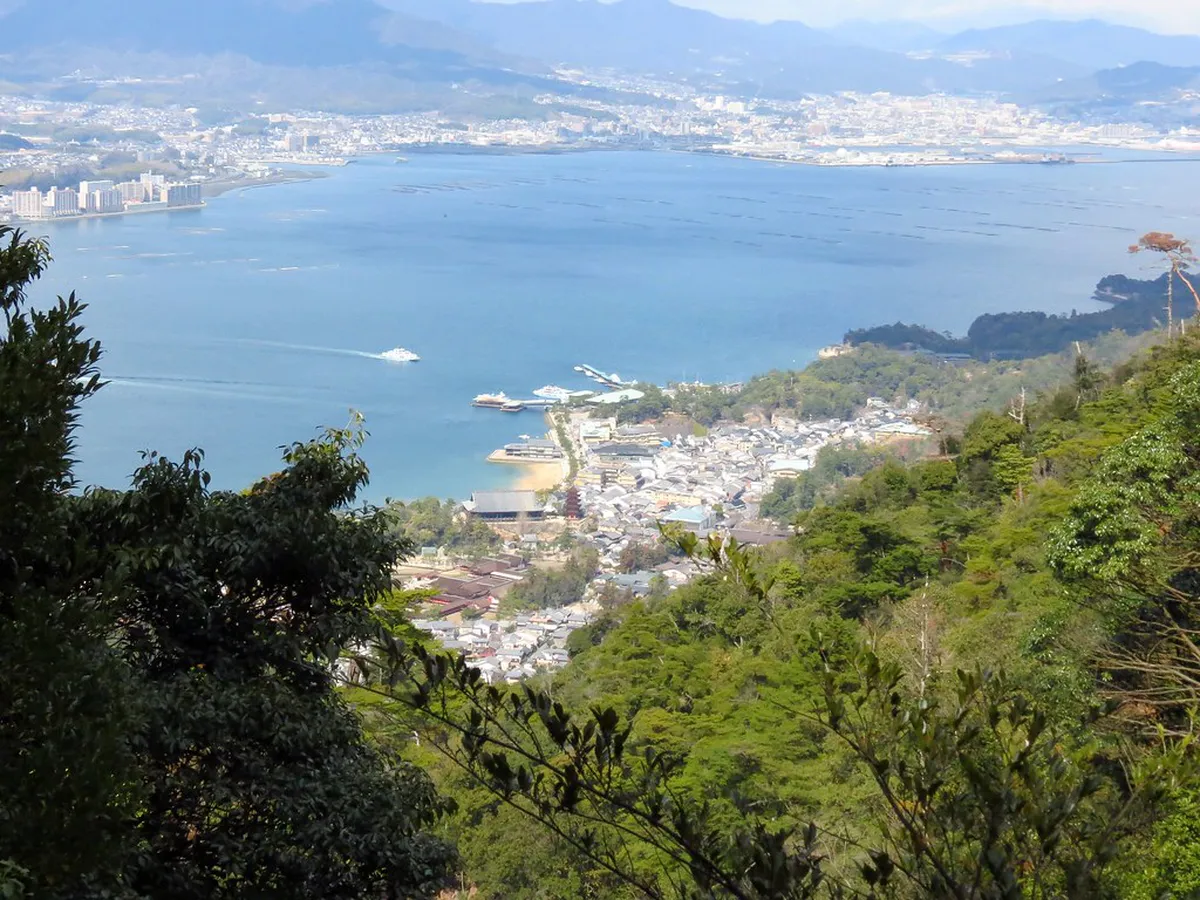
Mt Misen is the spiritual heart of Miyajima and the single best half-day hike near Hiroshima city. Three trails climb the 535 m peak from the shrine area: Momijidani (2.5 km, easiest, 90 minutes up), Daisho-in (3 km, moderate, religious sites en route), and Omoto (3.2 km, quietest and most forested). All three converge near the summit observation deck, which delivers a 360-degree panorama of the Seto Inland Sea. Plan your stay by reading where to stay in Hiroshima for convenient base locations.
2026 details: Trails are free. The Miyajima Ropeway (optional descent or ascent shortcut) costs ¥2,000 round-trip / ¥1,100 one-way as of April 2026. Ferry from Miyajimaguchi to the island is ¥200 + the ¥100 visitor tax. Add roughly ¥2,500 for a casual lunch in the Omotesando shopping street.
Difficulty: Easy–moderate. Roughly 500 m of vertical gain over rocky stone steps. Trail runners or grippy trail shoes preferred — sneakers are workable in dry weather but slick after rain.
Season: March–June and October–November are ideal. July and August are humid (28–32°C, high UV); start by 7 a.m. or skip. Snow on the upper trail is rare but possible in January–February. For a full breakdown of every Miyajima and inland route — including the lesser-known Mitaki Temple loop in the city — see our Hiroshima hiking trails guide.
2. Shimanami Kaido Cycling Route (Full-Day or 2-Day, All Levels)
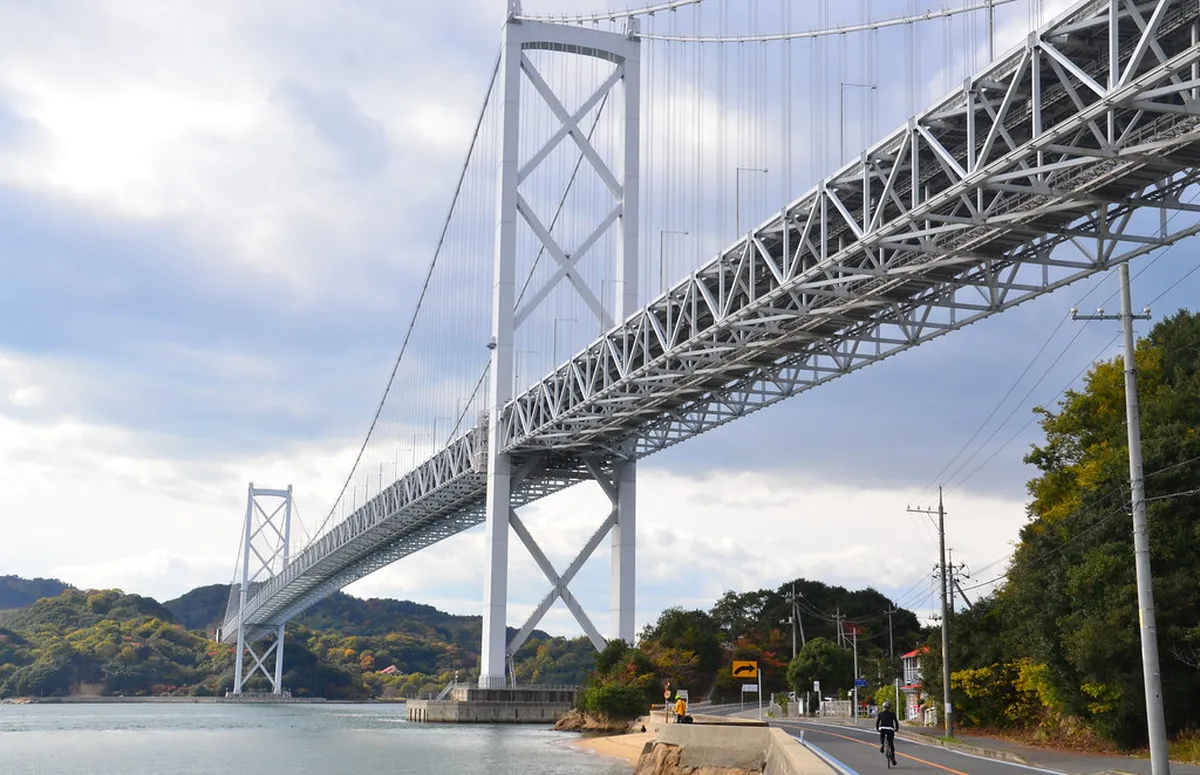
The Shimanami Kaido is a 70 km bike-friendly expressway running from Onomichi (Hiroshima Prefecture) to Imabari (Ehime Prefecture, on Shikoku), island-hopping six islands across the Seto Inland Sea via dedicated cycling lanes on each suspension bridge. It is consistently ranked one of the world’s top long-distance bike routes — and the only one in Japan with this level of infrastructure.
2026 rental prices: Standard cross-bike rental from Onomichi U2 or Giant Store: ¥2,500/day plus a ¥1,100 refundable deposit. E-bike rental: ¥6,000–¥7,500/day depending on operator (Giant Store, Shimanami Bike Tours). One-way drop-off at Imabari adds ¥1,100. Bridge tolls were abolished in April 2022 and remain free in 2026.
Difficulty: Full route is moderate (roughly 8 hours saddle time, mostly flat with bridge approach gradients of 3–4%). Beginners should split it across two days, overnighting on Ikuchijima or Omishima island. A standard cross-bike is fine for fit riders; choose the e-bike if you’re unsure or carrying luggage.
Season: April–June and September–November are the sweet spots. July–August add heat (riders should carry 2 L of water minimum). For e-bike vs road bike trade-offs, drop-off logistics, and which rental shop matches your itinerary, see our detailed Shimanami Kaido cycling guide: e-bike vs road bike logistics.
3. Sea Kayaking to Miyajima & the Floating Torii (Half-Day, Moderate)
Few visitors realise you can paddle through the Itsukushima torii gate at high tide. Local outfitter Paddle Park Hiroshima runs guided sea-kayak tours from the Miyajimaguchi area across the 1.5 km strait, circling Miyajima’s coastline and approaching the torii from the water — an angle most photographers never get.
2026 prices: Half-day guided sea-kayak tour (3 hours, including instruction and gear): ¥9,800–¥12,500 per person. Sunset tours run ¥13,500. Wetsuits, PFDs, dry bags, and a brief land orientation are included. Minimum age is typically 12; tours run with 4–8 paddlers per guide.
Difficulty: Moderate. The Seto Inland Sea is sheltered, but tidal currents around Miyajima can hit 3 knots — this is why every operator insists on a guide. No previous kayak experience required, but you should be comfortable swimming.
Season: May–October. Tide times determine the schedule — booking 5–7 days ahead is mandatory in summer. Bring a rashguard, quick-dry shorts, reef-safe sunscreen, and a waterproof phone pouch. Tours pause during typhoons (typically a 10–15% chance in September).
4. Sandankyo Gorge Hiking Trail (Full-Day, Moderate)
Sandankyo is a designated National Place of Scenic Beauty — a 16 km gorge of emerald pools, three-tiered waterfalls, and suspension bridges 90 km north of Hiroshima city. Most visitors do an out-and-back from the Sandankyo entrance to Sandan-no-taki waterfall (about 6 km one-way, 4 hours round trip). Strong hikers can continue to the upper Mitaki area for a full 16 km traverse.
2026 details: Trail entry is free. The boat ride across Kurobuchi pool (a highlight of the lower section) costs ¥500 per person and runs April–November only. Bus from Hiroshima Bus Center direct to Sandankyo: ¥1,360 each way, 75 minutes, four daily departures.
Difficulty: Moderate. The trail is well-maintained but narrow, with metal walkways bolted into the canyon walls. Some stretches close after heavy rain — check the Akiota Town tourism site the morning of your visit.
Season: April–early December. Late October to mid-November is peak — the canyon explodes into red and orange koyo (autumn colour). The trail is closed entirely December–March due to ice. Bring a windbreaker, lunch, 1.5 L of water, and proper hiking boots — there is no food service past the entrance.
5. Nukui River Rafting & SUP (Half-Day, Easy–Moderate)
For a softer water adventure, head to the Nukui River near Akiota Town (90 minutes from Hiroshima city). Two operators — Honki Adventure and West Japan Rafting — run inflatable kayak and stand-up paddleboard sessions on Class I–II water through forested sections of the upper river.
2026 prices: Inflatable kayak half-day (3 hours including transfer from Sandankyo Pavillion meeting point): ¥8,500–¥10,000. SUP half-day: ¥7,500. Family discounts (kids under 12) are typically 30% off. All gear, wetsuits, helmets, and PFDs are included.
Difficulty: Easy–moderate. No previous rafting experience required; minimum age 8 for the kayak option, 12 for SUP. Water temperatures stay around 18–22°C in summer.
Season: June through early October only. Spring water levels are too cold; winter is unrunnable. Book 3–5 days ahead via the operator websites in Japanese (Google-translated checkout works fine).
Getting to Each Adventure from Hiroshima City
Most travellers base in central Hiroshima (around Hiroshima Station or Peace Park) and day-trip out, since none of the five adventures sit more than 90 minutes from the city. The transit picture in 2026 is straightforward, but the right pass changes the maths quickly.
| Adventure | Duration | Cost (2026) | Season |
|---|---|---|---|
| Mt Misen hike | Half-day | Free trail; ¥2,000 ropeway | Mar–Nov |
| Shimanami Kaido cycling | Full-day or 2-day | ¥2,500–¥7,500/day rental | Apr–Jun, Sep–Nov |
| Sea kayaking (Miyajima) | Half-day (3 hrs) | ¥9,800–¥12,500 | May–Oct |
| Sandankyo Gorge walk | Full-day | Free trail; ¥500 boat ride | Apr–early Dec |
| Nukui River rafting/SUP | Half-day (3 hrs) | ¥7,500–¥10,000 | Jun–early Oct |
The Shimanami Kaido bridge tolls were abolished in April 2022 and remain free in 2026. Budget roughly ¥6,000–¥10,000 total per rider for a self-guided full-route ride including bike rental, one-way drop-off, and vending machine stops.
Sandankyo Gorge closes entirely December through March due to ice. Some sections also close temporarily after heavy rain — check the Akiota Town tourism site the morning of your visit before heading out.
Miyajima is the easiest: JR Sanyo Line from Hiroshima Station to Miyajimaguchi (25 minutes, ¥420), then the JR West ferry (¥200 one-way plus the ¥100 visitor tax). For Onomichi (the Shimanami Kaido start point), take the JR Sanyo Line (90 minutes, ¥1,520) or the Shinkansen to Shin-Onomichi plus a 10-minute bus. Sandankyo runs four daily Hiroden buses (¥1,360, 75 minutes) from Hiroshima Bus Center — first bus 8:35, last return 17:25, so you cannot take a late start. The Nukui River rafting meet-up is the same Sandankyo Pavillion stop or operator pickup from Akiota.
If you’re doing two or more of these in one trip, the JR Setouchi Area Pass (5-day, around ¥22,000 in 2026) usually pencils out — it covers Hiroshima–Onomichi, all Sanyo Line trips, the Miyajimaguchi ferry, and the Onomichi–Imabari express bus if you skip the bike at Imabari. For Miyajima-only day visitors, skip the pass: the round-trip is under ¥1,500 cash and the pass adds nothing.
How to Sequence These Adventures (Sample 3-Day Plan)
If you want to stack multiple outdoor experiences on one trip, a 3-day window works best:
- Day 1: Mt Misen hike from Miyajima (half-day) plus afternoon sea kayak around Itsukushima Shrine. Sleep in Hiroshima city.
- Day 2: Day trip to Sandankyo Gorge (full-day, bus from Hiroshima Bus Center). Return for Hiroshima-style okonomiyaki dinner.
- Day 3: Onomichi to Setoda (Ikuchijima) on the Shimanami Kaido by e-bike (40 km, half-day). Either turn back or continue to Imabari overnight if you have a fourth day.
This sequencing puts the easiest activity (Mt Misen) first as a fitness gauge, then escalates. Rafting on the Nukui River swaps in for kayaking on Day 1 if you’re travelling June–October and want freshwater over salt.
Families, Kids and Accessibility Notes
Hiroshima’s outdoor menu is more family-viable than the Japan Alps because the absolute distances and elevations are short. Mt Misen via the Momijidani trail handles ages 7+ comfortably; the ropeway-down-and-walk-up combination keeps young kids engaged without the full 500 m climb. The Shimanami Kaido has child seats and tag-along trailers at the Giant Store and Onomichi U2 for ¥1,000–¥1,500 extra, and Setoda (40 km in) is the natural family turnaround.
The Nukui River operators take children from age 8 in inflatable kayaks (parent-tandem), making it the best “real water” adventure for under-12s in the prefecture. Sea kayaking has a hard minimum age of 12 across all guides — there is no workaround. Sandankyo is fine for older kids in good weather but dangerous for strollers; the canyon walkway has metal grating and gaps. Wheelchair users can reach the Sandankyo entrance and Kurobuchi boat ride but cannot continue past the first 1 km. The Miyajima Ropeway is wheelchair-accessible to Shishiiwa Station, with a paved viewing deck — the summit hike from there is not.
Etajima, Typhoons and the Cancellation Playbook
One angle most English guides skip: Etajima Island is the locals’ kayaking alternative when Miyajima slots are full or the tide window is wrong. A 30-minute ferry from Hiroshima Port (¥600), Etajima has quieter coves, two small operators running half-day tours at ¥7,500–¥9,000 (cheaper than Miyajima), and almost no overseas visitors. You won’t paddle through a famous torii — but you will get a rougher, prettier coastline and likely a private guide. Worth knowing if Paddle Park Hiroshima is booked out.
Typhoon and weather-cancellation playbooks matter from late August through September, when one in seven sea-kayak and rafting days gets called off. Operators decide by 18:00 the night before and refund 100% if they cancel; if you cancel on a clear day, you forfeit 50% inside 48 hours. Pivot fallbacks that run rain-or-shine: Mt Misen via the ropeway (operates in light rain, closes only in lightning), Onomichi temple walk plus a shorter Shimanami section to Mukaishima, and the Mazda factory tour or the indoor Hiroshima Children’s Museum if you’re travelling with kids. Always book a refundable hotel rate in late summer — adventure refunds don’t cover sunk lodging.
One last 2026 detail worth flagging: most adventure operators outside Miyajima still run Japanese-only websites. Google Translate handles the checkout, but call-back confirmations come in Japanese. Reply with a one-line English email referencing your booking number and they will switch — virtually every guide we’ve spoken to in 2025–26 reads enough English to confirm a date and meet-up time, even if the marketing pages say otherwise.
Gear Checklist for Hiroshima Outdoor Adventures
- Hiking: Trail-running shoes or boots, daypack (15–20 L), 1.5 L water, windbreaker, headlamp (only needed for early starts).
- Cycling: Padded shorts (long days), cycling gloves, sunglasses, two water bottles, ¥1,000–¥2,000 cash for vending machines on smaller islands.
- Kayaking / SUP: Rashguard, quick-dry shorts, reef-safe sunscreen, waterproof phone case, sandals with heel straps. Wetsuits and PFDs are operator-provided.
- All activities: Travel insurance covering adventure sports, ¥3,000–¥5,000 in cash daily for rural transport, a Suica or ICOCA IC card, offline maps (Maps.me or Google Maps offline).
Frequently Asked Questions
What outdoor adventures can you do in Hiroshima?
Five core options: hiking Mt Misen on Miyajima (half-day, easy–moderate), cycling the 70 km Shimanami Kaido (full-day or 2-day), sea kayaking to the floating torii (half-day, moderate), trekking the 16 km Sandankyo Gorge (full-day, moderate), and inflatable kayaking or SUP on the Nukui River (half-day, easy–moderate). All run March–November with gear rental on-site.
How much does it cost to cycle the Shimanami Kaido in 2026?
Standard cross-bike rental from Onomichi runs ¥2,500/day with a ¥1,100 refundable deposit. E-bikes are ¥6,000–¥7,500/day. One-way drop-off at Imabari adds ¥1,100. Bridge tolls have been free since April 2022 and remain free in 2026. Budget roughly ¥6,000–¥10,000 total per rider for a self-guided full-route ride.
How hard is the Mt Misen hike?
Mt Misen is rated easy–moderate. The summit is 535 m above sea level with about 500 m of vertical gain across roughly 2.5–3.2 km depending on which of the three trails you pick. Most fit travellers reach the top in 75–100 minutes. Stone steps make it slick after rain — wear grippy trail shoes, not flip-flops.
Can you kayak to the Itsukushima floating torii?
Yes — guided sea-kayak tours run from May through October. Operators like Paddle Park Hiroshima offer 3-hour half-day tours from ¥9,800 that paddle across the 1.5 km strait and circle the torii at high tide (the only time it actually floats). Tidal currents around Miyajima can hit 3 knots, so going self-guided is not recommended.
When is the best season for outdoor adventures in Hiroshima?
April–June and September–November cover all five activities. Cherry blossoms peak late March to early April; autumn colour is at its best mid-October to mid-November (especially in Sandankyo Gorge). July–August are doable but humid (28–32°C); the Nukui River rafting season is June–early October only. Winter (December–February) closes Sandankyo and rafting entirely; Mt Misen and Shimanami Kaido remain open year-round.
Do I need to book outdoor activities in advance?
Yes for any guided activity (sea kayaking, rafting, e-bike rentals in peak season). Book 5–7 days ahead from May through October, longer over Golden Week (late April to early May) and Obon (mid-August). Mt Misen hiking and standard cross-bike rentals on the Shimanami Kaido can be done walk-up most of the year.
Pulling It Together
Hiroshima rewards travellers willing to swap one extra peace-park visit for a half-day on the water or in the hills. Mt Misen and the Shimanami Kaido alone are world-class; combine either with sea kayaking and you have a full 3-day adventure itinerary at a fraction of the cost of equivalents in Hokkaido or the Japan Alps.
Pick one core adventure as your trip anchor — most travellers pick either Shimanami Kaido cycling or sea kayaking — then layer in Mt Misen as a half-day add-on. Sandankyo and the Nukui River are the picks for travellers staying four-plus days who want to escape the city entirely. Whichever route you take, book gear and guides early in 2026 — operators are smaller than in Tokyo or Kyoto, and weekend slots fill 7–10 days out from May onward.
For the wider city overview, see our Hiroshima attractions guide.
Free: The Hiroshima Essentials guide
Top things to do, where to stay, a perfect day plan, getting around, and the best time to go — a Hiroshima mini-guide you can take offline.
You might also like


Continue reading
More guides you'll find useful


