
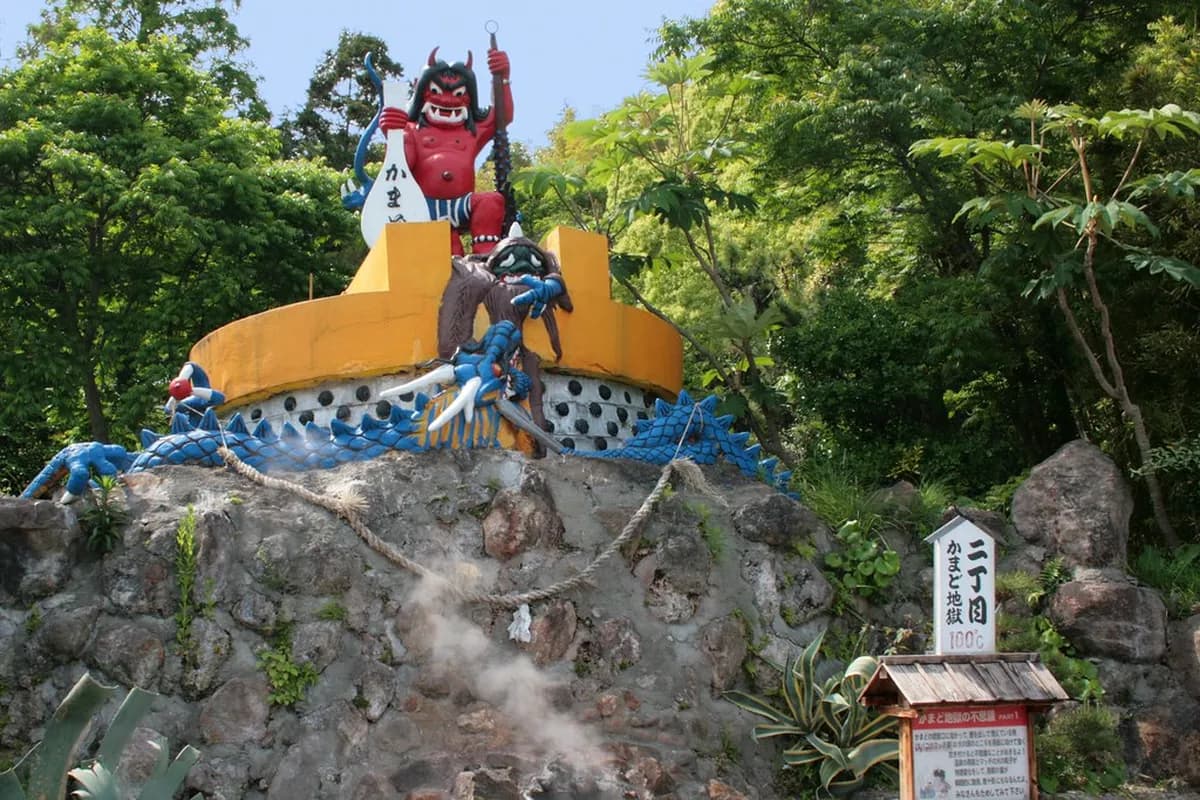
Beppu is home to some of the most memorable geothermal sights in Japan, but the key rule is simple: the "hells" are viewing springs, not bathing onsen. Kamado Jigoku is the most varied stop on the Beppu Jigoku Meguri circuit, combining six hot spring displays, steam demonstrations, foot baths, and quick geothermal snacks in one compact site.
Travelers visiting the city of Beppu usually start at Beppu Station, pick up a bus route map, and ride toward the steam-filled Kannawa district. You can also use the free hand onsen outside the station as a low-effort first taste of Beppu before heading uphill.
This 2026 Kamado Jigoku (Cooking Pot Hell) visitor guide focuses on the practical decisions that matter on the ground: when to go, whether the Hells Pass is worthwhile, how to use the Kamenoi buses, what to eat, and how to avoid common itinerary mistakes.
What Are the Beppu Hells?
The Hells of Beppu, known locally as Jigoku Meguri, are seven geothermal attractions where visitors view boiling pools, colored mineral water, mud vents, and a natural geyser. They are different from bathing onsen because the spring water is far too hot for direct contact. Most are clustered in Kannawa, with Chinoike Jigoku and Tatsumaki Jigoku set a little farther north.
Beppu itself feels like a working hot spring city rather than a single resort complex. Steam rises from drains, ryokan kitchens, and hillside vents, especially around Kannawa. If you want the wider city context before planning where to stay, start with our Beppu guide for first-time visitors.
You do not need to visit every hell to understand the experience. Two or three carefully chosen stops can be enough for a short Beppu stay, while the full seven-site circuit works best if you have a half day and enjoy comparing the geology, colors, and atmosphere of each location.
Must-See Kamado Jigoku Attractions
Kamado Jigoku translates to Cooking Pot Hell and is also sometimes rendered as Furnace Hell. The name comes from the old practice of using the steam to cook offerings for nearby Kamado Hachiman Shrine. Its main advantage is density: you can see several types of hot spring activity without walking between separate gates.
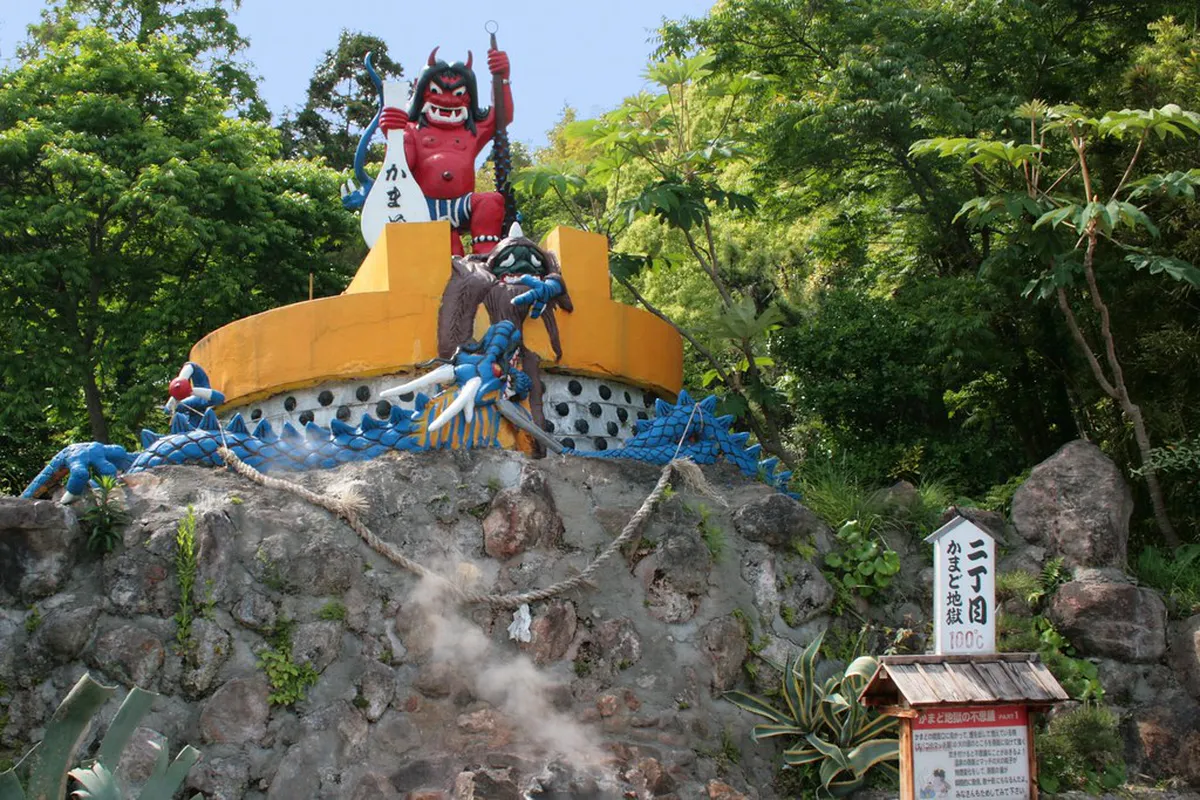
The ponds range from milky white and bubbling mud to a vivid blue similar to Umi Jigoku. The color-changing Kamado Jigoku pool can shift with sunlight, temperature, and mineral conditions, so it may look different from one visit to the next. Staff demonstrations often use smoke to make steam movement visible over the hot water.
Kamado Jigoku offers free hand baths and foot baths — save these for the end of your visit so you can soak comfortably before catching your next bus back toward Beppu Station.
Kamado Jigoku is also one of the easiest hells for families because the route is short and the interactive stations break up the viewing. Keep children close to the railings, do not touch the display water, and save the foot bath for the end so you are not walking around with damp feet.
- The cobalt blue pond
- Feature: Deep blue water
- Temperature: 90 degrees Celsius
- Best for: Photography
- The bubbling mud vents
- Feature: Thick grey mud
- Activity: Steam demonstrations
- Best for: Science fans
- The color-changing spring
- Feature: Shifts blue to green
- Reason: Mineral concentration
- Best for: Repeat visits
How to Get to Kamado Jigoku (Kamenoi Bus Pass)
Reaching Kamado Jigoku is straightforward from Beppu Station. Use the West Exit bus terminal and look for the Kamenoi Bus ticket counter before boarding. Staff can usually point you to the correct platform, and a printed route map is still useful because some buses continue beyond Kannawa while others loop back toward the station.
Purchasing a one-day Kamenoi Bus Pass is best if you plan to visit several hells, continue to Myoban for Okamotoya, or return to the station after an onsen stop. The pass usually costs less than paying separate fares for three or more rides, so it is less valuable only if you are taking a taxi one way or seeing a single attraction.
Board bus number 5 or 7 for the Kannawa area; bus 41 can also work depending on timing. The ride usually takes about twenty minutes, then Kamado Jigoku is a short walk from the Kannawa stop through narrow streets with visible steam vents. Use the Hells of Beppu (Google Maps) pin to confirm the final walking path.
Pro tip: Buy the pass before boarding if your day includes Kamado Jigoku, Umi Jigoku, Chinoike Jigoku, and a return to Beppu Station. If you only visit Kamado Jigoku and leave by taxi, individual fares may be simpler.
- Buy your bus pass
- Where: Beppu Station West Exit
- Cost: 900 Yen (Adults)
- Duration: One full day
- Board the loop bus
- Line: Numbers 5, 7, or 41
- Frequency: Every 15-20 minutes
- Stop: Kannawa Station
- Walk to the entrance
- Time: About 5 minutes
- Terrain: Slight slopes and narrow streets
- Mistake to avoid: Do not get off at Beppu Station East Exit expecting the main hells to be walkable
Planning Your Itinerary: Timing and Tickets
Most visitors spend 45 to 60 minutes at Kamado Jigoku, including the steam demonstrations, photos, a foot bath, and a snack. A two-hell visit can fit into a relaxed morning, while the full Beppu Jigoku Meguri circuit needs at least four hours once bus travel and waiting time are included. If Beppu is only a day trip, start early and keep lunch flexible.
A combination ticket known as the Hells Pass is available at the entrance of any participating site. This pass grants entry to all seven hells for a discounted price compared to buying single tickets. If you only plan to see two or three, it is cheaper to pay the individual entry fees at each gate.
The common mistake is treating all seven stops as equal priorities. Kamado Jigoku gives the broadest overview, Chinoike Jigoku is the best contrast for its red water, and Tatsumaki Jigoku is worth timing around the geyser eruption cycle. Umi Jigoku remains the classic blue-pond photo stop if you want the iconic image.
| Hell | Main feature | Best for | Time needed |
|---|---|---|---|
| Kamado Jigoku | Six pools, steam shows, snacks | Families and first-timers | 45-60 minutes |
| Umi Jigoku | Large cobalt blue pond | Classic photos | 30-45 minutes |
| Oniishi Bozu Jigoku | Shaven-head mud bubbles | Geology fans | 25-35 minutes |
| Shiraike Jigoku | Pale pond and garden setting | Quieter pacing | 20-30 minutes |
| Oniyama Jigoku | Crocodile displays | Special interest stops | 20-30 minutes |
| Chinoike Jigoku | Red mineral pond | Color contrast | 25-35 minutes |
| Tatsumaki Jigoku | Natural geyser | Timed eruption viewing | 20-40 minutes |
Where to Stay in Beppu Near the Hells
For one night in Beppu, Kannawa is the most atmospheric base because you are already near Kamado Jigoku, Kannawa Onsen, steam-cooking facilities, and several other hells. Choose this area if you want evening walks through steam vents and a ryokan-style stay.
Luxury travelers often prefer hillside resorts such as ANA InterContinental Beppu Resort and Spa, where the appeal is the bay view and resort onsen rather than step-out sightseeing. Hotels around Beppu Station, including business hotels and bay-facing properties such as REX Hotel Beppu, are more practical for train arrivals, restaurant choice, and early departures.
How many days do you need for Beppu? One full day is enough for Kamado Jigoku, two or three other hells, a steam-cooked meal, and one bathing onsen. Stay two days if you also want Myoban, Rakutenchi, Beppu Park, or a slower ryokan experience without rushing between buses.
Stop 2: ‘Hell-Steamed’ Pudding and Karaage at Okamotoya
No visit to the geothermal district is complete without considering the famous Okamotoya shop in Myoban. Its custard pudding is steamed with natural volcanic heat, giving it a firm, silky texture and a bittersweet caramel finish that feels different from standard convenience-store pudding.
The shop sits on a hillside with views toward Myoban Bridge, which is why it works best as a deliberate second stop rather than a quick detour. In addition to pudding, visitors often order steamed eggs and karaage, making it a useful lunch break between Kannawa and the higher Myoban area.
Buses from the Kannawa area stop near the shop, but service thins compared with the main station-to-Kannawa route. Check the return time before you order, and avoid arriving close to closing on weekends because popular items can sell out earlier in the afternoon.
Stop 5: Steam Your Own Meal Jigoku Mushi Style
Cooking with geothermal steam is a traditional method used throughout the Kannawa district for centuries. Kamado Jigoku has quick snack stalls, while nearby jigoku-mushi kitchens let you steam a fuller meal using the same local heat culture.
The process is simple but easier if you know the sequence. Choose ingredients from the menu or vending machine, collect your basket, put on the heavy gloves, lower the basket into the steaming chamber, and set the timer according to the food type. Staff will usually explain the basics, but the steam is forceful, so move slowly and keep children away from the lid.
Vegetables, eggs, buns, pork, and seafood all work well because the steam keeps them moist without adding oil. The flavor is clean and lightly mineral, so condiments matter; use salt, ponzu, or dipping sauces provided by the facility instead of expecting a heavily seasoned dish.
- Common food prices
- Vegetable Set: 800-1200 Yen
- Seafood Platter: 1500-2000 Yen
- Steamed Buns: 300 Yen
- Typical cooking times
- Leafy greens: 5 minutes
- Root vegetables: 15 minutes
- Hard boiled eggs: 8 minutes
- Kamado Jigoku snack priorities
- Onsen tamago if you want the classic hell-boiled egg
- Steamed buns for a quick warm snack
- Corn or sweet potato when available for something easy to share
Hidden Gem: Beppu Cable Car to Rakutenchi
The Beppu Cable Car offers a nostalgic ride up the mountainside to Rakutenchi Amusement Park. The real reason to add it is perspective: from above, you can see how steam rises across the city rather than only from the fenced pools of the hells.
Plan this as a separate half-day add-on, not something to squeeze between every hell. The ride and viewpoint are especially rewarding in cherry blossom season, autumn foliage, or clear winter air when Beppu Bay is visible. Families may also appreciate that Rakutenchi gives children a more playful break after several geothermal viewing sites.
Check the Beppu Cable Car (Google Maps) location and operating status before you commit, because timing can vary by season and weather. If your Beppu stay is only one day, prioritize Kamado Jigoku and the main Kannawa route first, then add Rakutenchi if your afternoon remains open.
After the Hells: Exploring Kannawa's Steam District
After finishing the hells, slow down in Kannawa rather than rushing straight back to the station. The district is part attraction, part lived-in onsen neighborhood, with steam rising from gutters, cooking vents, and small bathhouses. This is where Beppu feels most distinctive.
One of the best ways to end your day is with a visit to Hyotan Onsen for an actual soak. Keep the etiquette distinction clear: at Kamado Jigoku you view the hot spring displays and use only designated foot baths, while at Hyotan Onsen you wash first, enter the bathing area clean, and follow the facility rules for shared baths.
If you try the sand bath, expect a more guided process than a normal soak. Staff position the warm sand over your body, you remain still for the instructed time, and then rinse thoroughly before entering other baths. Bring or rent a towel, hydrate before and after, and skip sand bathing if heat exposure is a concern.
Is Kamado Jigoku Worth It? (Final Verdict)
Kamado Jigoku is worth it for most first-time visitors because it is the most well-rounded of the Beppu hells. Families get demonstrations and snacks, photographers get several colors and steam textures, and short-stay travelers get a compact overview without committing to the full circuit.
If you only have time to visit one hell, choose Kamado Jigoku for variety. Choose Umi Jigoku if your priority is the single most iconic blue-pond photo, or choose Chinoike Jigoku if you want the strongest visual contrast. For geology-focused travelers, pair Kamado with Tatsumaki Jigoku to see the geyser.
The main accessibility note is that Kamado Jigoku is relatively compact but still includes outdoor paths, wet surfaces, railings, crowds, and some narrow movement around viewing areas. Wear shoes with grip, carry a small towel for foot baths, and visit early if you need more space to move at an unhurried pace.
Frequently Asked Questions
How long does it take to see Kamado Jigoku?
Most visitors spend between 45 and 60 minutes exploring the six ponds and foot baths. This includes time for the steam demonstrations and a quick snack. If you plan to visit all seven hells, allow at least four hours for the full circuit including bus travel.
Can you bathe in the water at Kamado Jigoku?
No, the water in the main ponds is nearly 100 degrees Celsius and is for viewing only. However, the facility provides several safe foot baths where you can soak your feet in tempered mineral water. For a full bath, visit the nearby Hyotan Onsen instead.
Is the Hells Pass worth the money?
The Hells Pass is a great value if you plan to visit at least five of the seven springs. It costs significantly less than buying individual tickets for each site. If you only want to see Kamado Jigoku and one other, paying separately at the gate is cheaper.
What is the best time to visit the hells?
Arriving right when the gates open at 8:00 AM is the best way to avoid large crowds. Weekdays are generally much quieter than weekends or national holidays. Late afternoon is also a pleasant time as the lighting becomes ideal for taking photos of the colorful ponds.
What should I eat at Kamado Jigoku?
You must try the 'onsen tamago' or eggs boiled in the natural hot spring water. The 'hell-steamed' meat buns and corn are also popular and very delicious snacks. Many visitors enjoy these treats while relaxing their feet in the public foot baths near the exit.
The color-changing pool at Kamado Jigoku shifts its hue depending on mineral concentration and sunlight — it may look different from travel photos, which is part of the appeal rather than a disappointment.
Kamado Jigoku offers a fascinating look at the geothermal power that makes Beppu so famous. From the color-changing ponds to the delicious steamed snacks, there is something for every traveler to enjoy. Using the Kamenoi Bus Pass makes navigating the district both easy and affordable for international guests.
Plan your 2026 trip to include this unique cooking pot hell for an unforgettable Japanese experience. The combination of natural beauty and traditional culture creates memories that will last a lifetime. Be sure to bring your camera and an appetite for some of the best geothermal food in the country.
Official information & further reading: japan-guide.com reference.


