The Tokyo Imperial Palace sits at the very center of the city, a 10-minute walk from Tokyo Station's Marunouchi Central Exit. Three distinct ways to visit exist, and confusing them is the most common 2026 mistake: the free guided palace tour (Tuesday-Saturday, 10:00 and 13:30, book online at kunaicho.go.jp), the free East Gardens (separate Tuesday-Sunday hours, no booking), and the rare Jan 2 + Feb 23 inner palace openings when the Imperial Family appears on the balcony. Every other day, the inner palace itself is closed to the public.
Our tokyo imperial palace visitor guide covers booking logistics, the Nijubashi Bridge photo spot, the no-inside-photography rule for the guided tour, and what to skip if you only have a morning. All three access types are free of charge in 2026. The palace is the primary residence of the Emperor and Empress, so security protocols and same-day cancellations are part of the experience.
The History of Edo Castle and the Imperial Palace
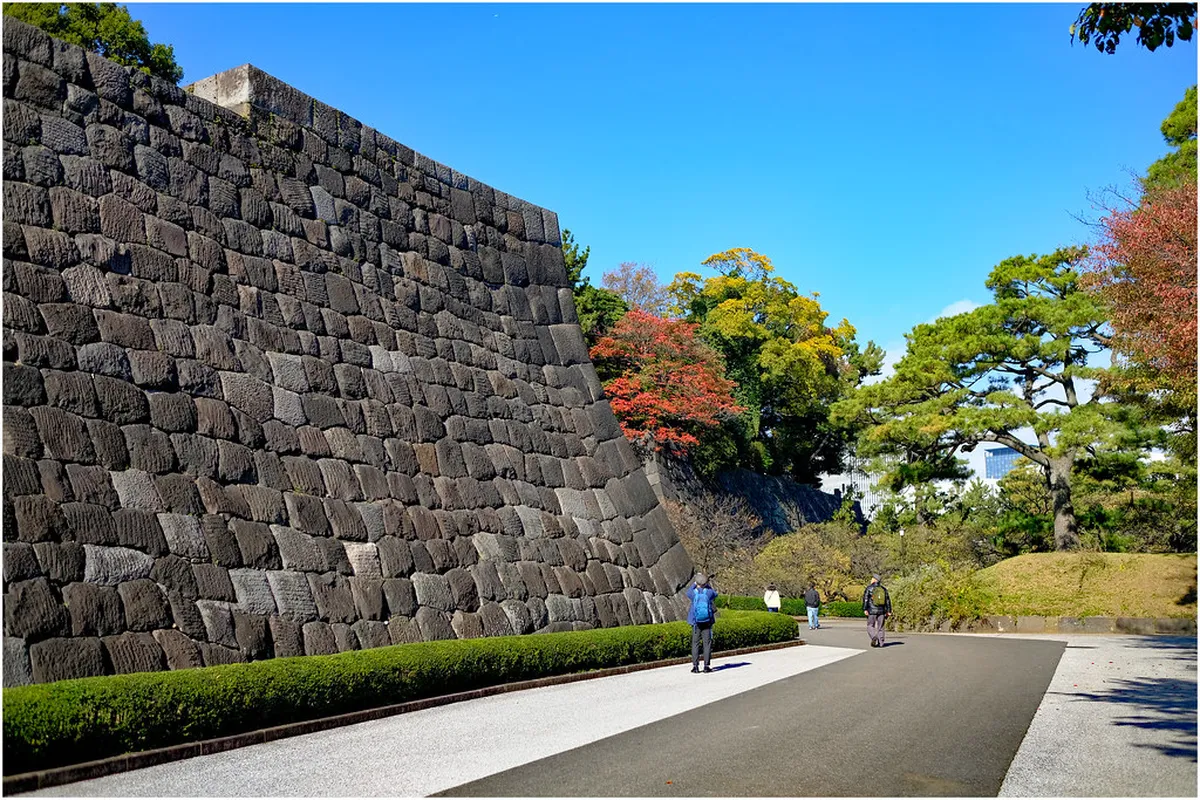
The site of the current palace was once the seat of the Tokugawa Shogunate during the Edo period. It served as the massive Edo Castle, which was the largest fortress in the world at its peak. The shogun ruled Japan from this location for over two hundred and fifty years of relative peace. Massive stone walls and deep moats still remain as evidence of this powerful samurai history.
In 1868, the Meiji Restoration shifted the center of power from the shogun back to the Emperor. The capital moved from Kyoto to Tokyo, and the former castle became the new Imperial residence. Most of the original wooden castle structures were lost to fires or wartime destruction over the decades. Modern reconstructions now blend traditional Japanese aesthetics with resilient materials to honor the royal family's legacy.
Visitors can identify specific architectural markers that distinguish different eras of the palace's long timeline. The rugged, hand-cut stones of the foundation walls represent the early seventeenth-century engineering of the shogunate. In contrast, the sleek bridges and rebuilt gates showcase the Meiji-era efforts to modernize the imperial image. Walking through the grounds feels like traveling through a visual timeline of Japan's political transformation.
Exploring the Imperial Palace East Gardens
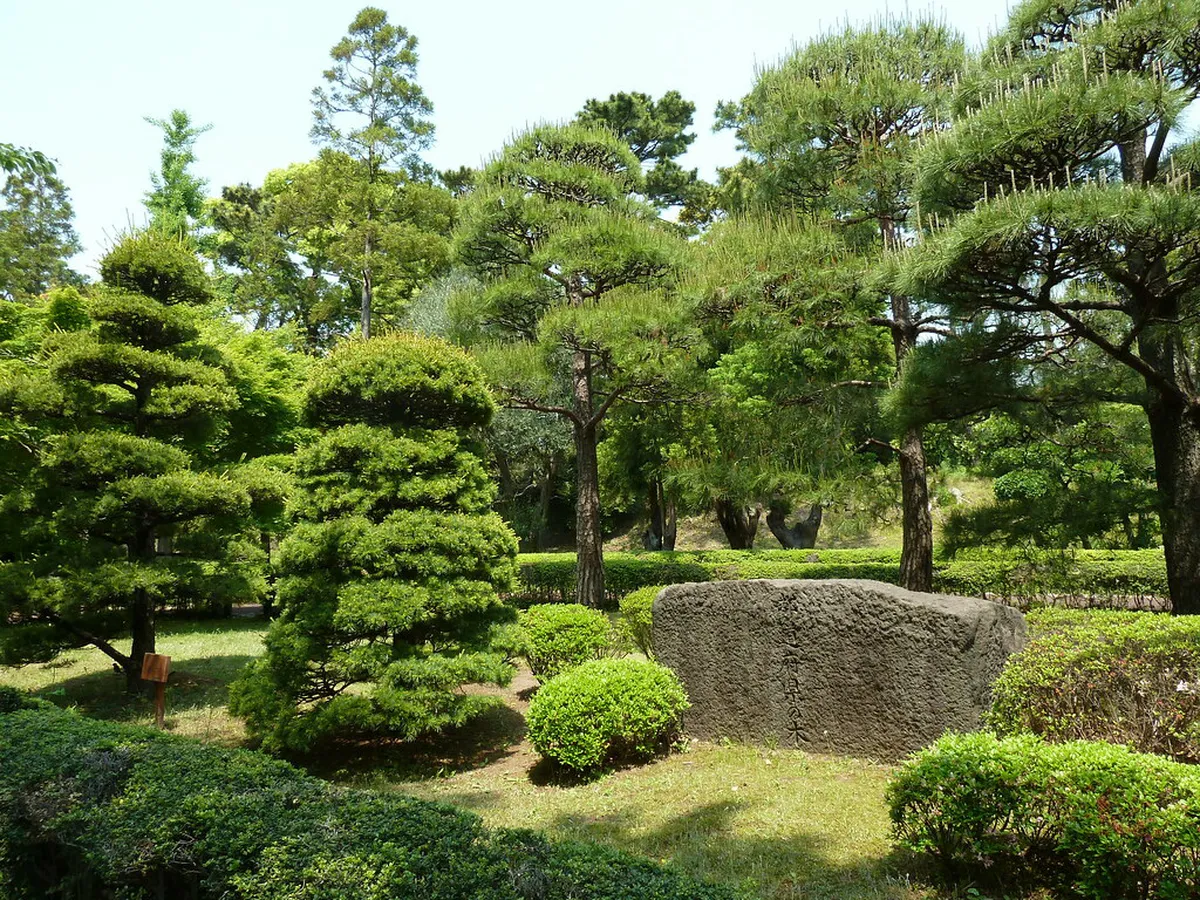
The Imperial Palace East Gardens (Kōkyo Higashi Gyoen) are the most accessible part of the palace for casual visitors and require no booking. The gardens are open Tuesday through Sunday — note this is different from the guided tour schedule (Tue-Sat). Hours shift seasonally: 09:00-17:00 in March-April and September-October, 09:00-18:00 May-August, and 09:00-16:30 November-February. Entry through Ōte-mon, Hirakawa-mon, or Kita-hanebashi-mon gates is free, and you will receive a plastic entry token at the gate which you must return upon exiting.
Inside the gardens, the Ninomaru Garden offers a stunning example of a traditional Japanese strolling landscape. This area features a pond with colorful koi fish and seasonal flowers like azaleas and irises. It provides a much quieter atmosphere compared to other popular spots like Shinjuku Gyoen during peak hours. The garden design aims to reflect the changing seasons with meticulous care and precision.
You should also climb the massive stone foundation where the main castle keep once stood. The keep was destroyed by fire in 1657 and was never fully rebuilt by the shogunate. From the top of this platform, you can enjoy a wide view of the surrounding skyscrapers in Marunouchi. This contrast between ancient ruins and modern glass towers defines the unique skyline of central Tokyo.
Suwa no Chaya Teahouse and Quiet Corners of the East Gardens
Just beyond the Ninomaru Garden pond, a quieter detour leads to Suwa no Chaya, a relocated Edo-period teahouse structure that now serves as a shaded rest pavilion rather than an operating teahouse — no food or drink is sold here, so pack water or a snack before entering, since there are no vendors inside the East Gardens gates. The building's dark wood lattice and deep eaves make it one of the more photogenic rest stops on the grounds, and it rarely draws a crowd even when the lawns near the castle keep foundation are busy.
Nearby, Shiomi-zaka ("Tide-Watching Slope") climbs a gentle rise that, during the Edo period, offered a direct view of Tokyo Bay before landfill and skyscrapers closed off the sightline. A small stand of plum trees, Ume Rin, blossoms here from late January into February, weeks ahead of the cherry season that packs the wider palace grounds — a good option if you are visiting in winter and want color in the gardens.
Benches line the connecting path between Suwa no Chaya and the Ninomaru Garden, and the nearest restrooms sit close to the Shiomizaka entrance. Because the loop is largely flat gravel, it suits visitors who want a slower half-hour after climbing the castle foundation platform, adding only about ten extra minutes to the standard East Gardens route.
How to Apply for Guided Tours of the Inner Grounds
Accessing the inner grounds requires joining an official guided tour organized by the Imperial Household Agency. Tours run Tuesday through Saturday at 10:00 AM and 1:30 PM, are completely free, but require you to register your passport details in advance for security. Reserve through the Official Imperial Household Agency Tour Booking site — online slots open one month ahead and often fill within days during cherry blossom (late March-early April) and autumn (November).
If you miss the online booking window for the guided tour, walk-in numbered tickets are distributed at Kikyo-mon Gate from 09:00 for the morning session and 12:30 for the afternoon. Arrive at least 30–60 minutes before distribution opens; during cherry blossom and autumn weekends, tickets can run out within 15 minutes.
If you miss the online window, try the same-day walk-in strategy at Kikyo-mon Gate. The agency distributes a limited number of walk-in numbered tickets starting at 9:00 AM for the morning session and 12:30 PM for the afternoon. Arrive at the gate at least 30 to 60 minutes before distribution opens — queues form earliest during cherry blossom or autumn weekends and walk-in tickets can run out within 15 minutes.
The guided tour lasts approximately 75 minutes and follows a strict 2.2-kilometer paved loop through the outer inner grounds. You will see the exterior of the Kyūden (palace halls), the Nijubashi Bridge from inside the gates, and the famous Fushimi-yagura watchtower. Commentary is in Japanese, but free multi-language audio devices and a smartphone app are available. No photography is allowed inside the palace buildings, although the outdoor route is photography-friendly.
Special Dates: Seeing the Imperial Family
There are only two days each year when the inner palace plaza opens to the public and the Imperial Family appears on the glass-shielded Chōwaden Reception Hall balcony — these are the only days the inner palace itself is open. The New Year's Greeting (Shinnen Ippan Sanga) on January 2 draws roughly 70,000 visitors across five separate balcony appearances between 10:10 AM and 2:00 PM. The Emperor's Birthday on February 23 (Emperor Naruhito's birthday) features three morning appearances around 10:20-11:20 AM only.
Security protocols for these special dates are extremely strict and involve multiple checkpoints. You should expect long wait times in the outer gardens before being allowed into the main plaza. Visitors are often organized into groups and must follow a specific entry and exit route. Avoid bringing large bags or prohibited items to ensure a faster screening process at the gates.
Participating in an Ippan Sanga event is a rare cultural experience for any traveler in Tokyo. The atmosphere is filled with national pride as people wave small Japanese flags in unison. Check the official schedule in late 2025 to confirm the exact appearance times for the following year. Plan to arrive several hours early if you want to be close to the balcony for a clear view.
Iconic Landmarks: Nijubashi Bridge and Fushimi-yagura
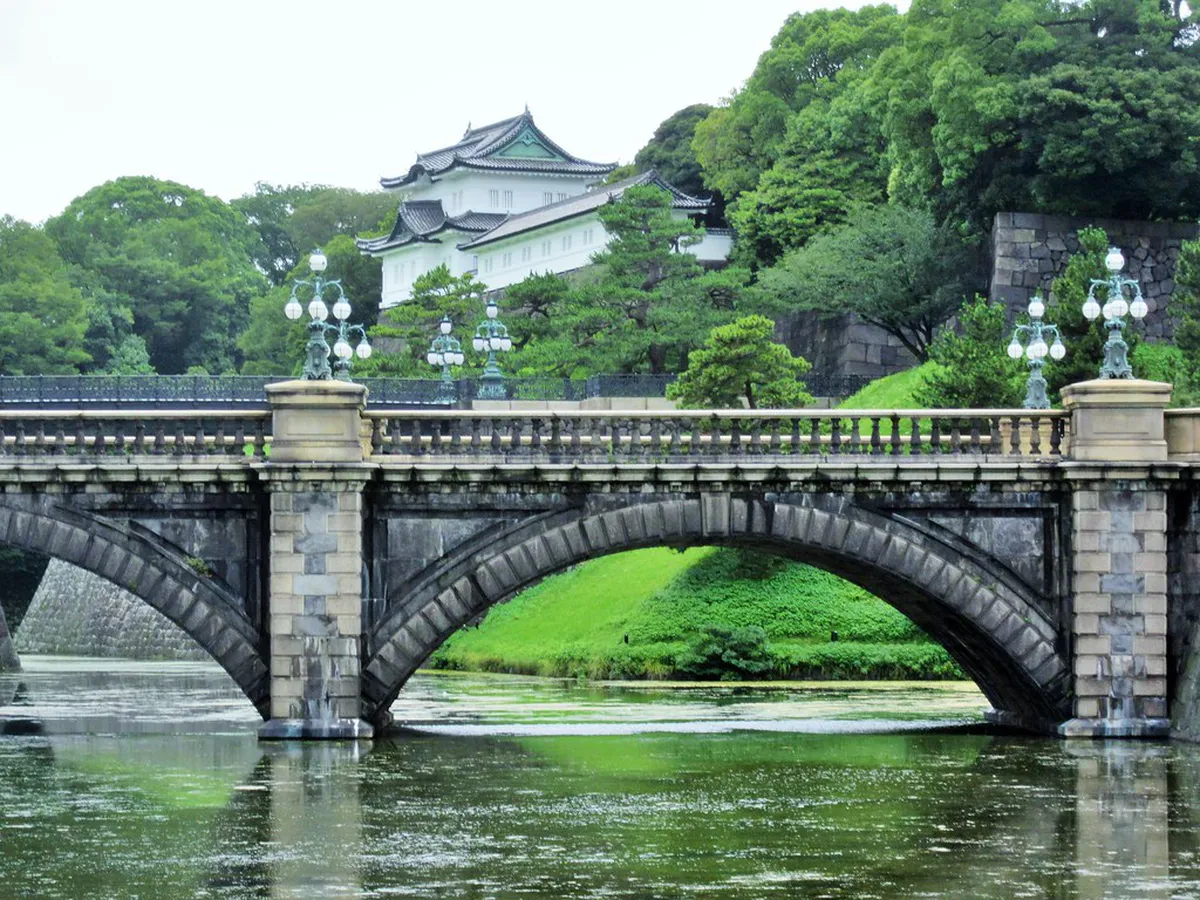
The Nijubashi Bridge is arguably the most famous photography spot in all of Tokyo. The name 'Double Bridge' refers to two separate spans crossing the inner moat — the stone Meganebashi (Eyeglass Bridge) in the foreground and the iron Nijubashi behind it create the classic imperial silhouette. The best public viewing angle is from the wide gravel plaza inside Kokyo Gaien National Garden, an easy 5-minute walk from Tokyo Station's Marunouchi Central Exit through the Wadakura-mon gate.
For the best reflection shots, position yourself near the small pine grove on the south side of the plaza early morning (before 8:30 AM) when the moat water is still and the light hits the white stone arches at a low angle. From this same spot you can frame the Fushimi-yagura watchtower perched on the stone wall behind the bridges — the only original Edo Castle structure still standing on the inner grounds, reportedly relocated from Fushimi Castle in Kyoto in the early 1600s. Tripods are not permitted inside the plaza, so plan for handheld shots.
Walking along the outer moat allows you to appreciate the sheer scale of the palace defenses. The massive granite blocks were transported from distant provinces by various feudal lords as a show of loyalty. Some stones even bear the engraved marks of the samurai clans who provided them. These details offer a hidden layer of history for those who take the time to look closely. To build your complete Tokyo itinerary, check out our guide to the best things to do in Tokyo and plan your full Tokyo trip.
Bonus Attractions: Museums and Parks Near the Palace
The area surrounding the palace is home to several world-class cultural institutions. You can visit the National Museum of Modern Art, Tokyo for a look at contemporary Japanese creativity. It is located just north of the East Gardens near the Takebashi subway station. This museum provides a perfect indoor break if the weather becomes too hot or rainy.
Kitanomaru Park is another nearby green space that offers a more relaxed, local vibe. It houses the Nippon Budokan, a famous indoor arena used for martial arts and concerts. During the spring, the Chidorigafuchi moat along the park's edge becomes a top spot for cherry blossoms. It is much less formal than the palace gardens and is a great place for a picnic.
If you enjoy large open spaces, Ueno Park is only a short train ride away from the palace. However, the immediate Wadakura Fountain Park offers a closer spot to rest your feet. The park features beautiful water displays and a quiet cafe with views of the palace walls. It is an ideal location to wait if you have time before your scheduled guided tour.
Chidorigafuchi Moat: Boat Rentals and a Quieter Cherry Blossom Walk
On the western edge of the palace grounds, the Chidorigafuchi Moat offers a quieter cherry-blossom view than the crowded Nijubashi plaza, plus an activity most first-time visitors miss entirely: renting a rowboat. The small boathouse rents rowboats and pedal boats for roughly ¥500-800 per 30 minutes, cash only, on a first-come basis with no advance booking. Boats typically run from late March through November, weather permitting, and the pier closes for the winter off-season.
During the same late March-early April window when the guided palace tour and Ninomaru Garden fill with visitors, the 700-meter path along Chidorigafuchi turns into a tunnel of overhanging sakura branches, with paper lanterns lighting the moat after dark for the week or two of peak bloom. Outside that window, the path is a genuinely calm walk shaded by cherry and pine trees, with almost none of the queueing you will find at the East Gardens gates or Kikyo-mon.
Chidorigafuchi sits about a 15-minute walk from Kudanshita Station, on the same side of the grounds as Kitanomaru Park, so it pairs naturally with the museums and green space covered above. Outside the cherry blossom festival dates, the moat path itself has no gate and no closing time, though the boat pier keeps to daylight hours only.
Practical Logistics: Access, Hours, and Contact Info
The palace is centrally located and easily reached from almost anywhere in the city. From Tokyo Station's Marunouchi Central Exit, it is a flat 10-minute walk west to Kikyo-mon Gate (for guided tours) or about 12 minutes to Ōte-mon Gate (for the East Gardens). Otemachi Station (Exit C13b) is closer to Ōte-mon — just 5 minutes — and serves five different subway lines including the Marunouchi, Tozai, Chiyoda, Hanzomon, and Mita lines. Using public transit is much faster than a taxi through Marunouchi traffic.
The East Gardens (Tue–Sun) and the guided tour (Tue–Sat) have different days and hours — they are not the same. The East Gardens are closed on Mondays and Fridays; the guided tour is closed Sundays, Mondays, and national holidays. Always check kunaicho.go.jp before travelling, as imperial ceremonies can trigger ad-hoc closures.
| Access type | Days open | Hours | Cost |
|---|---|---|---|
| East Gardens | Tue–Sun (closed Mon & Fri) | 09:00–16:30 (Nov–Feb) / 17:00 (Mar–Apr, Sep–Oct) / 18:00 (May–Aug) | Free |
| Guided palace tour | Tue–Sat (closed Sun, Mon, national holidays) | 10:00 and 13:30 | Free; book at kunaicho.go.jp |
| Inner palace opening | Jan 2 and Feb 23 only | Multiple balcony appearances | Free; expect large crowds |
Hours and closures differ between the two free access types — read them carefully. East Gardens are open Tuesday-Sunday 09:00, closing 16:30 (Nov-Feb), 17:00 (Mar-Apr / Sep-Oct), or 18:00 (May-Aug); last admission is 30 minutes before closing and the gardens are closed Mondays and Fridays. Guided tours run Tuesday-Saturday at 10:00 and 13:30 (closed Sundays, Mondays, and national holidays — except the Jan 2 and Feb 23 Ippan Sanga openings). Both are free of charge for all domestic and international visitors. Always verify the current schedule on kunaicho.go.jp before you start your journey, as imperial ceremonies can trigger ad-hoc closures.
Finding a quick lunch nearby is easy if you head toward the Marunouchi office buildings. The basement levels of the Shin-Marunouchi Building offer dozens of high-quality dining options. You can find everything from quick ramen shops to upscale sushi restaurants within a five-minute walk. These areas provide a comfortable, air-conditioned environment to recharge after exploring the sun-exposed palace grounds.
Recommended Imperial Palace Walking Tours
Choosing the right way to see the palace depends on your interest in history and your budget. The free official tour is best for those who want to see the inner grounds without spending money. If you prefer a more flexible pace, consider downloading the Free Imperial Palace Audio Guide App. This app allows you to learn about the landmarks while walking the public perimeter at your own speed.
Private guided tours often combine a palace visit with other nearby historic districts. Many tours start at the palace and then move to the Nihombashi area for traditional food experiences. This is a great way to see how the 'Old Tokyo' of the shoguns connects to modern commerce. Exploring Tokyo with a local expert helps you spot details that most tourists miss.
- Official Agency Tour
- Type: Group walk
- Best for: Restricted areas
- Where: Kikyo-mon Gate
- Cost: Free
- Self-Guided Audio App
- Type: Digital guide
- Best for: Flexibility
- Where: All public areas
- Cost: Free
- Private Heritage Tour
- Type: Professional guide
- Best for: Deep history
- Where: Custom starting point
- Cost: Paid
Where to Stay: Best Hotels Near the Palace
The Marunouchi district offers some of the most luxurious accommodation options in the entire city. Staying here puts you right next to the palace moats and the high-end shopping of Ginza. These hotels provide unparalleled views of the palace greenery against the urban skyline. Expect a very quiet and professional atmosphere in this part of the city after business hours.
Budget-conscious travelers should look toward the Kanda area just north of the palace. Kanda features many business hotels that offer clean, compact rooms at much lower prices. The neighborhood is lively with local izakayas and is only one train stop from Tokyo Station. It provides a great balance between affordability and easy access to the imperial grounds.
If you want a more spiritual or traditional vibe, consider staying near the Meiji Shrine area instead. However, staying within walking distance of the palace allows you to enjoy early morning walks before the crowds arrive. The perimeter of the palace is a famous five-kilometer jogging route that is popular with locals. Waking up early to see the sunrise over the palace moats is a highlight for many visitors.
Frequently Asked Questions
How old is the Tokyo Imperial Palace?
The current palace buildings were completed in 1968, but the site has been used for centuries. It was originally the location of Edo Castle, which was built in 1457. You can still see original stone foundations from the 1600s throughout the East Gardens.
Can you go inside the Tokyo Imperial Palace buildings?
You cannot enter the actual residential buildings where the Imperial Family lives. However, the guided tours allow you to walk through the inner grounds and see the exteriors of the palace halls. For a view of modern Tokyo architecture, visit the Tokyo Skytree after your tour.
Who lives in the Tokyo Imperial Palace?
The palace is the primary residence of the Emperor of Japan and the Empress. Other members of the Imperial Family also live within the larger palace complex. The Emperor carries out his official duties and hosts foreign dignitaries within the palace halls.
How much time should you plan for a visit?
You should plan for at least two to three hours to see the East Gardens and the main bridges. If you join an official guided tour, add another 90 minutes for the security check and the walk. Most visitors spend a full morning exploring the area.
Do I need to book tickets in advance for the Imperial Palace?
No tickets are needed for the public East Gardens, which are free to enter. However, the guided tours of the inner grounds require a reservation or a same-day walk-in ticket. Booking online a few weeks in advance is the most reliable way to secure a spot.
The Tokyo Imperial Palace is a must-visit destination in 2026 for anyone interested in Japan's history and royal culture. Whether you walk the free East Gardens (Tue-Sun), join the free guided palace tour (Tue-Sat, 10:00 or 13:30), or time your visit for the rare Jan 2 or Feb 23 inner palace openings, the site offers a peaceful escape from the city. Remember to check kunaicho.go.jp for closures and book your guided tour at least a month early for cherry blossom season. Use our tokyo imperial palace visitor guide to navigate the grounds with confidence and discover the hidden stories of Edo Castle.