Standing 634 metres tall, Tokyo Skytree is the tallest structure in Japan and the world's second-tallest tower. Two paid observation decks — the Tembo Deck at 350m and the Tembo Galleria at 450m — deliver some of the most expansive panoramic views on the planet, with Mt. Fuji visible on clear winter days. This 2026 tokyo skytree visitor guide covers ticket prices (online booking saves the JPY 500 same-day fee), how to choose between the two decks, the best photography window, and how to combine the tower with Solamachi shopping and the Sumida Aquarium for a half-day Tokyo itinerary.
Where is Tokyo Skytree?
The tower is located in Sumida City, which sits on the eastern side of the capital. It serves as the centerpiece of a larger complex known as Tokyo Skytree Town. You can find the exact coordinates at the Tokyo Skytree Google Maps Location for easy navigation. This area feels slightly more traditional than the neon-lit streets of Shinjuku.
Sumida is famous for its rich history and proximity to the Sumida River. The tower stands just across the water from the historic Senso-ji temple in Asakusa. Visitors often combine these two major sites into a single morning or afternoon itinerary. The contrast between the ancient temple and the modern tower is striking.
The surrounding neighborhood offers a mix of residential quiet and bustling commercial activity. Because it sits away from the main skyscraper clusters, the tower provides an unobstructed 360-degree view. You can see the urban sprawl stretching toward the horizon in every direction. This unique placement makes it a prime spot for photographers seeking depth.
Exploring the immediate vicinity reveals charming local shops and smaller shrines. Many travelers enjoy walking through the backstreets to reach the tower base. This approach allows you to see the structure grow larger as you get closer. It creates a sense of scale that you miss when arriving underground via the subway.
How to Get to Tokyo Skytree (Transport Options)
Reaching this landmark is simple thanks to Tokyo's efficient rail network. Two stations sit directly under the complex — pick based on which line you're transferring from. Oshiage Station (Tokyo Metro Hanzomon, Toei Asakusa, Keisei Oshiage lines) is the better choice if you're coming from Shibuya, Otemachi, or Narita Airport. The B3 exit feeds straight into the basement of Skytree Town, putting you under 5 minutes from the 4th-floor ticket counters with no street crossing.
Tokyo Skytree Station (Tobu Skytree Line) sits at the opposite end of the complex and is closer to the tower's main ground-level entrance. Use it if you're arriving from Asakusa — the ride is just two minutes and 150 yen. Walking from Asakusa across the Sumida River also takes about 15 minutes and gives you the classic photo of the tower reflecting in the water. Both stations land you inside Solamachi, so the difference is mostly which entrance you exit through.
Shuttle buses also operate from major hubs like Tokyo Station and Ueno. These Skytree Shuttles provide a direct, seat-guaranteed way to travel without navigating subway transfers. Fares are usually around 220 yen for adults, making it an affordable choice. Check the latest schedules at the bus stops to ensure timely arrivals.
Taxis are readily available but can be expensive depending on your starting point. Use a taxi if you are traveling in a group or have limited mobility. Most drivers recognize the tower immediately, so communication is rarely an issue. For those with a JR Pass, note that the closest JR station is Kinshicho, requiring a short bus or walk.
- Direct Train Access to Oshiage Station
- Lines: Hanzomon, Asakusa, Keisei
- Exit: Direct basement connection
- Travel time: 15 mins from Tokyo
- Cost: Standard subway fare
- Tobu Skytree Line Access
- Station: Tokyo Skytree Station
- From: Asakusa Station
- Travel time: 2 minutes
- Cost: 150 yen
- Skytree Shuttle Bus Routes
- Pick up: Tokyo Station (North)
- Frequency: Every 20-30 minutes
- Travel time: 30 minutes
- Cost: 220 yen
Tokyo Skytree Tickets: Booking and Prices
Understanding the ticket system is crucial for a smooth visit. Choose between the Tembo Deck at 350m (the lower deck, with the famous glass floor) or a combo that adds the Tembo Galleria at 450m. In 2026, adult Tembo Deck tickets start at JPY 1,800 online; the combo with Galleria starts at JPY 3,000. Same-day walk-up tickets add a JPY 500 service fee on top — so online booking saves money and a separate queue.
Book online at least 24 hours ahead during cherry blossom (late March to early April), Golden Week (late April to early May), summer holidays (mid-July to August), and the Christmas-illumination window (December). Sunset slots routinely sell out 2-3 days in advance in these periods. Off-peak weekdays you can usually walk up, but the time-slot system still applies so morning slots fill first.
Online booking saves the JPY 500 same-day service fee. Foreign tourists can show a passport at the dedicated international counter on the 4th floor for a Fast Skytree Ticket that bypasses the main queue — worth it on peak holidays when standard queues exceed an hour.
Foreign tourists can buy the Fast Skytree Ticket at the dedicated international counter on the 4th floor by showing a passport. It carries a small premium over the standard fare and lets you bypass the main queue entirely — worth it during peak holidays when standard queues exceed an hour. Children, students, and seniors get tiered discounts, and combo passes that bundle the Sumida Aquarium or the Tokyo Subway 24/48/72-hour ticket offer the best value if you're staying nearby.
Tickets are non-refundable once you pass the gate. If the Tembo Galleria closes for high winds (common on typhoon-edge days), combo holders are usually refunded the difference or issued a re-entry voucher. Check the official tower visibility cam on tokyo-skytree.jp before leaving your hotel — it updates every 30 minutes.
The weather policy is the part most visitors don't know about. If clouds or heavy rain cut visibility to zero, the staff posts visibility signs at the 4th-floor entrance — but tickets remain non-refundable once you've passed the gate. If the upper Galleria closes for high winds (common on typhoon-edge days), combo holders are usually refunded the difference or issued a re-entry voucher. Check the official tower visibility cam on tokyo-skytree.jp before you leave your hotel — it updates every 30 minutes.
What to Expect at the Observation Decks
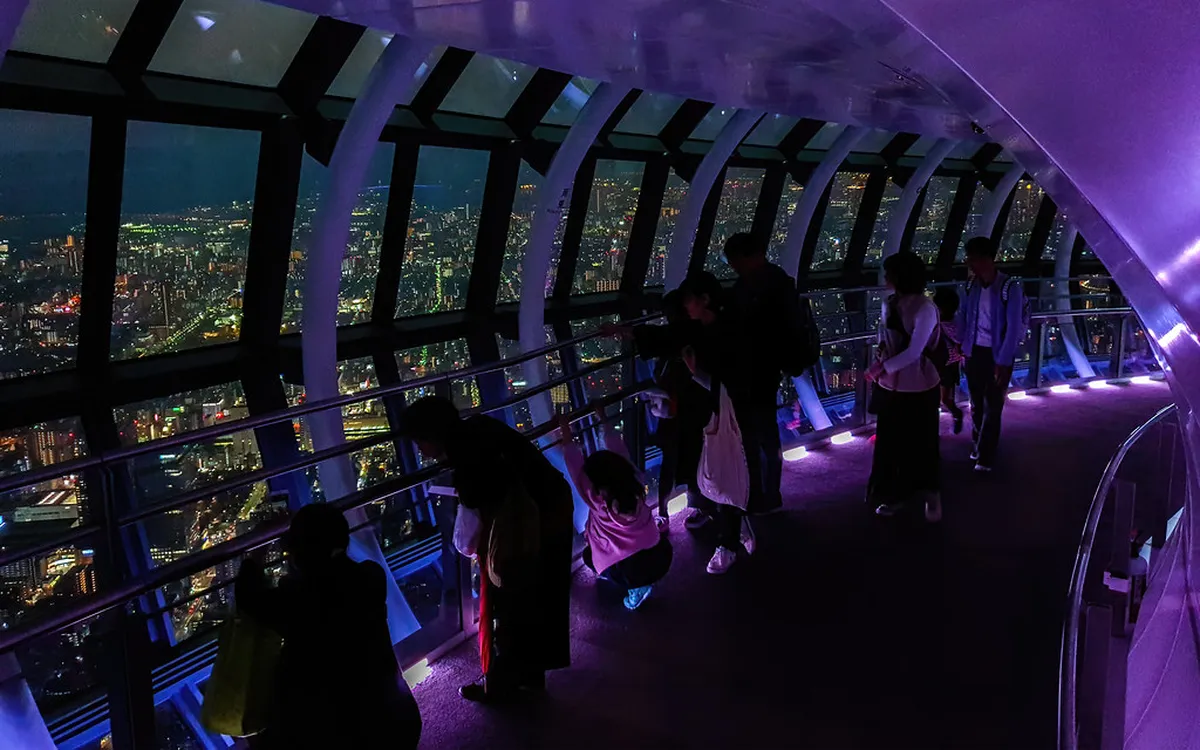
The journey begins with a 50-second elevator ride to the Tembo Deck at 350 meters — fast enough that your ears pop. The elevators themselves are a work of art, with seasonal Japanese motifs in each car (cherry blossoms, sunrise, summer festival, winter forest). Stepping out, the floor-to-ceiling windows wrap a full 360-degree view of the city, with digital displays helping you identify the Imperial Palace, Tokyo Bay, and Mt. Fuji on the western horizon.
The Tembo Deck's most photographed feature is the glass floor on the lower level (Floor 340). Standing on the thick laminated panes, you look straight down 340 meters at the lattice of steel below. The cafe and the Musashi Sky Restaurant also sit on this deck — book ahead if you want the sunset window seat.
The Tembo Galleria (450m) is a separate ticket and a separate elevator. It's a 110-metre spiralling glass tube that climbs from 445m to 451.2m around the outside of the tower, ending at Sorakara Point. The vibe is more exclusive (smaller crowds) and the height advantage is real if you want maximum Mt. Fuji line-of-sight, but views from the Tembo Deck alone are spectacular. Choose the Galleria combo if you're a photographer, you've come on a perfectly clear day, or this is a once-in-a-lifetime visit. Skip it if visibility is mediocre, you're short on time, or budget is tight — the extra JPY 1,200 buys 100m of height, not a fundamentally different view.
Plan 90 minutes for both decks at normal pace. The gift shop on the Tembo Deck stocks exclusive Skytree merchandise you won't find downstairs in Solamachi, and the highest cafe in Japan serves Skytree-branded soft serve and seasonal lattes.
Tokyo Skytree vs. Tokyo Tower: Which Should You Choose?
Choosing between these two icons depends on your priorities for the trip. The Skytree is significantly taller and offers a more modern, high-tech experience. Its location in Sumida provides a panoramic view of the entire Kanto Plain. However, Tokyo Tower offers a classic charm and a central location near Minato.
Price is another factor to consider when making your decision. Tokyo Tower is generally more affordable and offers a more nostalgic atmosphere. It is modeled after the Eiffel Tower and glows with a warm orange light at night. Many people prefer its aesthetic for photography from the ground level.
The Skytree wins for those who want the absolute highest vantage point in the city. Its observation decks are nearly double the height of those at Tokyo Tower. This height allows you to see the curvature of the earth on very clear days. It also boasts a much larger shopping and dining complex at its base.
Ultimately, both towers offer unique perspectives on the city's vast layout. If you have time, visiting both at different times of day is rewarding. Use the Skytree for daytime panoramic views and Tokyo Tower for a romantic evening vibe. Each provides a distinct chapter in the story of Tokyo's architectural history.
- Height and Vantage Point Comparison
- Skytree height: 634 meters
- Tokyo Tower height: 333 meters
- Skytree view: Distant panoramas
- Tower view: City center details
- Atmosphere and Design Style
- Skytree: Neo-futuristic and sleek
- Tokyo Tower: Mid-century classic
- Skytree vibe: High-tech mall
- Tower vibe: Nostalgic landmark
- Nearby Attractions and Location
- Skytree area: Asakusa, Sumida
- Tower area: Roppongi, Shiba Park
- Skytree: East Tokyo hub
- Tower: Central Tokyo icon
Things to Do at Tokyo Skytree Town
Tokyo Solamachi is the 312-shop complex wrapped around the base of the tower across seven floors. The character-store cluster on floors 4F and 4F-East is the headline draw: Pokemon Center Skytree Town (one of the largest in Japan, with Skytree-exclusive plushies), Donguri Republic for Studio Ghibli goods, Kirby Café & Store, Hello Kitty Japan, and Tomica Shop — easily the densest concentration of Japanese character merchandise outside Akihabara. The food court on the 30th and 31st floors (Solamachi Dining) gives you tower-view dining at 30-50% the price of Sky Restaurant 634, which is the trade-off most travellers prefer.
The Sumida Aquarium is another highlight located within the Skytree Town complex. It features a massive open-pool tank where you can watch penguins and fur seals. The jellyfish display is particularly beautiful, using creative lighting to enhance the experience. It provides a peaceful escape from the busy shopping crowds outside.
For a premium dining experience, book a table at Sky Restaurant 634. Located on the Tembo Deck, it serves high-quality French-Japanese fusion cuisine. The views from the tables are unmatched, especially as the city lights begin to twinkle. Be sure to make reservations well in advance for dinner service.
Families will enjoy the Konica Minolta Planetarium for an immersive celestial show. The theater uses state-of-the-art technology to project stunning star fields and seasonal stories. It is a great way to relax after a long morning of walking. The complex also hosts seasonal events and light displays throughout the year.
Best Time to Visit for Views and Photography
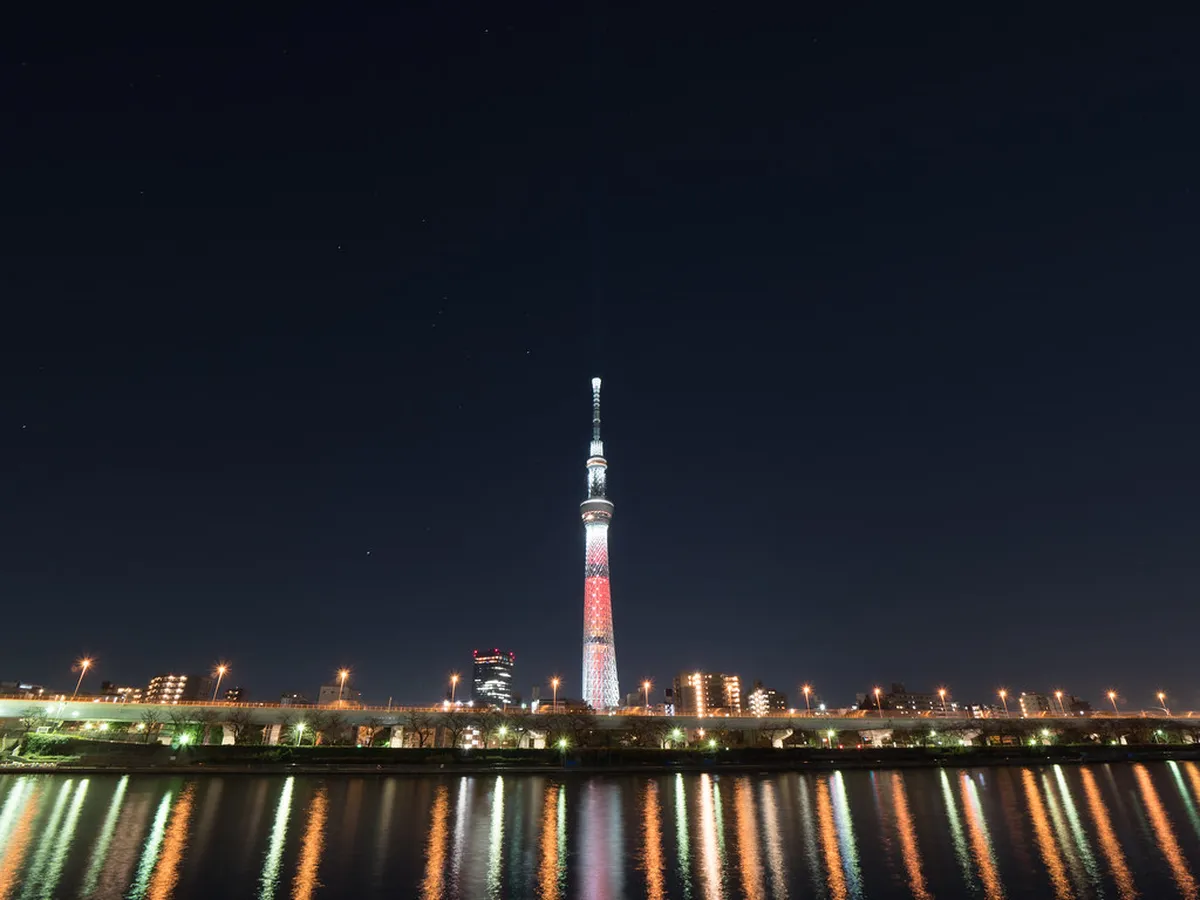
The best photographic slot is the sunset-to-night transition — book a time slot 60-75 minutes before sunset. You'll see the city in daylight, watch the western sky burn orange over Mt. Fuji, then see Tokyo's neon grid switch on, all from one ticket. If you can only pick one: sunset wins for landscape photography and Fuji silhouettes, night wins for pure city-glow shots and easier exposures. Sunset is the most competitive slot — book 3-5 days ahead in peak season.
For Mt. Fuji specifically, visibility is a function of three things: humidity (low), wind direction (north or northwest, blowing Kanto haze south), and time of day. The reliable window is 90-150 days a year, concentrated between November and February when cold dry air sweeps the plain. Even in winter, mornings (7-9am) and the final hour before sunset offer the cleanest sightlines. Summer humidity can hide Fuji for weeks even on "sunny" days, so don't bet a summer visit on the Fuji shot.
To beat window glare, press your lens directly against the glass and use a lens skirt or a folded dark scarf around the lens barrel. The reflective surfaces inside the deck (white floors, illuminated signs) bounce light onto the windows after dark, so night shots benefit most from this technique. Avoid the corners — the laminated panes show slight distortion. The cleanest panels are mid-wall on the south and west sides.
Nighttime brings the city's neon to life — you can pick out the glow of Shibuya Crossing to the west and the headlights tracing the elevated expressways. The tower's own illumination rotates daily between two main patterns: "Iki" (sky blue, evoking Edo aesthetics) and "Miyabi" (violet with gold accents, evoking imperial elegance), plus seasonal specials. If you visit in spring, the pink hues of cherry blossoms in Ueno Park are visible from above. Always check the wind forecast — the Tembo Galleria closes when sustained winds exceed roughly 60 km/h.
Essential Tips for First-Time Visitors
Arriving at least 15 minutes before your ticketed time slot is a smart move. This allows you to navigate the station and find the entrance without rushing. If you are using a digital ticket, ensure your phone is fully charged. The staff will scan your QR code at several checkpoints throughout the experience.
Wear comfortable walking shoes as you will be on your feet for several hours. The walk through Solamachi alone can cover a significant distance. Large bags and suitcases should be stored in the coin lockers at the station. This makes moving through the crowded observation decks much easier and safer.
Consider purchasing a combo pass if you plan to visit the Sumida Aquarium as well. These bundles often provide a discount compared to buying individual tickets. You can spend the morning at the tower and the afternoon exploring the aquatic exhibits. This approach maximizes your time in the Sumida area.
Finally, keep an eye on the official Twitter or website for real-time updates. They post information regarding visibility and any unexpected closures of the upper decks. Knowing this before you arrive can save you from disappointment on a cloudy day. Planning your visit with these details in mind ensures a memorable trip.
Frequently Asked Questions
How do you get to Tokyo Skytree?
The easiest way is by train to Oshiage Station via the Hanzomon or Asakusa lines. You can also take the Tobu Skytree Line directly to Tokyo Skytree Station. For a more interactive experience, consider visiting teamLab Planets before heading to the tower by taxi or bus.
What is the difference between the Tembo Deck and Tembo Galleria?
The Tembo Deck is the first level at 350 meters, offering wide views and a cafe. The Tembo Galleria is higher at 450 meters and features a spiraling glass walkway. Most visitors choose the combo ticket to experience both unique perspectives of the city.
Is it better to visit Tokyo Skytree at night or during the day?
Daytime is best for seeing landmarks like Mt. Fuji and the surrounding mountains. Nighttime offers a stunning view of the city's neon lights and the illuminated tower itself. Many travelers prefer the sunset window to experience both lighting conditions in one visit.
Can you see Mt. Fuji from Tokyo Skytree?
Yes, Mt. Fuji is visible on clear days, particularly during the winter months. The best time for a sighting is usually early morning or during the sunset hour. Visibility depends entirely on the weather and cloud cover in the Kanto region.
How much time should you plan for a Tokyo Skytree visit?
Plan for at least two to three hours to explore the observation decks and the shopping mall. If you add the aquarium or a sit-down meal, you may need a half-day. Arriving early helps you move through the crowds more efficiently.
The Tokyo Skytree is more than just a tall building; it is a symbol of modern Japan. From the heights of the Tembo Galleria to the shops of Solamachi, there is something for everyone. Following this tokyo skytree visitor guide will help you avoid common pitfalls and maximize your enjoyment. Enjoy the incredible views and the unique atmosphere of this world-class destination.
For more Tokyo planning, explore our guides on the best things to do in Tokyo, create a complete Tokyo itinerary, and discover more must-see Tokyo landmarks to round out your visit.