
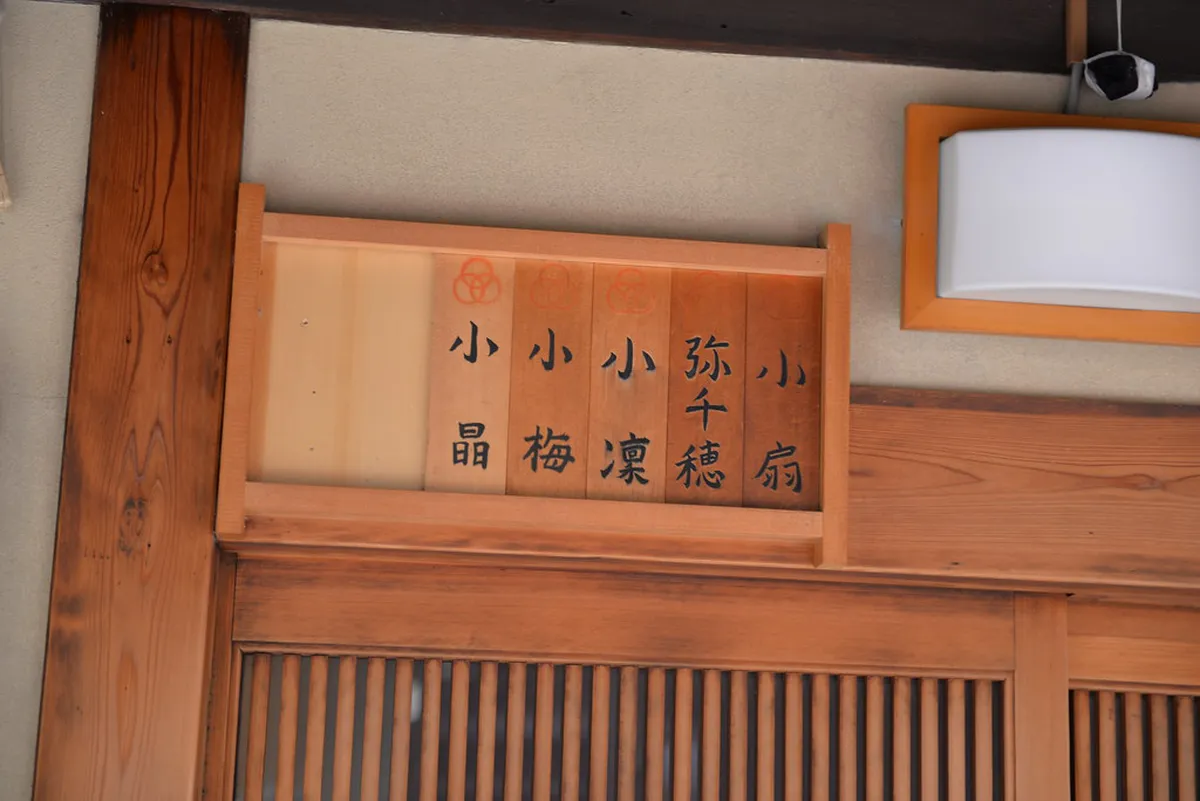
Gion is Kyoto's most celebrated historic district, stretching between the Kamo River in the west and Yasaka Shrine in the east along Shijo Street. Its narrow stone-paved alleys are lined with dark wooden machiya townhouses, red lanterns, and the ochaya teahouses where geiko and maiko still entertain tonight, as they have for more than three centuries.
Walking these streets in 2026, you are moving through a functioning neighborhood, not a theme park. Real families live here. Real performers work here. This guide covers every practical detail — how to get in, where to walk, what to see, and how to behave — so you can experience Gion without embarrassing yourself or disturbing the community.
All major sights described below are free to enter from the street. Individual temples, theaters, and teahouses charge their own admission, which is noted where relevant. This Kyoto attractions hub links to every landmark nearby.
History of Gion
Gion grew up as a service town for pilgrims visiting Yasaka Shrine, which was established over 1,350 years ago. Food stalls, lodgings, and entertainment gradually clustered around the shrine approach. By the Edo period, the district had evolved into one of Kyoto's five official hanamachi (flower towns), each with its own school of geisha arts and a distinct geisha union.
In 1772 the area received formal permission from the Tokugawa shogunate to operate its particular style of entertainment. By the Meiji era the district had split into two sub-districts — Gion Kobu and Gion Higashi — and at its peak housed over 700 teahouses and more than 3,000 geiko and maiko. World War II sharply reduced those numbers as performers left for war work. In 1974 Kyoto City designated Gion a special preservation zone, placing strict controls on buildings and street layouts. Underground cabling and cobblestone paving followed in 2001, restoring the streetscape you see today.
Today roughly 70 geiko and 30 maiko work across approximately 60 active ochaya in Gion. That is a fraction of the historical peak, which makes each sighting genuinely rare rather than guaranteed.
Geiko vs. Maiko: Who You Are Actually Seeing
In standard Japanese the word is geisha, but in Kyoto the correct term for a fully qualified female entertainer is geiko. An apprentice geiko is called a maiko. The distinction matters because they dress quite differently and appear at different hours. A maiko is typically aged 15–20 and wears a long trailing obi (sash), an elaborate pinned hairstyle with ornamental hairpins (kanzashi), and very thick white makeup with a red lip accent. A geiko is older, wears a shorter obi tied in a simpler knot, applies subtler makeup, and often keeps her own hair rather than a wig.
Both move quickly between okiya (lodging houses) and ochaya (teahouses) around dusk — usually between 17:30 and 18:30. They are rushing to timed appointments. Blocking their path, calling out to them, or attempting selfies is disrespectful and can cause them to be late, which is a professional embarrassment in their world.
The prime window to spot geiko and maiko moving between appointments on Hanamikoji is 17:30–18:30. After 18:30 the teahouses close their doors and the sightseeing window effectively ends. Walk at a normal pace — do not loiter outside okiya doorways or follow performers into side alleys.
There is one critical thing every first-timer should know: hundreds of tourists now rent kimono for the day and stroll through Hanamikoji Street. From a distance a rental-kimono tourist can look similar to a maiko. The tells that distinguish a real maiko: her obi trails almost to the ground (rental obis are tied high and short), her geta (wooden sandals) are extremely tall (around 10–15 cm), her face makeup is applied with professional precision, and she walks in a particular small-step gait suited to those sandals. A tourist in rental kimono walks normally and their obi is a simple bow knot. If someone stops to pose for photos enthusiastically, she is almost certainly a rental-kimono tourist, not a working performer.
Must-See Gion Attractions
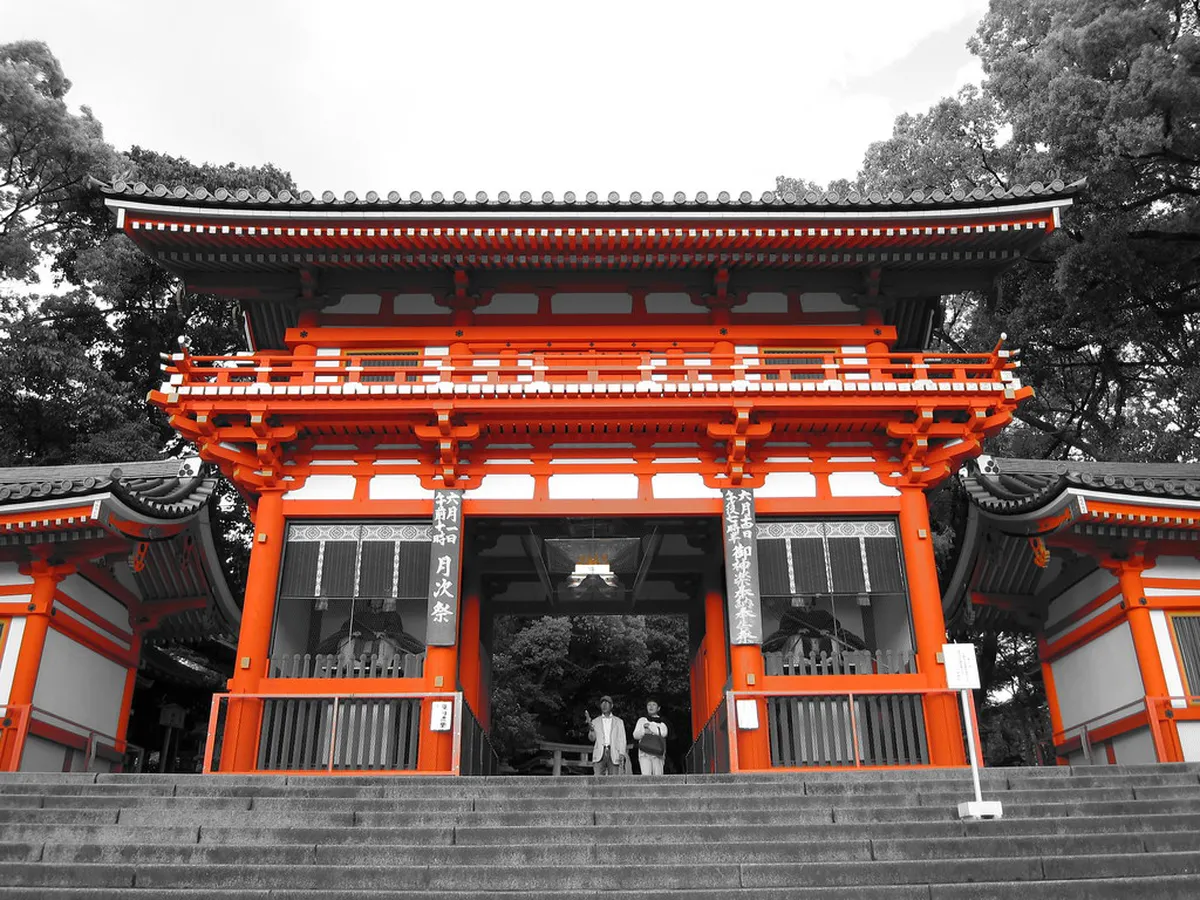
Yasaka Shrine anchors the eastern end of Shijo Dori with its bright vermilion gates. The shrine is free and open 24 hours, which makes it the natural start or end point of any Gion walk. It looks particularly atmospheric after dark when stone lanterns light the approach. The shrine is the headquarters of around 2,300 affiliated Yasaka shrines across Japan and is the symbolic home of the Gion Matsuri festival.
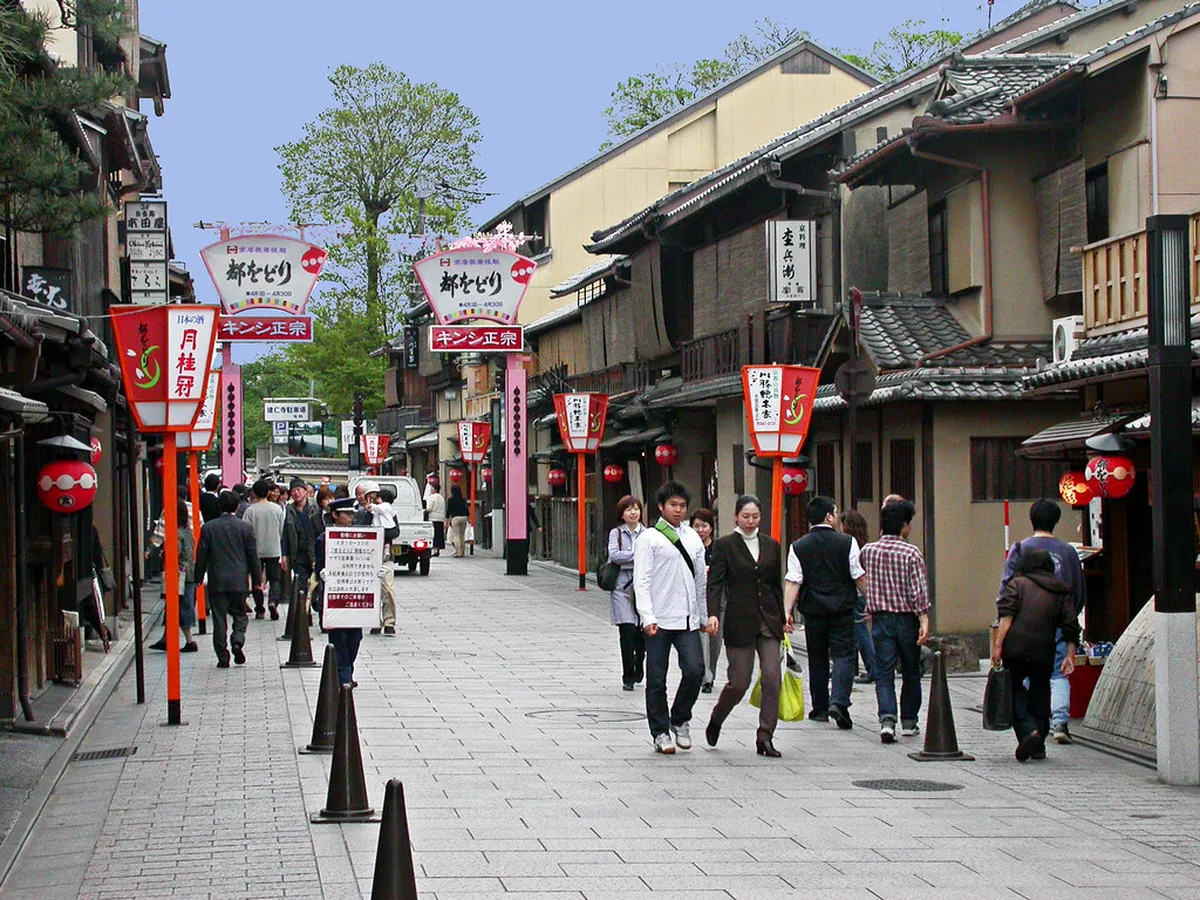
Hanamikoji Street runs north to south through the heart of Gion Kobu. It is a broad flagstone lane with no overhead power lines (buried underground since 2001) and is lined on both sides with preserved ochaya. At the northern end of Hanamikoji, at its corner with Shijo, stands Ichiriki Chaya — Kyoto's most famous teahouse, operating continuously since 1701. Its red clay-plaster wall is unmissable. You cannot enter without a prior introduction, but the exterior is worth a photograph.
Kennin-ji, at the southern end of Hanamikoji, is the oldest Zen temple in Kyoto, founded by the monk Eisai in 1202. Admission is 500 yen (roughly €3). Its main hall ceiling carries a large twin-dragon painting, and the temple gardens are among the calmest spaces in the district. Note it closes at 17:00. Immediately opposite Kennin-ji is Gion Corner, a theater offering one-hour introductions to seven traditional arts including maiko dance, tea ceremony, and bunraku puppet theater.
Walking north of Shijo along Shirakawa Canal takes you into Gion Shirakawa, the quieter northern section. Willow trees overhang the water and the ochaya here are smaller and less crowded. The Tatsumi Jinja shrine tucked along this canal is where authorized maiko make their first public appearance in the profession.
Museums, Art, and Culture in Gion
The Minamiza Theater on Shijo Dori is the oldest kabuki theater still operating in Japan. A theater has stood here since the early 1600s; the current building dates from 1929. The main annual kabuki event is the Kaomise performance in December, when the most celebrated actors of the year are announced. Tickets sell out months in advance. Check the official schedule for 2026 performances before your visit.
Travelers interested in a condensed introduction to traditional performing arts should visit the Gion Corner Official Site to book a cultural demonstration. Shows last about one hour and cover kyo-mai (Kyoto-style dance performed by maiko), tea ceremony, ikebana flower arranging, koto music, gagaku court music, kyogen comic theater, and bunraku puppet theater. It is the most efficient way to sample multiple art forms in a single session.
Smaller galleries on Shinmonzen and Furumonzen streets specialize in Kyoto antiques, ceramics, lacquerware, and woodblock prints. These streets run east to west just north of Shijo and are best explored on a weekday morning when dealers are more willing to talk. Prices are not tourist-inflated — serious collectors buy here.
Outdoor Spots: Shirakawa, Maruyama, and the Riverside
Maruyama Park sits directly behind Yasaka Shrine and is Kyoto's most popular cherry blossom viewing site. The centerpiece is a single enormous weeping cherry tree (shidarezakura) that blooms late March to early April and is lit up after dark during blossom season. Outside cherry season it is a pleasant free park for a rest — substantially quieter than the shrine approach.
The Shirakawa Canal path in northern Gion offers willow reflections on the water and fewer crowds than Hanamikoji. Walk it in the late afternoon light for the best photographs. The Gion Shirakawa Area is genuinely one of the most photogenic corners of Kyoto and is often overlooked by visitors who stay on the main street.
The Kamo River embankment is a five-minute walk west of Gion. Locals sit along the stepped banks in the evenings. Cross Shijo Bridge at dusk for the best view back toward the Higashiyama hills. The riverside is also the corridor to Pontocho Alley, a narrow lane of atmospheric restaurants and bars that runs along the western bank — a natural second stop on any Gion evening.
Ochaya, Okiya, and the No-First-Timers Rule
Understanding Gion's social architecture prevents a lot of confusion. An okiya is a lodging and training house where maiko and geiko live, study, and are managed by an okasan (house mother). An ochaya is a teahouse where geiko entertain guests over multi-course meals. The two look similar from outside — both are dark machiya with bamboo blinds — but serve completely different functions.
Access to ochaya operates under a rule called ichigen-san okotowari, literally "first-timers declined." You cannot simply book a table. An ochaya requires a formal introduction from an existing, trusted regular guest. Without that introduction, you will be politely turned away regardless of how much you offer to pay. This rule protects the intimate social atmosphere that makes these evenings valuable to the clients who fund the entire system.
In 2026 there are legitimate workarounds. Several high-end Kyoto hotels (including the Ritz-Carlton Kyoto and Hyatt Regency Kyoto) maintain concierge relationships with select ochaya and can arrange introductions for staying guests at significant cost — expect all-in evenings to start around 50,000 yen per person. There are also a small number of "tourist ochaya" that operate with different rules, offering fixed-price maiko dinner packages without the introduction requirement. These are genuine experiences but not the same thing as a traditional ochaya evening.
For a taste of the food culture without those prices, the ryotei restaurants on Hanamikoji and the kaiseki lunch sets in smaller side streets offer Kyoto cuisine at more accessible price points. A kaiseki lunch in the alleys off Hanamikoji typically runs 3,000–5,000 yen.
Gion Matsuri: Festival Logistics for July 2026
The Gion Matsuri traces its origins to the year 869 and is one of Japan's three largest festivals, recognized as a UNESCO Intangible Cultural Heritage. It runs throughout the entire month of July, but the peak dates concentrate in two windows.
The first float procession, Yamaboko Junko, takes place on July 17 starting at 09:00. A second procession follows on July 24. The floats — called yama and hoko — range up to 25 meters tall and weigh as much as 12 tons. Dozens of floats represent different Kyoto neighborhoods and carry musicians playing traditional hayashi music throughout the procession route.
The Yoiyama evenings on July 14, 15, and 16 are in many ways more enjoyable than the parade itself. Shijo Dori becomes a pedestrian zone from around 18:00. Food stalls (yatai) line the closed street selling ramen, yakitori, and kakigori shaved ice. The floats are displayed stationary and lit by hundreds of paper lanterns, and you can walk right up to them. Arrive before 19:00 to stake out a position before the crowds peak. Stay hydrated — July in Kyoto is hot and humid, routinely above 35°C.
Accommodation in Kyoto books out entirely for the Yoiyama dates months in advance. If you plan to be there in July 2026, book your hotel no later than March.
Annual Dance Performances in Gion
Three major public dance seasons give visitors a legitimate opportunity to see geiko and maiko perform on stage. These are the best context for watching their art form properly rather than trying to spot them on the street.
The Miyako Odori (Cherry Blossom Dance) runs through April at the Gion Kobu Kaburenjo Theater on Hanamikoji. First staged in 1872, it features elaborate seasonal costumes and ensemble choreography. This is the most famous and most heavily attended of the three. Reserved seats for 2026 typically go on sale in late February — book early.
The Kamogawa Odori (River Dance) runs in May at the Pontocho Kaburenjo, just across the river. It has been staged continuously since 1872 as well, with a more dramatic narrative storytelling style than Miyako Odori. Tickets are slightly easier to obtain.
The Gion Odori (Autumn Dance) is staged in November at the Gion Higashi Kaburenjo. It began in 1953 and offers a more intimate atmosphere with smaller audiences. This is the easiest performance to attend without advance planning, though booking ahead is still advisable.
Gion at Night: A Practical Evening Sequence
Arrive at Yasaka Shrine around 17:00 to see it in early evening light. Walk south down Hanamikoji between 17:30 and 18:30 — this is the prime window for spotting geiko and maiko moving between appointments. Stay on the main flagstone path and walk at a normal pace; do not loiter in front of okiya doorways.
After 18:30 the teahouses close their doors and the sightseeing window ends. At that point, take the side alleys east of Hanamikoji toward Shirakawa Canal for the night lantern atmosphere. The canal path is lit softly and far less crowded than the main drag. A cold beer or matcha parfait at the small cafes along Shijo Dori makes a good pause before deciding what to do next.
For dinner, the narrow side streets branching off Hanamikoji have mid-range izakayas and ramen shops that are far better value than the tourist-facing restaurants on the main road. Alternatively, cross the Kamo River on Shijo Bridge to Pontocho Alley for a longer selection of atmospheric riverside restaurants at every price point. Most Pontocho restaurants open from around 17:30 and accept walk-ins on weeknights.
If you want a nightcap with a view, the rooftop bar options near Shijo-Kawaramachi look back toward the Higashiyama hills. Gion itself does not have a bar scene — it is a residential working neighborhood after 21:00 and noise levels should be kept low accordingly.
How to Get to Gion
Gion has no dedicated subway station. The two most convenient options are the Keihan Main Line and the city bus network. From Osaka or Fushimi Inari, the Keihan Line drops you at Gion-Shijo Station (exits 6 or 7), which is a two-minute walk to Hanamikoji Street. From Kyoto Station, take City Bus 100 or 206 to the Gion bus stop — the journey takes around 15–20 minutes and costs 230 yen. Buses run every 10–12 minutes during the day.
Visitors arriving from Arashiyama can use the Hankyu Kyoto Line to Kyoto-Kawaramachi Station, then walk five minutes east across Shijo Bridge. Taxi from central Kyoto costs roughly 800–1,200 yen depending on traffic. Gion is also a 10-minute walk from Kiyomizu-dera, making it natural to combine both on the same afternoon.
- From Kyoto Station: City Bus 100 or 206, Gion stop, 15–20 min, 230 yen
- From Osaka / Fushimi: Keihan Main Line to Gion-Shijo Station, exits 6 or 7
- From Arashiyama: Hankyu Line to Kyoto-Kawaramachi, 5-min walk east across Shijo Bridge
- On foot from Kiyomizu-dera: 10 min northeast down Matsubara-dori
Gion is compact enough to cover entirely on foot. A leisurely walk from Yasaka Shrine to the Shirakawa Canal and back takes about 90 minutes. There is no bike rental inside the district itself and cycling on Hanamikoji Street is prohibited.
Photo Ban, Etiquette, and Fines
Photography is banned on the narrow private alleys (soji) branching off Hanamikoji Street, with a ¥10,000 fine enforced by neighborhood volunteers. The restricted alleys are the lanes running east off Hanamikoji between Shijo and Kennin-ji. The main Hanamikoji flagstone road remains a public street where photography is permitted.
Since November 25, 2019, photography has been explicitly banned on the private side streets branching off Hanamikoji Street. These alleys — called soji — are marked with Japanese and English signs stating the 10,000 yen fine. The ban is enforced by neighborhood watch volunteers who are present most evenings. Violations are taken seriously; tourists have been fined.
The restricted alleys are the narrow lanes running east off Hanamikoji between Shijo Dori and Kennin-ji. The main Hanamikoji Street itself remains a public road where photography is permitted, as is Yasaka Shrine, Maruyama Park, and the Shirakawa Canal path. When in doubt, stay on the wider paved roads and do not follow geiko or maiko into side alleys under any circumstances.
Beyond the photography rules, the behaviors most likely to cause problems include: blocking doorways or narrow alleys to wait for a performer, attempting to touch their kimono or accessories, eating food while walking (discouraged on all Gion streets), smoking outside designated areas, and speaking loudly near residential okiya after 20:00. These are not abstract cultural suggestions — some have resulted in formal complaints to the neighborhood association that manages the district.
Gion is a living neighborhood first and a tourist attraction second. Residents have asked the city to restrict access further if behavior does not improve. Treating it with the same consideration you would give any residential street in any city is the baseline.
Family and Budget Tips for Gion
The most famous sights in Gion — Yasaka Shrine, Hanamikoji Street, Shirakawa Canal, Maruyama Park — are entirely free to view from the street. Kennin-ji is the one major attraction with an admission fee (500 yen adults, free for young children). Budget the 230-yen bus fare each way and you can spend a full afternoon and evening in Gion for under 2,000 yen per person excluding food.
For affordable food, the side streets east of Hanamikoji have small lunch-set restaurants running 800–1,500 yen per person. Try yatsuhashi, Kyoto's signature sweet — triangular rice-flour confections filled with sweet bean paste, sold at street stalls for 150–300 yen each. Families with children can pick up affordable sweets at Patisserie Gion Sakai on Hanamikoji, which also bakes Western-style tarts and meringues in a historic wooden shopfront.
Visiting shrines and the park during the morning (before 09:00) gives families the space to explore without tour group congestion. The Kennin-ji gardens in particular are worth seeing before the crowds arrive. Children generally find the huge Gion Matsuri floats, the stone lanterns at Yasaka Shrine at night, and the canal ducks near Shirakawa engaging without needing any paid admission.
Frequently Asked Questions
What is the best time to see geiko in Gion?
The best time to spot geiko or maiko is during the early evening between 5:30 PM and 6:30 PM. They are usually moving quickly between their lodging and evening appointments. Please remain respectful and avoid blocking their path while they work in the Kyoto area.
Is there an entrance fee to enter the Gion district?
There is no entrance fee to walk through the public streets of Gion as it is a standard city neighborhood. You will only need to pay for specific attractions like temples, theaters, or private museums. Many visitors enjoy the atmosphere for free by simply wandering the historic alleys.
Where exactly is the Gion photo ban enforced?
The photo ban is primarily enforced in the small private alleys branching off from Hanami-koji Street. These areas are clearly marked with signs indicating the 10,000 yen fine for unauthorized photography. You are still permitted to take photos on the main public thoroughfares and near the shrines.
Can I visit Gion during the day or is it only for night?
Gion is worth visiting during both the day and night as the atmosphere changes significantly. Daytime is better for visiting temples like Kennin-ji and shopping for traditional crafts. The evening offers a more mysterious vibe with glowing lanterns and the chance to see traditional performers.
Visiting Gion remains a highlight for many travelers exploring the cultural heart of Japan in 2026.
By following local etiquette and respecting the photo ban, you contribute to the preservation of this unique heritage site.
Whether you are attending a grand festival or enjoying a quiet stroll, the district offers endless opportunities for discovery.
Plan your journey carefully to experience the perfect balance of history, art, and traditional Japanese hospitality.
For more Kyoto planning, see our Things to Do in Kyoto, Kyoto Itinerary, and Kyoto Culture guides.


