

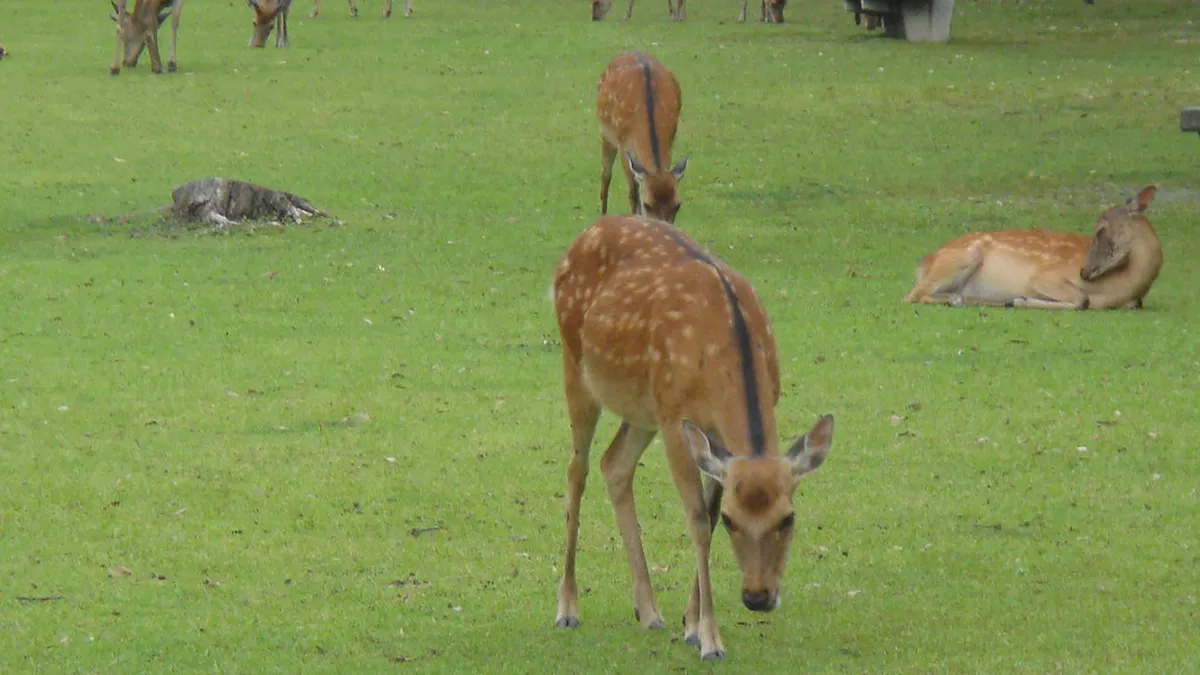
Nara Park is a sprawling 502-hectare public space in the heart of Nara City where more than 1,200 wild sika deer roam freely alongside ancient temples and forested shrine paths. Entry to the park itself is free and the gates never close, making it one of the most accessible day trips in the Kansai region.
Most visitors arrive from Kyoto or Osaka on a single-day excursion and find the core highlights — Todai-ji, the deer meadows, and Kasuga Taisha — manageable in four to six hours. This guide covers what to see, when to go, how to get there, and the practical deer-interaction details that most travel articles gloss over.
Where is Nara Park?
Nara Park sits in central Nara City, Nara Prefecture, roughly 45 kilometres south of Kyoto and 40 kilometres east of Osaka. The park stretches east from the urban centre toward Mount Wakakusa, with most of its famous temples and deer meadows concentrated in the western half nearest the train stations.
The park's postal address is Nara-koen, Nara City, Nara Prefecture 630-8212. GPS coordinates are approximately 34.685°N, 135.850°E — pointing to the area between Kofuku-ji and Todai-ji, where the deer density is highest. Kintetsu Nara Station sits a five-minute walk from the first deer; JR Nara Station is a twenty-minute walk or a short bus ride on lines 2 or 6.
The park is not a fenced enclosure. Deer wander freely into surrounding streets and even into the covered shopping arcade near Kintetsu station. If you see a deer before reaching any temple gate, you are already in the park.
Must-See Nara Attractions
The primary draw for most visitors is the massive Todai-ji temple complex, which houses the Great Buddha — one of the largest bronze statues in the world at 15 metres tall and roughly 300 tonnes. The wooden Daibutsuden hall surrounding it is itself a record-holder for the largest wooden structure in the world. Entry costs ¥600 per adult in 2026; the gate opens at 07:30 and closes at 17:30 (16:30 November–February).
A short walk east through the forest leads to Kasuga Taisha shrine, known for its thousands of bronze and stone lanterns lining the forested approach. The outer grounds are free; the inner Haiden area costs ¥500. Arriving before 09:00 gives you the lantern-lit paths largely to yourself before tour groups arrive from Kyoto.
Near the park's western entrance, the five-story pagoda at Kofuku-ji makes an excellent first landmark. The pagoda grounds are free to walk through all day. The temple's Tokondo (East Golden Hall) and National Treasure Museum charge separate fees if you want to go inside, but the pagoda view from Sarusawa Pond — where turtles and koi share the water with the tower's reflection — costs nothing.
| Attraction | Hours | Adult Fee |
|---|---|---|
| Nara Park (deer grounds) | Open 24 hours | Free |
| Todai-ji Great Buddha Hall | 07:30–17:30 (Apr–Oct); 08:00–17:00 (Nov–Mar) | ¥800 |
| Kasuga Taisha inner Haiden | 06:30–17:30 (outer free) | ¥500 |
| Kofuku-ji Tokondo (East Hall) | 09:00–17:00 | ¥300 |
| Nara National Museum | Tue–Sun 09:30–17:00 | ¥700 |
- Todai-ji Great Buddha Hall — ¥600 adults, ¥300 children; 07:30–17:30 (16:30 Nov–Feb)
- Kasuga Taisha outer grounds — free; inner Haiden ¥500; 06:30–17:30
- Kofuku-ji pagoda grounds — free; Tokondo ¥300; grounds open all day
- Nara National Museum — ¥700 general admission; closed Monday
How to Feed the Deer and Stay Safe
Shika-senbei (deer crackers) cost ¥200 per stack from licensed vendors dotted throughout the park. The crackers are made from wheat flour and rice bran with no sugar, so they are safe for the deer. Do not feed the deer anything else — including your map, which they will attempt to eat.
The most important tip: do not feed the deer immediately next to the cracker stands. Those particular deer are conditioned to be aggressive and will nip, headbutt, or chase you. Walk two or three minutes deeper into the park and find a calm, solitary deer grazing on its own. Offer one cracker at a time with an open palm. Keep the rest of the stack inside your bag out of sight. Once you finish, show the deer your empty hands — they usually understand this signal and walk away.
The famous bowing behavior is a learned response. Face a calm deer, show the cracker, and bow slowly from the waist. Many deer will bow back before approaching to eat. It works reliably with deer that are not already agitated.
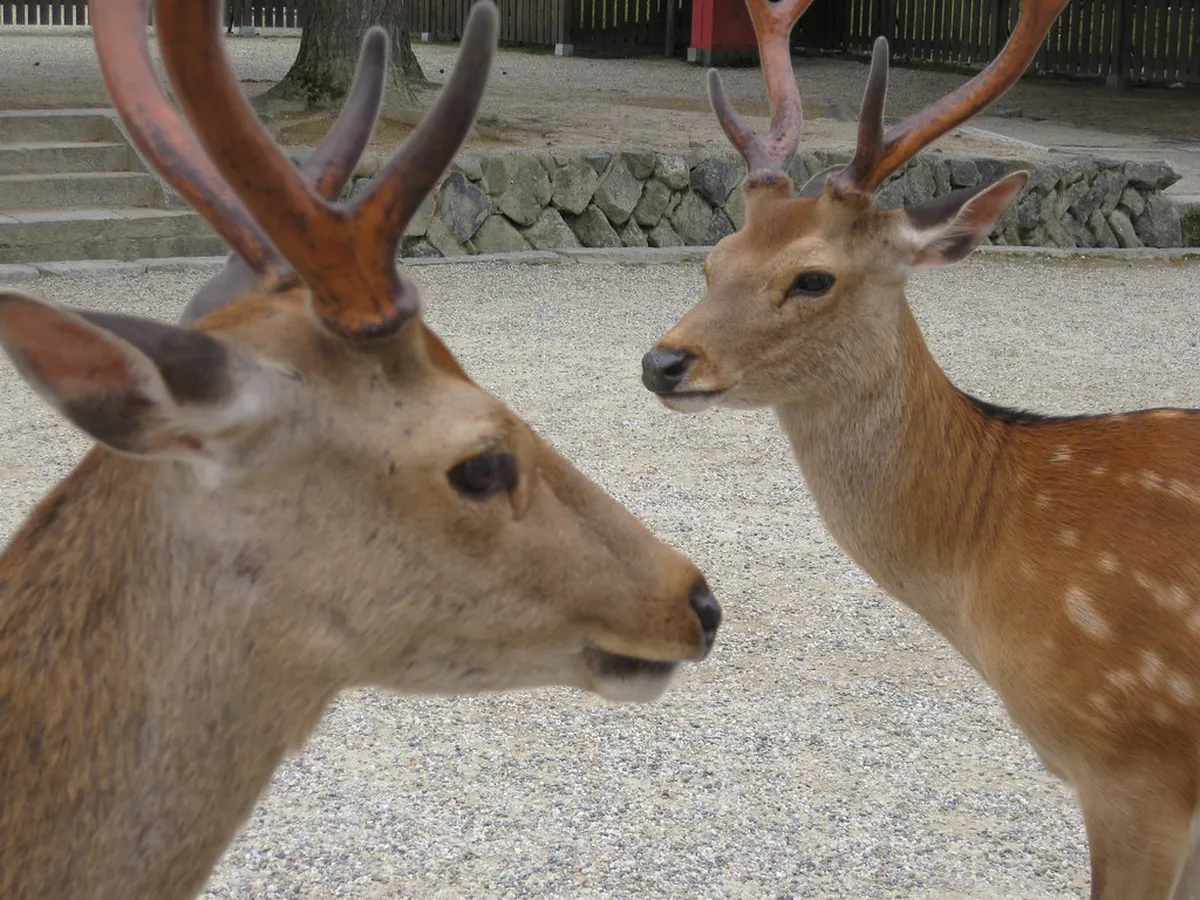
Avoid the park between mid-October and mid-November — this is rutting season for male deer. Bucks become noticeably aggressive even after the Shika no Tsunokiri antler-cutting ceremony. Supervise children closely and give all male deer plenty of space.
One safety detail that most guides skip: avoid the park between mid-October and mid-November. This is the rutting season for male deer, when antlers are at their largest and testosterone levels are high. Male deer become noticeably more aggressive during these weeks. The Shika no Tsunokiri antler-cutting ceremony at Kasuga-Taisha is held in mid-October specifically to reduce the injury risk before rutting peaks — if you visit in late October or early November after the ceremony, the males have cut antlers but remain agitated. If you must visit during this period, give all male deer significant space and supervise children closely.
Museums, Art, and Culture in Nara
Art enthusiasts will find the Nara National Museum essential for understanding Japanese Buddhist history. It specializes in Buddhist sculpture, paintings, and decorative arts, with a permanent collection of over 2,000 objects. The museum is located centrally within the park grounds near Kasuga Taisha, making it an easy addition to any temple circuit. Admission is ¥700 general; the museum is closed on Mondays.
The museum's annual Shosoin Treasure Exhibition runs for two weeks in late October and early November, displaying artifacts from the imperial treasure repository. These rarely-seen objects include Silk Road instruments, textiles, and glass from the 8th century. Tickets sell out; book online several weeks in advance if this is a priority.
Between the major temples, dozens of smaller stone shrines and torii gates sit quietly in the forested sections of the park. The walking path from Kofuku-ji toward Kasuga Taisha passes several of these lesser-visited sites. Arriving before crowds means you will hear nothing but cicadas in summer and wind in the trees — a quality of atmosphere the temples themselves cannot fully deliver once tour buses arrive.
Parks, Gardens, and Outdoor Spots in Nara
Beyond the temples, the Isuien Garden offers one of the finest examples of borrowed-scenery landscape design in Japan. The garden uses Mount Wakakusa in the background as a compositional element, making the space feel much larger than its physical footprint. It is particularly striking in November when the maple trees turn red. Admission is ¥1,200 for adults.
Mount Wakakusa rises at the eastern edge of the park and offers a moderate 30-minute climb to a summit with panoramic views over the Nara valley. The grassy slopes are open daily except Monday from late January to late November (closed during winter fire prevention). Entry to the mountain costs ¥150. The view at sunset, with deer grazing on the slope below and the city lit behind you, is one of Nara's best photographs that most day-trippers miss by leaving too early.
Sarusawa Pond, just south of Kofuku-ji, is a much-overlooked rest spot. The five-story pagoda reflects cleanly in the water on calm mornings, and the pond is stocked with turtles and koi that are remarkably calm around visitors. Benches are plentiful. Families with young children find this a good place to stop before or after the heavier temple circuits.
Where to Eat in Nara Park
Kasuganinaijaya is a teahouse inside the park grounds between Todai-ji and Kasuga Taisha, serving matcha and traditional sweets in a setting surrounded by trees and lanterns. It is one of the few places where you can sit down inside the park itself. Hours are approximately 10:00–17:00; check for seasonal closures.
For mochi, Nakatanidou near the park's western entrance is known for its live mochi-pounding demonstrations. Staff pound the mochi at high speed and it is genuinely impressive to watch. The shop posts a schedule on a board outside; demonstrations run several times per day. Eat the mochi fresh — it loses texture within an hour.
Rokumei Coffee, a few minutes from Kintetsu Nara Station, is a reliable breakfast stop before entering the park. For a more substantial meal, the streets around Kintetsu station have multiple tonkatsu and ramen options with short queues before 11:30. Persimmon leaf sushi (kakinoha-zushi) is the local specialty and is available as takeaway from multiple shops near the station — a practical choice if you want to eat in the park rather than a restaurant.
Family-Friendly and Budget-Friendly Options in Nara
A full visit to Nara Park's outdoor sections, including deer interactions, Sarusawa Pond, and the forest walks to Kasuga Taisha, costs nothing beyond the ¥200 deer crackers. The park itself never closes and has no gate fee. You can spend a complete half-day without purchasing any temple tickets if budget is the constraint.
For families, the area around Tobihino Meadow (northeast of Todai-ji, near the Nara Visitor Center) has the highest concentration of calm deer and is spacious enough for children to move freely. This section is less crowded than the approaches to Todai-ji and the deer here are typically less food-aggressive. The visitor center also has a free luggage storage service, clean restrooms, and multilingual staff — worth a ten-minute stop on arrival.
Budget travelers will appreciate that the Kofuku-ji pagoda grounds, the entire deer park walking area, and the Kasuga Taisha forest approach are all free. Targeting just Todai-ji (¥600) and the free areas gets you the Great Buddha plus a full deer experience for under ¥1,000 total, including crackers.
How to Plan a Smooth Nara Attractions Day
Arrive at Kintetsu Nara Station by 08:30 to beat the midday crowds from Kyoto. The Kintetsu Limited Express from Kyoto Station runs directly to Kintetsu Nara in 35–45 minutes. From Osaka-Namba, the Kintetsu Express takes about 40 minutes with no transfer. Both options drop you within a five-minute walk of the first deer, significantly closer than JR Nara Station.
A practical walking route: Kofuku-ji pagoda and Sarusawa Pond first (free, 30 minutes) → deer meadows near Tobihino (deer crackers, 45 minutes) → Todai-ji Great Buddha Hall (¥600, 45 minutes) → forest path toward Kasuga Taisha (free, 20 minutes walk) → Kasuga Taisha inner area (¥500, 30 minutes) → Nara National Museum if open (¥700, 60 minutes). This circuit covers the main attractions in roughly five hours at a comfortable pace.
If you are coming on a day trip to Nara from either Kyoto or Osaka, the last Kintetsu Express back runs until around 23:00, so there is no pressure to rush. The Naramachi historic district south of Sarusawa Pond adds another hour if you want to explore old merchant houses and craft shops.
How Long to Spend in Nara?
A three-hour visit is enough for Todai-ji, a walk through the deer meadows, and a stop at Kofuku-ji — this is the minimum that makes the trip worthwhile. Four to six hours allows for Kasuga Taisha and a leisurely pace without feeling rushed. Most day-trippers from Osaka or Kyoto find six hours comfortable.
If you want to hike Mount Wakakusa, visit Isuien Garden, and explore the Naramachi district, plan for a full eight-hour day. This also leaves time for a proper sit-down lunch rather than eating on the move. The Nara National Museum adds another hour if you go inside.
Staying overnight changes the experience considerably. The park in the early morning — between 06:30 and 08:00 — is almost entirely free of tourists. The deer are active, the temples are quiet, and the light is exceptional for photography. Photographers chasing the pagoda-reflection shot at Sarusawa Pond get the clearest water and softest light in that window. Overnight guests also gain access to the park during Shuni-e (the water-drawing ceremony at Todai-ji in early March) and the Mantoro lantern festivals in February and August at Kasuga Taisha, when all 3,000 lanterns are lit simultaneously — an experience not available to day-trippers who cannot stay past evening.
For First-Time Visitors
Your first stop should be the Nara Visitor Center & Inn near Kintetsu Nara Station for free maps and current information on temple hours and any festival closures. The staff offer luggage storage and can help book same-day accommodation if you decide to stay overnight. The center is staffed by English speakers and is open daily from 09:00.
Shika-senbei (deer crackers) cost ¥200 per stack from licensed vendors. Only feed these official crackers — human food is harmful to deer and technically illegal. Walk two or three minutes away from the vendor stalls before feeding to avoid the most food-aggressive animals.
Carry cash. Most temple entrance booths and cracker vendors are cash-only, and smaller teahouses inside the park do not accept cards. ¥3,000–¥5,000 per person covers all entry fees, deer crackers, lunch, and a souvenir comfortably. ATMs are available at the 7-Eleven near Kintetsu Nara Station.
Dress for walking on uneven stone paths. The routes between temples involve cobblestone, compacted earth, and forest trail surfaces — not suited to hard-soled dress shoes or sandals without ankle support. Pack a layer even in summer; the forested areas near Kasuga Taisha are noticeably cooler than the open deer meadows. In wet weather, the stone paths near Todai-ji become slippery.
Planning a Trip to Japan?
Nara fits naturally into a Kansai itinerary as a day trip from Kyoto or Osaka. Its temples predate most Kyoto landmarks — Todai-ji was completed in 752, nearly 250 years before Kyoto became the capital — and the atmosphere is markedly less crowded than comparable Kyoto sites like Fushimi Inari. Visitors who go to both consistently say Nara feels more authentic and less managed as a tourist experience.
You can find excellent accommodations in Nara if you prefer a quieter base. Staying overnight unlocks the wider prefecture, including the UNESCO-listed Horyu-ji temple (the world's oldest surviving wooden structure, 20 minutes by bus), Dorogawa Onsen for hot spring ryokan stays, and Yoshino for spring cherry blossom views that rival anything in Japan.
Check whether your Japan Rail Pass or Kansai Area Pass covers the Kintetsu line before buying separate tickets. The JR pass does not cover Kintetsu — you will need a separate ticket or a Kintetsu pass. The Kintetsu All Line Pass (¥3,000 for 1 day in 2026) covers unlimited rides on the Kintetsu network and makes sense if you are combining Nara with Ise Jingu or Yoshino on the same trip.
Frequently Asked Questions
Is Nara Park free to enter?
Yes, Nara Park itself is a public space and is free to enter 24 hours a day. However, individual attractions within the park like Todai-ji and the Nara National Museum require paid tickets. Most temple fees range from 500 to 1,000 Yen per adult.
How do I get to Nara Park from Kyoto?
The easiest way is to take the Kintetsu Limited Express or Express train from Kyoto Station. This journey takes about 35 to 45 minutes and arrives at Kintetsu Nara Station. From there, it is a short 5-minute walk to the park entrance. Nara day trips are very popular from Kyoto.
Are the deer in Nara Park dangerous?
The deer are generally wild but accustomed to humans and are mostly friendly. They can become aggressive if they smell food or if you tease them with crackers. Always follow the safety signs and avoid cornering the animals for photos. Bowing to them often results in a polite bow back.
What is the best time of year to visit Nara?
Spring and autumn are the most popular seasons due to the mild weather and beautiful scenery. Cherry blossoms typically bloom in early April, while autumn colors peak in late November. Winter is quieter and can be very peaceful if it snows on the temples.
Nara Park remains one of Japan's most distinctive destinations for its combination of free-roaming wildlife and UNESCO-level sacred architecture. Whether you visit for a rushed three-hour loop or a slow overnight stay, the encounter with deer among 1,300-year-old temples is unlike anything else in Japan.
Use the practical sequence in this guide — arrive early, start at Kofuku-ji, move toward Todai-ji and then Kasuga Taisha — to see the most important sites before the midday crowds arrive. Plan your 2026 visit for spring or early winter to avoid both peak summer heat and the autumn rutting season if you are travelling with children.
For more Nara planning, see our 20 Best Nara Attractions, Nara Itinerary for First-Timers, and Nara Deer Park Guide guide.


