

Visiting the massive Todai-ji Temple is often the highlight of any trip to the historic city of Nara. This UNESCO World Heritage site houses one of the largest bronze statues in the world. You will find it nestled within the scenic grounds of Nara Park among hundreds of free-roaming deer. This todai-ji temple visitor guide provides everything you need to plan a perfect visit to this landmark.
The temple stands as a powerful symbol of Japanese Buddhism and the imperial history of Nara. It serves as the headquarters of the Kegon school of Buddhism and attracts millions of pilgrims and travelers each year. Exploring the grounds requires a mix of indoor viewing and walking along paved outdoor paths. Many travelers visit this site as part of a wider day trip to the city of Nara.
Quick Answer: Todai-ji Temple at a Glance
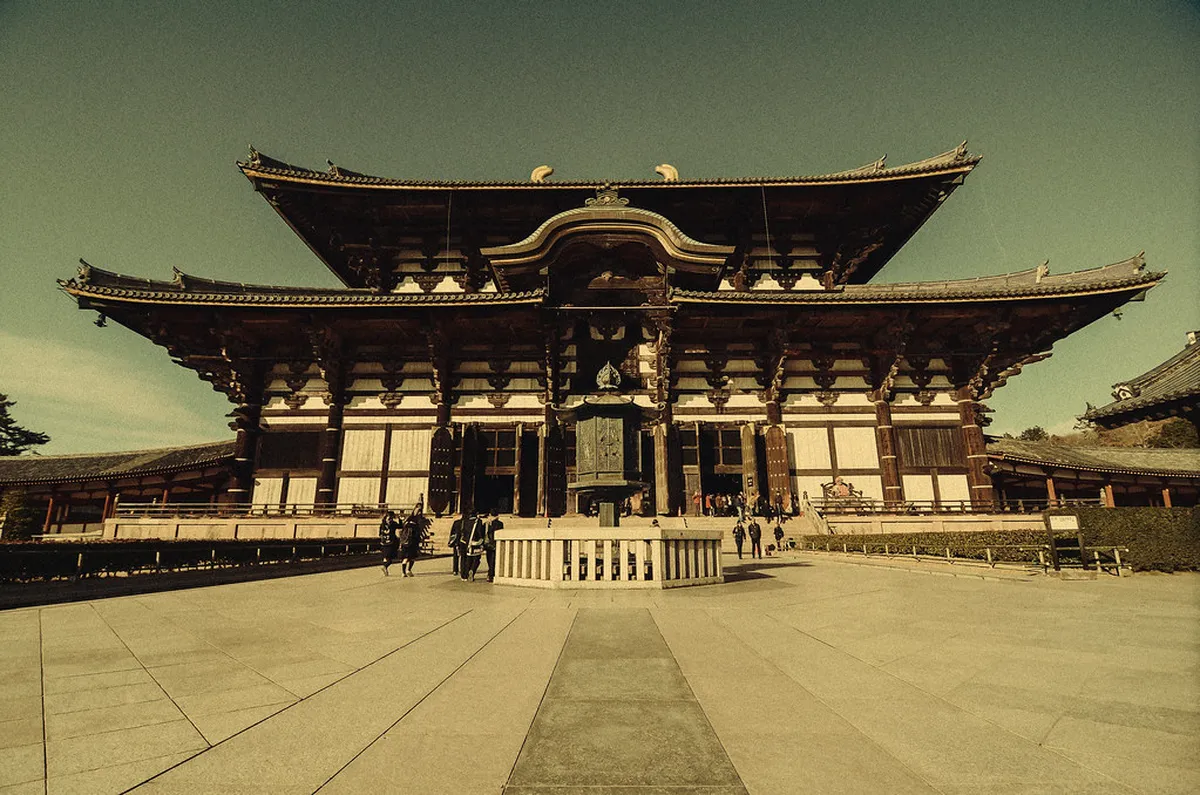
Todai-ji is the main reason most travelers add Nara to a Kansai trip. The core visit is straightforward: walk through Nandaimon Gate, enter the Daibutsuden (Great Buddha Hall), spend time with the Great Buddha, and check the famous pillar hole. From there you can decide whether to continue uphill to Nigatsu-do for the quieter side of the complex.
For a short stop, allow 60 to 90 minutes to cover the gate, the ticketed hall, and the Buddha. For a fuller experience, plan 2 to 3 hours so you can also add the museum, Sangatsu-do, and the walk up to Nigatsu-do. There is no need to book tickets in advance — they are sold in person at the entrance gates, cash only. Bring yen in coins or notes before you arrive.
- Main paid sight: the Daibutsuden (Great Buddha Hall), ¥800 for adults
- Strongest free highlights: Nandaimon Gate, Kagami-ike Pond, and the Nigatsu-do hillside walk
- Tickets sold on-site only; cash is the only accepted payment at the main entrance in 2026
- Opening: 07:30 (April–October) or 08:00 (November–March)
Todai-ji Temple Visiting Guide
Todai-ji is more than just a single building — it is a sprawling complex of sacred halls and gates spread across the northern part of Nara Park. The centerpiece is the Daibutsuden, or Great Buddha Hall, which dominates the local skyline. This structure was rebuilt several times due to fires over the centuries. Even the current version, completed in 1709, is only two-thirds the size of the original eighth-century hall.
Walking through the complex lets you appreciate the sheer scale of ancient Japanese architecture. You will encounter massive wooden pillars and intricate roof designs that have survived for hundreds of years. The atmosphere remains deeply spiritual despite the high number of daily tourists. Taking time to observe the smaller shrines and sub-halls helps you see beyond the crowds to the living religious site underneath.
Local experts suggest starting at the southern end of the park to follow the traditional approach. This path leads through the Nandaimon Gate before you reach the paid entrance area. You can see many impressive structures from the outside without purchasing a ticket immediately, which gives you flexibility when combining Todai-ji with a Kofuku-ji visit on the same day.
Prepare for a fair amount of walking on both flat and inclined surfaces. Wearing comfortable shoes is essential as the temple grounds cover a large area. Most primary paths are accessible, but some upper halls require climbing stone stairs. Planning for at least two hours gives you a complete experience of the main sites.
Nandaimon Gate, Great Buddha Hall, and Main Highlights
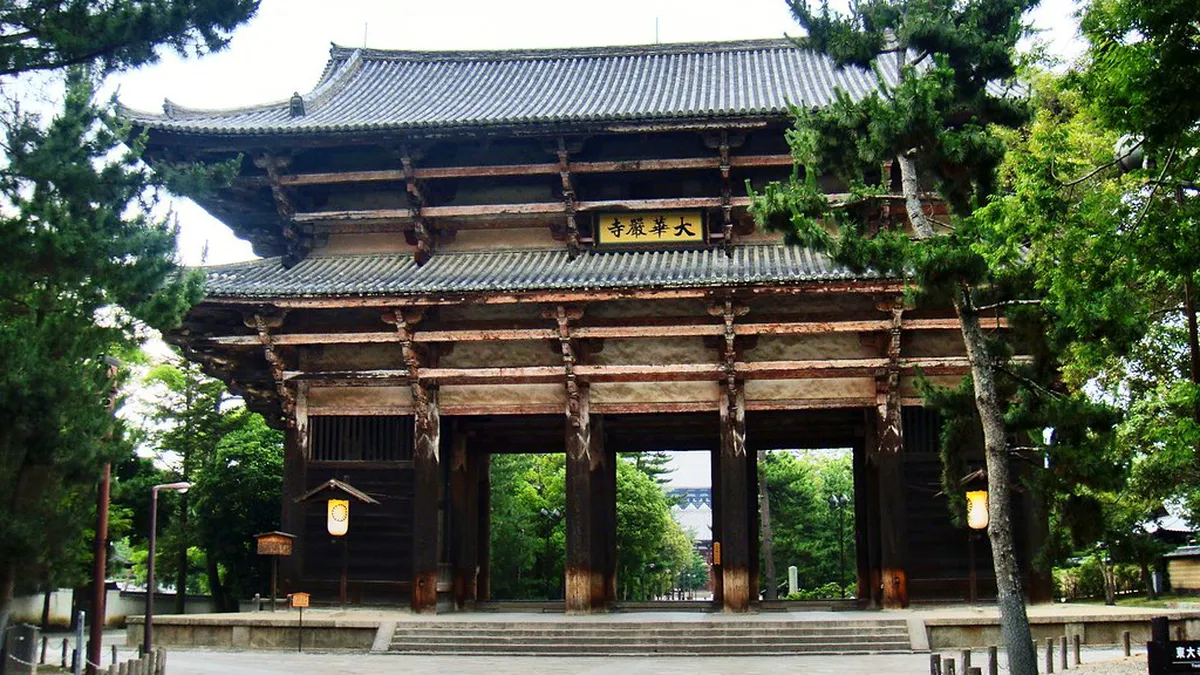
The Nandaimon Gate is the massive southern entrance and a National Treasure of Japan. Its two Nio Guardian statues stand over eight meters tall and were carved to confront visitors before they reached the sacred core of the temple. Move to the side of the gate rather than passing straight through — the figures are easier to appreciate from an angle, and many visitors walk past too quickly to notice the fine detail in the lacquered wood.
Once you pass the gate, the Great Buddha Hall comes into view across a wide courtyard. This building is famous for being one of the world's largest wooden structures. Inside, you will find the Great Buddha of Todai-ji, a bronze statue over 15 meters tall depicting Vairocana Buddha. Do not stop at the front photo spot and leave — walk the full interior perimeter, because the lotus pedestal, halo, and side figures reveal detail that is invisible from a single vantage point.
Behind the Great Buddha, look for the famous wooden pillar with a hole through its base. This opening is said to be the same size as the Buddha's nostril, and tradition holds that crawling through it brings good fortune in the next life. Access can vary with crowd control, so treat it as a bonus rather than the main event. Children usually fit more easily than adults.
Before or after the ticketed hall, pause at the Octagonal Bronze Lantern in the courtyard outside the Daibutsuden. Dating from the temple's founding period, it features delicate panels of celestial musicians and lions that most visitors walk straight past. On calm mornings, the Kagami-ike Pond further south reflects the hall's roofline — one of the better photographs in Nara that does not require queuing.
Suggested Walking Route for a First Visit
Following a logical route helps you see the major highlights without backtracking through the crowds. The easiest first-visit order starts at Kintetsu Nara Station, follows the park path toward Nandaimon Gate, enters the Daibutsuden, then loops east toward Sangatsu-do and Nigatsu-do before descending back through quieter lanes. This order works because it puts the biggest sight first and leaves the more flexible hillside for later.
After the Great Buddha Hall, turn right and head toward the hillside area. This path leads past the temple bell toward the beautiful Nigatsu-do Hall. The walk up is peaceful and offers a break from the main tourist groups. Several smaller sub-temples line this route with unique photography angles unavailable from the central courtyard.
The final leg takes you back down toward the Nara National Museum area. This allows you to exit the temple grounds near other popular Nara attractions. You can easily transition to a visit at Kasuga Taisha from this exit point. This loop ensures you see the best of the temple while moving toward your next destination without retracing steps.
- Nandaimon Gate — 10 minutes; free; stop to study the guardian statues from the sides, not just while passing through
- Great Buddha Hall — 40 minutes; ¥800 adults / ¥400 children (6–12); walk the full interior circuit and check the pillar hole if the queue is short
- Kagami-ike Pond and Octagonal Lantern — 10 minutes; free; best in the morning light
- Nigatsu-do Hillside Walk — 30 minutes; free; city-wide views; best at sunset
Nigatsu-do Hall and the Quieter Upper Grounds
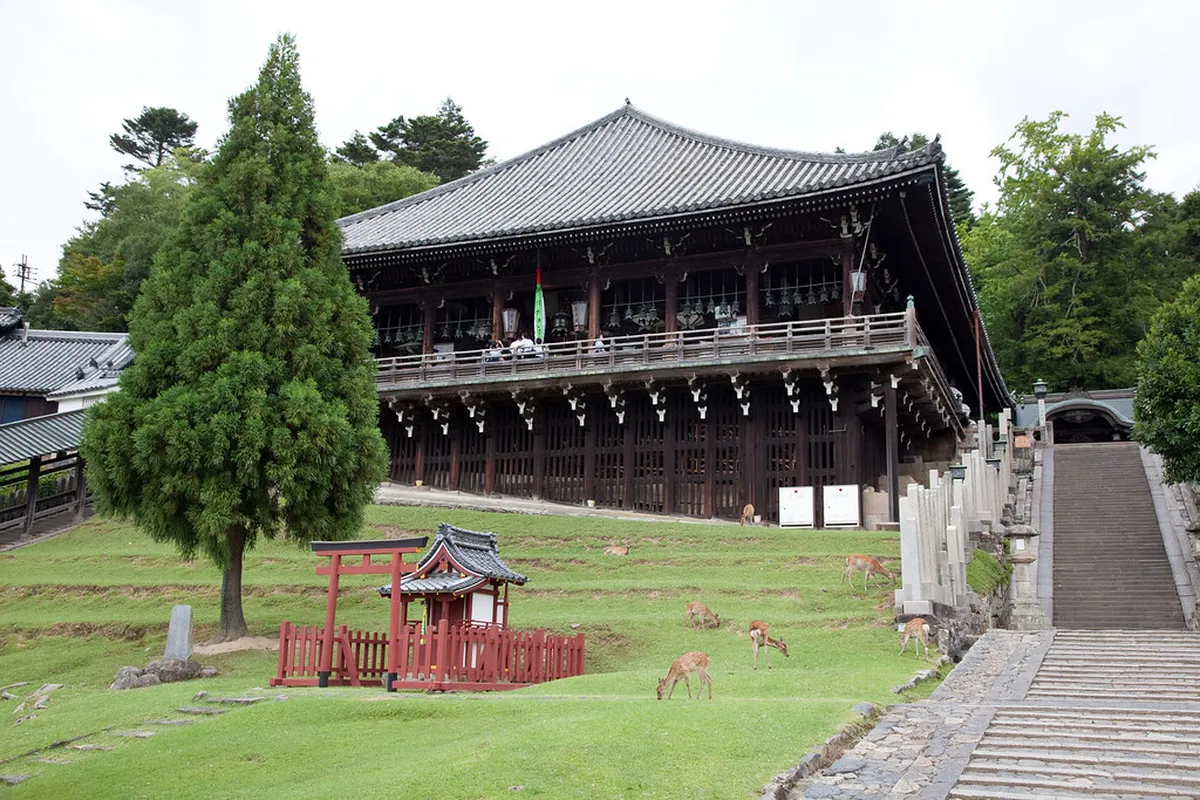
Many tourists make the mistake of leaving after seeing the Great Buddha Hall. The climb up to Nigatsu-do is the best add-on because it shifts the pace entirely. The wooden balcony looks back over Nara, the Daibutsuden roofline, and the park, and the area usually feels far calmer than the main approach. It is especially strong near sunset when the season allows.
Nigatsu-do is famous for hosting the Omizutori ceremony every March. During this ancient fire festival, monks carry giant torches across the balcony as part of a water-drawing ritual that has run for over 1,200 years. Even outside of festival dates, the hall feels deeply peaceful and spiritual. The route up passes stone lanterns, ancient walls, and monks' residential quarters that feel worlds away from the central crowds.
The upper grounds also contain Sangatsu-do (Hokke-do), which is the oldest building in the complex. It houses a collection of rare statues from the Nara period, including a dry-lacquer Fukukensaku Kannon surrounded by figures that survived the fires. It has separate admission and rewards visitors who care about Buddhist sculpture more than checklist sightseeing. Even if you skip the paid hall, the walk itself filters out the majority of day-trippers and provides the best sense of Todai-ji as a living monastic precinct.
Todai-ji Entrance Fee & Opening Hours
The entrance fee for the Great Buddha Hall is ¥800 for adults and ¥400 for children aged 6 to 12. A combined ticket covering both the Daibutsuden and the Todai-ji Museum costs ¥1,200 for adults and ¥600 for children. Hokke-do and Kaidan-do halls each carry separate admission. Check the official Todai-ji English site for any adjustments before you arrive.
| Ticket / Hours | Detail |
|---|---|
| Daibutsuden (adult) | ¥800 |
| Daibutsuden (child 6–12) | ¥400 |
| Daibutsuden + Museum combo (adult) | ¥1,200 |
| Open (Apr–Oct) | 07:30 – 17:30 |
| Open (Nov–Mar) | 08:00 – 17:00 |
| Hokke-do / Kaidan-do halls | 08:30 – 16:00 (separate fee) |
Opening hours vary by season. From April to October, the Daibutsuden is open 07:30 to 17:30. From November to March, it opens at 08:00 and closes at 17:00. Hokke-do and Kaidan-do halls open at 08:30 and close at 16:00. The museum opens at 09:30 with last entry 30 minutes before closing. The temple operates every day of the year including national holidays.
Cash is the only accepted payment at the ticket booths in 2026 — electronic payment is not available for main-hall admission. Come prepared with coins or notes. Special events or religious ceremonies, particularly around the Omizutori festival in March, can limit access to certain areas. Check for scheduled closures if your visit falls near a major ritual date.
Todai-ji Museum, Sangatsu-do, and Extra Stops
The Todai-ji Museum is located near the Nandaimon Gate and offers a modern look at the temple's history and treasures. It houses many National Treasures that were moved from the halls for better preservation, including Buddhist statues and ritual objects displayed in a climate-controlled setting. Exhibits come with English descriptions, and the building provides useful weather protection on hot or rainy days. Choose the museum if you want convenience and context before entering the main hall.
Sangatsu-do is a better choice for visitors who prefer atmosphere over museum cases. As the oldest structure at Todai-ji, it survived the fires that claimed other buildings and holds statues made using Nara-period clay and dry-lacquer techniques. It sits uphill from the main hall, which means less foot traffic and a quieter experience. The trade-off is simple: museum for efficiency and shelter, Sangatsu-do for atmosphere and silence.
Do not miss the Kaidan-in Hall on the western edge of the complex. It was traditionally used for monk ordination ceremonies and features four life-sized clay statues of the Four Heavenly Kings — among the finest Buddhist sculptures in Nara. Very few visitors reach it, making it one of the least-crowded National Treasures in the country. The Shosoin Repository, north of the main hall, is usually viewable only from the outside but is an architectural marvel: a raised log-cabin structure that uses no nails and regulates its own humidity.
Things to Know Before Visiting Todai-ji
The most common first-timer mistake is letting the deer consume the first hour of the day. The animals are a genuine part of the Nara experience, but Todai-ji is better before the Great Buddha Hall fills with tour groups. See the temple first, then enjoy shika senbei (deer crackers, roughly ¥200 per bundle) on your way back. Deer crackers are sold at stalls throughout the park approach.
Behind the Great Buddha there is a wooden pillar with a hole through its base said to be the same size as the Buddha's nostril. Crawling through is believed to bring good fortune — children fit easily, adults may need to squeeze. It is a free bonus that most visitors discover only after entering the hall.
Accessibility requires more planning than most guides acknowledge. The path from Kintetsu Nara Station to the Daibutsuden is mostly flat and manageable, but the full Todai-ji experience includes gravel, stone paving, raised thresholds, and significant stairs toward the upper halls. Visitors using strollers, canes, or wheelchairs should prioritize Nandaimon, the Daibutsuden, and the pond, and treat the Nigatsu-do climb as optional depending on comfort that day.
Carry a small coin purse, a water bottle in warm months, and a zipped bag for loose paper items — deer will pull maps and meal wrappers out of open bags. Avoid eating while walking through deer-heavy areas, and do not tease deer with crackers for photos. Todai-ji is a working Buddhist temple as well as a sightseeing landmark, so speak softly inside the halls, step aside before taking pictures, and follow any posted photography rules. Flash and tripods are generally discouraged. Drone photography is strictly prohibited across the entire grounds.
Cash is the only accepted payment at the Todai-ji ticket booths in 2026. Drone photography is strictly prohibited across the entire grounds. Bring yen in notes or coins before you arrive — there are no ATMs inside the temple complex.
Best Time to Visit Todai-ji for Fewer Crowds
Arrive near opening time and walk straight to Todai-ji before spending long with the deer. Tour buses and day trippers build from mid-morning, and the Daibutsuden feels less contemplative when the main aisle is packed. The early morning light also provides the best conditions for photography of the hall and the Kagami-ike reflection.
Late afternoon is another good window, especially outside winter when the hall closes earlier. As the main crowds head back to the train stations, the upper grounds become very quiet. Watching the light fall over Nara from the Nigatsu-do balcony is a detail many visitors miss by leaving too early. Just confirm the Daibutsuden closing time before you plan a late arrival — you need the interior visit first.
Weekdays outside cherry blossom season (late March to mid-April), Golden Week (late April to early May), autumn foliage peaks (mid-November), and major school holidays are the calmest. Winter has shorter hours but often a quieter mood, which suits travelers who want the Great Buddha Hall without constant tour movement. In summer, the early start matters for heat management as much as for crowd avoidance. Consider visiting during a light rain if you want a truly atmospheric visit — stone paths look striking when wet and most tourists stay away, leaving the grounds to the most dedicated travelers.
Why Todai-ji Is Worth Adding to Your Japan Itinerary
Todai-ji gives Nara a different weight from Kyoto. Kyoto often shows refinement, layered urban history, and gardens; Todai-ji shows the scale of early state Buddhism and the ambition of Japan's eighth-century capital. The construction of the Great Buddha nearly exhausted the national treasury, which tells you something about the religious and political stakes of the Nara period. That historical context makes the site especially valuable for travelers who want their Kansai trip to feel complete.
The temple is worth the admission fee if you take time with the hall rather than treating it as a single photo stop. The Great Buddha's scale, the heavy timber frame, the guardian statues, and the quieter hillside halls work together to build a cumulative impression. Seeing only the front of the Daibutsuden misses much of what makes the site memorable.
If you have only one day in Nara, Todai-ji should usually be the anchor. Build the rest of the day around it rather than squeezing it between too many secondary stops. The site is also conveniently located near world-class neighbors — Isuien Garden is a short walk east, and combining a morning at Todai-ji with an afternoon in Naramachi gives Nara a full-day shape that flows naturally.
Frequently Asked Questions
How much time should you plan for a Todai-ji Temple visit?
You should plan for at least 90 minutes to see the main Great Buddha Hall and the Nandaimon Gate. If you wish to explore the upper hillside halls and the museum, allow for 3 hours. This gives you time to walk through Nara Park comfortably.
Is the Todai-ji Temple visitor guide useful for families?
Yes, the temple is very family-friendly due to the wide paths and the presence of friendly deer. Children especially enjoy the challenge of crawling through the hole in the Great Buddha's pillar. The scale of the statues is impressive for all ages.
What is the best way to get to Todai-ji from the train station?
Todai-ji is about a 20-minute walk from Kintetsu Nara Station or a 30-minute walk from JR Nara Station. You can also take a loop bus that stops near the temple entrance. Walking through the park is the most scenic option.
Can you take photos inside the Great Buddha Hall?
Photography is generally permitted inside the Great Buddha Hall for personal use. However, the use of tripods or flash may be restricted to avoid disturbing other visitors. Always look for posted signs regarding specific photography rules during your visit.
Todai-ji Temple remains an essential destination for anyone traveling through the Kansai region of Japan. Its combination of massive architecture and deep spiritual history provides a unique window into the past. Whether you are there for the Great Buddha or the views from Nigatsu-do, the site never fails to impress.
By following this todai-ji temple visitor guide, you can navigate the crowds and see the best highlights efficiently. Remember to wear comfortable shoes, bring cash, and arrive early to make the most of your time. The temple is a place where you can truly feel the weight of centuries of tradition.
After your visit, take some time to explore the rest of Nara Park and its many hidden gems. The city offers a slower pace of life compared to nearby Osaka or Kyoto. Ending your day with a quiet walk among the deer is the perfect way to conclude your Nara adventure.
For more Nara planning, see our Nara Itinerary for First-Timers, and Todai-ji Temple Visiting Guide guide.


