

Fushimi Inari Taisha stands as one of the most recognizable and spiritual landmarks in the historic city of Kyoto.
Millions of global travelers visit every year to walk through the famous orange torii gates that line the mountain.
This comprehensive Kyoto guide helps you navigate the complex shrine grounds with absolute ease.
Proper planning ensures you experience the spiritual atmosphere without the stress of heavy midday crowds.
A Brief History of Fushimi Inari Taisha
The shrine dates back to the early eighth century before Kyoto even became the capital of Japan. Members of the Hata clan founded the site in 711 AD to honor Inari, the Shinto deity of rice and prosperity. Farmers traditionally prayed here for a bountiful harvest, and the location was chosen for its lush rice fields and unusually pure spring water.
You will notice many stone fox statues, known as the messengers of Inari, guarding the entrance. These sacred foxes often hold symbolic items like granary keys or scrolls in their mouths. The key represents the key to the ancient rice storehouse — a deeply practical symbol in a community whose survival depended on the harvest.
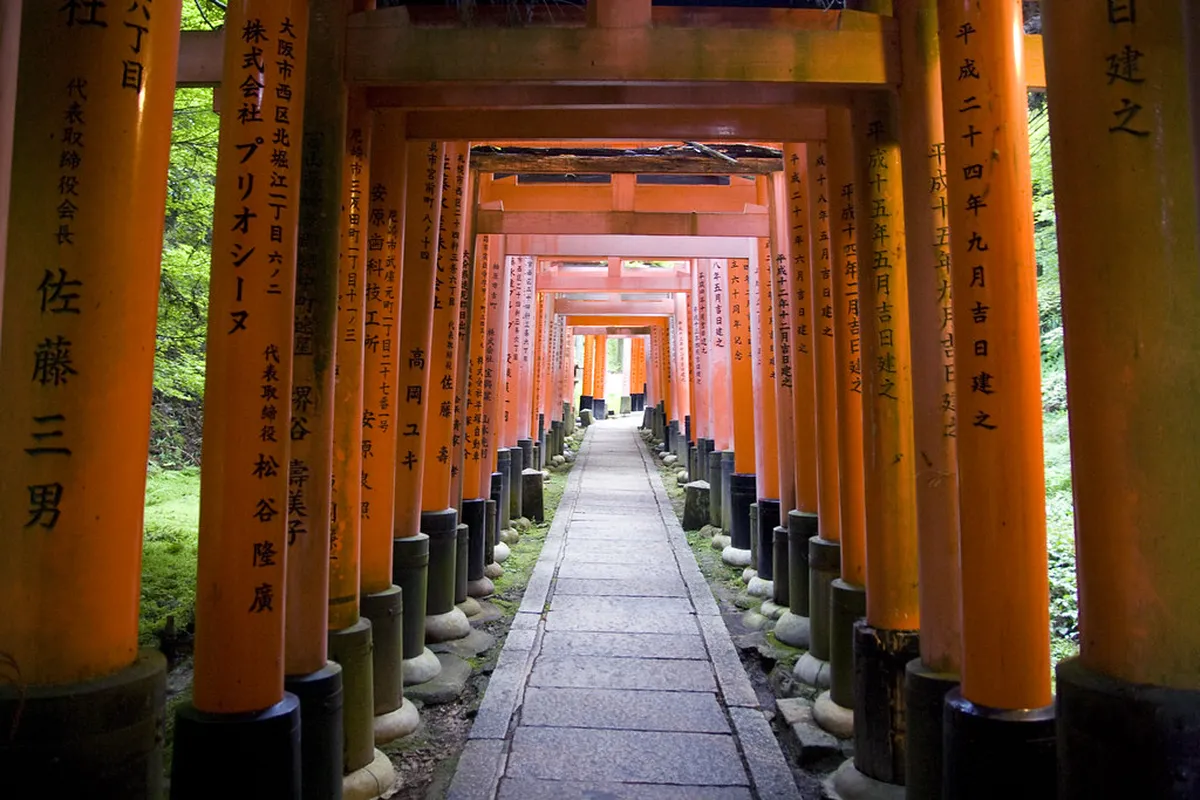
The thousands of torii gates came later. The custom of donating gates as offerings to Inari began roughly 400 years ago during the Edo Period (1603–1868), when merchants and business owners sought the favor of the god of commerce and prosperity. The tradition grew gradually into the dense orange tunnels you see today, with over 10,000 gates covering the mountain in total. Anyone can still donate a gate in 2026: prices range from around 400,000 yen for a small gate up to over 1,000,000 yen for a large roadside gate, depending on size and placement.
One lesser-known fact: Nintendo's creator Shigeru Miyamoto was inspired by Fushimi Inari when designing the Star Fox franchise. From the Yotsutsuji viewpoint near the summit, you can see the Nintendo headquarters in the distance — a small reward for those who make the climb.
Practical Information: Access, Hours, and JR Pass Tips
Reaching the shrine is simple once you understand the two nearby train stations and how they differ. Inari Station on the JR Nara Line sits directly across from the main entrance gate and is the correct stop for travelers using a JR Pass. The trip from Kyoto Station takes just five minutes and costs 150 yen without a pass. This is the fastest and most direct approach to the shrine entrance.
If you are coming from the Gion district or the Sanjo and Shijo areas, take the Keihan Main Line instead. Get off at Fushimi-Inari Station, which requires a five-minute walk through a local shopping street before you reach the shrine. Important: your JR Pass does not cover the Keihan Line, so you will pay the Keihan fare separately. Travelers coming from Gion often save 20 minutes by taking the Keihan train rather than backtracking to Kyoto Station for the JR line.
The shrine is open 24 hours a day, every day of the year, with no admission fee. There are no ticket booths, no timed-entry slots, and no last-entry cutoff. You can arrive at midnight and walk the entire mountain if you choose — flood lamps illuminate the lower trails and the Senbon Torii section throughout the night.
- JR Nara Line from Kyoto Station to Inari Station: 5 minutes, 150 yen (JR Pass valid)
- Keihan Main Line from Shijo Station to Fushimi-Inari Station: 8 minutes, 220 yen (JR Pass not valid)
- Admission: free, open 24 hours
- Address: 68 Fukakusa Yabunouchicho, Fushimi Ward, Kyoto 612-0882
The 6 Main Features of Fushimi Inari
The Romon Gate stands as the grand entrance and was donated by the famous warlord Toyotomi Hideyoshi in 1589. Behind it lies the main hall (Haiden), where visitors toss coins into the offering box, clap twice, and bow in prayer. Look to the left of the main hall for a table of cylindrical wooden fortune containers — shake one out, report the number, and pay 200 yen for your omikuji fortune paper.
Just to the right of the dance stage sits Higashimaru-jinja, a small subshrine dedicated to the god of academic success. Students preparing for university entrance exams come here to fold 1,000 origami cranes as a wish-granting ritual. It is rarely crowded, takes only a few minutes to visit, and offers a quiet contrast to the busy main precinct.
The Senbon Torii consists of two dense parallel rows of gates that create a stunning orange tunnel. This is the most photographed section of the shrine and has appeared in international films including Memoirs of a Geisha. Continue through to the Okusha Inner Shrine to try the Omokaru stone challenge: make a wish, then lift the heavy rock — if it feels lighter than expected, your wish will be granted.
The secret bamboo forest is the feature most visitors miss entirely. After you exit the Senbon Torii, enter the next shrine courtyard and turn left to follow the main path. Within a few minutes you will see a side path on your right heading uphill — follow it for a few minutes to reach a quiet grove of tall bamboo that feels completely separate from the crowds below. The sign pointing to it is written only in Japanese, which is exactly why most tourists walk past it.
Kumataka-sha is a small shrine beside a quiet pond where people pray to find lost objects. The mountain summit, topped by Kami-no-Yashiro shrine at 233 meters, marks the highest point of the pilgrimage circuit. Both destinations reward those who continue past the Yotsutsuji viewpoint, where the majority of visitors turn back.
Navigating the Fushimi-Inari Hike: Summit vs. Viewpoint
Choosing the right path depends on your fitness level and the time you have available. The hike data: roughly 5 km round trip to the summit, approximately 3 hours at a relaxed pace, moderate difficulty due to stone staircase climbing, 233 meters total elevation gain. The surface is paved stone throughout — regular trainers are fine in dry weather, but the steps become slippery after rain.
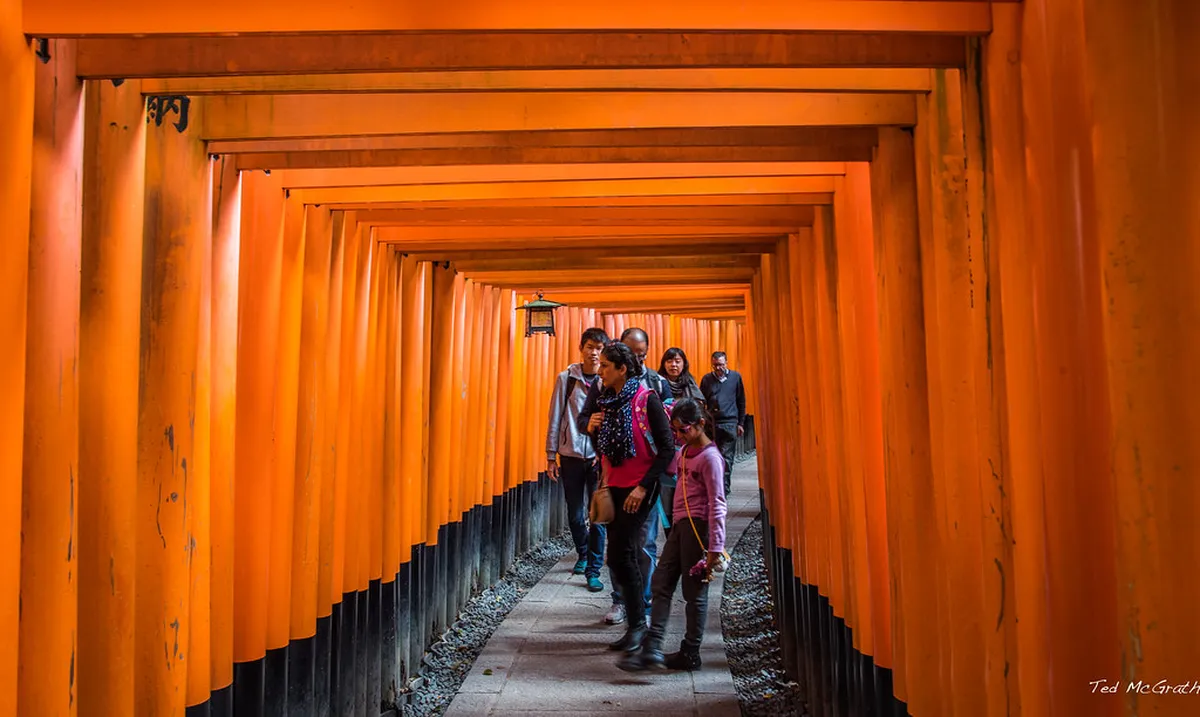
Most tourists walk only the lower trail to the Senbon Torii and back to the main hall, which takes about 45 minutes and covers the densest concentration of gates. This area provides the best photo opportunities but also the heaviest crowds from 09:30 onwards. Use this Google map of the Fushimi-Inari hike route to plan your path before arriving.
The Yotsutsuji intersection, about halfway up, is the decision point. Teahouses here sell drinks and shaved ice in summer — a genuinely welcome stop on a humid Kyoto afternoon. From Yotsutsuji the view takes in all of southern Kyoto and extends toward Osaka. Many visitors are satisfied here and turn back, which is a perfectly reasonable choice. Allow 1.5 to 2 hours for the lower shrine plus the walk to Yotsutsuji and back.
Hikers who continue to the true summit pass three smaller shrines: Shimo-no-Yashiro, Naka-no-Yashiro, and finally Kami-no-Yashiro at the top. Past the summit the pilgrimage circuit loops through Gozen-dani and Yakurikisha — the latter has a small waterfall where dedicated Shinto practitioners pray standing under the cold water. The full circuit returns you to Yotsutsuji, from which you retrace your steps down. Allow 2.5 to 3 hours total for the complete circuit. One navigation warning: at the Mitsu-tsuji junction on the way down, turn hard right and descend the steeper steps — going straight sends you on a long winding detour.
One hazard no competitor guide covers plainly: wild boar live in the upper forest and occasionally appear on the trails, especially at dusk and at night. They are generally shy but can be aggressive if startled or if young are nearby. Keep noise to a minimum in the upper sections after dark and do not approach them.
Wild boar live in the upper forest above Yotsutsuji and are most active at dusk and after dark. Keep noise low in those sections and do not approach them. Trail lighting also diminishes above Yotsutsuji — bring a torch if you plan to hike after sunset.
Japan's Shinto Shrine Etiquette and Bonus Tips
Respecting Shinto traditions is essential when visiting one of the most sacred sites in Japan. Start by purifying your hands at the stone temizuya (purification fountain) near the entrance gate. Use the ladle to rinse your left hand first, then your right, then pour water into your left palm and rinse your mouth — spit the water to the side, not back into the basin. Check the official guidelines on the Fushimi Inari Taisha website for the full list of rules before you arrive.
At the main hall, follow the standard Shinto prayer sequence: toss a coin into the offering box, bow twice deeply, clap twice sharply, then bow once more. This two-bow, two-clap, one-bow sequence (ni-rei, ni-hakushu, ichi-rei) is standard at most Shinto shrines across Japan. Speak quietly throughout the main precinct. Loud conversations and phone calls are disrespectful.
Photography rules follow a clear pattern. You are welcome to photograph anywhere along the open trails, the torii corridors, the sub-shrines, and the forest paths. Photography is strictly forbidden inside the main prayer halls themselves — if you see a "no camera" sign posted at a building entrance, respect it. Do not use a selfie stick on the narrow Senbon Torii path: the gates are spaced tightly and the crowds are dense. Blocking the path for a photo is the single most common complaint from other visitors.
Dress practically rather than formally. The trails involve significant stair climbing and become warm in summer. Closed-toe shoes are required for the upper trails. There is no dress code enforced at the entrance, but visitors who look visibly disrespectful (bare feet, swimwear) have been asked to cover up at the main hall.
Eating Near Fushimi Inari: Before and After the Hike
A street food market lines the approach path between the train station and the Romon Gate. Vendors sell Kyoto-style classics including okonomiyaki (savory pancakes), takoyaki (octopus balls), and shaved ice in summer. Most stalls open by 08:30, making it practical to grab something before you start climbing. The market is busiest from 10:00 onwards, so eating before the main crowds arrive means faster service and warmer food.
For a sit-down early breakfast, several small cafes in the Fushimi neighborhood open from 08:00. The Dragon Burger Fushimi Inari Shop is a well-regarded option near the shrine entrance, popular with visitors who want something more substantial before tackling the full hike. Traditional Japanese set-meal eateries (teishoku) near both train stations typically offer grilled fish, miso soup, and pickles from around 07:30.
On the trail itself, vending machines appear at regular intervals up to the Yotsutsuji intersection. Teahouses at Mitsu-tsuji and Yotsutsuji serve hot tea, cold drinks, and shaved ice. Above Yotsutsuji, facilities become sparse — carry water if you plan to hike the full circuit, especially in summer when temperatures can reach 35°C in the exposed upper sections.
Post-hike, the area around Nishiki Market in central Kyoto offers far more variety for lunch. The walk from Fushimi-Inari Station to Nishiki via the Keihan Line takes about 20 minutes and drops you directly into the market street. Many visitors combine the morning shrine visit with an afternoon of food exploration in central Kyoto along this exact route.
Fushimi Otesuji Shopping Street and Local Sake Tasting
The Fushimi district is famous across Japan for its exceptionally pure underground water, which feeds both the shrine's sacred springs and the city's historic sake breweries. Fushimi is the second-largest sake brewing district in Japan after Nada (Kobe), and several working breweries sit within a 15-minute walk of the shrine entrance. This combination — spiritual pilgrimage in the morning, sake culture in the afternoon — is the defining Fushimi experience that most visitors miss entirely by returning to central Kyoto immediately after the hike.
The Fushimi Otesuji Shopping Street is a covered arcade that runs through the neighborhood, offering practical local shopping away from the tourist-facing stalls near the shrine gate. Shops here stock locally made ceramics, pickled vegetables, and sake-related souvenirs at prices noticeably lower than the shrine entrance market. Because the arcade is covered, it works well as a rain-day alternative when the mountain trails are slippery and less appealing.
The Gekkeikan Okura Sake Museum sits about 15 minutes on foot from the shrine along the Uji River canal. The museum documents 350 years of sake production on this site and includes a tasting of three house varieties. Admission is 600 yen. The canal path connecting the shrine to the museum is pleasant and largely flat, passing traditional machiya townhouses and willow trees — a quieter walk than anything inside the shrine grounds.
Other historic breweries in the area include Kizakura and Kinshi Masamune, both of which offer informal tasting counters. None require advance reservations for drop-in tasting. Budget roughly one to two hours for a sake district detour, and note that all breweries are closed on irregular holidays — check their websites before visiting in 2026.
Best Times to Visit for Photography and Crowds
The shrine is free to enter, open 24 hours, with no ticket booths or timed-entry slots. JR Pass holders: take the JR Nara Line to Inari Station (5 min, directly opposite the main gate). Visitors coming from Gion or Sanjo save 20 minutes by taking the Keihan Line to Fushimi-Inari Station instead.
Fushimi Inari receives approximately 10 million visitors per year, making it the most visited shrine in Japan. Crowd management is the primary planning challenge. The three best strategies: arrive at sunrise, visit on a weekday, or go at night after 18:00. Of these, sunrise is the most effective — the shrine has a completely different character in the early morning quiet, and the orange gates photographed in soft pre-dawn light look strikingly different from midday shots.
Sunrise times vary significantly by season. In summer, sunrise falls around 05:00–05:30, meaning a crowd-free window of only 90 minutes before other early visitors appear. In winter, sunrise is around 07:00, making a 07:00 arrival far more practical for most travelers. Tour buses typically arrive from 09:30 onwards. The Senbon Torii becomes densely packed by 10:00 on any day of the week during peak season (mid-March to early April for cherry blossoms, late November for autumn leaves).
The upper mountain beyond Yotsutsuji is significantly quieter at any hour. If you visit during peak hours, skip a long wait at the Senbon Torii and walk directly to the upper trails — you will have a far more peaceful experience and see equally impressive gate corridors. Higher sections of the mountain offer clearer photos without other people in the frame.
Night visits are genuinely worthwhile. Lanterns illuminate the Senbon Torii section, and the lower trails are lit by flood lamps. The atmosphere after 21:00 is dramatically different from daytime — cool, quiet, and genuinely atmospheric. One practical caveat: the trail lighting diminishes above Yotsutsuji, so bring a torch if you plan to go higher after dark. And exercise caution with the wild boar in the upper forest sections, which are more active at night.
Unlike most Kyoto attractions, Fushimi Inari is not dramatically transformed by cherry blossoms or autumn leaves — the mountain is predominantly evergreen cedar and cypress. This is actually an advantage: the shrine is consistently impressive year-round and is a better choice than season-dependent attractions during the shoulder months of June–July or January–February when Kyoto crowds are lighter overall.
Fushimi Inari FAQ: Answers to Common Traveler Questions
Many travelers have similar questions when planning their first visit to this massive shrine complex. The answers below cover the most frequent practical concerns to help you prepare for a smooth and enjoyable trip.
Beyond the Shrine: Best Kyoto Food Tours and Day Trips
Kyoto offers many other incredible sites once you have explored the orange gates of Fushimi. Consider visiting the Arashiyama Bamboo Grove for another iconic nature walk. The two sites are often compared, but they reward different types of visitors — Fushimi is spiritual and physically demanding, while Arashiyama is scenic and relatively flat.
Many travelers combine this shrine visit with a trip to historic Nara, which is only 45 minutes from Kyoto Station on the JR Nara Line — the same line that stops at Inari Station. Nara's free-roaming deer and Todai-ji temple make for an easy and memorable same-day extension. Check our Kyoto attractions guide for more ideas on building your full itinerary around these complementary day trips.
For organized tours departing from Fushimi Inari, several operators run early-bird English guided walks that start at 07:00 and finish before the main crowds arrive by 09:30. A three-hour Fushimi Inari hidden hiking tour typically costs 3,500–5,000 yen per person and covers the bamboo forest, the upper trail sub-shrines, and the Omokaru stone challenge — sections that independent visitors often miss on their first visit. Booking a guide is particularly worthwhile if you have only one morning in Kyoto and want to maximize what you see.
Frequently Asked Questions
Is there an entrance fee for Fushimi Inari Taisha?
No, the shrine is completely free to enter for all visitors. You can explore the entire mountain and all the torii gate paths without paying any admission fees. This makes it one of the best value attractions in the city of Kyoto.
How long does the full hike to the summit take?
A full round trip to the summit usually takes between two and three hours. This depends on your walking speed and how many photos you stop to take along the way. Most people find the Yotsutsuji intersection to be a satisfying turning point.
Can I visit Fushimi Inari Taisha at night?
Yes, the shrine grounds never close and are accessible 24 hours a day. Walking through the gates at night is a unique experience with atmospheric lantern lighting. It is also the best way to avoid the large daytime crowds completely.
Are there public restrooms available on the hiking trail?
Public toilets are available at the base of the shrine and near major intersections like Yotsutsuji. However, facilities become much more sparse as you climb higher toward the mountain summit. It is best to use the restrooms near the entrance before starting.
Fushimi Inari Taisha remains a must-see destination for anyone visiting Japan in 2026.
The combination of spiritual history and scenic hiking makes it a truly unique experience for all.
Follow these tips to make the most of your time at this legendary and sacred shrine.
Your journey through the thousand gates will likely be a highlight of your entire trip to Kyoto.
For more Kyoto planning, see our Things to Do in Kyoto, Kyoto Itinerary, and Kyoto Landmarks guides.


