

Nishiki Market is often called Kyoto's Kitchen — a narrow covered arcade that has fed the city for over four centuries. More than 130 specialty stalls line the five-block stretch of Nishikikoji-dori, selling everything from fresh seafood and Kyoto pickles to handmade knives and matcha sweets. Many families have operated here for ten or more generations, passing down both recipes and sourcing relationships that no supermarket can replicate. Walking the full length takes under 90 minutes, but the density of flavour and history rewards a slower pace.
This visitor guide covers where the market sits, how to get there, the best things to eat in 2026, practical tips on timing and etiquette, and the nearby streets and sights worth combining into a half-day out. Whether you have two hours or a full afternoon, the sections below help you make the most of one of Kyoto's most visited — and most misunderstood — attractions.
Where Is Nishiki Market?
Nishiki Market runs east to west along Nishikikoji-dori, one block north of Shijo Avenue, between Teramachi Street in the east and Takakura Street in the west. The postal address is Nishikikoji-dori, Nakagyo Ward, Kyoto 604-8054. Entry is free and the arcade is open to the public every day, with most shops keeping hours of approximately 09:00–18:00 (individual stalls vary, and a handful close on Wednesdays).
The nearest subway stop is Shijo Station on the Karasuma Line — a three-minute walk from the west entrance. If you arrive at Kawaramachi Station on the Hankyu Kyoto Line, the east entrance is also around three minutes on foot. From Kyoto Station, take the Karasuma Subway Line one stop north to Shijo (220 yen, three minutes), then walk east. If you are staying in Gion, a 20–25-minute walk across the Shijo Bridge brings you directly to the market's east end.
The market is free to enter and open roughly 09:00–18:00 daily. Wednesdays see the most closures — more stalls shut on Wednesdays than any other day. A Tuesday or Thursday morning in May, June, September, or early November is the least crowded combination.
You can open the Kyoto map to see the exact layout of Nishikikoji-dori alongside nearby transit stops, hotels, and temples. Downloading an offline copy before you leave your accommodation is a sensible precaution, since the covered arcade can weaken mobile signals.
History and What Makes Nishiki Different
The market traces its origins to around 1310, when the area's cold underground spring water made it ideal for keeping fish fresh before refrigeration existed. Kyoto was Japan's imperial capital at the time, and the city's top chefs relied on this street for daily supplies. By the Edo period (1603–1868) it had evolved into the city's primary source of premium ingredients — a reputation it retains today.
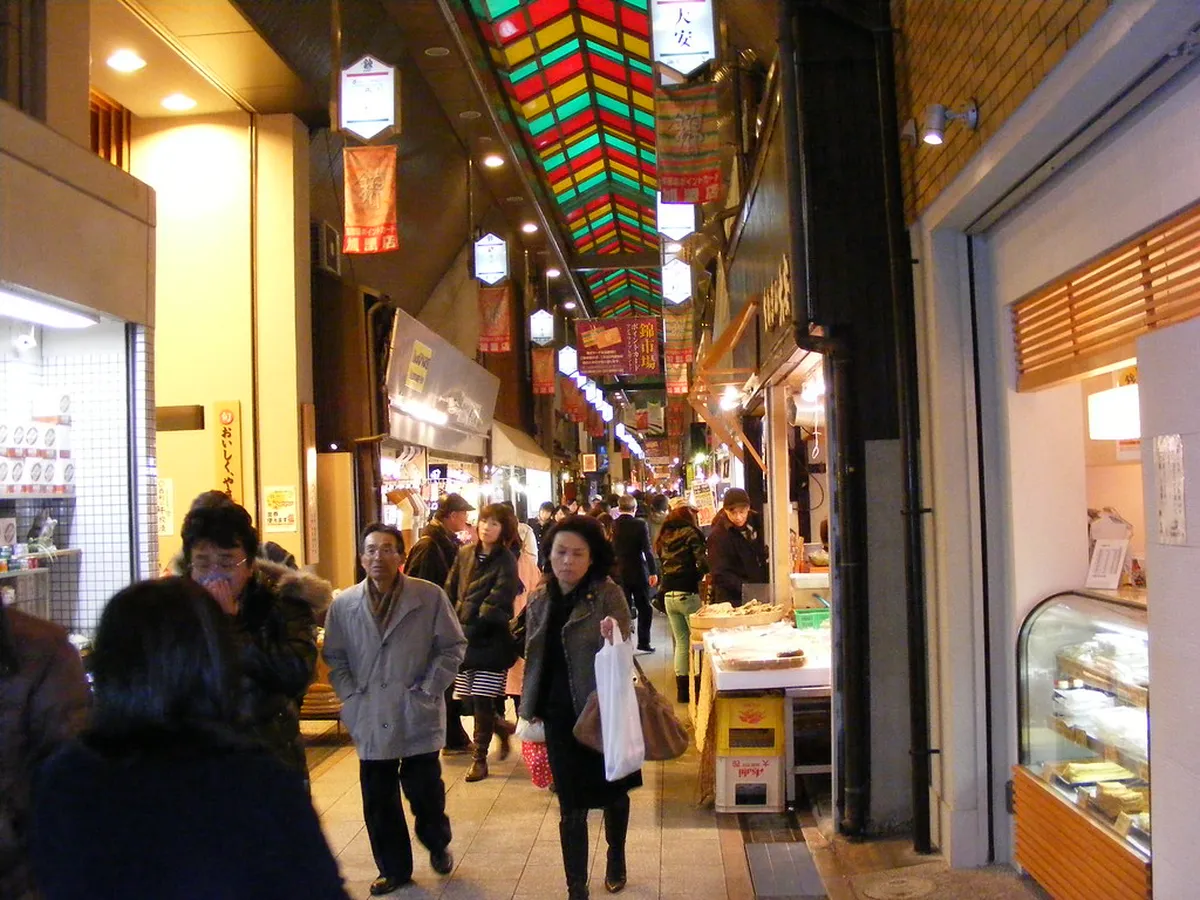
What separates Nishiki from a purely tourist food market is that roughly half of its operations still function as a wholesale supplier. Stalls that appear to be selling directly to visitors are simultaneously supplying Kyoto restaurants and — in some cases — high-end kitchens as far away as Tokyo. You can see this layer clearly if you arrive before 09:00: delivery boxes are stacked along the arcade, vendors are taking phone orders, and the pace is purposeful rather than leisurely. This working-market character is what prevents Nishiki from feeling like a theme park, and it is worth slowing down to notice.
The word "Nishiki" means brocade, a reference to the street's historically vibrant personality and its connections to Kyoto's textile industry. Fun fact: Aritsugu, the knife shop at the market's west end, has been operating since 1560 and originally forged swords for samurai before pivoting to kitchen knives. Visiting it — even just to look — gives a concrete sense of how deep the craft roots here run.
Must-Eat Food at Nishiki Market
Come hungry and plan to graze rather than sit for one big meal. Street food items typically cost between 200 and 600 yen, so trying four or five things from different stalls is both affordable and the most enjoyable way to eat here. Most stalls accept cards now, but several older vendors still prefer cash — bring at least 2,000 yen in coins and small notes to avoid awkward moments.
| Must-Try Item | Approx. Price | Notes |
|---|---|---|
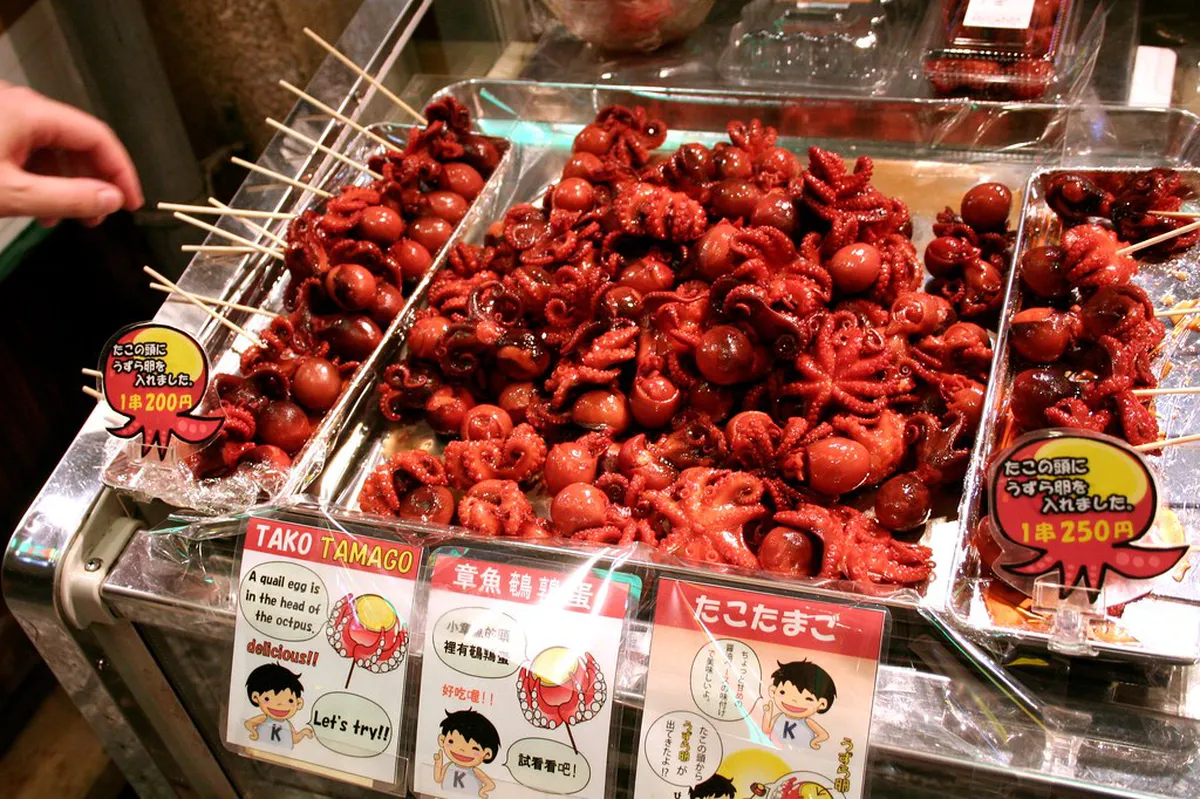
| Tako tamago | ~¥400 | Octopus stuffed with quail egg, skewered and glazed |
| Tamagoyaki | ~¥300 | Thick sweet rolled omelette; Kyoto style leans sweeter |
| Fresh yuba | ~¥400–600 | Warm tofu skin in dashi broth — a Kyoto delicacy |
| Wagashi sweets | ~¥200–400 | Seasonal: sakura in spring, chestnut in autumn |
| Wagyu beef skewer | ~¥800–1,200 | Grilled to order; excellent value vs a restaurant |
| Soy milk donuts | ~¥200 | Cooked to order; best eaten immediately |
The items that are genuinely worth seeking out include:
- Tako tamago — a small octopus stuffed with a quail egg, skewered and glazed. It is the market's most photographed snack. Expect to pay around 400 yen.
- Tamagoyaki — thick, lightly sweet rolled omelette. The Kyoto version leans sweeter than Osaka-style, which divides opinion but is worth trying once.
- Yuba — fresh tofu skin, a Kyoto delicacy almost impossible to find in this quality outside the city. Look for shops serving it warm in small bowls with dashi broth.
- Tsukemono — Kyoto pickles using seasonal vegetables preserved by methods passed down over generations. Kimura Pickles is one of the most respected stalls for these.
- Wagashi — Japanese sweets made from bean paste, mochi, or seasonal ingredients. Spring versions feature sakura; autumn versions use chestnut and sweet potato.
- Fried ayu (sweetfish) — a regional Kyoto specialty, skewered and grilled whole. The texture is delicate and the taste leans earthy. This is not available everywhere, which makes it one of the more authentic things to eat here.
- Soy milk donuts — fresh, lightly sweet rings cooked to order at a stall near the market's centre. The line moves quickly and they are best eaten immediately.
One item many visitors overlook: wagyu beef skewers grilled to order. They are more expensive (around 800–1,200 yen) but represent excellent value compared to a sit-down wagyu restaurant.
Beyond the Food: Shopping and Craft
Nishiki has always been about more than snacking. The market's most enduring shops sell high-quality kitchenware, ceramics, and specialty ingredients that are harder to find elsewhere in Kyoto. Aritsugu at the west end is the headline act — a knife shop with a 460-year history, where blades are still shaped and sharpened by hand. Prices start around 5,000 yen for a basic paring knife and rise steeply for professional-grade chef's knives. You can watch craftsmen at work and ask questions; staff speak enough English to guide you.
Ichihara Heibei Shoten sells personalised chopsticks — you choose the wood, the finish, and have your name or a message engraved. Allow around 45 minutes if you want engraving done in the shop, so do not leave this for the last stop if time is tight. Kidoairaku carries handmade ceramics that make practical souvenirs: cups, plates, and small bowls at a range of price points.
Near the eastern end, tea shops offer sample tastings of locally sourced matcha and sencha. Buying directly from these shops — rather than from department stores — usually means better provenance and a clearer story about which growing region the tea comes from. Several also sell gift sets that travel well.
Tips for Visiting Nishiki Market
Timing matters more here than at most Kyoto attractions. The market is busiest between 12:00 and 15:00, when day-trippers and tour groups converge. Arriving before 10:30 gives you a calmer experience with stalls fully stocked and vendors willing to chat. The early evening window — around 17:00 to closing — is another good option, particularly on weekdays; several stalls discount items they would otherwise have to discard.
Do not eat while walking — this rule is posted at both entrances and is observed by locals. Step aside near the stall where you bought your food, eat there, then move on. Avoid bringing large wheeled luggage during peak hours (11:00–16:00), as the lanes become almost impassable.
Do not eat while walking. This rule is posted at both entrances and is genuinely observed by locals. The arcade is only wide enough for three or four people standing side by side, and someone stopping to photograph food while walking creates an instant bottleneck. The correct practice is to step to the side near the stall where you bought your food, eat there, then move on. This also gives you a moment to actually taste what you bought rather than rushing to the next thing.
Avoid bringing large wheeled luggage into the market, especially between 11:00 and 16:00. The lanes become almost impassable when someone tries to navigate a full-sized suitcase. Leave bags at your hotel or at a coin locker at Shijo or Kawaramachi stations before entering. For families with young children, a front-carry baby carrier is much easier than a stroller in the tight spaces.
Wednesdays are the worst day to visit — more stalls close on Wednesdays than any other day of the week. Sundays can be very crowded due to domestic tourists. A Tuesday or Thursday morning in the shoulder season (May, June, September, early November) is the least congested combination in 2026.
Nishiki Tenmangu Shrine and Nearby Streets
At the market's eastern end, just as Nishikikoji-dori meets Teramachi Street, sits Nishiki Tenmangu Shrine. This compact Shinto shrine is dedicated to Sugawara no Michizane, the deity of learning and commerce — an apt patron for a market street. Look for the bronze bull near the entrance: rubbing its nose is said to bring good luck in business and study. The shrine's paper lanterns glow warmly in the late afternoon and make for good photographs.
Immediately to the north and south of the shrine, the Teramachi and Shinkyogoku covered arcades extend for several blocks. These are general shopping streets rather than food markets — a mix of souvenir shops, clothing retailers, and 100-yen stores. Daiso occupies a large space near Nishiki Tenmangu and is useful for small gifts. The outdoor gear brand Montbell has a shop here if you need trail supplies for a hike to Fushimi Inari Taisha.
The combination of Nishiki Market, the two arcades, and the shrine creates a natural east-to-west (or west-to-east) walking loop that takes two to three hours at a relaxed pace. Most visitors find this more satisfying than rushing through any one of the three separately.
How to Plan a Half-Day Around the Market
A practical sequence for a first visit: arrive at the Takakura (west) end at 10:00 and walk east at a slow pace, stopping to taste and look but not buy yet. Reach the Teramachi (east) end by 11:00, visit Nishiki Tenmangu Shrine, then reverse direction and buy the items you identified on the first pass. This prevents impulse spending early and ensures you see the full range of what is available before committing.
After the market, the Gion district is a 15-minute walk east across the Shijo Bridge. This pairs well as an afternoon activity — the narrow machiya townhouse streets of Hanamikoji-dori offer a completely different side of Kyoto's history. If you prefer temples, Kiyomizu-dera temple is about 20 minutes on foot from the market's east entrance and offers panoramic views of the city from its famous wooden stage.
For a longer day, the Arashiyama Bamboo Grove is on the city's western edge — best reached by Hankyu train from Kawaramachi or Arashiyama Line tram. Start with the market and the central district in the morning, then head west in early afternoon when the bamboo grove is slightly less crowded than at peak midday.
Staying Near Nishiki Market
The Nakagyo-ku district surrounding the market is one of the best bases for a central Kyoto stay. You are within walking distance of Gion, the Imperial Palace grounds, and the main shopping streets, and the subway grid makes temple districts to the north and south easy to reach. Booking three or more months ahead is essential for spring (late March to early May) and autumn (mid-October to mid-November) when accommodation demand across Kyoto peaks sharply.
Business hotels around Shijo-Karasuma intersection offer compact, clean rooms at 8,000–14,000 yen per night. These are efficient for solo travelers and couples who plan to spend most of their time outdoors. For a more traditional experience, several ryokan operate in the streets north of Nishikikoji, with kaiseki dinner services that often source ingredients directly from the market — a satisfying way to connect your morning browsing with an evening meal.
Budget travelers can find guesthouses and capsule hotels in the nearby Kawaramachi area, typically 4,000–7,000 yen per person. These are practical if you want central access without the cost of a full hotel room, and the proximity to the market means early-morning visits before the crowds arrive are genuinely easy to arrange.
Coffee Shop Carib
When the market's energy becomes overwhelming, Coffee Shop Carib is worth finding. This retro Showa-era cafe has operated near the market for decades and is a genuine local haunt rather than a tourist-facing business. The interior features dark wood furniture, soft lighting, and jazz playing at low volume — a deliberate contrast to the noise outside.
The menu covers thick-cut toast, simple sandwiches, and traditional Japanese-style drip coffee. Prices are low by central Kyoto standards. Market vendors have been stopping here for their morning coffee long before the tourist rush, which tells you something about the quality and consistency. The entrance can be difficult to spot — look for a small sign and a traditional wooden storefront tucked among the food stalls. Once inside, the difference in atmosphere from the arcade is immediate.
Is Japan's JR Rail Pass Worth It?
For visitors whose Japan trip is primarily based in Kyoto, the national JR Pass often does not break even in 2026. Following price increases, the 7-day pass costs around 50,000 yen. You would need multiple Shinkansen journeys — at minimum Tokyo–Kyoto return (around 28,000 yen for two one-way Nozomi tickets) plus a side trip to Hiroshima or further west — to justify that cost. If your itinerary is Kyoto-centred with day trips to Osaka and Nara, buy individual tickets or a regional pass instead.
Within Kyoto city, the JR network is largely irrelevant for getting to major attractions. The Karasuma and Tozai subway lines, Hankyu and Keihan railways, and the city bus network cover the temple districts more directly. An IC card (Suica or ICOCA, loaded at any station) handles all of these with a single tap. For the Nishiki Market area specifically, you will rely entirely on the subway and your own feet — the JR Pass adds nothing.
Alternatives worth considering: the Kansai Area Pass covers Shinkansen between Osaka, Kyoto, Nara, and Kobe at a lower price. The Kansai Thru Pass covers private railways and buses that the national JR Pass explicitly excludes. Check the latest prices and route coverage at the official JR or Klook sites before you leave home, since 2026 pricing updates have shifted the calculus compared to prior years.
other guides you may like...
Your Kyoto itinerary should include more than just the food market. Many visitors enjoy heading east to explore the stunning architecture of Kiyomizu-dera temple. This historic site offers panoramic views of the city from its famous wooden stage. It is especially beautiful during the cherry blossom and autumn leaf seasons.
For a change of pace, consider a morning trip to the Arashiyama Bamboo Grove on the western side of town. Walking through the towering stalks of green bamboo is a truly ethereal and peaceful experience. You should aim to arrive early to avoid the largest crowds and get the best photos. It is one of the most iconic natural sights in all of Japan.
No trip to the region is complete without visiting the thousands of red gates at Fushimi Inari Taisha. This shrine is dedicated to the god of rice and is a favourite for hikers and photographers. The path up the mountain offers various levels of difficulty depending on how far you want to go. It is a great way to experience the spiritual side of the city's heritage.
Frequently Asked Questions
Where is Nishiki Market?
Nishiki Market is located in central Kyoto, running parallel to Shijo Avenue. It spans five blocks between Teramachi and Takakura streets in the Nakagyo-ku district. You can easily reach it via the Karasuma or Kawaramachi subway stations. For more details, check our Kyoto guide.
Which nishiki market visitor guide options fit first-time visitors?
First-time visitors should focus on the main thoroughfare to experience iconic snacks like Tako Tamago and soy donuts. Arriving before 10:00 AM is the best way to avoid the heaviest crowds. Most people find that a self-guided walking tour from east to west provides the best introduction to the market's variety.
How much time should you plan for nishiki market visitor guide?
You should plan to spend approximately two hours exploring the market at a leisurely pace. This allows enough time to browse the stalls, wait in short lines for food, and visit the Nishiki Tenmangu Shrine. If you plan to sit down for a meal or coffee, add another hour to your schedule.
What should travelers avoid when planning nishiki market visitor guide?
Avoid visiting the market on Wednesdays or Sundays when many individual stalls may be closed. You should also refrain from eating while walking to respect local etiquette and keep the paths clear. Do not bring large luggage or strollers into the market during peak hours as the lanes are very narrow.
Nishiki Market remains one of the most vibrant and essential experiences for any visitor to Kyoto. It offers a unique window into the culinary traditions that have shaped the city for centuries. By following this guide, you can navigate the crowds and find the very best flavours available. Your journey through the market will likely be one of the most memorable parts of your trip.
Remember to respect the local customs and enjoy each bite with mindfulness and gratitude. The vendors take great pride in their work and appreciate polite and curious visitors. Whether you are a food lover or a history buff, there is something here for everyone to enjoy. We hope your visit to the heart of Kyoto's kitchen is absolutely delicious and full of discovery.
For more Kyoto planning, see our Things to Do in Kyoto, Kyoto Itinerary, and Kyoto Activities guides.


