Senso-ji stands as the oldest temple in Tokyo and serves as a major cultural landmark for international travelers. This ancient Buddhist site draws millions of visitors each year to witness its grand architecture and vibrant atmosphere. Walking through the iconic gates provides a deep sense of history right in the heart of the modern city.
Planning your trip to this spiritual hub requires a bit of local knowledge to avoid the heaviest crowds. Our senso-ji temple visitor guide covers everything from transport logistics to the best street food found nearby. Prepare to explore the colorful stalls of Nakamise-dori and the quiet corners of the temple grounds.
Senso-ji gates and Nakamise shopping street
The journey begins at Kaminarimon, the Thunder Gate, anchored by a 700-kg red paper lantern that towers nearly 4 meters tall. Bow once before passing beneath it — locals consider it the threshold between the secular city and sacred temple grounds. Statues of Fujin and Raijin, the gods of wind and thunder, guard the sides and were carved in the Heian period.
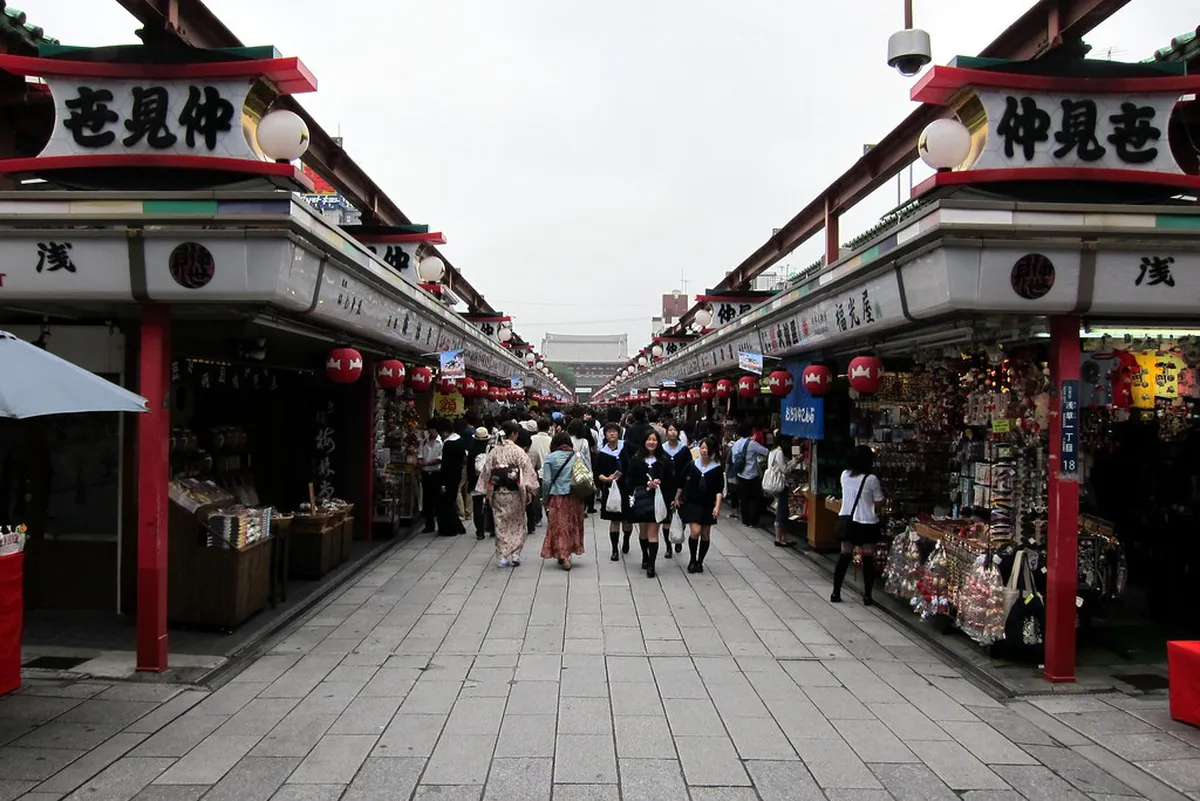
Beyond the gate stretches Nakamise-dori, a 250-meter shopping street with roughly 90 stalls that has operated continuously since the late 1600s. Vendors sell ningyo-yaki cakes, melon pan, folding fans, and yukata, and most refuse credit cards — carry small yen notes. Eating while walking is frowned upon here; step to the side of a stall to finish your snack before moving on.
Nakamise ends at Hozomon, the inner gate that houses the temple's sutra treasures and two massive Nio guardian statues. Walk around to the back to see the 4.5-meter straw sandals (waraji) donated by villagers from Yamagata — they're replaced every decade and symbolize Buddha's enormous strength. The five-story pagoda rises on your left as you exit Hozomon toward the Main Hall.
- Iconic Red Lantern at Kaminarimon Gate
- Location: Main Entrance
- Cost: Free access
- Best for: Photography
- Timing: Early morning
- Traditional Shopping Along Nakamise-dori Street
- Type: Market street
- Length: 250 meters
- Items: Snacks, crafts
- Vibe: High energy
The main hall, incense and temple rituals
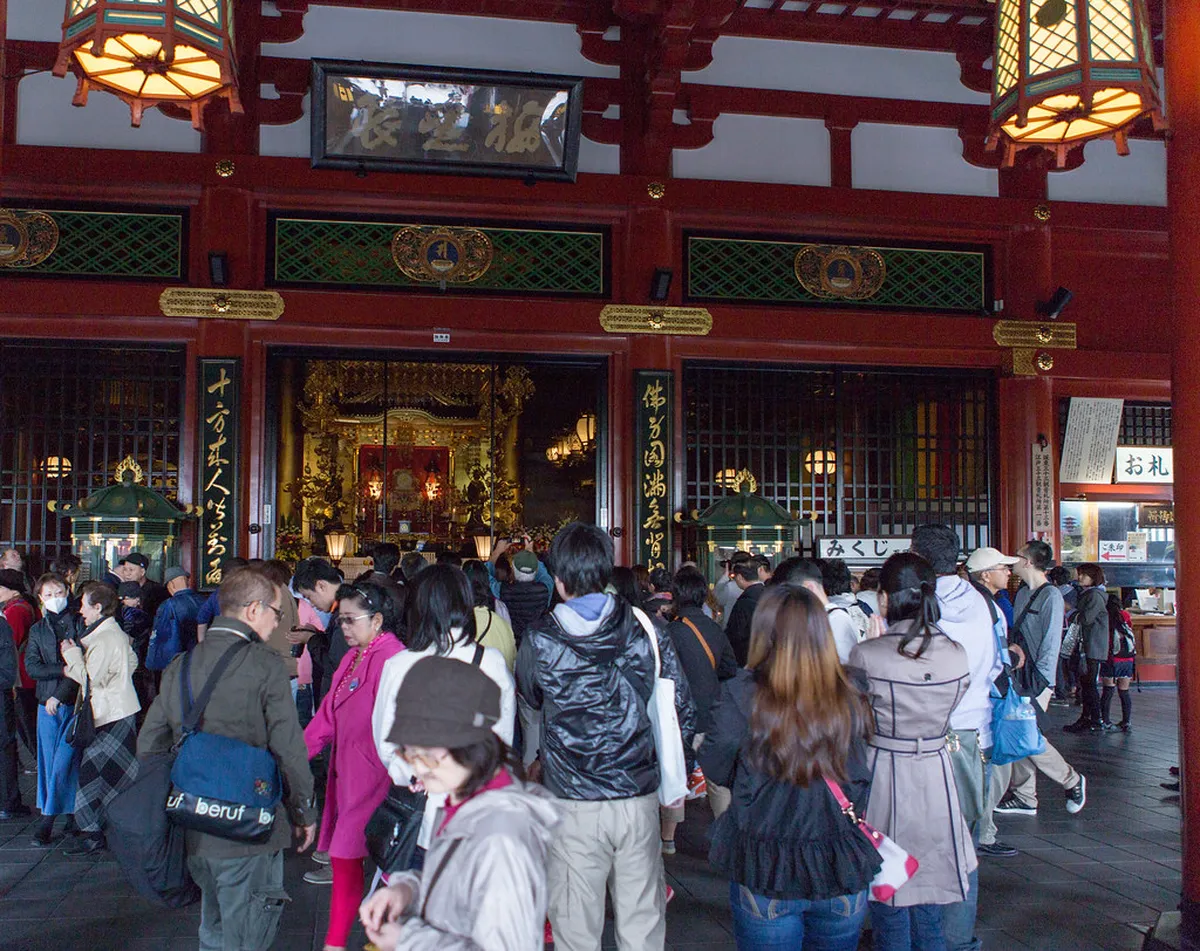
The Hondo, or Main Hall, is the spiritual heart of the complex where visitors pay their respects to Kannon. Inside, you will find intricate gold altars and beautiful ceiling paintings that depict dragons and goddesses. Respectful silence is encouraged while observers watch locals perform their daily prayers and rituals.
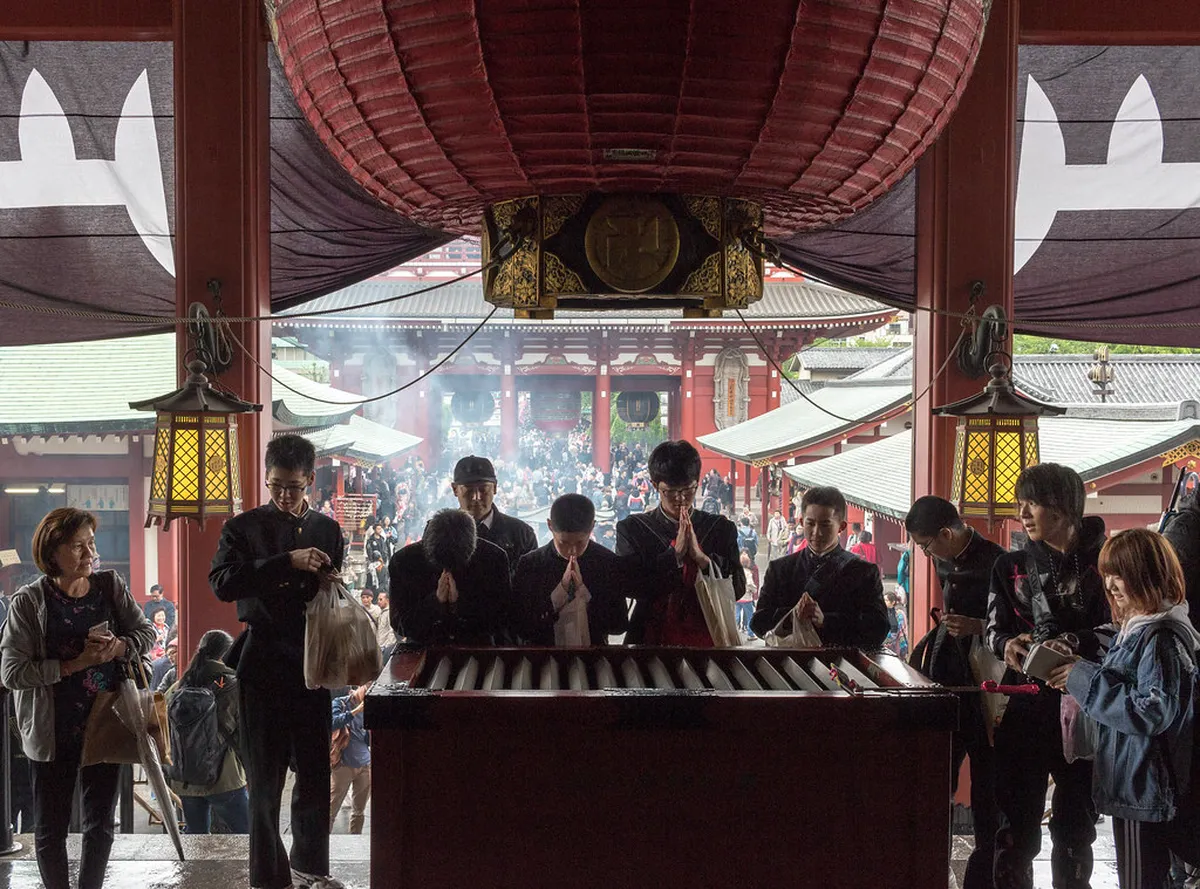
Before entering the hall, many people stop at the large incense burner located in the central courtyard. Wafting the smoke toward your body is believed to provide healing and protection from various ailments. This ritual is a core part of the experience for those seeking a deeper connection to the site.
You can also try your luck with Omikuji, which are traditional paper fortunes found in small wooden drawers. If you receive a bad fortune, follow the local custom of tying the paper to a nearby metal rack. This act helps leave the bad luck behind while you continue your journey through Tokyo attractions.
Pagoda, gardens and quieter temple grounds
The five-story pagoda stands tall on the left side of the main approach and is a striking architectural feat. While the interior is generally closed to the public, the exterior provides a perfect backdrop for scenic photos. Its elegant design represents the five elements of Buddhist philosophy: earth, water, fire, wind, and sky.
Nearby, the Dembo-in Garden offers a peaceful escape from the busy crowds of the main temple area. This private garden is often closed to the general public except during special seasonal exhibition periods. Check local listings in 2026 to see if the garden is open for your specific travel dates.
Exploring the smaller shrines tucked away in the corners reveals quiet koi ponds and stone statues. Asakusa Jinja, a Shinto shrine located right next to the Buddhist hall, shows the harmony of Japanese religions. These outdoor spots provide a much-needed break for travelers who want to enjoy a slower pace.
Entry fees and opening hours
| Feature | Detail |
|---|---|
| Entry fee | Free |
| Main Hall hours (Apr–Sep) | 06:00–17:00 |
| Main Hall hours (Oct–Mar) | 06:30–17:00 |
| Grounds | Open 24 hours |
| Kaminarimon lantern weight | 700 kg |
| Nakamise-dori length | 250 m (~90 stalls) |
| Evening illumination | Until 23:00 nightly |
Visiting Senso-ji is one of the best free activities available for families traveling through Japan. Children often enjoy the vibrant colors of the gates and the lively energy of the shopping street. The lack of an entrance fee makes it an ideal stop for those managing a tight travel budget.
Street food in Asakusa is both affordable and delicious, offering a variety of flavors for picky eaters. Try the freshly baked rice crackers or the sweet bean-filled cakes known as ningyo-yaki. Sample the famous melon pan at https://asakusa-kagetudo.com/en/ for a sweet treat.
Budget souvenirs like colorful keychains and small charms can be found for just a few hundred yen. Look for shops further away from the main gate to find slightly lower prices on similar items. Walking through the neighborhood is a great way to see authentic local life without spending any money.
Getting to Senso-ji and planning your visit
Asakusa Station is the gateway, served by four lines: Tokyo Metro Ginza, Toei Asakusa, Tobu Skytree, and the Tsukuba Express (one block west). From the Ginza Line, take Exit 1 — you will surface roughly 200 meters southeast of Kaminarimon Gate, a 3-minute walk. Avoid Exit A4 if you have luggage; it has stairs only and no elevator.
Arrive before 08:00 to photograph Kaminarimon with empty pavement; by 10:00 the crowd density on Nakamise can exceed 2 people per square meter and tour groups arrive in waves. The full complex is wheelchair-accessible: ramps lead into the Main Hall, accessible toilets sit beside the Five-Story Pagoda, and tactile paving lines the main approach. Strollers fit comfortably on Nakamise outside peak hours.
Pair Senso-ji with a 20-minute Sumida River walk to the Tokyo Skytree for a clean ancient-to-modern day plan.
The Asakusa Culture Tourist Information Center directly across from Kaminarimon is free, has an 8th-floor observation deck, and provides English maps — useful before entering the temple grounds.
Common first-timer mistakes to avoid: queueing at the wrong incense burner (the main jokoro is in front of the Hondo, not behind the pagoda), tying a good omikuji to the rack (only bad ones get tied — keep good fortunes with you), and ignoring the Asakusa Culture Tourist Information Center across from Kaminarimon, which has free English maps and an 8th-floor observation deck.
Staying near Senso-ji in Asakusa
Staying in Asakusa provides a unique opportunity to see the temple grounds after the sun goes down. The neighborhood retains a traditional charm that is hard to find in more modern districts like Shibuya. Booking your accommodation several months in advance is essential due to the high demand for local rooms.
Compare accommodation in our Tokyo area guide. Check the total room price for your dates and the walk to a convenient station before booking.
If you prefer a more traditional experience, look for a ryokan or a Japanese-style inn nearby. These accommodations often include tatami mats and communal baths for a truly authentic cultural experience. Living in the heart of Asakusa allows you to enjoy the morning quiet before the city fully wakes up.
Visiting Senso-ji after dark
While Senso-ji is famous for its history, the area transforms into a glowing wonderland after dark. The temple buildings are illuminated every night until 11:00 PM, highlighting their intricate architectural details. Night photography here is spectacular because the crowds are much thinner than during the daylight hours.
You can see the vibrant city lights from across the river while walking through the nearby Sumida Park. This area provides some of the best night views in Tokyo without any entrance fees. The reflection of the neon signs on the water creates a beautiful atmosphere for an evening stroll.
For a higher perspective, head to the nearby observation decks to see the city sprawl into the distance. The mix of ancient structures and modern skyscrapers defines the unique visual identity of the Japanese capital. Exploring the neon-lit streets of Asakusa reveals hidden bars and late-night eateries for adventurous travelers.
Tea and snacks near the temple
Asakusa is a premier destination for anyone looking to sample authentic Japanese green tea products. Traditional tea houses near the temple offer matcha sets served with seasonal wagashi sweets. The bitter taste of the tea perfectly balances the sweetness of the traditional sugar treats.
Modern cafes in the area have also embraced matcha by creating innovative lattes and ice cream flavors. You can find shops that offer different levels of matcha intensity to suit your personal preference. Trying a high-intensity matcha gelato is a must-do activity for any dedicated food lover visiting the area.
Grab a matcha-flavored snack from a street vendor to enjoy while you walk through the temple grounds. Many of these treats are made fresh daily and use high-quality tea leaves from famous regions like Uji. The vibrant green color of these snacks makes them a popular choice for social media photos.
The history of Sensoji: It all started in the river
Tying a good omikuji fortune to the metal rack is a common mistake — only tie bad fortunes there to leave the bad luck behind. Keep a good fortune with you.
The legend of Senso-ji dates back to the year 628 when two brothers were fishing in the Sumida River. They pulled a golden statue of Kannon, the goddess of mercy, out of the water in their net. Despite returning the statue to the river, it kept coming back to them every time they cast their nets.
Recognizing the divine nature of the statue, a local chief converted his home into a small temple. This humble beginning eventually grew into the massive complex that stands in the district today. Over the centuries, the temple has survived fires, earthquakes, and the destruction of World War II.
The current buildings are mostly post-war reconstructions that remain faithful to the original Edo-period designs. These structures serve as a symbol of rebirth and resilience for the people of the Asakusa neighborhood. Learning this history adds a layer of meaning to every gate and hall you encounter during your visit.
Frequently Asked Questions
Which senso-ji temple visitor guide options fit first-time visitors?
First-time visitors should prioritize the Kaminarimon Gate and the Hondo Main Hall. These iconic spots provide the best introduction to the temple's history and religious significance. Be sure to check out the shopping on Nakamise-dori for classic souvenirs during your first trip to Tokyo.
How much time should you plan for a Senso-ji visit?
Plan to spend at least two to three hours exploring the main complex and the surrounding market streets. This allows enough time for photography, trying local snacks, and observing the rituals in the Main Hall. If you enjoy shopping, you may want to add an extra hour for Nakamise-dori.
Is Senso-ji Temple worth including on a short itinerary?
Yes, the temple is highly recommended even for short trips because of its central location and cultural importance. It offers a concentrated look at traditional Japanese architecture and spiritual life. Since entry is free, it is an efficient way to see a major landmark without complex booking requirements.
What should travelers avoid when visiting the temple?
Avoid visiting during the middle of the day on weekends if you want to skip the largest crowds. Travelers should also be careful not to block the pathways while taking photos near the gates. Always follow the local rules regarding where photography is prohibited, especially inside the sacred Main Hall.
What is the proper etiquette at the Senso-ji temple gate?
Bow once before passing through Kaminarimon Gate, walk along the side of the path rather than the center (the center is reserved for the deities), and waft incense smoke from the large jokoro burner toward your body before climbing the steps to the Main Hall. At the offering box, toss a 5-yen coin, bow twice, clap twice, pray silently, then bow once more.
How do I walk from Asakusa Station to Senso-ji?
From Tokyo Metro Ginza Line Asakusa Station, take Exit 1 and walk 200 meters northwest along Kaminarimon-dori — Kaminarimon Gate appears on your right within 3 minutes. From the Toei Asakusa Line, use Exit A4 (stairs only) or A5 (elevator) for a 5-minute walk.
When is the best time of day to visit Senso-ji in 2026?
Arrive between 06:00 and 08:00 for empty pavement and soft morning light, or return after 18:00 when the gates, pagoda, and Hondo are illuminated nightly until 23:00. Midday between 11:00 and 15:00 is the busiest window, especially on weekends and during sakura season in late March.
Senso-ji remains a cornerstone of the Japanese travel experience for its beauty and historical depth. By following this senso-ji temple visitor guide, you can navigate the crowds and find the best local treasures. Enjoy the unique blend of ancient tradition and lively street culture found only in Asakusa.
For more Tokyo planning, check out our best things to do in Tokyo, explore a Tokyo itinerary guide, and discover Tokyo's cultural experiences.