

Yakushi-ji Temple stands as one of Nara's most rewarding destinations for anyone who wants more than a quick photo stop. Founded in 680 CE by Emperor Tenmu as a prayer for his ailing wife, it has survived fires, wars, and centuries of neglect to emerge as a UNESCO World Heritage Site. The complex mixes an original 8th-century pagoda with vividly reconstructed vermilion halls — a pairing that makes the passage of 1,300 years feel immediate. Our yakushi-ji temple visitor guide covers what to see, how to get there, and how to make the most of your time on the grounds.
The temple sits in the Nishinokyo district, a quieter corner of Nara away from the deer parks of the city centre. It is one of the focal points of the Nara travel guide for anyone interested in early Japanese Buddhism. The site pairs naturally with Toshodai-ji Temple, a ten-minute walk to the north. Together they make a half-day circuit that most visitors find more atmospheric than the busier central sites.
Historical Significance and the Founding of Yakushi-ji
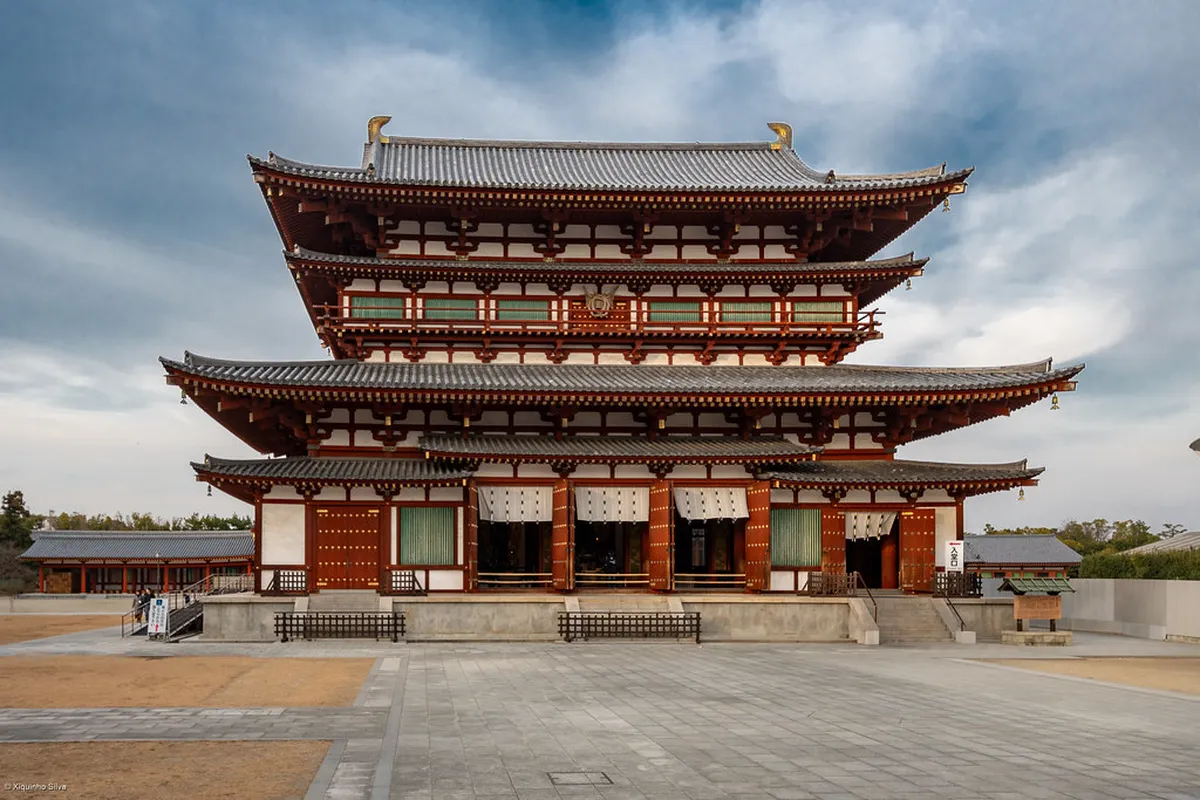
Emperor Tenmu commissioned Yakushi-ji in 680 CE as an act of devotion for the recovery of his consort, later Empress Jito. He died before the temple was finished, and it was Empress Jito who oversaw its completion around 698 CE. The practice of building temples to seek divine intervention was common among Nara-period nobles, and this particular vow gave the site its enduring identity as a place of healing.
The temple was originally built in Fujiwara-kyo, Japan's capital during the Asuka period. When the court transferred to Heijo-kyo — present-day Nara — in 710 CE, Yakushi-ji followed, relocating to its current site by 718. This move placed it within the emerging cluster of great temples that defined what is now called the Nara period (710–794 CE). Emperor Shomu later designated it one of the Seven Great Temples of Nanto, a status it retains in name today.
The centuries were not kind to the complex. Fires in 973 and 1528 destroyed most of the original structures. Only the East Pagoda survived intact. A decades-long reconstruction programme, championed by the head priest Koken Takada from the 1960s onward, has been steadily rebuilding the complex using original measurements and traditional techniques. The project is still ongoing in 2026, which means some visitors arrive to find scaffolding on peripheral structures — worth knowing before you go.
Unique Architectural Layout and Temple Complex
Yakushi-ji is credited as the first Japanese temple to feature two pagodas flanking a central main hall. This bilateral symmetry — known informally as the Yakushiji-style layout — was a departure from earlier single-pagoda arrangements and influenced subsequent temple construction across Japan. Standing at the main gate and looking north toward the Kondo, the paired pagodas frame the hall in a way that feels both monumental and composed.
The complex divides into two main precincts. The Hakuho Garan contains the Kondo (Main Hall), the East and West Pagodas, the Toindo (East Hall), and the Kodo (Lecture Hall). To the north, a short walk leads to the Genjo-sanzoin Garan, a separately administered complex dedicated to the Chinese monk Xuanzang. Both precincts are covered by the standard ¥1,100 adult admission.
Other structures worth noting include the Bussokudo (Hall of Buddha's Footprint) and the Hachiman Shrine tucked inside the compound. The open gravel courtyards between buildings are deliberately uncluttered, which gives the complex a calm, spacious quality that differs from the forested atmosphere of Todai-ji Temple. The bright vermilion paint on the reconstructed halls is intentional — it reflects how the complex would have appeared at its founding, not the bare wood aesthetic of later Japanese taste.
The East Pagoda: An Original 8th-Century Marvel
The East Pagoda looks six-storied but is actually three stories with decorative mokoshi pent-roofs between each floor. Standing between the weathered grey East Pagoda (730 CE) and the bright vermilion West Pagoda (rebuilt 1981) side by side is one of the most striking visual experiences in all of Nara.
The East Pagoda (Toto) is the sole structure on the grounds that has stood continuously since the Nara period. Completed in 730 CE, it rises 33.6 metres and is designated a National Treasure. The reason it appears to have six storeys when it is actually three is the presence of mokoshi — decorative pent-roof skirts between each main floor. This architectural device protects the timber structure and creates the pagoda's distinctive rhythmic silhouette. The American art historian Ernest Fenollosa described it as "frozen music," a phrase that has stuck.
A major 12-year restoration programme completed in 2021 stripped the pagoda down to its structural frame and rebuilt it using traditional techniques. The work involved some 40,000 cypress wood pieces and took craftsmen years to reassemble. The result is that the pagoda visitors see in 2026 is as close to its 8th-century appearance as modern conservation allows. The distinctive globe-shaped finial at the top is a direct replica of the original bronze casting.
Comparing the East Pagoda to the West Pagoda (rebuilt in 1981 in bright vermilion) side by side is one of the more striking exercises Yakushi-ji offers. The East looks weathered and grey; the West looks newly minted. They are technically identical in form. That contrast — the same design separated by twelve centuries of weathering — is something no photograph quite captures as well as standing between them.
The Yakushi Triad: Iconic Buddhist Sculptures
The Kondo houses the Yakushi Triad, three bronze figures created between 680 and 718 CE and designated a National Treasure. The central figure, Yakushi Nyorai (the Medicine Buddha), stands 2.5 metres tall. To his right is Nikko Bosatsu (Bodhisattva of the Sun) and to his left Gakko Bosatsu (Bodhisattva of the Moon). Originally gilded, the statues have acquired a dark black patina from centuries of incense smoke and weathering. This transformation gives them an intensity that gilt statues rarely possess.
The pedestal beneath Yakushi Nyorai is worth examining closely — most visitors walk past it without stopping. The bronze base is carved with relief motifs drawn from Greek, Persian, Hindu, and Islamic traditions: vine scrolls, floral patterns, and figures that would look at home in Gandhara or Sasanian Persia. These motifs arrived in Japan via the Silk Road trade networks that connected Nara to the Mediterranean world in the 7th and 8th centuries. This is a Buddhist statue in a Japanese temple decorated with the visual vocabulary of half a dozen ancient civilisations — a detail that no other site in Nara makes as viscerally legible.
Photography inside the Kondo is prohibited, so there is no photograph that does justice to the triad in situ. The only way to see it is to visit. Allow time to walk around the hall slowly; the bodhisattvas' postures and expressions change noticeably depending on the angle and the quality of the light.
The Genjo-sanzoin Garan and the Xuanzang Connection
A short walk north of the main precinct leads to the Genjo-sanzoin Garan, dedicated to the 7th-century Chinese monk Xuanzang (known in Japan as Genjo-sanzo). Xuanzang walked from China to India and back to collect Buddhist scriptures — a journey that inspired the Chinese novel "Journey to the West." The complex includes a small pagoda said to contain a portion of his remains, which were transferred here from China. It also houses a large exhibition hall built to display a series of paintings by the late Japanese artist Ikuo Hirayama.
Hirayama spent decades creating the mural series depicting Xuanzang's journey along the Silk Road. He donated the works to the temple before his death in 2009, and they are displayed in a purpose-built hall inside the garan. The murals run to a total length of approximately 49 metres and show the landscapes Xuanzang crossed from Xi'an to India. This is not a detail competitors typically mention: the Genjo-sanzoin complex is the only place in Japan where you can view this complete series in its intended setting.
The garan is quieter than the main precinct and tends to attract visitors with a specific interest in Buddhist history rather than general tourists. It is included in the standard ¥1,100 admission, so there is no reason to skip it.
Seasonal Beauty and the Temple Grounds
The open courtyards of Yakushi-ji change character dramatically across the year. Spring (late March to early April) brings cherry blossoms that frame the pagodas from the east side of the grounds. Autumn (mid-October to mid-November) is considered the most photogenic season: the ginkgo and maple trees near the Kodo turn orange and yellow against the vermilion of the West Pagoda. Summer is the quietest period for crowds, though the heat in Nara in July and August is significant. Winter visits are rare but the grounds in snow are genuinely striking.
The layout suits slow walking. Unlike forested temple sites, there is open sky above most of the complex, which means the light is consistent and good for photography from the outside. The main photo position — both pagodas visible together with the Kondo in between — is best captured from the area near the south gate in the morning, when the sun is behind you. Afternoon light catches the West Pagoda's vermilion from the east side.
Visitor Experience and Spiritual Practices
Yakushi-ji offers two participatory activities that most temples in Nara do not. The first is O-shakyo (sutra copying), available in a dedicated hall. Visitors trace Buddhist sutras onto special paper using a brush; the finished copy is then offered to the temple. The practice takes roughly 30 to 60 minutes and costs a modest fee separate from admission. No prior experience with Japanese calligraphy is required — the tracing format is designed for beginners.
The second is the Dharma talk (howa), given by resident monks in an accessible, often humorous style that is specifically aimed at non-specialist visitors. Talks typically last 20 to 30 minutes and do not require Japanese literacy to follow the general thread, though the content is in Japanese. The temple's monks have a reputation for engaging delivery; Yakushi-ji is specifically noted in Japanese travel writing as a temple where the talks are worth planning your schedule around rather than treating as optional.
Photography rules are worth knowing before you enter. Photography of the Yakushi Triad and other Buddhist statues inside the halls is prohibited. The grounds, pagodas, and exterior of all buildings are fully open to photography. Modest clothing is appreciated but not strictly enforced. The grounds are flat and accessible for strollers and wheelchair users across most paths.
Photography of the Yakushi Triad and all Buddhist statues inside the halls is prohibited. The open courtyards, pagodas, and all building exteriors are fully photographable — but put your camera away before entering any hall to avoid being asked to leave.
Practical Information for Visiting Yakushi-ji in 2026
Yakushi-ji is open daily 08:30–17:00, with last admission at 16:30. Admission for the standard precinct (Hakuho Garan plus Genjo-sanzoin Garan) is ¥1,100 for adults, ¥700 for junior and senior high school students, and ¥300 for elementary school children. Special seasonal openings — such as the Three Great Murals display in autumn — require an additional fee of around ¥1,000 for adults. Check the official site at yakushiji.or.jp before you visit, as these special openings are not always listed far in advance.
| Category | Detail |
|---|---|
| Adult admission | ¥1,100 (covers both precincts) |
| Junior / senior high school | ¥700 |
| Elementary school children | ¥300 |
| Special seasonal openings | Additional ~¥1,000 |
| Open hours | 08:30 – 17:00, last entry 16:30 |
| Nearest station | Nishinokyo (Kintetsu), 1 min walk |
Getting there is straightforward. From Kintetsu Nara Station, take the Kintetsu Nara Line to Yamato-Saidaiji (about 5 minutes), then transfer to the Kashihara Line and ride one stop to Nishinokyo Station (about 2 minutes). The temple entrance is a 1-minute walk from the station exit. Total travel time from central Nara is roughly 20 minutes. If you are coming from Osaka-Namba or Kyoto Station, plan for about 50 minutes each way via the same Kintetsu route. Drivers will find a paid parking lot on the south side of the complex (¥800 for standard cars).
Plan 1 to 1.5 hours for the main precinct and garan at a comfortable pace. Add another 30 to 60 minutes if you participate in O-shakyo or stay for a Dharma talk. Combining the visit with Toshodai-ji (10 minutes on foot) makes a logical half-day circuit. For a full day in the Nishinokyo area, extend the circuit to include Horyu-ji Temple (about 20 minutes by bus or train to the southwest).
Yakushi-ji's Role in Japanese Buddhism and Heritage
Yakushi-ji serves as the headquarters of the Hosso sect of Japanese Buddhism, one of the oldest Buddhist schools in the country. The Hosso school, based on the teachings transmitted by Xuanzang, focuses on the study of consciousness and perception in Buddhist philosophy. This is why the monk Xuanzang is so prominently honoured here — the entire Genjo-sanzoin Garan is an expression of the sect's intellectual lineage.
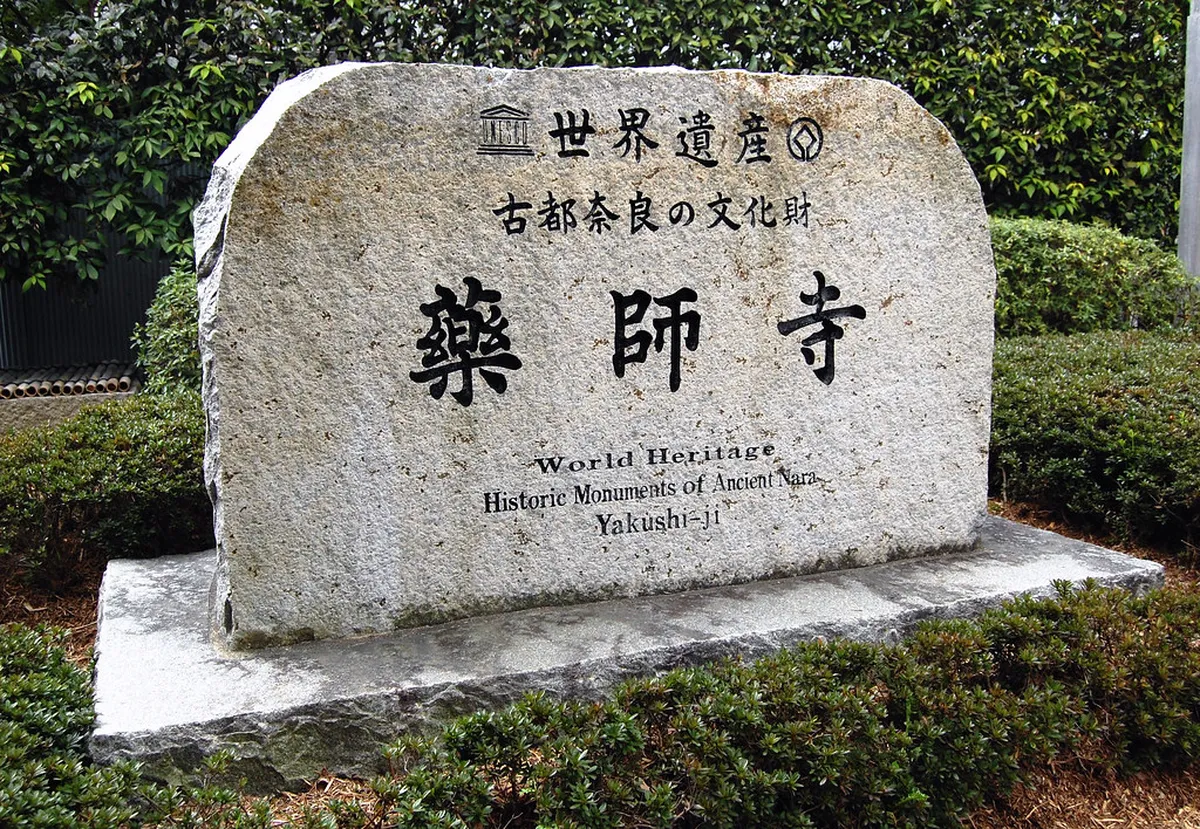
The UNESCO designation, conferred in 1998 as part of the "Historic Monuments of Ancient Nara" group listing, places Yakushi-ji in a cluster of eight sites. This cluster includes Kofuku-ji Temple, Kasuga Taisha, and Toshodai-ji, among others. The grouping reflects how intertwined these institutions are: they were built within decades of each other to create what was effectively a capital-city sacred landscape. Visiting Yakushi-ji alongside one or two others in the group gives that context a tangible shape.
The temple also continues as an active religious institution. Morning prayers are conducted daily, and the calendar includes major ceremonies at New Year, the equinoxes, and the autumn moon-viewing season. Visitors who arrive early in the morning may witness monks conducting rites in the Kondo before the tourist day begins — an experience that is available without any advance arrangement.
Frequently Asked Questions
Is Yakushi-ji Temple worth visiting during a short Nara trip?
Yes, Yakushi-ji is highly recommended for its unique architecture and National Treasures. It offers a quieter alternative to the busier central parks. You can find more details in our guide to Nara city attractions.
How do I get to Yakushi-ji from Nara Park?
You can take a bus or use the Kintetsu Railway to Nishinokyo Station. The train ride usually takes about fifteen minutes from the city center. Walking from the station to the temple entrance takes only a few minutes.
What are the opening hours and admission fees for 2026?
The temple is typically open from 8:30 AM to 5:00 PM daily. Admission for the main complex usually costs around 1,100 yen for adults. Prices may vary if there are special seasonal exhibitions or holiday events.
Can I take photographs inside the temple buildings?
Photography is generally prohibited inside the halls to protect the ancient statues and artwork. You are welcome to take photos of the pagodas and gardens from the outside. Always look for signs or ask staff if you are unsure about the rules.
Yakushi-ji Temple rewards the visitor who takes time to look closely. The pagoda comparison alone — original 8th-century timber beside a 1981 reconstruction — is one of the most thought-provoking things available in Nara in 2026. Add the Silk Road pedestal carvings, the Xuanzang murals, and the option of a monk's Dharma talk, and this is a site with genuine layers.
Planning your visit with this yakushi-ji temple visitor guide ensures you arrive knowing what to prioritise. The combination of the Hakuho Garan and the Genjo-sanzoin Garan at ¥1,100 admission is strong value for the time invested. We hope you find the experience as compelling as the history behind it.
For more Nara planning, see our 20 Best Nara Attractions, and Nara Itinerary for First-Timers guide.


