
Kofuku-ji Temple stands as one of Nara's most important religious sites, with a history stretching back over 1,300 years. Founded in 669 CE as the family shrine of the powerful Fujiwara clan, it grew into one of Japan's largest Buddhist complexes, at its peak commanding more than 150 sub-temples across the city. Today it is a UNESCO World Heritage Site and a defining landmark of central Nara, recognizable by its soaring five-story pagoda visible from much of the city.
The temple remains an active center of Hosso Buddhism. Most visitors come for the five-story pagoda, the newly reconstructed Central Golden Hall, and the acclaimed National Treasure Museum, which holds the celebrated Ashura statue. This guide covers every paid section, gives you exact admission prices in 2026, explains wheelchair accessibility, and helps you decide how to sequence your visit.
Origins and Early History of Kofuku-ji
Kofuku-ji's story begins with a private Buddhist chapel built in 669 by Kagami no Okimi, who prayed for the recovery of her husband Fujiwara no Kamatari. After his death, the temple was relocated to Umayasaka in 672 following the Jinshin civil war, then moved again in 710 when Emperor Genmei established the Heijo capital at present-day Nara. Kamatari's son, the politically powerful Fujiwara no Fuhito, gave the temple its current name, Kohfukuji — meaning "Temple that Generates Blessings" — drawing on the Vimalakiri Sutra.
From this foundation the Fujiwara used the temple as a vehicle for political legitimacy throughout the Nara (710–794) and Heian (794–1185) periods. By the height of their influence, the complex contained over 150 buildings and maintained its own army of warrior monks to enforce the clan's interests. That military power shaped regional politics for centuries, giving Kofuku-ji an authority rarely seen in purely religious institutions.
The temple endured severe destruction when Taira forces attacked and burned much of the complex in 1181. Rebuilding followed, but civil wars and fires across the subsequent centuries prevented full restoration. Two of the three golden halls were never rebuilt. The Meiji period anti-Buddhist movement (1868–1912) delivered a final blow, briefly forcing the temple's abandonment before modern preservation efforts began in earnest.
Main Buildings and Architectural Treasures
The Five-Story Pagoda is the defining image of Kofuku-ji and of Nara itself. It stands 50.1 meters tall, making it Japan's second-tallest wooden pagoda after To-ji in Kyoto. The structure was first built in 730 CE, burned down five times, and last rebuilt in 1426 during the Muromachi period. Inside, four carved Buddhist deities face north, south, east, and west around a massive central pillar that rises through all five floors in open-ceiling space. The exterior is freely viewable at all hours; the interior opens only during special seasonal periods.
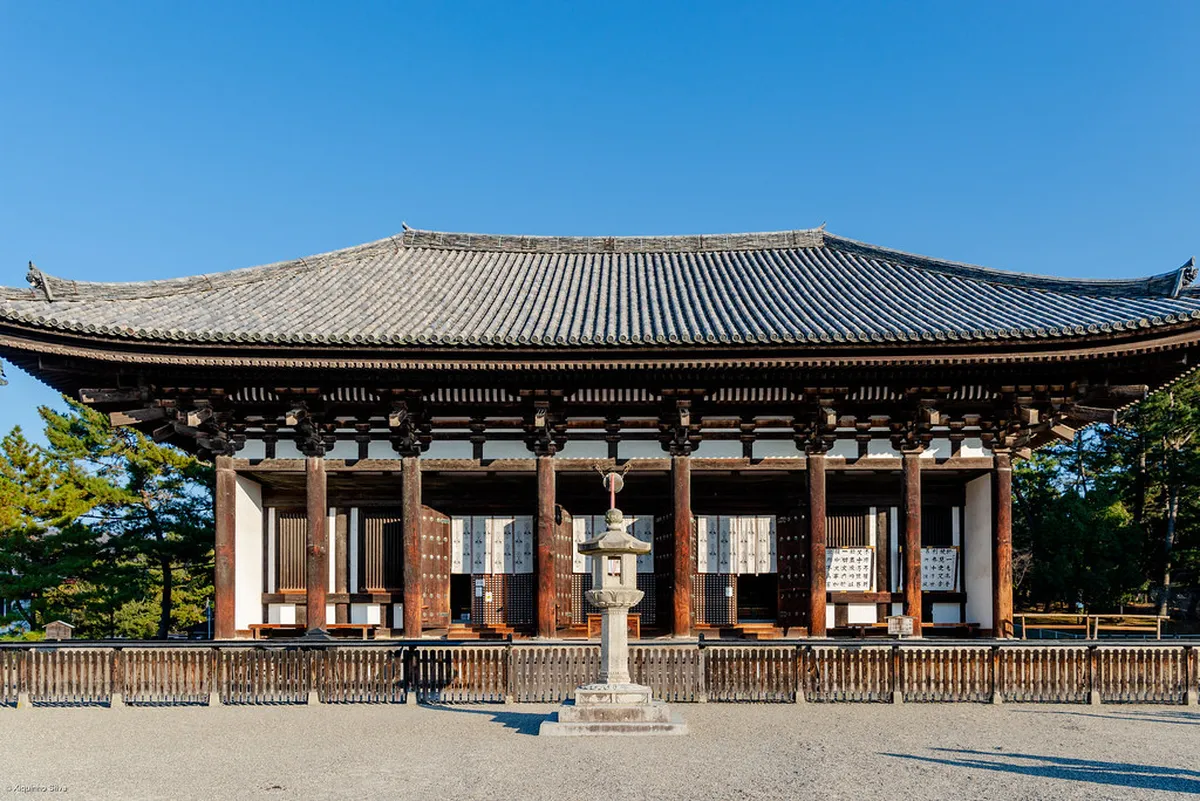
The Central Golden Hall (Chukondo) is the largest structure on the grounds and was completely rebuilt, reopening in 2018 after an absence from the site spanning centuries. The reconstruction took decades of research and craftsmanship to match the original 8th-century scale. Admission is ¥500 for adults. Inside you can see the principal Shaka Nyorai statue flanked by four attendants, all on an elevated platform that reproduces the original altar configuration.
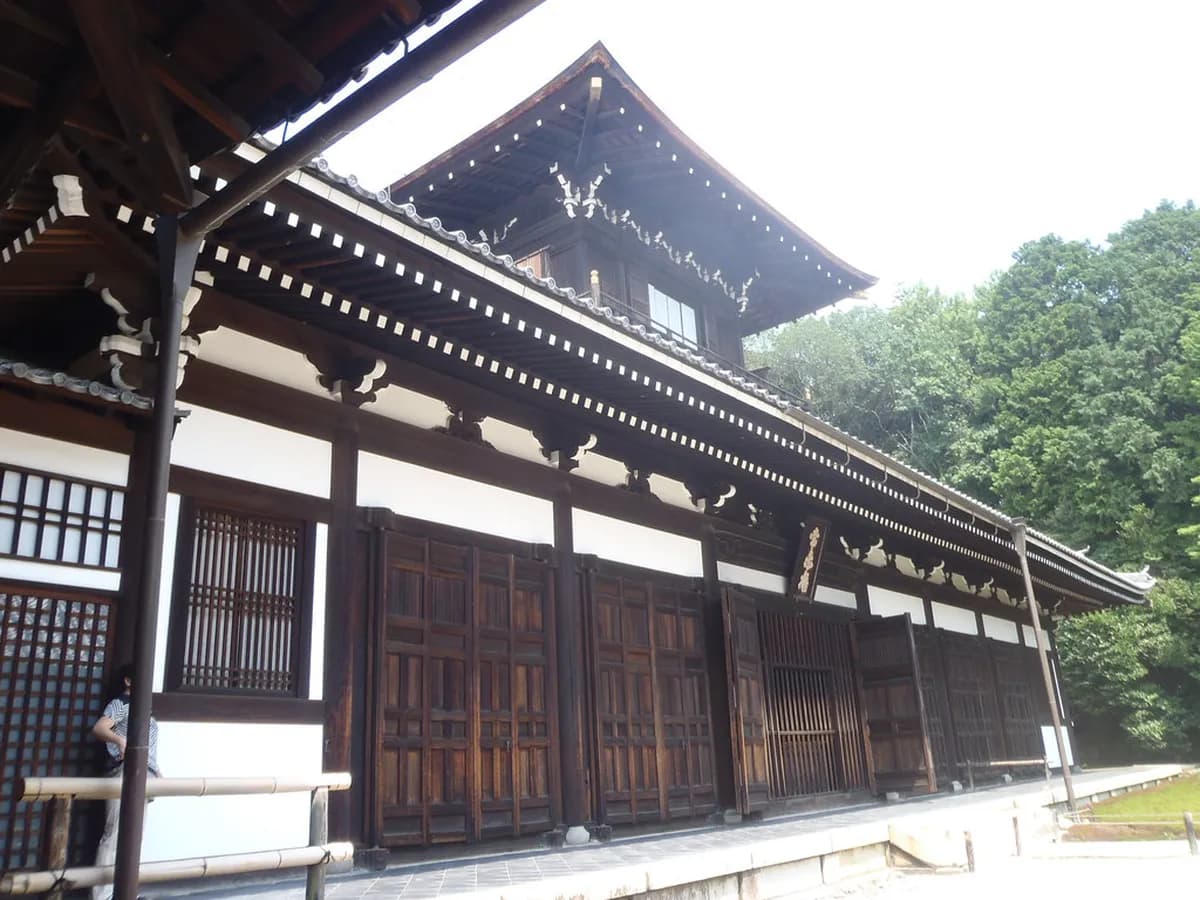
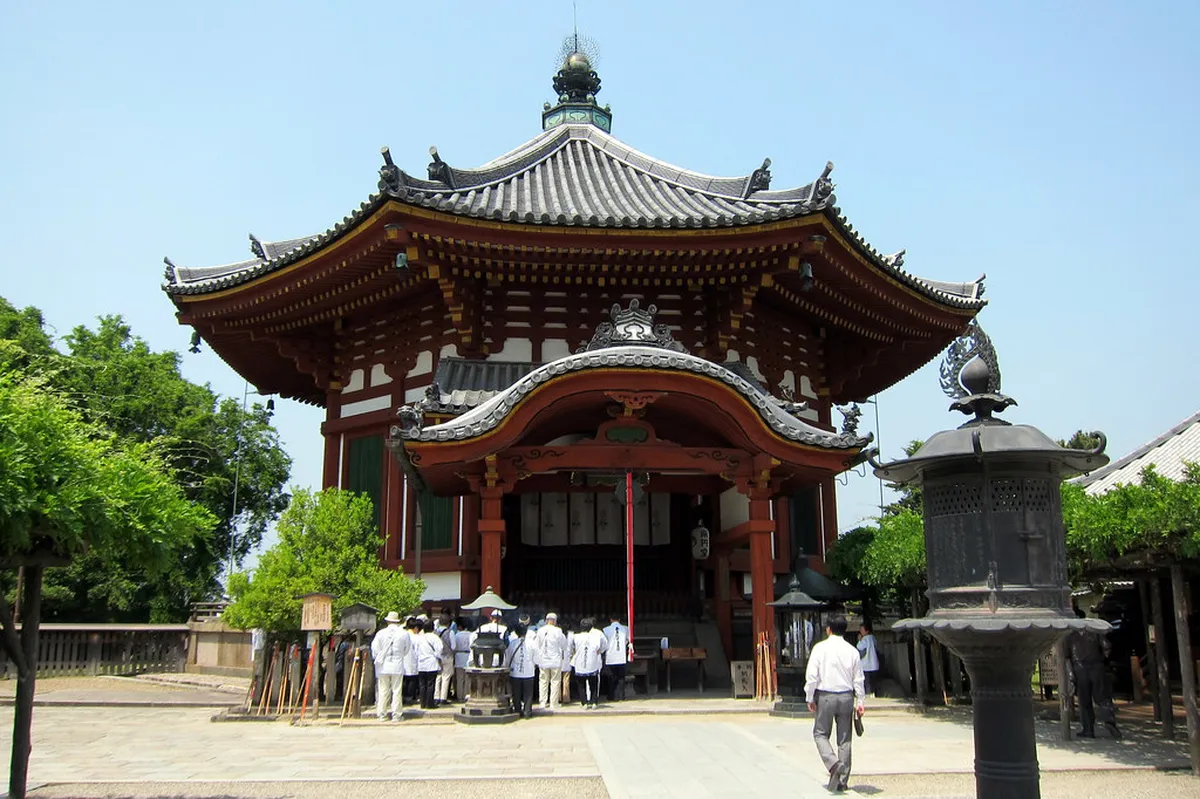
The Eastern Golden Hall (Tokondo) predates the Central Hall reconstruction and dates to 1415. It houses a famous statue of Yakushi Nyorai, the Buddha of medicine and healing, along with twelve guardian deities. Admission is ¥300 for adults. The Northern Octagonal Hall (Hokuendo) from 1210 contains the rare Miroku Bosatsu — the Future Buddha — and opens to the public only during special occasions. The Southern Octagonal Hall (Nanendo) from 1741 is usually closed except during the Mantokai lantern festival in August.
One episode that no standard guidebook dwells on: in 1874 at the height of the anti-Buddhist movement, the Five-Story Pagoda was offered for public sale at ¥250. A buyer reportedly planned to burn it down to salvage the metal fittings inside. Residents of the surrounding neighborhood blocked the plan out of fear that a fire would spread to their homes — and so Japan's second-tallest wooden pagoda survived on a technicality. The story is a useful reminder of how contingent historic preservation can be.
Must-See Kofuku-Ji Attractions
The Five-Story Pagoda is the most recognizable feature of the Kofuku-ji landscape. It reaches a height of over 50 meters and is one of the tallest wooden pagodas in Japan. Visitors often pause here to capture photos of the impressive timber framework. This structure has been rebuilt several times to maintain its historic 15th-century design.
Another essential stop is the Central Golden Hall, which recently underwent a massive reconstruction. The hall was reopened to the public in 2018 after centuries of being absent from the site. Inside, you can view the massive wooden Buddha statues that anchor the temple's spiritual life. It provides a clear look at how Todai-ji and other Nara temples influenced local architecture.
The East Golden Hall sits nearby and contains several important cultural artifacts. It houses a famous statue of Yakushi Nyorai, the Buddha of medicine and healing. Walking between these halls gives you a sense of the original scale of the complex. Most outdoor areas are free to roam, making it a flexible addition to any Nara itinerary.
Museums, Art, and Culture in Kofuku-Ji
The National Treasure Museum (Kokuhokan) is the single best reason to pay admission at Kofuku-ji. It houses one of the finest collections of Buddhist sculpture in Japan, built on the site of the temple's former dining hall specifically to protect fragile artworks from fire and humidity. Admission is ¥700 for adults, ¥600 for junior-high and high-school students, and ¥300 for primary-school children. A combination ticket for the National Treasure Museum and Eastern Golden Hall costs ¥900, saving ¥100 over separate entry.
The combination ticket for the Eastern Golden Hall and National Treasure Museum costs ¥900 — saving ¥100 compared to buying both separately at ¥300 + ¥700.
The undisputed star of the museum is the three-faced, six-armed Ashura statue, a hollow dry-lacquer figure created in the 8th century. Its youthful, expressive face and precise craftsmanship are consistently ranked among the greatest works of Buddhist sculpture in Japan. Photography is not permitted inside the museum or the halls, so put the camera away and focus on the detail in front of you. Budget at least 45 minutes to an hour inside the museum if Buddhist art is your interest.
Beyond the Ashura, the museum holds a remarkable bronze head of Yakushi Nyorai, along with painted scrolls, historical documents, and ritual objects that trace the evolution of Hosso Buddhism over thirteen centuries. Display labels are in Japanese, but an English-language brochure is available at the entrance. Many travelers continue their cultural journey at the nearby Nara National Museum, which holds a different but equally significant collection just ten minutes' walk away.
Parks, Gardens, and Outdoor Spots in Kofuku-Ji
Kofuku-ji is perfectly situated at the western entrance of the expansive Nara Park area. The temple grounds flow naturally into the green spaces where hundreds of deer roam freely. You can walk from the pagoda directly into the forested paths leading toward the hills. This open layout makes it feel more like a public park than a restricted religious site.
Sarusawa Pond offers the best vantage point for viewing the temple from a distance. The reflection of the five-story pagoda in the water is a classic Nara photography spot. Local residents often gather here to feed the turtles or enjoy the evening breeze. It is a peaceful place to rest your legs after a long morning of walking.
Seasonal changes bring new life to the temple's outdoor spaces throughout the year. Cherry blossoms frame the wooden halls in late March and early April. In the fall, the maple trees around the pagoda turn brilliant shades of red and orange. Visiting during these peak times requires arriving early to beat the crowds of photographers.
Family-Friendly and Budget-Friendly Options in Kofuku-Ji
Traveling with a family can be expensive, but Kofuku-ji offers many free experiences. You do not need a ticket to walk through the main courtyard or see the pagoda. Children often enjoy watching the deer that congregate near the Southern Octagonal Hall. The wide, flat paths are also very convenient for those using strollers or wheelchairs.
Budget-conscious travelers can explore the nearby Naramachi district for affordable dining options. Many small shops sell traditional snacks that are perfect for a quick lunch. You can find reasonably priced souvenirs in the arcade just a few blocks away. Planning a picnic in the park is another great way to save money while enjoying the views.
The museum and hall entry fees are modest compared to other major tourist attractions. The combination ticket for the Eastern Hall and National Treasure Museum at ¥900 offers the best value if you plan to enter both paid sections. Primary-school children pay only ¥300 for the National Treasure Museum, and disabilities-card holders receive a 50% discount on all admission fees (one caregiver also admitted at half price when presenting a Japanese disability certificate). Most families find that two hours is plenty of time to see the main highlights.
Access, Hours, and Admission in 2026
Kofuku-ji is at 48 Noborioji-cho, Nara City (postal code 630-8213), immediately west of Nara Park. The fastest route is a 5-minute walk east from Kintetsu Nara Station. From JR Nara Station the walk takes about 20 minutes, or take a Nara City Loop Bus (#2, #70, #72, or several others) to the Kencho-mae stop. The temple grounds are open 24 hours. The Central Golden Hall, Eastern Golden Hall, and National Treasure Museum all open 09:00–17:00 daily (last admission 16:45).
Photography is strictly prohibited inside all three paid sections — the Central Golden Hall, Eastern Golden Hall, and National Treasure Museum. Leave your camera ready only for the pagoda and outdoor grounds.
| Facility | Hours | Adult Fee |
|---|---|---|
| Temple grounds (pagoda, courtyard) | Open 24 hours | Free |
| Central Golden Hall (Chukondo) | 09:00–17:00 (last entry 16:45) | ¥500 |
| Eastern Golden Hall (Tokondo) | 09:00–17:00 (last entry 16:45) | ¥300 |
| National Treasure Museum (Kokuhokan) | 09:00–17:00 (last entry 16:45) | ¥700 |
| Combo: Eastern Hall + Museum | 09:00–17:00 | ¥900 |
Admission in 2026: Central Golden Hall ¥500, Eastern Golden Hall ¥300, National Treasure Museum ¥700. Combination ticket for Eastern Hall + Museum: ¥900. The outdoor areas including the pagodas, Sarusawa Pond viewpoint, and the main courtyard are free at any hour. Contact: +81 (0)742-22-5370. Official site: kohfukuji.com/en.
Wheelchair Accessibility and Practical Facilities
Kofuku-ji has better accessibility infrastructure than most historic temples in Japan. The National Treasure Museum has a slope from the adjacent parking area to the entrance (gradient 8 degrees) and an automatic door 157 cm wide. Once inside, aisles are 144 cm wide and the floor is carpeted throughout — no steps to navigate. One wheelchair is available for loan at the hall free of charge; no advance booking is needed.
Accessible parking (one dedicated space) is immediately adjacent to the National Treasure Museum. The distance from that space to the museum entrance is minimal — the slope connects directly. An accessible toilet is available at the museum with a sliding door 105 cm wide, an interior measuring 227 cm x 250 cm, handrails, a warm-water bidet, and ostomate-compatible facilities. For stroller users, the same slope and wide aisles apply; a stroller is not available for rental at the temple but can be folded during peak periods when aisles are crowded.
The main temple courtyard and outdoor paths around the pagodas are largely flat and paved, making them navigable for most mobility aids. The Northern and Southern Octagonal Halls sit on slightly raised plinths and are not regularly open; accessibility inside those structures has not been independently verified. Plan your visit for a weekday morning to avoid peak-hour congestion on the paths, which narrows effective aisle width during busy periods.
How to Plan a Smooth Kofuku-Ji Attractions Day
Starting your day early is the best way to enjoy the temple in peace. Most tour buses arrive after 10:00, making the early morning hours very quiet. You can reach the temple in five minutes by walking from Kintetsu Nara Station. The path is well-marked and takes you through a pleasant shopping arcade.
A logical sequence: arrive by 09:00, enter the National Treasure Museum as soon as it opens (45–60 minutes), then cross to the Central Golden Hall (20 minutes), then the Eastern Golden Hall (15–20 minutes). Finish by walking the exterior grounds and viewing the pagoda from Sarusawa Pond before the light gets too harsh for photos. This sequence finishes the paid sections before the midday crowds arrive and leaves the rest of your Nara day free for Kasuga Taisha or Todai-ji.
The temple grounds are open 24 hours a day, but the halls have specific hours. Typically, the indoor museums and halls open at 09:00 and close by 17:00. Last entry is at 16:45. Photography is prohibited inside all three paid sections. Many people choose to explore independently using a comprehensive Nara guide for navigation, which provides flexibility to spend more time at the sites that interest you most.
Frequently Asked Questions
Which kofuku-ji temple visitor guide options fit first-time visitors?
First-time visitors should prioritize the National Treasure Museum and the Central Golden Hall. These sites offer the most significant cultural and artistic value within the complex. You can also combine your visit with a trip to Kasuga Taisha for a full Nara experience.
How much time should you plan for kofuku-ji temple visitor guide?
Plan for about 1.5 to 2 hours to see the main attractions comfortably. This allows enough time to explore the museum and walk around the outdoor pagoda area. If you enjoy photography or Buddhist art, you may want to stay longer for the details.
Is kofuku-ji temple visitor guide worth including on a short itinerary?
Yes, it is highly recommended because of its central location and historical importance. Since it is close to the train station, it serves as a perfect starting point for any Nara trip. The free grounds also make it a very efficient stop for quick visits.
Kofuku-ji Temple is an essential part of any journey through Japan's ancient capital. Its combination of soaring architecture and world-class art makes it a standout destination. Whether you are a history buff or a casual traveler, the site offers something unique. We hope this guide helps you plan an unforgettable visit to this historic Nara landmark.
For more Nara planning, see our 20 Best Nara Attractions, and Kofuku-ji Temple Guide guide.


