

The Umeda Sky Building stands as a striking symbol of modern Osaka city architecture. This 173-meter tall landmark features two towers connected by a circular observatory at the top. Many visitors come here to experience the Floating Garden and its breathtaking 360-degree views.
Planning your visit requires more than just showing up at the entrance gates. You need to know about ticket options, walking paths, the best time to arrive for sunset, and where to eat after. This guide covers every detail to ensure your trip to the Kita district is seamless in 2026.
Beyond the views, the building offers a deep dive into Japanese history and modern design. From a retro basement food court to a mid-tower art museum, there is much to explore. Here is everything you need before your visit to this iconic skyscraper.
Overview of the Umeda Sky Building Architecture
Architect Hiroshi Hara designed this masterpiece to resemble a floating city in the sky. The structure consists of two 40-story towers — Tower East and Tower West — that rise 173 meters above the Umeda district. Its most famous feature is the circular bridge linking the two towers at their peak, known as the Kuchu Teien Observatory. The design was highly ambitious when construction finished in 1993 and has since earned a place on multiple "Top 20 Buildings Around the World" lists.
The exterior is clad in approximately 17,000 half-mirrored glass panels that reflect the changing colors of the Osaka sky. On clear days the building almost seems to dissolve into the clouds above, making it a favorite subject for architectural photographers. This reflective surface creates a seamless visual blend with the heavens that few other buildings anywhere achieve.
Inside the towers, the futuristic theme continues with sleek metallic finishes and open structural sightlines. The transition from street level to the observatory feels like a journey through three decades of Japanese architectural ambition. It remains one of the most recognizable silhouettes in the Japanese skyline, visible from many points across northern Osaka.
How Tall Is Umeda Sky Building?
The building reaches 173 meters across its 40 above-ground floors, placing it firmly among Osaka's iconic skyscrapers. For comparison, Abeno Harukas in the Tennoji district stands at 300 meters and holds the title of Japan's tallest building. Umeda Sky Building does not compete on raw height, but it wins on experience: its open-air rooftop ring puts you in the wind with no glass between you and the city, which Harukas cannot offer.
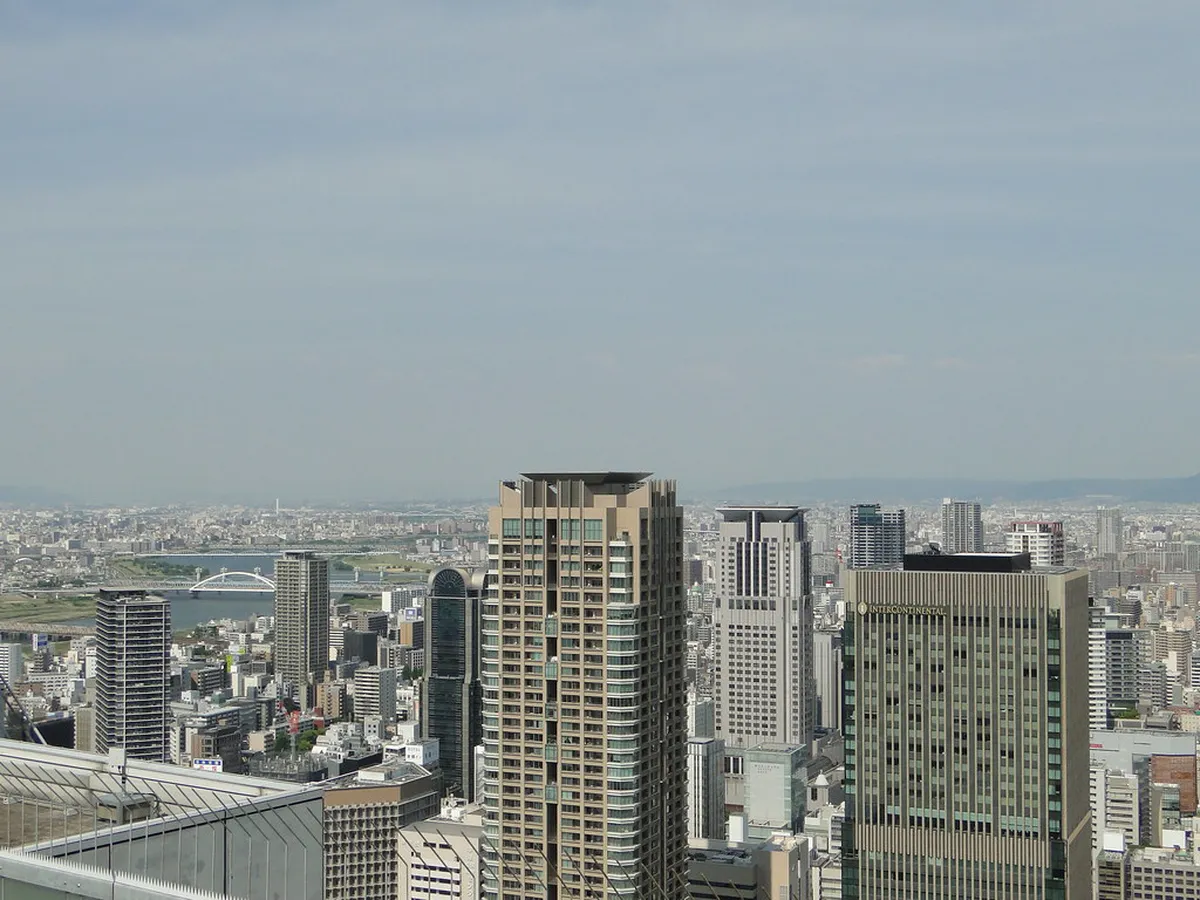
The height translates to genuinely long-range views. On a clear day from the rooftop you can see the Yodo River weaving through the city grid, the Mount Rokko range rising behind Kobe to the west, and on the clearest winter mornings, Awaji Island on the horizon. Osaka Castle is visible to the southeast and serves as an easy orientation anchor when you first step outside.
If you are deciding between the two observatories, the key difference is atmosphere. Harukas is taller and fully enclosed; Umeda Sky Building is shorter but completely open-air and far more dramatic at sunset. Most visitors who have done both rate the Umeda rooftop experience higher despite the lesser height.
How to Get to Umeda Sky Building (Access Guide)
The building is located at 1-1-88 Oyodonaka, Kita-ku, Osaka. Walking from the main station cluster is the easiest approach — no buses or additional train rides required. Once you exit toward Grand Front Osaka, the twin towers are visible on the horizon and you simply aim toward them.
- From JR Osaka Station (Central North Exit): approximately 7–9 minutes on foot via Umekita Plaza.
- From Osaka Metro Midosuji Line, Umeda Station (Exit 5): approximately 9 minutes.
- From Hankyu Osaka Umeda Station (Chayamachi Exit): approximately 9 minutes.
- From Hanshin Osaka Umeda Station (West Gate): approximately 12 minutes.
The route from JR Osaka Station passes through the newly opened Grand Green Osaka complex, which replaced most of the construction hoarding that made the old path confusing. As of 2026 the Umekita development is largely complete, so the walk is now more pleasant than it was in 2023–2024. Follow the green-lined pedestrian paths through Umekita Park and the towers will be directly ahead of you.
If you prefer the underground route on rainy days, take the underground passage from JR Osaka Station toward Grand Front Osaka North Building. Exit up the escalators on the north side, cross the open plaza, and continue past the park to the building entrance. This adds a minute or two but keeps you sheltered from rain almost the entire way.
Tickets and Entry: Prices and Travel Passes
Standard admission to the Kuchu Teien Floating Garden Observatory is ¥2,000 for adults and ¥500 for children aged 4 to 12 (under 4 free). You can purchase tickets on-site at the 39th-floor reception desk after taking the initial elevators, or book online in advance through the Official Umeda Sky Building Site to skip the queue. Online tickets also allow you to secure the Heart Lock add-on (¥3,300 combined) before it sells out.
The Osaka Amazing Pass covers free entry to the observatory with one key restriction: you must enter before 16:00. After 16:00, pass holders receive a discount rather than free admission, so arriving early saves the most money. You can check Klook: Osaka Amazing Pass Details for current pass pricing and inclusions.
Travelers using the Osaka e-pass face an even stricter cutoff. The e-pass grants free entry only if you arrive before 15:00. Miss that window and you pay the standard ¥2,000 adult fee regardless of pass type. Many visitors miss this detail and end up paying more than planned. Set a phone reminder before you arrive so the timing does not catch you off guard.
A combo ticket pairing the observatory with the Koji Kinutani Tenku Art Museum (27th floor, Tower West) is available for ¥2,500 — a saving of ¥800 over buying both separately. The art museum opens at 10:00 and closes at 18:00 (20:00 on Fridays and Saturdays), so check the timing fits your itinerary before buying the bundle.
Inside the Umeda Sky Building: The Floating Garden Experience
Your journey begins with a high-speed elevator ride from Level 3 (ground floor) to Level 35. From there, you board the famous see-through escalator that spans the gap between the towers in a glass-enclosed tube. This ride offers a thrilling view of the ground far below and is frequently cited as one of the most photogenic moments of the entire visit. On busy evenings the escalator corridor glows with star-patterned lighting that makes the ascent feel like floating through a constellation.
Once you reach the 39th floor, you find the ticketing desk (if you did not book online) and the souvenir gallery shop. The 40th floor serves as an indoor viewing gallery featuring a 35-meter-long glass counter where you can sit with a coffee and watch the city. This floor also houses the Sky 40 cafe, which serves a house-blend coffee (¥550) and the popular croffle — a fermented butter waffle (¥950) — alongside Osaka craft beers. It is the calmer, wind-free alternative to the open rooftop.
The rooftop Sky Walk is the final destination. This open-air circular platform lets you feel the breeze while looking over the city in every direction without glass barriers. At night, luminescent stones set into the floor create the "Lumi Skywalk," mimicking a starry sky underfoot. The combination of lights below and a star-lit floor above is uniquely disorienting in the best possible way.
Couples visiting for the Heart Rock tradition should note that the heart-shaped padlock set — which includes the observatory ticket plus an engraved lock — costs ¥3,300 and must be purchased online in advance. Walk-in availability is limited and often sold out by mid-afternoon. You collect the lock at the 39th-floor shop and attach it to the "Fence of Vows" on the rooftop.
Best Time to Visit: Sunset Timing and Crowd Strategy
Sunset is the most sought-after window at the observatory, but the exact timing shifts significantly across the year. In winter (December–January) Osaka's sun sets around 17:00–17:10. By late spring it pushes to roughly 19:00, and at peak summer (late June–July) it reaches 19:15–19:20. Arriving 45 to 60 minutes before sunset gives you daylight panoramas, the full golden-hour color shift, and the transition to city lights — three distinct views without moving from the same spot.
That window is also the most crowded, so if queues concern you, a clear morning arrival at 09:30 immediately after opening is the practical alternative. Morning light from the east illuminates the city grid cleanly and you will often have the rooftop nearly to yourself for the first 30 minutes. Distant visibility is usually best in winter and early spring before humidity builds.
Rainy days are worth reconsidering, not canceling. The observatory closes the open-air rooftop only during dangerous wind gusts or lightning; light rain does not trigger a closure. The enclosed 40th floor remains open regardless, and a misty cityscape viewed through the panoramic glass counter has its own moody appeal. Always check the official site for real-time closure notices before buying same-day tickets.
Seasonal Events at Umeda Sky Building
The building runs a consistent calendar of seasonal events that give repeat visitors new reasons to return. The most photogenic is the Koinobori display held annually from mid-April to early May: around 100 vividly colored carp streamers are strung between the two towers, swaying at height against the sky. The scale is hard to convey in photos — it is far more impressive in person.
From early June through early August, the Tanabata (Star Festival) transforms the plaza below. Visitors write wishes on tanzaku paper strips and hang them on bamboo branches; miniature bamboo boats called sasabune float on the courtyard pond. The romantic atmosphere pairs naturally with an evening observatory visit immediately after.
From mid-November through 25 December the building hosts one of Osaka's most popular Christmas markets. A large-scale projection-mapped tree — claimed to be among the largest of its kind in Japan — anchors the event, surrounded by craft and food stalls. Book observatory tickets well in advance during the Christmas market period, as evening queues regularly reach 30–40 minutes without a pre-purchased slot.
Dining at Takimikoji Food Court and Sky 40
After taking in the views, head to the basement level for the Takimikoji Food Court. This basement gourmet alley is designed to recreate the atmosphere of a Japanese street from the 1920s Showa era, complete with stone-paved lanes, vintage poster art, and wooden shopfronts. The contrast between the building's futuristic exterior and this nostalgic interior is deliberate and effective. It is one of the more unique restaurant spaces in the Osaka dining scene.
The food court covers most classic Japanese dishes alongside local Osaka specialties. You can find savory okonomiyaki, crispy kushikatsu, fresh sushi, shabu-shabu, ramen, and katsudon across the various shops. Many of the vendors have been operating for years and source ingredients from established local suppliers. It is a reliable spot for a proper meal without hunting for a restaurant elsewhere in the district.
If you prefer a view with your meal, the Sky 40 cafe on the 40th floor is the better choice. Sitting at the 35-meter glass counter allows you to watch the city while you eat. Prices are higher than the basement — budget ¥1,000–1,500 per person for food and drinks — but the setting is genuinely peaceful and the quality is consistent.
Koji Kinutani Tenku Art Museum: A Floor Most Visitors Skip
On the 27th floor of Tower West sits the Koji Kinutani Tenku Art Museum, an immersive gallery dedicated to one of Japan's most recognized living painters. Most visitors heading straight for the rooftop walk past the entrance without realizing it is there. Admission is ¥1,300 for adults and ¥800 for junior-high through university students; elementary school students enter free. The combo ticket with the observatory brings the combined price to ¥2,500.
The highlight of the museum is a powerful 3D projection experience that places you inside Kinutani's large-format paintings, combined with VR commentary filmed in the artist's Tokyo studio. It runs approximately 20 minutes and is fully narrated in Japanese and English. The adjoining Tenku Cafe serves drinks alongside museum merchandise, and the window seats offer elevated city views before you even reach the observatory floors above.
Opening hours differ from the observatory: the museum runs 10:00–18:00, extending to 20:00 on Fridays, Saturdays, and days before public holidays. It is closed Tuesdays and during exhibition renewal periods. If you plan to visit both, factor the museum into your entry time — it adds at least 45 minutes and is best done before rather than after the rooftop, so you arrive up top during the better light.
A Brief Pop-In To Yodobashi Umeda and Nearby Shopping
On your walk back to the station, consider stopping at the massive Yodobashi Umeda building. This electronics giant is a paradise for tech enthusiasts and a practical stop for anyone needing camera accessories, phone chargers, or Japanese home appliances that are harder to find overseas. It sits directly along the main pedestrian path between the Sky Building and JR Osaka Station, making it a natural detour.
The upper floors of Yodobashi carry an extensive range of hobby goods, figures, anime merchandise, and video game software. Free Wi-Fi is available throughout the building. Staff are experienced with international visitors and can help with tax-free procedures on purchases above ¥5,000.
Grand Green Osaka, the newest addition to the Umekita development, opened in 2024 and sits between the Sky Building and the station. It combines a large park, retail floors, a hotel, and a spa in a single complex. You will pass through it on the walk in or out — allow 20–30 minutes if you want to explore the park or stop for coffee at one of the ground-floor cafes.
Must-See Umeda Attractions Near the Building
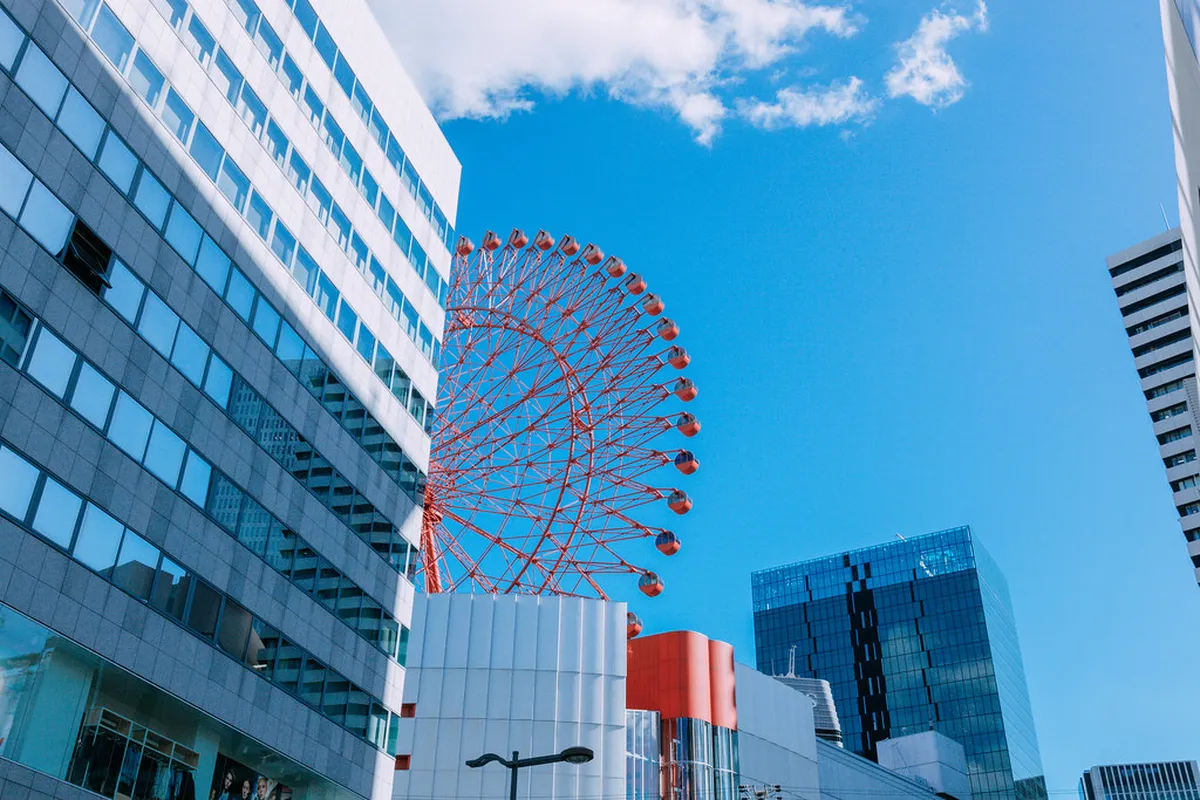
The Umeda district is packed with other things to do in Osaka worth adding to the same day. The HEP FIVE Ferris Wheel is a short walk east and offers a different elevated perspective. Its distinctive red color makes it easy to spot and the evening ride pairs well with a post-observatory dinner in the area.
For a change of pace, explore the underground shopping malls like Whity Umeda and Diamor Osaka. These subterranean streets are filled with small bars, cafes, and affordable clothing shops frequented by locals. The underground network connects most of the major stations in the Umeda area, making navigation easier than it appears on a surface map.
If you want to extend your day with a historic counterpoint to the futuristic Sky Building, a direct train from JR Osaka Station reaches Osaka Castle in under 15 minutes. The contrast between a seventeenth-century fortification and a late twentieth-century architectural icon makes for a compelling day structure. Most visitors can cover both in a well-planned afternoon without feeling rushed.
Basic Information and Key Visitor Tips
The observatory (Kuchu Teien Floating Garden) is open daily 09:30–22:30, with last admission at 22:00. It stays open year-round with no regular closure days, though the rooftop may close temporarily during strong wind or lightning. Ticket prices are ¥2,000 for adults and ¥500 for children aged 4–12; under 4 enter free. Current information is on the Osaka-Info Official Guide and the official building website.
For photography, the rooftop Sky Walk is the best place for clear shots since there is no glass to catch reflections. On the enclosed 40th floor, wipe the glass counter with a lens cloth before shooting and position yourself perpendicular to the glass to minimize glare. Tripods are discouraged during peak hours to keep the narrow rooftop ring clear for other visitors.
The open-air rooftop can be genuinely cold and windy in winter and during typhoon season (August–October). A light jacket is useful even in summer. Wind gusts can be strong enough to blow hats away — secure loose items in your bag before stepping outside. Lockers are available near the 39th-floor ticket area if you want to leave a larger bag before heading up. If you're planning a multi-day trip to the region, be sure to check out our Osaka itinerary for comprehensive travel guides.
Comfortable walking shoes are essential: the route from the station, the building exploration across multiple floors, and the circumnavigation of the rooftop ring add up to considerable time on your feet. Benches are available on the 40th floor if you need a break before descending.
Frequently Asked Questions
Is the Umeda Sky Building free with the Osaka Amazing Pass?
Yes, entry is free with the Osaka Amazing Pass if you arrive before 16:00. After this time, you must pay a discounted admission fee. This is a great way to see the city while visiting Osaka Castle and other sites on the same day.
What is the best time of day to visit the Floating Garden?
Sunset is the most popular time for the stunning golden hour views and city lights. However, arriving at 9:30 AM is better if you want to avoid the largest crowds. Clear mornings often provide the best visibility for seeing distant mountains.
How do I get to Umeda Sky Building from Osaka Station?
Exit JR Osaka Station via the Central North Exit and walk toward the Umekita Plaza. Follow the pedestrian walkways through the construction area for about 10 minutes. The two large towers are visible from the station, making them easy to find.
Can you buy Heart Rocks at the Umeda Sky Building?
Heart Rocks are available but they often sell out for walk-in visitors. It is highly recommended to purchase your Heart Rock ticket online in advance to guarantee one. You can then pick up your lock at the 39th-floor shop.
How long should I spend at the Umeda Sky Building?
Most visitors spend between 60 and 90 minutes exploring the observatory and taking photos. If you plan to eat at the Takimikoji Food Court, add another hour to your visit. It is a flexible attraction that fits well into any afternoon.
The Umeda Sky Building remains a must-visit destination for anyone exploring northern Osaka. Its blend of futuristic architecture, open-air rooftop, and retro basement dining offers a uniquely layered look at Japanese culture across the decades. Whether you visit for the sunset timing, a seasonal event, or the immersive art museum on the 27th floor, the experience delivers more than a single-purpose observation deck.
Remember to confirm the pass entry cutoffs (16:00 for Amazing Pass, 15:00 for Osaka e-pass), book Heart Rocks online if you need them, and time your arrival relative to the day's sunset. With a little planning, your visit to the Floating Garden will be a consistent highlight of any Osaka trip.
For additional Osaka landmarks and comprehensive guides to the wider region, explore our full travel resources to maximize your stay.


