

Dotonbori is the beating center of Osaka's food and entertainment scene, a canal-side district where neon signs tower over sizzling street stalls and the crowds rarely thin before midnight. This dotonbori visitor guide walks you through every part of the area — from the history of the Glico Man to the hidden alley temple most tourists walk straight past. Whether you have one evening or three full days, the layout and tips below help you use every hour well. See our guide to things to do in Osaka for more attractions in the city.
What is Dotonbori? Osaka's Premier Entertainment District
Dotonbori is the most famous entertainment district in Osaka and the city's primary tourist hub in 2026. The area runs alongside the Dotonbori Canal in Chuo Ward, stretching roughly 600 metres east to west between Namba and Soemoncho. It is widely recognised as the Bright Heart of Osaka because of its density of massive electronic billboards, restaurants, theatres, and bars packed into a walkable strip.
The district divides naturally into two banks. The northern bank is quieter, with the Tonbori River Walk promenade offering the best views of the reflections at night. The southern side contains the main tourist thoroughfare lined with restaurants and souvenir shops. Walking between both banks across the Ebisubashi Bridge gives you the full picture in under fifteen minutes.
The area shifts character by the hour. At noon it is a relaxed shopping district. By 18:00 the neon signs begin competing with the dusk light and the canal fills with boat tours. Past 21:00 the pavements are at their most crowded and the atmosphere peaks. First-timers should arrive around 17:30 to walk both sides before the evening crush builds.
The History of Dotonbori: From 1612 to Modern Neon
The story of this district began in 1612 when a local merchant named Yasui Doton invested his fortune to connect the Umezu River with the Kizugawa River via a new canal. Doton died during the Siege of Osaka in 1615, but his cousins completed the project that same year. The local lord named the waterway Dotonbori to honour the merchant's vision and sacrifice, and the name has held for over 400 years.
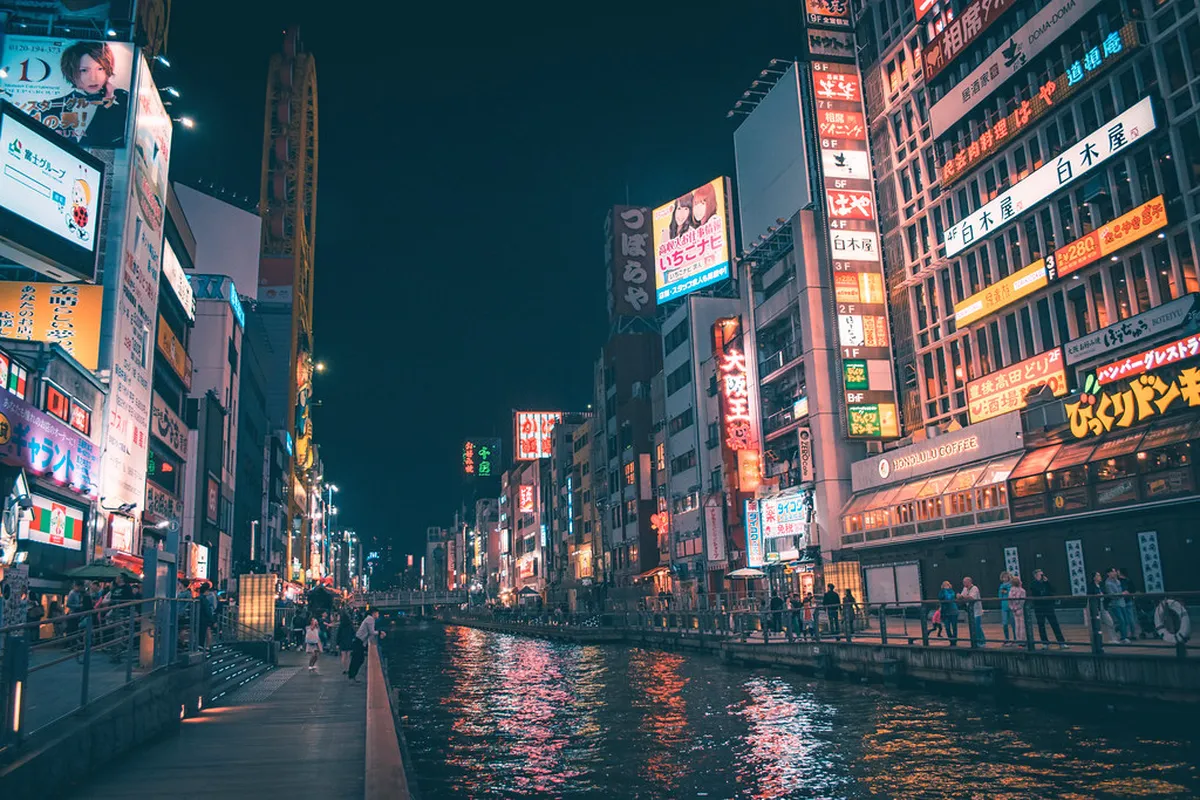
During the Edo period the area transformed into a major centre for traditional Japanese theatre. Six major kabuki and bunraku playhouses once lined the southern bank, making the district a playground for actors, writers, and wealthy merchant families. Remnants of this theatrical heritage survive at the Shochikuza Theater, which still stages performances today.
The 20th century brought neon in place of wooden lanterns and modern cinemas in place of old playhouses. Wartime bombing damaged parts of the district, but it rebuilt quickly around its reputation for food and entertainment. Today the canal is a symbol of the city's resilience — always in motion, always changing, always crowded.
Dotonbori's Food Culture: Mastering the Art of Kuidaore
Osaka is called the kitchen of Japan, and Dotonbori is its most active stove. The local philosophy of kuidaore — literally "eat until you drop or go bankrupt" — encourages visitors to graze across many stalls rather than committing to one long sit-down meal. The street food culture here is built for that approach: most stalls hand you your order within two minutes.
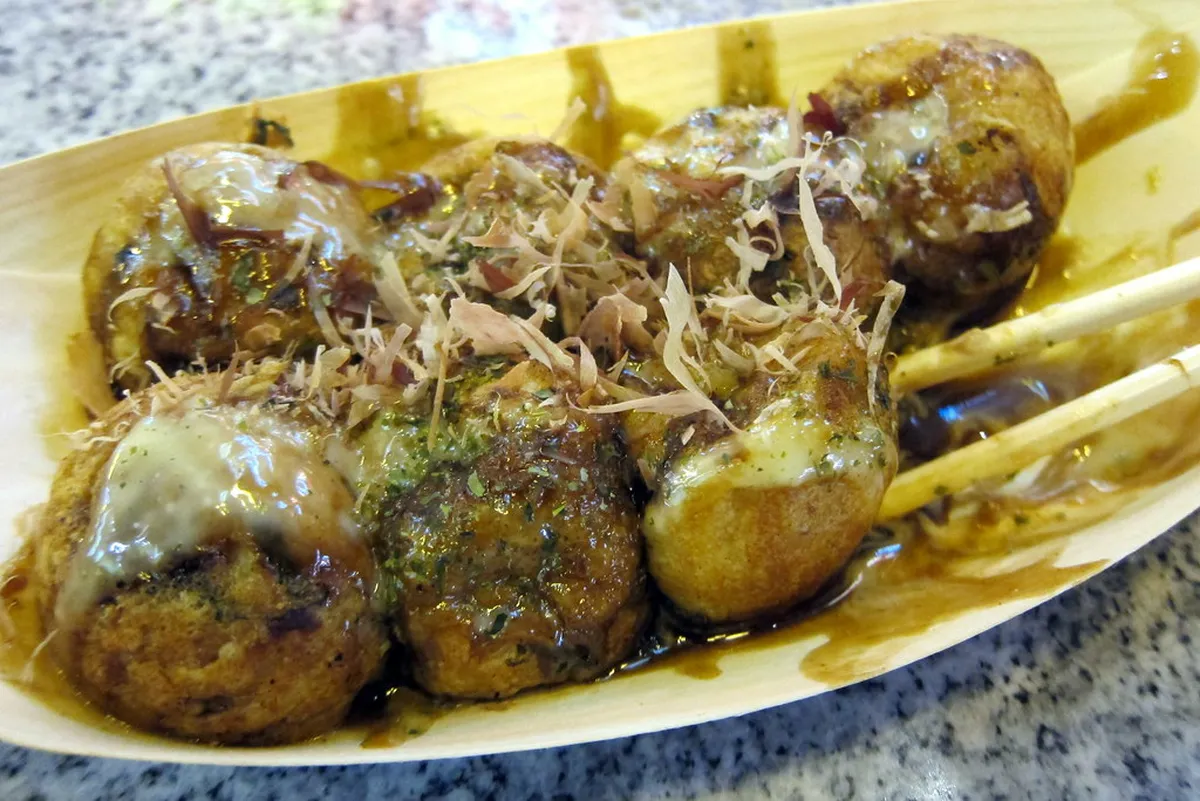
Takoyaki is the non-negotiable first stop. These octopus-filled batter balls are crispy on the outside, gooey and creamy inside, and dressed with Worcestershire sauce, mayo, dried bonito flakes, and aonori seaweed powder. Takoyaki Juhachiban (open 11:00–21:00, 1 Chome-7-21 Dotonbori) and Takoyaki Wanaka (open 11:00–21:00, 1 Chome-6-7 Dotonbori) are the two most-cited local favourites. A tray of eight balls costs 700–900 JPY.
| Food / Activity | Price (2026) | Notes |
|---|---|---|
| Takoyaki (8 balls) | ¥700–900 | Street stalls along canal; quick queue turnover |
| Kushikatsu (per person) | ¥2,000–3,000 | Never double-dip the communal sauce |
| Okonomiyaki (sit-down) | ¥2,500–3,500 | Budget more if adding protein toppings |
| Kani Doraku crab lunch set | ¥3,000–4,000 | Reservations recommended for canal-view table |
| Tombori River Cruise | ~¥1,000 adult | ~20 min; runs ~13:00–21:00 every 30 min |
| Subway from Umeda/Osaka | ¥240 | Midosuji Line to Namba (~10 min) |
| Airport Nankai Rapi:t express | ¥1,450 | KIX direct to Namba, 38 min |
Kushikatsu is the evening complement to a daytime takoyaki snack. Skewers of beef, lotus root, quail egg, and seasonal vegetables are battered, deep-fried, and served with a shared communal sauce. The iron rule — never double-dip your skewer — exists for hygiene and is enforced with genuine seriousness. Kushikatsu Daruma (open 11:00–22:30, 1 Chome-6-8 Dotonbori) is the best-known spot, with per-person budgets of around 2,000–3,000 JPY.
Okonomiyaki rounds out the essential trio. This savory pancake mixes cabbage, egg, and your choice of protein on a hot griddle, finished with the same sweet sauce and bonito flakes as the takoyaki. Sit-down restaurants like Ajinoya let you watch the cook at a counter, which is the best way to experience the dish. Budget 2,500–3,500 JPY for a full meal at a proper okonomiyaki restaurant. Share with a companion to leave room for everything else.
The Glico Running Man and Iconic Giant Signage
No visit is complete without a photo of the Glico Running Man sign over the Ebisubashi Bridge. This LED billboard of a triumphant athlete has stood in some form since 1935, originally built to advertise Glico candy. Modern LED technology allows the background to cycle through seasonal themes and special events. The standard tourist pose mimics the runner's raised-arms finish-line stance, and at any given evening dozens of people on the bridge are attempting it simultaneously.
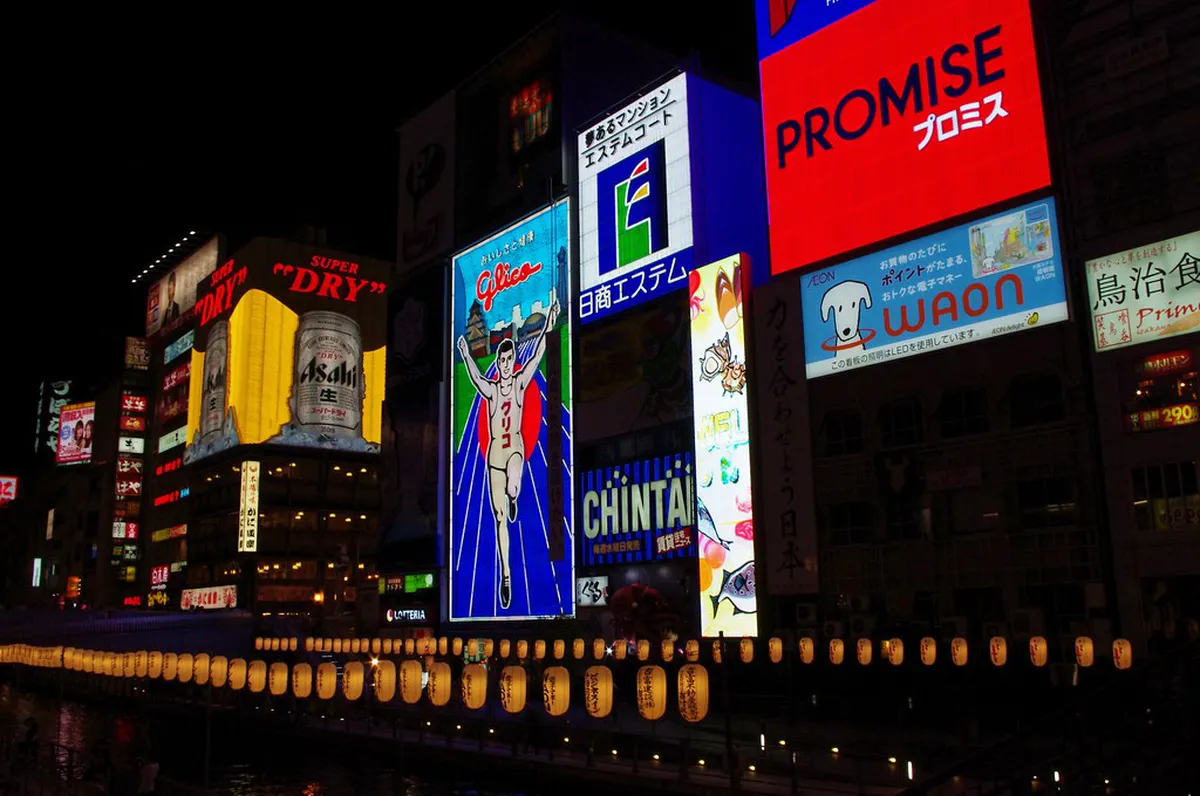
The mechanical restaurant signs along the main street are equally famous. Kani Doraku features a giant moving red crab on its facade — the crab pose (arms spread wide, fingers mimicking claws) is the expected photo ritual here. Nearby signs include a giant blowfish, a massive golden octopus, and a model ramen bowl large enough to be a landmark from fifty metres away. These displays were originally designed to guide customers who could not read signage, and they have outlasted that purpose by becoming attractions in their own right.
For a different perspective, take the Tombori River Cruise from the Tonbori River Walk promenade. The 20-minute boat ride offers a lower angle on all the major signs, with the reflections on the water adding to the spectacle after dark. Cruises run roughly every 30 minutes from around 13:00 to 21:00 and cost approximately 1,000 JPY for adults in 2026. You can also spot the Umeda Sky Building in the distance from certain positions on the water.
Must-Visit Spots: Hozenji Yokocho, Kuidaore Taro, and Donki
Most visitors spend all their time on the main canal promenade and miss three landmarks tucked one or two minutes away. Hozenji Yokocho is an 80-metre cobblestone alley on the south side of the Dotonbori River, lined with traditional izakayas and okonomiyaki restaurants. At the end of the alley sits the Hozenji Temple, home to a stone Fudo Myo-o statue so densely covered in moss from years of water offerings that you can barely make out its features. The custom is to ladle water onto the statue and then press your hands together for good luck. The alley is lit by paper lanterns at night and feels nothing like the neon strip fifty metres away — it is one of the few spots in the district that has kept its pre-war atmosphere intact.
Kuidaore Taro is a drumming clown doll in a red jacket that stands outside the Nakaza Cui-daore Building on the main street. It has been a symbol of Osaka's eat-till-you-drop philosophy since the mid-20th century, was temporarily retired when the original restaurant closed, and has since returned in response to popular demand. The area in front of it is surprisingly uncrowded compared to the Glico sign spot, making it a good fallback for photos without a crowd of people in the background.
Don Quijote Dotonbori (open 24 hours) is the giant discount store on the south bank with a small Ferris wheel attached to its facade. Inside, eight floors of electronics, snacks, cosmetics, costumes, and novelty items compete for your attention to a looping jingle that lodges itself in your brain permanently. It is genuinely useful for picking up affordable Japanese snacks, Kit-Kats for gifts, and travel essentials at any hour of the night. Budget at least 45 minutes if you go in — the store is designed to be disorienting in a deliberate, entertaining way.
Is Dotonbori Dangerous at Night? Safety for Visitors
Japan is remarkably safe by global standards, and Dotonbori's main strip is heavily policed, well-lit, and busy until after midnight. Solo travelers and families can walk the canal area and main street without concern. The risk is not crime but rather information: the district contains a handful of situations where inattention costs you time and money.
Soemoncho, the entertainment district on the north bank, has host clubs and bar touts who approach passersby with promises of cheap drinks. They are persistent rather than threatening. A firm shake of the head and continued walking is the correct response. Legitimate bars in Osaka do not operate through street recruitment. The touts are concentrated in the narrow alleys north of the canal between around 20:00 and 01:00.
The Midosuji Subway last train from Namba departs around 00:24 on weekdays. Plan your departure from the district by 23:30 to catch the last train without rushing. If you stay later, budget ¥1,000–2,000 for a taxi within the Namba and Shinsaibashi area.
Public transport stops between midnight and 01:00 depending on the line. The Midosuji Subway Line last train from Namba departs around 00:24 on weekdays. If you plan to stay later, budget for a taxi back to your hotel — a ride within the Namba and Shinsaibashi area typically costs 1,000–2,000 JPY. Plan your departure from the district by 23:30 to catch the last train comfortably without rushing through the crowds.
Dotonbori Guide: Neighboring Areas Based on the Map
The district connects directly to four distinct neighborhoods, and understanding the layout turns a short visit into a full half-day or evening. To the north, Shinsaibashi-suji is a roofed shopping arcade stretching 600 metres from the Ebisubashi Bridge toward Shinsaibashi Station. It covers fashion, cosmetics, and international brand stores and is fully walkable in any weather. The arcade dumps you into the heart of Shinsaibashi at the north end.
To the west, Amerikamura (America Village) is a three-block cluster of vintage clothing shops, independent record stores, and street-art murals. The crowd skews younger and more local than the Dotonbori strip. Triangle Park at its center is where Osaka's youth fashion scene congregates on weekend afternoons. It takes about ten minutes on foot from the canal.
Heading south brings you to the Namba area and its transport hub. Large department stores and the Namba Parks shopping complex are here, and you can walk to Shinsekai in about fifteen minutes from the south end of the Namba precinct. Understanding these connections makes it straightforward to plan a route that covers three or four neighborhoods in a single afternoon and evening.
How to Get to Dotonbori: Transit and Access
The closest station is Namba, served by the Midosuji, Yotsubashi, and Sennichimae subway lines as well as Nankai and Kintetsu private railways. From Namba Station Exit 14, the Ebisubashi Bridge and the start of the main canal promenade are a five-minute walk. If you are coming from Shin-Osaka or JR Osaka (Umeda) Station, take the Midosuji Subway Line south to Namba — the ride takes about 10 minutes and costs 240 JPY in 2026.
From Kansai International Airport, the fastest option is the Nankai Rapi:t limited express direct to Namba Station (38 minutes, 1,450 JPY). The standard Nankai express is slower but cheaper (45 minutes, 930 JPY). Both terminate at Namba, from which the canal is the same five-minute walk. There is no need to change trains from the airport on either service.
By taxi from central Osaka hotels the journey typically costs 800–1,500 JPY. Driving and parking in the area is not practical — the streets are narrow and the two nearby car parks fill by early evening on weekends. The district is 24 hours and free to enter; the only costs are food, drinks, and any optional activities like the river cruise.
Tours Are Recommended for Safely Enjoying Local Establishments
Navigating the thousands of restaurants in this district can be overwhelming for first-timers. Many of the best local-loved spots are hidden in narrow alleys or on upper floors with no English signage. Booking an Osaka Local Foodie Walking Tour provides an insider's perspective. Guides help you skip the tourist traps on the main drag and find the family-run spots in the back streets.
Tours provide cultural context that is hard to pick up independently. You learn about the history of specific dishes, the etiquette behind ordering them, and which stalls local residents actually use versus which ones are priced for tourists. Most evening tours include three to four stops with food and drinks covered in the price. Expect to pay between 6,000 and 12,000 JPY for a well-reviewed guided experience.
Daytime tours through providers like Arigato Travel combine Dotonbori with the nearby Kuromon Market, which means you can eat fresh seafood at the market in the morning and return to the canal for street food in the afternoon. This sequencing also avoids the worst of the Dotonbori evening crowds for people who find the peak-hour crush stressful.
Recommended Restaurants to Taste Osaka Food in Dotonbori
Choosing where to eat is the hardest task in the district. Popular spots like Ichiran Ramen have wait times exceeding 60 minutes on weekends. Eating at off-peak hours — a late lunch at 11:00 or a late dinner after 21:00 — cuts those waits significantly. The stalls along the canal walk clear their queues quickly and are the fastest option for grazing between landmarks.
Arriving around 17:30 lets you walk both canal banks before the peak-hour crush. The Ichiran Ramen annex entrance on the side street has a noticeably shorter queue than the main entrance. Don't miss Hozenji Yokocho — the 80 m cobblestone alley south of the canal with a moss-covered temple statue — just two minutes from the main promenade.
Kani Doraku is the top choice for fresh crab. The lunch set (around 3,000–4,000 JPY) offers the best value; the full dinner kaiseki climbs to 6,000–7,000 JPY or higher. Reservations are strongly recommended for a table with a canal view. Their outdoor counter stall lets you try a small grilled crab portion for under 1,000 JPY without booking.
- Kushikatsu Daruma (1 Chome-6-8 Dotonbori) — fried skewers in a lively setting, 2,000–3,000 JPY per person, open until 22:30. The original Shinsekai branch is more atmospheric, but the Dotonbori location has shorter waits.
- Ichiran Ramen Dotonbori — solo-booth tonkotsu ramen, 900–1,500 JPY, open late. The annex entrance on the side street has a noticeably shorter queue than the main entrance.
- 551 Horai (3 Chome-6-3 Namba, a five-minute walk south) — handmade steamed pork buns (butaman) for under 1,000 JPY. Osaka people consider this a local institution and it is a reliable cheap eat between heavier meals.
What to Eat at Kuromon Ichiba Market: The Seafood Paradise
Just a ten-minute walk from the canal lies the Kuromon Ichiba Market. This historic market has served the city for over 190 years and is the best single place to find high-quality fresh seafood, wagyu beef slices, and seasonal fruit in the Namba area. The market is most active from around 08:00 and starts winding down by 16:00; arrive before lunch for the best selection.
Grilled scallops, fresh sea urchin on rice, and giant grilled prawns are the most popular items with tourists. Many vendors prepare your selection on the spot for immediate eating. Prices run higher than the Dotonbori street stalls — a grilled scallop can cost 500–800 JPY per piece — so browse several vendors before committing. Rare items like fugu (blowfish) are also available here from licensed vendors.
The market also has small stalls selling traditional Japanese sweets: strawberry mochi and grilled dango make a good sweet finish after the savoury seafood section. Seating is limited, so be prepared to eat standing near the stall. Dispose of packaging and skewers in the bins provided by the specific vendor — the market has clear rules about waste and the vendors enforce them politely.
Nakazakicho Osaka: Vintage Shops and Cafes Nearby
If the neon lights and crowds become too much, Nakazakicho offers the sharpest contrast in Osaka. This neighbourhood survived wartime bombing and retains its pre-war streetscape: narrow alleys of renovated wooden machiya townhouses now operating as independent cafes, vintage clothing shops, and small galleries. The slow pace and absence of tour groups make it a favourite spot for locals on days off.
The area attracts artists, photographers, and vintage clothing collectors. You can spend hours browsing curated collections of retro Japanese fashion and records in shops the size of a living room. Many cafes serve artisan pour-over coffee and handmade desserts in a quiet, unhurried setting. It is a short subway ride from Namba — take the Tanimachi Line north to Nakazakicho Station, two stops, for about 180 JPY.
Combine a morning in Nakazakicho with an afternoon at Osaka Castle for a full day that covers both the city's quiet heritage side and its famous landmarks. Both locations provide a deeper look into the city's long and varied past. Nakazakicho is best explored without a tight schedule — the point is to slow down and let the alley layout dictate the route.
Frequently Asked Questions
When is the best time to visit Dotonbori?
The best time to visit is during the evening when the neon signs are fully lit. Aim to arrive around 6:00 PM to catch the sunset and stay for dinner. If you want to avoid the heaviest crowds, weekdays are generally quieter than Friday or Saturday nights.
How do I get to Dotonbori from Osaka Station?
Take the Midosuji Subway Line from Umeda Station to Namba Station. The ride takes about 10 minutes and costs 240 JPY. From Namba Station, follow the signs for Exit 14, which leads you directly toward the Ebisubashi Bridge and the canal area.
Are there other major attractions near Dotonbori?
Yes, you are close to many top sites like the Shinsaibashi shopping arcade and Hozenji Yokocho alley. For a longer day trip, you can easily reach Universal Studios Japan via a short train ride from nearby stations. The Namba area also connects to many other city districts.
Is Dotonbori expensive for travelers?
Dotonbori offers a wide range of prices to suit any budget. Street food snacks like takoyaki cost between 500 and 800 JPY. Sit-down restaurants for crab or wagyu beef can cost upwards of 5,000 JPY per person. You can easily enjoy the atmosphere for free by just walking along the canal.
Dotonbori remains the heart and soul of the city's social and culinary life. Whether you come for the lights or the food or the quiet cobblestone detour into Hozenji Yokocho, the energy of the district is infectious. You might also enjoy a quiet morning at Shitenno-ji after a busy night out. Use this guide to plan your perfect evening in Japan's most exciting entertainment hub.
For more comprehensive Osaka planning, check out our Osaka itinerary to structure your full trip.


