For the working wholesale operation and tuna auction, use the separate Toyosu Market guide; Tsukiji is now the retail food district.
Know before you go: Tsukiji Outer Market (the jogai shijo, or retail district) is free to enter, open roughly 05:00-14:00 Monday-Saturday with most shops closed Sunday, and reached in two minutes from Exit 1 of Tsukiji Station on the Tokyo Metro Hibiya Line. The wholesale auctions you may have seen in older travel content are no longer here — they relocated to Toyosu Market in October 2018.
What remains in Tsukiji is the retail outer market: around 400 family-run stalls, sushi counters, knife shops, and street-food stands packed into a few blocks of Chuo-ku. This 2026 guide explains the Tsukiji vs Toyosu split in the first 200 words, then covers timing, what to eat, where to shop, and the etiquette rules locals expect. Pair it with our wider Tokyo attractions overview when you plan the rest of your day.
The sweet spot for a Tsukiji visit is arriving between 07:00 and 09:00 — early enough to beat the 10:00 AM tour-group surge, late enough that most stalls are fully stocked.
Walking eating is discouraged, sushi-counter queues run 1-2 hours at peak, and guided food tours sell out 1-2 weeks ahead in 2026, so book early if you want a local to lead you through the alleys.
The History and Evolution of Tsukiji Outer Market
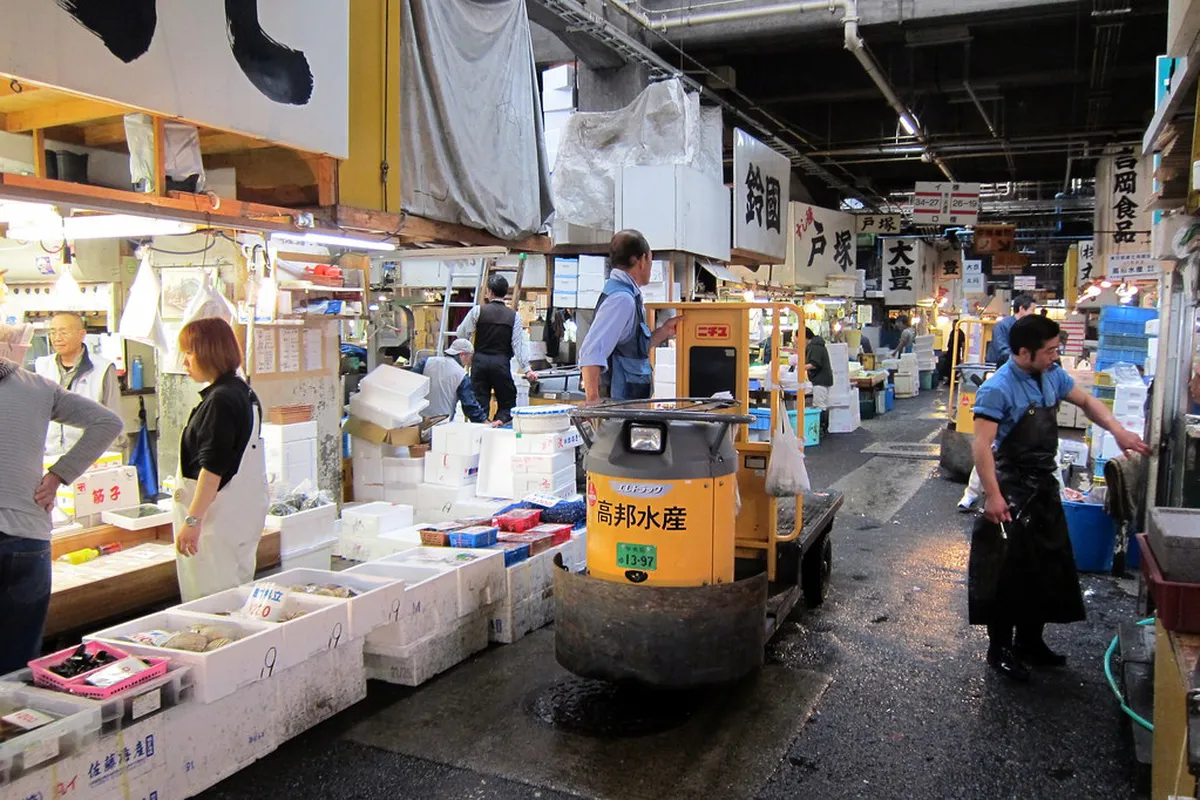
Tsukiji's market roots trace to the Edo Period (1603-1868), when fishmongers supplied the shogun's kitchens from nearby Nihonbashi. After the 1923 Great Kanto Earthquake destroyed that older district, the trade consolidated at Tsukiji in 1935 and grew into the world's largest wholesale fish market — at its peak handling more than 2,000 tonnes of seafood a day across the inner (jonai) wholesale floor.
The crucial 2026 fact for visitors: the wholesale auctions, intermediate wholesalers, and the famous pre-dawn tuna bidding all moved to the purpose-built Toyosu Market on 11 October 2018, about 2.3 km southeast. What stayed in Tsukiji is the outer market — the jogai shijo — a retail district of roughly 400 shops selling directly to home cooks, restaurant chefs, and tourists. If you want to watch a tuna auction, you now book a Toyosu observation slot; if you want to eat sushi and shop for knives, you come to Tsukiji.
That split has actually made the Outer Market more visitor-friendly. The aggressive forklifts and 5 AM auction chaos are gone, replaced by walkable retail hours and a denser concentration of multigenerational shops — many of which trace their lineage back to the Nihonbashi era and still supply Tokyo's top restaurants.
Essential Visitor Info: Hours, Holidays, and Timing
Most Outer Market shops trade 05:00-14:00 Monday through Saturday, with peak energy from roughly 07:00 to 09:00 — that is the window when stalls are fully stocked, professional buyers are still on the floor, and crowds have not yet built. By 14:00 the shutters are coming down across the district; a handful of sushi restaurants stay open for late lunch but the buzz is gone.
Sundays are the main closure: most stalls shut completely, and the area feels deserted. A subset of vendors also closes on Wednesdays — these tend to be the larger fishmongers — so a Wednesday visit is fine for street food but thinner for shopping. National holidays are unpredictable; cross-check the official Tsukiji.or.jp calendar for your 2026 dates before you commit.
For the smoothest visit, target Tuesday, Thursday, or Friday morning and arrive by 07:00-09:00. You will beat the 10:00 AM-12:00 PM tour-group surge, catch sushi counters before queues hit 1-2 hours, and have first pick of items that sell out daily (uni, the best cuts of fatty tuna, fresh tamagoyaki). Saturdays are open but visibly busier than weekdays.
- Peak Visiting Hours
- Start time: 5:00 AM
- Peak window: 8:00 AM - 11:00 AM
- Closing time: 2:00 PM
- Best for: Early breakfast
- Market Holiday Schedule
- Regular closed days: Sundays
- Occasional closures: Wednesdays
- Holiday rules: National holidays
- Verification: Official website
Navigating Access: How to Get to the Market
The recommended approach is the Tokyo Metro Hibiya Line to Tsukiji Station, Exit 1 — a flat two-minute walk dropping you straight at the entrance of the main shopping street (Tsukiji 4-chome). This is the option most travelers should default to; signage is clear and the exit is step-free.
The alternative is the Toei Oedo Line to Tsukijishijo Station, Exit A1, which lands you on the opposite (south) edge of the district near the old wholesale site. It is the same walking distance to the food alleys but a less intuitive arrival; choose it if you are already on the Oedo Line from Shinjuku or Roppongi.
On foot, the Outer Market sits a 10-15 minute walk from Ginza — an easy combination for travelers spending the morning at Tsukiji and the afternoon shopping. From central Tokyo Station it is roughly 20 minutes on foot or two stops via the Marunouchi Line + Hibiya transfer. Coming from Toyosu Market itself? Take the Yurakucho Line one stop to Tsukishima, then transfer to the Oedo Line — or simply taxi across in 10 minutes for around 1,500 JPY.
Top Attractions and Landmarks Within the Market
The Plat Tsukiji information center serves as a vital first stop for any new visitor. This facility offers coin lockers, clean restrooms, and helpful English-speaking staff members. You can pick up a detailed paper map here to navigate the winding back alleys.
Namiyoke Inari Shrine sits at the edge of the market and protects the local community. Its name translates to 'protection from waves,' reflecting the area's coastal history. Visitors can see massive lion head carvings that are carried during local summer festivals.
Walking through the market also reveals small rooftop shrines hidden above the busy stalls. These spiritual spots offer a quiet moment away from the energetic commerce below. Taking time to see these landmarks adds cultural depth to your food-focused journey.
What to Eat: A Guide to Tsukiji’s Best Seafood
Most stalls at Tsukiji are cash-only. Withdraw ¥10,000–¥20,000 from a 7-Eleven ATM before you arrive — knife shops and older family stalls do not accept cards.
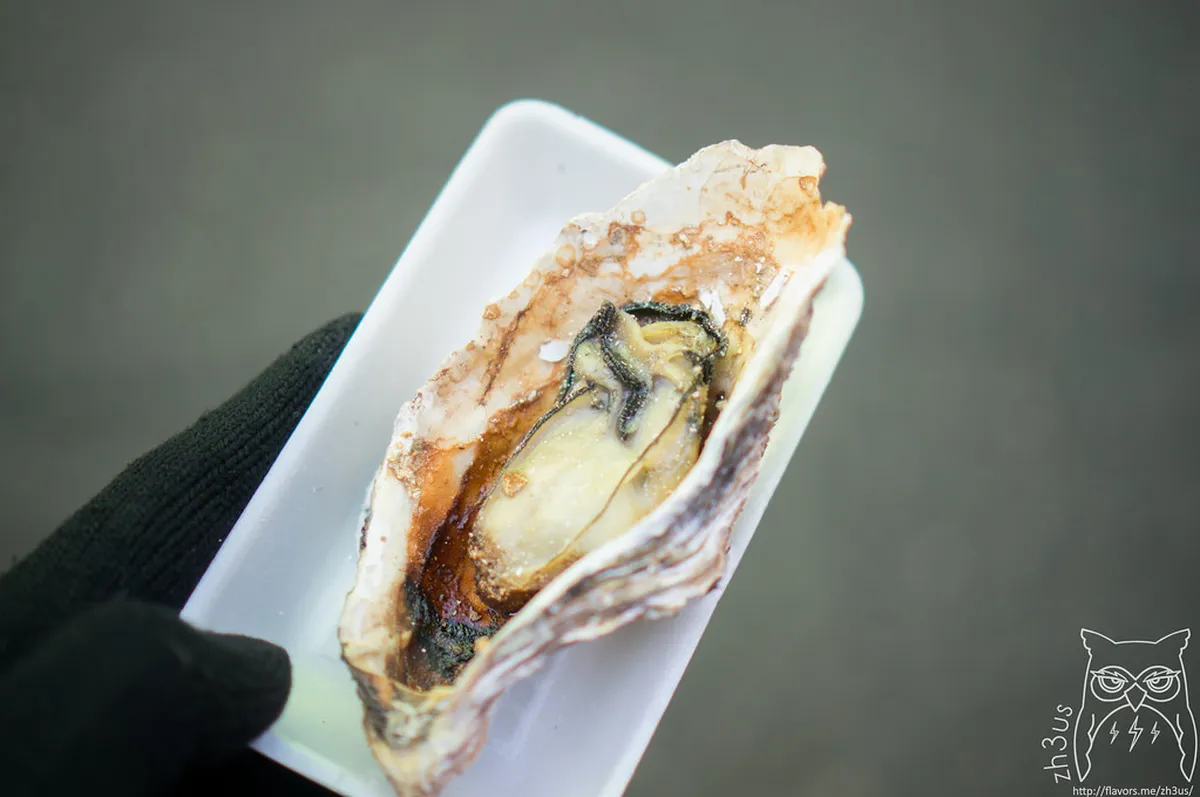
Five things to actually eat at Tsukiji: uni (sea urchin) served straight from the wooden box for 1,500-3,000 JPY a portion; fresh tuna — order the chutoro (medium-fatty) or otoro (fatty) cuts at a sushi counter, or grab a tuna skewer from a street stall; tamagoyaki, the sweet-savory layered omelet, sold hot off the pan for 100-200 JPY at long-running shops like Marutake and Yamacho; grilled scallops and oysters finished with soy or yuzu butter (500-1,000 JPY each); and seasonal mochi — strawberry daifuku in spring, kuri (chestnut) in autumn.
For sit-down sushi, the iconic kaisendon (sashimi rice bowl) costs 2,500-5,000 JPY at counter restaurants like Sushizanmai, Tsukiji Itadori, or Sushi Dai-style spots near the perimeter. Expect 1-2 hour queues at the most-photographed venues during 09:00-12:00 peak; quieter alternative is to walk one alley back and pick a counter with fewer than 5 people waiting — the fish supply is the same.
If you want a local to walk you through what's good that day, guided Tsukiji food tours run 8,000-15,000 JPY per person and sell out 1-2 weeks ahead in 2026 — book before you fly. The tours typically include 5-7 tastings and explanations of vendors you would otherwise walk past.
- Must-Try Food Items
- Dish: Kaisendon
- Price: 2,500 - 5,000 JPY
- Wait time: 20-40 minutes
- Flavor: Fresh and savory
- Popular Street Snacks
- Item: Tamagoyaki
- Price: 100 - 150 JPY
- Wait time: Under 5 minutes
- Flavor: Sweet and light
Shopping for Professional Kitchenware and Ingredients
The single most famous shop is Aritsugu, a knife maker founded in Kyoto in 1560 that has operated a Tsukiji counter for generations. Hand-forged carbon-steel chef knives start around 15,000 JPY for a small petty knife and run past 40,000 JPY for a 240 mm gyuto; staff sharpen your blade and engrave your name in kanji on the handle in about 10 minutes at no extra charge. Bring cash and patience — the queue moves slowly because they fit each handle.
For dashi ingredients, look for shops selling katsuobushi (dried bonito flakes shaved that morning) and rishiri or ma-konbu kelp; expect 800-2,500 JPY for a take-home pack that will make 20+ servings of stock. Tamari, fresh wasabi root, and yuzu kosho are easy finds and travel well.
Other worthwhile buys: handmade chopsticks (1,000-5,000 JPY), copper tamagoyaki pans, sharkskin wasabi graters, and small ceramic dishes from Tsukiji 6-chome's pottery shops. Most knife and ceramic shops accept credit cards in 2026, but small food stalls and the older family shops are cash-only — withdraw 10,000-20,000 JPY at a 7-Eleven before you arrive.
Market Etiquette: Rules for a Respectful Visit
Sundays are the main closure — most stalls shut completely. A subset of vendors also closes Wednesdays. Always cross-check the official Tsukiji.or.jp calendar for your specific 2026 dates.
| Item | Price (JPY) | Where to find it |
|---|---|---|
| Uni (sea urchin) | ¥1,500–¥3,000 | Seafood stalls |
| Tamagoyaki (sweet omelet) | ¥100–¥200 | Marutake, Yamacho |
| Grilled scallops/oysters | ¥500–¥1,000 | Street stalls |
| Kaisendon (sashimi rice bowl) | ¥2,500–¥5,000 | Sushi counters |
| Guided food tour | ¥8,000–¥15,000 | Book in advance |
| Aritsugu knife (petty) | From ¥15,000 | Aritsugu counter |
Six etiquette rules that matter at Tsukiji in 2026: (1) Do not eat while walking — finish each item at the stall's standing counter before moving on. (2) Always ask before photographing inside a shop or close-up shots of vendors and their product; the public alleys are fine for wide shots. (3) Leave large suitcases at Tokyo Station coin lockers or use Plat Tsukiji's storage — the narrow alleys cannot accommodate roller bags. (4) Skip heavy perfume; it interferes with the smell of the fish, and chefs notice. (5) Cash first — many street stalls and older shops do not take cards. (6) Do not haggle; prices are set, and bargaining is considered rude.
At sushi counters, eat each piece in one bite, dip the fish (not the rice) lightly in soy, and use chopsticks or fingers — both are acceptable. The Japan sushi etiquette guide covers the full set of customs if you want to read up before your meal.
Strollers are technically allowed but genuinely hard to push through 09:00-12:00 crowds; if you have a baby, a soft carrier works better. Smoking is banned in the alleys — use the marked smoking areas near Plat Tsukiji.
Beyond the Stalls: Art and Culture Nearby
After finishing your market tour, consider visiting the nearby Hama-rikyu Gardens. This traditional landscape garden features a seawater pond and a charming teahouse. It provides a peaceful contrast to the high-energy environment of the fish market.
The Kabuki-za Theater is another cultural landmark located within walking distance of Tsukiji. You can watch a single act of a traditional play for a reasonable price. This area perfectly blends the old traditions of Tokyo with its modern urban lifestyle.
If you enjoy modern art, the teamLab Planets exhibition is a short train ride away. This immersive digital art museum offers a completely different sensory experience for travelers. Combining these attractions creates a diverse and well-rounded day in the city.
A Perfect Morning Itinerary for First-Timers
07:00 — Arrive at Tsukiji Station Exit 1 and walk two minutes to the main alley. Add your name to the waiting list at a sushi counter (queues are still short before 08:00), then explore while you wait. 07:15-08:00 — Walk the back alleys north of Monzeki-dori to watch deliveries arrive and grab a tamagoyaki skewer (100-200 JPY) to bridge breakfast.
08:00-09:30 — Eat sushi or kaisendon at the counter (2,500-5,000 JPY). 09:30-10:30 — Shop: Aritsugu for knives, a dashi shop for katsuobushi and konbu, a ceramic stall for small dishes. Stop at Plat Tsukiji to use restrooms, refill water, or pick up the official paper map. 10:30-11:00 — Visit Namiyoke Inari Shrine on the market's eastern edge for a quiet moment and the lion-head carvings.
11:00-11:30 — Beat the lunch surge by walking 10-15 minutes through Tsukiji toward Ginza, or take the Hibiya Line one stop to Higashi-ginza. From there, you are positioned for Ginza shopping, Hama-rikyu Gardens (15-minute walk south), or a Kabukiza single-act ticket (700-2,000 JPY). Total time at the market: about 4 hours, with the worst crowds avoided.
Frequently Asked Questions
Is Tsukiji Market still open after the move to Toyosu?
Yes, the Tsukiji Outer Market remains fully open to the public for shopping and dining. While the wholesale operations moved to Toyosu, over 400 retail shops and restaurants still operate here daily. It remains a top destination for fresh seafood in Tokyo.
What is the difference between the Inner and Outer Market?
The Inner Market was the wholesale area where tuna auctions took place until 2018. The Outer Market is the retail section designed for the general public and tourists. Today, visitors go to Toyosu for auctions and Tsukiji for street food.
What time does Tsukiji Outer Market close?
Most shops begin to close around 2:00 PM, though some restaurants stay open for late lunch. It is best to arrive before 11:00 AM to see the full range of vendors. Many stalls close completely by mid-afternoon each day.
Can you eat while walking in Tsukiji?
No, eating while walking is considered poor etiquette and is officially discouraged in the market area. Most food stalls have designated standing areas for customers to enjoy their snacks. This helps keep the narrow walkways clear for other shoppers.
Do I need a ticket to visit Tsukiji Outer Market?
No tickets or reservations are required to enter the Tsukiji Outer Market area. It is a public shopping district that anyone can explore for free. You only pay for the food, drinks, and souvenirs you choose to purchase. For more tips, check our Senso-ji guide for other free Tokyo landmarks.
The Tsukiji Outer Market is an essential stop for anyone wanting to taste the best of Tokyo. Even without the wholesale auctions, the energy and quality of the food remain unmatched. Planning your visit with the right timing and etiquette ensures a rewarding experience for everyone.
From world-class sushi to professional-grade knives, the market offers treasures for every traveler. Take the time to explore the hidden corners and local shrines during your morning walk. We hope this guide helps you make the most of your culinary adventure in this historic district.
For more Tokyo planning, explore our Tokyo guide, 5-day Tokyo itinerary, and top Tokyo experiences writeups.