Welcome to the definitive 2026 teamlab planets tokyo dmm visitor guide for your trip to Japan. This barefoot digital art installation in Toyosu offers a 'Body Immersive' experience where you wade through ankle-to-knee-deep water rooms and stand inside a 13,000-orchid floating garden. Many travelers confuse this venue with teamLab Borderless, which is the separate 'mapless' museum located in Azabudai Hills near Roppongi. Plan for roughly 90 minutes to two hours inside the exhibits, plus 15-20 minutes for the locker and barefoot prep on arrival.
Planning a Tokyo trip often means navigating timed-entry systems that sell out one to two weeks ahead on weekends, but teamLab Planets is one of the best things to do in Tokyo. This guide simplifies the process by walking you through the official DMM platform, what to wear so the mirrored floors and water rooms work in your favor, and the exact station exits to use. You will also find tips on the teamLab smartphone app (download it on hotel Wi-Fi before you go), where to find vegan ramen inside the venue, and how to validate free parking at LaLaport Toyosu on weekdays.
What to Expect at teamLab Planets Tokyo
The museum focuses on the concept of 'Body Immersive,' where the boundaries between the viewer and the art dissolve. You will experience various textures and temperatures as you move through the darkened corridors. One room requires you to wade through warm, knee-high water filled with digital koi fish. The tactile nature of the museum makes it one of the most memorable attractions in Tokyo for international visitors.
The layout is divided into two main sections: the Water Area and the Garden Area. In the Water Area, the rooms utilize mirrors and light to create infinite landscapes. The Garden Area features thousands of live orchids that react to your presence. Every visitor must remove their shoes and socks before entering the first exhibit.
How to Book teamLab Planets Tickets (Step-by-Step)
Advance booking is essentially mandatory in 2026 — weekend and Japanese-holiday slots routinely sell out one to two weeks ahead, and walk-up tickets at the door are rarely available. Start by visiting the Official Guide to select your preferred date and a specific 30-minute entry window. You will need to create a DMM account or check out as a guest, and prices fluctuate by date and demand, so weekday morning slots are typically the cheapest. Choose your slot deliberately: late entries cannot be rebooked after the day starts.
After purchase, locate your digital voucher by signing into the DMM site on your phone and opening the 'My Ticket' screen — the QR code is generated live, and screenshots are not accepted at the gate. Keep your phone charged and confirm you have working mobile data or roaming before you arrive, because the indoor Wi-Fi at Toyosu can be slow at peak times. Booking direct via DMM generally offers more flexible cancellation than Klook or Agoda vouchers, which lock you into a specific slot once issued.
The QR code ticket is generated live on the DMM site — screenshots are not accepted at the gate. Charge your phone fully before arriving, as indoor Wi-Fi at Toyosu can be slow at peak times. Cancellation is more flexible when booking direct via DMM than through third-party resellers.
Best Time to Visit and Opening Hours
Operating hours typically run from 9:00 AM to 10:00 PM, but these can change seasonally. Early morning slots are ideal for those who want to avoid the largest crowds. Late evening visits offer a more tranquil atmosphere, especially in the outdoor garden sections. Check the Official Venue Info for the most current 2026 schedule before you travel.
Visiting during the 'golden hour' provides the best natural lighting for the Orchid Glass House. Weekdays are significantly less crowded than weekends or Japanese public holidays. If you are staying near Ginza, the short commute makes evening visits very convenient. Avoid the mid-afternoon rush if you want to take photos without other people in the frame.
What to Wear and Bring (Barefoot & Water Tips)
Choosing the right outfit is essential because you will be walking through ankle-to-knee-deep water in at least two rooms — the level can reach about 30 centimeters. Wear shorts you can roll above the knee, or loose trousers that roll up cleanly; tight skinny jeans, long dresses, and tights are the worst options. Many rooms also feature mirrored floors that reflect upward, so short skirts and thin dresses create obvious privacy issues. The museum provides free loaner shorts at the entrance if your clothing is unsuitable — just ask staff. Photography is allowed for personal use, but no flash, no tripods, and no selfie sticks are permitted; small waterproof phone pouches are sold on-site for the water rooms and are worth the few hundred yen.
- Recommended Clothing for Comfort
- Type: Shorts or cropped pants
- Best for: Easy wading
- Where: Water exhibits
- Cost: Free rental available
- Items to Avoid Bringing
- Type: Long skirts or dresses
- Best for: Avoiding mirror reflections
- Where: All mirrored rooms
- Cost: N/A
- Footwear Requirements
- Type: Barefoot only
- Best for: Sensory experience
- Where: Entire museum
- Cost: Free lockers provided
Experience Highlights: Must-See Immersive Rooms
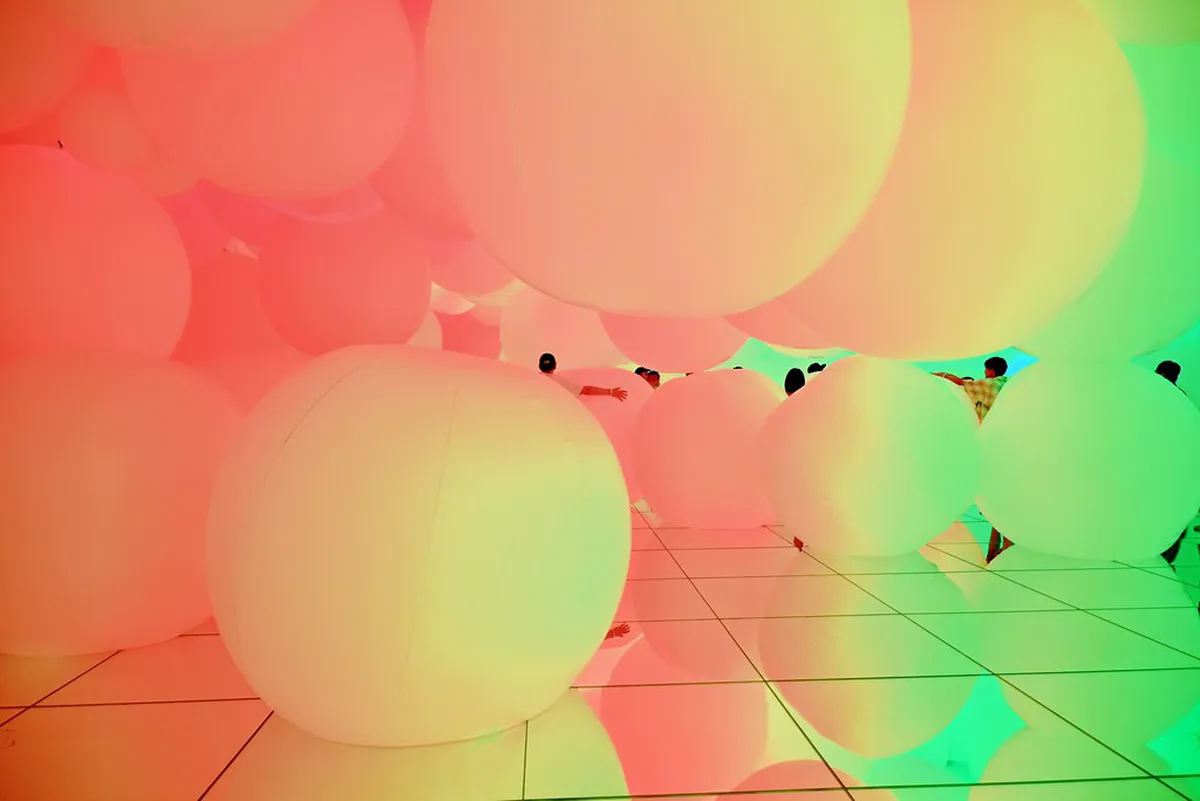
The **Infinite Crystal Universe** is a fan favorite featuring thousands of hanging LED lights. You can use the teamLab App to change the light patterns in real-time. Another highlight is **Drawing on the Water Surface**, where digital koi turn into flowers upon contact with visitors. This room uses sensors to track your movement, making every visit a unique visual experience.
Don't miss the **Catching and Collecting Extinct Forest**, which requires your smartphone for interaction. The app allows you to 'catch' various digital animals and study them on your screen. This specific exhibit drains battery quickly, so carrying a portable power bank is a smart move. The immersive nature of these rooms makes them stand out from other Tokyo attractions and delivers one of the most unique Tokyo experiences available.
The Orchid Glass House and Garden Area
The **Floating Flower Garden** features over 13,000 live orchids suspended from the ceiling. As you approach the flowers, they slowly rise to create a space for you to enter. This exhibit has a timed entry to ensure everyone has enough room to enjoy the scent and sight. It is one of the few areas with natural light, making it perfect for high-quality photography.
Nearby, the **Moss Garden of Resonating Microcosms** features giant silver ovoids. These shapes change color and emit sounds when they are pushed or moved by the wind. The atmosphere changes completely between day and night as the internal lights become more vibrant. Take a moment to sit quietly and observe how the art interacts with the surrounding environment.
Dining at Vegan Ramen UZU Tokyo
After your tour, visit **Vegan Ramen UZU Tokyo** located right outside the museum entrance. This restaurant originated in Kyoto and offers high-quality plant-based noodles. The 'Reversible Reflection' room allows you to eat your meal inside an art installation for an extra fee. The mirrored tables and walls reflect the digital art, creating a seamless transition from the museum.
If you prefer a quicker meal, there are public outdoor tables available for all visitors. The signature flower ramen is as beautiful as it is delicious, featuring edible petals. Prices are slightly higher than standard ramen shops but the environment justifies the cost. It is a great spot to relax before heading to nearby Tsukiji Outer Market for more snacks.
How to Get to teamLab Planets (Access & Parking)
The museum sits in Toyosu and is best reached by train. The closest entrance is Shin-Toyosu Station on the Yurikamome Line — exit the station and the venue is a one-minute walk straight ahead, well-signed in English. The alternative is Toyosu Station on the Tokyo Metro Yurakucho Line, which connects directly to central Tokyo (Ginza, Yurakucho) but adds a flat 10-minute walk past LaLaport. If you are coming from Shibuya or Shinjuku, the Yurakucho Line via Toyosu is usually faster despite the longer walk. This area is a short hop from Odaiba, making it easy to combine both in one day.
If you are driving, there is a specific 'parking hack' for visitors on weekdays. You can get one hour of free parking at the nearby LaLaport Toyosu shopping mall. Simply present your teamLab ticket at the mall's service desk to validate your parking pass. Check the LaLaport Parking PDF for detailed terms and conditions.
Visiting with Kids: Practical Tips
Children often find the water and light displays incredibly engaging and fun. Parents should be aware that the water in some rooms might be deep for toddlers. It is best to hold your child's hand while navigating the darker corridors and uneven floors. Strollers are not allowed inside the exhibits but can be stored in a designated area for free.
The sensory nature of the museum can be overwhelming for some younger children. Take breaks in the transition zones if the lights and sounds become too intense. Make sure to bring a change of clothes for kids, as they are likely to get splashed. The interactive elements provide a great way for families to bond over shared discovery.
Amenities and Accessibility Information
The closest station is Shin-Toyosu on the Yurikamome Line — a one-minute walk straight to the entrance. Free loaner shorts are available at the entrance if your clothing cannot be rolled above the knee. Bring a small microfibre towel as your feet stay damp throughout most of the visit.
The museum provides free lockers for shoes and small bags right after the ticket gate, and they are sized for daypacks rather than full suitcases. If you are arriving from the airport with luggage, drop it at a coin locker inside Toyosu Station or use the staffed oversized-luggage storage at the venue entrance (small fee). Restrooms and changing rooms are positioned before the barefoot zone — use them now, because there are no toilets inside the exhibit loop once you start. Bring a small microfibre towel or buy one from the gift shop; your feet are damp for most of the visit.
Accessibility is genuinely limited. Several rooms have uneven floors, water up to 30 cm deep, and very low light, so most of the standard route is not wheelchair accessible. Staff can offer a partial barrier-free path on request that skips the deepest water rooms, but visitors with mobility, balance, or sensory-processing needs should contact the venue in advance via the official site. Service dogs are permitted under venue safety rules. Strollers must be parked at the entrance — they are not allowed in the exhibits.
Frequently Asked Questions
Is there a place to store luggage at teamLab Planets?
Yes, the museum provides free lockers for shoes and small bags. For larger suitcases, there is a designated luggage storage area near the entrance. You should arrive early to secure a spot if you have bulky items. Check our Tokyo travel guide for more logistics tips.
Can I wear shoes inside the museum?
No, teamLab Planets is a barefoot-only experience. You must remove your shoes and socks at the entrance and store them in the provided lockers. This allows you to feel the various textures and the water throughout the exhibits. Rental shorts are available if your pants cannot be rolled up.
How long does it take to walk through teamLab Planets?
Most visitors spend between 90 minutes and two hours exploring the various rooms. If you plan to eat at the vegan ramen restaurant or spend time in the garden, budget for three hours. The timed entry helps manage the flow of people through the installations.
Is teamLab Planets different from teamLab Borderless?
Yes, they are different museums with unique concepts. Planets is a 'water' museum where you walk barefoot through installations. Borderless is a 'mapless' museum focused on art that moves between rooms. Both are worth visiting if you have time in your itinerary.
Visiting teamLab Planets is a highlight for many travelers exploring the modern side of Japan. By following this teamlab planets tokyo dmm visitor guide, you can ensure a stress-free and immersive experience. Remember to book your tickets early and dress appropriately for the water exhibits. Enjoy the unique blend of nature and technology in this world-class digital art space.