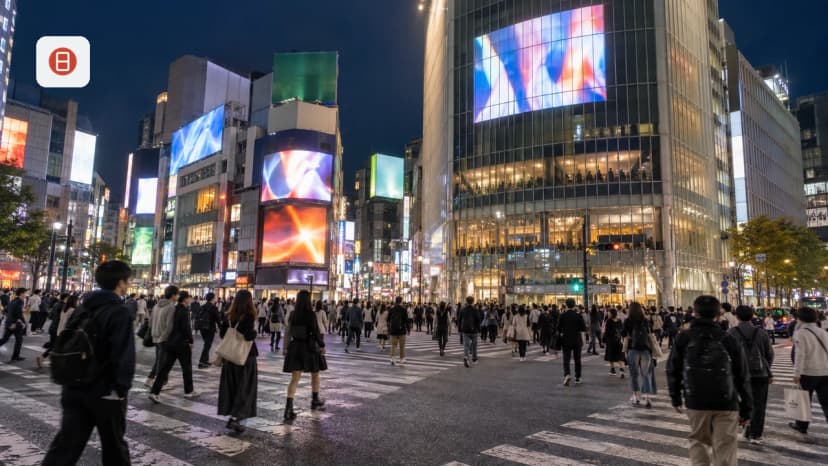
Odaiba stands as a futuristic man-made island in the heart of Tokyo Bay. This district offers a unique blend of high-tech entertainment and scenic waterfront views. Many visitors find it a refreshing break from the dense urban streets of central Tokyo.
Our comprehensive odaiba visitor guide helps you navigate this sprawling leisure hub with ease. You will discover the best ways to arrive and which landmarks deserve your time. The area features everything from giant robots to serene beach walks.
Planning a visit requires understanding the local transport and seasonal changes. This guide covers essential logistics to ensure your day trip runs smoothly. For more on things to do in Tokyo beyond Odaiba, see our broader city guide. Prepare to explore one of the most innovative neighborhoods in the world.
Odaiba Origins and History: The Evolution of Tokyo's Forts
Odaiba began in the 1850s as a chain of artificial battery islands built across Tokyo Bay. The Tokugawa Shogunate constructed these forts in 1853 in response to Commodore Perry's Black Ships, mounting cannons to defend Edo from naval attack. The name 'Daiba' literally means 'battery' or 'cannon platform,' and the third battery's stone ramparts still survive as Daiba Park, accessible by footbridge from Odaiba Seaside Park.
The island sat largely undeveloped until Tokyo's 1990s redevelopment push transformed Tokyo Bay into a futuristic waterfront subcenter. Major reclamation through the early 1990s expanded the land area, and by 1996 the Yurikamome monorail had opened over the Rainbow Bridge to bring visitors in. The vision was a 'Tokyo Teleport Town' of offices, residences and leisure — read more on Odaiba on Wikipedia.
Today the island in 2026 mixes Edo-era ruins with glass shopping malls, museums and digital-art venues. The contrast between the surviving 1850s stone batteries and the steel arches of the Rainbow Bridge gives Odaiba a layered character you do not get on the mainland. This history adds context to a visit that otherwise reads as pure leisure district.
Getting to Odaiba: Comparing the Yurikamome, Rinkai Line, and Water Bus
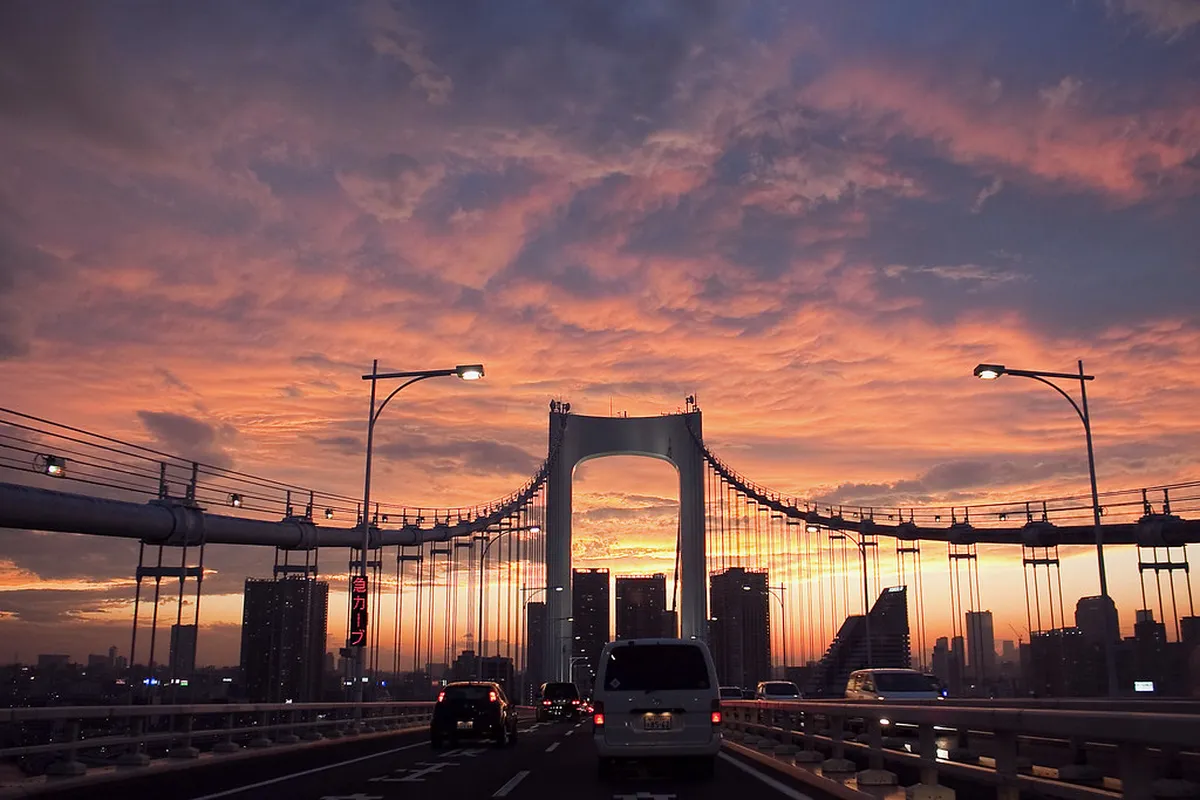
The Yurikamome is the scenic route: a driverless elevated monorail that departs Shimbashi Station, loops up onto the upper deck of the Rainbow Bridge, and crosses Tokyo Bay with panoramic skyline views before threading through Odaiba's stations. The full ride to Daiba or Aomi takes about 15–22 minutes. Grab the front-row seat in carriage 1 — with no driver's cab, you get an unobstructed forward view of the bridge crossing and the curving track ahead.
The Rinkai Line is the faster, less scenic alternative for travelers coming from Shinjuku, Shibuya or Osaki on the JR Saikyo Line, which through-runs into Rinkai. Trains tunnel underground to Tokyo Teleport Station in roughly 13 minutes from Osaki, dropping you between DiverCity and Aqua City. Pick this line if you want to reach the malls and Gundam quickly and skip the bridge crossing.
For the most scenic arrival, take the Yurikamome from Shimbashi and grab the front-row seat in carriage 1 — with no driver's cab you get an unobstructed forward view of the Rainbow Bridge crossing. The Rinkai Line is faster but underground and misses the view entirely.
The Tokyo water bus adds a third, slower option from the historic side of town. Suijo Bus cruisers — including the futuristic Hotaluna and Himiko, both designed by manga artist Leiji Matsumoto — run from Asakusa down the Sumida River to Odaiba Seaside Park in about 50–70 minutes. It is the most photogenic arrival and makes a natural pairing with a morning in Asakusa.
| Transport | Best for | Departs from | Travel time | Approx. fare |
|---|---|---|---|---|
| Yurikamome Monorail | Scenic views (Rainbow Bridge) | Shimbashi Station | 15–22 min | ¥330–390 |
| Rinkai Line | Speed (from Shinjuku/Shibuya area) | Osaki Station | ~13 min | ¥340–510 |
| Tokyo Water Bus | Full sightseeing experience | Asakusa Pier | 50–70 min | ¥1,200–1,700 |
JR Pass Services and Booking Your Travel
Many travelers wonder if their Japan Rail Pass covers the trip to Odaiba. Unfortunately, the Yurikamome is a private line and does not accept the JR Pass. You must purchase a separate ticket or use an IC card like Suica. This is a common point of confusion for first-time visitors.
The Rinkai Line is also a private railway, though it shares tracks with JR trains. Your JR Pass will cover the portion of the trip on JR tracks only. You may need to pay a small adjustment fee when exiting at Tokyo Teleport Station. Always keep your IC card topped up for these transitions.
Using a prepaid card is the most efficient way to handle local fares. You can use these cards on all trains, buses, and even in convenience stores. This saves you from calculating individual ticket prices at every station. Check our guide on Tokyo attractions for more transport tips.
Must-See Odaiba Attractions and Points of Interest
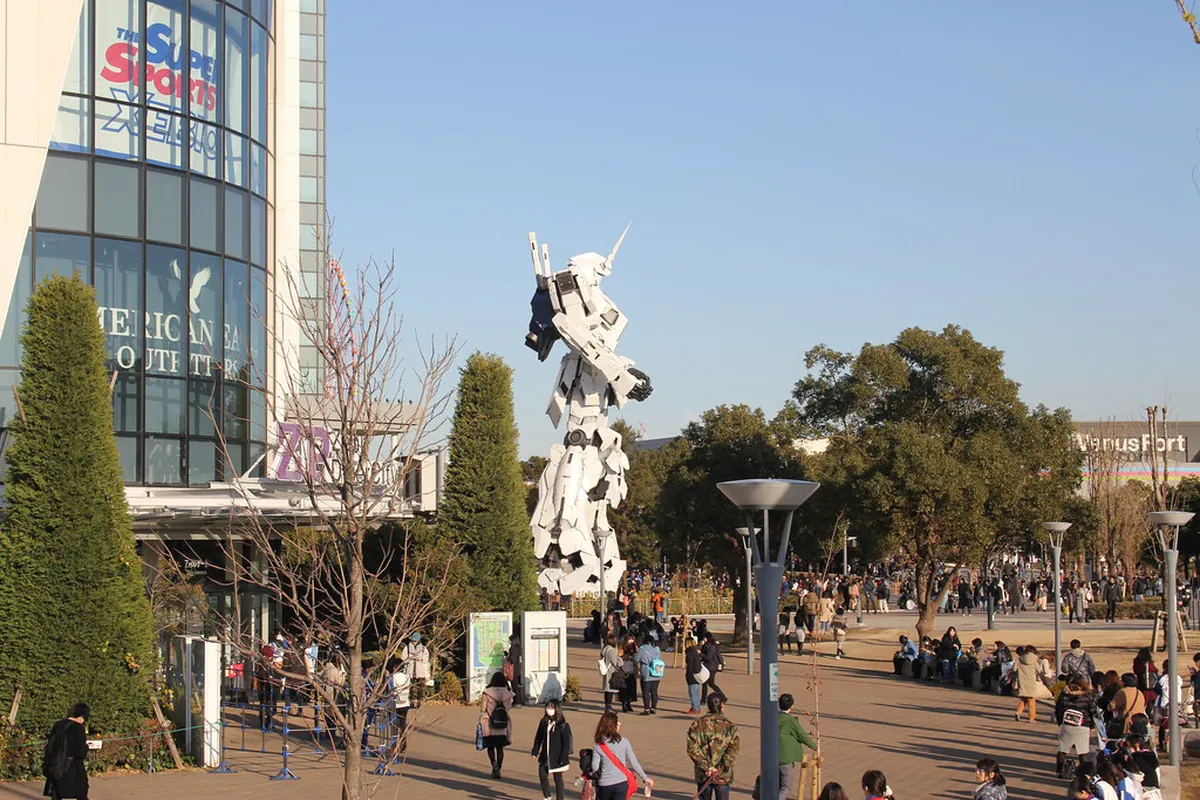
The 19.7-metre Life-Sized Unicorn Gundam Statue outside DiverCity Tokyo Plaza is the island's signature photo. It runs short daytime 'transformation' sequences every couple of hours, but the real event is the evening projection-mapping and light show on the DiverCity facade, typically from around 19:00 in winter and 19:30–20:30 in summer. Viewing is free from the 2nd-floor Festival Plaza.
The Fuji TV Building, designed by Kenzō Tange, is the other architectural icon — a steel grid wrapped around a 32-metre titanium-clad sphere. The sphere houses the Hachitama observation deck on the 25th floor, offering wide views of Tokyo Bay, the Rainbow Bridge and on clear days Mount Fuji. Entry is ticketed; access is by elevator up the exterior escalator route.
Just west, the Statue of Liberty replica on the Aqua City waterfront is the island's best free viewpoint. Installed permanently in 2000 after a French loan piece proved popular, it lines up directly with the Rainbow Bridge for a single-frame shot that captures both. The bridge itself is illuminated nightly from sunset until midnight, with white lighting in winter and rainbow-coloured displays during special events.
Museums, Art, and High-Tech Culture in Odaiba
Miraikan — the National Museum of Emerging Science and Innovation — is Odaiba's flagship cultural stop, a short walk from Telecom Center station on the Yurikamome. Permanent exhibits cover robotics, AI, space science and sustainability, anchored by the suspended Geo-Cosmos OLED globe that streams live earth data. The long-running ASIMO demonstrations ended when Honda retired the robot, but newer humanoid and android demonstrations continue in the 3rd-floor robotics zone. Allow 2–3 hours.
For full-scale immersive digital art, the closest option is teamLab Planets, treated as a separate entity in nearby Toyosu (one stop from Odaiba on the Yurikamome plus a short transfer). It is a barefoot, water-and-mirror sensory experience — book timed tickets in advance as walk-ups are rarely available.
Joypolis, Sega's indoor amusement park inside DiverCity-adjacent Decks Tokyo Beach, rounds out the high-tech roster with motion simulators, VR rides and arcade attractions across three floors — a strong rainy-day option. The Museum of Maritime Science, housed in a building shaped like a cruise ship, has had its main exhibits closed for years; the moored Antarctic research vessel Sōya remains free to board on the quay outside.
Japan Travel Stories: Local Perspectives on Odaiba's Waterfront
Odaiba has a reputation as one of the most romantic spots in the city. Local couples often flock here in the evening for quiet walks along the deck. The illuminated Rainbow Bridge creates a stunning backdrop for any night out. You will find many waterfront restaurants offering special dinner packages for two.
The atmosphere here differs significantly from the busy streets of Shinjuku. It feels spacious and airy thanks to the wide pedestrian walkways and sea breeze. Locals often come here on weekends to escape the cramped feeling of central districts. It is a place where Tokyoites go to slow down and enjoy the view.
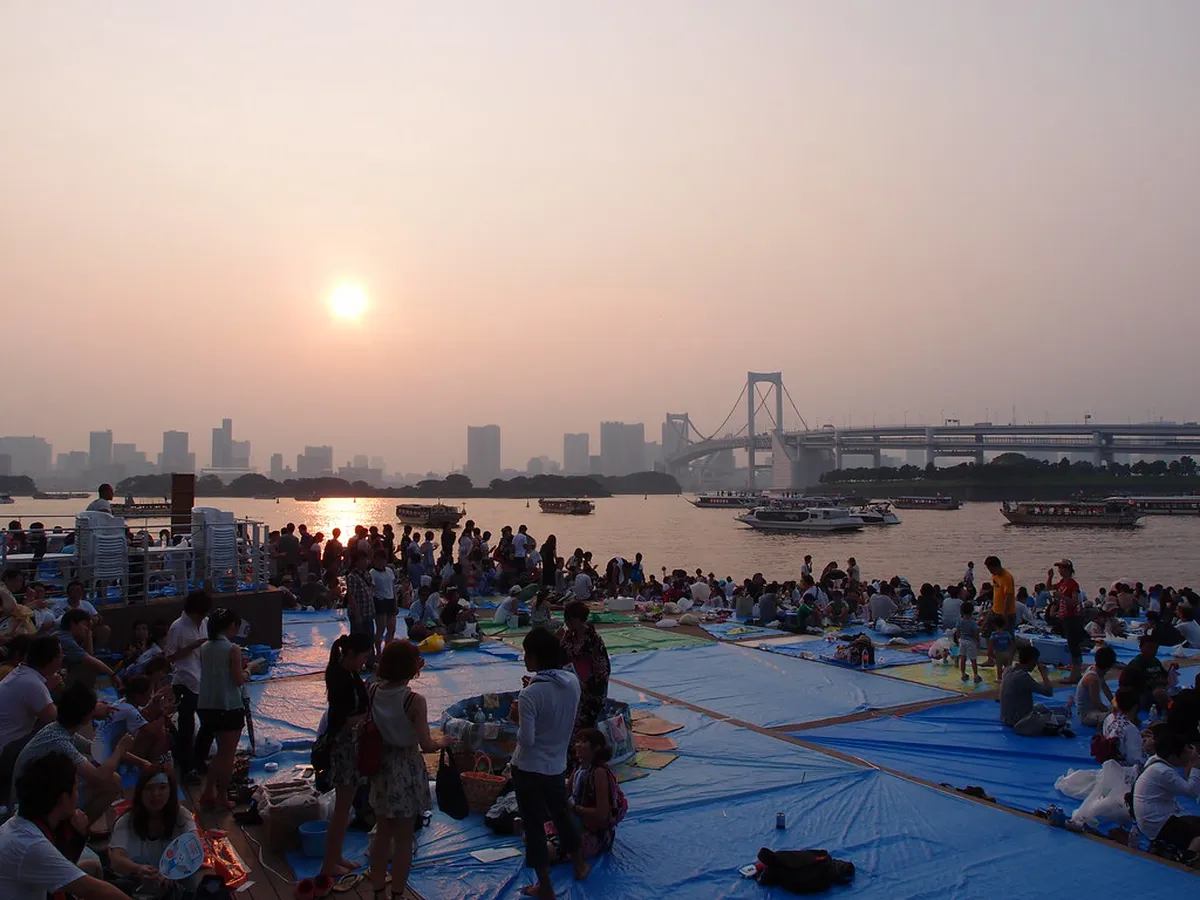
Watching the sunset from the seaside park is a quintessential local experience. The sky turns vibrant shades of orange and purple over the water. You can see the silhouette of the Tokyo Tower across the bay. This view is free and remains one of the best in the city.
Family-Friendly and Budget-Friendly Activities
Families have an unusually dense cluster of indoor venues in walking distance. Legoland Discovery Center inside Decks Tokyo Beach is built for ages 3–10, with a 4D cinema, ride attractions and millions of bricks. Madame Tussauds Tokyo and Tokyo Joypolis sit in the same complex, so a single mall stop can cover three rainy-day activities without leaving the building.
Odaiba Seaside Park has a 800-metre crescent of imported sand — a genuine beach inside Tokyo — paired with a pedestrian promenade lined with benches. Swimming in Tokyo Bay is prohibited because of water quality, but paddling, sand play, kite-flying and beach picnics are all popular, and the view across to the Rainbow Bridge is the island's most photographed scene. The park, beach and waterfront decks are free, 24 hours.
If you are watching costs, almost every signature Odaiba sight — the Gundam statue, the Rainbow Bridge from Seaside Park, the Statue of Liberty replica, the malls, the pedestrian Rainbow Promenade walk across the bridge itself — costs nothing. Pair a free morning loop with one paid attraction (Miraikan or Joypolis) and you have a strong-value family day.
Shopping and Entertainment Hubs: From Gundam to DiverCity
DiverCity Tokyo Plaza, opened in 2012 next to the Unicorn Gundam, is the anime-and-fashion anchor. The 7th-floor Gundam Base Tokyo is the largest official Gunpla store in Japan, with limited-edition kits sold only here. The 2nd-floor Tokyo Gourmet Stadium food court seats around 700 across roughly 25 outlets — ramen, tonkatsu, Hawaiian and global fast food — and stays open into the evening.
Aqua City Odaiba spans seven floors directly across from the Statue of Liberty replica, with about 50 restaurants — many with floor-to-ceiling Rainbow Bridge views, plus the 5th-floor Ramen Park collecting regional ramen from around Japan. A small Shinto shrine on the rooftop and a multiplex cinema make it a credible half-day destination on its own. Note that the long-running Daiba Itchome Shotengai retro shopping street inside Decks Tokyo Beach closed in 2024.
Decks Tokyo Beach, with the closure of Palette Town and VenusFort in 2022, has stepped up as the entertainment hub: Tokyo Joypolis, Legoland Discovery Center, Madame Tussauds and Trick Art Museum are all clustered here under one roof. The Daikanransha Ferris wheel — long an Odaiba skyline marker — was dismantled in August 2022 as part of the Palette Town redevelopment, which is now slated to become a new sports-and-events complex.
Tokyo Japan Via Cebu Pacific: Practical Tips for Regional Travelers
Travelers arriving via Cebu Pacific often land at Narita Airport's Terminal 3. The most direct way to reach Odaiba is by taking an airport limousine bus. These buses stop at major hotels like the Grand Nikko Tokyo Daiba. This saves you from navigating complex train transfers with heavy luggage.
If you prefer the train, take the Narita Sky Access line to Shimbashi Station. From there, you can easily transfer to the Yurikamome line for the final leg. This route is often cheaper than the bus but requires more walking. Learn more about the city layout on Tokyo - Wikipedia.
Budget travelers should look for coin lockers at Tokyo Teleport Station. Storing your bags early allows you to explore the malls and parks hands-free. Most lockers accept IC cards for payment, making the process very simple. Always keep a digital map of the district on your phone for easy navigation.
How to Plan a Smooth Odaiba Itinerary
Plan a minimum of half a day (4–6 hours) for Odaiba in 2026 — that covers Miraikan, the Gundam statue, one mall, and a Rainbow Bridge sunset. Stretch it to a full day (7–9 hours) if you are adding teamLab Planets in Toyosu, Joypolis, or the pedestrian Rainbow Promenade walk across the bridge. Open most attractions from 10:00 or 11:00 and hit Miraikan first to beat school groups.
For a Tokyo itinerary that incorporates Odaiba into a multi-day visit, check our 5-day Tokyo guide to see how the island fits into a broader city route.
The natural morning pairing is Tsukiji Outer Market for an early sushi or tamago breakfast, then taxi or Yurikamome (via Shimbashi) over to the island for a 10:00 museum opening. Both sit in southern Tokyo and link cleanly without a long backtrack.
The JR Pass does not cover the Yurikamome or the Rinkai Line — both are private railways. Keep your IC card (Suica/Pasmo) topped up for these transitions. A small adjustment fee may apply when exiting Tokyo Teleport Station via the JR through-running service.
Time the end of the day for the Rainbow Bridge illumination, which switches on at sunset. Watch from Odaiba Seaside Park beside the Statue of Liberty replica, then either take the Yurikamome back over the upper deck for a night-bridge crossing, or — if a sailing is running — catch the Hotaluna water bus back to Asakusa for a final river-and-skyline reveal.
Frequently Asked Questions
Is the JR Pass valid for travel to Odaiba?
No, the JR Pass does not cover the Yurikamome Line or the Rinkai Line fully. You will need to pay separate fares using an IC card or cash. Some JR lines connect to the area, but the final legs are private. See more in our Tokyo travel tips.
What are the best free things to do in Odaiba?
You can visit Odaiba Seaside Park and the Statue of Liberty for free. Watching the Gundam statue transformation and exploring the malls is also cost-free. The waterfront decks offer amazing views of the city skyline without a ticket. These spots are perfect for budget travelers.
How much time should I spend in Odaiba?
Most visitors should plan for at least a full afternoon and evening. This allows enough time to visit one museum, do some shopping, and see the sunset. If you enjoy museums and theme parks, a full day is recommended. The area is quite large and requires plenty of walking.
Is Odaiba worth visiting on a short Tokyo trip?
Yes, Odaiba offers a unique futuristic atmosphere that you won't find elsewhere. It is a great contrast to historic sites like the Senso-ji Temple. The views of the bay and the Rainbow Bridge are iconic Tokyo experiences. It provides a diverse look at modern Japanese culture.
Which malls in Odaiba are currently open?
DiverCity Tokyo Plaza, Aqua City Odaiba, and Decks Tokyo Beach are all open. Please note that Palette Town and VenusFort closed permanently in recent years. Always check official websites for the latest operating hours before your visit. Most malls open daily from late morning until night.
Odaiba remains a must-visit destination for anyone exploring the Japanese capital. Its blend of history, technology, and scenic beauty offers something for every traveler. You can enjoy world-class shopping or simply relax by the water with a view.
Using this odaiba visitor guide will help you avoid common transport mistakes. Remember to plan for the private train lines and enjoy the romantic evening atmosphere. Your trip to this man-made island will surely be a highlight of your Tokyo adventure.
For more Tokyo planning, explore our Tokyo activities guide to see additional experiences and ways to spend your time in the city.