

Kinkaku-ji stands as one of the most recognizable landmarks in all of Japan. This stunning Zen temple is covered in nearly pure gold leaf and shines against the surrounding forest and reflecting pond. It serves as a primary highlight for many travelers exploring the historic city of Kyoto. Our kinkaku-ji (golden pavilion) visitor guide helps you plan a perfect trip to this iconic site.
The temple is officially known as Rokuon-ji and has a rich history dating back centuries. It plays a central role in the famous "Golden Route" that connects Tokyo, Kyoto, and Osaka. Most first-time visitors prioritize this site for its incredible architecture and serene pond reflections. Understanding the local nuances will ensure you avoid common mistakes during your visit.
Visitors often find the site crowded, but careful planning leads to a far more peaceful experience. You will discover unique Buddhist commandments, hidden natural springs, and rare natural monuments on the grounds. This guide covers everything from ticket prices to the best photography spots for 2026. Prepare for a journey through the heart of Japanese culture and Zen philosophy.
The History of Rokuon-ji: From Shogun Villa to Zen Temple
The site originally served as a retirement villa for Shogun Ashikaga Yoshimitsu during the Muromachi period. He envisioned a complex that reflected the harmony between heaven and earth, drawing on aristocratic, samurai, and Zen Buddhist aesthetics simultaneously. Upon his death in 1408, the villa was converted into a Zen temple following his final wishes. This transition marked the beginning of its legacy as a spiritual center in Kyoto.
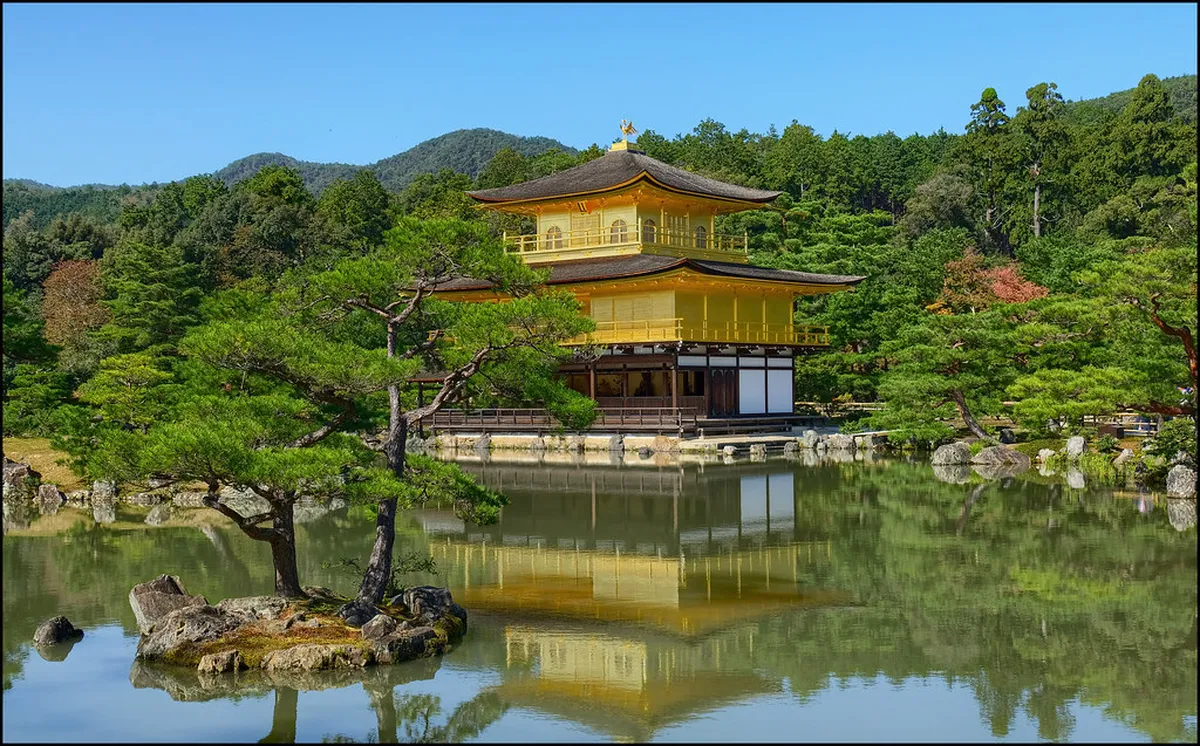
The architecture of the pavilion represents three distinct styles of Japanese design layered across its three floors. The first floor, called Hossui-in, uses the Shinden style of 11th-century imperial aristocracy. The second floor, Cho'on-do, follows the Bukke style used by samurai residences. The top floor, Kukkyo-cho, is built in the Chinese Zen temple style, with the entire second and third floors clad in pure gold leaf — not gold paint.
Tragedy struck in 1950 when a troubled young monk set fire to the original structure, destroying it entirely. The arson became the subject of Yukio Mishima's celebrated 1956 novel The Temple of the Golden Pavilion — a work that transformed the fire into a meditation on obsession and beauty. The current building is a meticulous reconstruction completed in 1955, with additional lacquer and gold leaf restorations carried out in 1987 at a cost equivalent to around 7 million US dollars. That resilience adds a layer of depth to the temple's enduring cultural significance.
Essential Visitor Info: Tickets, Hours, and Getting There
The temple is open daily from 09:00 to 17:00 throughout the year, with last entry recommended by 16:30. Adult admission is 500 yen; children in primary or middle school pay 300 yen. Uniquely, your ticket is an ofuda — a paper protective amulet printed with the temple name — rather than a standard stub. It doubles as a small souvenir you keep. Check the Official Kinkaku-ji Guide (shokoku-ji.jp) for any holiday schedule updates.
Getting there requires a bus because no train station sits close to the temple. Below is a quick comparison of the two main transport options from central Kyoto:
- Kyoto City Bus 101 or 205 from Kyoto Station — about 40 minutes, 230 yen. Exit at Kinkakuji-michi and walk one minute to the gate. Buses run frequently. Best option for most visitors.
- Randen Tram to Kitano Hakubai-cho, then 20-minute walk — scenic route that passes several shrines including Kitano Tenmangu. Add roughly 30 minutes total versus the bus. Good choice if you want to see Kitano Tenmangu on the same morning.
From Kyoto Station you can also take the Karasuma Subway Line north to Kitaoji Station, then transfer to a short bus or taxi. This often saves time during peak hours when the main bus routes are congested. Whichever route you choose, consult the Kyoto City Bus Map/Guide for live timetables.
The temple grounds use a strict one-way walking path. Once you pass through the main gate and start the garden circuit, you cannot return to the entrance — with one exception for wheelchair users, who may reverse along a designated route. Plan your photography accordingly before you move on from each viewpoint.
10 Must-See Highlights of the Golden Pavilion Grounds
The temple grounds offer far more than just the famous golden structure. The 92,400 m² garden holds historical artifacts, rare trees, hidden ponds, and stone arrangements accumulated over six centuries. Walk slowly — most of the details that separate a memorable visit from an ordinary one are easy to miss at speed.
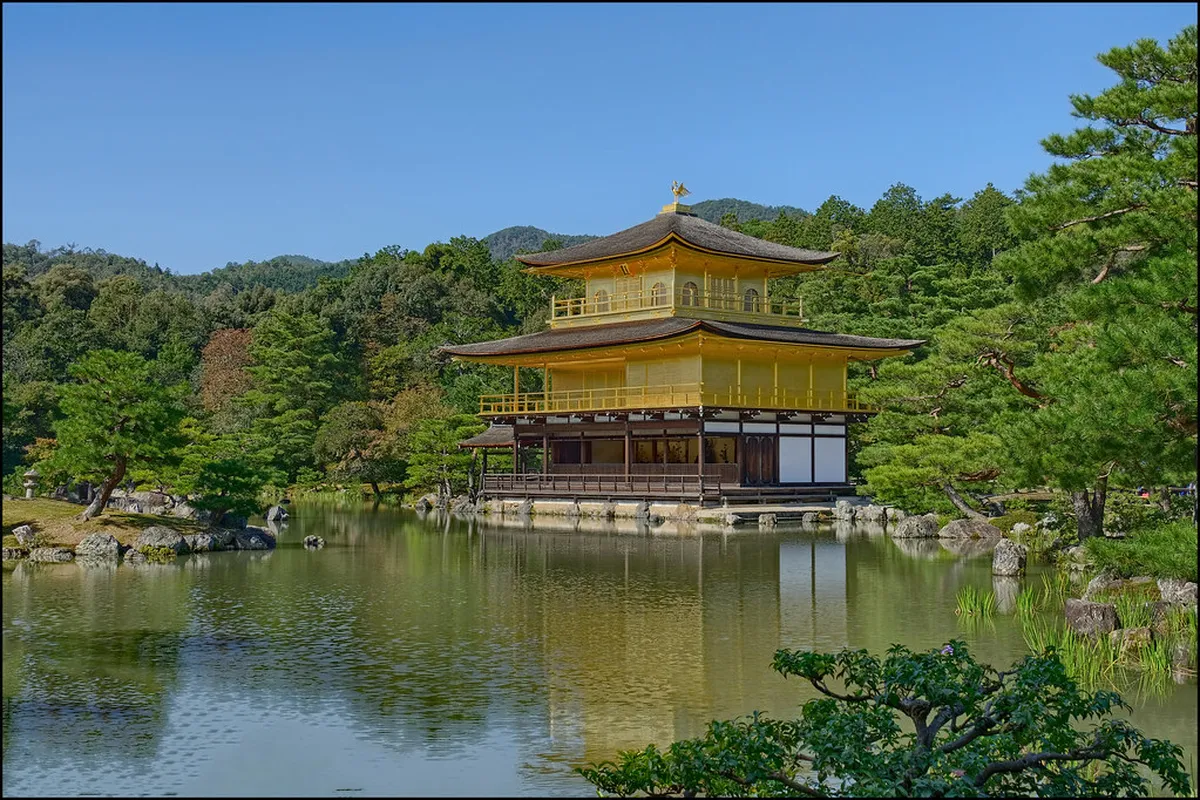
- Shariden (the Golden Pavilion) — the three-story pavilion itself, with gold leaf on the upper two floors. A bronze phoenix sits on the roof ridge, a symbol of imperial legitimacy that Yoshimitsu deliberately chose. The phoenix survived the 1950 fire because it had been removed for repairs.
- Kyoko-chi (Mirror Pond) — the large reflecting pond in front of the pavilion. On still, sunny mornings the reflection is near-perfect. The pond contains several island formations including Ashihara-jima, which Yoshimitsu reportedly viewed as a symbol of all of Japan under his rule.
- The 5 Commandments Gate — at the entrance gate on the left, a whiteboard lists the five precepts of Buddhism: do not kill, do not steal, do not commit adultery, do not lie, do not drink excessively. No English translation is provided on the board itself, so read them in advance.
- Rikushu-no-matsu Pine — a bonsai-style pine tree that Yoshimitsu is said to have planted 600 years ago, pruned into the shape of a boat sailing toward the Buddhist Pure Land in the west. It faces the Shariden directly.
- Quercus Gilva (Ichiigashi) Tree — a massive beech tree designated a natural monument in 1983. It is rare for this species to survive in the Kyoto area, and this specimen is one of the largest remaining in the region.
- Anmintaku Pond — a smaller, forested pond deeper in the garden. It is said never to dry up even during droughts, and a five-ringed stone pagoda on its central islet enshrines the Saionji family deity. This spot is noticeably quieter than the main pavilion viewing area.
- Ryumon Falls and the Carp Stone — a 2.3-metre waterfall topped by a rigyoseki (carp stone), referencing the Chinese legend of a carp scaling the falls to become a dragon. It represents perseverance against adversity.
- Sekkatei Tea House — an Edo-period thatched tea room built for Emperor Go-Mizu-no-O's visit. The alcove pillar is made of a twisted nandina tree, which Japanese tradition holds wards off evil. The view of the pavilion at sunset from here is considered one of the finest on the grounds.
- Fudo-do Hall — a prayer hall near the exit enshrining a stone statue of Fudo Myo-o carved by the monk Kobo Daishi. The doors are opened to the public only during Setsubun (early February) and on August 16th.
- Goshuin (Temple Seal Station) — near the exit, collect a hand-stamped red ink seal in your goshuincho (temple seal book). It costs 300 yen and is one of the most detailed seals available in Kyoto's temple circuit.
Beyond the Gold: Kyoko-chi Pond and the Hidden Springs
Most visitors spend their time at the main viewing area across from the pavilion, then move quickly along the path. Slowing down past the Rikushu pine and into the northern garden reveals features that none of the main tour groups stop for. Two natural springs sit close together on the far side of the pavilion, both used personally by Ashikaga Yoshimitsu.
The first, Gingasen (Milky Way Spring), is where Yoshimitsu drew water for his daily tea ceremony. It still flows with clean water today, nearly 600 years later. The second, Gankasui, is a shallow stream he used for washing his hands before rituals. The combination of a functioning gold-leaf palace and working springs used for Zen tea practice captures the site's original purpose better than any information board does.
The Kyoko-chi Pond itself is approximately 6,600 m² and designed as a strolling garden in the Muromachi tradition. Many of the stones in and around the pond were gifts from provincial samurai lords competing for Yoshimitsu's favor — each carries the symbolic weight of the lord's home region. The pond's largest island, Ashihara-jima, represents Japan as a whole. Stand at the far northern shore after visiting Anmintaku Pond for an elevated vantage over the pavilion that most visitors never reach.
Best Time to Visit: Seasonal Beauty and Crowd Control
Arriving at 09:00 opening is the most effective way to beat tour groups. The morning light hits the gold leaf directly for the best reflection photos. If you miss the morning window, arriving after 15:30 offers a second quieter period as day-trip buses depart.
Arriving right at 09:00 when the gates open is the single most effective way to beat large tour groups. The morning light hits the gold leaf directly, creating a warm and brilliant glow on the upper floors. Alternatively, arriving after 15:30 gives you a quieter late-afternoon atmosphere as day-trip tour buses have usually departed.
Each season provides a different backdrop for the temple's golden exterior. Spring brings delicate cherry blossoms that frame the pond in soft pink hues, typically from late March to mid-April. Summer offers lush greenery that contrasts sharply with the bright gold. Fall — particularly November — is consistently the most popular season as maple leaves turn vibrant red and orange across the garden paths.
Winter provides a rare and magical opportunity to see the pavilion covered in snow. Kyoto does not receive heavy snowfall reliably, so snow days at Kinkaku-ji are highly prized by photographers. The white landscape makes the gold appear even more luminous against the cold sky. If you visit in January or February, layer up: the garden paths are exposed and the open water amplifies the chill.
Avoid visiting on Japanese national holidays and during the peak cherry-blossom and autumn-leaf windows if you have flexibility. On those days, queues can form before 09:00 and the one-way garden circuit becomes uncomfortably congested by mid-morning.
Photography Guide: Capturing the Perfect Golden Reflection
The reflection of the pavilion in Kyoko-chi Pond is a world-famous image. The ideal position is the designated viewing area directly across the pond from the pavilion, roughly 30 metres from the water's edge near the main entrance. Use a wide-angle lens to include both the building and its mirrored image. A slightly lower camera angle — crouching down to near water level — sharpens the reflection and reduces the amount of foreground path in the frame.
Lighting plays a crucial role in how the gold leaf reads photographically. Bright direct sun at midday can cause harsh glare on the metallic surfaces. A morning visit with the sun behind you produces cleaner, richer gold. Slightly overcast skies eliminate glare entirely and work well for even color saturation across all three floors. For the upper floors specifically, the third floor's bronze phoenix catches light differently from the gold leaf below it — shooting from a slight angle to the east picks up that contrast.
Be patient with the crowds. People move continuously through the narrow main viewing platform, and gaps open and close quickly. Avoid large tripods as they block the path for other visitors and the temple staff may ask you to move. For a less crowded secondary angle, walk further along the circuit path to the north side of the pond — from here you see the pavilion at a three-quarter angle with the mountains behind it as borrowed scenery.
Temple Etiquette: The 5 Commandments and Zen Manners
At the entrance gate on the left side, a whiteboard lists the five precepts of Buddhism in Japanese with no English translation. These are not decorative — they are the foundational rules of the Zen community that operates the temple. Reading them before entering sets the right tone: do not kill, do not steal, do not commit adultery, do not lie, do not drink excessively.
Maintain a low speaking volume as you move through the garden paths. Many people come here for quiet appreciation and some for active meditation. Avoid eating or drinking while walking through the sacred areas; food and drink stalls are concentrated near the exit, not inside the main circuit. Smoking is prohibited except in a small designated zone outside the main gate.
The one-way path exists to manage the flow of thousands of daily visitors smoothly. Do not attempt to walk backward against the crowd to revisit a spot. This is taken seriously by the temple staff on busy days. Signs are clearly marked in both Japanese and English throughout the circuit. Allow approximately 45 to 60 minutes to walk the full circuit, longer if you stop at the Sekkatei Tea House or Fudo-do Hall near the end.
The garden uses a strict one-way circuit — you cannot backtrack to revisit a viewpoint once you have moved on (except wheelchair users on a designated reverse route). Plan your photography at each stop before moving forward.
One-Day Itinerary: Kinkaku-ji, Ryoan-ji, and Arashiyama
The northwestern cluster of Kyoto's temples is best tackled as a single day trip. Start at Kinkaku-ji at 09:00 when the gates open. Spend 60 minutes on the garden circuit, finishing at the exit tea house. By 10:15 you can walk south along Kinukake-no-michi (the Silk Road of Kyoto) to reach Ryoan-ji Temple in roughly 20 minutes — no bus needed.
At Ryoan-ji, spend 45 to 60 minutes with the famous karesansui (dry rock garden). The fifteen stones are arranged so that no single viewpoint reveals all of them simultaneously — a deliberate design reflecting Zen incompleteness. Admission is 600 yen. By noon, take Bus 59 from Ryoanji-michi west to Arashiyama (about 25 minutes, 230 yen) for lunch near Togetsukyo Bridge.
Spend the afternoon in Arashiyama Bamboo Forest and the surrounding lanes. The bamboo grove itself is free to enter and takes 15 minutes end-to-end, but the surrounding area of Sagano — Tenryu-ji Temple garden, Jojakko-ji hillside temple, Okochi Sanso Villa — rewards a slower pace. Return to central Kyoto by Hankyu Arashiyama Line from Arashiyama Station. Total transport cost for the day is around 690 yen using an IC card (Suica or ICOCA).
For those interested in silver versus gold, the counterpart known as Ginkaku-ji (Silver Pavilion) is best saved for a separate eastern Kyoto day. It belongs to the same Shokoku-ji branch of Rinzai Zen Buddhism, so comparing the two on the same day is logistically awkward given their positions on opposite sides of the city. Similarly, Nijo Castle pairs better with central and southern Kyoto attractions than with this northwestern circuit.
Where to Eat: Best Restaurants Near Kinkaku-ji
The area surrounding the temple entrance has a handful of traditional restaurants and tea houses. Soba noodles and matcha-flavored sweets are the most common choices for a quick lunch. Small shops sell seasonal bento boxes suited for a meal on the go. The exit area has stalls selling matcha ice cream and wasabi peanuts by Mamemasa — the peanuts are a well-regarded souvenir at around 500 yen a bag.
For a sit-down meal, Gontaro is a well-known Kyoto-style udon restaurant with a branch about five minutes' walk from the temple, en route to Ryoan-ji. It has both tatami and chair seating and accepts reservations for groups. If you are heading toward the Randen Tram route, there is a family restaurant near Hirano Jinja Shrine — about ten minutes' walk — that serves a wide range of dishes at accessible prices.
For a more formal experience, look for restaurants specializing in yudofu (boiled tofu), a staple of Kyoto's Buddhist vegetarian cuisine known as Shojin Ryori. This dish highlights the subtle flavors of high-quality local soy and clean spring water. Many of these dining spots offer views of private traditional gardens and are concentrated more toward the Ryoan-ji and Ninnaji area further south. The tea houses near the temple exit serve bowls of frothy matcha with sweet wagashi at typically reasonable prices for travelers.
Frequently Asked Questions
What is the "Golden Route" in Japan?
The Golden Route is the most popular travel path for first-time visitors to Japan. It typically includes Tokyo, Kyoto, and Osaka to showcase modern and traditional culture. Kinkaku-ji is a primary stop on this route within the Kyoto segment for its historic beauty.
How many days are needed for the Japan Golden Route itinerary?
Most travelers spend between 7 to 10 days to cover the main highlights of the Golden Route. This allows for three days in Tokyo, three days in Kyoto, and a final day in Osaka. You can visit Kinkaku-ji comfortably within a half-day Kyoto morning session.
Is the Japan Rail Pass (JR Pass) worth it for this package?
The JR Pass is often worth it if you plan to travel between major cities like Tokyo and Kyoto. However, it does not cover the Kyoto City Buses needed to reach the Golden Pavilion. You will need a separate IC card or bus pass for local transport.
What is the best time of year to travel the Golden Route?
Spring and autumn are the best times to travel the Golden Route due to mild weather. April offers cherry blossoms, while November provides stunning fall colors across the temple grounds. Winter is also excellent for seeing the Golden Pavilion with a rare dusting of snow.
Do I need a guide for the Golden Route?
While you can navigate the route independently, a guide can provide deeper historical context at sites like Kinkaku-ji. Many visitors prefer using digital guides or apps to manage bus schedules and translations. A local guide can also help you find hidden dining spots nearby.
Kinkaku-ji remains a timeless symbol of Kyoto's spiritual and architectural heritage. Visiting the Golden Pavilion offers a unique glimpse into the Muromachi period's artistic vision and into the complex ambitions of the man who built it. By following this guide, you can navigate the crowds and appreciate the site's deeper meanings — from the actual Buddhist commandments at the gate to the hidden springs Yoshimitsu used for his daily tea. Your journey through the golden grounds will surely be a highlight of your Japan trip.
Remember to respect the Zen etiquette and the natural beauty of the surrounding gardens. Whether you visit in the snow or under the autumn leaves, the pavilion never fails to impress. Plan your transport early, arrive at 09:00 if possible, and allow time to explore the garden circuit fully beyond the main viewing area. Kyoto has many more wonders waiting for you beyond the shimmering reflections of the Mirror Pond.
For more Kyoto planning, see our Things to Do in Kyoto, Kyoto Itinerary, and Kyoto Landmarks guides.


