
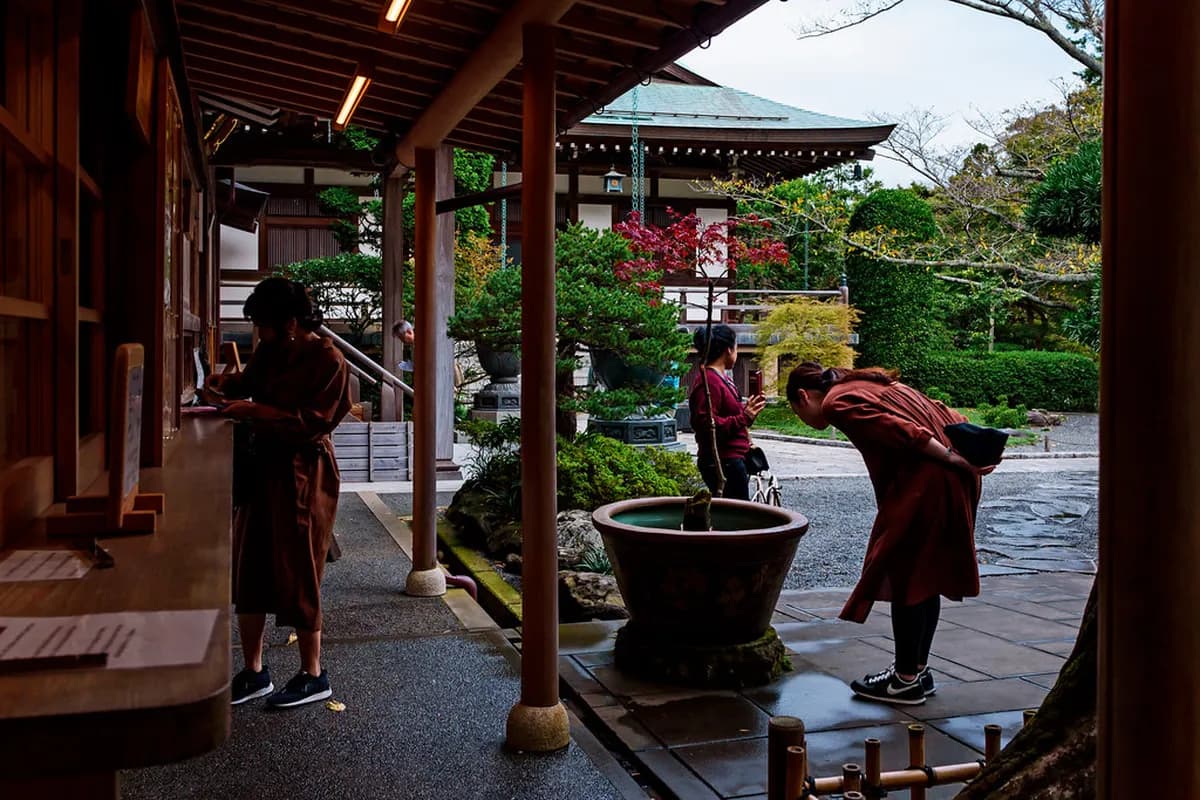
Hokoku-ji offers one of the most quietly atmospheric experiences in the whole of Kamakura. Over 2,000 towering Moso bamboo stalks form a dense green canopy above a winding stone path, filtering sunlight and muffling outside noise in a way that feels immediate. The temple belongs to the Rinzai Zen sect and dates to 1334, making the grove as much a piece of living history as a landscape.
Many travelers visit Kamakura specifically for this site. Unlike the broad public lanes of Arashiyama in Kyoto, the grove here is ticketed, small, and enforced quiet — which is exactly why it rewards a slow visit. This guide covers logistics, the tea ceremony, photography, and how to fit Hokokuji into a wider day in eastern Kamakura for 2026.
Must-See Hokokuji Attractions
The bamboo grove itself is roughly 80 metres of looping stone walkway behind the main hall. The canopy is dense enough that ambient noise drops the moment you step inside. Most visitors spend 20 to 30 minutes walking the path slowly — rushing through defeats the purpose.
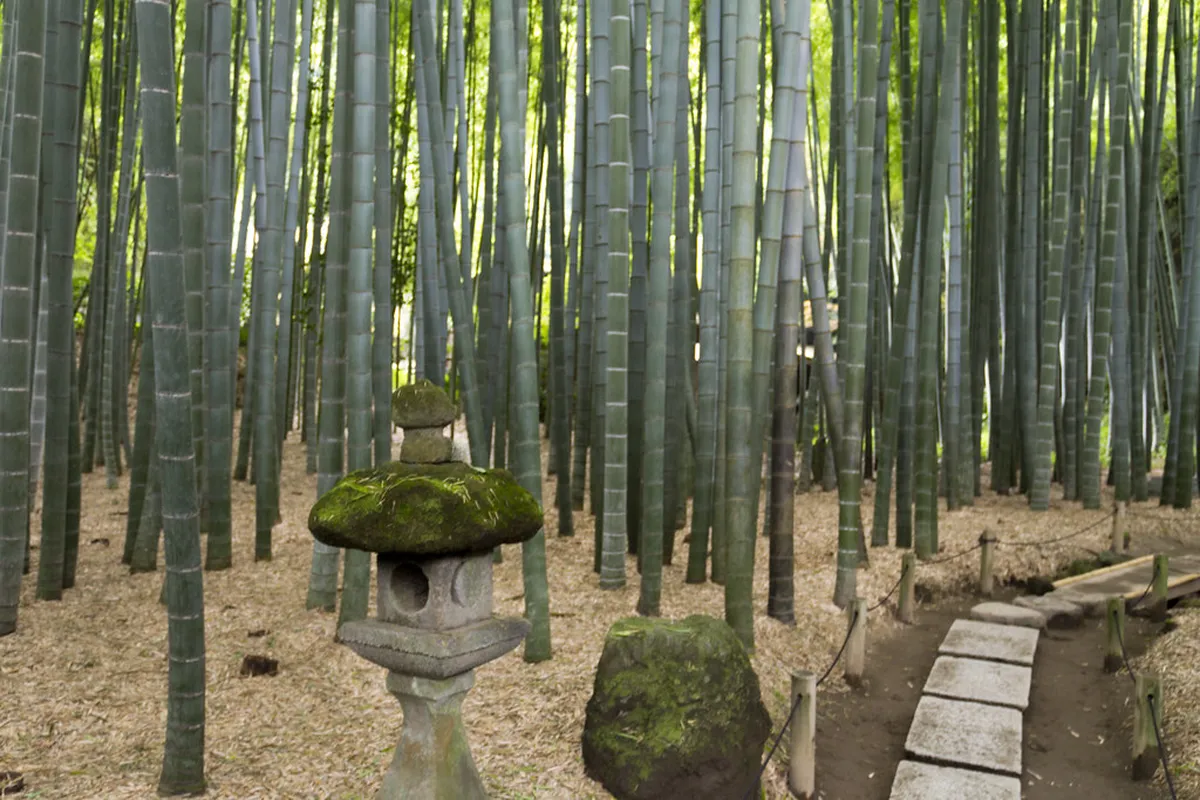
Behind the grove, three shallow yagura caves are carved into the hillside. These served as memorial tombs for the Ashikaga clan and date to the early 14th century. Most visitors miss them entirely: the caves sit to the right of the tea-house turn, marked only by a small wooden sign. Look past the obvious path and you will find stone stupas set inside carved rock faces — some of the quietest medieval history in the city.
The Butsuden main hall houses a seated Shaka Nyorai (Shakyamuni Buddha) and reflects the deliberately spare Rinzai Zen aesthetic. The building is a later reconstruction — earlier halls were lost to medieval conflict and the 1923 Great Kanto Earthquake — but the proportions and simple joinery are the point. Photography is not permitted inside the hall.
A small karesansui dry-landscape garden sits near the entrance and is easy to walk past. The convention is that raked gravel represents water and standing stones represent mountains. Pausing here for a minute before entering the grove helps calibrate the pace the site rewards.
History of Hokokuji and Its Bamboo Grove
Hokokuji was founded in 1334 by Tengan Eko, a Rinzai Zen priest who had trained in Yuan-dynasty China. The patron was the Ashikaga clan — the same family that would install Ashikaga Takauji as the first shogun of the Muromachi Shogunate the following year. The temple functioned as the clan's mortuary chapel for its Kamakura branch, which is why the yagura tomb caves remain part of the grounds today.
The bamboo grove is not the original 14th-century planting. Bamboo of this scale is managed across generations: the temple's gardeners thin and harvest stalks each year to keep light reaching the floor. That ongoing maintenance explains why the grove feels open and walkable rather than choked, and why you will occasionally see freshly cut sections behind low cordons.
Kamakura served as Japan's political capital from the late 12th century until 1333, the year before Hokokuji's founding. The temple entered a transitional era alongside the city itself. Its Rinzai lineage connects it to Kenchoji and Engakuji on the western side of Kamakura — useful context if you are building a temple itinerary around the city's Zen heritage.
Adult admission is ¥300; the optional matcha set at the Kyukoan tea house adds ¥600, bringing the total to ¥900 per person. Tea service usually ends around 15:30 — avoid leaving it for the last moment. The temple is open 09:00–16:00 daily, closed 29 December through 3 January.
Art and the Tea Ceremony at Kyukoan
The Kyukoan tea house is the cultural centrepiece of the visit. For ¥600 on top of the ¥300 admission you receive a bowl of whisked matcha and a seasonal wagashi sweet, served while seated on a tatami platform facing directly into the grove. The combination of bitter tea, bamboo canopy, and open shoji panels is the defining Hokokuji experience.
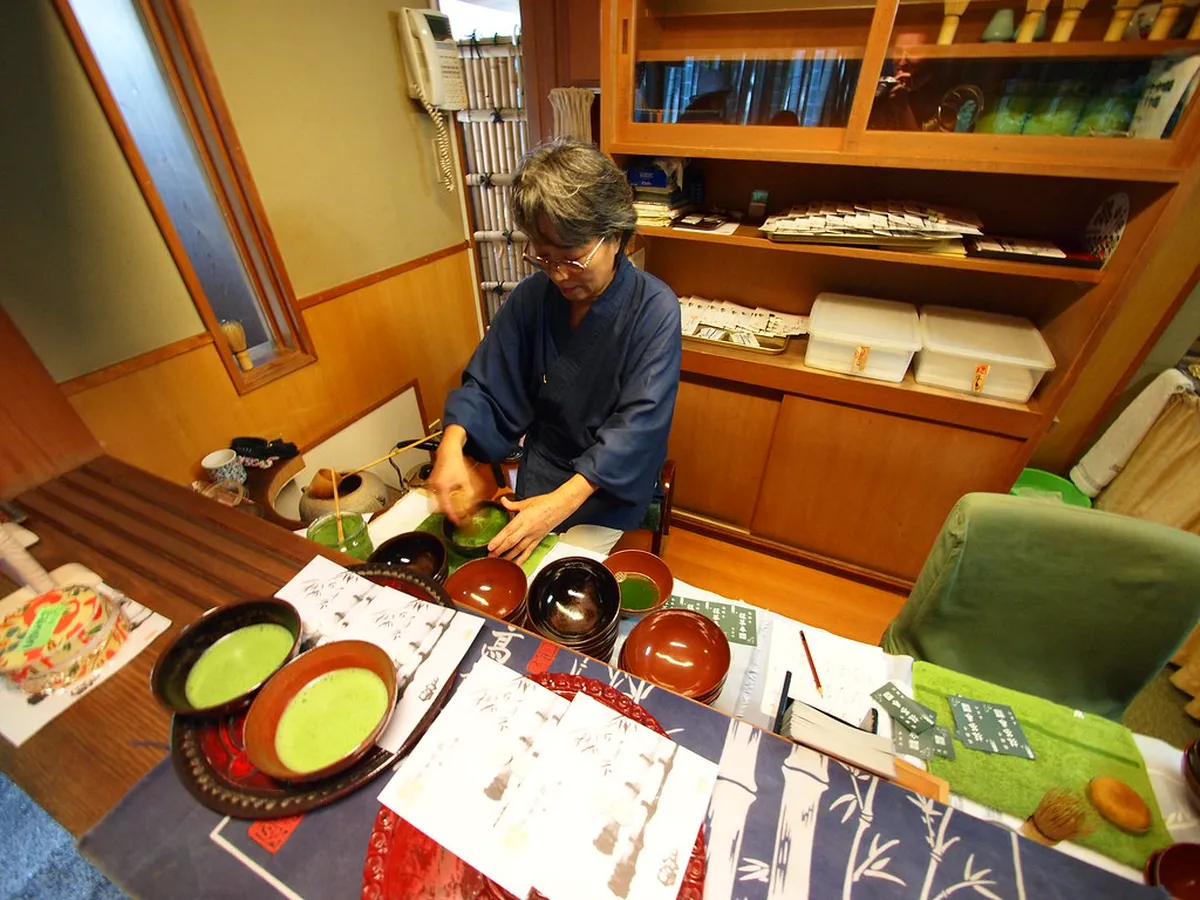
The etiquette is simple and staff are patient with first-time visitors. Take the wagashi first, then drink the matcha in three measured sips, rotating the bowl 90 degrees clockwise before setting it down. There is no performance element — this is a functional tea house, not a staged ceremony. Service usually ends around 15:30, roughly 30 minutes before the gates close, so avoid leaving it for the last moment.
Check the official Hokokuji Temple website for the current schedule of zazen meditation sessions, which are open to the public on certain mornings. The tea house provides the best sustained vantage point for watching light move through the bamboo across an extended stay.
Parks, Gardens, and the Grove Through the Seasons
The bamboo canopy stays evergreen year-round, so the grove's visual character changes less dramatically across seasons than a Kyoto temple garden would. That said, the surrounding grounds shift meaningfully. Cherry blossoms frame the front gate in late March to early April. Hydrangeas come into peak bloom in mid-June. Maples near the entrance turn deep red in the third week of November, which is the busiest fortnight of the year.
Winter is underrated. With the maples bare, the bamboo's green reads more starkly against the grey sky, the stone paths are dry, and weekday morning crowds thin to almost nothing. The trade-off is that the tea house's open shoji panels make sitting for matcha colder than you expect — bring a layer. January and February offer the clearest, most unhurried visit of the year.
Summer provides a cool refuge from Kamakura's heat, though humidity inside the dense canopy can be noticeable in August. Moss thrives on the stones during this season. Expect peak school-holiday crowds in July and August. If you visit in spring, the fresh green of new bamboo growth is most intense in April and May, and the light through the canopy has a softer quality than the high-contrast winter version.
Photography, Light, and Visitor Etiquette
The grove's light peaks roughly two hours after opening — around 11:00 in summer, 11:30 in winter — once the sun clears the eastern hillside and angles through the upper canopy. This is the window for the komorebi effect: shifting light bands that photograph best with a wide-angle lens (24–35mm full-frame equivalent). Bumping ISO is preferable to flash, which is discouraged. The most common first-timer mistake is shooting from the centre of the path; step to the edge and angle upward to capture the canopy without other visitors in frame.
Tripods and large monopods are not permitted on the grove path — staff will ask you to fold them. Drones are banned. The Kyukoan tea house allows photos of your own bowl and the grove view but not of other guests. The honest trade-off on timing: the best komorebi light and the first tour-bus arrivals overlap at around 10:30, so a 9:00 opening arrival gives you flat but quiet light, while a late-afternoon visit gives long shadows in a thinning crowd.
Hokokuji is an active temple, not a park. Keep voices low throughout the grounds. Remove shoes before stepping onto the tatami in the tea house and before entering the main Butsuden Hall. Wearing socks is recommended as the wooden floors are cold in autumn and winter. Following these points is less about strict rules and more about the visit making sense at the pace it requires.
Family, Budget, and Accessibility Notes
Hokokuji is one of the less expensive major attractions in Kamakura. Adult admission is ¥300; the optional matcha set at the tea house adds ¥600, bringing the total to ¥900 per person. A family of four with a single tea service rarely spends more than ¥1,800 on the site itself — well below what you would pay at the Great Buddha and Hasedera combined.
Children generally handle the site well. The path is short, the bamboo canopy is striking at kid eye level, and the karesansui garden near the entrance invites questions. The constraint is noise — this is an active temple with an enforced quiet code, and toddlers who run and shout will draw looks from staff and other visitors. Strollers fit on the entry path, but the grove's gravel sections are uneven; a baby carrier is easier from the ticket gate inward.
Wheelchair access is partial. The entry forecourt and the tea-house viewing platform are reachable on flat ground. The yagura caves and upper grove path involve unpaved sections and a few stone steps. Staff at the ticket booth can advise on the current accessible route on request. The site is compact enough that partial access still covers the core experiences: the tea house view and the first section of the bamboo path.
How to Plan a Smooth Hokokuji Day
The temple opens at 09:00 and closes at 16:00 daily, with last admission around 15:30. It closes from 29 December through 3 January. Arrive at 09:00 on a weekday and you will have the grove nearly to yourself for the first 30 minutes. By 10:30, the first tour buses have arrived at the Jomyoji stop. By midday in spring or autumn, the narrow stone path can feel congested.
From Kamakura Station's east exit, take Keikyu Bus #23, #24, or #36 from stop number 5 toward Kanazawa-Hakkei or Jomyoji. Get off at the Jomyoji stop (about 10 minutes, around ¥200), then walk roughly 3 minutes east. The walk from the station takes 25 to 30 minutes along the Kanazawa-kaido road through a residential area — you will pass smaller shrines and local shops, and the route is pleasant in cool weather. In August humidity, the bus is the better call.
If you are coming from Tokyo, fold Hokokuji into the eastern half of a day trip. Hitting the Great Buddha and Hasedera in the morning, then moving east in the afternoon, keeps you moving ahead of the main tour-group flow rather than against it. Consult the Kamakura City Tourism Association for current transport alerts around festivals and public holidays.
Tripods and large monopods are not permitted on the grove path — staff will ask you to fold them. Drones are banned. Noise is expected to be kept low throughout the grounds; this is an active temple, not a public park.
| Hokokuji (Kamakura) | Arashiyama (Kyoto) | |
|---|---|---|
| Entry fee | ¥300 (bamboo grove ticketed) | Free (public lane) |
| Crowd density | Low (~200 visitors/day average) | Very high from 09:00 |
| Quiet code enforced | Yes (active temple) | No |
| On-site matcha tea house | Yes (¥600) | No |
| Grove length | ~80 m looping path | ~500 m public lane |
| From Tokyo by train | ~75 minutes (no overnight needed) | ~2.5 hours (usually overnight trip) |
Hokokuji vs Arashiyama: Which Bamboo Grove to Visit
The most common question is whether Hokokuji is worth the trip if you are already planning Arashiyama in Kyoto. They are genuinely different experiences. Arashiyama's grove is a free public lane — wide, photogenic, and overrun by 09:00 with queue lines that make a calm photograph difficult. Hokokuji is a small ticketed temple grove averaging roughly 200 visitors per day, with an active tea house and an enforced quiet code. The ¥300 ticket functions, in effect, as a crowd filter.
If your priority is scale and the iconic shot, Arashiyama still wins. If your priority is sitting quietly, drinking matcha, and hearing the wind move through bamboo without being shoulder-to-shoulder with other visitors, Hokokuji wins on every metric: atmosphere, per-visitor density, and cultural integration with the temple itself.
For travelers based in Tokyo without a Kyoto leg on their itinerary, Hokokuji removes the shinkansen-and-overnight question entirely. You can be standing in the grove by 10:00 from central Tokyo and back at your hotel by 16:00, which makes it the more accessible bamboo-grove experience for most short-trip visitors to Japan in 2026.
Extending Your Stay: Where to Go After Hokokuji
Hokokuji sits in eastern Kamakura, an area many day-trippers never reach. Jomyoji Temple is five minutes' walk back toward the bus stop — one of the city's Five Great Zen Temples, with a ranked garden and its own tea house. Pairing the two sites covers the eastern Zen circuit in a focused half-morning without backtracking.
Hikers can access the Tenen Hiking Trail from a trailhead north of Hokokuji. The trail connects across the hills to Kencho-ji on the western side of Kamakura — a route that avoids the main tourist drag entirely and takes around 90 minutes in good conditions. This is the detail most visitor guides for the area skip, but it turns an hour-long attraction into the centerpiece of a full half-day in the hills.
Back toward the center, Tsurugaoka Hachimangu shrine is the most important Shinto site in the region. The approach road is lined with cherry trees and craft shops, offering a strong contrast to the quiet Zen atmosphere of the bamboo temple. If time allows, add the Great Buddha at Kotoku-in in Hase — plan your transit carefully to cover both major sites on the western side in one afternoon.
Frequently Asked Questions
How much does it cost to visit Hokokuji Temple?
General admission to the temple grounds and bamboo grove is 300 yen. If you wish to participate in the matcha tea ceremony at Kyukoan, the total cost is 900 yen. Tickets are purchased at the main gate upon arrival.
How much time should you plan for Hokokuji?
Most visitors spend between 45 and 60 minutes exploring the grounds. This includes time for the bamboo walk, visiting the main hall, and enjoying tea. Add an extra 30 minutes if you plan to walk from the station.
Is the bamboo temple in Kamakura worth visiting?
Yes, it is highly recommended for those seeking a peaceful Zen experience. While smaller than Kyoto's groves, the integration with the temple and tea house makes it unique. It is a top-rated attraction in any Kamakura travel guide.
Can you take photos inside the bamboo grove?
Photography is allowed for personal use throughout the bamboo forest. However, you must refrain from using tripods or blocking the narrow paths. Photography is strictly prohibited inside the Butsuden Hall and other sacred buildings.
What is the best time of day to visit Hokokuji?
The best time to arrive is right when the gates open at 9:00 AM. This allows you to beat the mid-day tour groups and enjoy the silence. For the best light, aim for the 10:00 AM window when the sun filters through the stalks.
Hokoku-ji rewards visitors who slow down. The 14th-century Rinzai temple, the managed grove of 2,000 bamboo stalks, the Ashikaga yagura caves, and the Kyukoan tea house are all inside a one-hour visit window. Time it well: 09:00 on a weekday for solitude, mid-November for foliage colour, January for empty paths and crisp light.
Pair it with Jomyoji next door, access the Tenen trail for the hill crossing to Kenchoji, or add Tsurugaoku Hachimangu and the Great Buddha for a complete Kamakura day. Hokokuji is the calm centre of the eastern circuit — the kind of place that improves every other stop around it.
For more Kamakura planning, see our Things to do in Kamakura and Kamakura experiences guides.