

Meigetsu-in stands as one of the most serene Zen temples in the historic city of Kamakura. Known locally as Ajisai-dera, this Rinzai Zen temple transforms into a deep-blue wonderland every June when roughly 2,500 hime-ajisai hydrangeas line its approach path. This visitor guide covers everything you need for a well-timed trip in 2026 — from the iconic circular window to the hidden iris garden and the photography timing trick most visitors never hear about.
Essential Highlights: The Circular Window and Main Hall
The defining feature of Meigetsu-in is the Satori no Mado — the Window of Enlightenment — a large circular opening cut into the wall of the Main Hall. Through it you see the inner garden: in June it glows with hydrangeas, in November with maple foliage, and in winter with frost-dusted moss. The round frame is a Zen metaphor for the cycle of existence, and it has made this hall one of the most photographed interiors in all of Kamakura.
Expect a queue of ten to twenty minutes to stand in front of the window during hydrangea season. Staff manage the line and move it efficiently. Bring a 35mm or 50mm lens if you are shooting on a mirrorless or DSLR body — wider lenses include the door frame and surrounding distractions, and longer focal lengths lose the garden depth. Tripods and monopods are prohibited everywhere on the grounds.
The karesansui dry garden near the entrance is worth a slow minute before you join the window queue. Raked gravel represents ocean waves, and it captures the meditative character of the temple well outside the floral spectacle of June.
Look closely at the temple's decorative motifs and you will notice rabbits — stone carvings, printed ema votive plaques, and small figurines throughout the grounds. The rabbit (usagi) is Meigetsu-in's patron animal, linked to the moon imagery in the temple's name (meigetsu means "bright moon"). This detail appears on no standard tourist board sign; it is the kind of thing that turns a visit into a story worth telling.
Best Time to Visit: The Hydrangea Season (June)
Mid-June is peak bloom. The temple grows almost exclusively the hime-ajisai (princess hydrangea) variety, prized for its uniform deep blue-violet colour. The concentrated palette is what separates Meigetsu-in from Hasedera, which offers a mixed range of colours but a less cohesive visual impact. Target the second and third weeks of June for fullest bloom; by early July the flowers begin to fade.
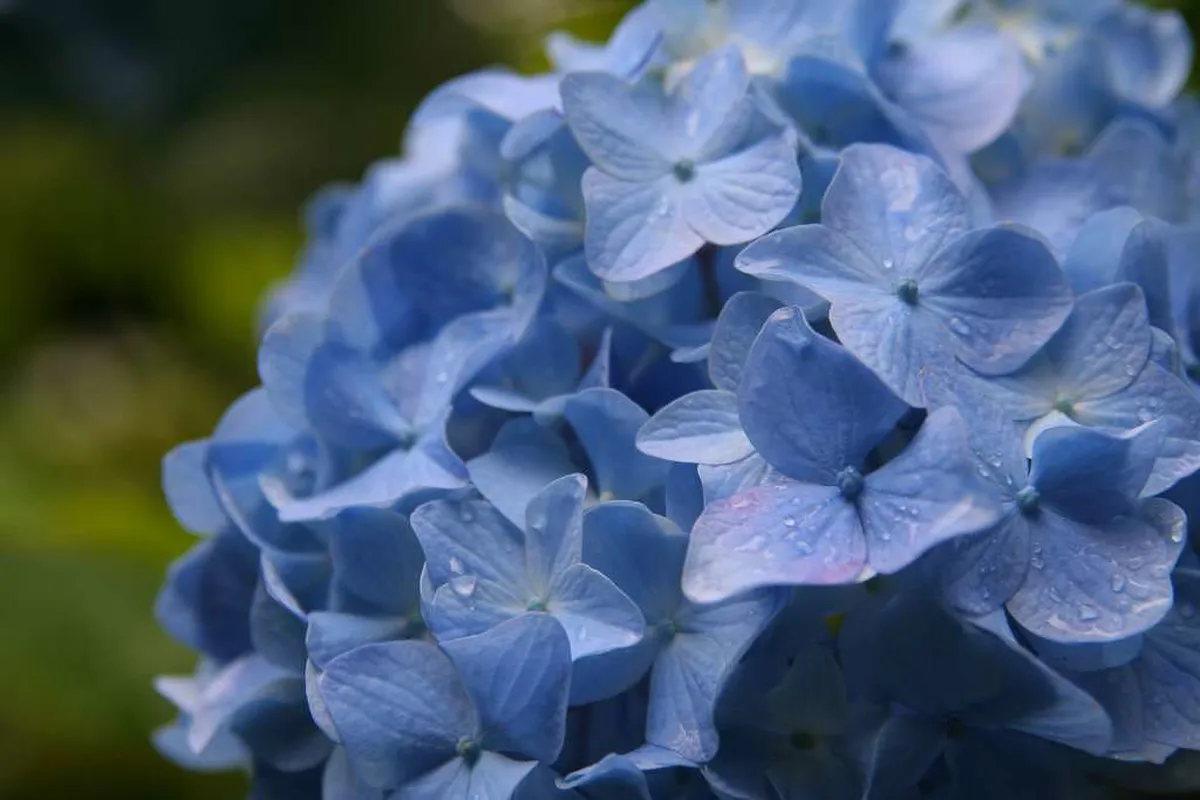
Crowd levels are consistently high throughout June regardless of the day of the week. There is no genuinely uncrowded window, but weekday mornings before 10:00 are noticeably quieter than weekend afternoons. The temple opens at 08:30 during hydrangea season, and arriving at opening time gives you roughly thirty minutes before tour groups begin to arrive.
Rainy and overcast days are arguably superior for photography at this temple. Diffused light eliminates harsh shadows on the narrow paths, the hime-ajisai colour deepens visibly when wet, and the grey sky does not compete with the saturated blue of the flowers. If rain is forecast on your Japan trip in June, prioritise Meigetsu-in for that day rather than avoiding it.
On sunny days, morning light hits the main approach from the east, meaning the path is backlit until around 11:00. For well-exposed, front-lit shots on a clear day, arrive after 14:00 rather than at opening. On overcast days, any time from 08:30 works — the diffused light is consistent all day.
The temple is worth visiting outside hydrangea season — the Satori no Mado frames spectacular autumn colour in late November, and winter is peaceful and uncrowded — but be realistic: the scale of the hydrangea display is what makes this temple exceptional. A January visit is pleasant but forgettable compared to June.
Photography Timing: Sun Direction and Crowd Flow
Most guides tell you to arrive early to beat crowds. That advice is correct but incomplete. On a clear sunny day, morning light hits the main approach from the east, which means the hydrangea path and temple gate are backlit until roughly 11:00. Your shots will be washed out or silhouetted, no matter how early you arrive. On sunny days, the better photography window is the afternoon — specifically after 14:00 when sun moves to the west and illuminates the gate and staircase from the front, producing well-exposed, warm-toned frames of the approach.
On overcast or rainy days, timing matters less for light direction but more for crowd size. Aim for 08:30 opening if the sky is grey. The soft, directionless light is consistent all day, but the crowds build steadily from around 10:00. Cloudy mornings are the single best combination of conditions for Meigetsu-in photography.
For the Satori no Mado window itself, the garden beyond faces north, so direct sunlight rarely enters the room. The window shot is workable at almost any time of day. What changes is how crowded the queue is — arriving at 08:30 means a five-minute wait; arriving at 11:00 on a weekend means thirty to forty minutes.
The Inner Iris Garden: A Seasonal Hidden Gem
Behind the Main Hall lies a separate walled garden that opens only twice a year. In early to mid-June it holds a sprawling field of purple and white iris in full bloom, visible from a wooden walkway that runs along the garden's edge. In late November it reopens for the autumn foliage season when the maple trees inside turn. Outside these two windows the gate stays locked.
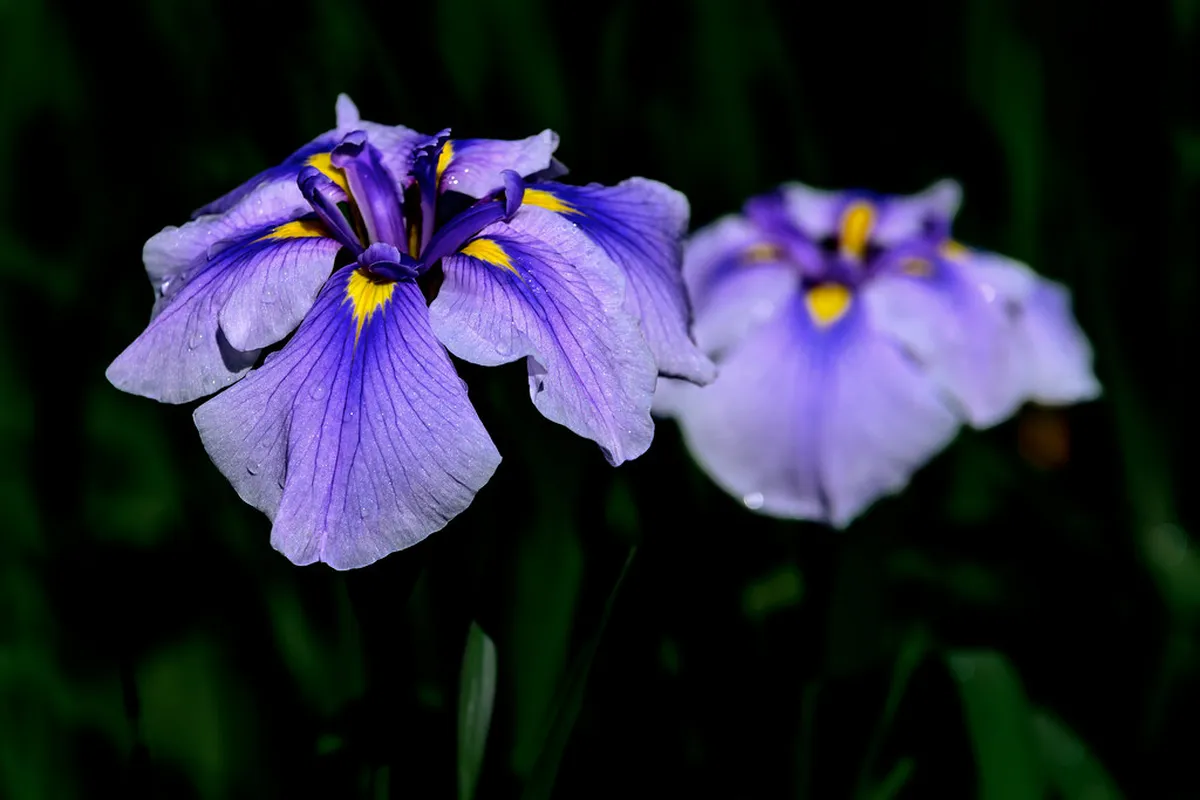
Access to the inner garden requires a separate ¥500 fee paid at the inner gate, on top of the standard admission. The combined cost during June is therefore ¥600 standard admission plus ¥500 for the garden, totalling ¥1,100. Many visitors are caught off guard by this charge — budget for it if you plan to see the iris.
The iris garden is less crowded than the main hydrangea path because not all visitors choose to pay the extra fee. If you have already come to Meigetsu-in and paid for entry, the inner garden is worth the additional cost. The view of purple iris against the old stone wall is genuinely beautiful and distinct from the blue hydrangea path outside.
Why Meigetsu-in Gets Overlooked — and Why You Should Not Skip It
Meigetsu-in sits one stop north of central Kamakura at Kita-Kamakura Station, not at the main Kamakura Station hub. Most day-trippers from Tokyo stay on the train through Kita-Kamakura without getting off, heading directly to the Great Buddha or Tsurugaoka Hachimangu Shrine. The temple therefore avoids the widest stream of casual visitors, which keeps it more intimate in scale even during its busiest month.
The other factor is seasonality. Outside June, Meigetsu-in is a quiet, beautiful, but unremarkable Zen temple. Reviews and travel blog posts written in October or January reflect that reality. If you search for it in winter and read those accounts, it sounds skippable. The key is to time your visit correctly — June is not a compromise, it is the only month where the temple operates at full effect.
For 2026, Japan's rainy season (tsuyu) is expected to reach the Kanto region by early June. The hydrangeas benefit directly from this moisture. Checking the JMA forecast the week before your planned visit is more reliable than fixed calendar dates for predicting peak bloom.
How to Get to Meigetsu-in from Tokyo and Kamakura
Take the JR Yokosuka Line from Tokyo Station toward Zushi or Kurihama and exit at Kita-Kamakura Station — one stop before the main Kamakura hub. The journey from Tokyo Station takes approximately 55 minutes and costs around ¥820 one-way. Trains run every 15 to 20 minutes. If you are already in Kamakura, simply take the same line one stop north; it is a two-minute ride.
From Kita-Kamakura Station's east exit, the temple is a ten-minute flat walk of about 600 metres through a quiet residential valley. The path passes through Engakuji's outer grounds and a small stream corridor. Follow the main road north-east and look for signs. The address is 189 Yamanouchi, Kamakura, Kanagawa 247-0062. Check the official map location for precise walking directions from the station.
There is no car park at Meigetsu-in. Driving is not recommended during June when Kita-Kamakura roads become congested. The train is the right option for every visitor, including those combining the temple with other sites along the Yokosuka Line.
Practical Visitor Info: Hours, Fees, and Rules
Standard admission is ¥500 for adults. During June's hydrangea season the entry fee rises to ¥600. Children pay ¥300. The inner iris garden costs an additional ¥500 when it opens in June and again in late November for autumn foliage. Refer to the Kamakura Official Tourism Guide — Meigetsu-in for any schedule changes for 2026.
| Ticket type | Price | When / notes |
|---|---|---|
| Adult — standard admission | ¥500 | All year except June hydrangea season |
| Adult — hydrangea season | ¥600 | Throughout June; temple opens early at 08:30 |
| Child admission | ¥300 | Year-round |
| Inner iris garden (separate) | +¥500 | Opens in early–mid June and late November only; combined Jun cost ¥1,100 |
Standard opening hours are 09:00–16:00 daily. During hydrangea season in June the temple opens earlier at 08:30 and closes later at 17:00. These extended hours are the only practical window for avoiding the worst crowds — arriving at 08:30 before tour coaches pull in is the single most useful logistical tip for any June visit.
The inner iris garden charges an extra ¥500 on top of the June admission, bringing the total to ¥1,100 per adult — many visitors are caught off guard by this. Tripods and monopods are prohibited throughout the grounds, and pets are not permitted inside the temple.
- Tripods and monopods are prohibited throughout the grounds.
- Pets are not permitted inside the temple.
- Photography in outdoor areas and from the front of the Main Hall is allowed.
- Bags should be carried, not wheeled, on the stone paths.
- The temple is an active place of worship — quieter behaviour is expected.
Allow 45 minutes to an hour for a standard visit outside June. During hydrangea season, budget 90 minutes to two hours to account for the Satori no Mado queue and time in the inner garden if you choose to enter.
Comparing Kamakura Hydrangeas: Meigetsu-in vs Hasedera
Both temples are serious hydrangea destinations and visiting both on the same day is feasible if you start early at Kita-Kamakura. The experiences are genuinely different in character. Meigetsu-in grows almost exclusively hime-ajisai, a single deep-blue variety, in a narrow valley that creates a concentrated, immersive tunnel of colour. Hasedera grows over 40 varieties across a hillside terraced garden with views down to the coast — more variety, more visual contrast, but less of the enveloping blue-on-blue impact Meigetsu-in delivers.
Meigetsu-in's path is narrower and crowd management is tighter. Hasedera has a formal queue system that moves faster. If you have one morning and must choose, Meigetsu-in is the stronger recommendation specifically for hydrangea photography because of that uniform colour palette. If you want coastal scenery and a longer garden walk, Hasedera wins. Visiting in the order Meigetsu-in first (Kita-Kamakura) then Hasedera (near the Great Buddha) makes geographic sense as a day itinerary.
Nearby Attractions in Kita-Kamakura
Kita-Kamakura is one of the most walkable temple corridors in Japan. Within ten minutes of Meigetsu-in you have three temples of real significance. Engakuji is right beside the train station — founded in 1282, it has a National Treasure Shariden reliquary hall and outstanding autumn foliage. Entry is ¥500. Kenchoji, fifteen minutes south on foot, is the oldest Zen training monastery in Japan and the first in Kamakura's five great Zen temples ranking. It charges ¥500 and includes a hiking trail up to Hansobo Shrine with views over the city.
Tokeiji Temple is another worthwhile stop two minutes from Kita-Kamakura Station. Known historically as a "divorce temple" where women could seek refuge, it now has a small garden and a modest museum. Entry costs ¥100, and it grows hydrangeas of its own during June. The combination of Meigetsu-in and Tokeiji makes a tight half-day itinerary without backtracking. For the full Kamakura experience, continue south by train to reach the Great Buddha and Hasedera in the afternoon.
Frequently Asked Questions
What is the best time to visit Meigetsu-in for hydrangeas?
The best time to visit is mid-June when the flowers reach their peak bloom. Arriving at 8:30 AM on a weekday helps you avoid the largest crowds. Cloudy or misty days provide the best lighting for photography at this Kamakura landmark.
How much is the entrance fee for Meigetsu-in?
The standard entrance fee is 500 yen for adults and 300 yen for children. If you wish to enter the inner iris garden during June or December, there is an additional 500 yen charge. This separate fee supports the maintenance of the seasonal floral displays.
Is Meigetsu-in worth visiting outside of June?
Yes, the temple offers a quiet Zen atmosphere year-round. Autumn brings beautiful maple leaves that frame the circular window in late November. Winter and spring offer peaceful strolls without the heavy crowds of the hydrangea season.
Can you take photos inside Meigetsu-in?
Photography is allowed in most outdoor areas and from the front of the Main Hall. However, the use of tripods and monopods is strictly prohibited to maintain foot traffic. Always be respectful of worshippers and follow posted signs regarding photography limits.
Meigetsu-in offers a rare combination of architectural Zen and concentrated seasonal beauty. The hime-ajisai path, the Satori no Mado, the hidden iris garden, and the rabbit motifs woven through the temple's decor each reward a visitor who pays attention. Plan the logistics carefully — time your arrival for 08:30, account for the inner garden fee, and check the weather before choosing your day. Kamakura is one of Japan's most enduring destinations, and Meigetsu-in in June is one of its most distinctive hours.
For more Kamakura planning, read our Things to do in Kamakura guide.