

Tsurugaoka Hachimangu Shrine is the most important Shinto landmark in Kamakura and arguably the most historically charged site in the entire city. Founded in 1063 and dramatically expanded by Minamoto no Yoritomo in 1180, it served as the spiritual and political heart of Japan's first samurai government. The shrine grounds are free to enter and open daily from 05:00 in summer (06:00 in winter) until 21:00. A visit here is the natural anchor of any Kamakura day trip in 2026.
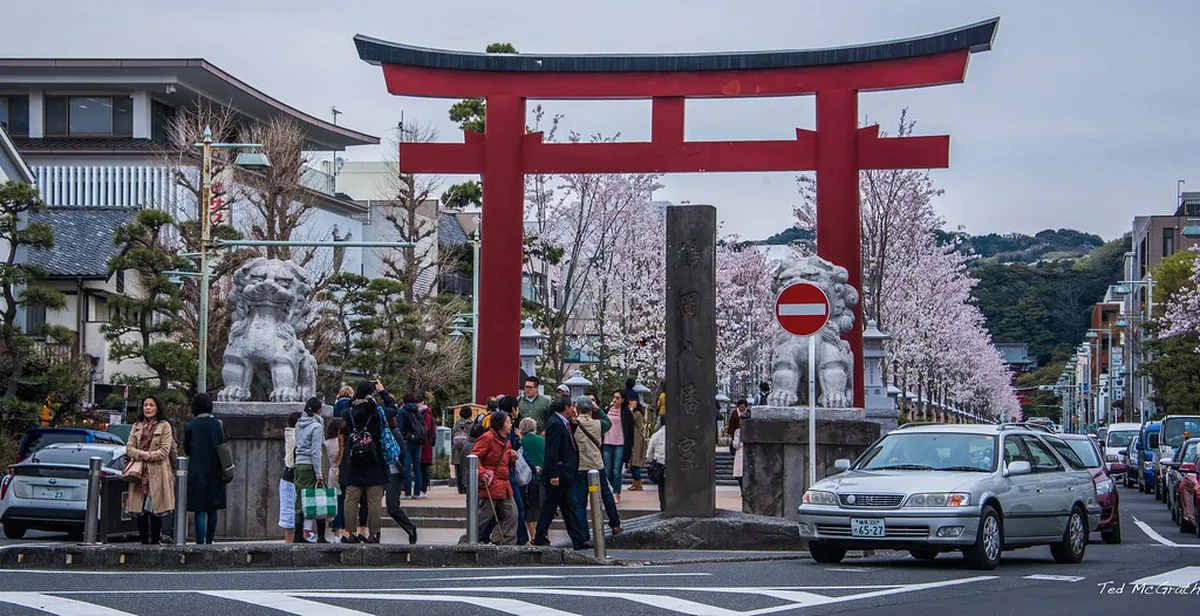
The complex sits about a 10-minute walk north of Kamakura Station. From the grand vermilion torii gate at the station end of Wakamiya-oji all the way up the 61-step stone staircase to the Honden, the entire axis was engineered to impress. Plan at least 60 to 90 minutes on site; add another 30 minutes if you want to visit the Treasure Hall or linger by the ponds.
History and Significance of Tsurugaoka Hachimangu
The shrine was originally established in 1063 by Minamoto no Yoriyoshi at a location closer to the sea. His descendant Minamoto no Yoritomo relocated and massively enlarged it in 1180 as part of his plan to legitimize Kamakura as a new capital. Hachiman, the deity enshrined here, is the patron god of the Minamoto clan and of the samurai class in general — making the shrine inseparable from the rise of warrior rule in Japan.
One of the most dramatic moments in Japanese history took place on these grounds. In 1219, the third Kamakura shogun Minamoto no Sanetomo was assassinated on the shrine's stone staircase by his nephew, ending the direct Minamoto bloodline in power. The event is still referenced in history textbooks and adds a layer of genuine weight to climbing those steps today.
For much of its pre-Meiji history the complex blended Shinto and Tendai Buddhist practice under one roof. The Meiji Restoration of 1868 mandated strict separation of the two religions, which is why visitors now see a pure Shinto layout. Understanding this syncretic past helps explain why the compound feels grander than a typical shrine — it was effectively a temple-shrine hybrid for nearly 700 years.
Layout and Key Features of the Shrine Complex
The shrine follows a north-south axis roughly 1.8 km long from the coastal torii gate at Yuigahama to the Honden at the northern end. The elevated central promenade — the Dankazura — runs from the third torii gate near Kamakura Station up through the city center. Lined with cherry trees, it was constructed in the 12th century and designed to resemble a dragon's spine rising toward the sacred ground.
The lower grounds hold the most activity. The Genpei Ponds flank the approach on either side: the Genji (Minamoto) Pond to the west and the Heike (Taira) Pond to the east. Their symbolism is deliberate — the Genji Pond has three islands representing birth in the kanji for three, while the Heike Pond has four islands evoking death in the kanji for four. Lotus blossoms cover both ponds from mid-July through August. The open-air Maiden (Mai-den) stage sits between the ponds and the main staircase. Traditional Shinto dances, weddings, and cultural performances take place here throughout the year.
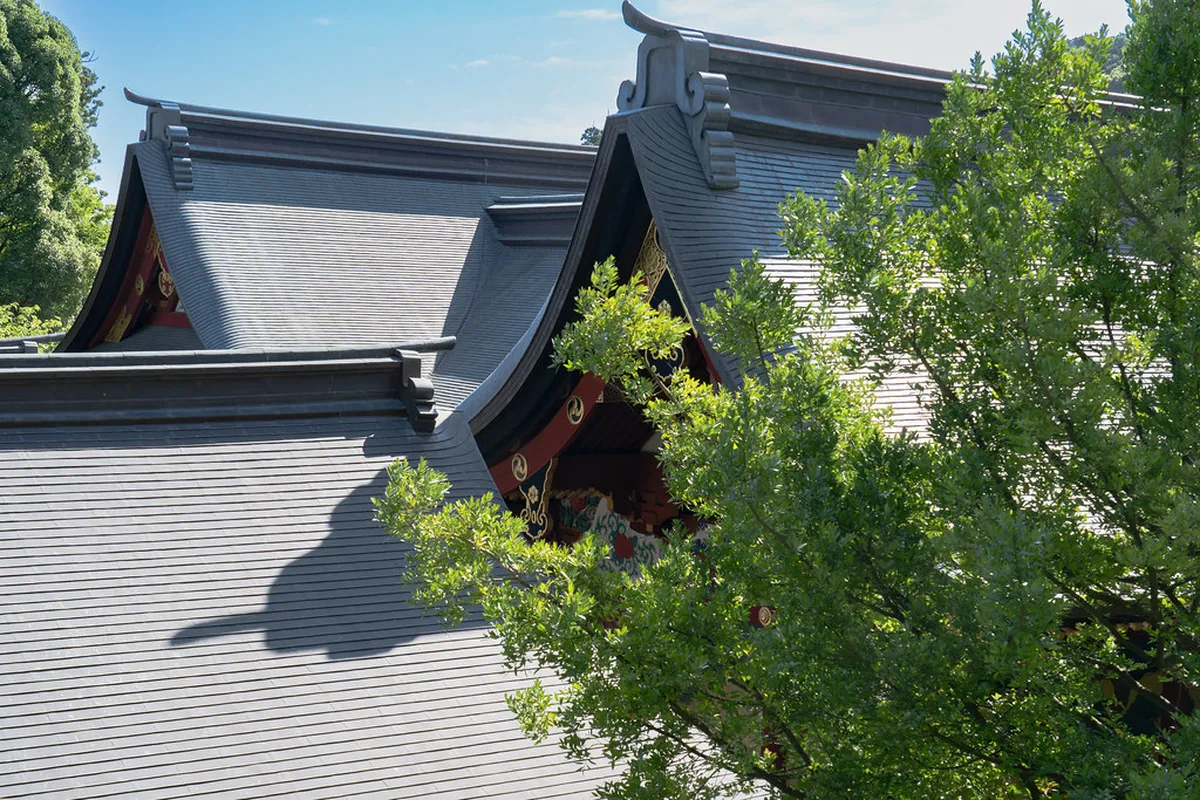
The upper grounds center on the Honden (main sanctuary), rebuilt in 1828 after earlier fires but faithful to its historical proportions. Its vermilion-and-white exterior is the most photographed view at the shrine. The smaller Wakamiya Shrine sits to the right of the main staircase and is dedicated to Wakamiya, a child deity — it is where the Wakamiya Festival procession begins each December. Scattered auxiliary shrines dot the compound, each dedicated to specific blessings including safe travel, academic success, and good harvests.
The Fallen Ginkgo and What the Shrine Lost in 2010
For centuries a massive ginkgo tree stood to the left of the stone staircase. Believed to be around 1,000 years old, it was one of the most recognizable features of the entire compound and a landmark in its own right. In March 2010 a powerful storm uprooted it entirely. The loss was treated as a national event in Japan; news coverage ran for days.
The stump remains in place today and has produced a visible new shoot that has grown to several meters. Shrine staff refer to this sprout as a symbol of resilience, and it now carries its own modest explanatory signboard. No competitor guide consistently draws attention to this spot, but for visitors interested in the shrine's living history it is one of the most poignant corners of the grounds. Look for it on the left side of the stairs before you begin your ascent. The absence of the original tree also means the left side of the staircase now feels noticeably more open than historical photographs suggest — worth knowing for anyone comparing old images to what they will actually see.
Festivals and Cultural Events at Tsurugaoka Hachimangu
The shrine hosts one of the densest festival calendars of any site in the Kanto region. The Reitaisai Grand Festival runs September 14–16 each year and is the most important. On the final day, mounted archers in full samurai hunting costume gallop down a 250-metre track beside the Dankazura, loosing arrows at wooden targets in the ancient rite of Yabusame. Spectator space along the track is limited and fills quickly — arrive at least 90 minutes before the 14:00 start to secure a standing position.
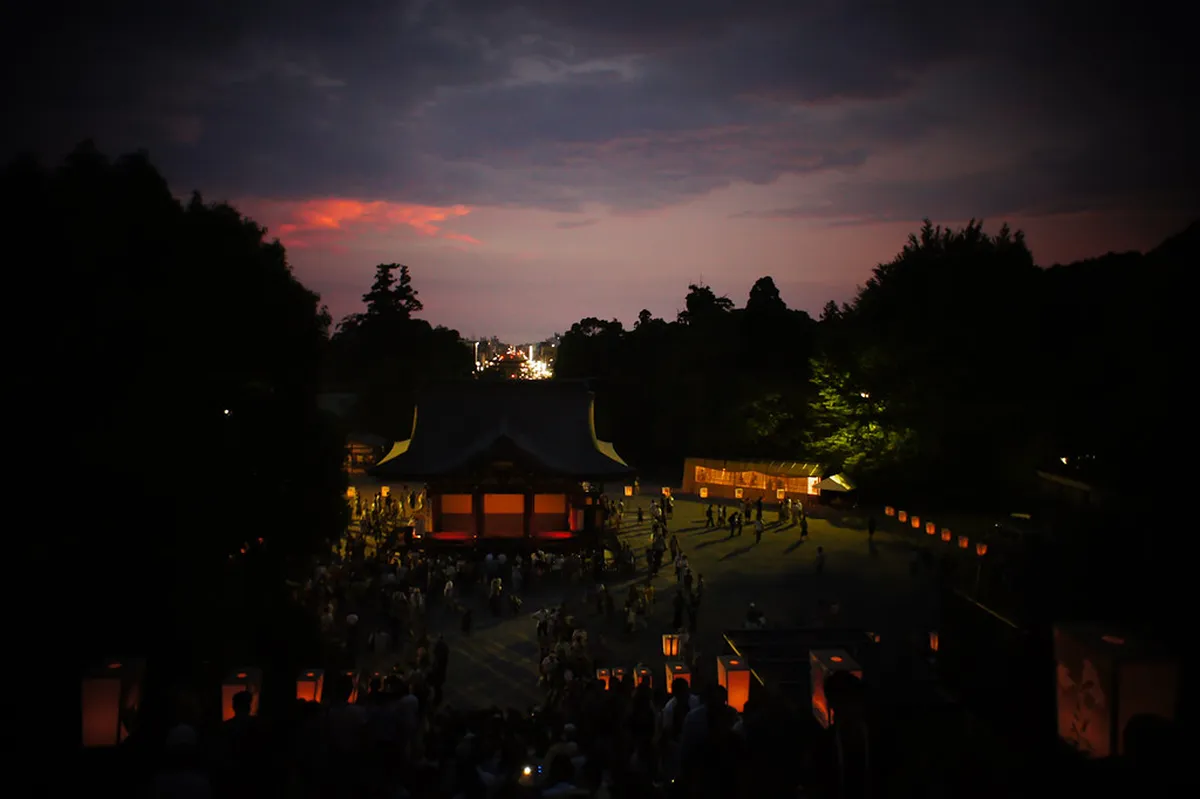
New Year is the busiest period by far. Over two million people visit during the first three days of January for Hatsumode (first shrine visit of the year), making Tsurugaoka one of the most attended shrines in Kanagawa Prefecture. Temporary stalls line the entire Dankazura approach selling omamori (protective charms), omikuji (fortune slips), and festival food. If you plan to visit in early January, expect waits of over an hour at the main staircase.
Other notable events include Setsubun on February 3rd (bean-throwing to drive out evil spirits), the Kamakura Matsuri week in April (featuring the Shizuka no Mai dance performance at the Maiden stage), and Tanabata decorations in early July. The shrine's official website at hachimangu.or.jp publishes an updated event calendar in English ahead of each season.
Over two million people visit during the first three days of January for Hatsumode — expect waits of over an hour at the main staircase. For the Reitaisai Yabusame (mounted archery) on 16 September, arrive at least 90 minutes before the 14:00 start to secure a viewing position along the 250-metre track.
Museums, Art, and Culture in Tsurugaoka
The Kamakura Museum of National Treasures sits within the shrine precinct and houses an outstanding collection of Buddhist statues, samurai-era swords, ceremonial masks, and ancient scrolls from temples across the Kamakura region. Admission is ¥700 for adults. The museum's collection rotates seasonally; the spring and autumn exhibitions typically display the most significant pieces. It provides essential context for understanding why Kamakura was culturally dominant during the 12th and 13th centuries.
The Treasure Hall (Houmotsuden), located on the upper grounds near the Honden, is a smaller and frequently overlooked exhibit space dedicated specifically to artifacts belonging to the shrine itself. Admission is ¥200. Displays include ceremonial swords, Noh masks used in shrine performances, ancient documents, and lacquerwork from the Kamakura and Edo periods. The collection is modest in scale but deeply specific to Hachimangu, making it a worthwhile 20-minute stop for anyone interested in the shrine's own ritual history. Opening hours for the Treasure Hall are 09:00–16:00 daily.
For broader context on how Kamakura's artistic heritage connects to the wider region, the Kamakura travel guide covers the Kamakura Museum of Modern Art, also located adjacent to the shrine grounds on the northern edge of the Genji Pond.
Parks, Gardens, and Outdoor Spots in the Shrine Complex
The Genpei Ponds are the most photogenic feature of the lower grounds. Genji Pond, on the western side, is home to a small island shrine accessible via a red bridge. Heike Pond on the eastern side tends to be quieter and has more lotus coverage in summer. Both ponds support koi, ducks, and seasonal waterfowl. Early morning light between 07:00 and 09:00 makes these ponds particularly good for photography before crowds arrive.
The Peony Garden flanks the Genji Pond and opens seasonally: the winter display runs late January through late February, and the spring display runs early April through early May. Admission is ¥500 for adults. Around 2,000 peonies are cultivated here and many are sheltered under traditional straw hats (komo kaburi) that protect the blooms from frost and direct sun — a visually distinctive detail that surprises most first-time visitors. Entry outside the bloom seasons is free and the garden becomes part of the regular grounds.
The Dankazura pedestrian approach is at its peak during cherry blossom season in late March through early April, when the raised central path turns into a tunnel of sakura blossoms. This is unquestionably the most crowded time of year. After the petals fall, the path shifts to fresh green which is far quieter and still pleasant. In autumn, ginkgo and maple trees along the approach and upper grounds turn yellow and red from late November into early December.
The shrine grounds are entirely free to enter. Optional paid entries are limited to the Treasure Hall (¥200), the Kamakura Museum of National Treasures (¥700), and the seasonal Peony Garden (¥500). The main experience — Honden, ponds, Maiden stage, Dankazura — costs nothing and can fill a comfortable 60–90 minutes.
How to Get to Tsurugaoka Hachimangu
The most direct route from Tokyo is the JR Yokosuka Line from Tokyo Station to Kamakura Station, a journey of about 55 minutes with no transfers needed. Trains run frequently throughout the day. From Yokohama, the same line takes approximately 25 minutes. Use the East Exit of Kamakura Station and walk north; the first large torii gate is visible almost immediately.
From the station to the shrine there are two parallel routes. Komachi-dori is the narrow shopping street lined with food stalls, cafes, and souvenir shops — busier, more entertaining, and worth at least one pass. The Dankazura runs alongside it and is the more traditional approach, slightly elevated and tree-lined. Both routes take 10 to 12 minutes on foot. There is no need to take a bus or taxi unless you are coming from another part of Kamakura after visiting sites like the Great Buddha of Kamakura.
If you are arriving from Enoshima, the Enoshima Electric Railway (Enoden) runs to Kamakura Station in about 25 minutes from Fujisawa. This is a useful option for building a combined Enoshima and Kamakura itinerary on the same day.
Family-Friendly and Budget-Friendly Options
The main shrine grounds are completely free to enter, which makes Tsurugaoka one of the best-value destinations in the Kamakura area. The open space of the lower grounds is safe for children and easy to navigate with a stroller along the paved central path. Optional paid entries are limited to the Treasure Hall (¥200), the Kamakura Museum of National Treasures (¥700), and the seasonal Peony Garden (¥500) — all of which can be skipped without missing the core experience.
There are affordable food options both inside and just outside the shrine gates. Soft-serve ice cream in purple sweet potato and matcha flavors is available from kiosks near the entrance for around ¥400 to ¥500. Small cafes on Komachi-dori serve lunch sets from ¥800. For those wanting a more atmospheric sit-down stop, the Chayakado restaurant inside the shrine grounds serves simple Japanese meals and matcha in a traditional setting overlooking the garden area.
Families visiting for a full day can pair the shrine with the Hokokuji bamboo temple in the afternoon, reached by a 15-minute bus ride from Kamakura Station. The combination covers both grand Shinto architecture and quiet Zen atmosphere without requiring a long commute between sites.
Quiet Morning vs Peak Hours: What to Expect
The shrine opens at 05:00 from April to September and 06:00 from October to March. The first two hours after opening are the calmest of the day. Local residents come to pray, priests set up for the day's rituals, and the approach is quiet enough to hear the gravel underfoot. This is the best window for photography and for experiencing the shrine in its actual function as a place of worship rather than a tourist attraction.
The main tourist wave arrives between 10:00 and 14:00, particularly on weekends and during cherry blossom and autumn leaf season. The 61-step stone staircase becomes a bottleneck, and the Honden viewing platform fills quickly. School groups from Tokyo typically arrive around 09:30 on weekday mornings. If you cannot visit early, aim for the last 90 minutes before closing at 21:00 — the grounds feel dramatically different at dusk with the buildings lit by subtle illumination.
Weekdays in the shoulder months of May, June, and October offer the best overall balance of reasonable crowds and pleasant weather. Golden Week in late April and early May brings Tokyo-level crowds to all Kamakura sites and is best avoided if you have any flexibility.
Seasonal Beauty: Autumn Leaves and When to Visit
Autumn is consistently cited as the most visually spectacular season at Tsurugaoka Hachimangu. The ginkgo trees along the Dankazura turn deep yellow in late November, while the maple trees around the ponds and upper grounds produce red and orange foliage that peaks between late November and the first week of December. In a typical year, the colors are most vivid around November 25 to December 5, though the exact timing shifts by a week or more depending on temperature in any given year.
Three spots on the grounds deliver the best autumn color. The approach from the third torii gate looking north toward the staircase frames the yellow ginkgo canopy against the red shrine buildings — this is the definitive autumn shot. The pond area at sunrise captures leaf reflections on still water. The stone steps near the Maiden stage, flanked by maple trees, offer a quieter version of the same colors without the staircase crowds. Visit on a sunny weekday before 10:00 for the cleanest combination of light and space.
After walking the grounds, the area around Kamakura Station has several seasonal food options worth seeking out. Autumn-specific wagashi (Japanese sweets) featuring chestnut and sweet potato appear in the confectionery shops on Komachi-dori from October onward. The cafes inside the shrine complex also offer seasonal matcha sets that pair well with the slower pace of an autumn morning visit.
Must-Visit Nearby Attractions
Tsurugaoka Hachimangu works best as the starting point of a full Kamakura day rather than a standalone stop. The shrine is within walking distance of several other significant sites. Kenchoji Temple, ranked first among the Kamakura Five Zen Temples, is a 15-minute walk northeast. Its grounds include a Chinese-style gate dating to the 13th century and hillside views of the city from the Hansobo area above the main temple buildings.
The Great Buddha at Kotoku-in is a 20-minute bus ride or 30-minute walk southwest. Most visitors treat this as the second stop of the day after Hachimangu, which works well since the Buddha site is busiest in the late morning and easier to visit around 15:00 when the large tour groups have moved on. The Zeniarai Benten Shrine — where visitors wash coins in a cave spring for financial luck — adds an unusual 45-minute detour en route to the Great Buddha.
For a quieter afternoon, the Hokokuji bamboo temple is the best contrast to the grand scale of Hachimangu. The bamboo grove is small but dense, and the matcha tea service at the grove's edge is genuinely good. Combining Hachimangu in the morning with Hokokuji in the mid-afternoon covers the two most distinct atmospheres in Kamakura in a single comfortable day.
Frequently Asked Questions
Is there an admission fee for Tsurugaoka Hachimangu Shrine?
Entrance to the main shrine grounds and the Honden area is free for all visitors. You only need to pay a small fee to enter the museums or the seasonal peony garden. This makes it a great budget-friendly stop during your trip to the historic city.
How long does it take to walk from Kamakura Station to the shrine?
The walk takes about 10 to 15 minutes depending on your pace and which path you take. Walking through the Dankazura pedestrian path is the most scenic route. You can also visit Hasedera Temple by taking a short train ride after your walk.
When is the best time to visit for autumn leaves?
The best time to see the autumn colors is usually from late November to early December. The ginkgo and maple trees throughout the complex turn vibrant shades of yellow and red. This period offers some of the most beautiful photography opportunities of the entire year.
What are the most important rituals held at the Mai-den hall?
The Mai-den hall is primarily used for Shinto weddings and traditional dance performances. During major festivals, you can see ancient music and kagura dances performed for the deities. It remains a very active site for religious ceremonies and cultural preservation today.
Tsurugaoka Hachimangu is more than a beautiful building — it is the soul of Kamakura and the place where Japan's samurai era took its defining shape. Whether you arrive for the Reitaisai yabusame in September, the autumn ginkgo colors in late November, or simply a quiet morning walk before the crowds arrive, the shrine rewards every type of visitor. Use this guide to plan your timing, budget your optional paid entries, and pick the nearby sites that match your pace.
For more Kamakura planning, see our Things to do in Kamakura and Kamakura culture guides.