

Kiyomizu-dera stands as one of the most iconic landmarks in all of Japan. This historic temple sits perched on the wooded hills of eastern Kyoto and offers breathtaking views of the city skyline. Most travelers prioritize this site because of its massive wooden stage and deep spiritual history.
This comprehensive kiyomizu-dera temple visitor guide will walk you through everything you need for a perfect trip in 2026. You will discover the best times to visit and the most efficient ways to reach the gates. We also cover the fascinating legends that make this temple a cornerstone of Japanese culture.
The temple is officially part of the UNESCO World Heritage: Historic Monuments of Ancient Kyoto collection. It represents over 1,200 years of Buddhist tradition and architectural brilliance. Planning your visit to Kyoto is incomplete without seeing this 'Pure Water Temple' in person.
History and Significance of the "Pure Water Temple"
The temple was founded in 778 AD during the early Heian period. An entity named Enchin Shonin discovered a sacred spring at the site after a divine vision. He established a small hut to worship Kannon, the Bodhisattva of Mercy. Later, the famous general Sakanoue no Tamuramaro expanded the site into a grand temple complex.
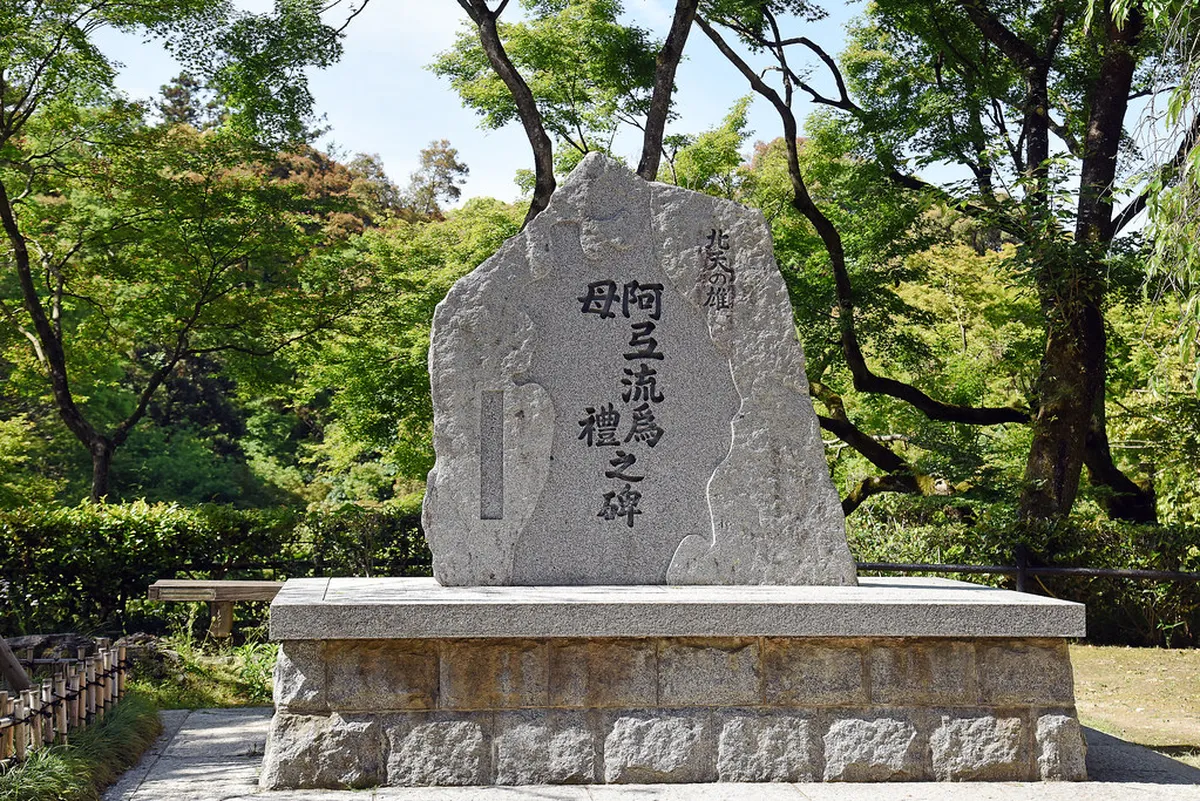
The name Kiyomizu-dera translates directly to 'Pure Water Temple' in English. This name refers to the pristine waters of the Otowa Waterfall located beneath the main hall. For centuries, pilgrims have traveled here to drink from these sacred streams. They believe the water brings health, longevity, and success in studies.
Kiyomizu-dera belongs to the Kita-Hosso sect of Japanese Buddhism, formed as an independent sect in 1965. This sect focuses on the teachings of the consciousness-only school and the veneration of Kannon. The temple has been destroyed by fire more than ten times over the centuries. Most of the current buildings date back to 1633 when the third Tokugawa Shogun, Iemitsu, ordered a complete rebuild.
Today, the site serves as a vital center for religious rituals and seasonal celebrations. It remains a powerful symbol of resilience and devotion for the local community. Visitors can feel the weight of history as they walk through the ancient gates and halls.
Essential Visitor Info: Opening Hours and Entrance Fees
| Detail | Information |
|---|---|
| Opening hours (standard) | 06:00–18:00 daily |
| Opening hours (Jul–Aug) | 06:00–18:30 |
| Night illuminations | Until 21:30, last entry 21:00 (select dates in Mar–Apr, Aug, Nov) |
| Adult admission | ¥500 |
| Night illumination fee | Additional ¥500 |
| Children (jr high / elem.) | ¥200 |
| Payment | Cash recommended at entry booth |
The temple opens its gates at 06:00 every morning throughout the year. This early start allows dedicated travelers to experience the grounds before the main crowds arrive. Standard closing time is 18:00 daily, extended to 18:30 in July and August. You should verify the current schedule on Kiyomizu-dera Temple's Official Webpage before your visit, as dates can shift slightly each season.
Entrance fees for 2026 are 500 yen per adult. Students in junior high and elementary school pay a reduced fee of 200 yen. These prices grant you access to the Main Hall, the wooden stage, and the Otowa Waterfall area. Carry cash — credit cards are not reliably accepted at the entry booth.
Special night illuminations are held during the peak cherry blossom season (March to early April), during the Thousand-Day Pilgrimage in mid-August, and during the autumn leaf season (November). The temple stays open until 21:30 on these evenings, with last entry at 21:00. A separate 500-yen fee applies for night access. The grounds are illuminated with LED lighting that turns the trees into a vivid display of pink or gold depending on the season.
Most visitors spend two to three hours exploring the entire complex. Arriving at opening gives you the quietest experience by far. Afternoon visits in peak season routinely involve long queues at the ticket booths and crowded viewing platforms.
How to Get to Kiyomizu-dera from Kyoto Station and Osaka
Reaching the temple from Kyoto Station is straightforward using the city bus system. Board bus number 206 or 100 from the main bus terminal on the north side of the station. The ride takes about 15 to 20 minutes depending on traffic. Get off at Gojo-zaka or Kiyomizu-michi and walk uphill for around 10 minutes. The one-way fare is 230 yen. Buses run roughly every 10 minutes during the day.
If you are traveling from Osaka, the Keihan Main Line is your best option. Take a limited express to Shichijo Station or continue one stop further to Kiyomizu-Gojo Station. From Kiyomizu-Gojo, the walk to the temple gates is about 20 to 25 minutes uphill through the Higashiyama shopping lanes. This route is often faster than transferring to the Kyoto bus network during peak hours.
Travelers using a Japan Rail Pass can ride a JR express to Kyoto Station and then switch to the Keihan Line via Tofukuji Station. At Tofukuji, transfer to a Keihan local train and ride one stop to Kiyomizu-Gojo. This combination uses your pass for the Osaka-to-Kyoto leg and keeps the final connection quick.
- Kyoto City Bus 206 or 100 — board at Kyoto Station north terminal, exit at Gojo-zaka, 230 yen, around 15–20 minutes
- Keihan Main Line — exit at Kiyomizu-Gojo, 20–25 minute walk uphill, best for travelers coming directly from Osaka
- Taxi from Gion — approximately 5 to 8 minutes and 1,000–1,500 yen, drops you near the upper parking lot and avoids the steepest part of the climb
The final approach involves a steep walk through the Higashiyama shopping streets. The climb takes 10 to 15 minutes and passes pottery stores, snack vendors, and traditional cafes. Wear shoes with a firm grip — the stone steps can be slippery after rain.
Must-See Attractions: The Main Hall and Wooden Stage
The Hondo, or Main Hall, is the architectural centerpiece of the entire temple complex. It was built in 1633 using a traditional method that requires no metal nails whatsoever. Massive wooden pillars and beams are joined using complex interlocking joints. This technique allows the structure to flex under earthquakes and bear the weight of heavy mountain snow without failure.
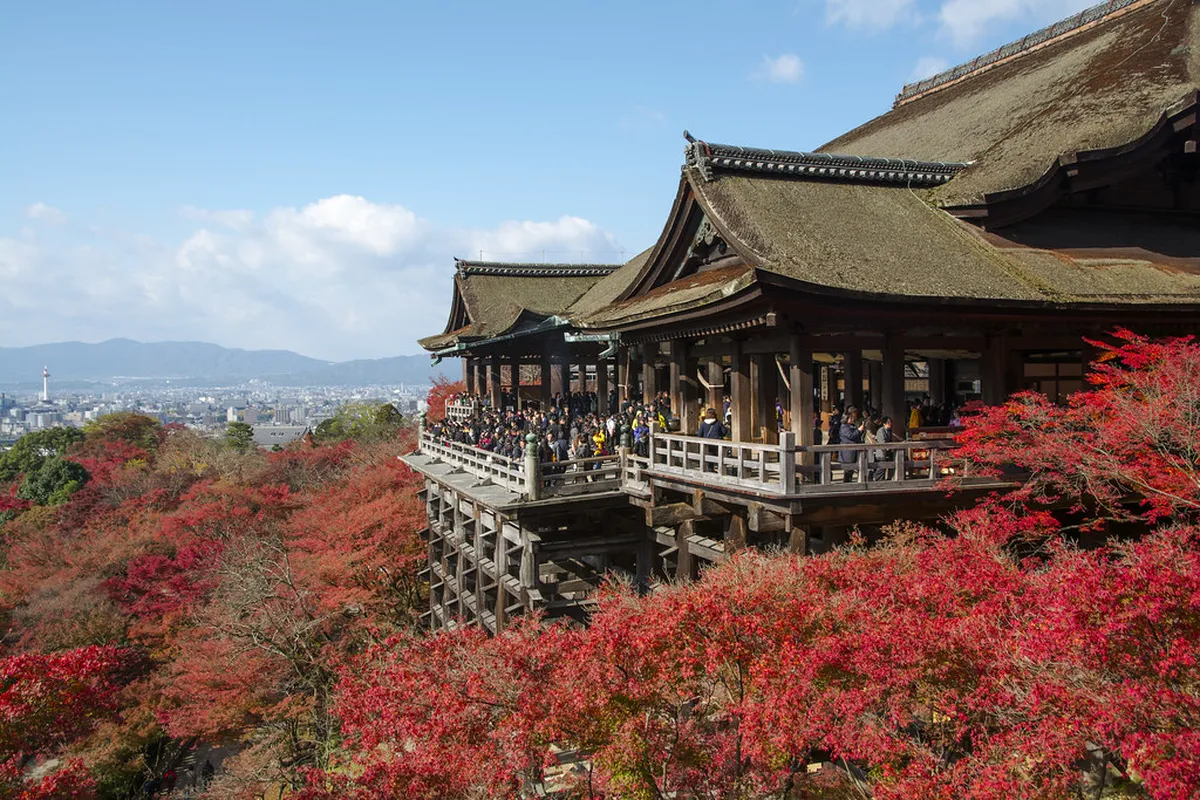
The famous wooden stage extends from the Main Hall over a steep cliff and stands 13 meters above the ground. It offers a panoramic view of the Kyoto valley and the surrounding forested hills. In the Edo period, people believed that surviving a jump from the stage would grant a wish. Historical records document 234 such jumps, with a surprising survival rate of around 85 percent — the practice was eventually banned in 1872.
Inside the hall stands the primary object of worship: a small, multi-armed statue of the eleven-headed Kannon. This hidden Buddha is rarely shown to the public and is displayed only on special religious occasions. You can offer prayers and light incense in the outer hall to honor this deity of compassion. The smell of incense and the low murmur of sutras create an atmosphere unlike anywhere else in the city.
For photography, move to the Okunoin Hall positioned directly across from the Main Hall. This secondary hall gives you the classic postcard angle of the wooden stage and the orange pagoda in a single frame. The best light falls in the first hour after opening and again in the 30 minutes before closing. The major Heisei renovation of the roof and stage is now fully complete, so 2026 visitors see fresh cypress bark shingles without any scaffolding obstructing the view.
Exploring the Otowa Waterfall and Jishu Shrine
The Otowa Waterfall sits at the base of the Main Hall's wooden stage and is the source of the temple's name. Its waters are divided into three distinct streams that fall into a stone basin. Visitors use long-handled cups to catch and drink the water from each stream. The three streams are said to bring success in academic studies, good fortune in love, and health and longevity respectively. Most visitors choose only two — drinking from all three is considered greedy.
Jishu Shrine, the love shrine famous for its pair of "love stones" placed 18 meters apart, was formerly located just behind the Main Hall. However, the shrine was relocated to Izumo Taisha in Shimane Prefecture in 2020 as part of administrative changes. It no longer operates on the Kiyomizu-dera grounds. Visitors who arrive expecting to walk between the love stones will find that area is now simply part of the temple walking path. If the love stone ritual is on your list, you will need to plan a separate trip to Izumo Taisha.
The area around the waterfall still has several smaller sub-halls worth exploring. The Okunoin Hall above the waterfall has its own modest stage with excellent sightlines to the Main Hall. Near Okunoin you will find rows of small stone Jizo statues — protectors of travelers and children — tucked quietly among the trees. These quieter corners of the complex offer a more meditative atmosphere than the crowded main stage area.
The contrast between the Buddhist temple buildings and the Shinto elements on the grounds illustrates the long history of syncretic practice in Japan. Take time to explore the full circuit of sub-temples rather than rushing back to the main entrance after the waterfall.
Seasonal Highlights: Spring Sakura and Fall Illuminations
Spring is the most famous season to visit. Hundreds of cherry trees bloom across the temple grounds in late March and early April. The pink blossoms frame the dark wood of the Main Hall and the hillside trail in a way that feels deliberately composed. This season draws the largest crowds of the year, so arriving at 06:00 is not just a suggestion — it is the only way to get the stage to yourself for photos.
Autumn delivers a completely different but equally striking experience. The maple trees on the hillside turn vibrant shades of red and orange in mid to late November. Viewed from the opposite ridge, the temple appears to float on a canopy of fire. Many locals and regular visitors rate the autumn foliage as even more beautiful than the spring blossoms because the colors are denser and more varied.
Special night illuminations run during both seasons and also for a short window in mid-August for the Sennichi Mairi pilgrimage. The temple stays open until 21:30 on these nights. A beam of blue light representing Kannon's compassion rises into the sky from the temple grounds. The lit trees reflecting in the small pond below the hillside create a mirror effect that is difficult to capture in photographs but unforgettable in person.
Winter and summer are the quietest months. A dusting of snow on the cypress roof in January or February offers a rare, serene composition that peak-season visitors never see. Summer brings thick green foliage and the sound of cicadas through the mountain woods. Both off-peak seasons are ideal for travelers who prioritize atmosphere over spectacle.
Walking Through the Historic Higashiyama District
The approach to the temple takes you through the heart of the Higashiyama district. Ninenzaka and Sannenzaka are the two most popular preserved streets. Both run uphill through a corridor of traditional wooden buildings that have been maintained to look as they did during the Edo period. The atmosphere shifts noticeably once you leave the main road and enter these lanes.
Kiyomizu-yaki pottery is the specialty of this area. Dozens of shops sell hand-painted ceramics ranging from small tea cups to larger decorative pieces. Traditional Japanese sweets such as yatsuhashi (thin triangular wafers flavored with cinnamon or matcha) make compact and lightweight gifts. Several shops let you watch confectionery being prepared by hand in small open kitchens.
Several tea houses are tucked into the side alleys of Sannenzaka. A bowl of matcha with a seasonal wagashi sweet costs around 600 to 800 yen and gives you an excuse to sit down before the final uphill push to the temple gates. These gardens are quieter than the main shopping lane and offer a much calmer version of Kyoto for 20 minutes.
Take care on the stone steps of Sannenzaka, particularly after rain. Local tradition holds that tripping on these stairs brings three years of bad luck. The steps are genuine hazards in wet weather regardless of the legend. Descending this route at the end of your visit is actually more pleasant than ascending, since you can browse the shops at a leisurely pace on the way down.
Jishu Shrine — the famous "love stones" attraction — was relocated off the Kiyomizu-dera grounds to Izumo Taisha in Shimane in 2020. Visitors expecting the love stone ritual will not find it here. The approach steps of Sannenzaka are also a genuine slipping hazard in wet weather — wear shoes with grip.
The Seiryu-e Dragon Festival and Special Events
The Seiryu-e Dragon Festival is one of the most visually compelling events on the temple calendar. It features an 18-meter-long blue dragon costume carried and animated by a large team of trained performers. The dragon honors the deity believed to protect the eastern hills of Kyoto. Performers wear full traditional dress and move to the sound of flutes and taiko drums as the procession winds through the temple grounds and down into the Higashiyama streets.
The festival is held three times a year: mid-March, mid-April, and mid-September. Parades typically begin around 11:00 and run for approximately two hours. Crowds are significantly smaller than during cherry blossom or autumn leaf peak, which makes this an excellent window for visitors who want cultural depth without the worst congestion. Exact dates shift slightly each year, so confirm the schedule on the official website before planning your trip around it.
August brings the Sennichi Mairi, or Thousand-Day Pilgrimage, held on the 14th, 15th, and 16th. Visiting the temple during these three days is considered spiritually equivalent to visiting for a thousand consecutive days. The temple also opens the inner sanctuary of the Main Hall during this period — one of the very few times the nainaijin is accessible to the public. This is a rare opportunity that general visitor guides rarely mention.
Various memorial services and sutra readings take place throughout the year. Checking the event calendar on the official website before your trip can help you time a visit to coincide with one of these quieter ceremonies. The Jizo-do services in particular offer a glimpse of active temple practice rather than tourist spectacle.
Practical Tips for Beating the Crowds
Arriving at 06:00 opening gives you roughly three hours before tour groups arrive at 09:00. The wooden stage is essentially empty at dawn and the soft morning light produces the warm cypress-pillar tones that midday overhead light cannot replicate.
The single most effective tactic is arriving at 06:00 when the gates open. Most organized tour groups do not arrive until 09:00 or later, which gives solo travelers and small groups roughly three hours of relative quiet. The wooden stage is essentially empty at dawn, and the soft morning light wraps the cypress pillars in warm tones that midday overhead light cannot replicate. Start at the Main Hall and work your way back through the sub-temples before the crowds build.
Weekday visits are noticeably calmer than weekends. Tuesday and Wednesday are typically the quietest days across Kyoto's major attractions. Avoid the major Japanese holidays — Golden Week in late April and early May, Obon in mid-August, and the New Year period — when domestic tourism fills the site to capacity and queues extend well outside the ticket gate.
Mobility-limited visitors and those traveling with strollers will find the standard approach route challenging. The cobbled lanes of Ninenzaka and Sannenzaka involve steep gradients and uneven stone steps. A taxi taken directly to the upper parking lot near the Nio-mon gate eliminates the hardest uphill stretch entirely and costs roughly 1,000 to 1,500 yen from the Gion area. The internal temple circuit itself involves moderate slopes but no severe steps after the gate.
- Arrive at 06:00 and start at the Main Hall for empty-stage photography before tour groups arrive at 09:00
- Visit on a Tuesday or Wednesday and avoid Golden Week, Obon, and New Year holidays
- Taxi to the upper parking area if mobility is a concern — the Higashiyama approach is steep and cobbled
- Keep your ticket stub throughout your visit as re-entry to some zones requires showing it again
Nearby Gems: Gion and Kodai-ji Temple
After visiting the temple, a short walk downhill brings you to the Gion district. This area is the center of Kyoto's geisha culture and traditional entertainment. In the early evening, you may spot a geiko or maiko in full dress walking between tea houses along Hanamikoji Street. The lantern-lit wooden facades of this lane are one of the most recognizable images in all of Japan.
Kodai-ji Temple is located just a short walk from Kiyomizu-dera and sees far fewer visitors than its famous neighbor. It was established in 1606 by the widow of Toyotomi Hideyoshi. The temple features an exceptional zen garden, a bamboo grove, and two tea houses designed by Sen no Rikyu's grandson. The relative quiet makes it a genuine counterpoint to the intensity of the main temple complex.
Yasaka Shrine sits at the western end of Shijo-dori and marks the formal entry into Gion. It is one of the most important Shinto shrines in Kyoto and is particularly atmospheric at night when its lanterns are fully lit. The shrine is famous as the organizing site for the Gion Matsuri, held each July — one of Japan's three largest festivals.
Combining Kiyomizu-dera with Kodai-ji, Gion, and Yasaka Shrine in a single afternoon is very achievable on foot. You can find additional Kyoto attractions within easy walking distance in the Higashiyama hills. End your day with dinner in Gion, where restaurants serving kaiseki, tofu cuisine, and yakitori line the side streets behind Hanamikoji.
Frequently Asked Questions
What is the best time of day to visit Kiyomizu-dera?
The best time to visit is at 6:00 AM when the temple first opens. This allows you to avoid the large tour groups that arrive after 9:00 AM. You will have a much better chance of taking photos of the stage without crowds. Sunset is also a popular time for beautiful views.
How much does it cost to enter Kiyomizu-dera?
For 2026, the standard adult admission fee is 400 yen per person. Elementary and junior high school students pay a reduced rate of 200 yen. Special night illuminations may require a separate ticket of roughly the same price. It is best to carry cash for these fees.
Can you visit Kiyomizu-dera at night?
Yes, but only during special seasonal illumination events in spring and autumn. During these times, the temple reopens in the evening and stays open until around 9:30 PM. The buildings and trees are lit with beautiful LED displays. Check the official website for specific dates each year.
How do I get to Kiyomizu-dera from Kyoto Station?
The easiest way is to take Kyoto City Bus 206 or 100 from the station's north bus terminal. The ride takes about 20 minutes and costs 230 yen. You should get off at the Gojo-zaka stop. From there, it is a 10-minute walk uphill to the temple gates.
Is the Kiyomizu-dera renovation finished?
Yes, the major 'Heisei Big Renovation' of the Main Hall and the wooden stage is now complete. All the scaffolding that previously blocked the view has been removed. Visitors can now enjoy the full, unobstructed sight of the temple's iconic architecture and fresh roof shingles.
Kiyomizu-dera remains a timeless treasure that captures the heart of every visitor. Whether you come for the history or the views, the experience is truly unforgettable. This guide should help you navigate the crowds and find the best spots for your trip.
Remember to arrive early and wear comfortable shoes for the hilly walk. Note that Jishu Shrine is no longer on the temple grounds since its 2020 relocation — if the love stones are a priority, plan for a separate visit to Izumo Taisha. The Otowa Waterfall and the main stage remain as spectacular as ever.
Enjoy the spiritual atmosphere and the incredible craftsmanship of this ancient temple. It stands as a testament to the enduring beauty of Kyoto's cultural heritage. We hope this kiyomizu-dera temple visitor guide makes your 2026 adventure smooth and meaningful.
Other essential Kyoto stops nearby: our Gion District and Kinkaku-ji (Golden Pavilion) guides cover what to expect.
For more Kyoto planning, see our Things to Do in Kyoto, Kyoto Itinerary, and Kyoto Culture guides.


