

Toshodai-ji Temple stands as one of the most serene UNESCO World Heritage sites in the historic city of Nara.
Founded in 759 CE by the blind Chinese monk Ganjin, this temple complex preserves some of Japan's finest Nara-period architecture in near-original condition.
Unlike the busier sites clustered around Nara Park, Toshodai-ji sits in the quieter Nishinokyo district — a deliberate choice for visitors who want depth over crowds.
What Is Toshodai-ji Temple?
Toshodai-ji (唐招提寺) is the head temple of the Ritsu school of Japanese Buddhism, located at 13-46 Gojo-cho, Nara City. The first character of its name (唐) means Tang dynasty China, pointing directly to its foreign origins. The full name translates roughly as "temple established by the one invited from China" — a reference to Ganjin himself.
UNESCO inscribed it in 1998 as one of eight properties forming the Historic Monuments of Ancient Nara World Heritage Site. What makes it stand apart is the exceptional state of preservation: several of the original Tenpyo-era (729–749) wooden structures survive intact, which is extremely rare anywhere in Asia. Most visitors find the temple far less crowded than Todai-ji, giving the architecture the contemplative atmosphere it deserves.
The complex remains a functioning monastic center, not just a museum. Ritsu school monks continue ceremonies and study here, so you may encounter ritual activity during morning hours. Admission is ¥1,000 for adults, ¥400 for junior and senior high school students, and ¥200 for elementary children.
History of Toshodai-ji Temple
Ganjin (688–763), known in Chinese as Jianzhen, was a celebrated Tang-dynasty monk based in Yangzhou. Japanese Buddhists studying in China asked him to travel to Nara and establish proper ordination procedures — a request he accepted and spent twelve years attempting to fulfill. He made five failed crossings between 743 and 753, losing his eyesight during one voyage due to an eye infection, before finally reaching Japan on his sixth attempt in 754.
On arrival, Ganjin set up an ordination platform at Todai-ji, where he personally ordained Emperor Shomu. In 759 he retired from that role and was granted land in what became Toshodai-ji, where he spent the final four years of his life building and teaching. He died in 763 at the age of 76, leaving behind a temple and a reformed ordination system that shaped Japanese Buddhism for centuries.
The Kamakura period (1185–1333) brought new construction: a sutra repository and the multi-storied Koro (shariden) were added around 1288. The main Kondo underwent major reconstruction between 2000 and 2009, when it was fully dismantled, restored, and reassembled — the most thorough repair in its 1,200-year history. The 1963 restoration of the Nandai-mon (southern gate) marked the 1,200th anniversary of Ganjin's death.
Must-See Toshodai-ji Attractions
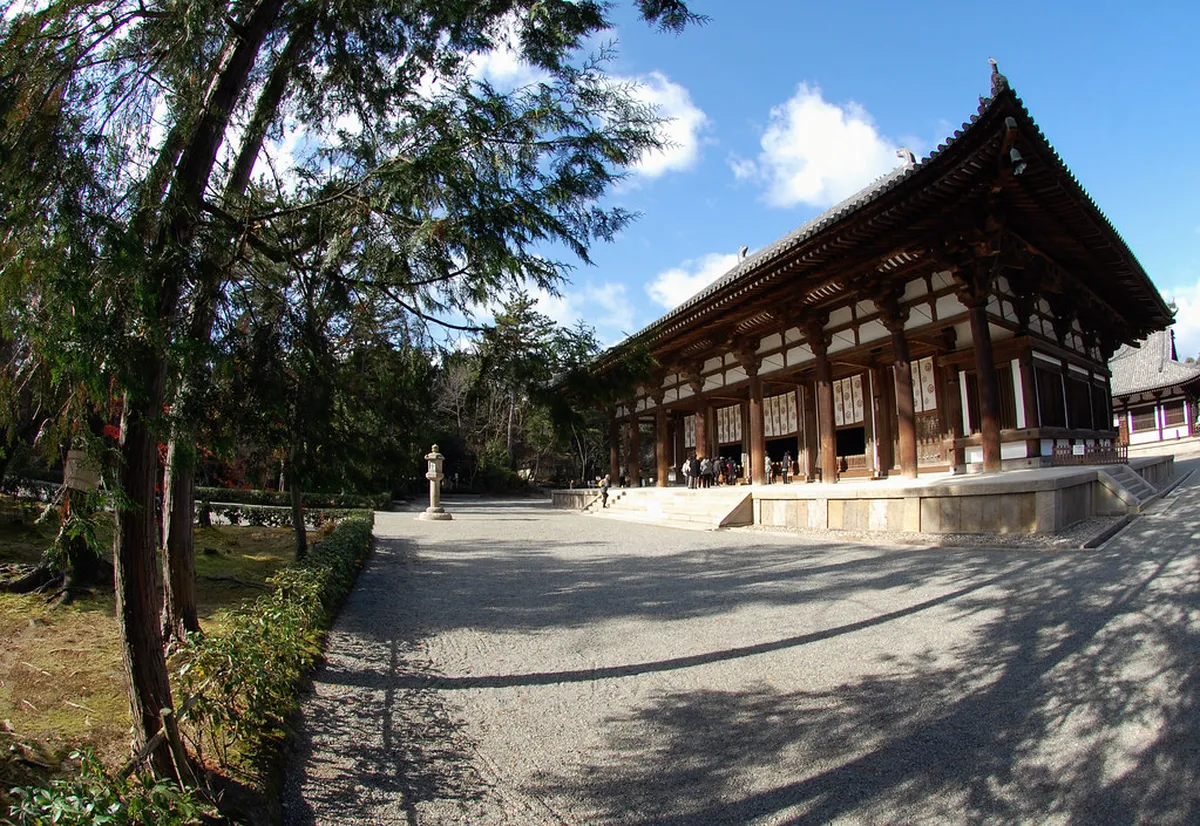
The Kondo (Golden Hall) is the undisputed centerpiece. Seven bays wide with a single-story sloping roof, it is considered one of the finest surviving examples of Nara-period Buddhist architecture anywhere in Japan. Inside stand three National Treasures: a seated Rushana Butsu (Vairocana Buddha) in dry-lacquer construction, a 5.3-meter Senju Kannon with individually carved arms rather than a symbolic cluster, and a standing Yakushi Nyorai. Photography is prohibited inside — come prepared to absorb the statues slowly rather than through a viewfinder.
The famous clay statue of Ganjin — the blind founder — is only shown to the public around June 5–7 each year on the anniversary of his death. A high-quality replica visible year-round in the Kaizando gives a faithful impression of the original's meditative presence and is worth seeking out.
Behind the Kondo sits the Kodo (Lecture Hall), relocated from the Heijo Imperial Palace when the capital moved to Kyoto. It is the only surviving building from that palace complex, making it an architectural document of eighth-century imperial life. The spacious interior has a quieter, less decorated quality than the Kondo, which many visitors find equally compelling.
Between the two main halls stands the Koro (drum tower and shariden), a Kamakura-period multi-storied structure said to contain ashes of the historical Buddha brought by Ganjin. This is the site of the Uchiwamaki ceremony each May 19, when heart-shaped fans are scattered from the upper story — more on that below. To the east, the Houzo and Kyozo storehouses use the azekurazukuri interlocking-log technique to regulate humidity and protect scrolls; the Kyozo is the oldest surviving building on the grounds.
In the northeast of the precinct, the Mieido (founder's hall) opens to the public only a few days around June 5–7, the anniversary of Ganjin's death. The famous National Treasure clay statue of the seated blind Ganjin is shown during this window. A replica in the Kaizando (just south of the Mieido) is visible year-round. Most visitors underestimate the replica's quality — it was completed in 2013 to museum standards and gives a faithful impression of the original's meditative presence.
Gardens and Seasonal Beauty
Ganjin's Mausoleum (Kaizan Gobyo) lies at the eastern end of the grounds, approached by a small bridge over a pond and a path edged with moss-covered stones. This is the quietest, most atmospheric corner of the complex — plan at least fifteen minutes here. The moss thrives in the shade of large trees that have grown for over a century, and the effect on an overcast morning is genuinely striking.
Seasonal interest is spread across the year. Cherry blossoms and fresh greenery arrive in April and early May. The lotus flowers in front of the Kondo reach peak bloom in mid-June, coinciding with the Ganjin memorial period — combining both is one of the best-timed single-day itineraries in Nara. Autumn foliage turns the maples near the rear of the grounds in early to late November, drawing photographers who find the crowd levels at Toshodai-ji far more manageable than at the more famous maple spots in Kyoto.
The stone ordination platform (Kaidan) on the western edge of the grounds is where monks officially entered the Buddhist priesthood under Ganjin's supervision. A pagoda once stood here but was destroyed by lightning in 1802 and never rebuilt. The low stone enclosure that remains conveys the ritual gravity of the site without needing reconstruction.
The Uchiwamaki Fan-Scattering Festival
Every May 19, Toshodai-ji holds the Uchiwamaki ceremony — one of the more unusual annual events at any Nara temple. During the ritual, large round fans (uchiwa) are scattered from the second story of the Koro to the crowd gathered below. Catching one is considered good luck. The tradition dates to a practice by nuns from nearby Hokkeji Temple, who brought round fans to honor a beloved abbot of Toshodai-ji. It has continued for over 800 years.
The ceremony takes place in the late morning and draws a concentrated crowd, but nothing on the scale of the deer-feeding crowds at Nara Park. Arriving by 09:30 gives you time to explore the Kondo before the ceremony begins. The combination of the late-spring grounds, the lotus buds just starting near the Kondo, and the festival atmosphere makes May 19 one of the single best days to visit the temple. No special ticket is required beyond the standard ¥1,000 admission.
Accessibility Details
Toshodai-ji is partially accessible for wheelchair users, and the specifics matter more than most guides acknowledge. The Kodo (Lecture Hall) and the Shin-hozo (new treasure house) both have ramp access and doorways wider than 80 cm. The Kondo (Golden Hall) requires climbing six steps of approximately 20 cm each, with no slope alternative — wheelchair users cannot enter the main hall. The Mieido, open only in early June, also has no slope during special viewing periods.
Pathways throughout the grounds are primarily compacted gravel, which can be difficult for manual wheelchairs and is uneven underfoot for anyone with mobility challenges. The path to Ganjin's Mausoleum is not accessible by wheelchair. Accessible restrooms are available on-site, featuring sliding doors 220 cm wide, L-bar and adjustable U-bar handrails, warm-water bidet, and ostomate-compatible facilities. Three dedicated parking spaces for visitors with disabilities are available in the nearby lot.
The temple does not offer wheelchair rental or audio guides in English at the gate, though the official website hosts a video guide in Japanese at toshodaiji.jp/movie.html. Group guided tours with accommodation can be arranged in advance. Visitors traveling with strollers should note that the gravel paths are manageable but not smooth — a frame stroller is easier than a pram.
Family-Friendly and Budget-Friendly Options
Traveling with children is noticeably more relaxed here than at Todai-ji Temple. The wide central axis between the Kondo and Kodo gives children room to walk without the shoulder-to-shoulder density of the main Nara tourist corridor. The ¥1,000 adult admission is consistent with other major Nara sites, and children under elementary school age enter free.
If you plan to visit Yakushi-ji Temple on the same day, ask about the combined ticket when you arrive — it typically saves several hundred yen per person compared to individual entry at each gate. The two temples are connected by a ten-minute flat walk through a quiet residential neighborhood, making a half-day circuit very manageable with young children or older travelers.
Food options in the immediate Nishinokyo area are limited to a few small shops near the temple entrance. Eat before you arrive — the best approach is a meal near Nishinokyo Station or in central Nara, then head to the temple. Carry water, especially in summer when the gravel paths and open grounds retain heat in the middle of the day.
How to Plan Your Toshodai-ji Visit
Gates open at 08:30 and close at 17:00, with last entry at 16:30. The quietest window is 08:30–10:00, before tour buses arrive from Kyoto and Osaka. Arriving at opening gives you the Kondo nearly to yourself and the best light for exterior photography. The Shinpōzo treasure house has a separate admission of approximately ¥500 and keeps seasonal hours — check toshodaiji.jp/english before your visit to confirm it is open on your date.
| Category | Detail |
|---|---|
| Adult admission | ¥1,000 |
| Junior / senior high school | ¥400 |
| Elementary school children | ¥200 |
| Shinpōzo treasure house (separate) | ~¥500 (seasonal) |
| Open hours | 08:30 – 17:00, last entry 16:30 |
| Nearest station | Nishinokyo (Kintetsu), ~8 min walk north |
A standard visit to the main grounds, Kondo, Kodo, and the Mausoleum takes 60–90 minutes at a comfortable pace. Add 30 minutes if you enter the Shinpōzo. Combining Toshodai-ji with Yakushi-ji (a ten-minute walk south) makes a satisfying half-day itinerary that covers two UNESCO sites without doubling back. Most visitors then take the Kintetsu line east to Kasuga Taisha or central Nara in the afternoon.
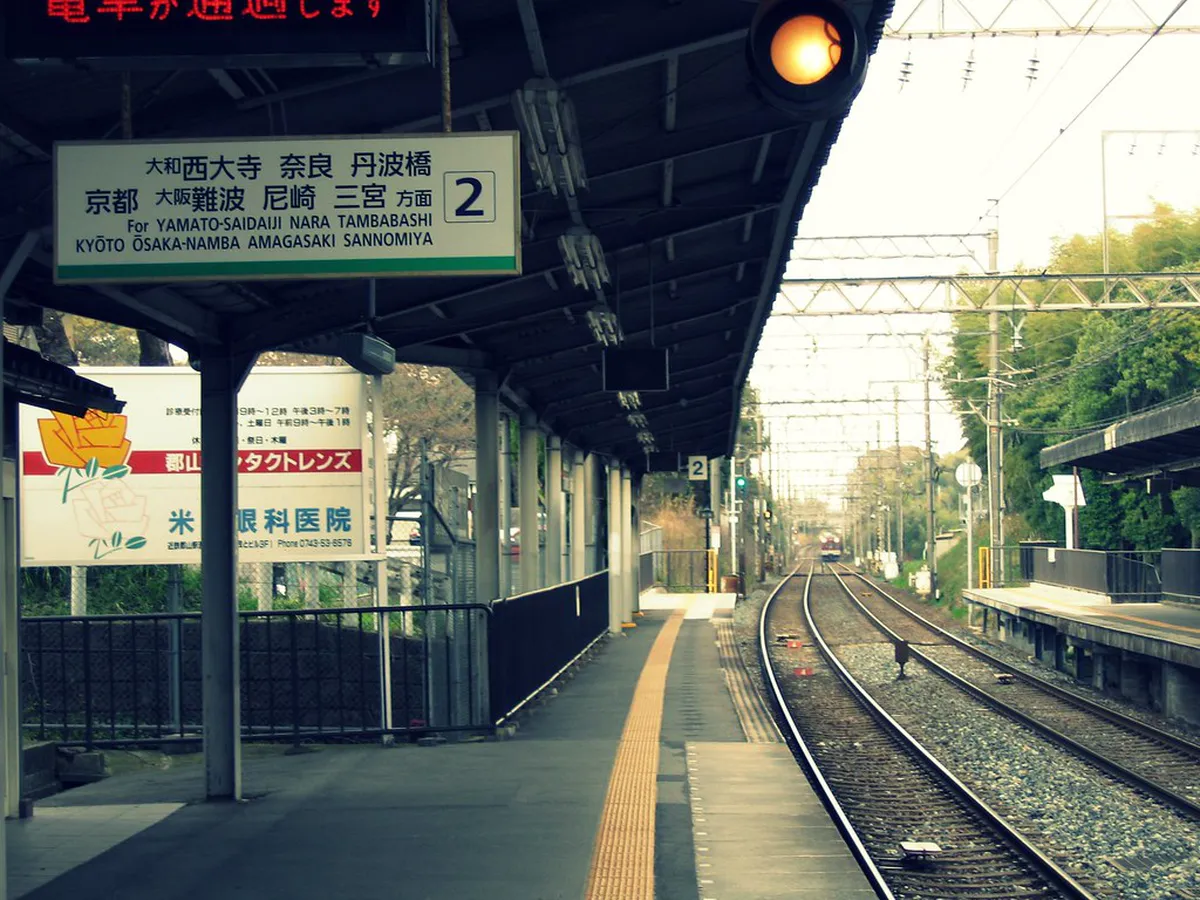
To get here, take the Kintetsu Kashihara Line to Nishinokyo Station — about 8 minutes' walk north of the temple entrance. From JR Nara Station or Kintetsu Nara Station, Nara Kotsu buses #70, #72, or #97 serve the area; the #97 stops at Toshodaiji-higashiguchi (30 metres from the entrance), while #70 and #72 stop at the Toshodaiji bus stop. By car from Osaka, use the Daini Hanna Road and exit at Koriyama IC; the drive takes approximately one hour. A small parking lot is adjacent to the temple and has three spaces reserved for visitors with disabilities.
Wear shoes you can walk in on loose gravel for an extended period. Rainy days transform the moss gardens and create atmospheric photography conditions, but all major paths are outdoors and there is no covered waiting area. A compact umbrella is more useful than a poncho given the need to keep both hands free on uneven ground.
Photography is prohibited inside the Kondo main hall — no phones, no cameras. The restriction covers all devices and all statues. Exterior photography across the grounds is unrestricted, so prepare to put your camera away before stepping inside the Golden Hall entrance.
Frequently Asked Questions
How much time should you plan for a Toshodai-ji temple visitor guide?
Most visitors should plan for 1.5 to 2 hours to fully appreciate the main halls and gardens. This allows enough time to walk to Ganjin's Mausoleum and view the statues without rushing. If you also visit the treasure house, add another thirty minutes to your itinerary.
Is Toshodai-ji worth including on a short Nara itinerary?
Yes, it is highly worth visiting for its unique Tang-style architecture and peaceful atmosphere. It offers a quieter alternative to the busy central sites like the Great Buddha. You can easily combine it with other Nara attractions in a single morning or afternoon.
What should travelers avoid when planning a visit?
Avoid arriving too late in the afternoon as the temple closes its gates promptly at 5:00 PM. Do not wear uncomfortable shoes because the grounds feature extensive gravel paths that can be tiring to walk on. Also, try to avoid the peak mid-day heat during the summer months.
Can I take photos inside the temple buildings?
Photography is generally prohibited inside the main halls to protect the ancient Buddhist statues and artwork. You are welcome to take as many photos as you like of the building exteriors and the gardens. Please look for signs or ask staff if you are unsure about specific areas.
Toshodai-ji Temple offers a profound look into the early history of Japanese Buddhism and the legacy of Ganjin.
Its well-preserved architecture and tranquil gardens provide a refreshing break from the busier parts of Nara.
By following this guide, you can ensure a smooth and meaningful visit to one of Japan's most significant cultural treasures.
Plan your trip today to experience the timeless beauty and spiritual depth of this ancient sanctuary.
For more Nara planning, see our 20 Best Nara Attractions, and Nara Itinerary for First-Timers guide.


