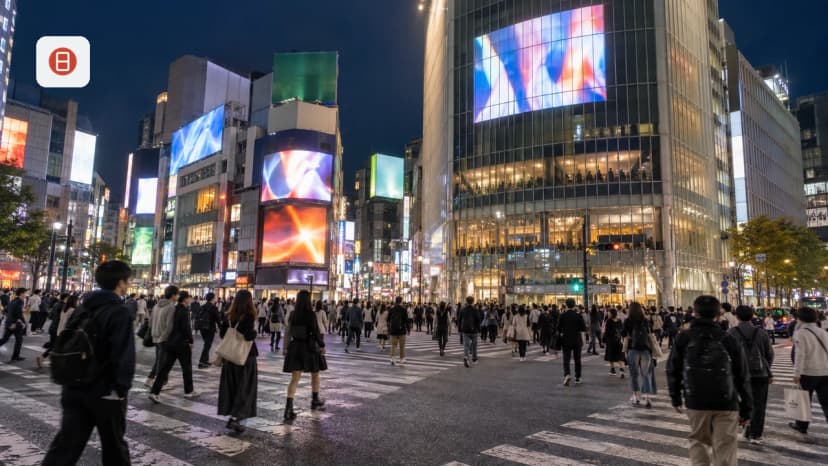
Shibuya Crossing is the world's busiest pedestrian intersection and the beating heart of modern Tokyo, with up to 3,000 people surging across in a single 45-second light cycle. Access is free, 24/7, and the crossing sits directly outside the Hachiko Exit of Shibuya Station.
This 2026 shibuya crossing visitor guide breaks down the 10 best viewpoints (free and paid), peak crowd windows, the safest meeting-point strategy at the Hachiko statue, and accessibility details for wheelchair users. Use it to choose your visit time and viewpoint based on whether you want neon photography, peak-crowd intensity, or a calm overhead perspective.
This Tokyo landmark sits at the crossroads of three JR lines and three Tokyo Metro lines, so you can fold it into almost any Tokyo itinerary with minimal detour.
How to Get to Shibuya Crossing: Best Station Exits
Shibuya Station is served by three JR lines (Yamanote, Saikyo, Shonan-Shinjuku), three Tokyo Metro lines (Ginza, Hanzomon, Fukutoshin), and the Keio Inokashira Line. With over 3 million daily passengers, it is one of the largest transit hubs on the planet, so signage discipline matters — always follow the bright yellow signs pointing toward the Hachiko Exit.
The Hachiko Exit (signposted as Exit A8 from the Tokyo Metro side) drops you directly opposite the scramble, with the Hachiko statue immediately on your right. From the JR Yamanote Line platforms, take the central escalators down, pass through the main ticket gates marked "Hachiko Exit," and you will emerge facing the crossing within 90 seconds. Other exits — Miyamasuzaka, South, or West — land you on the wrong side and add a 5–10 minute walk. Consult the Tokyo Convention & Visitors Bureau: Shibuya Spot Guide for detailed station maps.
If you arrive via the Fukutoshin or Hanzomon lines, head for Exit 8 to surface beside the Hachiko statue. Travelers often get lost in the maze of department stores connected to the tracks — if you find yourself inside Shibuya Mark City, follow the elevated walkway toward the JR lines for a clear, indoor first glimpse of the scramble from above.
Timing Your Visit: When is the Scramble Busiest?
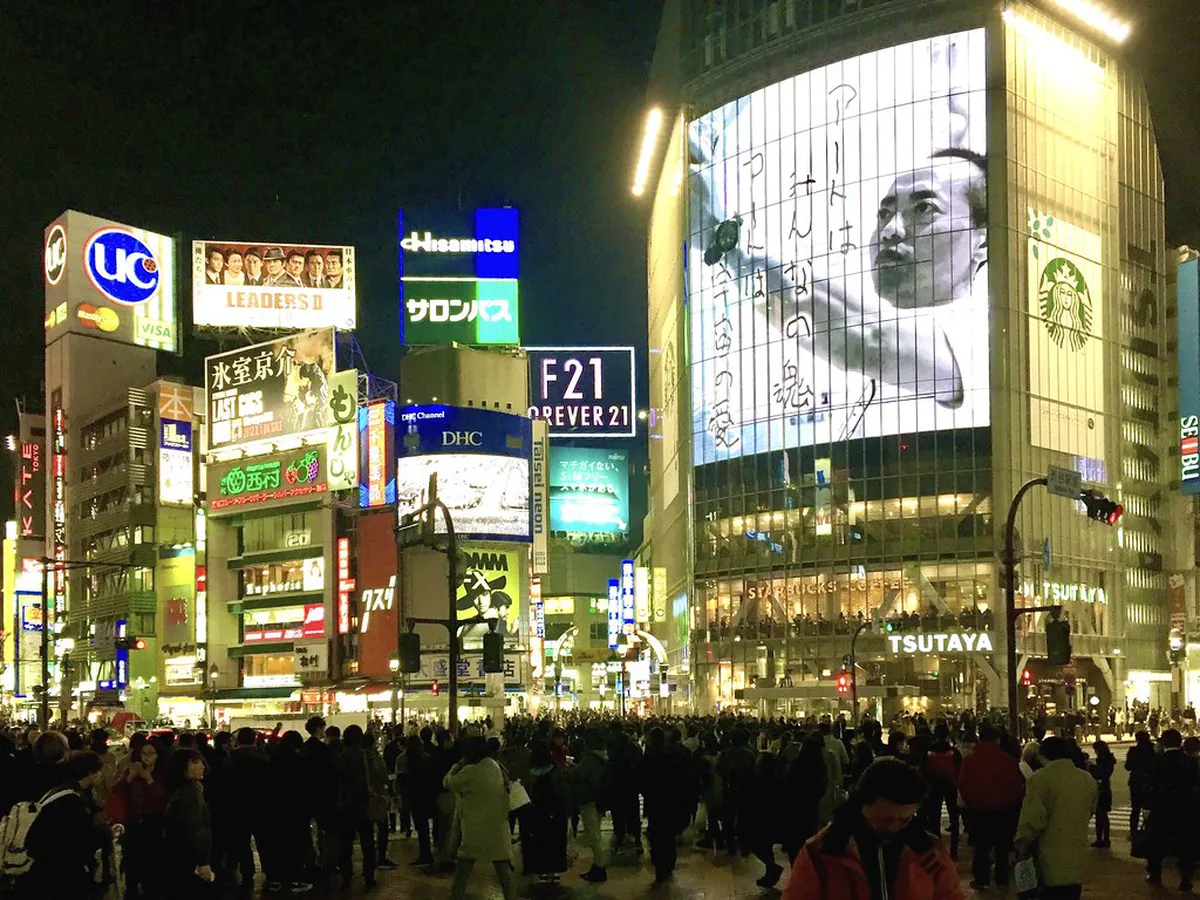
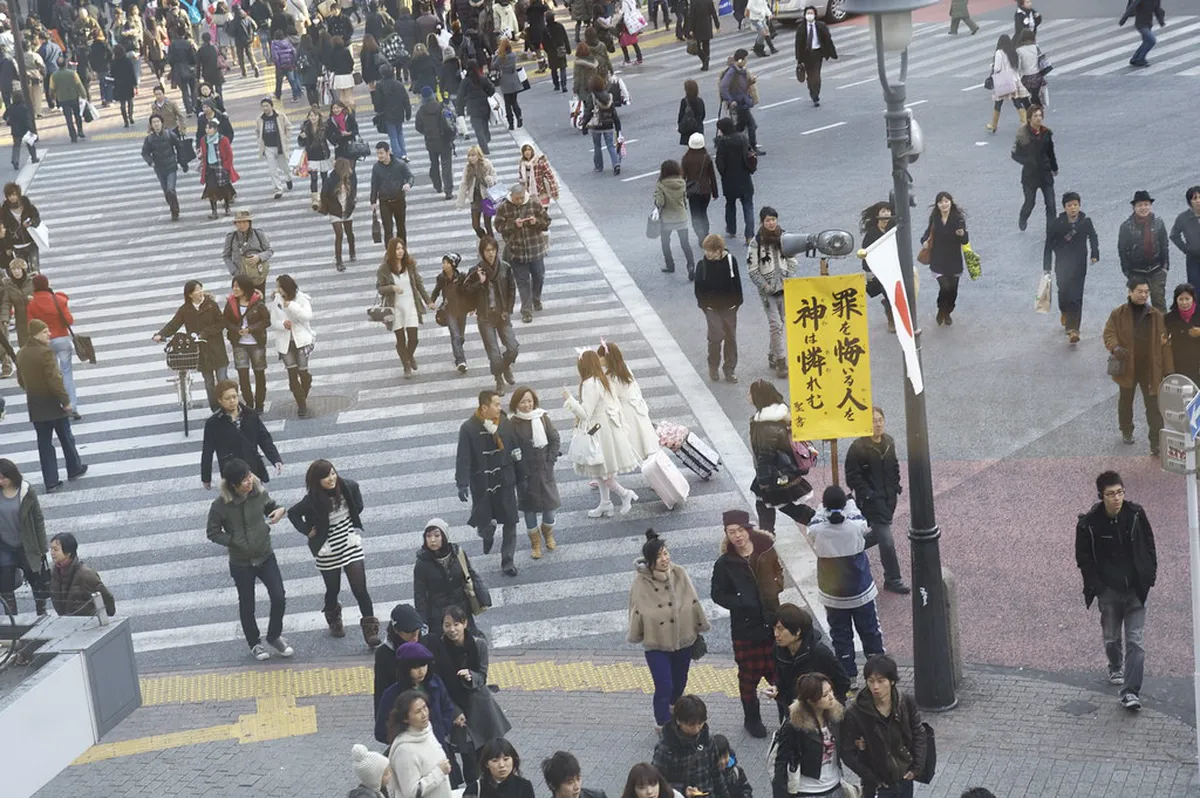
Each light cycle gives pedestrians roughly 45 seconds to cross. The scramble peaks on Friday and Saturday evenings between 18:00 and 22:00, when the neon walls light up and 2,500–3,000 people cross per cycle. Weekday rush (18:00–20:00) is the second-densest window, driven by commuters and students from the surrounding offices and Shibuya 109.
Saturday afternoons are consistently packed from noon onward — best if you want the iconic daylight "sea of people" shot. Sunday mornings before 10:00 are the quietest window of the week, ideal for accessibility, family visits, or wide-angle empty-crossing shots. Blue hour (about 30 minutes after sunset) is the photographer's sweet spot: ambient light still illuminates faces while the screens dominate the frame.
Two dates to plan around carefully: Halloween (October 31) and New Year's Eve. Shibuya Ward enforces a public-area alcohol ban in the central Shibuya zone from late October through early November and again around NYE, with extra police deployment and crowd-control fences. The mayor has publicly asked tourists to avoid Shibuya on Halloween. Check the Shibuya Crossing Live Camera before leaving your hotel to gauge current density.
Shibuya Ward bans alcohol in public areas around Halloween (late October–early November) and New Year's Eve. The mayor has officially asked tourists to avoid the crossing on October 31. Police barriers and extra patrols are deployed during both periods.
Shibuya Crossing Starbucks: Strategy for the Best View
The Starbucks Shibuya Tsutaya 2F is the most famous free viewpoint of the scramble, with full-height windows facing directly down the longest crossing axis. It is consistently ranked among the busiest Starbucks branches in the world. Entry is free with a drink purchase — a tall coffee runs about ¥400 and lets you stay as long as a window seat is open.
Order downstairs first, then carry your drink upstairs to the viewing area; staff strictly enforce the order-first rule. Aim for the first row along the glass railing facing the intersection. Best timing: arrive 30 minutes before sunset on a weekday to grab a seat, then stay through blue hour for the strongest neon contrast.
If the 2F is at capacity (common Fri–Sat after 17:00), try the same building's 1F window stools or pivot to the L'Occitane Cafe directly across the intersection. Camera tip: shoot through the glass with your lens hood pressed flat to kill reflections, and lock white balance to tungsten to keep the screen colors saturated.
Mag's Park Rooftop and L'Occitane Cafe: Alternative Views
Mag's Park sits atop the Magnet by Shibuya 109 building, directly above the scramble's north-east corner. Entry is paid (¥600 in 2026, includes a drink ticket), and it is the closest open-air rooftop to the crossing — perfect for vertical and top-down photos with a 50–85mm equivalent lens. Operating hours are 11:00–22:00.
The chest-high plexiglass barrier causes major glare in midday sun and reflects the screens back at night. Two field-tested fixes: angle your lens 10–15 degrees off perpendicular and press the rubber hood flush against the glass, or use a small piece of black cloth as an ad-hoc lens skirt. Avoid the south-facing edge between 12:00 and 15:00 in summer — direct sun ruins exposures.
L'Occitane Cafe on the 2F of the L'Occitane building offers a relaxed, sit-down alternative facing the scramble's west side. Large windows, table service, seasonal Provence-themed desserts, and reservations available via the website. It is the better pick if you are traveling with non-photographers, want a meal, or need a calm break from the street-level chaos.
Shibuya Sky: The Ultimate High-Altitude Perspective
Shibuya Sky crowns the 47-floor Shibuya Scramble Square building at 229 metres, with a true open-air 360-degree rooftop ("Sky Stage"). Standard admission in 2026 is ¥2,500 online (¥2,700 at the door), with sunset and early-evening slots selling out 2–3 weeks ahead. Operating hours run 10:00–22:30 (last entry 21:20).
Book the slot starting 60–75 minutes before sunset to catch both daylight scramble shots and the city lighting up. The view here is wider but lower than the Tokyo Skytree — Skytree's 350m deck is taller, but Shibuya Sky's advantage is that you look straight down on the crossing, with Mt. Fuji visible on clear winter afternoons.
Safety rules on the open-air deck are strict: all loose items (hats, sunglasses, phones held on selfie sticks, tripods, monopods, drink bottles) must be stored in free lockers before entry. Only your phone and a small camera are allowed on the Sky Stage. Tripods and selfie sticks are prohibited outdoors but permitted on the indoor 46F gallery floor.
Shibuya Excel Hotel Tokyu: Staying Overlooking the Scramble
The Shibuya Excel Hotel Tokyu, perched directly above the Mark City complex, is the only major hotel with rooms facing the scramble. Ask specifically for a "Scramble Side" or "Hachiko Side" Premier King/Twin on floor 22 or higher — these face the intersection at a 30-degree angle and let you photograph the crossing from bed, day or night. Avoid the "Tower Side" rooms, which face the Cerulean Tower and miss the scramble entirely.
Demand outstrips supply year-round. Book 3–4 months ahead for shoulder season and 6 months ahead for cherry-blossom (late March), autumn-leaves (mid-November), and the holiday season. In the special requests field, explicitly type "scramble-facing high floor, Hachiko side preferred" — the front desk honours these notes when inventory allows.
Non-guests can ride the elevator to the 25F sky lobby for free. Floor-to-ceiling windows there overlook the scramble from a quieter perspective, with sofas and a vending corner. It is one of the best free indoor viewpoints in Shibuya outside the Starbucks Tsutaya line.
Shibuya Crossing Viewpoint Comparison Table
Use this quick decision matrix to pick the right vantage point for your goals:
| Viewpoint | Cost (2026) | Height | Indoor / Outdoor | Best For |
|---|---|---|---|---|
| Starbucks Tsutaya 2F | ~¥400 (drink) | Floor 2 | Indoor (glass) | Classic free street-level angle |
| L'Occitane Cafe 2F | ~¥1,200 (meal/drink) | Floor 2 | Indoor (glass) | Relaxed sit-down, west angle |
| Mag's Park Rooftop | ¥600 | Floor 8 | Outdoor (plexiglass) | Top-down vertical photos |
| Shibuya Excel 25F lobby | Free | Floor 25 | Indoor (glass) | Quiet high view, no purchase |
| Shibuya Sky | ¥2,500 online | 229 m (Floor 47) | Open-air rooftop | 360° city + sunset/Mt Fuji |
| Mark City elevated walkway | Free | Floor 2 | Indoor (glass) | Quick photo, no queue |
Quick decision: Crowd-seeker → Mag's Park or Starbucks at 18:30 Fri/Sat. Photographer (blue hour) → Starbucks Tsutaya 30 min before sunset. Maximum drama → Shibuya Sky sunset slot. Budget / quiet → Mark City walkway or Excel 25F lobby.
The Hachiko Statue: History and Meeting Tips
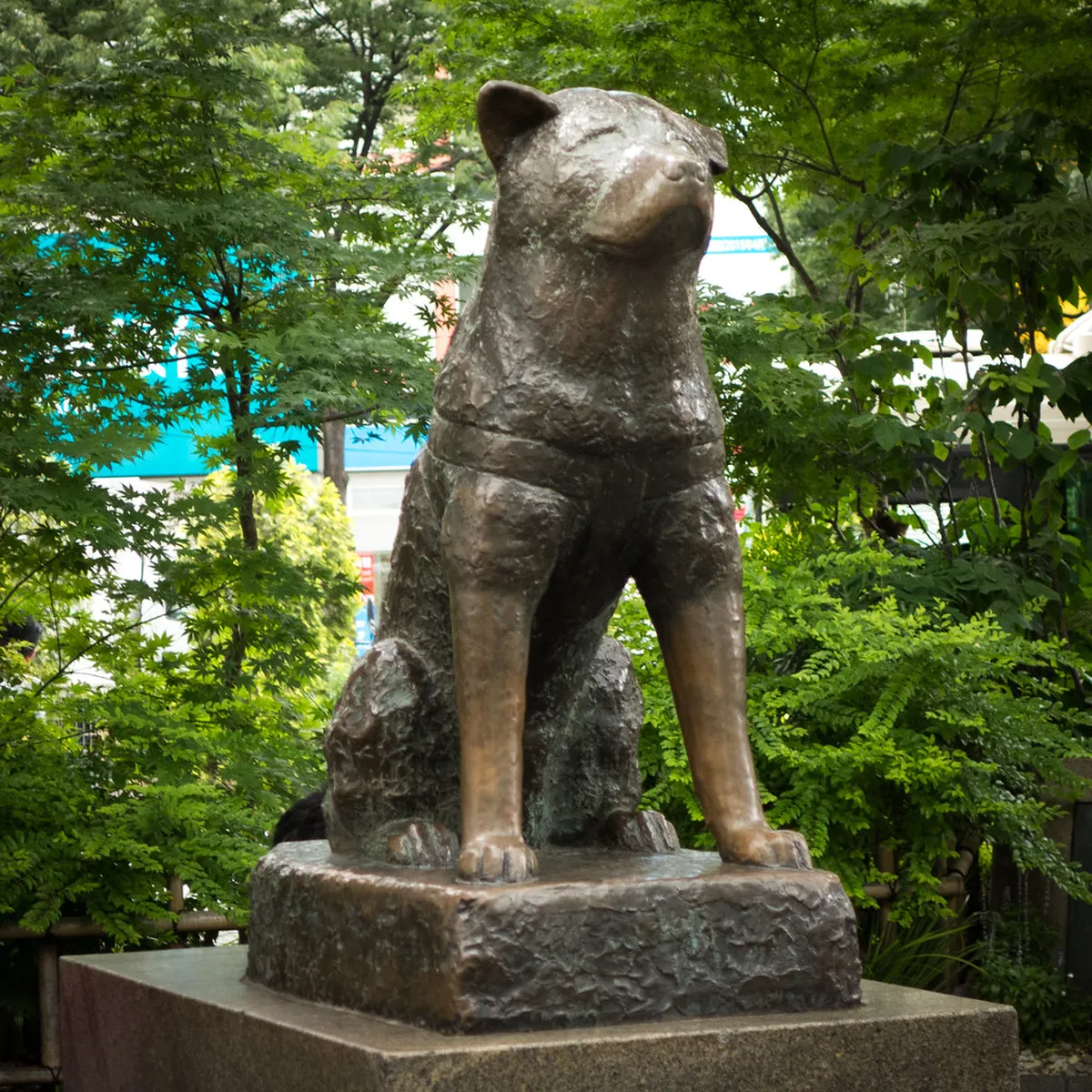
The Hachiko statue honours the Akita dog who waited every afternoon at Shibuya Station for his owner, Professor Hidesaburo Ueno, from 1925 — even after Ueno's sudden death — until Hachiko's own death in 1935. The current bronze, unveiled in 1948 after the original was melted down for the war effort, sits 30 metres from the Hachiko Exit and is Tokyo's single most popular meeting point.
Expect a 5–10 minute queue if you want a solo photo with the statue, longer on weekends. The line moves quickly; most visitors take one shot and step aside. Hachiko's story is taught in Japanese elementary schools and remains the cultural shorthand for loyalty in Japan.
The meeting-point catch: the immediate area around the statue is so crowded that "meet at Hachiko" routinely fails. Pick a more specific anchor instead — the Aoi Green Frog tram car (a retro train carriage parked beside the statue) is the most popular landmark, or arrange to meet at the tactile-paved corner directly opposite the Tsutaya building. Share your live location for the last 5 minutes to avoid the "I'm at Hachiko" / "so am I" loop.
Shibuya at Night: Neon Lights and Nonbei Yokocho
From sunset onward the crossing becomes a wraparound neon canvas. Six giant LED screens — including the curved Q's Eye on Shibuya 109 and the towering displays atop Tsutaya — sync ad cycles, so every few minutes the whole intersection pulses with the same colour wash. Peak neon density runs 19:00–23:00, and the screens dim slightly after midnight to comply with light-pollution rules.
One block north-east lies Nonbei Yokocho ("Drunkard's Alley"), a narrow lane under the Yamanote tracks that has survived since the 1950s. Roughly 40 micro-bars line two tight rows, most seating only 4–8 people. Many bars have a flat ¥1,000–¥2,000 seating charge plus drinks; tourists are welcome at the foreigner-friendly spots near the entrance, but a few "regulars only" izakaya politely turn newcomers away.
For a less crowded post-crossing drink, try Mitsuya Coffee (24-hour kissaten) or head three minutes south to the rooftop bars in Shibuya Stream. Note: the Halloween / NYE alcohol ban applies to the public street, not licensed venues — bars stay open as normal.
Practical Travel Tips: Currency, Safety, Accessibility, and Connectivity
Payments: chain shops, cafes, and viewpoints accept Visa, Mastercard, JCB, Apple Pay, and Suica/Pasmo IC cards. Nonbei Yokocho bars and a handful of yatai stalls remain cash-only — keep ¥5,000–¥10,000 in 1,000-yen notes. Tax-free shopping is available at department stores like Shibuya Hikarie with a passport.
Sunday mornings before 10:00 are the quietest window of the week — ideal for wheelchair users, families, or wide-angle empty-crossing shots. Blue hour (roughly 30 minutes after sunset) is the photographer's sweet spot: ambient light still illuminates faces while the six LED screens dominate the frame.
Accessibility: all four corners of the crossing have tactile paving and full kerb ramps; pedestrian signals include audible cues for the visually impaired. Elevators at the Hachiko Exit (look for the JR elevator near the Hachiko statue and the Tokyo Metro elevator at Exit 7/8) provide step-free access from every line. Shibuya Sky and Mag's Park are wheelchair-accessible via dedicated lifts; Starbucks Tsutaya 2F has elevator access from the 1F ordering counter. Crowds peak Fri/Sat evenings — visit before 11:00 or on Sunday morning for the calmest wheelchair experience.
Safety: Tokyo's overall crime rate is among the world's lowest, but stay aware of your belongings in the dense Friday/Saturday surge — keep bags zipped and in front. Police boxes (kōban) sit at the Hachiko Exit and outside Shibuya 109. Connectivity: free city Wi-Fi ("Shibuya Free Wi-Fi") works around the station but slows during peak hours; an eSIM or pocket Wi-Fi gives reliable Maps navigation. See the Shibuya Scramble Crossing Official FAQ for official Ward guidance.
Top Things to Do in Shibuya After the Crossing
After the scramble, walk 15 minutes north-west to Meiji Shrine for a complete sensory reset — 70 hectares of forest, gravel paths, and torii gates in the middle of central Tokyo. The contrast from neon to old-growth cedar is the single best way to feel Tokyo's dual identity in one afternoon — a pairing covered in our Tokyo highlights guide.
Adjoining Meiji Shrine, Harajuku's Takeshita Street delivers crêpes, kawaii fashion, and rainbow cotton candy in a 400-metre car-free lane. Most visitors fold Shibuya + Harajuku + Meiji into one half-day loop using the Yamanote Line (one stop).
With more time, ride the JR Chuo Line 5 minutes to Shinjuku Gyoen for seasonal gardens (cherry blossom in April, momiji in November), or hop the Tokyo Metro Hanzomon Line to Toyosu for teamLab Planets's barefoot digital-art installations. For more Tokyo guide coverage and the full Tokyo greatest-hits loop, see our Tokyo attractions hub.
Frequently Asked Questions
When is the best time to see the crowd at Shibuya Crossing?
The best time to see maximum crowds is during the weekday evening rush from 6:00 PM to 8:00 PM. Friday nights are especially busy. For a different vibe, visit on Saturday afternoons when shoppers fill the streets. You can see more of Senso-ji or other sites in the morning before Shibuya peaks.
Is Shibuya Scramble Crossing the busiest in the world?
Yes, it is widely considered the busiest pedestrian intersection on the planet. During peak times, as many as 3,000 people cross in a single light cycle. Millions of commuters pass through the adjacent station every day, making it a true global hub of activity.
Where is the best free viewing spot for the crossing?
The elevated walkway between Shibuya Station and Shibuya Mark City offers the best free view. It is completely enclosed and provides a clear perspective of the pedestrians below. Another free option is the lobby of the Shibuya Excel Hotel Tokyu on the 25th floor.
How much time should you plan for a Shibuya Crossing visit?
Plan for about 30 to 60 minutes if you just want to walk across and take photos. If you intend to visit a viewpoint like Shibuya Sky or the Starbucks, allow at least two hours. This gives you enough time for lines and enjoying the scenery without rushing.
Shibuya Crossing is an essential stop for anyone visiting the Japanese capital.
Whether you watch from above or join the surge on the street, the energy is unforgettable.
Use this guide to find the perfect viewpoint for your travel style and photography goals.
Enjoy your time exploring one of the most vibrant and iconic corners of the world.