
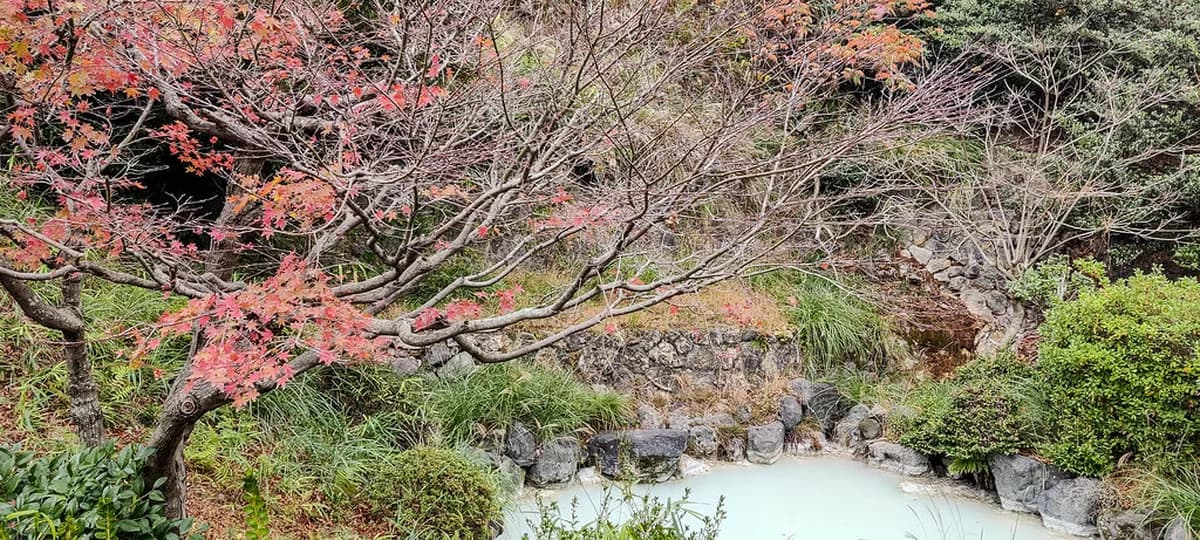
Myoban Onsen is one of the most atmospheric hot spring districts in Beppu, set high on the hillsides where sulfur steam, milky white baths, and thatched Yunohana huts shape the landscape. This 2026 visitor guide covers what to see, where to soak, what to eat, and how to avoid the bus and timing mistakes that make Myoban harder than it needs to be.
Must-See Myoban Attractions
The heart of the district is the cluster of traditional bathhouses and Yunohana huts around Myoban Yu no Sato Official Site. Start here for the classic Myoban scene: straw-roofed huts, drifting steam, open-air baths, and views toward the Great Beppu Bridge. The milky sulfur water is the signature draw, especially if you want a bath that feels different from the clearer springs in central Beppu.
For privacy, choose a family or private hut bath early in the day before weekend visitors arrive. These small bath spaces suit couples, families, and first-time onsen visitors who feel unsure about public bathing etiquette. Bring a small towel, remove jewelry before soaking because sulfur can discolor some metals, and keep cameras away from bath areas.
Myoban Onsen Basic Information: Hours, Admission, and Location
Myoban Onsen sits in the hills above central Beppu, in the Myoban district of Beppu City, Oita Prefecture, roughly 25 to 30 minutes by Kamenoi Bus from Beppu Station. Before you go, it helps to know what is free, what costs money, and when the district is calmest.
| Detail | Information |
|---|---|
| Location | Myoban district, Kannawa area, Beppu, Oita Prefecture |
| Viewing the Yunohana huts | Free, no reservation needed |
| Public bath entry | Approx. ¥700–900 per adult |
| Private family bath | Approx. ¥1,500–2,500 per hour, per room |
| Typical opening hours | 9:00–20:00, last entry usually 30–60 minutes before closing |
| Nearest bus stop | Myoban, on Kamenoi Bus routes from Beppu Station via Kannawa |
| Best months to visit | Late autumn through winter for the clearest steam views; early spring for cherry blossoms |
If you plan to combine Myoban with several other hot spring stops in one trip, a district pass can be worth pricing out — see this Beppu onsen pass guide for which passes cover Myoban's facilities. Travelers visiting in late March or early April should also check dates for the Beppu Hatto Onsen Festival, when several district bathhouses run special events and extended hours.
Museums, Art, and Culture in Myoban
Myoban takes its name from alum, and the district's identity still centers on Yunohana, the natural hot spring crystals collected from geothermal steam. The craft dates back more than 200 years to the Edo Period. Walking the designated paths around the Yunohana Goya huts shows why the roofs matter: the clay floors and straw structures help regulate heat and moisture so mineral crystals can form.
Small displays explain the process, but the real appeal is seeing a living craft embedded in the hillside. Treat the huts as working cultural facilities, stay on marked paths, and avoid touching surfaces near vents. This is the best free cultural stop in Myoban and a smart first stop before you bathe.
Parks, Gardens, and Outdoor Spots in Myoban
The Yunohana Goya huts at Myoban Yu no Sato can be viewed for free from the designated path — no entry fee needed to appreciate the thatched-roof alum crystal huts and hillside steam views.
The elevated position of Myoban gives you some of Beppu's clearest hillside views. From the lanes around Yu no Sato, you can look down toward Beppu Bay while steam rises from the valley. The best photos usually come from slightly above the hut cluster, where you can frame the straw roofs, vents, and city backdrop without entering restricted areas.
Spring brings cherry blossoms, autumn adds maple color, and winter mornings are especially atmospheric because the steam hangs low in the cold air. Accessibility is the tradeoff: sidewalks can be narrow, gradients are steep, and wet patches near vents can be slippery. Visitors with mobility concerns should keep the itinerary simple and consider taxis for the final climb.
Family-Friendly and Budget-Friendly Options in Myoban
Traveling on a budget is easy in Myoban because many of the best sights are free to view. Families can explore steam vents, Yunohana huts, small shops, and mountain viewpoints before choosing a bath. Snacks such as steamed eggs, corn, and pudding also keep the area easy for children.
African Safari appears in some Beppu itineraries and is reachable from the wider area, but it needs a separate block of four hours or more once transport, tickets, and the park loop are included. Do not add it to a half-day Myoban plan unless you are willing to skip baths or the Hells.
- Top Budget Tips for Myoban
- Transport: Use the Kamenoi Bus Pass if you will ride multiple local buses
- Entry: Visit the free Yunohana viewing huts before choosing a bath
- Dining: Buy hell-steamed eggs or pudding as a light snack
- Bathing: Pick one public bath instead of trying to sample every facility
How to Plan a Smooth Myoban Attractions Day
A successful Myoban day begins at the tourist information area in Beppu Station, where visitors can confirm Kamenoi bus routes and buy or activate the right local pass before boarding. The ride takes about 25 to 30 minutes. Check both the outbound stop and final return times; the biggest planning mistake is assuming mountain buses run like central-city buses late in the day.
Start early for calmer bathhouses and shorter queues at Okamotoya. Most visitors need three to four hours for the Yunohana huts, one bath, a snack stop, and photos; add Kannawa only if you have at least a full day. Wear shoes with grip, pack a small towel, and prioritize Myoban Yu no Sato, Okamotoya, and one nearby viewpoint if time is tight.
Hidden Gem: Ride the Beppu Cable Car to Rakutenchi Amusement Park
For a break from sulfur baths, head to the Beppu Cable Car Location for a nostalgic ride up to Rakutenchi. It is not in the Myoban core, so treat it as an add-on when you have extra afternoon time. The cable car gives wide views of Beppu Bay and shows how the city rises from the waterfront into the hot spring hills.
The park has classic rides, a small zoo, a suspension bridge, and a foot bath overlooking the city. It suits families and travelers who like retro attractions more than high-speed theme parks. In 2026, its best role is as a lighter stop after the sulfur smell, hilly walking, and hot baths of Myoban.
First-Timer’s Guide to Beppu: Hells, Hot Springs, and Hidden Surprises
The strong sulfur smell in Myoban is natural but can linger on clothing and towels. Pack a dedicated towel and consider wearing older clothes if the smell bothers you.
First-time visitors should be ready for the strong sulfur smell that permeates Myoban. It is natural, but it can linger on towels and clothing. If you have sensitive skin, keep your first soak short, rinse after bathing if the facility allows it, and drink water before and after the bath.
You can pair Myoban with Umi Jigoku, but be clear on the difference: a jigoku is for viewing, while an onsen is for soaking. The Hells are dramatic but not all essential if your main goal is bathing. Carry cash and build in buffer time for queues, buses, and steep walking.
| Short on time? | Best choice | Why |
|---|---|---|
| One Hell | Umi Jigoku | Most iconic blue pool and easy first-time pick. |
| One more stop | Kamado Jigoku | Multiple pond colors and snack stalls in one compact site. |
| Want contrast | Chinoike Jigoku | Red-orange pond scenery that feels different from Umi Jigoku. |
Stop 2: ‘Hell-Steamed’ Pudding and Karaage at the Mountainside Okamotoya Restaurant
No trip to Myoban is complete without tasting the famous Jigoku Mushi pudding at Okamotoya Restaurant. The custard is steamed with geothermal heat, giving it a dense texture that works well with the slightly bitter caramel sauce. Queues are common on weekends, holidays, and late lunch hours, so visit on a weekday morning if pudding is a priority.
Okamotoya also serves savory dishes such as karaage and steamed noodles, with terrace and window seats overlooking the steaming valley. The common mistake is treating it as a quick snack stop during peak hours; if you are on a tight bus schedule, check the line before committing.
Stop 5: Steam Your Own Meal Jigoku Mushi Style
For a more interactive dining experience, head down to the Kannawa Onsen district to try DIY steam cooking. Choose ingredients, rent steaming time, place the basket into the volcanic steam box, then wait while the heat cooks everything quickly. Eggs, sweet potatoes, mushrooms, corn, and shellfish work especially well.
Staff explain timing and safety, and most facilities provide timers, baskets, and protective gloves. Pre-packed ingredient sets are easiest for visitors. Jigoku Mushi works better as lunch or an early dinner than as a rushed stop after bathing, when heat and dehydration can catch up with you.
Stop 6: Soaking and Sand Bath at Hyotan Onsen
If you want variety after Myoban's sulfur baths, Hyotan Onsen is a strong choice in nearby Kannawa. It is known for waterfall baths, spacious indoor and outdoor areas, and a setup that makes it easier for first-timers to find a comfortable temperature. Visitors concerned about tattoo policies should still check current rules before arrival.
The sand bath is the distinctive add-on: you wear a yukata while warm volcanic sand is packed around your body. Choose a regular soak for simple relaxation; choose the sand bath for a more memorable Beppu-specific experience. Either way, avoid stacking too many hot experiences back-to-back without a water break.
Recommended Bathhouses and Ryokans in the Myoban Onsen Area
Myoban Yu no Sato is the district's signature stop, but it is not the only place to bathe in the area. A short walk or one extra bus stop opens up a few more options worth knowing about.
Beppu Onsen Hoyoland
Beppu Onsen Hoyoland is a short ride from the main Yu no Sato cluster and is known for its doro-yu mud bath, a mineral-rich clay pool that visitors coat themselves in before rinsing off in an adjoining rotenburo. Admission runs around ¥700 to 800, and the facility also has a standard sulfur bath for visitors who prefer to skip the mud. Towel rental is usually available on-site, but bringing your own keeps costs down.
Ryokans with Private Onsen
Several small ryokans and guesthouses in and around Myoban offer private in-room or reserved-time baths, which suit couples, families with young children, or anyone who prefers not to use a shared bath on a first visit. Rates and reservation policies vary by property, so book ahead for weekends. For a shortlist of options across the city, this guide to Beppu ryokans with private onsen is a useful starting point, and this roundup of Beppu's best onsen hotels covers larger properties with in-house baths if you would rather stay closer to the action after a day exploring Myoban.
Whichever facility you choose, pace your day: alternate a soak with time in the open air, since consecutive hot baths in the district's already warm, sulfur-heavy atmosphere can be more tiring than a single relaxed session.
Frequently Asked Questions
What is Myoban Onsen famous for?
Myoban Onsen is world-renowned for its milky white sulfur water and the 200-year-old tradition of harvesting Yunohana crystals. The district features unique thatched-roof huts where these medicinal crystals are produced using natural geothermal steam. It is also a top spot for 'hell-steamed' pudding at the famous Okamotoya Restaurant.
How do I get to Myoban Onsen from Beppu Station?
You can easily reach Myoban by taking a Kamenoi bus from the west exit of Beppu Station. The journey takes approximately 25 minutes on bus numbers 5, 41, or 43. Buying a one-day bus pass is highly recommended to save on fares while exploring other areas like the Takegawara Onsen district.
Is the Beppu Hells pass worth it for Myoban visitors?
The Hells pass is worth it if you plan to see at least five of the seven main geothermal sites. While Myoban has its own unique attractions, it is located a short bus ride away from the main Hells cluster. If you only want to see one or two, paying individual entry fees may be cheaper.
What is hell-steamed pudding?
Hell-steamed pudding, or Jigoku Mushi Purin, is a local custard dessert cooked using natural volcanic steam. This traditional method gives the pudding a dense texture and a rich, deep flavor that is hard to replicate with standard ovens. It is a must-try delicacy for anyone visiting the Myoban or Kannawa areas.
Can you visit the Yunohana huts for free?
Yes, many of the Yunohana huts at Myoban Yu no Sato are free for the public to view from the outside. You can walk through the designated paths to see how the alum crystals form on the clay floors. Some specific museum areas or the bathhouses themselves will require a small entrance fee.
Myoban Onsen pairs milky sulfur baths, Yunohana craft, hillside views, and steamed treats in one compact mountain district. Plan around buses, hills, and bath timing, and it becomes one of Beppu's most rewarding half-day escapes.
For more Beppu planning, read our Beppu Hoyoland Mud Onsen Guide guide.
Official information & further reading: Beppu Onsen districts on Wikipedia · japan-guide.com reference.


