

Mitaki-dera Temple stands as a quiet sanctuary nestled within the lush forests of Mount Mitaki. This ancient site offers a stark contrast to the modern streets of downtown Hiroshima found nearby. Visitors discover a world of mossy statues and rushing waterfalls just minutes from the city center.
This mitaki-dera temple visitor guide helps you navigate the spiritual paths and scenic trails of this hidden treasure. You will find practical tips for transport, hiking, and cultural etiquette to ensure a respectful visit. Many travelers find this forest escape to be the highlight of their time in the region.
The temple provides a deep sense of peace that resonates with the city's broader narrative of resilience. Exploring the grounds allows you to witness the natural beauty that has thrived here since the ninth century. Prepare for a journey through history and nature as you climb these sacred slopes.
Mitaki-dera Temple: Visit at a Glance (2026)
Planning your visit requires knowing a few essential logistics to maximize your time on the mountain. The temple grounds remain open throughout the year, offering different views during every season. Most visitors spend at least one to two hours exploring the main buildings and the surrounding forest paths.
There is no ticket booth at Mitaki-dera. The entrance runs on a voluntary donation system — a self-service box near the gate accepts contributions, with ¥200 per person recommended. Bring cash since there are no card payment options anywhere on the grounds. If the box appears unattended, leave your donation in a folded piece of paper and place it at the box. Temple staff collect regularly.
Check the Official Hiroshima Tourism (Dive Hiroshima) website for any temporary closures before you depart. Morning visits are highly recommended to avoid small crowds and to see the forest mist. Early light creates a magical atmosphere that is perfect for capturing high-quality photographs.
- Opening hours: daily 08:00–17:00 (no hard gate — early hikers often arrive before 08:00)
- Admission: voluntary donation, ¥200 per person recommended, cash only
- Address: 411 Mitaki-cho, Nishi-ku, Hiroshima (広島市西区三滝町411)
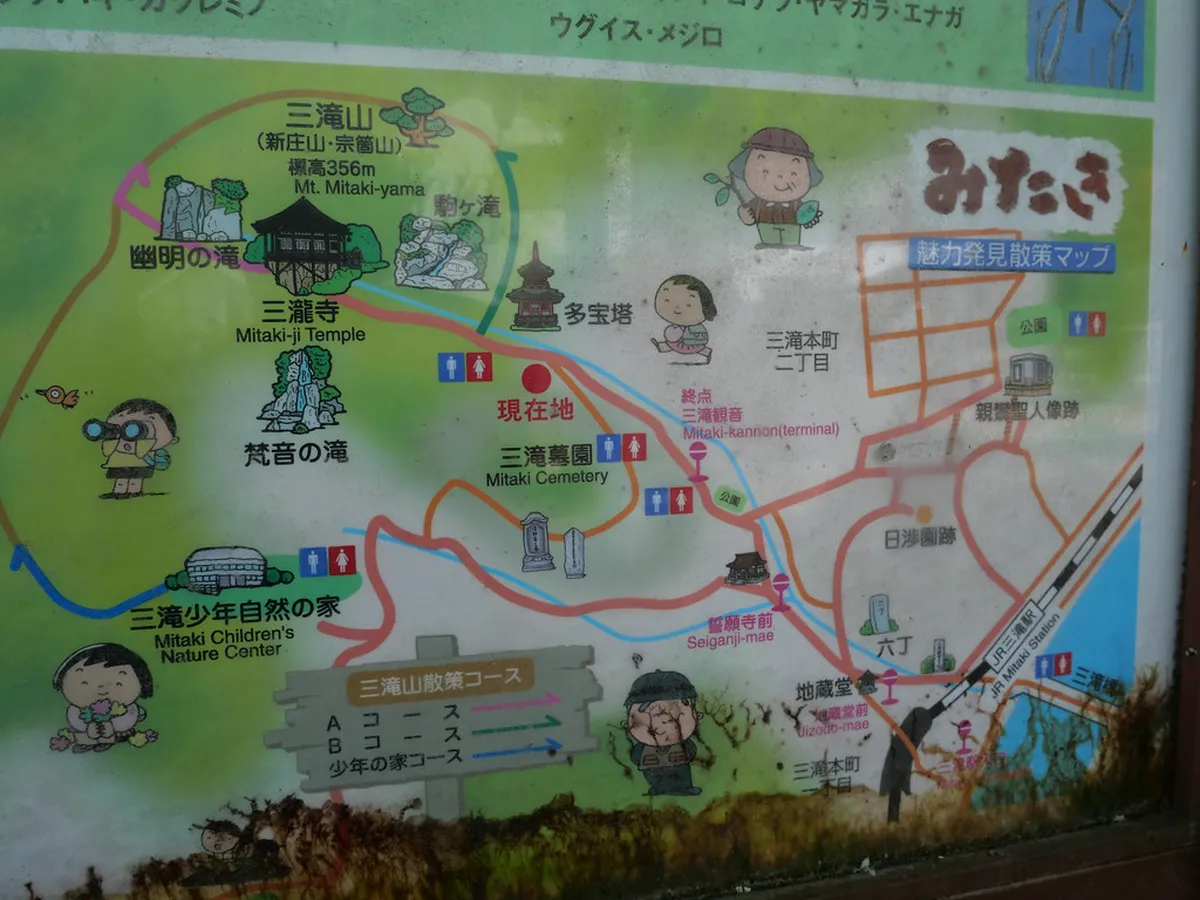
- Nearest station: Mitaki Station (JR Kabe Line), 15–20 min walk
- Alternative station: Yokogawa Station, 25–30 min via flatter route through shotengai shopping arcade
- Recommended visit time: 1–2 hours for main grounds; 2–3 hours for full trail circuit
History of Mitaki-dera: Kukai, Shingon Buddhism, and the Kannon Pilgrimage
Mitaki-dera was founded in 809 CE by Kukai, the monk who established the Shingon school of Buddhism in Japan. Kukai — also known by his posthumous title Kobo Daishi — is credited with discovering the three sacred waterfalls on the slopes of Mount Mitaki and consecrating the site as a place of worship dedicated to Kannon, the Bodhisattva of Mercy. The temple has operated continuously for over 1,200 years, maintained by generations of Shingon Buddhist practitioners.
The temple holds a specific position within the regional pilgrimage circuit as the 13th temple of the Chugoku 33 Kannon Pilgrimage. This circuit spans the western Chugoku region of Honshu and draws pilgrims who walk a route honoring Kannon at 33 separate sites. That formal pilgrimage designation explains why the grounds are immaculately maintained despite their distance from Hiroshima's main tourist corridor — the temple serves active worshippers, not just sightseers. Pilgrims typically arrive in small groups wearing white jackets, walking staves in hand, and you may encounter them on weekday mornings.
The connection to Hiroshima's modern history adds a further layer of significance. In 1951, a two-storey vermilion pagoda was relocated from Wakayama Prefecture and installed on the grounds as a memorial to the victims of the 1945 atomic bombing. That act of commemoration transformed the temple from a purely medieval religious site into one with a direct thread to the city's twentieth-century story. Every year, water drawn from the three waterfalls is offered at the annual August 6 Peace Memorial Ceremony — linking this quiet forest directly to the city's ongoing act of remembrance.
Why Mitaki-dera Is Hiroshima's Best-Kept Secret
Many tourists focus their energy on the Peace Memorial Park while visiting this historic city. While that site is essential, Mitaki-dera offers a different perspective on local spirituality and natural beauty. The temple feels like a secret world where time has slowed down significantly.
The water from the three waterfalls plays a vital role in the city's annual memorial ceremonies. This connection links the forest's serenity directly to the heart of the community's healing process. You can feel the weight of history as you walk among the ancient cedar trees.
Hundreds of Jizo statues line the pathways, each wearing a small red knitted bib placed by worshippers seeking protection for children and travelers. These figures offer a comforting presence throughout the climb, and their moss-covered faces tell of decades of quiet care by local devotees. The combination of rushing water, ancient stone, and filtered forest light creates a visual landscape that very few places in Japan match.
How to Get to Mitaki-dera: From Mitaki, Yokogawa & Hiroshima Stations
| Route | Travel time | Cost | Walk to gate |
|---|---|---|---|
| Hiroshima Station → Mitaki Station (JR Kabe Line local) | ~10 min | ¥190–210 | 15–20 min (steep uphill) |
| Hiroshima Station → Yokogawa Station (JR Kabe Line or tram Line 3) | ~15–20 min | ¥190 / ¥220 | 25–30 min (gentler gradient) |
| Taxi from Hiroshima Station | ~15 min | ¥1,500–2,000 | Drops at gate |
The fastest route is the JR Kabe Line from Hiroshima Station to Mitaki Station. The ride takes roughly 10 minutes and costs approximately ¥190–210 each way. From Mitaki Station, walk 15–20 minutes along paved streets with some steep uphill sections to reach the temple gate. Trains run regularly throughout the day, but check the last departure time before you go — the service thins out in the evening and missing it means a taxi back.
The better cultural option is starting from Yokogawa Station, one stop before Mitaki on the JR Kabe Line. Yokogawa is also reachable by Hiroshima tram Line 3 from the city center in about 20 minutes (¥220). From Yokogawa, the walk to the temple takes 25–30 minutes but follows a gentler gradient, passing through the Yokogawa shotengai — a covered shopping arcade where small coffee shops and local bakeries open early. This approach suits visitors who prefer a flatter walk or want to absorb a neighborhood before entering the forest. If you walk in from Yokogawa and exit toward Mitaki Station, you complete a natural loop without retracing steps.
Navigating from central Hiroshima is affordable and fast via the local train network. A taxi from Hiroshima Station to the temple entrance costs roughly ¥1,500–2,000 and takes about 15 minutes, which is a practical option for visitors with mobility limitations or those traveling with young children. Taxis are available at both Hiroshima and Yokogawa stations.
Exploring the Temple Grounds and Three Waterfalls
The name Mitaki literally translates to "three waterfalls," and these falls serve as the primary attraction for many visitors. They provide a constant rhythmic soundscape that enhances the meditative atmosphere of the Shingon Buddhist site. The Upper waterfall drops in a narrow cascade visible from above the main hall path. The Middle waterfall is the broadest and most accessible from a flat viewing position. The Lower waterfall is surrounded most densely by maple trees, making it the preferred subject for autumn foliage-with-water compositions.
A stunning vermilion pagoda stands as a central landmark within the temple complex. This Edo-period structure was relocated from Wakayama Prefecture in 1951 to serve as a memorial for atomic bomb victims. Its bright color provides a beautiful contrast against the deep green of the surrounding forest canopy, and on overcast autumn mornings the red paint reads most vividly against grey sky.
You should stop at the Kusawake teahouse for a traditional break during your exploration. This rustic shop serves warabi-mochi — a soft, chewy wagashi sweet dusted with kinako soybean flour — alongside simple udon noodles. Sitting on the wooden deck while listening to the water is a genuine highlight for most visitors. The teahouse is the only food option on the grounds, so if you plan to hike the upper trail, order before you head up rather than after.
The moss-covered Jizo statues are distributed across the grounds in two main concentrations: near the entrance path and on the stone steps behind the main hall. Each figure wears a small red bib placed by worshippers. The north-facing groupings, which receive the least direct sun, carry the thickest moss — look for those for the most textured photographs. Near the main hall, a wooden statue unlike any typical temple figure guards against evil spirits; it tends to stop first-time visitors mid-step.
Hiking the Forest Trails to Mount Mitaki Summit
Advanced hikers can continue past the main temple buildings to reach the summit of Mount Mitaki at 356 meters. The trail becomes more rugged as you leave the manicured temple grounds and enter the wilder forest. Follow the wooden markers to stay on the correct path toward the peak.
A significant trail fork often confuses first-time visitors. Turning left leads toward the summit; the right path takes you back toward the upper waterfalls. The climb to the top takes approximately 40 minutes for those with a moderate fitness level. The steps are uneven and can be damp from waterfall mist even on dry days — wear shoes with grip and stick to the center of each step rather than the edges.
The summit offers a panoramic view of the city and the distant Seto Inland Sea. You can see the Peace Memorial Museum and other landmarks from this high vantage point. This view provides a sense of scale for the city's impressive post-war reconstruction and is worth the extra exertion for anyone with the time and fitness to reach it.
Photography Guide: Best Spots and Shooting Tips
Mitaki-dera is one of the most photogenic temple complexes near Hiroshima, offering distinct subjects at every depth of the grounds. Arriving before 09:00 gives you the best combination of soft directional light, forest mist on the moss, and grounds free of other visitors. The following five locations produce the strongest results in visit order.
The stone lantern approach path runs from the gate to the main hall and is lined with moss-covered lanterns at irregular intervals. A wide-angle shot in portrait orientation captures the full corridor effect. In autumn, fallen maple leaves settle between the lanterns; in spring, filtered blossom light reaches the path through gaps in the canopy. Early morning condensation gives the green surfaces a saturated, almost glowing quality.
The vermilion pagoda is the single most recognizable image from Mitaki-dera. Position yourself 10–12 meters back along the central path and shoot upward at roughly 30 degrees to include the maple canopy in the upper third of the frame. In November the canopy shifts from green to deep red-orange. Overcast mornings in autumn are the optimal shooting condition — direct sun flattens the pagoda's color.
For the three waterfalls, shoot at a slow shutter speed (1/8 to 1/4 second) for a silk-effect water motion. A small travel tripod or stable stone ledge helps in the low-light forest sections. The Lower waterfall surrounded by maples is the priority target during autumn foliage season. The Jizo groupings near the entrance and on the back steps are most effective as close-focus shots — a single face with the red bib sharp and the stone texture blurred behind it. The steep stone staircase behind the main buildings also rewards a direct downward shot for a strong leading-line composition.
Mitaki-dera Half-Day and Full-Day Itinerary Options
A half-day trip is perfect for those who want to see the main temple highlights and the waterfalls. Depart Hiroshima Station on the JR Kabe Line by 08:30, arrive at Mitaki Station around 08:40, and reach the temple gate by 09:00. Spend 45 minutes on the main grounds — pagoda, Jizo statues, all three waterfalls — then take the forest trail section for another 30–45 minutes. Stop at the Kusawake teahouse before descending. This schedule leaves your afternoon free to visit the Hiroshima Castle downtown.
Full-day visitors can exit via the Yokogawa route rather than returning to Mitaki Station. The 25–30 minute downhill walk through the shotengai arcade provides a natural cool-down, and the coffee shops and small restaurants in the neighborhood make a comfortable lunch stop. After descending, spend the afternoon at Shukkeien Garden, which is 15 minutes from Hiroshima Station by tram and offers a contrasting classical garden experience that complements the forest temple morning. You might end your day with a savory meal at Okonomimura for the full local experience.
Planning your route carefully allows you to see both nature and urban history in a single day. The proximity of the forest to the train line makes these transitions very easy for tourists. Always check the JR Kabe Line schedule before heading up — evening departures become infrequent and the last train is easy to miss if you linger on the trails.
Best Times to Visit for Seasonal Scenery (Autumn & Spring)
Peak autumn foliage at Mitaki-dera peaks around the third week of November — the maple canopy above the vermilion pagoda turns deep red-orange. Arrive before 09:00 on autumn weekends to photograph the pagoda without other visitors in frame.
Autumn remains the most popular time to visit because of the vibrant maple leaves. The forest turns into a sea of red and gold during mid-November, with the maple canopy above the pagoda reaching peak color around the third week of November. Photographers should arrive before 09:00 on autumn weekends to capture the pagoda without other visitors in frame — this is the one time of year when the grounds see genuine weekend crowds.
Spring offers a quieter experience with cherry blossoms near the entrance in late March and early April. While less famous than Shukkeien Garden, the temple provides a more peaceful blossom viewing environment. The fresh green moss also looks its best during the mild spring months, when rainfall keeps the surfaces saturated.
Summer visits provide a natural escape from the intense heat of the city streets. The thick forest cover and the mist from the waterfalls keep the temperature noticeably cooler than central Hiroshima. Winter is the quietest season — frost-dusted paths and near-empty grounds suit visitors who want solitude, though some stone steps can become icy and require extra care underfoot.
Essential Preparation Checklist and Visitor Tips
Wearing sturdy walking shoes with flat, non-slip soles is the most important tip for anyone visiting this mountain temple. The stone steps can become very slippery when wet or covered in fallen leaves, and deeper trail sections shift to uneven stone that requires real grip. Proper footwear ensures you can explore the upper trails safely and comfortably. High heels and wheeled luggage are impractical — leave both at your accommodation.
Bring at least ¥200 per person in small coins for the donation box near the entrance, since the site is entirely cash-based. Even on dry days, waterfall mist near the main structures can dampen clothing and make stones slick underfoot. A light packable rain jacket is worth carrying in any season. Add a small bottle of water and insect repellent during the warmer months — the forest environment is home to many mosquitoes active near the water features.
Remember to maintain a quiet and respectful demeanor while walking through the sacred temple grounds. Many local people come here for prayer and meditation in the presence of the Kannon statues. Avoid loud conversations and follow all posted signs regarding photography inside the temple buildings. Trail signage inside the grounds is almost entirely in Japanese, so download an offline map before leaving your accommodation's Wi-Fi.
Troubleshooting Common Problems During Your Visit
The JR Kabe Line runs infrequently in the evenings — check the last departure time before you head up, and set a phone alarm 30 minutes before it. Missing the last train means a ¥1,500–2,000 taxi ride back. Stone steps near the waterfalls are slippery when wet; grip-soled shoes are essential.
The JR Kabe Line runs infrequently in the evenings, and missing the last departure is a realistic risk if you linger on the trails. Check the return schedule before you leave Hiroshima Station and set a phone alarm 30 minutes before the last train. If you miss it, a taxi back to Hiroshima Station costs approximately ¥1,500–2,000 — uncomfortable but manageable.
Mobility can be a challenge at this site due to the many steep stone staircases. Visitors with limited mobility may find it difficult to reach the upper waterfalls or the pagoda. The lower entrance area still offers beautiful views. For visitors who find the Mitaki Station approach too steep, the Yokogawa route follows a gentler gradient and the taxi option drops you closest to the gate.
Sudden rain can make the forest trails muddy and difficult to navigate. If rain starts while you are on the upper path, descend slowly and stick to the center of each step rather than the edges. The main temple structures remain accessible in light rain, but the forest trails become genuinely risky in heavy downpours. Check the local weather forecast before you leave your accommodation in the morning and carry a small travel umbrella as a precaution.
Frequently Asked Questions
Is there an entrance fee for Mitaki-dera Temple?
There is no fixed entrance fee for the temple grounds, but donations are strongly encouraged. Visitors typically place 200 to 500 yen in the donation boxes to support maintenance. You can find more details about local sites on the Hiroshima guide page.
How long does it take to hike to the top of Mount Mitaki?
The hike from the temple entrance to the summit of Mount Mitaki takes about 40 to 60 minutes. This time depends on your fitness level and how often you stop for photos. The trail is well-marked but includes several steep sections through the forest.
What is the best time to see autumn leaves at Mitaki-dera?
Peak autumn foliage usually occurs from mid-November to early December in this part of Japan. The maple trees around the vermilion pagoda create a stunning display of red and orange colors. Early morning light provides the best conditions for photography during this peak season.
Can you eat at Mitaki-dera Temple?
Yes, you can enjoy a meal or snacks at the Kusawake teahouse located on the temple grounds. They specialize in traditional Japanese treats like warabi-mochi and simple noodle dishes like udon. It is the perfect place to rest your legs after exploring the waterfalls.
Mitaki-dera Temple offers a unique blend of spiritual history and natural wonder that every traveler should experience. This mitaki-dera temple visitor guide provides the foundation for a successful and respectful journey into the forest. From the three waterfalls to the red-bibbed Jizo statues, the mountain is full of discovery.
The connection between the temple's sacred water and the city's history adds a layer of deep meaning to your visit. You will leave the forest feeling refreshed and more connected to the local culture. This hidden gem remains one of the most rewarding destinations in the entire region.
Prepare your walking shoes and bring your sense of wonder for this incredible mountain sanctuary. Whether you seek a challenging hike or a quiet place for reflection, the temple delivers an unforgettable experience. Enjoy your time exploring the ancient paths of this beautiful forest retreat.
Plan your wider Hiroshima trip: see our Hiroshima attractions guide, Hiroshima itinerary, Hiroshima hiking trails guide for routing, pacing, and what to slot in alongside this stop.

