
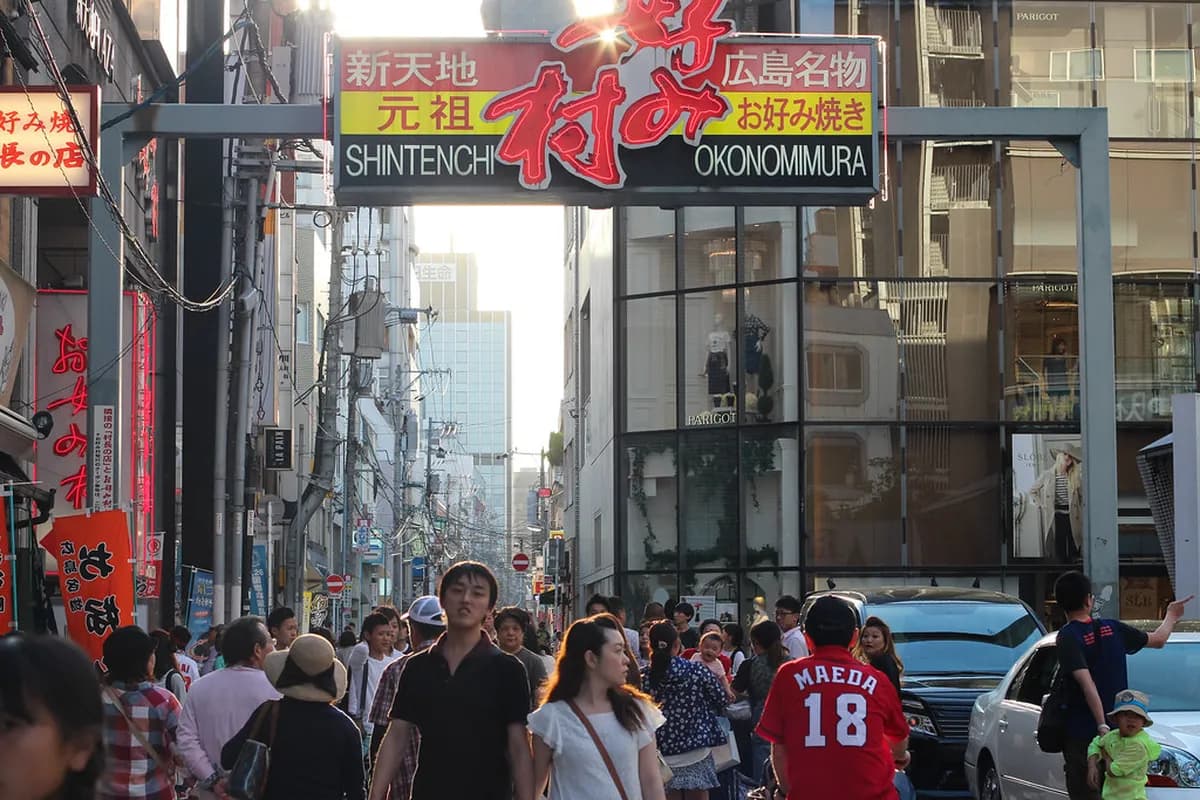
Stepping into Okonomimura feels like entering a delicious maze of sizzling grills and savory aromas. This legendary food theme park is a cornerstone of the culinary scene in Hiroshima.
Travelers from around the world visit this multi-story building to taste the city's most famous dish. With over two dozen stalls to choose from, finding the perfect meal can feel overwhelming for a first-time guest.
This comprehensive okonomimura visitor guide will help you navigate the floors and select the best stalls. You will learn the history of this unique landmark and the proper way to enjoy your meal like a local.
What is Okonomimura? (The Okonomiyaki Village)
Okonomimura is not just a building but a symbol of resilience and recovery for the local community. It originated as a collection of street stalls in the Shintenchi district following the post-war reconstruction period.
Local vendors gathered here to provide affordable and filling meals to residents during difficult times. This gathering eventually evolved into the multi-story food theme park that stands in the city center today.
The building now houses 24 individual stalls spread across three distinct floors of the New Shintenchi Building. Each stall maintains its own secret recipe and unique atmosphere for hungry diners to explore.
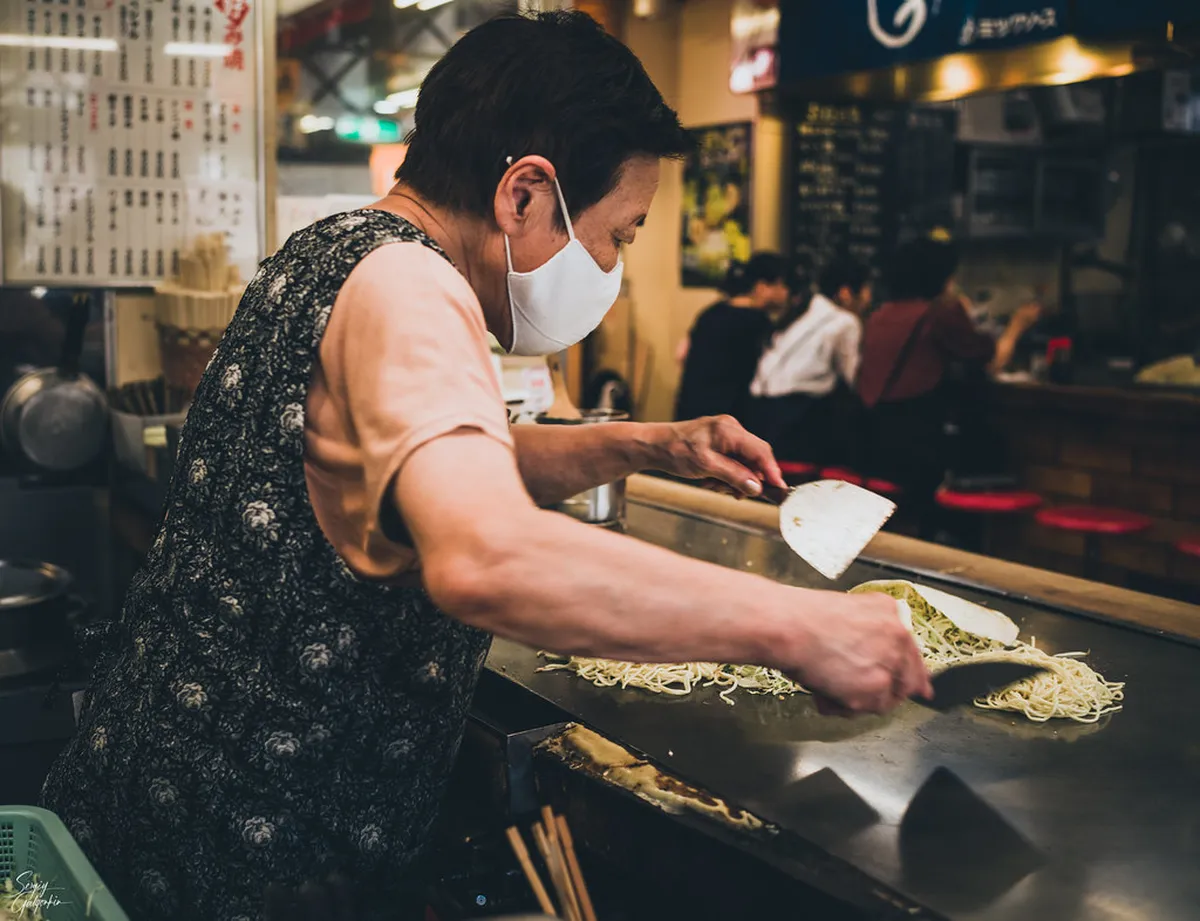
Visiting this site is a highlight of any trip to Hiroshima because it offers an authentic taste of local culture. You can witness the skill of the chefs as they prepare every meal right in front of your eyes on a flat iron teppan griddle.
Hiroshima vs. Osaka Style: Understanding the Layers
The primary difference between regional styles lies in how the ingredients are handled on the hot griddle. In Osaka, the batter and ingredients are mixed together before being poured onto the cooking surface as a single thick mass.
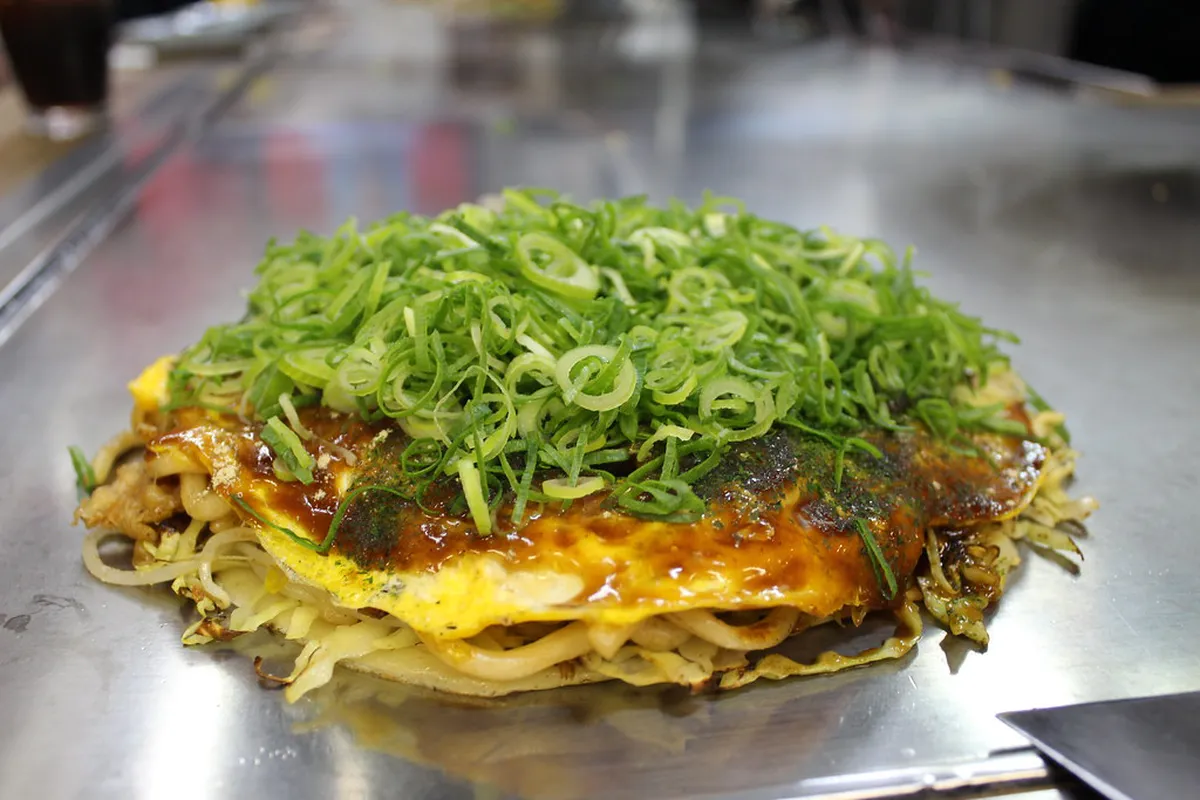
Hiroshima style uses a layered approach where each component is stacked carefully on top of a thin crepe. This method allows the individual flavors and textures of the cabbage, pork, and noodles to remain distinct rather than blending together.
Most servings include a generous portion of yakisoba or udon noodles as a core layer, which makes the Hiroshima version much heartier than the batter-heavy pancakes found in Osaka. The cabbage mountain piled on top wilts down during cooking, adding a sweet crunch against the soft noodles.
The final touch is a rich drizzle of savory sauce, most commonly from the Otafuku brand, whose factory is also based in Hiroshima. This sweet and tangy condiment ties all the layers together for a balanced, umami-rich bite.
Okonomimura Floor Map, Hours, and 2026 Prices
Stalls are located on the second, third, and fourth levels of the New Shintenchi Building at 5-13 Shintenchi, Naka-ku. Each floor follows a similar layout: a central corridor with stall counters lining both sides and seating for five to eight diners at each one.
Most stalls open around 11:00 and continue serving until 23:00, though individual chefs set their own hours and some close one day per week. Check okonomimura.jp for specific holiday closures before you go.
A standard okonomiyaki with pork and soba noodles costs between ¥900 and ¥1,500 in 2026. Add premium toppings such as fresh oysters, squid crackers, or cheese and prices climb to ¥1,800 or more. The 2026 price range reflects ingredient cost increases, particularly for cabbage and pork belly.
Cash remains the most common form of payment at almost every stall within the village. Carry enough yen before you take a seat to avoid any issues, as most counters cannot accept cards.
| Item | 2026 price range | Notes |
|---|---|---|
| Standard okonomiyaki (pork + soba) | ¥900–¥1,500 | Most popular order: Nikutama Soba |
| Premium toppings (oyster, squid, cheese) | +¥300–¥600 | Oysters best Nov–Mar (fresh season) |
| Drinks (beer, soda) | ¥400–¥700 | Hiroshima Lager widely available |
| Extra green onions (negi-mori) | ~¥100–¥150 | Ask at counter |
How to Navigate the Four Floors of Okonomimura
The entrance staircase on the ground floor is decorated with colorful okonomiyaki cartoon characters and leads directly to the second floor. An elevator on the left side of the corridor serves all upper levels and is the main access point for travelers who cannot use stairs.
The second floor tends to be the busiest because it is the first landing visitors reach. It holds some of the most well-known stalls, including the Hassho counter near the front.
Climbing to the third and fourth floors often reveals shorter queues and a slightly more relaxed pace. These levels are a smart choice if the second floor is packed during the 12:00 to 13:30 lunch rush or the 19:00 to 20:30 dinner surge.
Walk around the entire floor before sitting down so you can watch the chefs at work. Seeing which counters have locals perched on their stools eating quietly is usually the most reliable signal of quality.
Top Stalls — Hassho, Atom, and More: The Insider View
Hassho on the second floor is the name visitors encounter most often in travel guides, but there is an important backstory worth knowing. The Okonomimura Hassho is sometimes called "False Hassho" by locals because the original founder, Takanori Furuta, moved his legendary restaurant — now known as Ganso Hassho or "Red Hassho" — to Takeya-cho. The current tenant uses the Hassho name legally but has no direct family connection to the Furuta lineage. That said, the food at the Okonomimura Hassho remains excellent, with freshly made isono soba noodles that stay loose and springy even after frying.
If you want a "Blue Hassho" with direct lineage to the original craft, head to one of Hiroki Ogawa's restaurants in Yagenbori or Itsukaichi after your Okonomimura visit. Both use the same traditional technique passed down from Takanori Furuta's kitchen.
Atom on the fourth floor is the best choice for first-timers who want variety beyond a plain okonomiyaki. The counter also serves teppanyaki appetizers — try the butter-grilled fresh oysters from November through March when Hiroshima's oyster season peaks. During warmer months the oysters are frozen, so order squid crackers or the grilled cheese potato wedges instead.
Ikki on the third floor is run by an owner who trained at multiple restaurants before opening, which shows in the recipe. The okonomiyaki here includes sesame seeds and bean sprouts alongside the standard cabbage, giving each bite a subtle nuttiness. A half-size noodle portion is available for smaller appetites, something most floors do not offer. Takenoko, also on the third floor, is run by the eldest daughter of Shozaburo Furuta — the man who started the Hassho lineage. It is a quieter counter with strong seafood options and loyal local regulars. Yamachan on the third floor has an especially welcoming atmosphere for solo travelers and is the easiest counter for first-timers to approach.
Step-by-Step: How to Order and Eat Like a Local
Begin your meal by choosing a base — most people go with Nikutama Soba (pork, egg, soba noodles), the most popular standard order. If you prefer a thicker noodle, ask for udon instead. Most counters have a picture menu in English, so you can point at what you want.
Once you order, the chef will build your meal on the teppan griddle directly in front of you. Watch the thin crepe layer go down first, then the cabbage, then pork, then noodles, then egg — each layer added at precisely the right moment. The whole process takes about 8 to 12 minutes.
When the okonomiyaki arrives, use the small metal spatula called a hera to cut it into bite-sized squares and eat directly from the hot iron surface. This keeps each bite at the correct temperature from first to last. Press gently rather than scraping, as dragging the hera hard across a well-seasoned griddle damages the surface and is considered poor form.
Pour Otafuku sauce and Japanese mayonnaise over the top in whatever amount you like — there is no wrong answer. Finish with the phrase Gochisousama deshita when you leave; it signals respect and the chefs genuinely appreciate it.
Ordering Script: Romaji Phrases for Non-Japanese Speakers
Most stalls provide English picture menus, so pointing works fine. A few short phrases go a long way in making the interaction easier and more comfortable for both you and the chef.
- Standard order: "Nikutama Soba kudasai" (Nee-koo-tah-mah Soh-bah koo-dah-sigh) — pork, egg, and soba noodles, the default choice for most visitors.
- Without pork: "Butaniku nashi de onegaishimasu" (Boo-tah-nee-koo nah-shee deh oh-neh-guy-shee-mahs) — note that egg and fish-based dashi stock are still present in most recipes.
- Extra green onions: "Negi-mori kudasai" (Neh-ghee-moh-ree koo-dah-sigh) — usually charged as a small extra fee, around ¥100 to ¥150.
- Cheese topping: "Cheezu toppingu onegaishimasu" — most stalls know this request and it has become common in 2026.
- When you finish: "Gochisousama deshita" (Go-chee-so-sah-mah desh-tah) — thank you for the meal, said to the chef as you leave the counter.
If a chef seems unsure about a special request, show them the Japanese text on your phone. A written note in Japanese is the most reliable fallback for allergy or dietary concerns.
Essential Etiquette and Pro-Tips for First-Timers
Space is limited at the counters, so order at least one main dish per person. Sharing a single serving between two adults during busy periods is considered inconsiderate when others are waiting for a seat.
Arrive at 17:30 or after 21:00 to walk straight to an open seat on any floor. The third and fourth floors typically have shorter queues even during the 19:00–20:30 dinner surge — worth the extra flight of stairs.
Arrive outside the two main rush windows to avoid a wait: 12:00 to 13:30 (lunch) and 19:00 to 20:30 (dinner). Getting there at 17:30 or after 21:00 typically means walking straight to an open seat on any floor.
Keep your bag under the stool or on your lap rather than on the counter. The workspace around the teppan is small and chefs need the full surface to cook safely. Narrow aisles fill up quickly when the building is at capacity.
A cold Hiroshima Lager or a Calpico soda pairs well with the rich sauce flavors. The building does not restrict outside drinks but you can order beverages directly from most stalls.
What To Do If Okonomimura Is Full: Nearby Alternatives
During peak dinner hours on Friday and Saturday nights, every floor of Okonomimura can fill within minutes of the 19:00 rush. If you arrive and cannot find a seat, the wait is usually no more than 15 minutes — stand near the floor entrance and a chef will signal you when a counter opens.
If you would rather move on, Okonomi Republic is located two doors down the same street. It operates on a smaller scale with around six stalls across two floors and is almost always less crowded than the main building. Quality is comparable; the third-floor counter Ichinari has been selected by several tour operators as a starting point for Hiroshima food tours.
Individual okonomiyaki restaurants also line the streets of the Shintenchi district within a five-minute walk. Chii-chan — run by Shozaburo Furuta's second son and directly continuing the founding family's recipe — is on the second floor of Okonomimura itself and is frequently overlooked by tourists in favor of better-known names. That oversight works in your favor: Chii-chan usually has open seats when neighboring stalls are full.
For a deeper dive into the dish, Okosta at Hiroshima Station offers a 90-minute hands-on cooking class with vegetarian and halal-friendly menus available on request — an option that restaurants in the village generally cannot accommodate.
Reservations, Group Visits, and Seasonal Crowd Planning
Reservations are not standard practice at individual Okonomimura stalls. Counters operate on a walk-in basis, and most seat only five to eight diners at a time, so parties of one to four people rarely need to plan ahead beyond avoiding the 12:00–13:30 lunch and 19:00–20:30 dinner windows already noted.
Groups of five or more should call the stall directly if a phone number is listed on okonomimura.jp, or arrive right when a floor opens at 11:00, since larger parties are difficult to seat once a counter fills.
- Golden Week (late April–early May) and Obon (mid-August): expect 30 to 45-minute waits at the most popular counters, well beyond the normal daily rush.
- New Year holidays: several stalls close entirely for two to three days; confirm on okonomimura.jp before visiting.
- Hiroshima Carp home games at Mazda Zoom-Zoom Stadium Hiroshima, about 1.5 kilometers away, send fans into downtown restaurants after games typically end around 21:00 during the March–October season, which can fill Okonomimura's stalls later in the evening.
Checking the Carp schedule or major holiday calendars before finalizing an evening visit can save a long wait at the entrance.
Getting to Okonomimura in the Shintenchi District
The building sits at 5-13 Shintenchi, Naka-ku, in the center of the Shintenchi entertainment district. From Hiroshima Station, take Hiroden tram lines 1, 2, or 6 to the Hatchobori stop — the total journey takes about 15 minutes and costs ¥180. From the stop, walk south through the Kinzagai shopping arcade for about five minutes until you see the colorful Okonomimura signage on the building facade.
If you are coming from the Peace Memorial Park, the building is a 15-minute walk east along the riverfront. The route passes the Hondori shopping street, making it a natural post-museum dinner stop.
The Hiroshima sightseeing loop bus also stops at Hatchobori for visitors who prefer not to use the tram. Elevators inside the New Shintenchi Building take you directly to the second, third, or fourth floor from street level.
Nearby Attractions to Combine With Your Okonomimura Visit
Okonomimura sits inside the Shintenchi district, a few minutes' walk from several of Hiroshima's must-see sights, which makes it easy to combine a meal here with a half-day of sightseeing rather than treating it as a standalone stop.
The covered Hondori shopping arcade begins just around the corner from the New Shintenchi Building, so many visitors browse its shops before or after lunch. The Hiroshima Peace Memorial Park and Atomic Bomb Dome are about 1.2 kilometers away, roughly an 18-minute walk or a single stop on the Hiroden tram to the Genbaku Dome-mae station (flat fare around ¥220). Hiroshima Castle and the neighboring Shukkeien Garden sit about 1.5 to 1.7 kilometers north, each a 20 to 25-minute walk or a short tram-and-walk combination.
A practical order for a full day: visit the Peace Memorial Park and Museum in the morning while the galleries are quieter, tram back into the city center for a mid-afternoon meal at Okonomimura once the 12:00–13:30 lunch rush has cleared, then finish with Hondori shopping or a walk to Hiroshima Castle before it closes. This sequencing also avoids stacking two crowded attractions back to back on the same tram line.
Accessibility, Families, and Dietary Restrictions
The building has an elevator to all floors, making the upper levels reachable for travelers who cannot use stairs. The stalls themselves are tight counter spaces with fixed stools, which can be difficult for wheelchair users — some stalls have one or two table seats, but these fill quickly and cannot be reserved in advance.
Families with children are welcome, though the high counter stools and proximity to open griddles require supervision of young kids. The noise and bustle on busy nights can be intense; going at 17:30 gives families a calmer experience before the evening rush.
The standard recipe uses pork and fish-based dashi — "butaniku nashi" (no pork) removes the meat but not the seafood stock. Fully vegan or gluten-free orders are very difficult to accommodate here. For those dietary needs, Okosta at Hiroshima Station offers advance-booked vegetarian and halal menus.
Vegetarians should know that the standard recipe uses pork and a dashi stock made from bonito or sardines. You can ask for no pork ("butaniku nashi de"), but a fully vegan version is very difficult to achieve here. Gluten-free diners will face additional challenges because the dish uses a wheat-based crepe and noodles. Honest expectations are important: Okosta at Hiroshima Station is the more suitable choice for anyone with strict dietary requirements, as it can arrange vegetarian and halal menus with advance notice.
Frequently Asked Questions
What is the best stall at Okonomimura?
While many consider Hassho the best for its crispy noodles, Atom is a top choice for creative toppings. Every stall offers a high-quality experience, so choosing one with an open seat is often the best strategy. You can also visit Hiroshima Castle nearby before your meal.
Do I need a reservation for Okonomimura?
Reservations are generally not required or accepted at most individual stalls within the building. Seating is handled on a first-come, first-served basis at the counters. If your preferred stall is full, you can easily find another great option on a different floor.
Is Okonomimura cash only?
Most stalls in the building still prefer cash and may not accept credit cards or mobile payments. It is highly recommended to carry enough yen to cover your meal and drinks. A few larger stalls might accept cards, but cash is the safest option for visitors.
How much does a meal cost at Okonomimura in 2026?
A standard okonomiyaki meal typically costs between ¥1,100 and ¥1,800 in 2026. Prices can increase if you add premium toppings like oysters, squid, or extra green onions. Drinks like beer or soda will usually add another ¥400 to ¥700 to your total bill.
A visit to Okonomimura is an essential part of any culinary journey through Japan. This building offers more than just a meal; it provides a window into the soul of a city that rebuilt itself through community and food.
By following this okonomimura visitor guide, you can confidently navigate the floors and enjoy a world-class dining experience. Whether you choose a legendary stall or a hidden gem like Chii-chan, the flavors will stay with you long after you leave Hiroshima.
Remember to bring cash, arrive outside the rush hours, and don't be afraid to explore the third and fourth floors where the hidden gems wait. Your perfect plate of layered goodness is waiting for you on the griddles of the Shintenchi district.
Plan your wider Hiroshima trip: see our Hiroshima attractions guide, Hiroshima itinerary, how to eat okonomiyaki at Okonomimura for routing, pacing, and what to slot in alongside this stop.

