

Hiroshima Castle stands as a powerful symbol of the city's long history and modern resilience. Often called Rijo — the Carp Castle — this landmark offers a deep look into Japan's feudal past alongside the story of its post-war reconstruction. This hiroshima castle (rijo) visitor guide helps you navigate the grounds, museum floors, and nearby attractions with confidence. Visitors find a striking five-story keep that dominates the flat river-delta skyline.
Before you go in 2026, there is one critical update every visitor must know. The castle keep's interior closed to the public on March 22, 2026 due to structural aging in the concrete frame — the same building completed in 1958. The grounds, moat paths, and Ninomaru structures remain fully open and free. If your priority was the museum inside the keep, check the official Hiroshima City Tourism Board page for the latest reopening timeline before you visit.
Admission and opening hours
As of March 22, 2026, the castle keep interior is closed indefinitely for structural safety assessments — no reopening date has been confirmed. The museum floors, samurai exhibits, and observation deck are currently inaccessible. The grounds, Ninomaru, and moat paths remain fully open and free.
The surrounding castle park and the Ninomaru (second bailey) area are free to enter at any time. When the keep museum is operational, adult admission is ¥370 and high school and senior tickets run ¥180. Junior high school students and younger enter free. Payment is normally cash only, so carry some yen.
Standard keep hours run 09:00–18:00 from April through September, with last entry at 17:30. From October through March the close moves to 17:00, with last entry at 16:30. The castle closes entirely from December 29 through December 31 each year. Because of the 2026 structural closure of the interior, visitors should treat the keep as unavailable until an official reopening date is confirmed.
The outer grounds have no gate closing time, making early-morning or evening visits to the moat paths and Ninomaru perfectly workable. Check for holiday closures before you finalize your Hiroshima itinerary. Arriving before 10:00 on weekday mornings gives you the quietest experience around the stone walls and moat.
| Visitor type / area | Admission | Hours |
|---|---|---|
| Adults (keep museum) | ¥370 | Apr–Sep: 09:00–18:00; Oct–Mar: 09:00–17:00 |
| Seniors / high school | ¥180 | Same as above; last entry 30 min before close |
| Junior high and younger | Free | Same as above |
| Castle grounds & Ninomaru | Free | No gate closing time (24 hrs) |
| Annual closure | — | December 29–31 each year |
- Adult admission (keep): ¥370
- Senior / high school admission: ¥180
- Junior high and younger: free
- Castle grounds and Ninomaru: always free
- Keep hours (Apr–Sep): 09:00–18:00 (last entry 17:30)
- Keep hours (Oct–Mar): 09:00–17:00 (last entry 16:30)
- Annual closure: December 29–31
What the 2026 interior closure means for your visit
On March 22, 2026, Hiroshima City announced the indefinite closure of the castle keep's interior for structural safety assessments. The reinforced concrete building, constructed in 1958 as a post-war reconstruction, has reached the age where fatigue in the concrete frame required engineers to suspend public access. No reopening date has been confirmed as of May 2026.
This closure affects the five-story museum inside the keep — the samurai armor displays, the feudal lord exhibits, and the panoramic observation deck on the fifth floor. None of those interiors are currently accessible. What remains fully open is the castle park itself: the Ninomaru gates and drum tower, the inner and outer moats, Hiroshima Gokoku Shrine, and the stone walls that actually survived the 1945 atomic bombing.
For most first-time visitors, the grounds alone still justify an hour of exploration. The Ninomaru structures, rebuilt since the 1990s using traditional timber methods, are more architecturally authentic than the concrete keep. The view across the inner moat toward the keep exterior is the photograph most visitors want anyway. If the museum exhibits are essential to your itinerary, consider pairing a future visit with the Peace Memorial Museum, which covers the 1945 bombing in far greater depth.
Exploring the Castle Grounds and Ninomaru
The Ninomaru serves as the castle's second line of defense and is currently the most rewarding area to explore. Craftsmen rebuilt the main Chuushamon Gate, the Taiko-yagura Drum Tower, and the Omote-go-mon Gate using traditional joinery in the 1990s. The scent of cypress wood still lingers inside the drum tower, which now displays exhibits on traditional castle carpentry. These timber reconstructions feel more true to the Edo period than the concrete keep they surround.
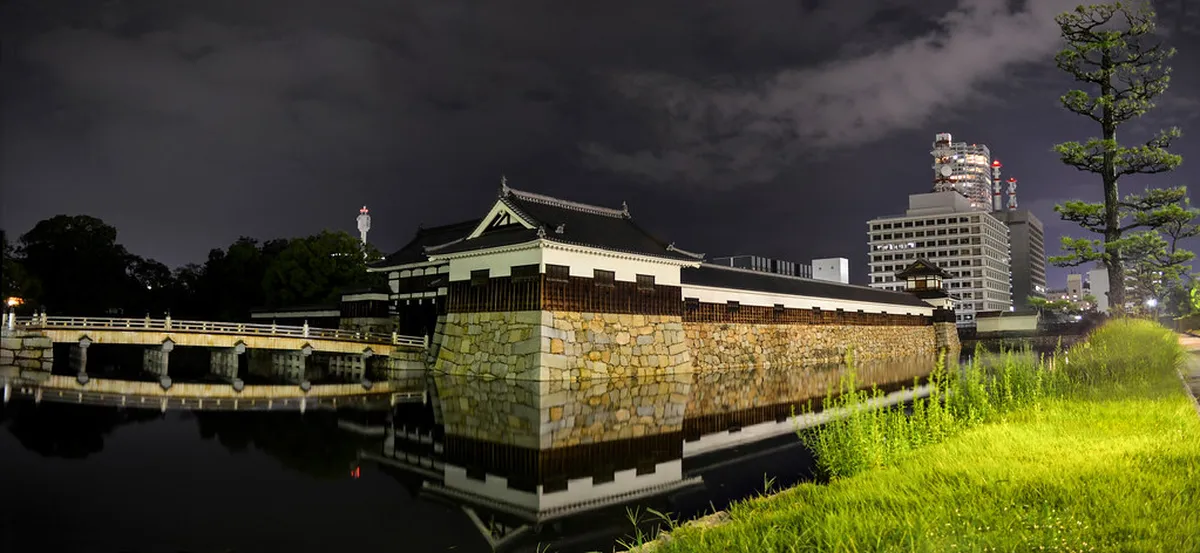
A wide inner moat reflects the keep exterior and gives the castle its iconic silhouette. Large carp swim in the green water — the source of the Rijo nickname. The stone walls lining the moat are original Edo-period masonry and genuinely survived the 1945 atomic blast. Look closely at individual stones for the carved mason marks left by the craftsmen who built them four centuries ago.
Within the grounds you will also find Hiroshima Gokoku Shrine, rebuilt in 1956 after the bombing destroyed the original 1868 structure. It remains a working Shinto shrine popular with locals on New Year's Day. The teahouse Oshiro-no-Chaya near the Ninomaru serves matcha ice cream and hot beverages — a quiet spot to rest before continuing. The entire park loop, moat perimeter included, takes about 50 minutes at a relaxed pace.
The castle grounds are at their finest during cherry blossom season (late March – early April) and autumn foliage (November). Evening illuminations during sakura season make a night walk well worthwhile. Arriving before 10:00 AM on weekdays gives the quietest atmosphere around the moat and Ninomaru.
Cherry blossom season in late March to early April transforms the grounds into one of Hiroshima's best hanami sites. Autumn foliage in November turns the moat-side trees deep orange and red. The grounds are lit at night during cherry blossom season, making an evening walk genuinely worth the extra time. Nature lovers should also visit the nearby Shukkeien Garden — the Asano clan built it in 1620 and it captures the same Edo aesthetic as the castle.
Destruction and Resilience: The 1945 Atomic Bombing
On August 6, 1945, the atomic bomb detonated almost directly over Hiroshima Castle. The wooden keep and the original castle structures — designated National Treasures — were instantly obliterated. The blast was so close and so powerful that only the stone foundations, parts of the moat walls, and a handful of outer gate stones survived. A eucalyptus tree near the Ninomaru, visible today, is one of the few living things that endured the explosion.
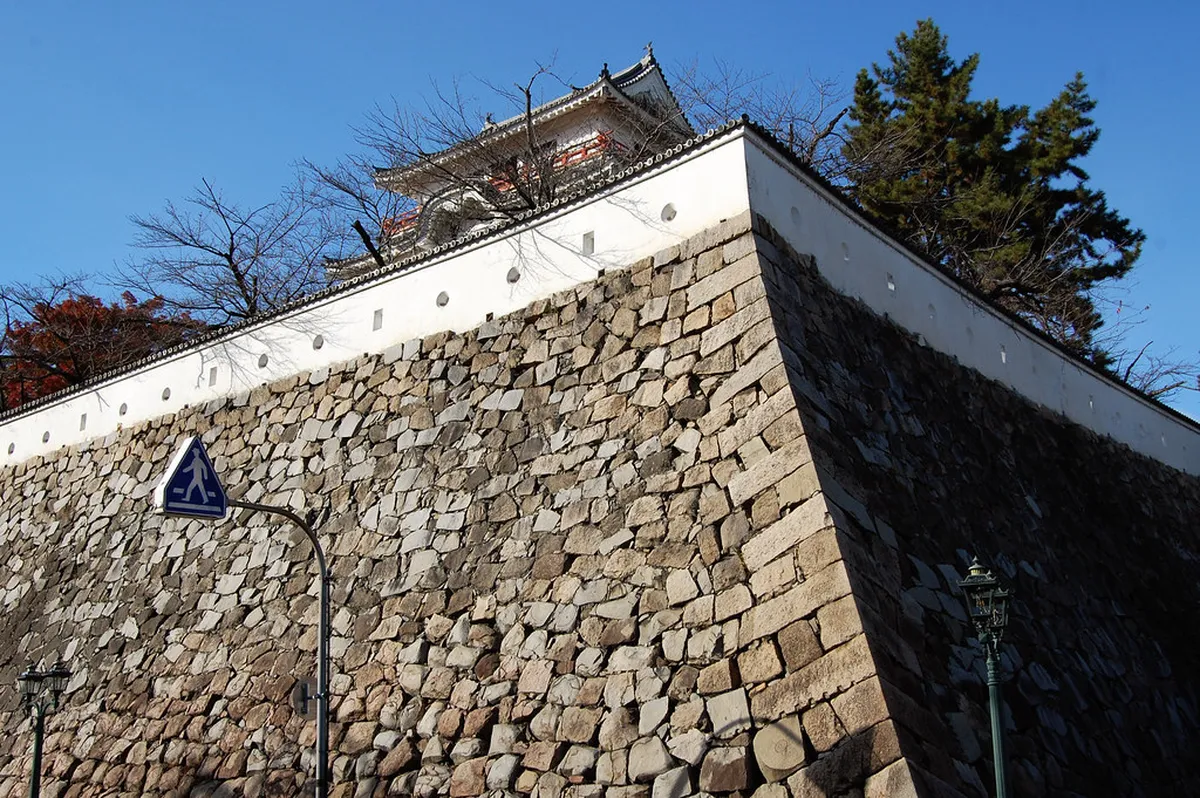
Before 1945, the castle had been repurposed as the headquarters of the Imperial Japanese Army's 5th Division. During the First Sino-Japanese War in 1894, Emperor Meiji himself commanded operations from a provisional palace on the grounds. That military role made the castle a legitimate strategic target in Allied planning, a fact that adds complicated layers to the site's history.
The reconstruction of the main keep in 1958 was a deliberate civic act — Hiroshima choosing to rebuild rather than leave a ruin. The concrete structure used historical plans and photographs to replicate the exterior proportions of Mori Terumoto's original. The stone walls and moat that survived the bomb now sit as the authentic relics at the base of a modern replica, a tension that the museum formerly explored across its five floors. The nearby Atomic Bomb Dome stands in deliberate contrast, preserved in its ruined state as the opposite choice.
The Edo Period: Rule of the Fukushima and Asano Clans
Hiroshima Castle was originally built in the 1590s by the powerful feudal lord Mori Terumoto, one of the five Great Elders appointed by Toyotomi Hideyoshi. Terumoto chose the Ota River delta for its natural moat system and trade access, renaming the area "Hiroshima" — broad island — to reflect the delta geography. The five-story keep, completed around 1599, was among the largest of its era. His tenure ended abruptly after his defeat at the Battle of Sekigahara in 1600.
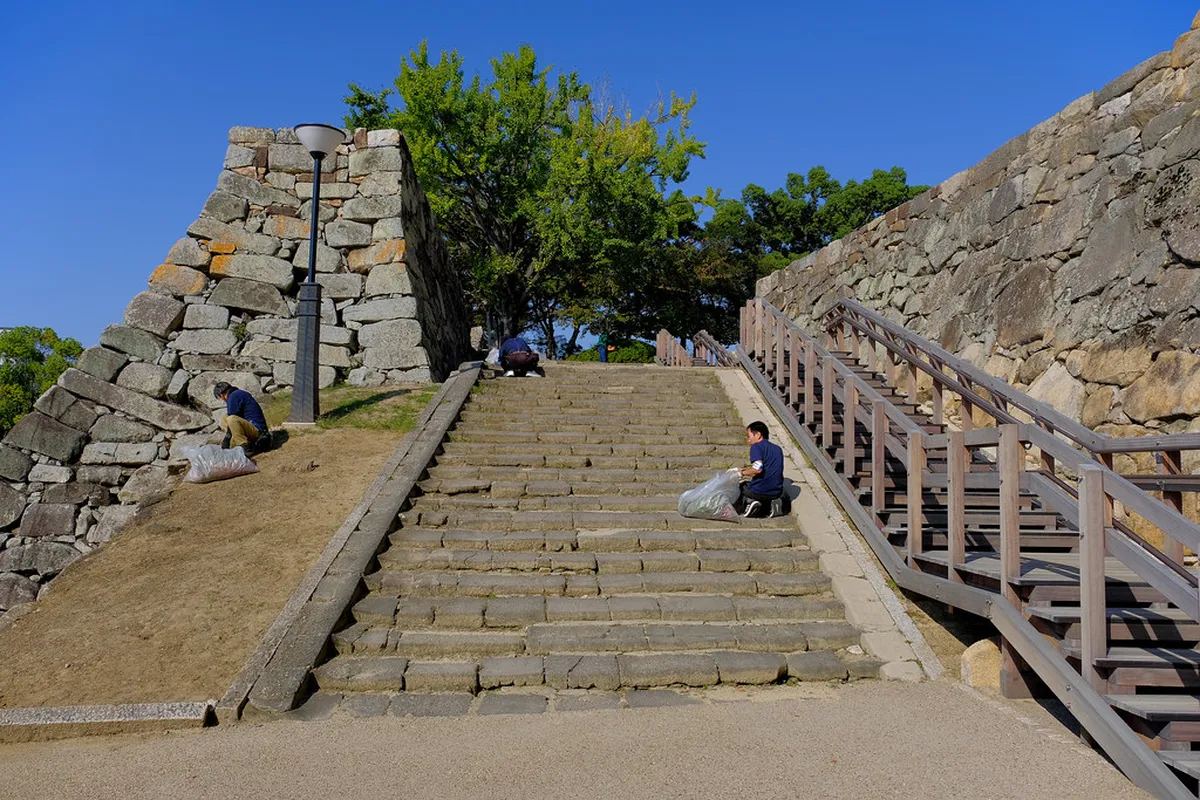
The castle then passed to Fukushima Masanori, who further fortified the defenses, before the Asano clan took control in 1619. Asano Nagaakira established a stable domain that lasted 250 years through the Edo period. The Asano lords governed a prosperous rice and port economy from the castle, periodically renovating the keep without altering its essential form. Their long rule is why so many artifacts from this period dominate the castle museum's collection — armor, swords, clan documents, and administrative records that captured a generation of peaceful samurai administration.
The castle museum formerly displayed samurai armor, clan maps, and dioramas explaining how the Hiroshima Domain operated day-to-day. Until the interior reopens, the best way to encounter this history in Hiroshima is through the Peace Memorial Park exhibits, which set the feudal and military context for the city before the modern era. Historical panels around the Ninomaru also summarize the Asano clan's contributions to the grounds you are walking through.
How to get to Hiroshima Castle
The castle sits in central Hiroshima about 1.5 km northwest of Hiroshima Station, an easy 20-minute walk through flat city streets. The most scenic route on foot follows the Kyobashi River north from the station, skirting the Shukkei-en Garden before reaching the castle's south moat gate.
The Hiroden tram is the most practical option from the station. Take Line 1, 2, or 6 toward Kamiyacho-nishi or Kamiyacho-higashi stops — the ride takes about 15 minutes — then walk 10 minutes north following the castle signage. The Hiroshima Sightseeing Loop Bus (Meipuru-pu) orange and green routes stop at Hiroshima-jo Mae directly in front of the main approach, which takes about 15 minutes from the station. Both the city sightseeing bus and the JR Pass sightseeing bus services accept the Japan Rail Pass.
From Peace Memorial Park the castle is a 15-minute walk north or one tram stop from Genbaku Dome-mae to Kamiyacho-higashi. Parking is extremely limited at the castle site — public transport is strongly preferred. Bicycles can be rented from several stations near Hiroshima Station and the flat city grid makes cycling to the castle simple in about 12 minutes.
Beyond the Castle Walls: Nearby Attractions and Nightlife
The castle sits within walking distance of the Peace Memorial Park. Many travelers visit both sites on the same morning to save time, since the walk between them is about 15 minutes along the Motoyasu River. The contrast between the feudal castle grounds and the modern memorial is striking and intentional — both tell the story of the same city across different centuries.
Shukkeien Garden, created in 1620 for the Asano clan who ruled the castle, is a 10-minute walk east and pairs logically with a castle visit. The garden survived the bombing partially and was restored in 1951. Entry is ¥260 for adults and the landscape of miniature hills, ponds, and teahouses is worth an hour on its own. The Hiroshima Prefectural Art Museum is adjacent to Shukkeien for visitors who want a cultural extension.
The downtown Nagarekawa district offers vibrant nightlife just south of the castle. Small bars and traditional izakayas fill the narrow alleys and most stay open past midnight. The area is safe and clearly signed in multiple languages. Finding your way back to hotels in Hiroshima is straightforward from the central district.
For day trips, Miyajima Island is 30 minutes by tram and ferry from central Hiroshima, with the famous floating torii gate of Itsukushima Shrine. The town of Onomichi lies about an hour east by train and is the gateway to the Shimanami Kaido cycling route. Both destinations work as half-day excursions from a Hiroshima base.
A dive into Hiroshima's rich food culture
No visit to the castle area is complete without tasting Hiroshima-style okonomiyaki. The local version stacks thin batter, cabbage, yakisoba noodles, and your choice of pork or seafood on a flat iron griddle — a construction method that separates it clearly from the mixed Osaka style. The best introduction is Okonomimura in the downtown area, a multi-floor building housing about 25 stalls with individual family recipes.
Chefs cook directly in front of guests on large teppan plates and the atmosphere is loud and social — a reliable way to strike up conversation with locals. A standard serving costs ¥800–¥1,200 depending on toppings. Pairing the meal with Hiroshima's local Chugoku Jozo sake is the regional choice, though cold beer is equally common at the evening stalls.
Beyond okonomiyaki, Hiroshima is famous for its fresh oysters from Miyajima Bay. Many restaurants near the castle serve grilled, fried, or raw oysters from October through April when the season peaks. The city's coastal position also shows in its extensive selection of anago — saltwater eel from the Seto Inland Sea — served over rice in many of the traditional restaurants around the Peace Memorial Park area.
Japan Rail Pass Guide: Using your JR Pass in Hiroshima 2026
The Japan Rail Pass covers the Shinkansen into Hiroshima Station and the JR ferry to Miyajima. It also covers the Meipuru-pu sightseeing bus that stops at the castle. Show your pass to the driver when boarding the bright orange bus — no separate ticket required.
The pass does not cover Hiroden streetcars, which are operated by a private company. A single Hiroden tram fare costs ¥180–¥220 depending on route. If your Hiroshima stay is primarily the castle, Miyajima, and Peace Park, the JR Pass covers the major legs and the sightseeing bus handles local connections. If you plan to also explore Onomichi, the Setouchi Area Pass (7 days, covers Shinkansen Okayama–Hiroshima, ferry routes, and island buses) is worth comparing against individual JR tickets depending on your itinerary length.
For 2026 visitors, note that the JR ferry to Miyajima departs from Hiroshima Port rather than Miyajimaguchi for some sailings due to pier maintenance — confirm the departure terminal on the JR West website before travelling. Walking from Hiroshima Castle to the station takes 20 minutes on flat ground, making it feasible to reach the ferry without additional transport if you are already near the city center.
Frequently Asked Questions
How much does it cost to enter Hiroshima Castle?
Admission to the main castle keep costs 370 yen for adults. Children and students receive discounted rates starting at 180 yen. Access to the surrounding park and the Ninomaru area is free for all visitors. This makes it a very budget-friendly attraction in the city center.
Is Hiroshima Castle the original building?
The current castle keep is a faithful reconstruction completed in 1958. The original structure was destroyed by the atomic bomb in 1945. However, the stone walls and parts of the moat are original features from the Edo period. You can see the Atomic Bomb Dome nearby for more history.
How long does it take to tour Hiroshima Castle?
Most visitors spend between 60 and 90 minutes exploring the castle and its museum. If you plan to walk the entire perimeter of the moat, allow two hours. The museum inside the keep has five floors of exhibits to enjoy. Combine your visit with the Peace Memorial Museum for a full day.
Hiroshima Castle remains a vital link to the city's samurai heritage and cultural identity. Even with the keep interior closed in 2026, the grounds, moat, Ninomaru structures, and the layered history embedded in the original stone walls justify the visit. This hiroshima castle (rijo) visitor guide provides the tools for a meaningful and organized trip. The combination of history, nature, and architectural authenticity makes it a must-see destination in any Hiroshima itinerary.
Be sure to book your hotels in Hiroshima early to secure the best locations near the city center. Check the official tourism board for any interior reopening announcement closer to your travel date. Enjoy your journey through the grounds of the Carp Castle — and allow time for the Peace Memorial Park and Shukkeien Garden on the same afternoon.
Plan your wider Hiroshima trip: see our Hiroshima attractions guide, Hiroshima itinerary, Hiroshima landmarks guide for routing, pacing, and what to slot in alongside this stop.

