

Shukkeien Garden is a 400-year-old strolling garden in central Hiroshima, arranged around a central pond modeled on the West Lake of Hangzhou, China. Its Japanese name, 縮景園, means "contracted scenery garden" — a place where mountains, valleys, rivers, and forests are compressed into one walkable circuit. More than 250,000 visitors walk its paths each year.
This shukkei-en garden visitor guide covers the garden's layout zone by zone, the Seifukan tea house, photography rules and best angles, seasonal highlights, and the practical details you need for a smooth 2026 visit. Adult admission is ¥260. The Line 9 streetcar from Hiroshima Station drops you directly at the gate.
The garden carries a layer of meaning that most Japanese gardens do not. On 6 August 1945, the atomic bomb detonated approximately 1.3 kilometres away. The pond's edge became a gathering point for survivors in the hours after the explosion. That fact adds a weight to any quiet moment here that the garden's beauty alone could not produce.
History: From the Asano Clan to Atomic Bomb Restoration
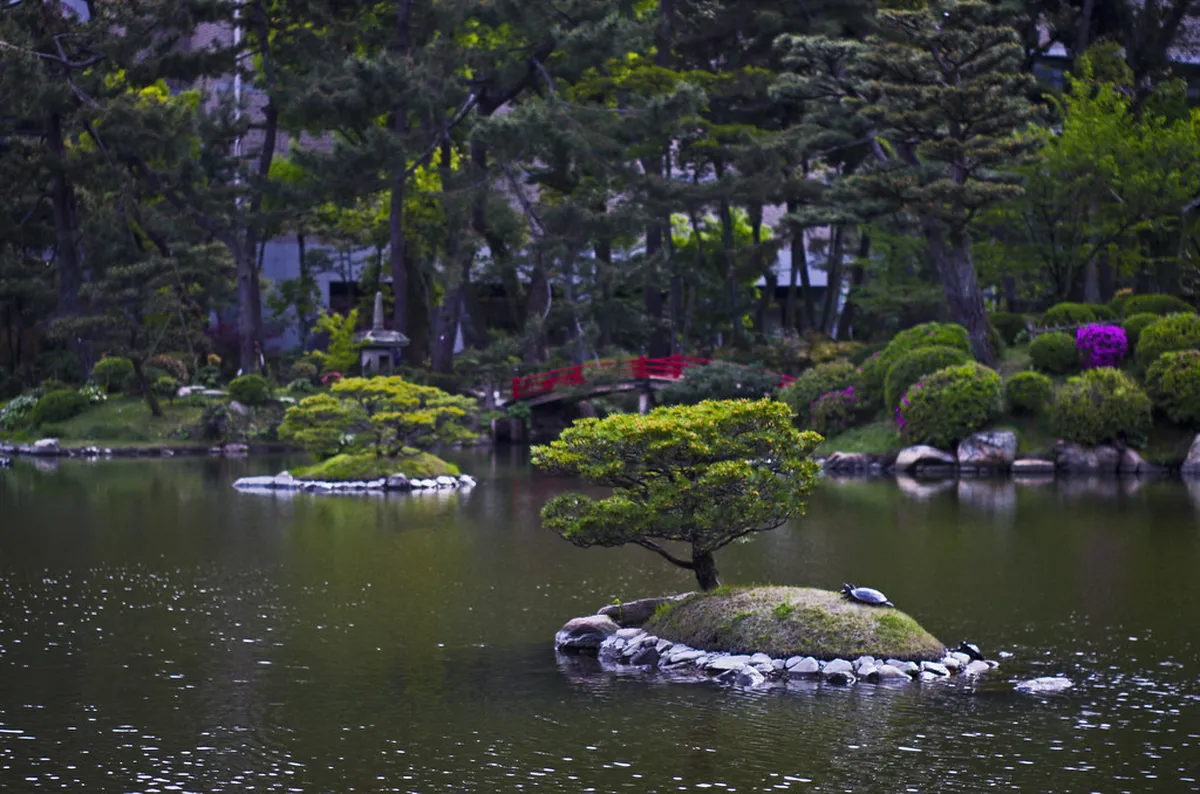
The garden was commissioned in 1620 by Lord Asano Nagaakira, the daimyo who governed the Hiroshima domain under the early Edo-period Tokugawa shogunate. He engaged Ueda Soko, a tea master and samurai who had studied under two of Japan's most influential tea practitioners before founding his own school, Ueda Soko-ryu, which continues to this day in its 16th generation. Together they built a garden whose design philosophy — shakkei, or borrowed scenery — pulled the distant landscape into the composition.
The Asano clan retained the garden as a private retreat for nine feudal lords across more than two centuries. Ueda Soko arranged the circuit so that each turn around the pond produced a new framed view that shifted with the season. The garden first opened to the public in 1940, just five years before the bombing would change everything.
On 6 August 1945, the atomic blast flattened surrounding buildings, scorched the trees, and killed many survivors who had taken shelter at the garden's edge. Restoration began within a decade. Hiroshima Prefecture replanted traditional species, rebuilt the teahouses using pre-war methods, and restored the stone paths and bridges. In 1951 the garden was designated a National Place of Scenic Beauty — both a legal recognition of its horticultural quality and a statement about the city's recovery.
A few trees survived the bomb and still stand on the grounds today, marked with plaques noting their endurance. The pond, the bridges, and the rebuilt Seifukan tea house closely match what Ueda Soko designed in the seventeenth century, with one additional layer of history that no other Japanese garden carries.
Garden Layout Zone by Zone
Shukkeien covers 40,000 square metres — compact enough to circle in under an hour, but designed to feel much larger through clever compression of terrain. A single circular path loops around Takuei Pond at the centre, with distinct landscape zones radiating outward: open water, marshland, forested hillside, and dry-landscape garden. A garden map is available at the entrance gate.
Takuei Pond is the axis of the entire design. Koi move slowly through the water, and on calm mornings the surface mirrors the teahouses and surrounding trees with unusual clarity. Six stone bridges cross the pond at different angles, each offering a distinct composition. The longest bridge near the northern shore gives the widest view of the garden in one sweep and is where most visitors stop first. Koi food is sold at the gate for ¥100 per bag.
Beyond the eastern shore, a series of low artificial hills rise through bamboo groves, moss-covered lanterns, and seasonal shrubs. The elevation gain is modest — four or five metres — but from the highest point the pond and teahouses appear as a composed painting below. This vantage point is undermarked on the official map; allow ten minutes to climb up and pause. The east side also contains a small herb garden called Yakuso-en dating to 1663, a miniature rice field said to have been planted by the feudal lord himself, and a small peak called Geikiho that was designed to resemble a miniature Mt Fuji.
The western end of the pond gives way to a shallow iris marsh planted with thousands of hanashobu irises. In early June these bloom in concentrated shades of purple and white and become the garden's most photographed feature for those few weeks. Outside June the marsh looks unremarkable. If iris is the reason for your visit, plan for the first two weeks of June and verify bloom status on the official site before travel.
Cultural Experiences: Tea Houses and Ceremonies
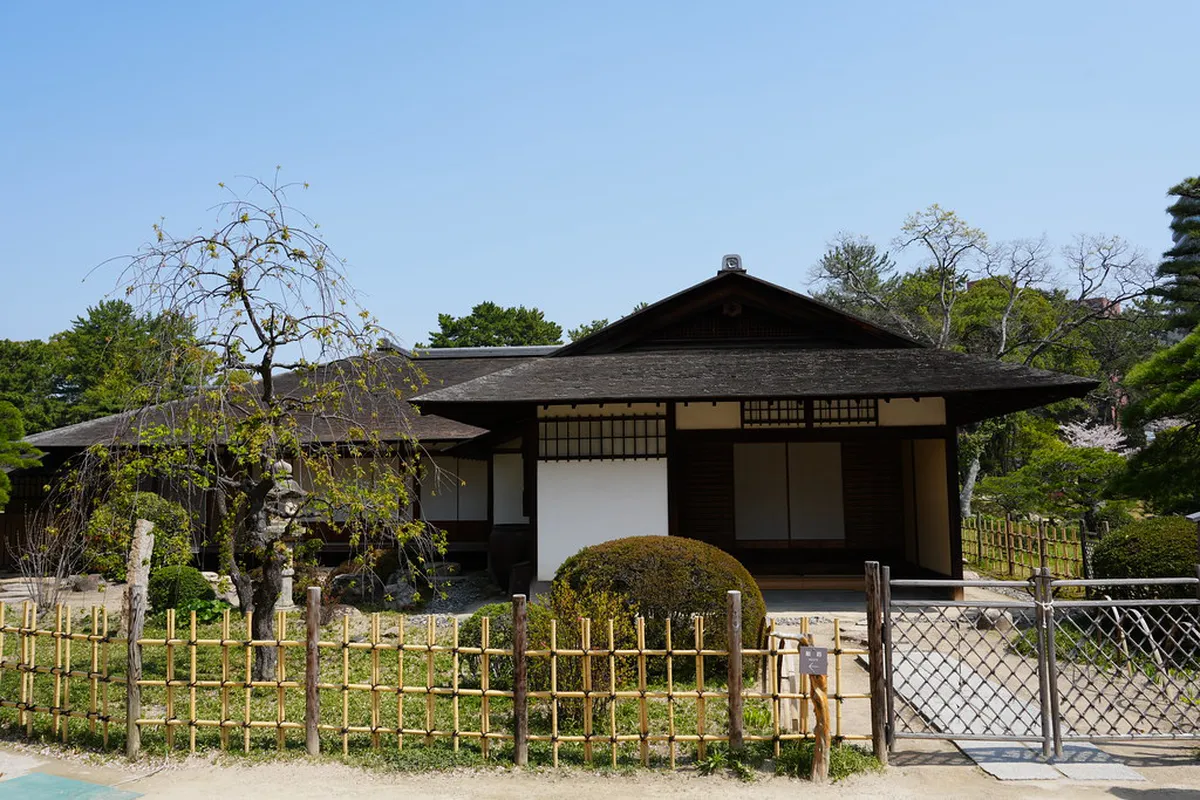
The Seifukan tea house sits on the northern shore of Takuei Pond with an unobstructed view across the water. Built in the traditional Sukiya-Zukuri architectural style with characteristic katomado (bell-shaped) windows, it was reconstructed after the bombing using pre-war techniques and materials. Sitting on the veranda with a bowl of matcha while the pond reflects the garden around you is one of the quieter cultural experiences available anywhere in Hiroshima. A matcha set with seasonal wagashi (Japanese sweets) typically costs ¥500–700.
Formal chakai tea ceremonies are held at Seifukan throughout the year, each tied to a seasonal flower or occasion. January marks the Oobuku Chakai (healthy tea ceremony), April the cherry blossom Kanou Chakai, September the moon-viewing Kangetsu Chakai, and November the maple-themed Momiji Chakai, among others. These scheduled ceremonies require advance booking and are conducted primarily in Japanese, with occasional English support. If attending a formal ceremony is a priority, check the garden's events calendar at least two weeks before your visit and book promptly — sessions fill quickly in peak seasons.
The Sensuitei Cafe at the garden entrance operates year-round and is more casual: matcha, Hiroshima-style wagashi, mochi, and light meals including udon. It also has a small souvenir shop. The Meigetsutei tea house on a small hill above the pond is generally closed to the public but is occasionally opened for private ceremony events. Its name, meaning "beautiful moon," reflects its original purpose as a viewing platform for the feudal lord.
Remove shoes when entering tatami-matted areas in the tea houses. Tripods require prior permission from the garden administration and are generally not approved during peak cherry blossom or autumn colour weekends — the narrow stone bridges become too busy. Apply in advance if you need one.
Please remove your shoes when entering tatami-matted areas in the tea houses. Speak softly in the ceremony spaces — the garden attracts locals seeking genuine quiet, not just tourists seeking atmosphere.
Photography: Rules and Best Angles
Personal photography with cameras and smartphones is permitted throughout the garden at no additional charge. Tripods require prior permission from the garden administration and are generally not approved during peak seasonal periods — cherry blossom weekends in late March and early April, and autumn colour weekends in mid to late November — to keep the narrow stone bridges clear. Drone flights and commercial photography require written permission from the Hiroshima Prefectural government office and are rarely granted. Inside the Seifukan tea house, ask staff before raising your camera; discreet photography is typically tolerated during open matcha service if you are a paying guest.
The northern stone bridge over Takuei Pond is the classic wide-angle position: face south with the stone lantern and the tea house in the mid-ground. Arrive within the first 30 minutes after the 9:00 opening on a weekday morning for still water and an empty foreground. By 10:00 on peak weekends, this bridge typically has a queue. For a less-photographed angle, stand on the small wooden platform near the iris marsh and shoot back east toward the stone bridges and forested hills — a morning light composition that most visitors skip entirely.
Autumn photographers should note that the maple cluster immediately behind the Seifukan tea house peaks roughly one week before the pond-facing maples. Arriving during that earlier window produces the richest colour before the main autumn rush. Overcast days give better colour saturation on red and orange foliage than direct sun, which causes blown highlights on bright leaves. In spring, the cherry tree paths along the northern shore are at their best between late March and the first week of April — exact dates shift by up to ten days year to year, so check the Hiroshima city sakura forecast close to travel.
Seasonal Highlights: Sakura and Autumn Illuminations
Arrive within the first 30 minutes of the 09:00 opening on a weekday for still water on the pond and empty stone bridges. The maple cluster behind the Seifukan tea house peaks roughly one week before the main pond-facing maples — visit early in the autumn colour window for the richest colour before the main rush.
Spring is the garden's busiest season. Cherry blossoms typically peak between late March and early April along the northern shore paths, creating a soft pink canopy above the stone bridges. The contrast against dark timber and still water makes Shukkeien one of Hiroshima's best sakura spots — considerably quieter than the Peace Memorial Park crowds during the same window. Evening illumination events are held on selected dates during peak blossom, transforming the pond into a mirror of lit pink branches after dark.
Autumn colour arrives in mid to late November and draws a second wave of visitors. Maple trees near the Seifukan tea house turn vivid red and orange, and the garden holds evening illumination sessions during the foliage peak. These events draw large crowds; arriving at opening on a weekday is the practical solution if you want the garden to yourself. The reflections of lit maples in Takuei Pond during these evening sessions are exceptional.
Winter is the most overlooked season. Crowds are minimal, plum blossoms begin appearing in February, and the traditional yukitsuri rope formations — ropes tied around pine branches to protect them from snow damage — add a sculptural element to the otherwise bare garden. The quiet here in January and February is genuine. Summer offers deep green foliage and lotus blooms on the water surface, though heat and humidity between July and early September are significant; the garden is best in early morning before 10:00 during these months.
The Atomic Bomb Victims Memorial Inside the Garden
On the garden's north side, on a small hilltop overlooking the Enko River, stands a stone memorial dedicated to the victims of the 1945 atomic bombing who died at or near Shukkeien. This is not the same as the Peace Memorial Park across town. This memorial marks the specific ground where survivors gathered in the hours after the explosion — many of them mortally wounded — and where many died. It receives a fraction of the visitors that the Peace Park statues draw, and it is easy to miss if you are following the main pond circuit without looking uphill.
To reach it, take the path that climbs the northern hillside past the Meigetsutei tea house and continue toward the river-facing viewpoint. The memorial is a small, understated stone statue, not a grand monument. That understatement is part of what makes a pause here meaningful. The view north over the Enko River from this point is also among the least-crowded vantage points in the garden at any time of year.
For visitors combining Shukkeien with the Atomic Bomb Dome and the broader Peace Memorial area, this garden memorial adds a layer of specificity that the main park sites cannot provide. The Peace Memorial Park covers the civic and international narrative of the bombing. The Shukkeien memorial is about this specific place, these specific people, this specific morning.
Nearby Attractions: Hiroshima Castle and Art Museum
Shukkeien and Hiroshima Castle are natural companions for a half-day itinerary. The two sites sit approximately 800 metres apart, walkable in under 15 minutes via a quiet residential street crossing the Kyobashi River. The practical sequence: arrive at Shukkeien at opening (9:00), spend 60–90 minutes on the garden circuit including matcha at the Seifukan, then walk to the castle and arrive before the main tour bus crowds settle in around 10:30. The castle's top floor has views across the Ota River delta and, on clear days, toward Miyajima Island.
The Hiroshima Prefectural Art Museum occupies the building directly adjacent to the garden entrance gate — no additional transit required. The museum houses nearly 5,000 artworks spanning modern Western and Japanese painting, as well as Japanese and Asian crafts. Its ground-floor Italian restaurant has floor-to-ceiling windows with direct views into the garden. Allow 45–60 minutes for the museum if modern art interests you. Combined entry tickets with the garden are sometimes available at the gate; confirm at the booth on arrival.
The Peace Memorial Park and the Atomic Bomb Dome are further southwest, reachable by tram or a 20-minute walk. Most visitors to Hiroshima cover the Peace Park in the morning when emotional weight is easiest to carry, then move to Shukkeien in the early afternoon for contrast. Planning your route in advance helps — the city's flat layout and reliable tram network make it possible to visit all three areas without backtracking.
Tickets and Practical Information
Adult admission is ¥260. Students pay ¥150, seniors aged 65 and over pay a reduced rate, and children in elementary school and below enter free. Tickets are sold at the gate; no online booking is available, and the queue is typically short outside peak weekends. A combined ticket with the Hiroshima Prefectural Art Museum is sometimes offered — ask at the booth. For current pricing and any scheduled closures, check the Shukkeien official site before your visit.
The garden opens at 9:00 daily. From April through September closing time is 18:00; from October through March it is 17:00. Last admission is 30 minutes before closing in both periods. The garden closes December 29–31. During cherry blossom and peak autumn colour seasons, hours are sometimes extended for evening illumination events — check the official site for updated schedules as these vary year to year.
- Adult admission: ¥260
- Student admission: ¥150
- Elementary school and below: free
- April–September hours: 9:00–18:00 (last entry 17:30)
- October–March hours: 9:00–17:00 (last entry 16:30)
- Garden closed: December 29–31
| Season | Highlight | Best timing |
|---|---|---|
| Late March – early April | Cherry blossoms on northern shore | Weekday morning within first 30 min of opening |
| Early June (first 2 weeks) | Iris marsh bloom (purple/white) | Morning; verify bloom status before travel |
| Mid–late November | Autumn maple foliage | Overcast weekday morning; target tea-house maples first |
| February | Plum blossoms + yukitsuri rope sculptures | Quietest crowds of the year |
| July – early September | Lotus blooms on pond | Before 10:00 to beat heat and humidity |
The most direct route from Hiroshima Station is the Line 9 Hiroden streetcar, boarded on the south side of the station building. Exit at Shukkeien-mae (縮景園前) — the stop is named for the garden and places you directly at the entrance gate with no walking navigation required. The journey takes 12–15 minutes and costs approximately ¥190. On foot, the garden is a 15-minute walk northeast from the station along the Kyobashi River, a pleasant route in mild weather. Taxis from the station take 8–10 minutes and cost approximately ¥800–1,000 depending on traffic, making them the practical choice for visitors with mobility limitations or strollers.
Accessibility: the main pond circuit path is level and firm-surfaced, manageable for wheelchairs and strollers. The hillside paths and some secondary stone bridges are uneven and not suitable for mobility aids. The Seifukan tea house veranda has ground-level access. Visitors using wheelchairs can complete the main garden loop and reach the tea house without staff assistance.
Frequently Asked Questions
How much time should you plan for a Shukkeien Garden visit?
Most visitors find that 60 to 90 minutes is the perfect amount of time to explore the main paths. If you plan to enjoy a tea ceremony or visit the adjacent museum, allow for two to three hours. Check the Shukkeien Garden's official webpage for any special event schedules.
Is Shukkeien Garden wheelchair accessible?
The garden offers some accessible paths, but many areas feature traditional stone steps and narrow gravel walkways. Visitors with mobility concerns should stick to the main paved routes near the entrance for the best experience. Staff can provide a map highlighting the most accessible viewpoints upon your arrival.
Are tripods allowed in Shukkeien Garden?
Tripods are generally discouraged during busy periods to keep the narrow paths clear for all walking guests. Professional photographers should contact the management office in advance to request special permission for commercial equipment. Handheld photography is always welcome and encouraged throughout the beautiful scenic grounds.
Can you buy tickets for Shukkeien Garden online?
Tickets are currently sold at the physical entrance gate rather than through an official online booking system. The queue is usually very short, so you do not need to worry about long wait times. For more planning tips, see our guide to the Peace Memorial Museum nearby.
A visit to Shukkeien Garden rewards anyone who explores the beautiful city of Hiroshima. It offers a rare combination of genuine horticultural craft, Edo-period design intelligence, and post-war resilience that few other gardens in Japan can match. Pair it with the Hiroshima Castle to the north and the Hiroshima Prefectural Art Museum at the gate for a complete half-day cultural itinerary.
Whether you come for the spring blossoms, the June irises, the autumn illuminations, or the winter quiet, the design still works at every season. Bring comfortable walking shoes for the gravel paths and hillside trails, and arrive within the first half-hour of opening on weekdays to find the pond at its stillest and the bridges empty.
Take a few minutes to find the Atomic Bomb Victims Memorial on the northern hillside. It is easy to miss, and it is worth finding. The garden earns its place on any Hiroshima itinerary — even a single hour here is not wasted.
Plan your wider Hiroshima trip: see our Hiroshima attractions guide, Hiroshima itinerary, Hiroshima landmarks guide for routing, pacing, and what to slot in alongside this stop.

