Fukuoka Yatai Guide 2026: Best Stalls, Prices, and What to Order
The complete 2026 guide to Fukuoka yatai street food stalls — specific stall names, dish prices, etiquette rules, best districts, and what to order.

On this page
Fukuoka Yatai Guide 2026: Best Stalls, Prices, and What to Order
Fukuoka yatai are open-air street food stalls that line the riverbanks and sidewalks of Fukuoka every evening from around 6:00 PM to 2:00 AM. As of 2026, roughly 100 licensed yatai operate across three main districts — Nakasu, Tenjin, and Nagahama — making Fukuoka the only city in Japan where this street food tradition survives at scale. A typical meal costs between 1,500 and 3,000 yen per person including one drink.
This guide covers the specific stalls worth visiting, exact dish prices, etiquette rules you need to follow, and practical logistics so you can plan a yatai crawl with confidence. Whether you want a single bowl of Hakata ramen or a full evening hopping between stalls, the information below tells you exactly what to expect. For broader trip planning, see our Fukuoka Experiences overview.
What Are Fukuoka's Yatai Street Food Stalls?
Yatai are small, open-air food stands that seat roughly seven to ten people around a central cooking counter. Each stall is a self-contained mobile kitchen — the owner wheels it into position each evening, sets up wooden frames and heavy canvas tarps, and breaks everything down again after the last customer leaves around 2:00 AM. Chefs prepare every dish right in front of you, creating an intimate, counter-dining experience unlike any restaurant.
The tradition dates back to the post-World War II reconstruction era, when yatai provided affordable meals for workers rebuilding Fukuoka's infrastructure. While most Japanese cities eventually banned street stalls, Fukuoka actively preserved them as cultural heritage. The city government now issues limited licenses — as of 2026, Fukuoka maintains around 100 licensed yatai, down from over 400 in the 1960s. Each license is non-transferable, meaning when an owner retires, that stall disappears permanently.
Fukuoka is the last major city in Japan where yatai culture thrives on a large scale. The stalls are regulated by the Fukuoka City government, which assigns specific locations and enforces hygiene standards. You can check the official stall roster on the Fukuoka City Official Travel Guide (Yokanavi) website before your visit.
Best Yatai Stalls by Name: Where to Eat in 2026
Not all yatai are equal. Some have been operating for decades and have earned loyal followings among locals and returning visitors. Here are specific stalls worth seeking out across the three main districts.
Nakasu District Stalls
- Yatai Kenzo — Located next to Higashi Nakajima Bridge on Showa-dori. Known for affordable grilled skewers (yakitori from 150 yen per stick) and classic Hakata ramen (900 yen). One of the more tourist-friendly stalls with picture menus.
- Nagahama Ramen Yatai Number One — A Nakasu riverside institution specializing in Nagahama-style thin-noodle ramen with extra-rich tonkotsu broth. A bowl costs around 800 yen, with kaedama (noodle refill) for 150 yen.
Tenjin District Stalls
- Yatai Mamichan — Named after the owner, this Tenjin stall is famous for its roast pork ramen, mabo tofu, and signature mentaiko gyoza (each around 800-1,000 yen). Popular with local office workers, with English picture menus available — one of the friendliest stalls for first-timers.
- Chez Remy — A unique French-Japanese fusion yatai run by Monsieur Remi Grenard, the first foreign yatai owner in Japan. The menu features escargot, fresh fish, and hot mulled wine alongside Japanese staples. Dishes range from 500 to 1,200 yen. Staff speak fluent English, making this an easy entry point if you are nervous about the language barrier.
- Telas & mico — A modern Tenjin stall popular with younger crowds, serving hand-dripped coffee alongside grilled skewers (300-500 yen). English is well-spoken and the styling is more cafe than classic yatai.
Nagahama District Stalls
- Genkai — One of Fukuoka's oldest yatai, operating for over 70 years. Specializes in fresh seafood tempura and seasonal fish dishes. Expect to spend around 2,000-3,000 yen per person here.
Neo-Yatai (Modern Stalls)
- Megane Coffee and Spirits — A new-style yatai offering hand-dripped coffee, Japanese shochu, and craft cocktails instead of the traditional food-heavy menu. A good stop for after-dinner drinks (drinks from 500 yen).
Menus are displayed on the outside of each stall with prices listed next to every item. Always check the menu before sitting down to confirm pricing. For more on Fukuoka's nighttime food scene, see our guide to budget nightlife in Fukuoka with cheap drinks and late-night ramen.
Top Yatai Districts to Explore in Fukuoka
Fukuoka yatai concentrate in three distinct districts, each with a different atmosphere and crowd. Choosing the right district matters more than choosing the right stall — the vibe of your evening depends heavily on location.
Nakasu Island is the most famous yatai district, with roughly 20 stalls lined up along the southern bank of the Naka River. Neon lights from the entertainment district reflect off the water, creating the iconic scene you see in travel photos. This area attracts the most tourists, so expect wait times of 20-45 minutes on weekend evenings. Prices here run about 10-20% higher than other districts. The nearest station is Nakasu-Kawabata on the Kuko subway line.
Tenjin offers a more local, business-district atmosphere. Stalls are scattered along the sidewalks near Tenjin Station rather than clustered in a row. You will see office workers grabbing a quick bowl of ramen on their way home. Wait times are shorter, prices are lower (ramen from 800 yen), and the conversation tends to be more genuine. This is the district we recommend for first-timers who want an authentic experience without the tourist crowds.
Nagahama is the original birthplace of Fukuoka's thin-noodle ramen style and sits near the former fish market. Fewer stalls operate here now, but the food quality is consistently high. This area is best for serious ramen enthusiasts who want to taste the traditional Nagahama style in its home neighborhood. The crowd is mostly local, and you can usually sit down immediately even on Friday nights.
- Nakasu Riverside District
- Stall count: ~20 yatai along the river
- Best for: Scenic evening, photography
- Nearest station: Nakasu-Kawabata (Kuko Line)
- Average spend: 2,000-3,500 yen/person
- Peak wait: 20-45 min on weekends
- Tenjin Business District
- Stall count: ~15 yatai spread across sidewalks
- Best for: Authentic local vibe, lower prices
- Nearest station: Tenjin (Kuko Line)
- Average spend: 1,500-2,500 yen/person
- Peak wait: 10-20 min on weekends
- Nagahama Market Area
- Stall count: ~5-8 yatai
- Best for: Traditional ramen, quiet atmosphere
- Nearest station: Akasaka (Kuko Line), 10 min walk
- Average spend: 1,500-3,000 yen/person
- Peak wait: Rarely more than 5 min
For a complete day plan that includes yatai hopping, see our one day Fukuoka itinerary for first timers.
What to Eat: Must-Try Dishes and Prices at Fukuoka Yatai
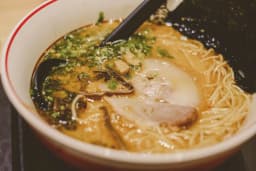
Hakata ramen is the signature dish at virtually every yatai. It features a creamy tonkotsu broth made from pork bones simmered for 8-12 hours, served with thin straight noodles, sliced chashu pork, green onions, and pickled red ginger. A bowl costs 800-1,200 yen at most stalls. You can request your noodle firmness: kata (firm), futsuu (normal), or yawa (soft). Order kaedama (noodle refill, 150-200 yen) if you finish the noodles before the broth.
Yakitori skewers are the second most popular order and pair well with beer. Individual skewers cost 150-300 yen each, or you can order an assorted platter of 5-6 skewers for around 800-1,000 yen. The best picks are negima (chicken thigh with leek), tsukune (chicken meatball), and buta bara (pork belly with salt). Most chefs will ask if you prefer shio (salt) or tare (sauce) seasoning.
Hitokuchi gyoza (one-bite dumplings) are a Fukuoka specialty smaller and thinner than standard gyoza. A plate of 8-10 pieces costs around 500-600 yen, served with a simple soy-vinegar dipping sauce. These crispy dumplings are perfect as a side dish alongside ramen.
Mentai tamagoyaki is a rolled Japanese omelet stuffed with mentaiko (spicy cod roe), one of Fukuoka's most famous local ingredients. A serving costs 500-800 yen. The combination of fluffy egg and salty, slightly spicy mentaiko is unique to this region.
Oden is a comforting choice during autumn and winter months (October through March). Ingredients like daikon radish, boiled eggs, konnyaku, and fish cakes simmer in dashi broth for hours. You pick individual items at 100-200 yen each, building your own bowl. A typical oden order totals 400-800 yen.
Yaki ramen (stir-fried ramen noodles) is a lesser-known specialty that some stalls offer as an alternative to soup ramen. The noodles are tossed on a hot griddle with tonkotsu sauce, cabbage, and pork. A plate costs around 900-1,100 yen. This is a good choice if you want something different from the standard bowl.
Motsunabe (offal hot pot) is a Fukuoka favorite some yatai serve in single-person yatai portions, especially during cooler months. Beef or pork offal simmers in a soy or miso broth with cabbage and garlic chives. Expect to pay 900-1,400 yen for a yatai-sized portion. It is rich, garlicky, and pairs perfectly with a cold draft beer.
Ordering tip: Glance at the chalkboard for daily seasonal seafood specials — Nagahama and Genkai-area stalls often write in fresh squid, sashimi, or grilled fish from the morning's catch at prices in the 800-1,500 yen range. These are usually the best-value items on any given night.
Yatai Etiquette: Dos and Don'ts for First-Timers
Every yatai enforces a mandatory one-drink minimum per person. This is not optional — it functions as a seat charge since stalls have only 7-10 seats. Your drink order is the first thing the chef will ask for. Options include draft beer (500-600 yen), sake, shochu highballs, or non-alcoholic choices like oolong tea or ramune soda (300-400 yen).
Seat rotation is the most important social rule. Once you finish eating, pay promptly and free your seat for the next person waiting in line. Lingering over a single drink for 30+ minutes when others are queuing is considered rude. The Japanese term is kaiten (rotation), and respecting this custom is what keeps the system working smoothly for everyone.
Cash only applies at nearly all yatai in 2026. Very few stalls accept credit cards or mobile payment apps like PayPay. Bring at least 3,000-5,000 yen in cash per person for the evening. Smaller bills (1,000 yen notes) and coins are ideal — making change from a 10,000 yen note can be awkward for a solo chef managing a hot stove.
Other rules to follow: Do not bring outside food or drinks to a yatai. Store bags under your stool, on your lap, or on the under-counter hooks some stalls provide — never on an empty stool, which belongs to the next waiting customer. Smoking policies vary by stall, but most now prohibit smoking at the counter. Tipping is not expected or practiced in Japan (see the Fukuoka travel budget guide for cash planning). Never photograph the chef or other diners without asking permission first — a quick nod or polite "shashin ii desu ka?" almost always gets a friendly yes. Slurping ramen is encouraged and considered a compliment to the chef. Avoid arriving in groups of five or more; split into pairs or threes so individual stalls can actually seat you.
Helpful Japanese phrases: Say "sumimasen" (excuse me) to get the chef's attention, "kanpai" (cheers) when toasting your neighbors, and "gochisousama deshita" (thank you for the feast) when you finish. These three phrases cover almost every interaction at the counter.
Silent Signals: How to Be Seated, Order, and Pay
Yatai run on a near-wordless choreography of hand signals — useful for travelers with limited Japanese and respectful in stalls where the chef is busy at the grill. Knowing four gestures will get you through an entire meal.
Getting a seat: Do not sit down on your own, even if a stool looks empty. Stand at the entrance, catch the master's eye, and hold up the number of fingers that matches your party size — two fingers for a couple, three for a trio. The chef will either point to specific stools, ask current diners to shift, or signal you to wait outside. Wait for an explicit nod before moving in.
Ordering: Once seated, the first thing to order is your drink — this satisfies the one-drink minimum and tells the chef you are ready. Menus are usually tucked into the counter frame or pinned to the inside of the canvas. If you are unsure, ask for the osusume (recommendation) — most chefs will steer you to their signature dish.
Asking for the bill: Cross your two index fingers in front of you to form an "X." This is the universal Japanese signal for okaikei (the check) and works without interrupting the chef's cooking.
Paying: Settle up while still seated, in cash, with the smallest bills you have. Stand, say "gochisousama deshita," and free the seat immediately for the next person waiting outside.
Language, Restrooms, and Logistics at Yatai
Language barrier: You do not need to speak Japanese to eat at a yatai in 2026. Most Nakasu and Tenjin stalls now display English picture menus, and chefs at tourist-friendly stalls (Yatai Kenzo, Mamichan, Chez Remy, Telas & mico) handle basic English. For everywhere else, a translation app on your phone, simple finger-pointing at the menu, and the gestures above will carry you through. The communal counter often produces a bilingual neighbor willing to help translate.
Restrooms: Yatai have no toilets of their own — the carts are too small and they roll away every night. Use the public restrooms inside the nearest subway station (Nakasu-Kawabata or Tenjin both have clean facilities), a 7-Eleven or Lawson convenience store, or a nearby park. Always go before you sit down; leaving mid-meal during a busy rush risks losing your seat to a waiting customer.
Time-of-night patterns: The evening breaks into three distinct windows. The 6:00–7:30 PM opening window is the easiest time for first-timers — stalls have just set up, seats are open, and chefs have time to chat. The 8:00–10:00 PM peak rush brings the longest waits (30-45 minutes at popular Nakasu stalls) and the liveliest atmosphere. The 11:00 PM–2:00 AM late window quiets down again as office workers head home, making it another good window for solo travelers and longer conversations with the chef.
Official licensing: Every legitimate yatai operates under the Fukuoka Yatai Basic Ordinance, which requires owners to tow their cart to a GPS-marked location each evening and remove every trace before sunrise. Look for the official "Yatai Support" sticker on the cart frame to confirm you are at a licensed stall. Unlicensed imitators occasionally appear during festivals — the sticker is your guarantee of regulated hygiene and pricing.
Practical Tips for an Enjoyable Yatai Experience
Best time to arrive: Go between 6:00 PM and 7:00 PM to get a seat without waiting. The peak rush hits from 8:00 PM to 10:00 PM, when wait times at popular Nakasu stalls can exceed 30 minutes. Late-night visits after 11:00 PM are also quieter and give you more time to chat with the chef.
Closure days: Most yatai close one day per week, often on Sundays, Mondays, or Wednesdays. There is no single universal closing day — each stall sets its own schedule. Rainy or windy weather also forces closures since the stalls have no permanent shelter. If weather looks bad, have a backup plan: permanent ramen shops like Ichiran (Nakasu location, open 24 hours) or Shin-Shin (Tenjin, open until midnight) serve comparable Hakata ramen.
Best nights for first-timers: Tuesday through Thursday offer the shortest waits and most relaxed atmosphere. The chef is more likely to chat and explain dishes when the stall is not packed. Friday and Saturday nights have the most energy but also the longest queues — 30-45 minutes is normal at popular spots.
What to wear: Dress casually and in layers. Yatai are open-air, so you will feel the temperature. In winter (December-February), bring a warm jacket — the cooking heat only helps if you are sitting close to the grill. In summer, expect to sweat. Avoid wearing expensive clothes, as cooking smoke and splatter are unavoidable at close range.
For more ways to enjoy Fukuoka after dark without overspending, see our guide to free things to do in Fukuoka on a budget.
How to Get to Fukuoka's Yatai Areas
The Fukuoka City Subway Kuko Line connects all three yatai districts. For Tenjin stalls, exit at Tenjin Station (exit 7 or 11). For Nakasu, exit at Nakasu-Kawabata Station and walk 5 minutes south toward the river. A single subway ride costs 210-260 yen. The last train departs around midnight, so plan accordingly if you intend to stay at the stalls past that hour.
From Hakata Station, you can walk to the Nakasu riverside stalls in about 15-20 minutes heading west along Taihaku-dori. The walk is flat, well-lit, and passes through the entertainment district. This is a good option if you want to scout stalls along the way before committing to one.
Taxis are widely available and most drivers recognize "Nakasu yatai" or "Tenjin yatai" as destinations. A taxi from Hakata Station to Nakasu costs approximately 700-900 yen. After midnight when the subway stops running, taxis become the primary option for getting back to your hotel. For a full breakdown of transport options, see our guide on how to get around Fukuoka with subway and IC cards.
How Much Does a Yatai Evening Cost in 2026?
A typical yatai meal for one person in 2026 costs between 1,500 and 3,000 yen, depending on what you order and which district you visit. Here is a realistic cost breakdown for a standard evening:
- One bowl of Hakata ramen: 800-1,200 yen
- Kaedama (noodle refill): 150-200 yen
- One draft beer: 500-600 yen
- Yakitori (3-4 skewers): 450-900 yen
- Hitokuchi gyoza (one plate): 500-600 yen
- Total for a full meal + drink: approximately 2,000-3,000 yen
Nakasu stalls tend to be the most expensive, while Tenjin and Nagahama offer better value. If you plan to hop between two or three stalls in one evening, budget around 4,000-6,000 yen total. Drinks add up quickly — a second or third beer will push the total toward the higher end. For a broader look at daily spending, see our 17-Part Guide to Fukuoka Travel Budget and Daily Costs 2026 guide.
Are Fukuoka's Yatai Worth Visiting?
Yes. Yatai are worth visiting because they offer an experience that does not exist anywhere else in Japan. The combination of open-air cooking, communal counter seating, and direct interaction with the chef creates a social dining format that no restaurant replicates. For solo travelers especially, the counter format makes it easy to strike up conversation with locals and other visitors without any awkwardness.
That said, yatai are not ideal for every situation. Groups of four or more will struggle to sit together at a single stall. The seating is tight with no room for luggage or large bags. Prices are slightly higher than equivalent permanent restaurants — a bowl of ramen that costs 700 yen at Ichiran might cost 900-1,000 yen at a yatai. The premium covers the unique setting and the significant labor of assembling and disassembling the stall every night.
The best approach is to treat yatai as an experience rather than just a meal. Go with an open mind, try one or two dishes, order a drink, and enjoy the atmosphere for 30-45 minutes before rotating out. Combined with an evening stroll along the Nakasu riverfront, it makes for one of the most memorable nights of any Japan trip. It also pairs well with daytime activities like exploring the 12 Best Modern Art Galleries & Museums in Fukuoka 2026 (With Prices &.
Frequently Asked Questions
What time do yatai stalls open in Fukuoka?
Most Fukuoka yatai stalls open around 6:00 PM and serve food until approximately 2:00 AM. Setup begins around 5:30 PM, but the first orders are usually taken by 6:00 PM. Many stalls take one day off per week — commonly Sunday, Monday, or Wednesday — so the exact lineup varies by night. Arrive between 6:00 and 7:00 PM for the shortest wait times.
Do Fukuoka yatai stalls take credit cards?
The vast majority of yatai in Fukuoka are cash-only as of 2026. A small number of newer stalls in Tenjin accept mobile payment apps like PayPay, but you should not rely on this. Bring at least 3,000-5,000 yen in cash per person for the evening. Use 1,000 yen notes rather than 10,000 yen bills to make payment easier for the chef.
Are yatai stalls in Fukuoka safe for solo travelers?
Fukuoka is one of the safest cities in Japan, and yatai stalls are especially welcoming to solo travelers. The counter seating format means you will sit next to other diners and can easily chat with the chef or your neighbors. Many solo visitors say the communal atmosphere is the highlight of the experience. All three yatai districts — Nakasu, Tenjin, and Nagahama — are well-lit and safe to walk through late at night.
Can vegetarians eat at Fukuoka yatai?
Vegetarian options at yatai are limited because most dishes use pork-based broth or fish stock. Your best options are vegetable oden items (daikon, konnyaku, boiled eggs), grilled vegetable skewers (shiitake mushrooms, shishito peppers, corn), and edamame. Use a translation app or a printed card in Japanese explaining your dietary restrictions — most chefs are accommodating if they understand your needs. Strictly vegan diners will find yatai very challenging.
How much does it cost to eat at a yatai in Fukuoka?
A typical yatai meal costs 1,500 to 3,000 yen per person in 2026. This covers one main dish like Hakata ramen (800-1,200 yen), one mandatory drink (300-600 yen), and optionally a side dish like gyoza or yakitori (500-900 yen). If you plan to hop between two or three stalls in one evening, budget 4,000-6,000 yen total. Nakasu stalls are generally 10-20% pricier than Tenjin or Nagahama.
Do yatai stalls close when it rains?
Yes, most yatai close during heavy rain or strong winds because the stalls have no permanent roof — only canvas tarps. Light drizzle usually does not cause closures. If the weather forecast shows rain, have a backup plan: permanent ramen shops like Ichiran in Nakasu (open 24 hours) or Shin-Shin in Tenjin (open until midnight) serve similar Hakata ramen in a warm indoor setting.
Which Fukuoka yatai district is best for first-time visitors?
Tenjin is the best district for first-time visitors because it offers shorter wait times, lower prices, and a more authentic local atmosphere than the tourist-heavy Nakasu riverside. If you specifically want the scenic river-and-neon photo opportunity, go to Nakasu but arrive before 7:00 PM to beat the crowds. Nagahama is ideal for dedicated ramen fans who want the most traditional experience with minimal waiting.
Fukuoka's yatai stalls are the city's most distinctive cultural experience and one of the best reasons to visit Kyushu in 2026. Bring cash, arrive early, follow the etiquette, and be ready to rotate your seat when you finish eating. Whether you stick to a single bowl of Hakata ramen or spend the evening hopping between Nakasu, Tenjin, and Nagahama, the combination of open-air cooking and communal seating creates a night you will not forget.

 10 Best Places: Fukuoka Mentaiko Guide (2026)May 17, 2026