
10 Essential Hakata Gion Yamakasa Viewing Insights
Discover the best viewing spots at Kushida Shrine for the Hakata Gion Yamakasa festival. Includes the 2026 schedule, Kushida-iri tips, and crowd navigation.
On this page
10 Essential Insights for Hakata Gion Yamakasa and Kushida Shrine Viewing
The Hakata Gion Yamakasa festival transforms Fukuoka into a vibrant hub of energy and ancient Shinto tradition every July. This spectacular event features massive floats and thousands of participants racing through the historic streets of the Hakata district. Visitors from around the world gather to witness the intense speed and dedication shown by the local neighborhood teams. Finding the perfect spot at Kushida Shrine is essential for experiencing the most powerful moments of the entire celebration.
Kushida Shrine serves as the focal point where the racing teams demonstrate their incredible strength and coordination. Most visitors arrive several hours before the main events to secure a position with a clear view of the action. Understanding the layout of the shrine grounds helps you avoid the most congested areas during the peak festival hours. This guide provides the necessary details to plan your visit and enjoy the unique atmosphere of this UNESCO-recognized heritage.
What Is the Hakata Gion Yamakasa Festival?
The Hakata Gion Yamakasa festival is a historic celebration that has defined the spirit of Fukuoka for over 780 years. Historical records trace its origins back to 1241 when a Buddhist priest used holy water to stop a deadly plague. The event has since evolved into a massive competition between seven traditional neighborhoods known as Nagare. Participants carry heavy wooden floats through the city streets to show their devotion and physical prowess.
UNESCO recognized this festival as an Intangible Cultural Heritage because of its deep roots in local community identity. The celebration spans the first fifteen days of July and culminates in a high-speed race through the city center. You can learn more about the city's history by following a 1-day Fukuoka landmarks itinerary during your stay. The festival successfully blends religious solemnity with the raw excitement of a modern sporting event.
Two distinct types of floats appear during the festivities to represent different aspects of the Hakata culture. Kazariyama are towering decorative floats that stand stationary at various points throughout the city for public viewing. Kakiyama are smaller racing floats that teams of men carry on their shoulders during the intense timed trials. Each neighborhood takes immense pride in the design and construction of their specific racing float every year.
Local residents spend months preparing for the physical demands of carrying these one-ton structures through narrow urban corridors. The festival remains a male-only event in terms of participation but attracts diverse crowds of spectators from every demographic. Tradition dictates every movement and ritual performed during the two-week period to ensure the safety of the runners. Watching the teams practice their maneuvers provides a fascinating glimpse into the discipline required for the final race.
The Spiritual Heart: Why Kushida Shrine Matters
Kushida Shrine stands as the most important religious site for the residents of the Hakata district in Fukuoka. The shrine is dedicated to Susanoo-no-Mikoto who is a powerful Shinto deity associated with protection and the sea. Locals affectionately call the shrine Okushida-sama to show their deep respect and personal connection to the grounds. It is consistently ranked among the top 7 Fukuoka cultural landmarks for its historical and spiritual value.
Every racing team must enter the shrine courtyard to perform a ritual known as the Kushida-iri during the festival. This entry signifies the official start of their timed run and is considered the most sacred part of the event. The atmosphere inside the shrine becomes electric as the teams chant and prepare to lift their massive floats. Priests perform blessings for the participants to ensure their health and success throughout the grueling summer heat.
The shrine grounds house a permanent decorative float that visitors can view throughout the entire year. This display allows travelers to appreciate the intricate craftsmanship and storytelling depicted on the towering structures. During the festival weeks the shrine serves as a central meeting point for all participating neighborhood groups. Seeing the interaction between the different generations of runners highlights the continuity of this ancient Japanese tradition.
Architectural details within the shrine provide excellent backdrops for photography enthusiasts looking to capture the festival spirit. The main gate and the surrounding walls offer a traditional aesthetic that contrasts with the modern city skyline. Visitors should take a moment to explore the smaller sub-shrines located within the complex for a quieter experience. Respectful behavior is expected at all times as the shrine remains an active place of worship for the community.
Top Viewing Spots for the Kushida-iri Ceremony
Securing a prime viewing spot at Kushida Shrine requires careful planning and a very early arrival on race day. The Seimon Gate offers the most dramatic view as the massive floats burst into the courtyard at high speed. Spectators often line up ten hours in advance to claim a position along the stone walls near this entrance. This vantage point allows you to see the intense facial expressions of the runners as they enter the shrine.
Sajiki-machi refers to the tiered wooden seating constructed inside the shrine specifically for the Yamakasa festival. These coveted seats are almost impossible for tourists to obtain because they are sold through a local lottery system. Most international visitors should focus on finding free standing areas located just outside the main shrine gates. The streets leading to the shrine provide excellent views of the floats as they queue for their official entry.
Smart travelers often head to the streets behind the shrine for a unique perspective on the racing preparations. This area provides a closer look at the runners as they organize their heavy floats before the main entry. You can avoid the heaviest crowds by positioning yourself near the exit route where the teams depart the shrine. The energy remains high in these secondary locations and often allows for better photography opportunities without the crush.
The Hakata Gion Yamakasa Festival Map shows the exact path each float takes during the ceremony. Using this map helps you identify narrow corners where the teams must perform difficult turns with their floats. These technical sections of the route offer a thrilling look at the teamwork required to navigate the city. Positioning yourself near a water station ensures you see the spectacular splashing of water onto the runners.
Understanding the 2026 Festival Schedule and Key Dates
The Hakata Gion Yamakasa festival follows a strict schedule that remains consistent from year to year. Festivities begin on July 1st with the unveiling of the Kazariyama decorative floats across the city. Walking between these stationary displays is a great way to explore different neighborhoods at a relaxed pace. Check the Official Site of Hakata Gion Yamakasa for any specific 2026 timing updates.
The Oshioi-tori ritual takes place on July 9th as participants gather sand for spiritual purification. Teams run from their respective districts to the beach at Hakozaki to collect the sacred sand in small bags. This event serves as a final spiritual preparation before the competitive racing events begin later in the week. Watching the sunrise during this ritual provides a serene contrast to the loud energy of the main races.
The Shudanyamamise parade on July 13th is the only time the floats cross the river into the Tenjin area. This event features local dignitaries riding on the floats and is generally easier for families to attend. The parade occurs in the afternoon which makes it a popular choice for those who cannot wake up early. It offers a festive atmosphere with plenty of opportunities to see the costumes and floats in broad daylight.
The Oiyama finale on July 15th is the most famous and intense part of the entire fifteen-day celebration. Starting at exactly **4:59 AM**, the first float enters Kushida Shrine to begin the final five-kilometer race. The remaining six floats follow at five-minute intervals as they race against the clock through the streets. Planning your arrival time for this event is the most critical logistical challenge for any festival visitor.
The Seven Nagare Districts and Their Racing Floats
The festival is organized around seven historic districts known as Nagare that represent the heart of Hakata. Each district maintains its own traditions and specific designs for the Kakiyama racing floats used in the competition. The competitive rivalry between these neighborhoods drives the high level of performance seen during the races. Understanding the different groups adds a layer of depth to your viewing experience as you pick a favorite team.
Kakiyama floats are engineered to be both heavy enough for tradition and light enough for high-speed racing. Teams of hundreds of men rotate in and out of the carrying positions to maintain a fast pace. The structure of the float is held together by complex rope work without the use of any metal nails. This traditional construction allows the wooden frame to flex and absorb the impact of the uneven city streets.
- The Daikoku Nagare district team
- Type: Racing team
- Best for: Speed records
- Where: Central Hakata
- Cost: Free viewing
- The Higashi Nagare neighborhood group
- Type: Racing team
- Best for: Powerful entries
- Where: Eastern district
- Cost: Free viewing
- The Nakasu Nagare entertainment district
- Type: Racing team
- Best for: Elaborate designs
- Where: River island
- Cost: Free viewing
- The Chiyo Nagare coastal district
- Type: Racing team
- Best for: Traditional spirit
- Where: Northern coast
- Cost: Free viewing
Key Rituals: From Oshioi-tori to the Shudanyamamise
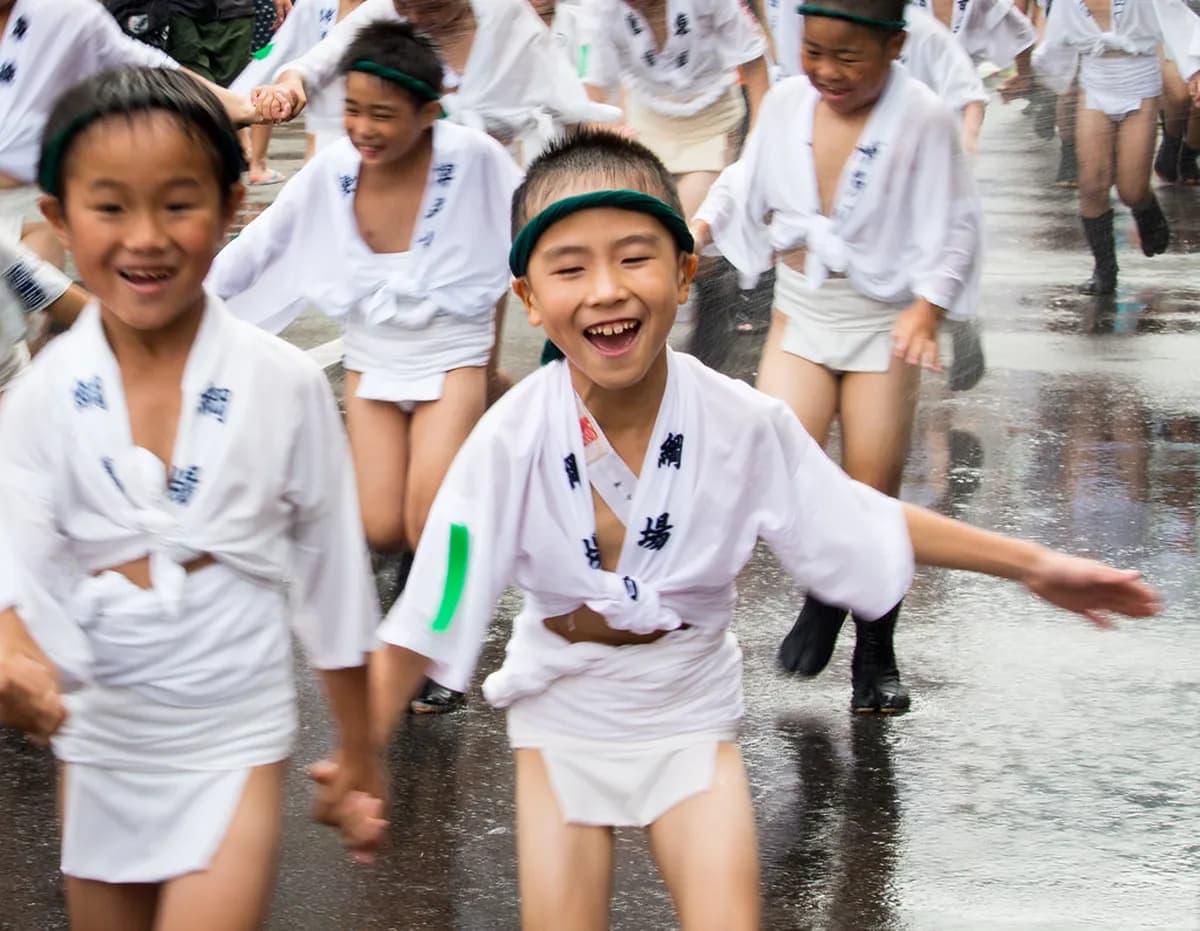
Traditional rituals form the backbone of the festival and connect modern participants to their ancestors. The Mizu-happi is the iconic short cotton coat worn by all runners during the various ceremonies. These coats are often soaked in water to help keep the participants cool during the humid July weather. Seeing thousands of men in traditional attire creates a powerful visual link to the history of Fukuoka landmarks.
Seisui or holy water is splashed onto the runners by spectators to provide both purification and physical cooling. Buckets of water are placed along the race route for people to throw as the teams pass by. This interaction between the crowd and the participants is a unique feature of the Yamakasa festival. Be prepared to get wet if you stand in the front row of the viewing areas near the shrine.
The Shudanyamamise parade serves as a bridge between the traditional Hakata area and the modern Tenjin district. This event allows the city's political leaders to participate in the festival by riding on the floats. It is a colorful display that attracts large crowds of office workers and shoppers during the weekday afternoon. The route is wider than the race course which makes it easier to find a comfortable viewing position.
Each ritual serves a specific purpose in building the momentum toward the final race on the last day. The transition from stationary displays to high-speed movement keeps the energy of the city building for two weeks. Visitors who attend multiple events gain a better appreciation for the complexity of the festival organization. The dedication of the volunteers who manage the logistics is as impressive as the performance of the runners.
The Oiyama Finale: Timing and Logistics at the Shrine
The Oiyama race is the ultimate test of endurance for the participants and patience for the spectators. Starting at **4:59 AM** requires visitors to adjust their sleep schedules or stay awake through the night. Public transportation often runs special early morning services to accommodate the thousands of people heading to Hakata. Check the Official Fukuoka City Subway Fare Guide for special festival transit schedules.
Arriving at Kushida Shrine by 10:00 PM the previous night is often necessary to get a front-row spot. The area becomes extremely crowded as the start time approaches and movement becomes very difficult. The first float to enter the shrine has the special honor of singing a traditional song called the Hakata Iwai-uta. This haunting melody marks a moment of silence and beauty before the explosive start of the race.
The race course covers five kilometers of narrow streets and requires the teams to navigate sharp turns. Each float is timed individually as they pass specific checkpoints throughout the city center. The finish line is located near the Susaki Wholesalers Market where the final times are recorded and announced. Witnessing the exhaustion and relief on the faces of the runners at the finish is a moving experience.
After the final float completes the course the streets of Hakata remain filled with a celebratory atmosphere. Local shops often open early to serve breakfast and drinks to the tired spectators and participants. The sense of community pride is palpable as people discuss the performance of their favorite neighborhood teams. This post-race window is a great time to see the floats up close before they are disassembled.
Practical Tips for Navigating Crowds and Summer Heat
July in Fukuoka is characterized by high temperatures and extreme humidity that can be physically taxing. Staying hydrated is the most important rule for anyone planning to spend several hours outside waiting for the race. Convenience stores remain open 24 hours and serve as vital points for purchasing cold drinks and snacks. Using a Fukuoka City Subway Pass allows you to move quickly between different air-conditioned stations.
Finding a restroom during the 4:00 AM rush is a major challenge due to the massive crowd size. Identify the locations of public facilities and large department stores along the route before the event starts. Many streets are blocked off for the race which can make reaching your intended destination take much longer. Give yourself at least double the usual travel time when moving around the Hakata district during the finale.
The festival proceeds regardless of the weather and often takes place during the heavy rains of the monsoon season. Rain ponchos are much more practical than umbrellas because they allow you to keep your hands free in the crowd. Plastic bags are useful for protecting your camera gear and mobile phones from both rain and splashing holy water. Footwear with good grip is essential as the stone pavements around Kushida Shrine can become very slippery when wet.
Photography enthusiasts should consider using a wide-angle lens to capture the scale of the floats in narrow streets. The fast movement of the runners requires a high shutter speed to avoid blurry images in the low morning light. Be mindful of the people behind you and avoid holding your camera high above your head for long periods. Respect the instructions of the festival marshals who work hard to keep the race course clear and safe.
Festival Etiquette and Traditional Costumes
Respecting local customs ensures a positive experience for both visitors and the participating community members. One of the most unique rules of the festival is the ban on eating cucumbers during the event period. This tradition exists because the cross-section of a cucumber resembles the crest of the Kushida Shrine deity. Many local restaurants stop serving cucumber dishes entirely during the first two weeks of July.
The Hakata-Te-Ippon is a rhythmic hand-clapping ritual that signifies the successful completion of a festival event. Spectators should watch for the lead runners to raise their hands before joining the synchronized three-beat clap. Participating in this ritual is a great way to show your appreciation for the hard work of the teams. You can find more cultural trivia and district news by visiting the Yamakasa Navi website.
Participants wear traditional loincloths called shimekomi which are designed for maximum mobility during the race. The sight of thousands of men in this traditional attire is a defining image of the Hakata summer. Spectators should dress in light and breathable clothing to manage the heat while standing in the dense crowds. Avoid wearing expensive or delicate fabrics as you will likely be splashed with water during the race.
Maintaining a respectful distance from the racing floats is critical for the safety of everyone involved. The teams move with incredible momentum and cannot stop quickly if someone steps onto the race course. Follow the guidance of the local police and volunteers who manage the flow of the crowd along the route. A polite and patient attitude will help you navigate the intense energy of the festival with ease.
Frequently Asked Questions
What time does the Yamakasa race start at Kushida Shrine?
The Oiyama finale begins at exactly 4:59 AM on July 15th at Kushida Shrine. You should arrive at least several hours early to find a spot. Consider using a Fukuoka City Subway Pass for early morning travel.
Can I buy tickets for the seating at Kushida Shrine?
Tickets for the tiered Sajiki-machi seating are sold via a local lottery and are very difficult for tourists to obtain. Most visitors watch for free from the standing areas surrounding the shrine. Arriving early is the only way to secure these free positions.
Why can't you eat cucumbers during the festival?
Eating cucumbers is prohibited because their sliced pattern looks like the emblem of the Kushida Shrine's deity. This tradition is strictly followed by participants and many local residents during the festival. Many restaurants in Hakata remove cucumbers from their menus in July.
What is the best day to see the Yamakasa floats?
July 15th is the most exciting day for the racing finale, but July 1st is best for viewing stationary decorative floats. The Shudanyamamise on July 13th offers a great daytime parade experience. Each day of the fifteen-day festival offers something unique for visitors.
The Hakata Gion Yamakasa festival offers an unforgettable look into the heart of Japanese cultural heritage. Witnessing the power and speed of the floats at Kushida Shrine is a highlight for any traveler in Fukuoka. By planning your viewing spots and understanding the rituals you can fully appreciate this ancient tradition. Visit Japan Activity to find more guides for your upcoming trip to this dynamic city.


