
Nanzoin Temple Fukuoka: Reclining Buddha Day Trip (2026)
Nanzoin Temple day trip from Fukuoka: 25-min train (¥380), the world's largest bronze reclining Buddha, free grounds, tattoo rules and the sand-stepping ritual.
On this page
Learning how to visit Nanzoin Temple Reclining Buddha from Fukuoka is a top priority for many travelers. This stunning site houses the world's largest bronze Buddha statue in a peaceful mountain setting. You will find the temple just a short train ride away from the busy city center. It offers a perfect escape for those seeking spiritual peace and natural beauty.
The temple serves as the start of the Sasaguri Shikoku 88 pilgrimage route. Visitors often feel a sense of awe when they first see the massive reclining figure. This guide provides all the logistics you need for a smooth day trip. You can easily combine this visit with other local Fukuoka landmarks during your stay.
What is Nanzoin Temple and the Fukuoka Reclining Buddha?
Nanzoin Temple belongs to the Shingon sect of Buddhism and has a long history. It was originally located on Mount Koya but moved to Sasaguri in 1899. The temple gained global fame when it installed the massive Shaka Nehan-zo statue in 1995. This bronze masterpiece represents the Buddha at the moment of his death and entry into Nirvana.
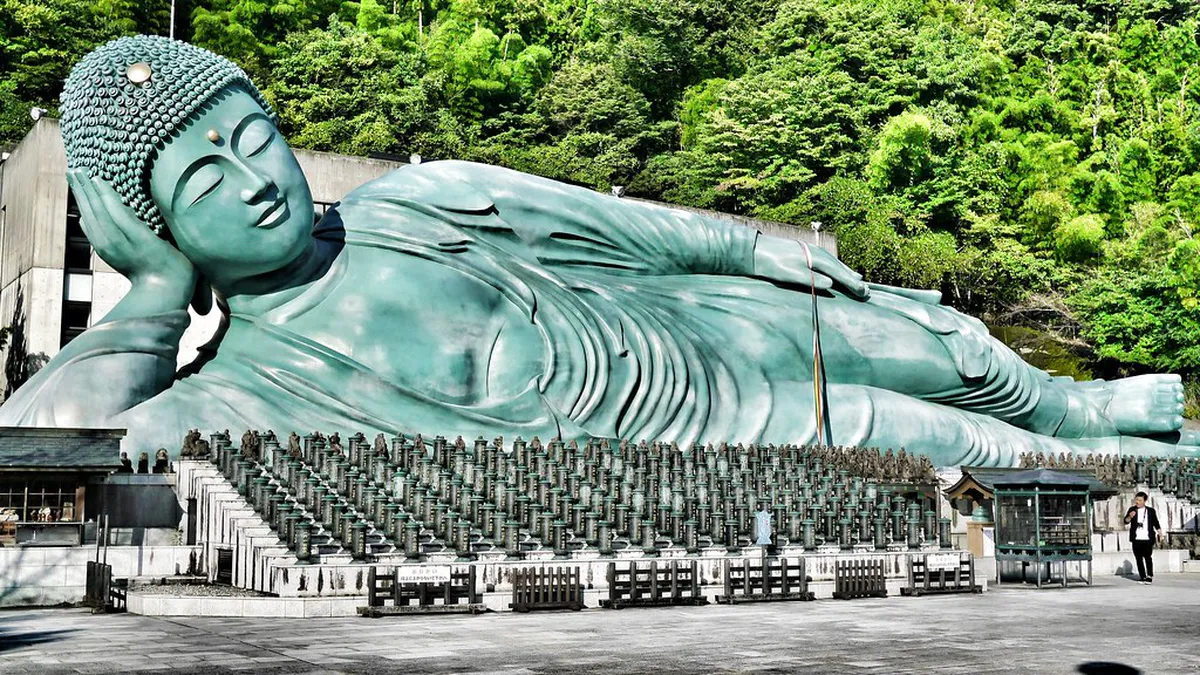
The statue measures 41 meters in length and weighs nearly 300 tons. Its size is comparable to a jumbo jet or the Statue of Liberty. Many people visit specifically to see this Fukuoka Landmarks icon up close. The site remains an active place of worship for local monks and pilgrims.
As the head of the Sasaguri pilgrimage, the temple holds deep religious importance. It connects 88 different sacred sites throughout the surrounding mountains and forests. You will often see pilgrims dressed in traditional white clothing walking through the grounds. Their presence adds a layer of authentic culture to your sightseeing experience.
How to Visit Nanzoin Temple Reclining Buddha from Fukuoka by Train
Getting to the temple requires a simple train journey from the main city hub. Head to Hakata Station and look for the JR Sasaguri Line platforms. This route is part of the Fukuhoku Yutaka Line which connects Fukuoka to regional towns. Check the Fukuoka City Subway Guide if you need help reaching Hakata first.
Trains depart frequently, but rapid services are the fastest option for travelers. The journey to Kidonanzoin-mae Station takes about 25 minutes on these faster trains. You can use your IC card to pay the 380 Yen fare at the ticket gates. This is much simpler than navigating the Dazaifu Tenmangu transport routes which often involve different railway companies.
Keep a close eye on the digital displays to ensure you board the correct train. Most trains bound for Nogata or Shin-Iizuka will stop at the required station. If you miss a rapid train, a local service will still get you there eventually. The rural scenery begins to appear shortly after the train leaves the urban sprawl.
- JR Sasaguri Line (Train)
- Time: 25 minutes
- Cost: 380 Yen
- Platform: Platform 8
- Payment: IC Cards accepted
- Rental Car (Driving)
- Time: 35-45 minutes
- Cost: Rental + Tolls
- Parking: Free on-site
- Traffic: Variable
Navigating Kidonanzoin-mae Station and the Melody Bridge
Your adventure truly begins once you step off the train at Kidonanzoin-mae Station. This small station features clear English signs to guide tourists toward the temple entrance. The walk to the main gates takes less than five minutes on a flat path. You will immediately notice the cooler mountain air as you exit the platform.
Before reaching the temple, you must cross the famous Melody Bridge. This unique structure features metal plates that act like a giant xylophone. You can find small wooden mallets attached to the sides of the bridge railings. Use them to strike the plates in sequence to play a traditional Japanese tune.
The bridge serves as a playful introduction to the creative spirit of the temple grounds. Many visitors spend a few minutes here enjoying the musical echoes over the river. It is a great spot for photos before you start the uphill walk. Be sure to return the mallets to their holders for the next guest to use.
The Great Reclining Buddha (Nehanzo) Experience
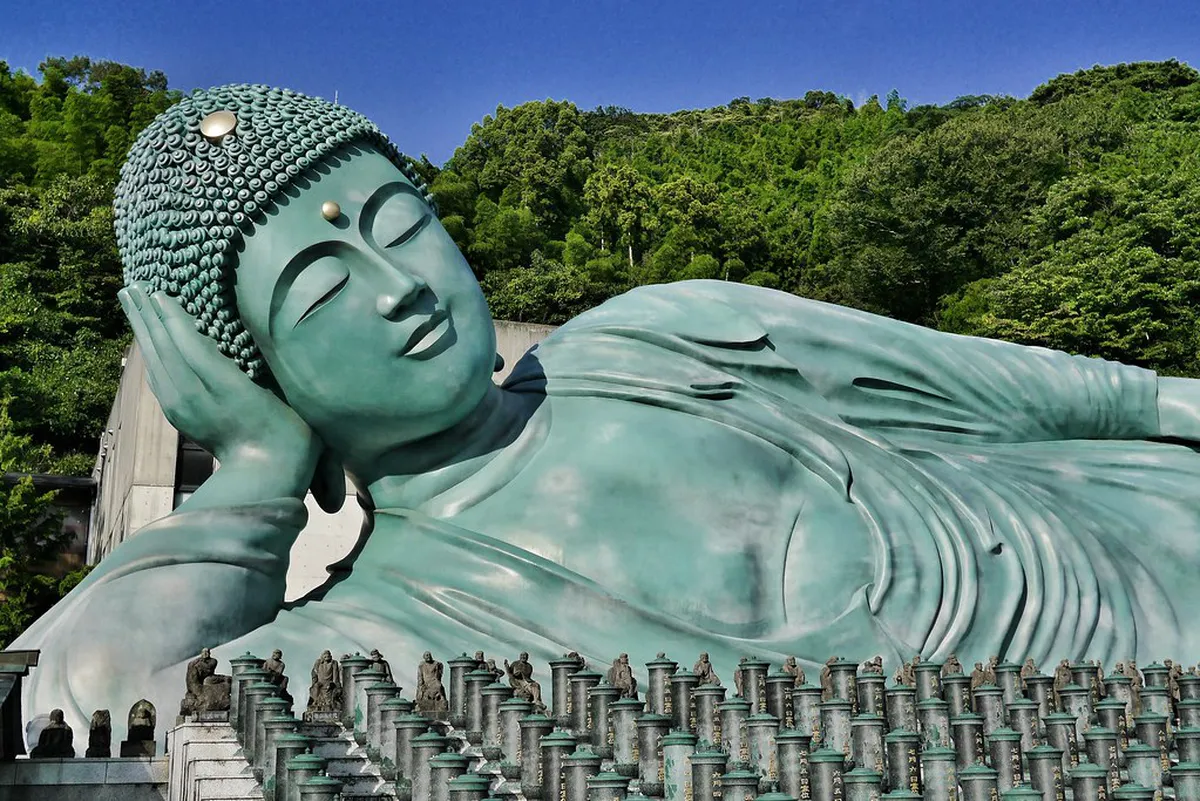
The Great Reclining Buddha experience is the undisputed highlight of any visit to this site. As you turn the final corner, the scale of the bronze statue becomes truly apparent. It rests peacefully against a backdrop of green trees and steep mountain cliffs. The serene expression on the Buddha's face creates a very calm atmosphere.
Visitors can walk right up to the base of the massive bronze feet. Look closely at the soles to see intricate golden carvings and religious symbols. These patterns represent the teachings of Buddha and are a focus for many worshippers. You may see people placing coins on the feet for good luck and blessings.
For a small fee, you can actually enter the interior of the giant statue. This space houses thousands of small Buddha images donated by followers from around the world. It also contains a special area for the 'Sand-Stepping' ritual for pilgrims. Walking through this quiet interior provides a deeper connection to the temple's spiritual mission.
Inside the Buddha: The Sand-Stepping (Osunafumi) Ritual
One of the most overlooked highlights at Nanzoin is the "osunafumi" or sand-stepping pilgrimage ritual. For a 500 Yen prayer fee, you can enter the prayer room located directly inside the bronze Buddha. Staff will ask you to remove your shoes before stepping onto the wooden walkway that runs through the chamber. The interior is dimly lit and filled with the calming scent of burning incense.
The ritual involves walking over small packets of sand collected from all 88 temples of the Shikoku pilgrimage. By stepping on each packet in sequence, you symbolically complete the entire sacred journey in just a few minutes. This compressed pilgrimage is meaningful to anyone who cannot dedicate weeks to walking the full Shikoku route in person. Many travelers describe the experience as the most memorable part of their entire visit to the temple.
Photography is strictly forbidden once you cross the threshold into this inner sanctum area. Keep your phone tucked away, move slowly, and avoid speaking above a whisper while you walk the path. After completing the ritual, you may receive a small commemorative charm or paper slip from the resident staff. The 500 Yen fee directly supports the maintenance of the massive bronze statue and the surrounding shrines.
Exploring the Temple Grounds and Hidden Statues
The temple grounds offer much more than just the famous reclining statue. You should explore the Seven Lucky Gods Tunnel which leads to various smaller shrines. Each god represents a different type of fortune such as wealth or long life. The tunnel is lined with small statues that visitors often touch for luck.
Daikokudo Hall is another significant building where people pray for financial success. This area is known for its vibrant atmosphere and beautiful traditional architecture. You can also visit the Top 7 Fukuoka cultural landmarks while exploring the wider region. The mountain paths provide several scenic viewpoints overlooking the valley below.
Hidden statues are tucked away in mossy corners and stone alcoves throughout the forest. Look for the fierce-looking Fudo Myoo statue standing near a small waterfall, holding a sword and surrounded by carved flames. This deity protects the grounds and helps practitioners overcome their internal obstacles. The blend of nature and art makes every path worth exploring.
Climb the side trails to find the 500 Arhat statues, which represent the original disciples of the Buddha. Each stone figure shows a unique facial expression and a different hand pose, and visitors often spend time hunting for the most expressive faces in the group. You will also encounter rows of Mizuko Jizo statues dressed in small red bibs, placed by families to protect the souls of children. These quieter corners are some of the best hidden viewing spots within the Nanzoin grounds and offer sweeping views back toward the Reclining Buddha.
Essential Temple Etiquette and Tattoo Policy
Nanzoin is known for having a very strict tattoo policy compared to other Japanese temples. Staff members actively monitor the grounds to ensure all visitors follow the rules. If you have visible ink, you must cover it completely with clothing or bandages. This rule applies to everyone regardless of the size or meaning of the tattoo.
Nanzoin has a very strict tattoo policy — all visible ink must be covered with clothing or bandages at all times. Staff actively monitor the grounds. Tripods and selfie sticks are not permitted anywhere on the temple grounds as they can block elderly pilgrims walking the Sasaguri route.
Dress modestly by ensuring both your shoulders and your knees are fully covered before you enter. The monks specifically ask visitors to avoid sleeveless tops, tank tops, miniskirts, athletic shorts, and swimsuits anywhere on the grounds. Long pants or a long skirt paired with a shirt that has sleeves is the safest choice in any season. Pack a light scarf or shawl in your bag as a quick cover-up if the day turns warm.
Large groups should try to keep their voices low while walking through the prayer areas. Avoid eating or drinking while standing directly in front of the religious statues; designated rest areas near the entrance are the only spots where snacks are appropriate. Carry your trash back to Hakata, since public bins are rare in rural Japanese temples. Taking photos is generally allowed in outdoor areas but strictly forbidden inside the temple buildings, the inner sanctum of the Reclining Buddha, and any prayer hall marked with a camera-and-red-slash sign. Avoid using tripods or selfie sticks anywhere on the grounds, as both can block the path for elderly pilgrims walking the Sasaguri route.
Practical Information: Hours, Fees, and Best Time to Visit
The temple is open daily from 9:00 AM until 4:30 PM for general visitors. However, the interior of the Reclining Buddha usually closes earlier at 4:00 PM. Entry to the main temple grounds is free, which is rare for such a major site. You only need to pay a small fee if you wish to enter the statue itself.
| Transport Option | Duration | Cost | Notes |
|---|---|---|---|
| JR Sasaguri Line (rapid) | ~25 min | ¥380 | Platform 8, Hakata Station |
| JR Sasaguri Line (local) | ~30 min | ¥380 | IC card accepted |
| Rental car | ~35–45 min | Rental + fuel | Free on-site parking |
Entry to the main temple grounds is free. You only pay ¥500 to enter the interior of the bronze Buddha for the Osunafumi sand-stepping pilgrimage ritual. Photography is strictly forbidden inside the inner sanctum — leave your camera in your bag before crossing the threshold.
Spring and autumn are the best times to visit for pleasant weather and scenery. Cherry blossoms bloom in late March, creating a soft pink frame around the bronze Buddha. In late November, the maple trees turn bright red and orange across the mountainside. Check the Nanzoin Temple Official Site for any seasonal closure updates.
Visiting on a weekday morning helps you avoid the largest crowds of tourists. If you are on a budget, consider using the Fukuoka Tourist City Pass for your other city travels. While it does not cover the JR train to Nanzoin, it saves money elsewhere. Early arrival gives you the best light for photography before the sun gets too high.
- Spring (March to May)
- Highlight: Cherry blossoms
- Weather: Mild
- Crowds: Moderate
- Autumn (October to November)
- Highlight: Red maples
- Weather: Cool
- Crowds: High
Guided Tour vs. DIY: Which is Right for You?
Choosing between a guided tour and a DIY trip depends on your personal travel style. A solo trip via the JR Sasaguri Line offers the most flexibility and lower costs. You can spend as much time as you want at each statue or shrine. This is ideal for photographers who need to wait for the perfect light.
A guided tour provides deep cultural context that you might miss on your own. Expert guides can explain the specific meanings behind the 'Sand-Stepping' pilgrimage ritual. They also handle all the logistics and transport from your hotel in the city. This option is great for travelers who want a stress-free experience. Most small-group tours meet at the Lawson convenience store near the Oriental Hotel Fukuoka by the Hakata Station Chikushi Exit, which makes the morning departure simple to find even on your first day in Japan.
You can find more ideas in a 1-day Fukuoka landmarks itinerary for your trip. Compare the benefits of each method before making your final booking decision. Both options allow you to see the world's largest bronze Buddha statue comfortably.
- Solo DIY Trip
- Cost: Low
- Flexibility: High
- Best for: Photographers
- Effort: Moderate
- Guided Cultural Tour
- Cost: Higher
- Flexibility: Low
- Best for: History buffs
- Effort: Low
Beyond Nanzoin: Nearby Sasaguri Attractions
Sasaguri town has several other attractions that make a full-day trip worthwhile. You can hike the trails that connect the 88 pilgrimage temples in the hills. Many of these paths are well-marked and offer beautiful views of the rural landscape. The local atmosphere is much quieter than the busy streets of Hakata.
Visit the Sasaguri Kyudai Forest to see the famous 'submerged' cypress trees in the water. This spot has become popular for its mystical appearance and calm walking paths. It is only a short bus or taxi ride from the Nanzoin area. Exploring these spots gives you a better look at regional landmarks outside the city center.
Local restaurants near the station serve simple but delicious noodle dishes and rice bowls. Try some regional specialties before heading back to the city on the train. Supporting small local businesses is a great way to give back to the community. You will find the residents to be very welcoming to respectful visitors.
Half-Day or Full-Day? Pairing Nanzoin with Dazaifu
Most travelers see everything at Nanzoin in two to three hours, which makes it ideal for a half-day trip back to Hakata by lunchtime. If you want a fuller day out, you can extend the rural escape rather than rush back into the city.
A popular pairing is Nanzoin with Dazaifu Tenmangu Shrine, since both sit east of central Fukuoka — the day-trip route many visitors search for. Note that the two run on different railway companies, so check the Dazaifu transport options separately rather than assuming one ticket covers both. Alternatively, stay in Sasaguri and visit the submerged cypress trees at Kyudai Forest, only a short bus or taxi ride from the temple.
- Half day: Nanzoin grounds, Reclining Buddha and Melody Bridge, then return to Hakata.
- Full day: Add Dazaifu Tenmangu or Sasaguri Kyudai Forest, with a noodle lunch near the station before the train home.
Frequently Asked Questions
Is there an entrance fee for Nanzoin Temple?
Entry to the main Nanzoin Temple grounds is completely free for all visitors. You only need to pay a small fee of 500 Yen if you wish to enter the interior of the Reclining Buddha. For more budget tips, visit japanactivity.com to plan your trip.
Can I visit Nanzoin Temple if I have tattoos?
Yes, you can visit, but you must keep your tattoos covered at all times. The temple has a very strict policy and staff may ask you to leave if ink is visible. Wear long sleeves or use bandages to ensure you follow the local rules.
How long does the train take from Hakata to Nanzoin?
The train journey from Hakata Station to Kidonanzoin-mae Station takes approximately 25 minutes on a rapid service. Local trains are also available but may take closer to 30 minutes. Trains run frequently throughout the day on the JR Sasaguri Line.
Which train platform should I use at Hakata Station for Nanzoin?
Most trains heading toward Nanzoin Temple depart from Platform 8 at Hakata Station. You should look for the Fukuhoku Yutaka Line or the Sasaguri Line on the digital boards. Always double-check the latest departure information when you arrive at the station.
Can you enter the inside of the Reclining Buddha?
Yes, visitors can enter the interior of the bronze statue for a small additional fee. Inside, you will find thousands of small Buddha statues and a sacred prayer space. It also features the unique sand-stepping ritual which represents the full Shikoku pilgrimage.
Visiting the Nanzoin Temple Reclining Buddha is a highlight of any Fukuoka vacation. The combination of massive art and quiet nature creates a lasting memory for everyone. By following this guide, you can navigate the train system and temple rules with ease. Enjoy your journey to one of Japan's most impressive spiritual sites.
Free: The Fukuoka Essentials guide
Top things to do, where to stay, a perfect day plan, getting around, and the best time to go — a Fukuoka mini-guide you can take offline.
You might also like

Continue reading
More guides you'll find useful