How to Get Around Hiroshima: 8 Essential Transport Tips (2026 Guide)
Master Hiroshima's 2026 transit: ¥190 streetcar fares, ¥600 1-day pass, PASPY/ICOCA IC cards, Meipuru~pu buses, Astram Line, and ferry routes to Miyajima.
On this page
Hiroshima is compact, flat, and easier to navigate than the sprawling networks of Tokyo or Osaka. The city centre fits inside roughly a 3 km square, the streetcars run on the surface so you always know where you are, and almost every signboard is bilingual. Most visitors learn the system on day one and barely think about it after that.
This guide covers what actually matters in 2026: current fares, the IC card situation after the PASPY transition, which lines hit which sights, how to reach Miyajima and the airport, and what to do after the last streetcar leaves. You can pair it with our list of the 15 best things to do in Hiroshima to plan a route before you arrive.
Hiroden's tram network is the largest in Japan and the backbone of any tourist itinerary. Buses, the JR Sanyo Line, ferries to Miyajima, and the single Astram monorail line fill in the rest. We will walk through each option, then give a clear recommendation for the most common visitor scenarios.
Overview: Getting Around Hiroshima as a Tourist
How do you get around Hiroshima? The default answer is the Hiroden streetcar — Japan's largest tram network — at a flat ¥190 fare within central Hiroshima as of 2026. Tap an IC card (ICOCA, Suica, PASMO) on boarding and exiting, or buy a ¥600 1-Day Streetcar Pass for unlimited rides. The Meipuru~pu sightseeing bus loop covers Peace Park, the Castle, and Shukkeien Garden and is free with a JR Pass. For deeper context on what to see along these routes, browse our Hiroshima attractions pillar guide.
Tip: pick up a free Hiroden route map at the Hiroshima Station tourist info desk (South Exit, 2F) — it shows all 9 streetcar lines, Meipuru~pu loop stops, and ferry piers on a single foldable sheet, with English labels.
Hiroshima's flat geography makes it one of the most walkable cities in Japan. Most major attractions cluster in the central area or along the riverbanks. A typical day uses the streetcar for two or three longer hops and walking for everything else. For a route-by-route walking plan that pairs with the streetcar, see our Hiroshima landmarks 1-day itinerary.
Buses fill the gaps the streetcars do not reach, the Astram Line monorail handles the northern suburbs, and JR local trains take over for longer trips like Miyajima. Travelers arriving from other regions should check how to get to Hiroshima from Tokyo and Osaka to plan their arrival hub. Choosing between modes really comes down to whether you prioritize speed, scenery, or pass coverage.
Hiroshima Streetcars (Hiroden): The Iconic Way to Explore
The streetcars, locally called Hiroden, are the heartbeat of Hiroshima's transit. Nine numbered lines crisscross the city, with most tourist routes starting from Hiroshima Station's tram terminal directly outside the South Exit. Trams run roughly every 5–10 minutes from around 5:50 AM to 11:00 PM, with a slight thinning of frequency after 9:30 PM.
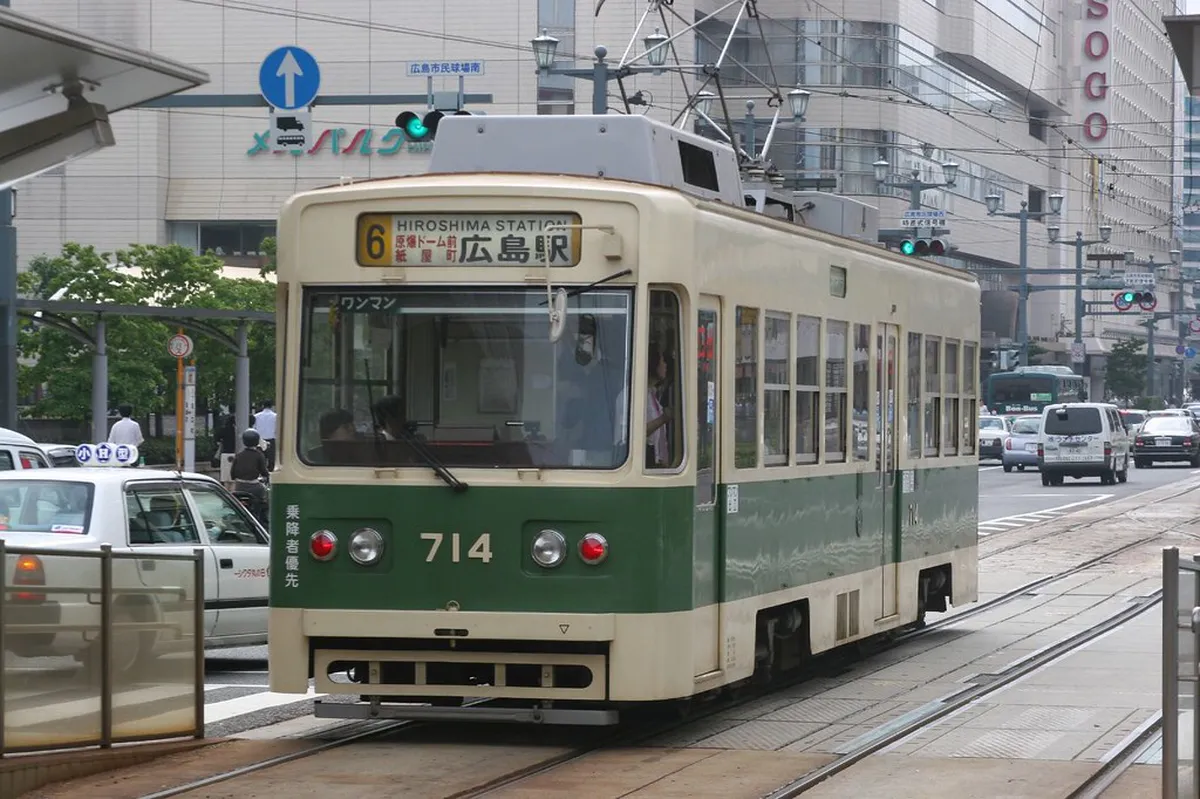
Hiroden is sometimes called Japan's "Moving Museum" of streetcars because it still operates models from several eras side by side. You might board a sleek modern low-floor "Green Mover" tram on one trip and a vintage 1940s carriage on the next. A handful of these older trams actually survived the 1945 atomic bombing and remain in service — Hibaku trams 651 and 652 still run the Line 1 and Line 2 corridors on most weekdays.
Boarding a streetcar is different from a typical city bus. You enter through the middle or rear door, and exit through the front door beside the driver. Modern trams display the next stop in English, Chinese, and Korean, while vintage cars usually only have a Japanese voice announcement, so glance at the route map by the door if you are unsure. For the official visual walkthrough, see Hiroden Official: How to Ride the Streetcar.
- Streetcar Line 2 (Red): Hiroshima Station to Miyajima-guchi. Best for the long-distance ride to the Miyajima ferry. Flat ¥190 within the city zone, ¥280 all the way to Miyajima-guchi terminus. Departs every 10 minutes between 5:50 AM and 11:00 PM.
- Streetcar Line 1 (Blue): Hiroshima Station to Hiroshima Port. Best for downtown access via Hatchobori and onward connections to Ujina ferry terminal. Flat ¥190 within central zone.
- Streetcar Line 6 (Yellow): Hiroshima Station to Eba via Genbaku-domu-mae. Best for the Peace Memorial Park, roughly 5 stops and 15 minutes from the station. Flat ¥190; very busy mid-morning, so board at platform B at the station.
Hiroshima Buses and the Meipuru~pu Sightseeing Loop
The Meipuru~pu is a dedicated red sightseeing bus loop branded with maple-leaf graphics. It runs three routes — Orange, Green, and Lemon — each starting and ending at the Shinkansen exit (North Exit) of Hiroshima Station. The Orange line traces the Peace Park corridor, the Green line adds Shukkeien Garden and the Manga Library, and the Lemon line offers the quickest sweep of the central shopping districts. Buses depart every 15–30 minutes from roughly 9:00 AM to 6:00 PM.
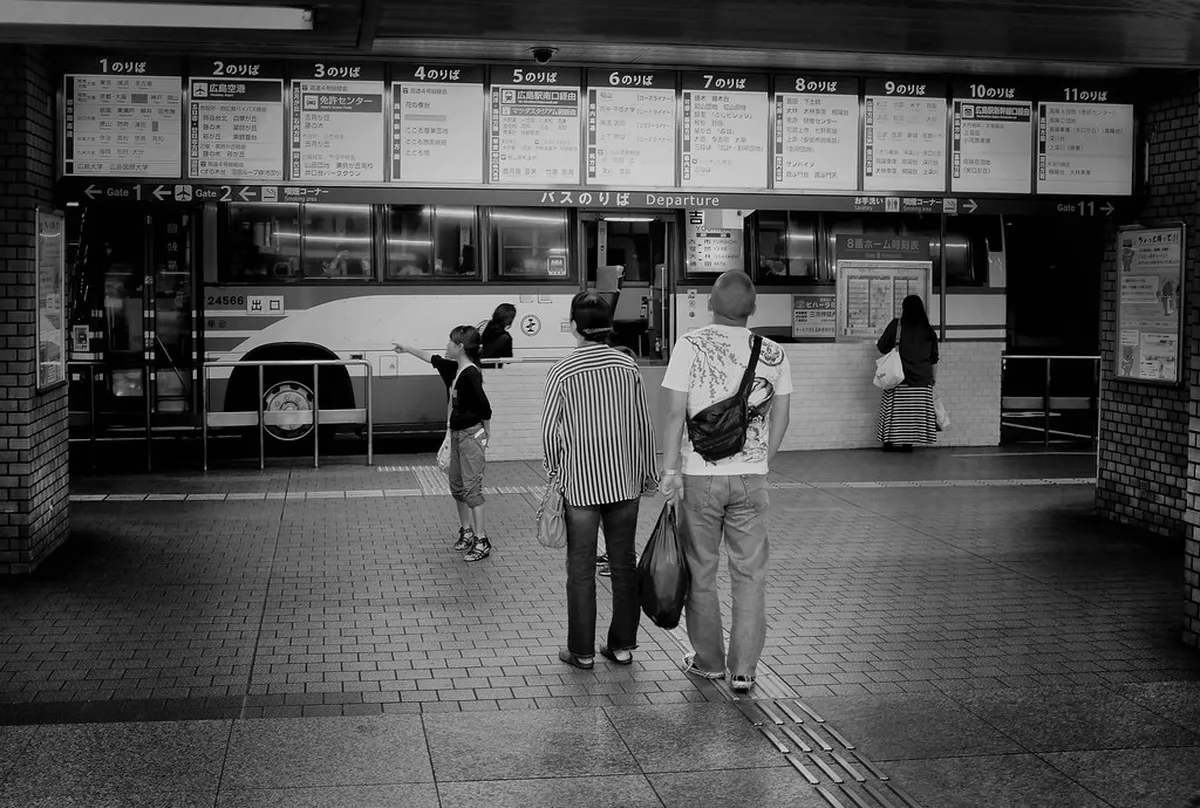
The standout feature is JR Pass compatibility: show an active pass to the driver and the ride is free. For travelers without a pass, the flat fare is ¥220 per ride or ¥400 for a Meipuru~pu day pass, paid with an IC card or cash on entry. This makes it a genuinely cost-effective option, particularly for those following a Hiroshima budget travel guide.
Beyond the tourist loop, regular Hiroshima Bus and Hiroden Bus city services cover residential districts and reach a few attractions the trams skip — most notably the Mazda Museum (advance reservation required) and the suburbs north of Ushita. Standard city bus fares start at ¥160 and rise by distance, paid by IC card or by taking a numbered ticket on entry and dropping coins into the box on exit. For most tourist days, you can ignore regular buses and stick with streetcars + Meipuru~pu.
JR Local Trains and Ferry Services for Miyajima
Reaching the iconic floating torii on Miyajima takes a quick land-then-sea hop. The most efficient route is the JR Sanyo Line from Hiroshima Station to Miyajimaguchi Station — about 25 minutes and fully covered by the JR Pass. Trains run every 10–15 minutes during the day. The slower Hiroden Line 2 streetcar makes the same trip in roughly 70 minutes for ¥280, which is only worth it if you want the scenic ride or already hold a streetcar day pass.
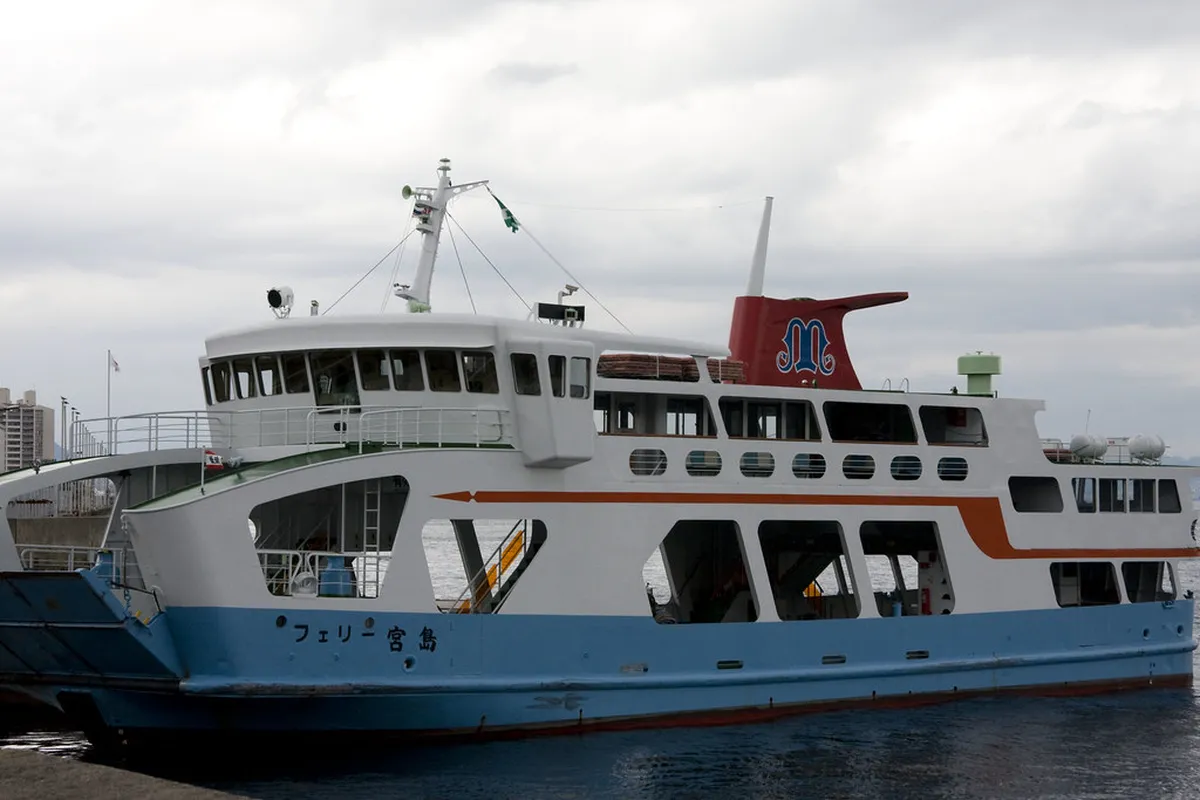
From Miyajimaguchi Station, two ferry companies operate from piers a 5-minute walk away. The JR Miyajima Ferry is included with the JR Pass. The competing Matsudai Ferry charges ¥200 each way (¥100 children) and accepts IC cards. Note that since October 2023, all visitors to Miyajima Island also pay a ¥100 visitor tax (Miyajima Visitor Tax), collected at the ferry ticket gate — this still applies in 2026 even with a JR Pass.
For a more scenic and direct option, the high-speed Hiroshima Water Taxi / Aqua Net service departs straight from Peace Memorial Park and reaches Miyajima in about 45 minutes for ¥2,200 one way. It saves you the train-plus-ferry transfer and is a genuinely beautiful run past Hiroshima Bay's oyster rafts. Last departures from Miyajima back to Peace Park are typically 16:10 in winter and 17:10 in summer, so plan accordingly.
Always confirm the final ferry departure before you head over, especially in autumn when crowds peak and queues at the Miyajimaguchi pier can stretch 30+ minutes. You can find detailed maps and timing in our Hiroshima and Miyajima 2-day itinerary map.
How to Pay: IC Cards, Cash, and Mobile Options
An IC card is the smoothest way to pay for everything except long-distance JR rides. ICOCA (JR West's regional card) is the natural fit because it works on streetcars, Meipuru~pu, the Astram Line, JR trains, and most convenience stores. Suica and PASMO from Tokyo work identically. Tap on boarding and exiting; the ¥190 streetcar fare is deducted automatically.
2026 IC card update — the PASPY transition. The local PASPY card stopped issuing new cards in March 2025 and is being phased out across Hiroden's network during 2025–2026 as the operator rolls out a new QR-code system called MOBIRY DAYS. Existing PASPY cards still work on streetcars and most local buses through the transition window, but tourists should not seek out PASPY in 2026 — buy or top up an ICOCA or Suica instead, which works seamlessly across all systems and the rest of Japan. The MOBIRY DAYS QR app currently targets commuters and is not necessary for short visits.
The Astram Line is Hiroshima's single subway/monorail, running north from Hondori in the central shopping district to Koiki-koen-mae near Big Arch stadium. The 2026 base fare is ¥190 (1–3 km), rising in ¥30 increments to ¥490 for the full 18 km. Most tourists only use it for the Children's Museum, the Big Arch sports complex, or hiking trails north of the city. ICOCA, Suica, and PASMO all work.
If you prefer cash, carry small coins because drivers cannot break large bills. On streetcars within the central flat-fare zone you simply drop ¥190 into the fare box on exit; on distance-based segments (e.g. heading to Miyajima-guchi) you take a numbered ticket on entry and pay the matching amount on exit. Mobile Suica and ICOCA on iPhone Wallet or Android Google Wallet work everywhere a physical card does, and you can top up directly in the app — handy when ticket-machine queues build at Hiroshima Station.
Useful Transportation Passes and Cost-Saving Tips
The 1-Day Streetcar Pass (¥600 in 2026) breaks even on the fourth ride. If your day includes the Peace Park, Hiroshima Castle, Shukkeien Garden, and Hatchobori shopping, four to six rides is typical — buy the pass at the Hiroshima Station transport desk before boarding your first tram.
Anyone planning four or more streetcar rides in a day should buy a pass. The 1-Day Streetcar Pass costs ¥600 in 2026 (children ¥300) and covers unlimited rides on every Hiroden line within the city and out to Miyajima-guchi. With a flat ¥190 fare, the pass breaks even on the fourth ride — easy to hit on any sightseeing day. Buy it at the Hiroshima Station transport desk, the streetcar information centre at platform A, or as a digital QR pass through the official Hiroden mobile app.
Travelers heading to the island as well should look at the 1-Day Streetcar & Ferry Pass at ¥900 (children ¥450), which adds a round-trip Matsudai ferry between Miyajima-guchi and the island. Without a JR Pass, this is the cheapest way to combine downtown sightseeing with a half-day on Miyajima.
The Visit Hiroshima Tourist Pass covers a wider net — Hiroden streetcars, most local buses, the Astram Line, and selected ferries — across 1, 2, or 3 days (¥1,000 / ¥1,500 / ¥2,000 in 2026, with the 3-day version including a Miyajima ferry round-trip). It is the right pass if you also want the Mazda Stadium-area buses or are mixing in suburban day trips. See Hiroden Official: Economical Tickets and Passes for current coverage.
| Pass | 2026 Price | Coverage | Best For |
|---|---|---|---|
| 1-Day Streetcar Pass | ¥600 (child ¥300) | All Hiroden lines to Miyajima-guchi | 4+ rides in a day |
| 1-Day Streetcar & Ferry Pass | ¥900 (child ¥450) | Streetcar + Matsudai ferry round-trip | City sightseeing + Miyajima |
| Visit Hiroshima Tourist Pass 1-day | ¥1,000 | Streetcar, buses, Astram Line | Mixed-mode sightseeing day |
| Visit Hiroshima Tourist Pass 3-day | ¥2,000 | All above + Miyajima ferry round-trip | Multi-day visit |
Visitors arriving from Kansai should compare the JR Kansai-Hiroshima Area Pass (5 days, ¥17,000), which covers the Shinkansen from Osaka, local JR trains, and the JR Miyajima ferry. On a multi-city itinerary it can save more than ¥10,000 versus single tickets. Children aged 6–11 ride at half fare on all public transport; under-6s ride free with a paying adult, with a maximum of two free children per adult.
Hiroshima Airport, Taxis, and Late-Night Options
Hiroshima Airport (HIJ) is inconveniently located 50 km east of the city, so plan the airport leg in advance. The Limousine Bus from the airport to Hiroshima Station's North Exit takes about 50 minutes and costs ¥1,450 one way (¥2,600 return) in 2026, departing every 15–30 minutes timed to flight arrivals. Buy tickets from the machine in the arrivals hall or tap an IC card on boarding. There is no train link, so the bus is the default for most travelers.
Taxis from the airport to central Hiroshima run roughly ¥13,000–15,000 and are only sensible if you are splitting four ways with luggage. Within the city, taxis are plentiful and metered: the 2026 starting fare is ¥620 for the first 1.5 km, then approximately ¥90 per additional 271 m. A typical hop from Peace Park to Hiroshima Station runs ¥1,200–1,500. JapanTaxi, GO, and Uber all operate locally; cash, IC card, and credit card are universally accepted.
The streetcar's last service window matters more than most guides admit. Final Line 2 trams from Hiroshima Station depart around 11:05 PM, and central-zone services thin to every 15–20 minutes after 9:30 PM. If you are dining late in Nagarekawa or Hatchobori, build the last tram into your evening — or budget around ¥1,200–1,800 for a taxi back to most central hotels. Hiroshima has no late-night metro and only a thin night-bus service, so once trams stop, taxi is the practical fallback. Standing at the kerb on Aioi-dori usually surfaces an empty cab within two or three minutes; on quieter side streets, use the GO or JapanTaxi app.
Apps, Real-Time Tools, and Route Planning
Google Maps handles Hiroden streetcar, JR, and bus routing accurately and is the single most useful tool for visitors — it shows departure platforms at Hiroshima Station, walking time to each tram stop, and real-time delays during peak hours. Set the language to English and the currency to JPY in advanced settings to keep prices clear.
For deeper transit planning, Navitime Japan Travel and Jorudan both offer English interfaces with JR Pass filters. Hiroden's own app shows live streetcar positions on a map and lets you buy the digital 1-Day Pass without queueing — useful if you arrive late on a Shinkansen and want to board immediately. The HIROSHIMA Free Wi-Fi service covers all major stations, the Peace Park, and most tram stops, so you do not need data to look up the next tram.
Hiroshima Station's South Exit is currently undergoing a multi-year rebuild that bundles the streetcar terminal directly into the station building (target completion late 2025, finishing touches in 2026). Tram boarding gates may shift between platforms A, B, and C during your visit — check the digital boards above the gates, which update every few seconds.
Practical Tips for a Smooth Hiroshima Transit Experience
Accessibility is reasonably good. The "Green Mover" and newer 5100-series low-floor trams accept wheelchairs and strollers without help, and they run frequently on Lines 1, 2, and 3 through the city centre. Vintage cars have steps and narrow doorways — check the front display for "low-floor" markings if step-free boarding matters. Hiroshima Station, Genbaku-Dome-mae, Hatchobori, and Hiroden-miyajima-guchi all have step-free routes between street and platform.
For an active alternative, the Peacecle (Docomo Cycle) Hiroshima bike-share has electric-assist bicycles at roughly 100 docks across the flat city centre. A 30-minute ride is ¥165 in 2026, with day passes at ¥1,650. The riverside paths between Peace Park, Hiroshima Castle, and Shukkeien are particularly pleasant on a bike — a great option for visiting during the best things to do in Hiroshima during cherry blossom season.
Avoid trams between 8:00 AM and 9:00 AM on weekdays if you want a seat — commuter loads are heavy on Lines 1 and 2 in particular. Mid-morning (after 9:30 AM) and early afternoon are the most comfortable windows for sightseeing. Streetcars are not designed for large suitcases: if you arrive on the Shinkansen with hold luggage, drop it in a Hiroshima Station coin locker (¥500–¥800 per day depending on size) before riding the tram into the city.
Hiroshima Station's South Exit is undergoing a multi-year rebuild through 2026. Streetcar boarding platforms A, B, and C may shift during your visit — check the digital boards above the gates rather than relying on printed maps from before your trip.
Always check the destination sign on the front of each streetcar before boarding — multiple lines share central tracks before branching. Showing the driver a screenshot of your destination is normal and welcomed; staff at the station's tourist information centres speak excellent English and can mark your route on the free map.
Frequently Asked Questions
Does the JR Pass cover streetcars in Hiroshima?
No, the standard JR Pass does not cover the Hiroden streetcar network. However, you can use your JR Pass for the Meipuru~pu sightseeing bus loop and the JR Miyajima Ferry. For more details on budgeting, see our budget guide.
How do you pay for the streetcar in Hiroshima?
You can pay using an IC card like ICOCA or Suica by tapping the reader upon boarding and exiting. If paying with cash, take a ticket when entering and pay the exact fare into the box as you exit. Drivers cannot change large banknotes, so carry coins.
Is Hiroshima walkable or should I use public transport?
Hiroshima's city center is very flat and walkable, especially around the Peace Memorial Park. However, public transport is recommended for reaching Hiroshima Station or traveling to Miyajima. Most tourists use a mix of walking and streetcars to save energy during long days.
What is the difference between the Meipuru~pu bus routes?
The Orange, Green, and Lemon routes all start at Hiroshima Station but serve different landmarks. The Orange line focuses on the Peace Park, while the Green line reaches the Shukkeien Garden. The Lemon line provides a quicker loop through the most popular central shopping districts.
How much is a single streetcar ride in Hiroshima in 2026?
A single Hiroden streetcar ride within central Hiroshima costs a flat ¥190 in 2026 when paying cash, or ¥180 when tapping an IC card (ICOCA, PASPY, Suica, PASMO). Rides extending out to Miyajima-guchi on Line 2 cost ¥280 due to the longer distance. Children aged 6–11 pay half fare.
Is the Hiroshima 1-Day Streetcar Pass worth buying?
Yes, if you plan four or more streetcar rides in a single day. The 2026 pass costs ¥600 (children ¥300), so it pays for itself after the fourth ¥190 ride. A typical Peace Park + Castle + Shukkeien + Hatchobori shopping itinerary easily uses 4–6 rides, making the pass a clear winner. The combined ¥900 Streetcar & Ferry Pass adds Miyajima access.
What is PASPY and do I need it as a tourist?
PASPY is Hiroshima's regional IC card, accepted on streetcars, Astram Line, and most local buses. Tourists do not need to buy PASPY specifically — ICOCA, Suica, or PASMO work equally well on the same systems and are more useful elsewhere in Japan. The only PASPY perk is monthly bonus points kicking in after 11 rides, which a short-stay traveler will not reach.
Should I use the streetcar or the Meipuru~pu bus to see Hiroshima?
Use the streetcar for short hops along the central corridor (Hiroshima Station ↔ Peace Park ↔ Hatchobori) — it runs every 5–10 minutes and stops are everywhere. Use the Meipuru~pu bus when you want a free, hop-on/hop-off loop with your JR Pass that adds the Castle, Museum of Art, and Shukkeien Garden to your itinerary. Many visitors mix both: streetcar for downtown, Meipuru~pu for outlying landmarks.
Navigating Hiroshima by streetcar and bus is a rewarding part of the local travel experience. The system is reliable, affordable, and provides a unique window into the city's history and daily life. By using IC cards and tourist passes, you can focus on the sights rather than the logistics.
Whether you are riding a vintage tram or the modern bus loop, you will find the city easy to explore. Remember to keep this guide handy for your next trip to Japan's city of peace. Safe travels as you discover everything this remarkable destination has to offer in 2026.
Free: The Hiroshima Essentials guide
Top things to do, where to stay, a perfect day plan, getting around, and the best time to go — a Hiroshima mini-guide you can take offline.
You might also like

Continue reading
More guides you'll find useful