Hiroshima and Miyajima 2-Day Itinerary with Map (2026 Guide)
A turn-by-turn Hiroshima and Miyajima 2-day itinerary map with 2026 prices, hours, streetcar routes, ferry timings, accommodation pin, and a clear cost breakdown.
On this page
Hiroshima and Miyajima 2-Day Itinerary with Map (2026 Guide)
This Hiroshima and Miyajima 2-day itinerary uses a text-based walking-and-streetcar map to anchor every stop in time and space. Day 1 traces Peace Park to Hiroshima Castle to Shukkeien Garden along the Hiroden tram line. Day 2 takes the JR Sanyo Line to Miyajimaguchi, then ferry to Itsukushima Shrine, the Mt Misen ropeway, and Daisho-in Temple. Below you will find 2026 prices in JPY, hour-by-hour timing, tide-window guidance for the floating torii, and where to stay overnight.
Quick Answer: Can You Do Hiroshima and Miyajima in 2 Days?
Yes, two days is the right amount of time to see Hiroshima and Miyajima without rushing. Spend Day 1 on the city loop (Peace Memorial Park, Hiroshima Castle, Shukkeien Garden) using the Hiroden streetcar Lines 2 and 9. Spend Day 2 on Miyajima (Itsukushima Shrine, Mt Misen ropeway, Daisho-in Temple) via JR Sanyo Line and JR ferry. Sleep one night near Hiroshima Station or in the Hatchobori shopping district to keep both days efficient.
One day is too tight to do justice to both the Peace Memorial Museum and a proper Mt Misen hike. Three days adds breathing room for Onomichi, the Mazda Museum, or a sunset stay on Miyajima itself, but is not necessary for first-time visitors.
Best Time to Visit Hiroshima and Miyajima
Spring and autumn offer the most comfortable weather for exploring the busy city streets and island trails. Most travelers prefer visiting during the cherry blossom season to see the pink petals against the blue sea. You can find many best things to do in Hiroshima during cherry blossom season to enhance your trip. These months provide mild temperatures that are perfect for long days of walking.
Autumn brings vibrant red and orange leaves that transform the scenery on Miyajima Island. The maple trees in Momijidani Park create a stunning backdrop for photography and hiking. Crowds are often larger during these peak seasons, so early starts are essential. Planning your visit for mid-week can help you avoid the busiest tourist groups.
Winter and summer present different challenges for travelers who want to follow a strict schedule. Summer can be very humid and hot, making outdoor exploration more tiring for many people. Winter is much quieter and offers a peaceful atmosphere at the various shrines and temples. Checking the HIROSHIMA WEATHER before you pack will ensure you are ready for any conditions.
Getting to and Around Hiroshima (JR Pass & Trams)
Arriving in the city is simple if you understand the various transportation links from major hubs like Osaka. Many visitors choose to use the how to get to Hiroshima from Tokyo and Osaka guide for transit tips. The Shinkansen Nozomi from Shin-Osaka takes about 1h 25min and Tokyo to Hiroshima takes about 4h via Nozomi (around ¥19,760 reserved seat in 2026). Using a regional pass can save you money on these high-speed trains.
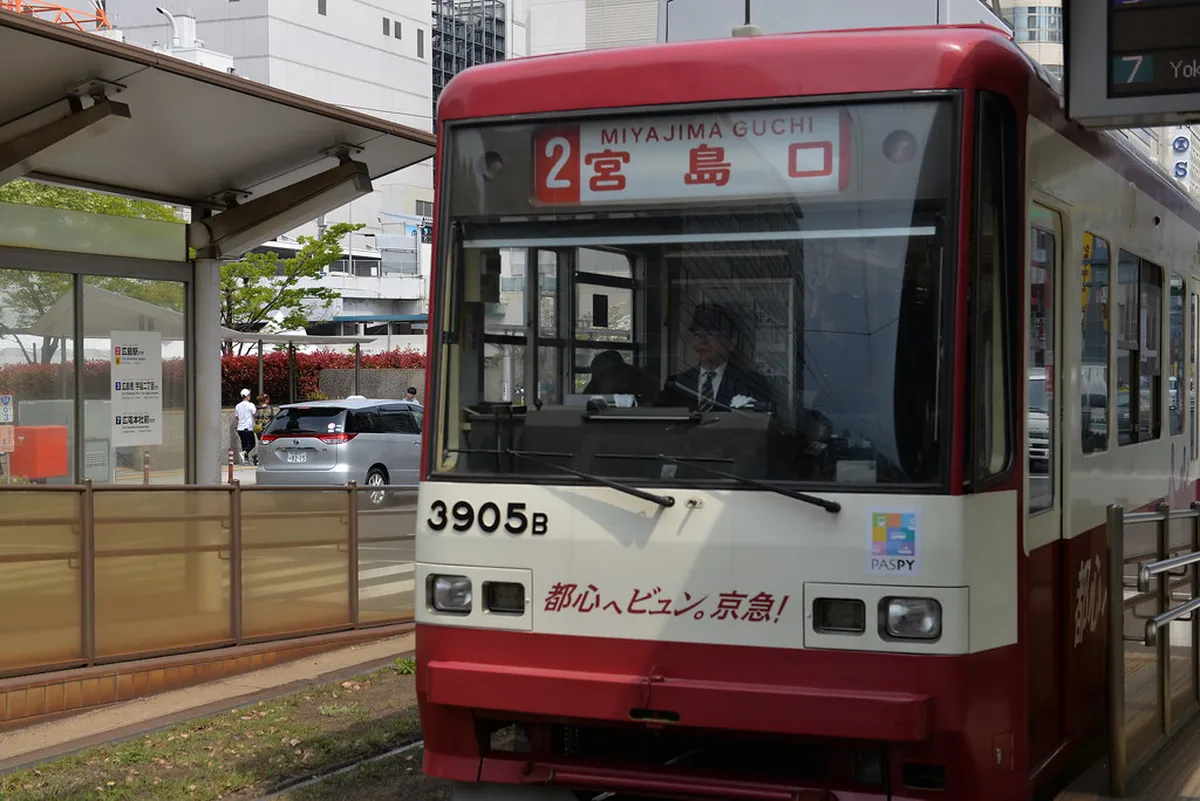
Once you arrive, the local Hiroden streetcar is the most efficient way to travel inside the city. A single ride is ¥240 (adult, 2026) and a 1-day Hiroden tram pass is ¥700, or ¥900 if you add the Miyajima ferry segment. Lines 2 and 6 connect Hiroshima Station to the Peace Memorial Park (about 15 min). You should learn how to get around Hiroshima by streetcar and bus to navigate like a local.
Traveling to Miyajima requires the JR Sanyo Line from Hiroshima Station to Miyajimaguchi (about 28 min, ¥420) plus the JR ferry to the island (10 min, ¥200 one-way). The ¥100 island visitor tax (Miyajima Visitor Tax, introduced 2023) is added at the ferry gate. JR Pass holders ride the JR ferry free but must still pay the visitor tax separately. The private Matsudai Kisen ferry runs the same route at the same price.
One trade-off most guides skip: Hiroden Line 2 also runs all the way to Miyajimaguchi as a direct tram, but it takes about 70 minutes versus the JR Sanyo Line's 28 minutes. The tram is only worth it if you already hold a ¥900 Hiroden + ferry combined pass and want to skip transferring at Hiroshima Station — otherwise JR is the right Day 2 morning choice.
- JR Kansai-Hiroshima Area Pass
- Type: Regional Rail Pass
- Best for: Travel from Osaka
- Where: JR West Stations
- Provider: JR Kansai-Hiroshima Area Pass (Klook)
Where to Stay: The Accommodation Pin Between Day 1 and Day 2
The smartest accommodation pin for this 2-day route sits in the triangle between Hiroshima Station, Hatchobori, and the Peace Park. Staying here lets you finish Day 1 on foot from Shukkeien Garden, walk to dinner in Nagarekawa, and catch the early JR Sanyo Line on Day 2 morning. Mid-range hotels here run ¥11,000–¥18,000 per night in 2026 shoulder season.
Three pin options by zone:
- Hiroshima Station (Minami-ku): Best for early Shinkansen arrivals or departures. Sheraton Grand Hiroshima or Hotel Granvia put you right above the JR platforms.
- Hatchobori / Kamiya-cho (central): Best for evening walks to okonomiyaki and Nagarekawa nightlife. KIRO Hiroshima and Hotel Active are within 8 minutes of Peace Park on foot.
- Miyajima Island (Itsukushima): Best for travelers wanting to see the floating torii gate after day-trippers leave. Ryokans (Iwaso, Kurayado Iroha) start ¥28,000 per night for a half-board stay.
For most 2-day visitors, pin a hotel near Hatchobori or Hiroshima Station and treat Miyajima as a Day 2 round trip. This saves the cost of moving luggage and lets you keep evening dinner reservations on the mainland.
Tide Windows for the Floating Torii: 2026 Timing Rule
Most itinerary guides tell you to "check the tide times" but skip the actual decision rule. Here it is: the Itsukushima torii looks fully "floating" when the tide reading at Hiroshima Bay is 250 cm or higher, and you can walk out to the torii base when it drops below 100 cm. Anything in between gives you a partial reflection that photographs poorly.
Tides cycle roughly every 6 hours, so during a typical 2-day visit you usually catch one high and one low without effort. The Japan Meteorological Agency publishes daily tide charts for Hiroshima — bookmark the page before you leave home and screenshot Day 2 because mobile data on the island can be patchy.
Practical rule for Day 2: if high tide falls between 08:30 and 11:00, do the shrine first as planned. If high tide is in the late afternoon, flip the schedule — go straight to Mt Misen on arrival, then return to the shrine for high water around 16:00. The shrine itself is open until 18:00 (06:30–18:00, Mar–Oct 14), so a flipped order still works.
Day 1 Text-Based Map: Peace Park → Castle → Shukkeien
Day 1 is a tight north-loop. The total walking distance is about 4.5 km plus two short streetcar rides. Here is the text-based map with arrows:
[Hiroshima Station] --(Hiroden Line 2, 15 min, ¥240)--> [Genbaku Dome-mae stop]
        ↓ walk 3 min south across Aioi Bridge
[Atomic Bomb Dome] --(walk 5 min south)--> [Peace Memorial Park & Museum]
        ↓ walk 25 min north along the Motoyasu River
[Hiroshima Castle] --(walk 12 min east across Hashimoto-cho)-->
[Shukkeien Garden] --(walk 8 min south)--> [Hatchobori for dinner]
Now the hour-by-hour schedule for Day 1 with 2026 prices and hours per stop:
- 08:30 — Depart Hiroshima Station. Take Hiroden Line 2 toward Miyajima-guchi, get off at Genbaku Dome-mae (15 min, ¥240). Tap the 1-day pass if you bought one at the station info desk.
- 09:00 — Atomic Bomb Dome (exterior only). Free, viewable 24/7. Allow 20 minutes to circle the structure and read the bilingual plaques.
- 09:30 — Peace Memorial Museum. Open 08:30–18:00 (Mar–Jul, Sep–Nov), 08:30–19:00 (Aug), 08:30–17:00 (Dec–Feb). Adult admission ¥200 (2026). Allow 90 minutes — the East Building is included with the same ticket.
- 11:30 — Walk through Peace Park to the Children's Peace Monument. Free. 30 minutes including the Sadako Sasaki statue and paper-crane displays.
- 12:15 — Lunch at Okonomimura. 8 minutes' walk east. Okonomiyaki ¥1,100–¥1,500. Allow 60 minutes.
- 13:30 — Hiroshima Castle. 15 minutes' walk north. Open 09:00–18:00 (Mar–Nov), 09:00–17:00 (Dec–Feb). Adult tower admission ¥370 (2026). Allow 75 minutes including the Ninomaru reconstructed gate area.
- 15:30 — Shukkeien Garden. 12 minutes' walk east. Open 09:00–18:00 (Apr–Sep), 09:00–17:00 (Oct–Mar). Adult admission ¥260 (2026). Allow 60 minutes for a slow loop around the central pond.
- 17:00 — Walk to Hatchobori or take Hiroden Line 9 (Hakushima → Hatchobori, 7 min, ¥240). Check into your hotel.
- 19:00 — Dinner. Okonomiyaki at Nagataya near the Peace Park, or izakaya hopping in Nagarekawa. Optional: Nagarekawa and Ekinishi bar-hopping guide.
Day 1 cost (admissions + transit only, single adult): ¥1,790. Add ¥1,500 for lunch and ¥3,000 for dinner = ¥6,290 total.
Day 2 Text-Based Map: Ferry → Shrine → Mt Misen → Daisho-in
Day 2 stretches across the Seto Inland Sea. Total walking is about 3 km on the island, plus the Mt Misen ropeway round trip. Here is the text-based route map:
[Hiroshima Station] --(JR Sanyo Line, 28 min, ¥420)--> [Miyajimaguchi Station]
        ↓ walk 5 min to ferry pier
[JR Ferry] --(10 min, ¥200 + ¥100 visitor tax)--> [Miyajima Pier]
        ↓ walk 12 min along seafront promenade
[Itsukushima Shrine & Floating Torii Gate]
        ↓ walk 15 min through Momijidani Park
[Momijidani Ropeway Station] --(ropeway, 14 min total)--> [Shishiiwa Station, Mt Misen]
        ↓ hike 30 min to summit observation deck
[Mt Misen Summit (535m)]
        ↓ ropeway down + walk 20 min back through village
[Daisho-in Temple] --(walk 15 min back to ferry pier)--> [Return ferry to Miyajimaguchi]
Hour-by-hour Day 2 schedule with 2026 prices and hours:
- 07:30 — Depart Hiroshima Station. JR Sanyo Line local toward Iwakuni, 28 min, ¥420 (free with JR Pass). Trains run every 10–15 min.
- 08:00 — Miyajimaguchi Pier. Buy JR ferry ticket ¥200 + ¥100 visitor tax. Ferries depart every 15 min, 06:25–22:42. JR ferry passes the floating torii closer at 09:10 and 14:10 (slow torii-gate route).
- 08:15 — Arrive Miyajima Pier. Walk 12 min south along the deer-lined promenade.
- 08:30 — Itsukushima Shrine. Open 06:30–18:00 (Mar–Oct 14), shorter winter hours. Adult admission ¥300 (2026). Allow 60 minutes. Check tide times before you go — see floating torii gate tide times.
- 09:45 — Walk through Momijidani Park to the ropeway lower station. Free park, 15 min walk uphill.
- 10:15 — Miyajima Ropeway round trip. Adult round-trip ¥2,000 (2026). Two-segment ride: Momijidani → Kayatani (gondola, 10 min), Kayatani → Shishiiwa (cable car, 4 min). Operating 09:00–17:00.
- 10:45 — Hike to Mt Misen summit. 30 min uphill from Shishiiwa station. Summit observation deck at 535 m has 360° views of the Seto Inland Sea. Allow 75 minutes including descent back to ropeway.
- 12:30 — Ropeway down + lunch in the village. Grilled oysters ¥600–¥800 each, anago-meshi (eel rice bowl) ¥2,200. Allow 60 minutes.
- 14:00 — Daisho-in Temple. 15 min walk south. Free admission, open 08:00–17:00 daily. Allow 45 minutes for the prayer wheels, 500 Rakan statues, and the inner hall.
- 15:00 — Stroll Omotesando shopping street. Pick up Momiji Manju (maple-leaf cakes) ¥130–¥180 each. 45 minutes.
- 16:00 — Catch the JR ferry back. 10 min crossing + 28 min JR Sanyo Line back to Hiroshima Station.
- 17:30 — Arrive Hiroshima Station in time for Shinkansen onward, or dinner if staying another night.
Day 2 cost (admissions + transit, single adult): ¥3,540. Add ¥2,800 for lunch and ¥800 for snacks = ¥7,140 total.
Luggage Storage, Coin Lockers, and Checkout Timing
Most 2-day visitors arrive by Shinkansen on Day 1 morning and leave on Day 2 evening, which means you need a plan for where your suitcase lives during the daytime hours. Hiroshima Station has three coin-locker zones: the central concourse (¥400 small / ¥600 medium / ¥800 large), the Shinkansen-side gates, and inside the Hiroden tram terminal. Mid-day on weekends large lockers fill up by 10:00, so reserve via the Ecbo Cloak app if you arrive late.
For Day 2, do not drag your luggage to Miyajima. Either leave it at the hotel after late checkout (most Hatchobori hotels allow free same-day storage until 19:00) or use the lockers at Miyajimaguchi Station (¥400–¥700) so you can come straight off the JR Sanyo Line, head to the island, and grab the bag on the way to the Shinkansen. Miyajima Pier itself has lockers too but they are smaller and more expensive (¥500–¥1,000).
Rainy-Day and Typhoon Contingency Plan
Hiroshima sees about 12 rainy days per month in June and 8–10 in September, plus occasional typhoon disruption that can suspend the Mt Misen ropeway. Build a Plan B before you go so a wet morning does not waste a day.
If Day 2 is rained out, swap Mt Misen for the indoor stops: spend longer at Daisho-in Temple (covered halls, prayer-wheel corridor), eat a slow lunch of anago-meshi at Ueno or Fujitaya, then ferry back early and use the afternoon for the Mazda Museum (free, advance booking required) or the Hiroshima Museum of Art near the castle. The ropeway re-opens within 2–3 hours of wind dropping below 15 m/s, so checking the official status page mid-morning often unlocks an afternoon ride.
For typhoon-grade weather (rare but possible Aug–Oct), JR ferries suspend service when wave height exceeds 1.5 m. In that case, treat Day 2 as a second city day: Onomichi day-trip (1h on the JR Sanyo Line), the Shukkeien tea house, or the Hiroden tram-line-end coastal walk to Hijiyama Park.
2-Day Total Cost Breakdown (2026)
Here is what one adult should budget for the full two-day route, excluding the Shinkansen ride into Hiroshima:
- Day 1 transit + admissions: ¥1,790
- Day 2 transit + admissions: ¥3,540
- Food (2 lunches, 1 dinner, snacks): ¥8,200
- One-night mid-range hotel (Hatchobori): ¥14,000
- Total: ¥27,530 per person (~$184 USD at 2026 rates)
Budget tips: a ¥900 1-day Hiroden + ferry pass beats individual fares if you make 4+ rides on Day 1 or pair city travel with the Miyajima crossing. Lunch sets at okonomiyaki shops run ¥1,100 versus ¥1,800 à la carte. The JR Pass is worth it only if you are also doing Tokyo or Kansai segments — for Hiroshima alone it does not pay back.
What to Eat: Hiroshima-Style Okonomiyaki and Beyond
Tasting the local okonomiyaki is a mandatory part of any trip to this historic city. Unlike the Osaka version, this style layers the ingredients instead of mixing them all together. You can find the best rated spots on the Tabelog - Hiroshima Okonomiyaki Rankings for a great meal. Watching the chefs prepare the food on a large iron griddle is part of the fun.
Oysters are another local specialty that you must try while visiting the nearby island. Miyajima is famous for its fresh, grilled oysters served right along the main shopping street. Many restaurants offer them fried, raw, or cooked with rice in traditional wooden bowls. These dishes highlight the fresh flavors of the surrounding Seto Inland Sea.
For dessert, look for the leaf-shaped cakes known as Momiji Manju in the village shops. These small treats are traditionally filled with sweet red bean paste or creamy custard. You can find more affordable dining tips in our hiroshima budget travel guide: free sights and cheap eats. Sharing a box of these cakes makes for a perfect afternoon snack during your travels.
Reverse Flow: Staying on Miyajima Night 1 Instead
Photographers and slow travelers can flip the standard order. Arrive on Day 1 mid-afternoon, take the JR Sanyo Line and ferry straight to the island, check into a ryokan (Iwaso, Kurayado Iroha, or the budget-friendly Backpackers Miyajima at ¥4,800/night), and watch the torii at golden hour after the day-trip crowds leave at 17:00. Sunset over Itsukushima from the seafront promenade is the photograph most guides describe but few visitors actually witness because they are already on a returning ferry.
Day 2 in this reverse order then becomes the mainland day: catch the early 07:00 ferry back, drop bags at Hiroshima Station lockers, and run the Day 1 route in reverse (Shukkeien → Castle → Peace Park → Atomic Bomb Dome) so the museum is your final stop before evening Shinkansen. The trade-off is one extra ferry ride per direction (¥600 total) and the higher ryokan price, but you gain the empty-island evening that mainland sleepers miss.
Alternative Itineraries and Related Routes
If you only have one day, follow the compressed version in our Hiroshima and Miyajima 1-day itinerary, which trims the castle and Shukkeien Garden to fit Miyajima into the same day. If you have more time and want to spend both days on the mainland (no island), use our Hiroshima 2-day itinerary covering Onomichi and the Mazda Museum. For travelers focused on the historic city skyline rather than islands, the Hiroshima landmarks 1-day itinerary is the most efficient single-day plan.
See our complete Hiroshima attractions guide for the wider city overview.
Frequently Asked Questions
Is 2 days enough for Hiroshima and Miyajima?
Yes. Day 1 covers Peace Park, Hiroshima Castle, and Shukkeien Garden by streetcar (about 4.5 km walking). Day 2 covers Itsukushima Shrine, Mt Misen, and Daisho-in by JR Sanyo Line and ferry. Two days lets you take the Mt Misen ropeway and eat oysters in the village without rushing.
How much does the Miyajima Ropeway cost in 2026?
The Miyajima Ropeway adult round-trip fare is ¥2,000 in 2026. It runs daily 09:00–17:00 in two segments: Momijidani to Kayatani (gondola, 10 min) and Kayatani to Shishiiwa (cable car, 4 min). The summit observation deck is a 30-minute hike from Shishiiwa station.
Where should I sleep between Day 1 and Day 2?
For most travelers, the best accommodation pin is Hatchobori or Hiroshima Station. Mid-range hotels here run ¥11,000–¥18,000 per night in 2026. This puts you within 8 minutes of Peace Park on foot and 28 minutes by JR Sanyo Line from Miyajimaguchi for an early Day 2 start.
Is the JR Pass valid for the Miyajima ferry?
Yes, the JR Pass covers the JR West Miyajima Ferry but not the private Matsudai Kisen ferry. Both run the same 10-minute crossing for ¥200 one-way. JR Pass holders still pay the separate ¥100 Miyajima Visitor Tax at the ferry gate.
What is the cheapest way to get around the city on Day 1?
Buy a Hiroden 1-day tram pass for ¥700, or the combined tram + Miyajima ferry pass for ¥900. Both cover unlimited rides on all Hiroden streetcar lines. A single ride is ¥240, so the pass pays back after 3 rides — easy to hit on Day 1 between station, Peace Park, castle, and Hatchobori.
What is the total cost for a 2-day Hiroshima and Miyajima trip in 2026?
Budget around ¥27,500 per person (about $184 USD) for one mid-range adult, excluding the Shinkansen into Hiroshima. That covers ¥1,790 Day 1 admissions and transit, ¥3,540 Day 2 admissions and transit, ¥8,200 food, and ¥14,000 for one night at a Hatchobori hotel.
This 2-day plan ties Hiroshima's mainland history to Miyajima's island shrines into a single efficient loop. Day 1 walks you from Atomic Bomb Dome to the castle to Shukkeien Garden by Hiroden tram. Day 2 takes you across to Itsukushima Shrine, Mt Misen summit, and Daisho-in Temple by JR ferry. Use the text-based maps above to time each stop, the tide-window rule for the floating torii, the 2026 price tables to budget, and the accommodation pin in Hatchobori to keep both days easy.