Kanazawa to Takayama Bus and Train Guide: 10 Best Travel Tips
Discover the best way to travel from Kanazawa to Takayama. Compare Nohi bus times, JR train costs, and UNESCO Shirakawa-go stopover options for a perfect trip.
On this page
Traveling between the historic streets of Kanazawa and the mountain peaks of Takayama is a classic Japanese journey. The route connects the Sea of Japan coast to the heart of Gifu Prefecture, cutting through some of the most scenic alpine terrain in Japan. No direct train exists between the two cities, so you will need to plan your transfer carefully.
In 2026, travelers have three main options: the direct Nohi Highway Bus, the Shinkansen-plus-Hida Express combination, or local trains through Inotani. Each suits a different budget, pass type, and schedule. The table below shows the key numbers at a glance.
| Option | Cost (one way) | Time | JR Pass? |
|---|---|---|---|
| Nohi Highway Bus | ¥3,390–¥4,000 / ~$23–$27 | 2 hrs 15 min | No (separate ticket) |
| Shinkansen + Hida Express | ¥5,710 / ~$39 | 2 hrs 1 min | Yes + ¥2,640 extra |
| Shinkansen + Local Trains | ¥4,510 / ~$31 | 2.5–4 hrs | Yes + ¥920 extra |
How to Get from Kanazawa to Takayama: Transport Overview
The direct Nohi Highway Bus is the best option for most independent travelers, costing ¥3,390–¥4,000 and taking approximately 2 hours 15 minutes. It departs from bus stop #2 at the East Exit of Kanazawa Station and arrives at the Takayama Bus Terminal adjacent to Takayama Station.
Travelers holding a JR Pass should take the Hokuriku Shinkansen from Kanazawa to Toyama, then transfer to the Wide View Hida Limited Express toward Takayama. This combination takes just over two hours but requires an additional fare for the Inotani–Takayama segment. A third option — local trains through Inotani — is slower but fully manageable if you miss the Hida Express.
Most buses require advance reservations, especially during the busy Takayama Spring Festival weeks in April and October. Check the nouhibus.co.jp site for the most current seasonal timetables, as frequencies change in winter when heavy snow affects mountain roads. From Osaka, the Tokaido Shinkansen reaches Nagoya in approximately 50 minutes before connecting onward.
Option 1: The Direct Nohi Highway Bus
The Nohi Highway Bus is the most popular and economical way to travel between these two cities. It runs four times daily from Kanazawa Station and makes a brief stop at Shirakawa-go village before continuing to Takayama. The standard adult fare is ¥3,390 for the Kanazawa–Takayama direct service, though some seasonal routes price at ¥4,000.
Booking two separate bus tickets when stopping at Shirakawa-go is essential — there is no through-ticket. The Shirakawa-go bus terminal has coin lockers for a few hundred yen per day; they fill during peak season, so arrive early or use the staffed bag-storage service at the tourist information centre.
Booking in advance is essential — these buses fill quickly, especially for the Shirakawa-go day-trip crowd. You can reserve online at the Nohi Bus website or at the ticket office near Kanazawa Station's East Exit. When booking, you will be asked for your gender; the operator assigns seats and generally groups same-gender passengers together. You can cancel and receive a refund up to two hours before departure for a ¥100 fee.
One practical note for pass holders: if you carry a Hokuriku Area Tourist Pass rather than a standard JR Pass, you cannot book the Nohi Bus online. You must call the Nohi Bus Reservation Center directly — the phone number and hours appear on the official website. This surprises many travelers who assume online booking is universally available. The Hokutetsu Highway Bus is a second operator running the same corridor, departing Kanazawa at 08:10, 10:50, 13:10, and 16:00 daily, with the same fare and journey time. If Nohi is sold out, check Hokutetsu availability — the two operators do not share ticket inventory.
- Reserve your seat online or at the station ticket window at least one week ahead during spring or autumn peak periods. Round trips require two separate bookings — there is no combined ticket.
- Locate bus stop #2 at Kanazawa Station's East Exit and arrive at least 15 minutes early. The West Exit serves local city buses — do not go there.
- Hand large suitcases to the driver before boarding for free undercarriage storage. One large bag per person is the standard limit during peak periods.
- Enjoy the 135-minute alpine highway ride and avoid eating strong-smelling food — considered impolite on Japanese buses.
- Disembark at the Takayama Bus Terminal, directly beside Takayama Station, and check your seat pocket for phones or chargers before leaving.
Option 2: Hokuriku Shinkansen and Hida Limited Express Train
The train route starts with a short Hokuriku Shinkansen leg from Kanazawa to Toyama — just 18–23 minutes depending on the service (Kagayaki: 18 min, reserved only; Hakutaka or Tsurugi: 23 min, with non-reserved cars). At Toyama, transfer to the Wide View Hida Limited Express. The Hida runs four times daily between Toyama and Takayama: 07:58, 09:54, 13:08, and 17:14. Missing a departure adds up to two hours of waiting.
Without a JR Pass, this combination costs approximately ¥5,710 for a reserved seat and takes just over two hours end-to-end. JR Pass holders ride the Shinkansen and most of the Hida for free, but must pay an extra ¥2,640 for the Inotani–Takayama segment. Pay this fee at the JR ticket office in Kanazawa before departure — it cannot be covered by the pass or paid on the train.
The Hida's wide panoramic windows are the real draw on this route. The train follows the Hida River through gorge scenery that the bus highway misses entirely. Reserved seats on the Hida Limited Express each have an electrical socket — useful for charging phones and laptops on the 90-minute leg from Toyama. For those who prefer the rail experience or already hold a JR Pass, this is the most comfortable option. Check Kanazawastation.com for detailed transfer platform maps at Toyama.
Option 3: Local JR Trains via Inotani (Budget Rail Route)
If you miss the Hida Limited Express — or want the cheapest rail option — local trains via Inotani are your fallback. The journey breaks into three segments: Kanazawa to Toyama by Shinkansen (23 min), Toyama to Inotani by local train (55 min), then Inotani to Takayama by local train (1 hr 17 min). Total travel time including waits runs 2.5–4 hours depending on connections.
The Inotani–Takayama leg is the critical detail: this segment is operated by a private company, not JR, so JR Pass holders must pay an extra ¥920 in cash or by card at the JR ticket office before departing. The Inotani Station itself is very small — just two platforms, no ticket staff on site, and nothing in the surrounding area. Waiting between trains here means standing outdoors, so dress appropriately in winter and confirm your next departure time before you leave Toyama.
A real risk with this option: the JR ticket office wait time is typically 15–25 minutes at busy periods. If you are booking trains at the last minute and miss your Shinkansen by even a few minutes, you could chain-miss the Hida Express too. Budget extra time at the office, especially during Golden Week and Obon. This route costs approximately ¥4,510 total and is best used as a contingency plan rather than your first choice.
The Inotani JR Pass Gap: What Every Rail Pass Holder Must Know
The most common surprise on this route is the extra fare at Inotani. The JR network covers the track from Toyama up to Inotani Station, but the final stretch from Inotani into Takayama is owned by a separate operator. Every JR Pass holder — regardless of pass type (standard JR Pass, Hokuriku Arch Pass, or regional passes) — must pay this supplement.
The Inotani–Takayama segment is not covered by any JR Pass. The supplement is ¥2,640 for the Hida Limited Express and ¥920 for local trains. Pay at the JR ticket office in Kanazawa or Toyama before boarding — it cannot be paid on the train and refunds are partial and complicated.
For the Hida Limited Express, the supplement is ¥2,640. For local trains, it is ¥920. The difference reflects the express surcharge, not just the distance. Pay at the JR ticket office in Kanazawa or Toyama before you board — staff will automatically ask about it and add it to your booking. If you try to change to an earlier train after booking, the refund process becomes complicated: the ¥920 local portion is refundable, but only 30% of the express surcharge is returned, and some offices will ask you to claim the refund at a different location entirely.
JR Pass holders who book the Kagayaki Shinkansen for Segment 1 need a reserved seat — walk into any JR office and book all segments at once. The Hakutaka and Tsurugi Shinkansen have non-reserved cars (cars 1–3 or 1–2 respectively) where pass holders can board without advance booking. If you want the Hida Express, however, book it at the same time as your Shinkansen to guarantee a seat — only four departures run daily from Toyama.
Tokyo, Osaka, and Kyoto to Takayama: Connecting Routes
Many travelers arrive in Kanazawa as part of a longer route from Tokyo, Osaka, or Kyoto. Understanding the full chain helps you decide where to break the journey. From Tokyo, the Hokuriku Shinkansen runs direct to Kanazawa in approximately 2 hours 28 minutes (¥14,170 unreserved; JR Pass-compatible). From Kanazawa you then connect to Takayama via any of the options above.
An alternative for travelers coming from Tokyo who want to skip Kanazawa: take the Tokaido Shinkansen to Nagoya (1 hr 40 min), then board the Hida Limited Express directly from Nagoya to Takayama (approximately 2 hrs 30 min). The entire Nagoya–Takayama leg is operated by JR Central and JR Tokai, so there is no Inotani supplement for this direction. From Osaka, the Tokaido Shinkansen reaches Nagoya in approximately 50 minutes; from Kyoto, 35 minutes. This makes the Osaka/Kyoto → Nagoya → Takayama routing the most seamless JR Pass-compatible path for travelers on a western Japan loop.
If your itinerary runs Tokyo → Kanazawa → Takayama → Nagoya (a common Hokuriku circuit), note that the Nohi Bus also connects Takayama directly to Nagoya's Meitetsu Bus Center — a useful link that avoids backtracking through Toyama for those heading south after Takayama.
UNESCO World Heritage Site: The Shirakawa-go Village Stopover
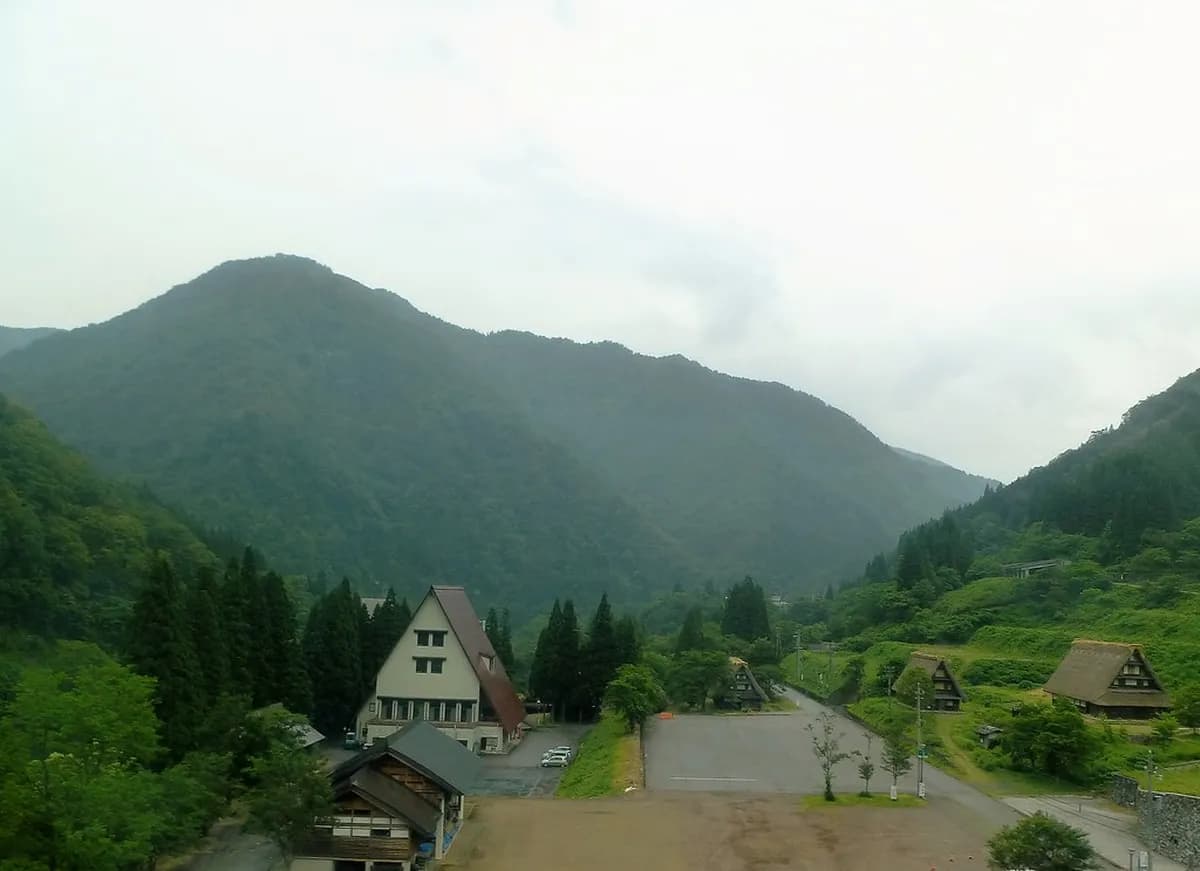
Many travelers choose to break their journey at the Shirakawa-go bus stop, located almost exactly halfway between Kanazawa and Takayama. This UNESCO site is famous for its traditional gassho-zukuri farmhouses with dramatically steep thatched roofs. Allow at least three hours to see the main viewpoints and the observation deck above the village.
If you stop here, you must book two separate bus tickets: Kanazawa to Shirakawa-go, then Shirakawa-go to Takayama. The Shirakawa-go bus terminal has coin lockers for luggage storage (a few hundred yen per day). In peak season the lockers fill up; the tourist information center provides manned bag storage as a backup, though hours are limited. Heavy snow in winter can affect access to the observation deck path, so check conditions before planning a winter stopover.
- Reserve both bus legs individually before leaving Kanazawa.
- Carry small coins for luggage lockers at the bus terminal.
- Wear sturdy shoes — the path to the main observation deck is steep.
- Download an offline map; mobile data can be patchy in the village.
- Keep physical bus tickets in an accessible pocket — digital tickets are available but signal can drop.
Seat Reservations and Oversized Baggage Rules for 2026
On the Hokuriku Shinkansen, the Kagayaki is reserved-only — every seat requires a booking. The Hakutaka and Tsurugi have non-reserved cars where you board freely. During Golden Week, Obon, and the New Year holiday, even the non-reserved cars fill completely; book ahead during those windows.
Baggage rules differ by train. The Tokaido-Sanyo Shinkansen (Tokyo–Osaka corridor) requires a reservation for suitcases exceeding 160 cm in total dimensions. The Hokuriku Shinkansen and Hida Limited Express do not have the same formal oversized baggage system, but space is limited in the overhead racks and the small luggage areas at carriage ends. Large suitcases can cause congestion during peak travel. If you are carrying multiple large bags, mention it when booking at the JR ticket office so staff can advise on the best car.
For the Nohi Bus, luggage goes in the undercarriage hold. If you have multiple suitcases, consider using a luggage forwarding (takkyubin) service to ship bags directly to your Takayama accommodation ahead of your journey. Most large hotels in Takayama accept forwarded luggage. Ship from your Kanazawa hotel by 12:00 and luggage typically arrives at the Takayama destination by the following morning.
Exploring Kanazawa Before You Leave
Kanazawa rewards an early start before your bus or train departs. The city was largely spared from World War II bombing, leaving its historical quarters intact. The Higashi Chaya geisha district and Kenroku-en Garden — one of Japan's three most celebrated gardens — are both walkable from Kanazawa Station in under 15 minutes.
For food before your departure, head to Omicho Market, a short walk from the station, often called the "kitchen of Kanazawa." Seafood stalls sell nodoguro (black throat seaperch), a fatty white-fleshed wintertime specialty unique to Ishikawa Prefecture. If you are taking the Hida Limited Express, pick up a local bento box at Kanazawa Station — the ekiben selection here includes Kanazawa seafood sets that make the train journey considerably more enjoyable. The station's Tsuzumimon Gate, styled after a traditional Shinto torii and a tsuzumi drum, is worth photographing before you board.
Things to Do Around Takayama: Gifu's Best Local Spots
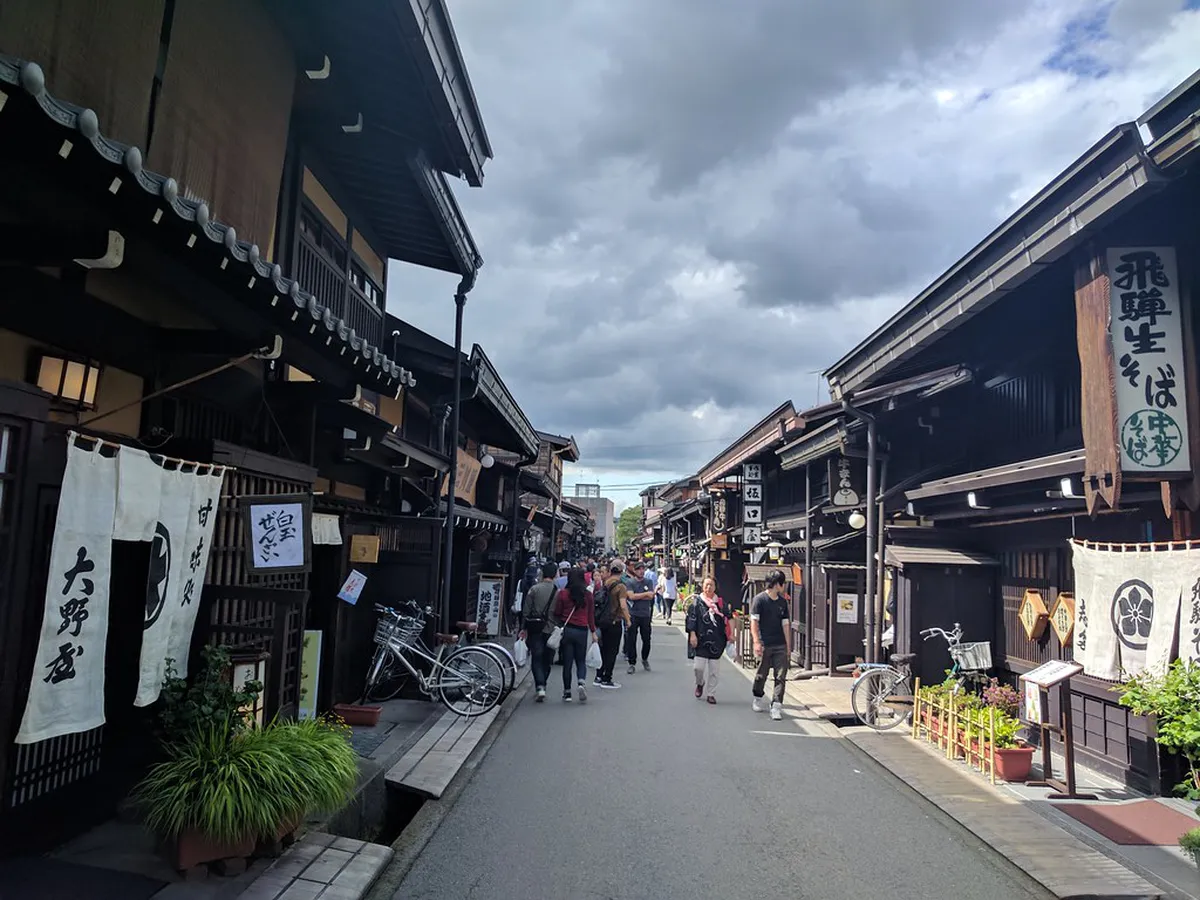
Once you arrive, start your visit at the Takayama Old Town Sanmachi Suji district — preserved Edo-period streets lined with wooden sake breweries, craft shops, and cafes. It is a 12-minute walk from Takayama Station. The Higashiyama Walking Course, a 3.5 km stroll past temples and castle ruins, begins nearby and is free to walk.
Food lovers should consult a Takayama Food Guide before their first dinner. The region is famous for Hida Wagyu beef — some restaurants hold Michelin recognition for their beef dishes. Many central restaurants fill up on weekends and during festival dates; book dinner in advance.
If you have extra time, visit the Takayama Morning Markets along the Miyagawa River. Local farmers sell fresh produce and handmade crafts from 06:00 each morning, packing up by noon. It is a practical way to interact with locals before the main sightseeing crowds arrive.
Frequently Asked Questions
Is the JR Pass valid on the Nohi Bus?
No, the JR Pass does not cover the Nohi Highway Bus. You must purchase a separate ticket for about ¥4,000 / ~$27. Use the train route via Toyama to utilize your rail pass fully.
How long does the bus take from Kanazawa to Takayama?
The direct bus journey takes approximately 2 hours and 15 minutes. This time can increase if you choose to stop at Shirakawa-go. Heavy winter snow may also cause occasional traffic delays.
Should I take the bus or the train for a day trip?
The bus is better for a day trip due to its direct route. It saves you the time spent transferring between trains in Toyama. You can maximize your sightseeing time in Takayama this way.
Choosing between the bus and the train depends on your budget and pass status. The Nohi Bus remains the fastest and most economical choice for most independent travelers. Those with a JR Pass will find the train route via Toyama comfortable — just budget for the ¥920–¥2,640 Inotani supplement that every pass holder must pay.
No matter which you choose, book your seats early. The Hida Limited Express runs only four times daily and sells out in peak season. The Nohi Bus fills quickly for the Shirakawa-go stop leg. A little advance planning makes the difference between a smooth alpine crossing and a long wait at a cold mountain station.
Pair this with our broader Takayama attractions guide for the full city overview.
Free: The Takayama Essentials guide
Top things to do, where to stay, a perfect day plan, getting around, and the best time to go — a Takayama mini-guide you can take offline.
You might also like


Continue reading
More guides you'll find useful