12 Essential Tips for Shirakawa-go From Takayama
Master your trip from Takayama to Shirakawa-go. Includes Nohi bus schedules, JR Pass tips, Hida beef recommendations, and a perfect 2-day itinerary.
On this page
Visiting shirakawa-go from takayama is one of the most rewarding day trips in central Japan. The fifty-minute Nohi Bus ride drops you into a living UNESCO World Heritage village of steeply thatched farmhouses surrounded by the Gifu mountains. Getting the logistics right makes the difference between a rushed photo stop and a genuinely immersive half-day.
This guide covers the Nohi Bus booking process, the Gassho-zukuri architecture that makes Ogimachi village unique, the Shiroyama Viewpoint, Takayama's Sanmachi Suji old town, and the practical details most travelers miss — including the winter illumination lottery. All transport costs and schedules reflect 2026 conditions.
Gassho-zukuri Farmhouses: The Architecture of Shirakawa-go
The farmhouses of Ogimachi village are built in the Gassho-zukuri style, a name that translates roughly as "hands in prayer." The steeply pitched thatched roofs — some reaching 60 degrees — were designed to shed the region's heavy winter snowfall before it could collapse the structure. The thatch is typically one to one-and-a-half metres thick and insulates the interior through temperatures that regularly drop below -10°C.
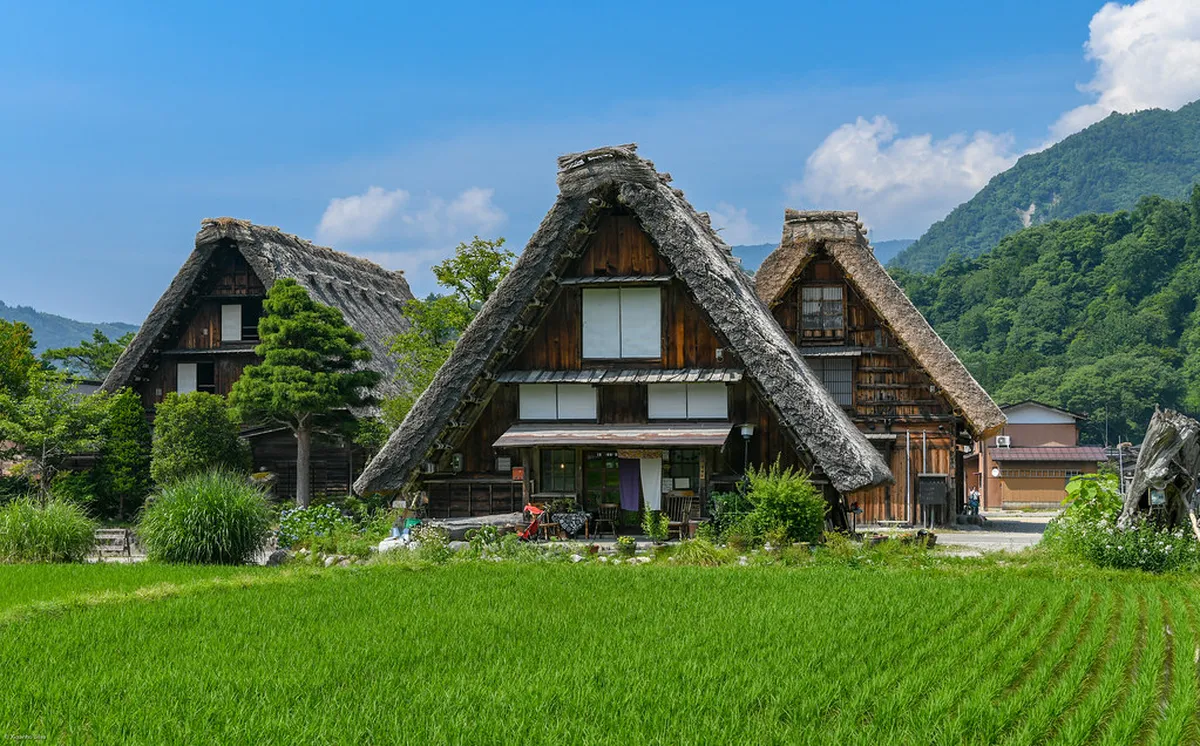
What makes these buildings extraordinary is the upper-storey use. The attic spaces, called naya, were used for silk-worm cultivation throughout the Edo period. The heat generated by the irori hearth below kept the attics warm enough for the silkworms to thrive, making the buildings both a home and a production facility. When you pay the 400 JPY entry to the Wada House — the largest surviving farmhouse — you can walk through these attic levels and see the preserved looms and silk tools.
There are roughly 114 Gassho-zukuri structures remaining in Ogimachi, of which about 59 are designated UNESCO World Heritage properties. Three farmhouses are open to the public as museums: Wada House (largest, 400 JPY), Kanda House (400 JPY), and Nagase House (300 JPY). Each has a slightly different interior and story — visiting two of the three gives a complete picture without being repetitive.
Getting to Shirakawa-go from Takayama
The only practical public transport option is the Nohi Bus, which departs from Bus Stop No. 4 at the Takayama Nohi Bus Center. Exit Takayama Station via the East Exit and look immediately to your left — the bus center is a one-minute walk. Buses run more than a dozen times daily and the journey takes approximately 50 minutes. A round-trip adult ticket costs 5,200 JPY (one-way is 2,600 JPY).
Book Nohi Bus reserved seats online as soon as your travel dates are set. Morning departures (08:20 and 09:10) sell out weeks ahead during autumn foliage (mid-October to mid-November) and cherry blossom season (late April). Arrive at Bus Stop No. 4 at least 20 minutes early even for unreserved services.
About half of the daily departures require a reserved seat. For morning buses — especially the 8:20 AM and 9:10 AM — reservations are essential during spring cherry blossom season (late April) and autumn foliage (mid-October to mid-November). You can book online via the Nohi Bus website; you will receive an e-ticket to your smartphone but as of 2026 you must show a printed copy to the driver. Buy tickets at the counter if you prefer to pay cash.
| Route / Fare | Adult price (2026) | Journey time |
|---|---|---|
| Takayama → Shirakawa-go (one-way) | 2,600 JPY | ~50 min |
| Takayama → Shirakawa-go (round-trip) | 5,200 JPY | — |
| Shirakawa-go → Kanazawa (one-way) | 2,000 JPY | ~75 min |
| Wada House entry | 400 JPY | — |
| Kanda House entry | 400 JPY | — |
| Nagase House entry | 300 JPY | — |
| Shiroyama Viewpoint shuttle (one-way) | 200 JPY | ~5 min |
Buses from Takayama continue past Shirakawa-go all the way to Kanazawa, which opens a useful routing option. You can leave Takayama in the morning, stop at Shirakawa-go for four to five hours, then ride on to Kanazawa rather than doubling back. If you do this, you must buy two separate tickets — Takayama to Shirakawa-go (2,600 JPY) and Shirakawa-go to Kanazawa (2,000 JPY).
What to See in Ogimachi Village
The Shiroyama Viewpoint is the single most photographed spot in the entire Hida region. A steep forest trail leads from the village center to the observation deck in about twenty minutes on foot. Alternatively, a shuttle bus runs from the Ogimachi bus terminal for 200 JPY each way. Walk up and take the shuttle down — your knees will thank you after a long day of sightseeing.
The Deai-mon Suspension Bridge is the main entry point for visitors arriving by bus. This 107-metre wooden bridge crosses the Shokawa River and frames the village against the mountains. Cross early in the morning for a quieter experience — by 11:00 AM the midday crowds from Kanazawa and Nagoya tours arrive and the bridge becomes congested.
Beyond the three farmhouse museums, the village has a handful of artisan workshops where you can watch traditional crafts being made. The Doburoku Matsuri Exhibition Hall (free entry) covers the autumn festival and the locally brewed unfiltered sake unique to this village. Plan for at least four hours in the Ogimachi village core — two hours if you are only doing the viewpoint and one farmhouse, four to five if you want to explore at a proper pace.
Takayama Old Town: A Sanmachi Suji Walking Guide
Sanmachi Suji is three parallel streets — Ichi-no-machi, Ni-no-machi, and San-no-machi — lined with dark wooden merchant houses, sake breweries, and craft shops from the Edo period. The area is entirely walkable from Takayama Station in under ten minutes. Visit the Takayama Old Town area in the morning before the large tour groups arrive from Nagoya around 10:30 AM.
The streets are at their quietest and most atmospheric between 8:00 AM and 9:30 AM. Most shops open by 9:00 AM; sake breweries open between 8:30 and 9:00 AM. Walking the three streets end to end and back takes around forty-five minutes at a leisurely pace. Budget another hour if you plan to enter the Takayama Jinya government house (440 JPY), the only surviving Edo-period government building of its type in Japan.
The Sarubobo doll — a limbless red fabric figure traditionally made for good luck — is the most distinctive souvenir of the area. Prices run from 500 JPY for a keychain version to 3,000 JPY for a large display figure. For food in the old town, Hida beef sushi (two pieces, around 1,000 JPY) and Hida beef buns (400–600 JPY each) are sold from street stalls on the main lane.
Sakurayama Hachimangu Shrine
Sakurayama Hachimangu Shrine sits at the northern end of Sanmachi Suji, adjacent to the Takayama Festival Floats Exhibition Hall. The shrine grounds are free to enter and open from early morning. A short walking course winds from the shrine up through cedar trees past smaller sub-shrines, with glimpses of the Japan Alps on clear days — best seen before 10:00 AM when mountain haze builds.
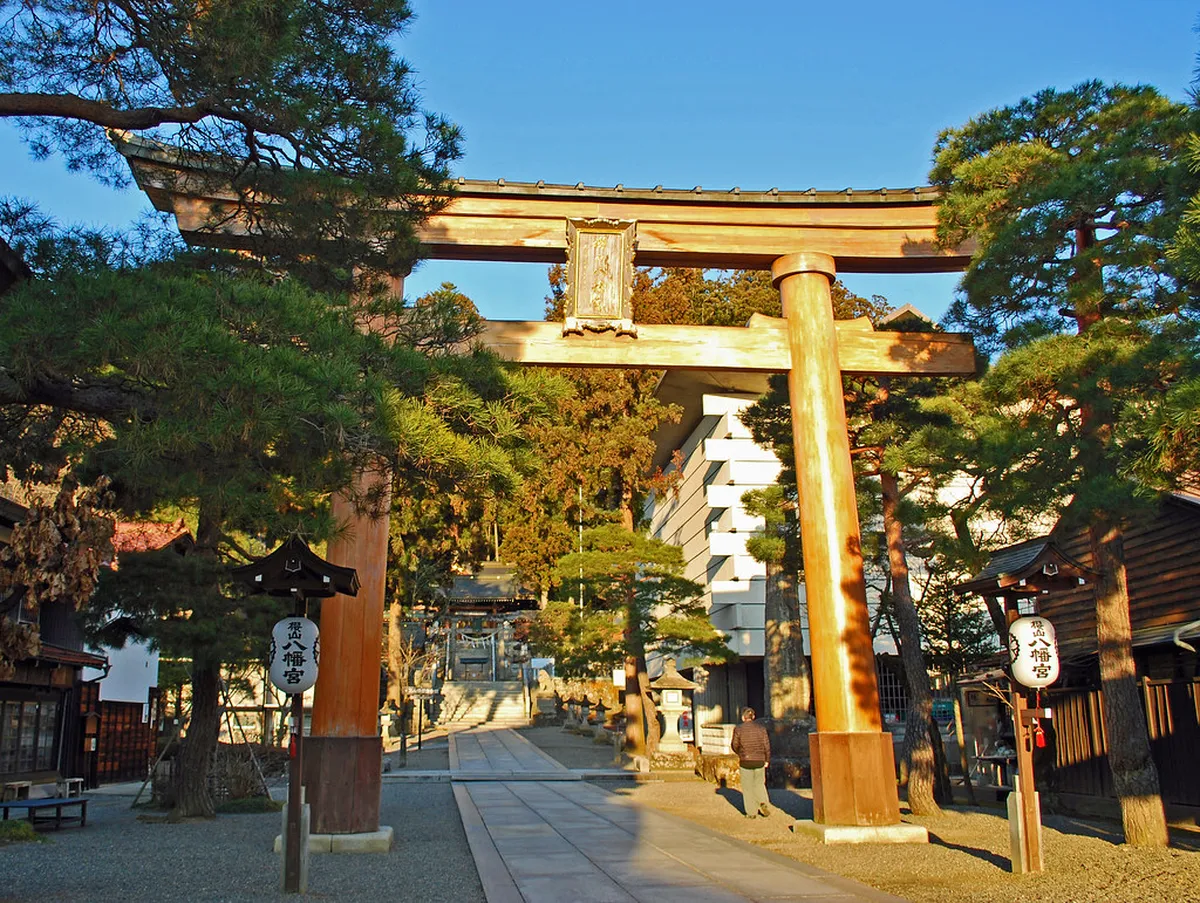
The shrine is the focal point for the Takayama Festival, held twice a year in April (Sanno Matsuri) and October (Hachiman Matsuri). These are two of Japan's three most beautiful festivals, featuring enormous lacquered floats and mechanical puppet shows. If your travel dates overlap with either festival, expect the entire old town to be extremely crowded and accommodation to be booked months in advance.
Eat the Local Hida Beef
Hida beef is Gifu Prefecture's answer to Kobe wagyu. The cattle are raised in the Hida highlands and graded A4 or A5 on the Japanese beef marbling scale. Two restaurants define the Takayama experience for this dish. Maruaki specializes in yakiniku — you grill thin-cut slices of beef yourself over a table burner. Lunch sets run 3,500–5,500 JPY and expect a queue of thirty to sixty minutes at noon. Check our guide to Hida Beef Experiences in Takayama for current wait time patterns.
Kyoya offers the traditional Hoba miso style instead. The beef arrives raw on a dried magnolia leaf atop a small charcoal brazier, cooked at your table with fermented miso paste and seasonal vegetables. This format is quieter and more atmospheric than yakiniku. Lunch sets are 2,800–4,200 JPY and reservations are possible — call ahead if you are visiting during festival weekends.
For a cheaper street-food version, Hida beef buns (gyunikuman) and Hida beef sushi are sold from stalls throughout the old town. The sushi — one or two pieces of lightly seared beef on a small rice pad — costs around 500–1,000 JPY per portion and is a satisfying snack between sightseeing stops. Both are best eaten immediately; the fat congeals quickly once cooled.
Sake Tasting at Local Breweries
Takayama has six sake breweries concentrated in Sanmachi Suji, all fed by the same pure snowmelt water from the surrounding mountains. Look for the sugidama — a large ball of cedar boughs hung above the entrance. A fresh green ball indicates a new batch has been pressed; as the ball dries and turns brown, the sake matures. It is a centuries-old signal system still used today.
Most breweries operate a self-pour tasting system. You purchase a small ceramic cup for 200–300 JPY, which serves as both the tasting vessel and a souvenir. You can then sample several varieties from labeled dispensers inside. Funasaka Brewery (open 08:30–18:00) has automated tasting machines stocked with ten or more varieties including yuzu-infused and seasonal limited editions. A sake breweries tour is a structured way to work through all six without doubling back.
Hirase Brewery focuses on junmai daiginjo — the premium, highly milled rice wine — and charges slightly more per tasting (400–500 JPY). Niki Shuzojo is the most compact of the six and the easiest to find from the station end of San-no-machi. Bring cash; older breweries often do not accept credit cards, and the tasting tokens must be purchased at a staffed counter before you approach the dispensers.
Miyagawa Morning Market
The Miyagawa Morning Market runs along the east bank of the Miyagawa River and has been a daily institution for over 300 years. Stalls open at 07:00 in summer (May–October) and 08:00 in winter. Arrive before 08:30 to browse in relative peace — Nagoya bus tours begin arriving around 09:30 and the walkways narrow quickly.
The market runs for about 400 metres along the riverbank. You will find handmade Sarubobo dolls, pickled vegetables, dried mushrooms, local honey, fresh mountain herbs, and seasonal produce. Prices are honest and most vendors welcome small haggling for larger purchases. Carry small denomination coins — the 500 JPY and 1,000 JPY coins are ideal — since older vendors rarely accept cards.
Budget about forty-five minutes for a full walk-through including a few purchases. The Owara Tamaten rice-cake stall near the south end of the market is worth the stop — these soft, slightly sweet sweets are made fresh on-site and cost around 200 JPY for three pieces. The market winds down by noon as vendors begin packing around 11:30.
Winter Illumination: How the Lottery System Works
Shirakawa-go holds a series of Yukidoro light-up events on selected evenings between late January and mid-February. The snow-covered thatched roofs are lit from below with warm lanterns, creating the postcard image most visitors have seen. Attendance is strictly limited to prevent the narrow village lanes from becoming dangerously overcrowded.
Access requires a pre-booked bus ticket from Shirakawa-go's designated access points — you cannot drive in or walk in independently. The ticket sale is managed through a publicly announced online lottery, typically opening in November for January and February events. Entry into the lottery is free, but winning a slot is not guaranteed. Each event evening admits around 750 visitors per session and typically runs two sessions (17:30–19:00 and 19:30–21:00). Slots sell out within hours of the lottery opening.
The practical steps: monitor the Shirakawa-go Tourism Association website from October onwards for the lottery announcement date, register during the application window (usually a two-week period in November), and await results by early December. If you do not win, resale is prohibited. The lottery is genuinely competitive — plan this as the anchor of your trip, not an afterthought, or accept that a daytime winter visit is the realistic alternative and is still exceptional for snow photography.
Winter illumination lottery slots sell out within hours of opening and tickets cannot be resold or refunded. Plan this as the anchor of your trip from the start — booking accommodation and transport before confirming the lottery outcome puts those plans at risk.
Using the JR Pass for Shirakawa-go
The standard JR Pass covers the train to Takayama but does not cover the Nohi Bus to Shirakawa-go. The Hida Wide View Limited Express from Nagoya to Takayama Station (about 2 hours 20 minutes) is fully JR Pass eligible. Once in Takayama, the bus to Shirakawa-go is a separate 2,600 JPY purchase outside the pass. Read our Tokyo to Takayama Train Guide for the best rail approach from Tokyo via Nagoya.
The better value option for many travelers is the Takayama-Hokuriku Area Tourist Pass, a regional pass covering Takayama, Shirakawa-go, and Kanazawa. It includes the Nohi Bus fare and typically costs around 14,000 JPY for five days. If your itinerary includes Kanazawa alongside Shirakawa-go, this pass almost always beats buying individual tickets. It is sold at Nagoya Station, Chubu Centrair Airport, and Takayama Station's tourist counter.
Book your Hida Wide View train seats at least three days ahead during peak seasons — the trains fill up and unreserved cars become uncomfortable for the two-hour mountain crossing. Platform assignments at Takayama Station change occasionally during festivals, so double-check the departure board on the day of travel.
Book Early and Plan Smart
The Nohi Bus reserved seats for morning departures (08:20 and 09:10) sell out weeks ahead during autumn foliage season (mid-October to mid-November) and cherry blossom season (late April). Book online as soon as your travel dates are fixed. For non-reserved buses, arrive at Bus Stop No. 4 at least twenty minutes early to join the queue — seats are first-come, first-served and the bus will not wait.
Popular Hida beef restaurants in Sanmachi Suji accept reservations — Kyoya in particular recommends calling ahead for dinner. The best ryokans with private onsen in Takayama book out three to six months in advance for festival weekends and winter illumination periods. Check the Takayama accommodation guide for current availability windows by season.
A practical one-day schedule: 07:30 Miyagawa Morning Market → 09:00 Sanmachi Suji + sake breweries → 09:50 Sakurayama Hachimangu Shrine → 10:30 bus terminal → 11:00 Nohi Bus to Shirakawa-go → 11:50 arrive Ogimachi → 12:00–16:30 village exploration (viewpoint, two farmhouses, lunch) → 17:00 return bus to Takayama → 18:00 Hida beef dinner. This schedule uses the mid-morning bus, which avoids the peak-hour reservation crunch while still leaving five hours in the village.
Frequently Asked Questions
Is a day trip to Shirakawa-go from Takayama enough?
Yes, four to six hours is usually sufficient to see the main village highlights. This timeframe allows you to visit the viewpoint and two farmhouses. Most travelers find a day trip very satisfying.
Does the JR Pass cover the bus to Shirakawa-go?
No, the standard JR Pass only covers trains to Takayama station. You must purchase a separate Nohi Bus ticket for about 2,600 JPY. Consider the Takayama-Hokuriku pass for better value.
What is the best time of year to visit?
Winter offers magical snow-covered landscapes, while autumn provides vibrant fall colors. May is also excellent for mild weather and fewer crowds. Each season has a unique charm.
Shirakawa-go from Takayama rewards travelers who come prepared. Secure the Nohi Bus reservation first, build the rest of the day around the village's quieter morning hours, and leave time for Sanmachi Suji and a proper Hida beef dinner on your return. The combination of living UNESCO architecture, sake culture, and mountain scenery is unmatched anywhere else on the Japan Alps circuit.
Pair this with our broader Takayama attractions guide for the full city overview, or plan a longer stay with our Shirakawa-go itinerary.
Free: The Takayama Essentials guide
Top things to do, where to stay, a perfect day plan, getting around, and the best time to go — a Takayama mini-guide you can take offline.
You might also like


Continue reading
More guides you'll find useful