Kurokawa Onsen Day Trip Guide: 10 Essential Planning Tips
Plan a perfect Kurokawa Onsen day trip with our guide to the best bathhouses, transportation tips, onsen etiquette, and a 10-step planning checklist.
On this page
Kurokawa Onsen Day Trip Guide: 10 Essential Planning Tips
Kurokawa Onsen stands as one of Japan's most scenic hot spring towns, and in 2026 it remains a bucket-list stop for Kyushu travelers. Tucked away in the lush valleys of northern Kumamoto Prefecture, this village delivers a peaceful escape from modern life without requiring an overnight stay. Many travelers choose a kurokawa onsen day trip to experience the traditional atmosphere — wooden buildings, stone paths, cedar-scented air — and return to the city the same evening.
The town is famous for its unified aesthetic, its absence of flashy neon signs, and the remarkably cooperative spirit of its thirty-odd ryokans. Each inn shares a common vision of preserving a rustic, natural environment for all guests. You can cover the main area on foot within a few hours, making it one of the most rewarding half-day or full-day excursions from Kumamoto. This guide covers everything from bus schedules and the wooden hopping pass to specific bathhouse picks and the best local beef in town.
Already planning a longer Kumamoto stay? Check our Kumamoto attractions guide for the full picture, or our Kumamoto 3-day adventure itinerary if you want to slot Kurokawa into a multi-day trip.
What is Kurokawa Onsen?
Kurokawa Onsen is a compact hot spring village located in the Minami-Oguni area of northern Kumamoto Prefecture, roughly 80 km northeast of Kumamoto City. Unlike the sprawling resort complexes found in other onsen towns, Kurokawa is built around roughly thirty ryokans in Kurokawa Onsen that have agreed to share a single aesthetic code: no large signs, no chain hotels, no synthetic materials on building facades. The Japan National Tourism Organization (JNTO) official guide describes it as one of Japan's most celebrated hot spring towns.
The result is a town that feels like one large, connected resort. Moss-covered stone lanterns line the paths between inns. The sound of the Tanoharu River threads through the valley. Mineral-rich waters bubble up from multiple geothermal sources, giving each bathhouse a subtly different water quality and color — from milky white sulfur baths to clear sodium bicarbonate pools known for softening skin.
What makes Kurokawa especially valuable for a day trip is its walkability. The core village — home to most participating ryokans, the visitor center, restaurants, and craft shops — is contained within a 15-minute walking radius. You do not need a car inside the town at all.
Getting to Kurokawa Onsen: Bus and Car Options
Getting to Kurokawa Onsen requires some planning because no train line serves the village. Your two main options are the highway bus and a rental car. Both are viable; the right choice depends on your group size, budget, and tolerance for mountain driving.
Highway Bus (Kyusanko Kyushu Odan Bus)
The Kyusanko Kyushu Odan Bus is the primary public transport link. It connects Kumamoto City, Aso, Kurokawa Onsen, and Yufuin in a single route. From Kumamoto Kotsu Bus Terminal (adjacent to Kumamoto Station), the ride to Kurokawa takes approximately 2 hours 45 minutes to 3 hours, depending on the stop. The one-way fare from Kumamoto is approximately 2,500 yen in 2026. Reservations are strongly recommended and can be made via the Japan Bus Online website — seats sell out on weekends and Golden Week.
Rental Car from Kumamoto
Driving from Kumamoto City takes roughly 2 hours via National Route 57 through the Aso highland plateau — one of the most scenic drives in Kyushu. The mountain roads are winding but well-maintained. A compact rental car from Kumamoto Station typically costs 5,000–8,000 yen per day plus fuel. Parking is available at the central village lot near the visitor center for around 500 yen per hour.
Bus vs. Car: Quick Comparison
| Factor | Highway Bus | Rental Car |
|---|---|---|
| Travel time from Kumamoto | ~3 hours | ~2 hours |
| One-way cost (per person) | ~2,500 yen | ~2,500–4,000 yen (split across group) |
| Flexibility | Fixed schedule | Full flexibility |
| Stress level | Low (no driving) | Medium (mountain roads) |
| Access to nearby sights (Mt. Aso) | Limited stop-offs | Easy detours |
| Best for | Solo travelers, couples | Groups of 3+, families |
Last Bus Warning: Don't Miss Your Return
The bus schedule is sparse in the late afternoon. Missing the last bus means either finding a ryokan bed on short notice or a very expensive taxi ride. Use the table below to plan your departure from Kurokawa:
| Destination | Last bus departs Kurokawa (approx.) | Note |
|---|---|---|
| Kumamoto City | 16:00 | Confirm current timetable at visitor center |
| Fukuoka (Hakata) | 15:30 | Requires change at Aso or Yufuin |
| Yufuin | 15:50 | Direct Odan Bus service |
Schedules change seasonally, so always verify at the Kurokawa Onsen Information Center when you arrive. Building a 30-minute buffer before the last bus is strongly advised.
How the Nyuto Tegata Onsen Hopping Pass Works
The Nyuto Tegata is Kurokawa's signature cedar wood pass, and it is the single most cost-effective purchase you can make as a day visitor. For 1,500 yen (2026 price), you receive a small wooden tablet with three detachable sticker seals. Each seal grants you one admission to any of the participating ryokan baths — including outdoor rotenburo that would otherwise cost 600–1,000 yen per entry.
The pass is available at the Kurokawa Onsen Information Center, which opens at 8:30 AM. It is valid for six months from purchase, so unused seals are not wasted if you only visit two baths on a short day. The Tegata also doubles as a charming souvenir: the cedar wood absorbs the mineral water smell over time.
Tips for maximizing the pass on a tight schedule:
- Buy it immediately on arrival — the Information Center can get crowded after 10:30 AM.
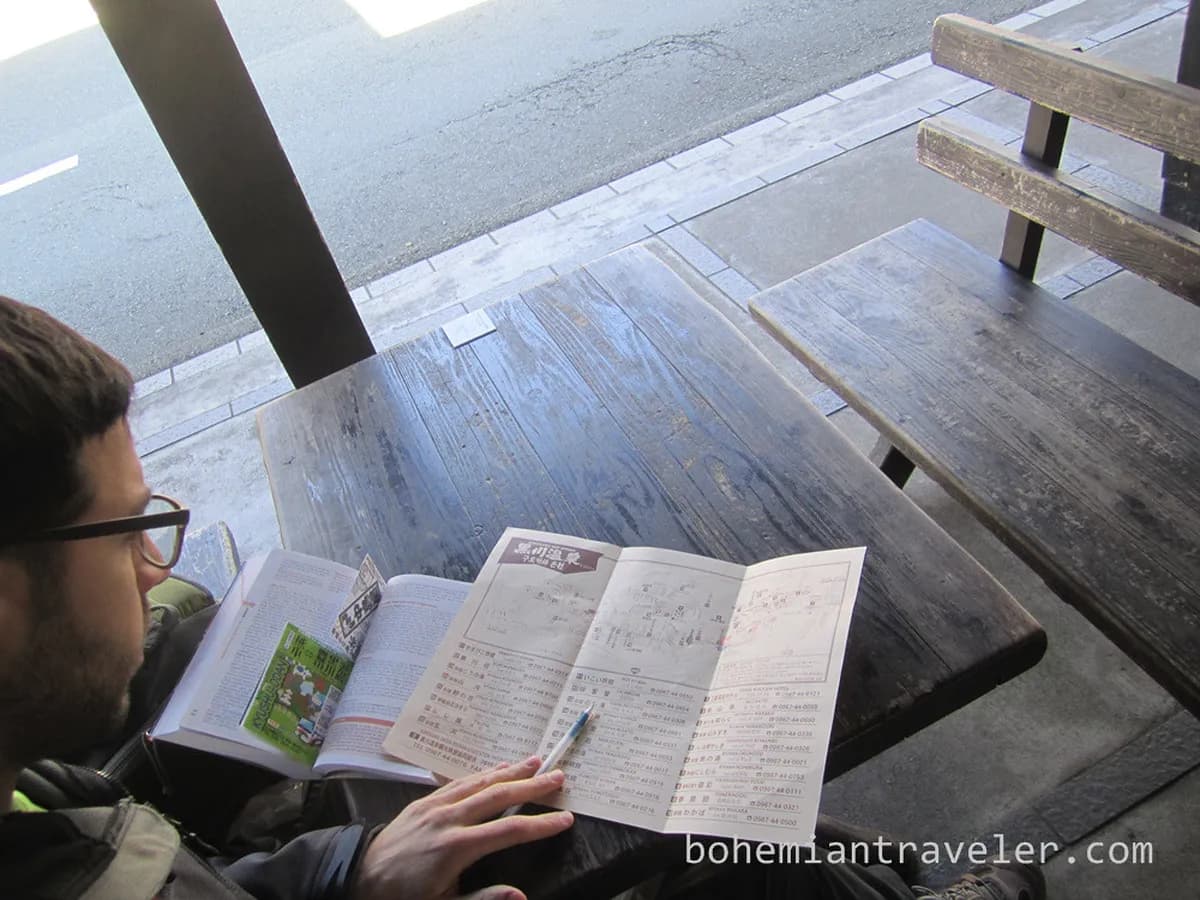
- Ask staff to mark the three bathhouses on your map before you leave the counter.
- Choose baths that form a logical walking loop rather than backtracking across the valley.
- The pass covers outdoor (rotenburo) baths, but some ryokans have premium cave baths that require a small supplement — ask before entering.
For a broader look at Kumamoto's hot spring scene, our Kumamoto onsen guide covers everything from Kurokawa to the city's urban bathhouses.
Best Bathhouses for Day Trip Visitors
With roughly thirty participating ryokans, choosing three baths for your Tegata can feel overwhelming. The options below are particularly well-suited for day visitors because they prioritize day-use guests during peak hours (10 AM–3 PM), offer easy access on foot, and deliver standout sensory experiences.
- Yamamizuki — Large riverside rotenburo with the sound of the Tanoharu River running just below the pools. Peaceful and natural vibe. Located at the edge of town; reachable on foot in 10 minutes from the visitor center. Best for: first-time visitors wanting a classic Kurokawa photo moment.
- Yama No Yado Shinmeikan (Cave Bath) — The most talked-about bath in town. A hand-carved rock tunnel leads to a dimly lit cave pool. Best for: visitors who want something visually unique. Note: the cave bath may require a small supplement above the Tegata seal.
- Ikoi Ryokan — Multi-level outdoor pools on the main street, highly accessible, and one of the most welcoming ryokans for day-use guests. Traditional rustic aesthetic. Best for: those with limited mobility or a tight schedule, as it is the most central option.
- Onsen Gosho Gekkoju — Premium garden setting with several outdoor pools at different elevations. Quieter than the central ryokans. Best for: travelers willing to walk 15 minutes for a more private experience.
- Okunoyu — Forested mountain bath with good mineral concentration. Known for its milky sulfur water. Best for: serious onsen enthusiasts who want therapeutic water quality over scenic river views.
Tattoo-Friendly Baths: Updated 2026
Tattoo policies in Kurokawa have relaxed compared to five years ago, but they vary significantly by establishment. Here is an honest summary for 2026:
| Bath / Ryokan | Policy | Notes |
|---|---|---|
| Ikoi Ryokan | Stickers required | Stickers available at entrance; small tattoos acceptable |
| Yamamizuki | Stickers required | Large tattoos may be asked to use private bath |
| Fumoto Ryokan | Generally welcoming | Confirm directly; policy subject to change |
| Container House Villa Kurokawa | Fully open | Private villa baths; no shared pools |
| Any ryokan: private bath (kashikiri) | Fully open | Book 1–2 hours in advance; fee ~2,000–3,000 yen |
The Information Center maintains an up-to-date list. When in doubt, ask staff on arrival — they will match you with the most suitable bath for your situation.
Restaurant and Food Recommendations in Kurokawa
Dining in Kurokawa is centred on one headline ingredient: Aka-ushi (Red Cow) beef, the regional Kumamoto delicacy prized for its deep marbling and tender texture. You will find it served as donburi (rice bowls), yakiniku-style on tabletop grills, and as thick steaks at a handful of village restaurants.
Tips for eating well on a day trip:
- Eat early. Most restaurants open at 11:00 AM and popular spots fill up by 11:30 AM. Arrive before noon to avoid a 40-minute wait.
- Budget 1,500–3,000 yen for a sit-down Aka-ushi meal. Lunch sets are significantly cheaper than dinner menus.
- Street snacks between baths keep energy levels up. Look for: steamed manjuu buns (100–150 yen each), mitarashi dango on bamboo skewers, and seasonal soft-serve ice cream — a beloved ritual after a hot soak.
- Most small shops close by 16:00, so do not plan a late-afternoon snack run.
- Nearly all establishments are cash only. Bring sufficient yen — the nearest ATM is a 30-minute drive away.
Things to Do in Kurokawa Other Than Onsen-Hopping
If you need a break from the water — or if you arrive early and the bathhouses have not yet opened for day visitors — the town offers several worthwhile diversions.
- Jizo-do Shrine hike: A 10-minute uphill walk from the main street leads to a small forest shrine decorated with hundreds of Nyuto Tegata passes left as offerings by previous visitors. It is a genuinely moving sight and one of the most photographed spots in the village. The path is steep but paved.
- Artisan shopping: Narrow alleys behind the main strip hide boutiques selling handmade pottery, cedar bath products, and mineral bath salts sourced directly from the springs. These make far more thoughtful souvenirs than standard airport goods.
- Tanoharu River walk: A riverside path runs along the valley floor past several ryokans. It is the best way to scout bath locations before committing your Tegata seals.
- Mt. Aso day extension: If you have a rental car, Kurokawa sits only 30–40 minutes from the Aso-Kuju National Park caldera rim. Adding a volcano walk to your day trip is entirely feasible if you depart Kurokawa by 14:00.
For a curated list of Kumamoto Prefecture highlights beyond Kurokawa, see our full Kumamoto attractions guide.
Basic Onsen Etiquette for Bathing in Japan
Following local customs is not merely polite — it is expected. Most ryokans will gently redirect guests who violate the rules, and in some cases you may be asked to leave the bathing area. Here is a concise checklist for first-timers:
- Shower first, always. Wash your entire body at the shower stations (kake-yu) before stepping into any communal pool. Soap and shampoo are provided at most ryokans.
- No swimsuits. Traditional Japanese onsen are entered fully unclothed. The small modesty towel (tenugui) should be kept out of the water — place it folded on your head or on a poolside rock.
- No loud voices or splashing. Onsen are contemplative spaces. Speak quietly and move slowly.
- Keep hair out of the water. Tie it up or use a hair band before entering.
- No cameras or phones in the bathing areas. Photography is strictly prohibited in all changing rooms and baths.
- Yukata after bathing. Many ryokans provide a lightweight cotton yukata robe. Wearing it while strolling between baths is perfectly acceptable and part of the Kurokawa experience.
Sample Kurokawa Onsen Day Trip Itinerary
A well-timed kurokawa onsen day trip can comfortably fit three baths, a proper lunch, shrine visit, and some shopping into a six-hour window in the village. Here is the sequence that works best based on crowd patterns in 2026:
- 09:45 — Arrive and buy Nyuto Tegata. Get to the Information Center before it fills up. Pick up a printed map and have staff mark your three chosen baths. Stow luggage in coin lockers (500–800 yen).
- 10:00–11:00 — First bath. Start with the farthest bath (e.g., Yamamizuki riverside) while energy is high and crowds are thin. Allow 45–60 minutes including showering and changing.
- 11:00–11:30 — Jizo-do Shrine walk. Use the break between baths to hike up to the shrine and take in the view of the valley.
- 11:30–12:30 — Lunch. Hit the Aka-ushi restaurants before the 12:00 rush peaks. Aim to be seated by 11:40.
- 12:30–13:30 — Second bath. Choose a centrally located bath (e.g., Ikoi Ryokan) for easy access and a different water character.
- 13:30–14:00 — Shopping and snacks. Browse the artisan boutiques and grab a dango or soft-serve from the street stalls.
- 14:00–15:00 — Third bath. Your final soak. Shinmeikan cave bath is ideal here — save the most memorable experience for last.
- 15:15 — Begin walk to bus stop. The main bus stop is a 5-minute walk from most ryokans. Check the board for the current last bus time and be there 10 minutes early.
If you are linking Kurokawa to a broader Kumamoto trip, our Kumamoto 3-day adventure itinerary shows exactly how to build Kurokawa into Day 2 alongside Mt. Aso and Kumamoto Castle.
Practical Tips: Tattoos, Luggage, and Cash
A few logistics that catch first-time visitors off guard:
- Tattoos: See the tattoo policy table in the Bathhouses section above. The safest universal option is booking a private kashikiri bath in advance (2,000–3,000 yen per 45 minutes). The Information Center can help you book on arrival.
- Luggage storage: The Kurokawa Onsen Information Center runs coin lockers (500 yen, small bags) and a manned storage service (800 yen, large bags). Operating hours generally match the center's hours — confirm on arrival. This is essential if you are traveling between cities with rolling luggage.
- Cash only: Carry at least 6,000–8,000 yen per person for: Tegata pass (1,500 yen), two bus fares (5,000 yen round-trip from Kumamoto), lunch (1,500–2,500 yen), and snacks. The nearest konbini ATM is in Minami-Oguni, a 30-minute drive away.
- Best time to visit: Weekdays in spring (March–May) and autumn (October–November) offer the best combination of foliage, mild temperatures, and manageable crowds. Summer weekends and Golden Week are the most congested periods — arrive before 10:00 AM if visiting during peak season.
- Mobile signal: Coverage in the valley is patchy with some carriers. Download offline maps and the bus timetable PDF before leaving Kumamoto.
How Many Days to Stay: Is a Day Trip Enough?
For most travelers, a well-planned day trip delivers a genuinely complete Kurokawa experience. You can visit three different baths, eat a proper lunch, walk the shrine path, and browse the artisan shops within six hours in the village. This is ideal for travelers based in Kumamoto City, those on a Kyushu rail pass covering multiple cities, or anyone who simply cannot spare a full night.
However, what a day trip cannot give you is the evening atmosphere. After the last day buses depart around 16:00, Kurokawa transforms. The stone lanterns glow, the river sounds louder, and the ryokans shift to private kaiseki dinner mode. Overnight guests enjoy pre-dawn private soaks when the mineral pools are utterly silent. If your schedule allows, even a single night dramatically deepens the experience.
A practical middle ground: book a ryokan for one night, depart mid-morning the following day, and combine with an Mt. Aso stop on the return leg. That structure — covered in our Kumamoto 3-day adventure itinerary — is how most repeat visitors choose to revisit Kurokawa in 2026.
Frequently Asked Questions
How much time should you plan for a Kurokawa Onsen day trip?
Plan for at least five to six hours in the village to visit three baths, have lunch, and explore the shrine path. If you are taking the bus from Kumamoto, add approximately three hours each way for transit. Arriving by 10:00 AM and catching the 16:00 return bus gives you the ideal window.
Can you get to Kurokawa Onsen by public transportation?
Yes. The Kyusanko Kyushu Odan Bus is the primary option, running daily from Kumamoto Station (approx. 2 hours 45 minutes, 2,500 yen one-way in 2026). Reservations are required and can be made via the Japan Bus Online website. There is no train service to the village.
Which ryokan at Kurokawa Onsen are tattoo-friendly?
Policies vary. Fumoto Ryokan and Container House Villa Kurokawa are generally more open, while most others require small tattoos to be covered with waterproof stickers provided at the entrance. Booking a private kashikiri bath (any ryokan) is the fully reliable option for larger tattoos. Always confirm current policy at the Information Center on arrival.
Is there luggage storage at Kurokawa Onsen?
Yes. The Kurokawa Onsen Information Center has coin lockers (500 yen) and a manned luggage storage counter (800 yen for large bags). Both are located near the main bus stop. Storage is only available during the center's operating hours, so collect bags before it closes in the late afternoon.
How much does the Nyuto Tegata onsen hopping pass cost in 2026?
The Nyuto Tegata pass costs 1,500 yen in 2026 and grants admission to any three of the approximately thirty participating ryokan baths. It is valid for six months, so unused seals are not lost if you only visit two baths on a short day. Purchase it at the Kurokawa Onsen Information Center on arrival.
A kurokawa onsen day trip is one of the most rewarding half-day or full-day excursions in Kyushu in 2026. The combination of thermal waters, mountain scenery, artisan craft, and Aka-ushi beef creates an experience that is impossible to replicate anywhere else in Japan. Whether you end up soaking in a hand-carved cave or a riverside rotenburo, the memory tends to outlast the muscle relaxation.
Plan your transportation carefully, buy the wooden Tegata pass first thing, and build in a 30-minute buffer before the last bus. The village rewards slow, unhurried exploration — and if you find yourself wishing you had stayed the night, that is probably the strongest recommendation Kurokawa can give you.
Ready to plan more of your Kumamoto trip? Start with our Kumamoto attractions guide for must-see highlights, or browse our Kumamoto onsen guide for the full hot spring landscape across the prefecture.