Kumamoto 3-Day Itinerary: Castle, Mount Aso & Kurokawa Onsen
Planning 3 days in Kumamoto? This 2026 itinerary covers the city core, Mount Aso volcano, Kurokawa Onsen, and the Amakusa Islands — with practical tips on transport, accommodation, and daily budget.
On this page
Kumamoto 3-Day Itinerary: Castle, Mount Aso & Kurokawa Onsen (2026)
If you only have a single day in Kumamoto, the Kumamoto day-trip itinerary has you covered with a tight city loop. This 3-day plan is for travelers who want to go deeper — combining the city core on Day 1 with a full volcanic adventure on Day 2 (Mount Aso + Aso Shrine + Kurokawa Onsen overnight) and a coastal or cultural escape on Day 3 (Amakusa Islands or an alternate deep-dive). Three days is the sweet spot: long enough to experience the prefecture's extraordinary range, short enough to stay energetic throughout. Fukuoka and Osaka travelers can add this as a multi-city Kyushu leg within broader itineraries.
Kumamoto sits at the heart of Kyushu, roughly 1 hour 20 minutes from Fukuoka by Shinkansen and about 3 hours from Osaka. Its headline attraction — a magnificent hilltop castle — survived a catastrophic 2016 earthquake and a decade of painstaking restoration. The surrounding region adds one of the world's largest active calderas, a revered mountain shrine, Japan's most atmospheric hot-spring village, and a UNESCO-listed archipelago shaped by hidden Christian history. You won't find this combination anywhere else in Japan.
Free: The Kumamoto Essentials guide
Top things to do, where to stay, a perfect day plan, getting around, and the best time to go — a Kumamoto mini-guide you can take offline.
3-Day Kumamoto at a Glance
Here is the logical flow for three days, designed to minimise backtracking and make the most of each region's geography:
- Day 1 — City Core: Kumamoto Castle, Sakuranobaba Josaien, Suizenji Garden, Shimotori dining + Kumamoto ramen dinner
- Day 2 — Volcanic Highlands: Drive or bus to Mount Aso (Nakadake Crater + Kusasenri grasslands), Aso Shrine, overnight at Kurokawa Onsen ryokan
- Day 3 — Amakusa Islands (recommended) or cultural deep-dive (Shimada Museum, Miyamoto Musashi, Hosokawa legacy)
The itinerary is designed around a rental car from Day 2 onward — public buses to Aso exist but limit your flexibility significantly. See the transport section for bus alternatives if you prefer not to drive.
Day 1: Kumamoto City Core — Castle, Garden & Ramen
Morning: Kumamoto Castle (8:30 AM – 12:00 PM)
Start early at Kumamoto Castle — one of Japan's three great castles and a symbol of the city's resilience after the 2016 Kumamoto Earthquakes. The main keep is fully restored and open as of 2026, with interior exhibits tracing the Hosokawa clan's 240-year rule and the 1877 Satsuma Rebellion. For official visitor details, see the official Kumamoto Castle guide. Arriving by 8:30 AM lets you photograph the iconic black-lacquered wooden exterior before tour groups arrive.
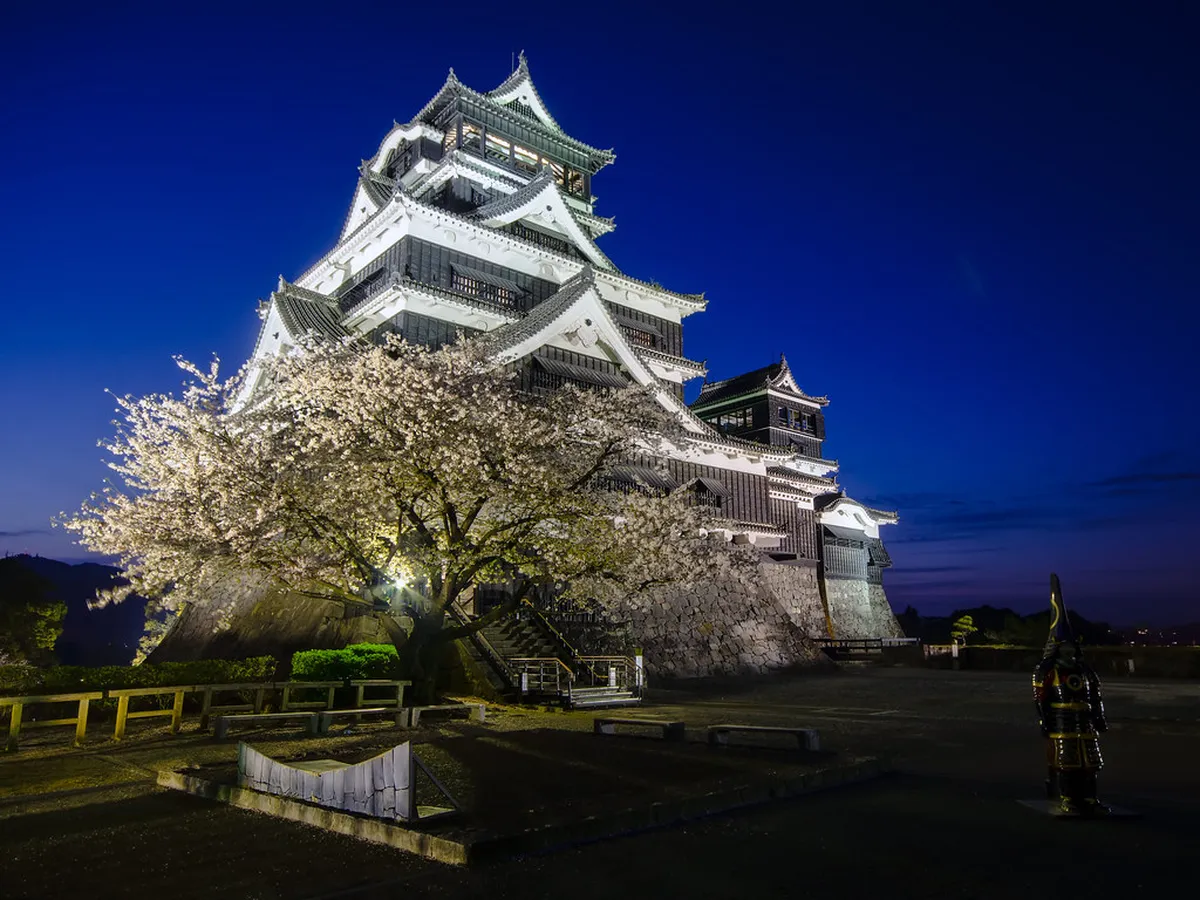
Plan at least 2.5 hours to walk the full grounds. The massive musha-gaeshi stone walls — engineered specifically to defeat ninja infiltrators — are engineering marvels worth studying up close. Note that some secondary yagura (turrets) are still under restoration; check the castle website before visiting for the latest path openings.
2026 entry fee: ¥800 adults, ¥300 children. Open daily 8:30 AM – 5:30 PM (last entry 5:00 PM).
Late Morning: Sakuranobaba Josaien (12:00 PM – 1:30 PM)
Walk five minutes downhill to Sakuranobaba Josaien, a recreated Edo-period castle town at the foot of the main gate. The complex holds craft shops, a Kumamoto mascot Kumamon Square, and the Wakuwaku-za interactive history museum. This is the best place to try ikinari dango (steamed bun with sweet potato and red bean) — a local sweet that you won't find outside Kumamoto.
Lunch here is convenient: several restaurants serve local specialties including karashi renkon (lotus root stuffed with mustard miso) and Kumamoto-style ramen for around ¥1,000–1,500.
Afternoon: Suizenji Garden (2:00 PM – 4:30 PM)
Take the city tram (Line 2, about 20 minutes, ¥180) to Suizenji Garden. This 300-year-old landscape garden was commissioned by the Hosokawa lords as a private retreat and recreates the 53 post towns of the historic Tokaido road in miniature, with a sculpted hill representing Mount Fuji at its centre. The spring-fed pond is crystal clear — water flows from deep inside Mount Aso via underground channels.
Walk the circular path (about 30 minutes) and stop for a matcha tea ceremony at the thatched-roof teahouse overlooking the water. It costs ¥500 for matcha + a traditional sweet and is one of the more memorable moments of any Kumamoto visit. Early morning or late afternoon light is best for photography.
2026 entry fee: ¥400 adults, ¥200 children. Open 7:30 AM – 6:00 PM (March–November); 8:30 AM – 5:00 PM (December–February).
Evening: Shimotori Arcades + Kumamoto Ramen Dinner
Head back toward the city centre and spend the evening in the Shimotori and Kamitori covered arcades. These pedestrian streets are the social heart of Kumamoto with izakayas, ramen shops, and craft-beer bars open until late. This is the place to try Kumamoto ramen — a rich tonkotsu pork-bone broth with a distinctive topping of mayu (blackened garlic oil) that sets it apart from Fukuoka's style.
- Kokutei Honten — regarded as the city's most traditional Kumamoto ramen shop; expect a short queue after 7 PM; bowl from ¥850
- Kousyouya — popular with locals for the intense mayu flavour; open until midnight
- For horse meat sashimi (basashi), try Sugimoto in the Shimotori arcade; set menus ¥4,000–6,000
Day 1 transport tip: Buy a one-day tram pass at the station for ¥500 — it covers all tram rides and gives small discounts at Suizenji Garden and several museums.
Day 2: Mount Aso Volcano + Aso Shrine + Kurokawa Onsen
Day 2 is the centrepiece of this itinerary and arguably one of the most dramatic days you can spend anywhere in Japan. Pick up your rental car by 8:00 AM (see transport section) and head east toward the Aso caldera — about 1 hour 20 minutes from central Kumamoto.
Read the dedicated Mount Aso day trip from Kumamoto guide for full details on crater access, Kusasenri, and the Aso Volcano Museum. Here is the Day 2 flow:
Morning: Nakadake Crater + Kusasenri (9:30 AM – 12:30 PM)
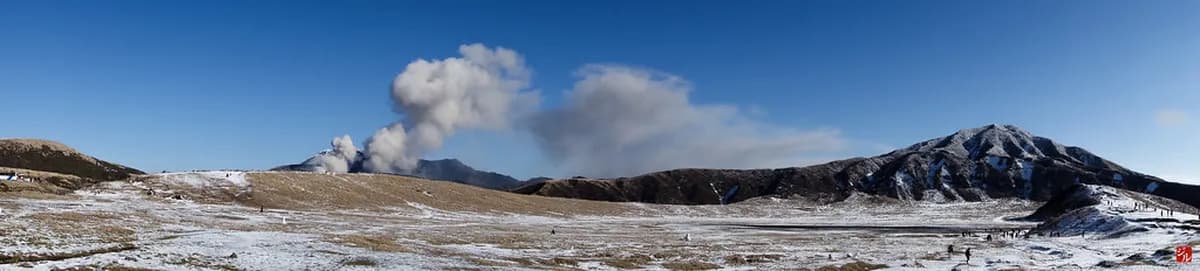
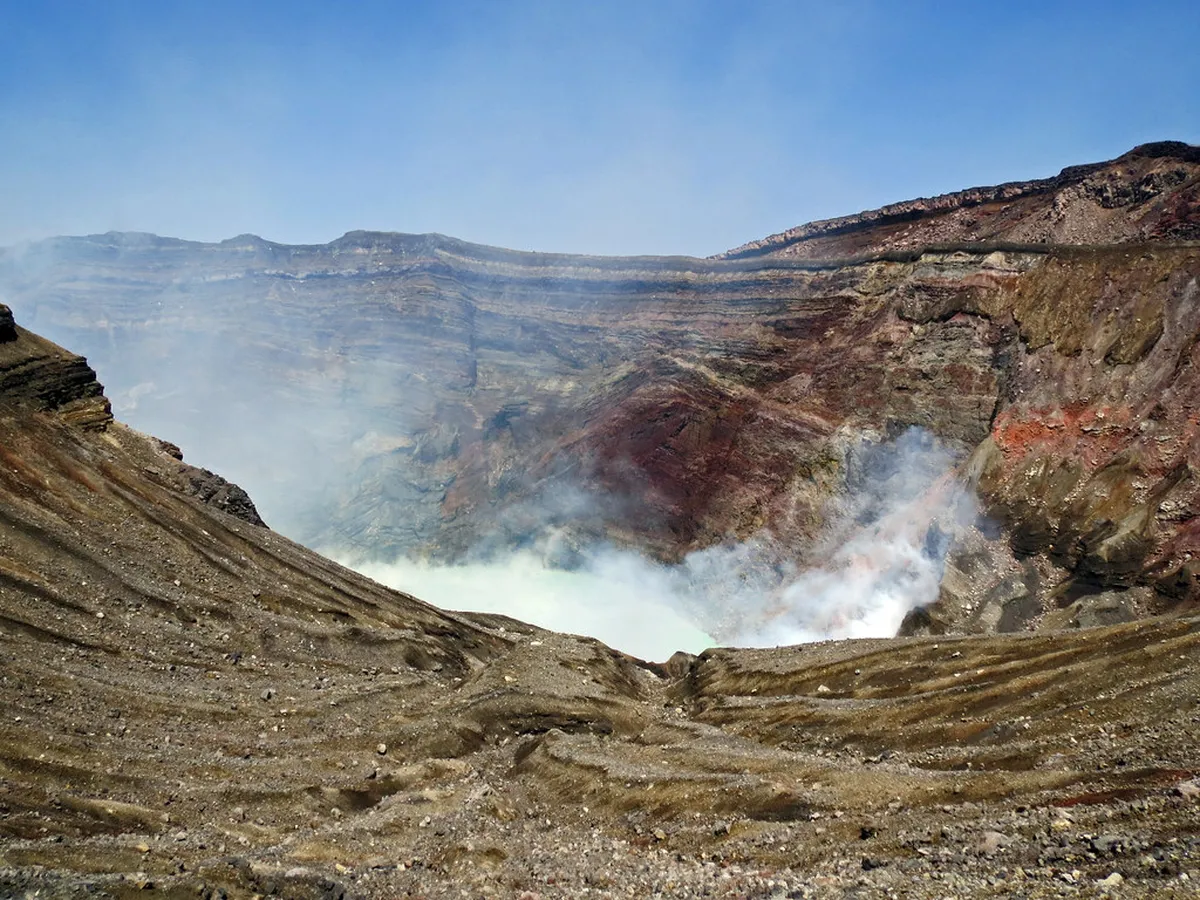
Mount Aso is one of the largest active volcanic calderas on Earth — approximately 25 km north to south and 18 km east to west, home to around 50,000 people living inside its walls. The main visitor target is Nakadake, the most active of Aso's five peaks, whose turquoise crater lake and fumarolic vents create an otherworldly landscape. The Aso-Kuju National Park official site provides current volcanic alert levels and park information.
Mt. Aso crater access depends on the JMA volcanic alert level. Level 2 or above closes the rim with no advance warning. Always check the Aso Volcano Information page the morning of your visit — the Daikanbo viewpoint on the northern rim is the best fallback when the crater is closed.
Drive up to the Nishisensuikyo parking area (free) and walk the paved path to the crater viewing platform (15 minutes). Budget 45 minutes at the crater itself — the colours shift as sulphuric gas concentrations change throughout the morning. From there, drive 10 minutes to the Kusasenri plateau, an open meadow with two small lakes inside an old sub-crater. The contrast of rolling green grassland with smoking peaks in the background is one of Japan's most photogenic landscapes. Visit the Aso Volcano Museum (¥1,100) inside Kusasenri if weather limits crater access.
Afternoon: Aso Shrine (1:30 PM – 3:00 PM)
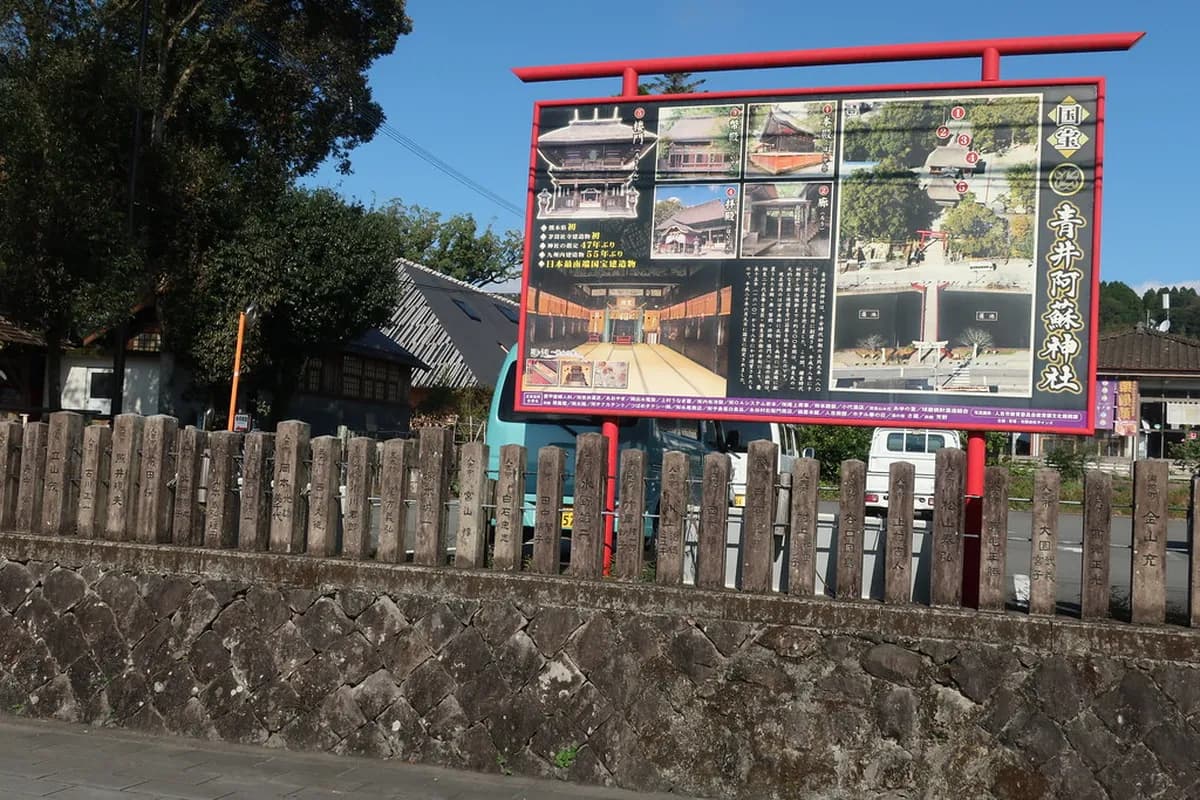
Drive down to Aso town (25 minutes) and visit Aso Shrine — one of Japan's oldest shrines, believed to have been founded over 2,000 years ago and dedicated to the deity Takeiwatatsu-no-Mikoto. The shrine was also badly damaged in 2016, and major restoration work has been ongoing; the iconic roumon (tower gate) is scheduled for full reopening in late 2026 or early 2027. The grounds remain atmospheric and worth an hour, with ancient stone lanterns and a spring sacred to the caldera deity.
Lunch near Aso: Several restaurants around Aso Station serve local Aso Takasugi beef (wagyu raised on caldera pastures) for around ¥2,000–3,000 per set. Book ahead on weekends.
Late Afternoon to Evening: Kurokawa Onsen Overnight (3:30 PM onward)
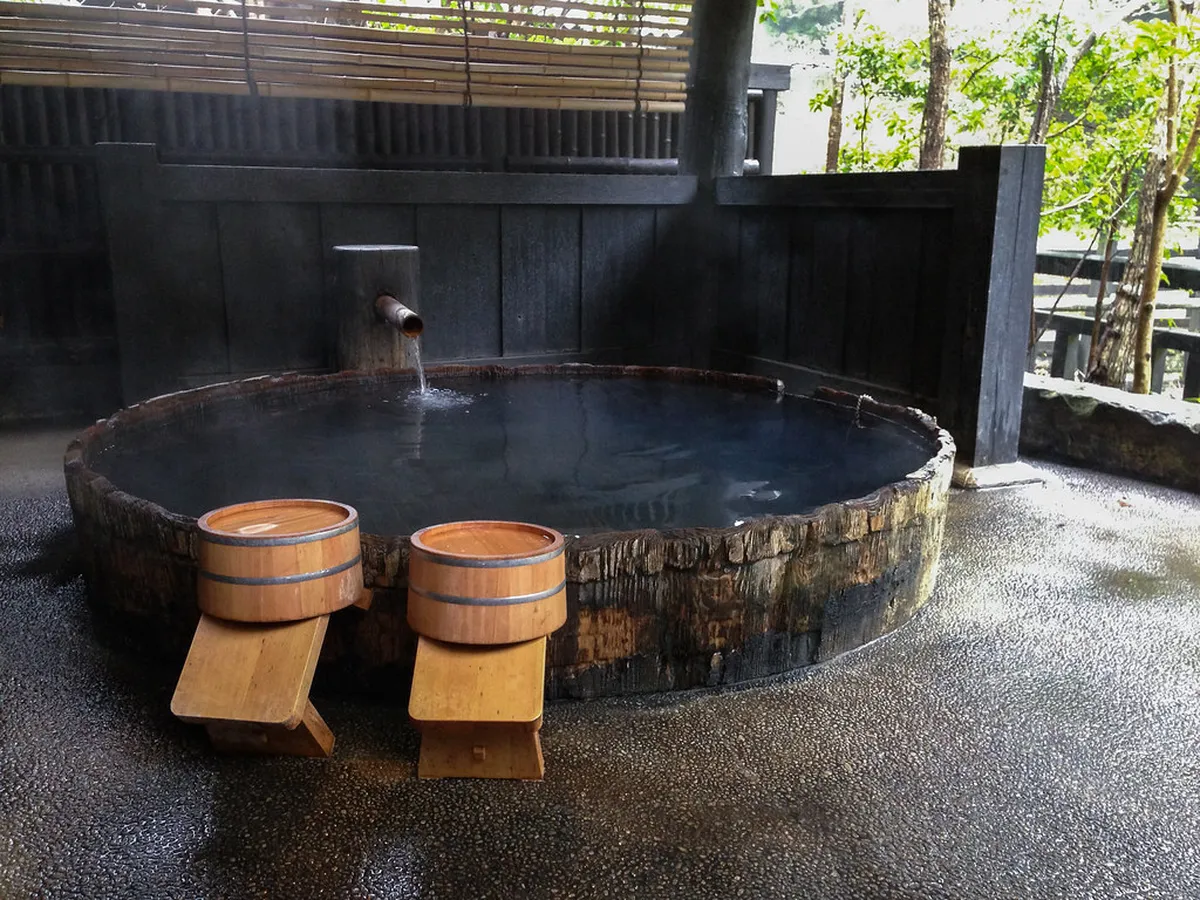
Drive 50 minutes north from Aso to Kurokawa Onsen, consistently rated one of Japan's most beautiful hot-spring towns. Unlike large resort-style onsen complexes, Kurokawa is a compact village of around 30 ryokan with open-air (rotenburo) baths tucked into a forested gorge along the Tanoharu River.
The signature experience is the Rotemburo Meguri pass (¥1,500 in 2026) — a wooden disc that admits you to the outdoor baths at any three participating ryokan. Even if you are staying overnight, the pass is a good way to explore different baths: each ryokan has its own spring chemistry and bath design. Staying overnight at a Kurokawa ryokan (from ¥15,000 per person including dinner and breakfast) means you can use the baths after day-trippers leave and wake up to a silent mist-covered valley.
Day 2 driving summary: Kumamoto → Nakadake Crater (80 km, 1h 20m) → Kusasenri (10 km, 15m) → Aso Shrine (25 km, 30m) → Kurokawa Onsen (45 km, 50m). Total approximately 160 km.
Day 3: Amakusa Islands (Recommended) or Cultural Deep-Dive
Day 3 offers a genuine fork in the road. Both options are excellent; your choice depends on whether you want to add a coastal UNESCO experience or spend more time in the city's cultural layer.
Option A: Amakusa Islands (Highly Recommended)
Drive from Kurokawa back to Kumamoto city (1h 30m) and then continue southwest over the five Amakusa bridges to the Amakusa archipelago — a collection of islands off the western coast of Kumamoto Prefecture. Budget approximately 2 hours' driving from Kurokawa to the main island of Shimoshima. Alternatively, return your car to Kumamoto and take the high-speed ferry from Misumi Port (50 minutes to Matsushima).
Amakusa's defining history is its role as the centre of Japanese hidden Christianity. After the Tokugawa Shogunate banned Christianity in 1637, an estimated 20,000–37,000 Christian villagers launched the Shimabara-Amakusa Rebellion. The survivors went underground, secretly practising their faith for over 200 years as kakure kirishitan (hidden Christians). The Amakusa Christian Museum (¥540) in Sakitsu village — whose white church sits directly on the water's edge — tells this story compellingly. The village's unique tidal street and the church are part of the "Hidden Christian Sites in the Nagasaki Region" UNESCO World Heritage inscription.
Beyond the history, Amakusa offers excellent seafood (local tairagi fan scallops and flying fish are superb), dolphin-watching boat tours in Itsuwamachi (year-round, ¥3,000–4,000), and a slower pace than the mainland. If you are returning to Kumamoto for the evening, budget 4–5 hours on the islands and head back by 5 PM.
Option B: Cultural Deep-Dive in Kumamoto City
Return to Kumamoto city from Kurokawa (1h 30m drive) and spend the morning exploring sites typically rushed on shorter trips:
- Shimada Museum of Arts — houses personal effects and original scrolls of the philosopher-swordsman Miyamoto Musashi, who spent his final years in Kumamoto under Hosokawa patronage and wrote The Book of Five Rings here in 1645. Entry ¥500; the museum forest walk is serene.
- Kumamoto Prefectural Museum of Art — strong collection of Meiji-era painting and a permanent section on the castle's reconstruction; free entry to the main gallery.
- Kumamoto City Museum (Sannomaru Shōzōkan) — inside the castle grounds, focused on the city's post-earthquake resilience story.
Finish with a final lunch in the Shimotori arcade and pick up local souvenirs: Kumamoto's signature ikinari dango, karashi renkon (packed for travel), and Kumamon-branded everything.
Where to Stay in Kumamoto
For a 3-day itinerary, split your accommodation across two nights: Nights 1 and 3 in Kumamoto city; Night 2 at a Kurokawa Onsen ryokan. This eliminates backtracking and puts you at the crater with fresh energy in the morning.
Kumamoto City
- Budget (¥5,000–8,000/night): Dormy Inn Kumamoto and Toyoko Inn Kumamoto are reliable mid-budget chains near the station with excellent breakfast buffets. Guest houses in the Shimotori area start around ¥3,500 per person in dorms.
- Mid-range (¥9,000–15,000/night): ANA Crowne Plaza Kumamoto New Sky (city views, pool) and Mitsui Garden Hotel Kumamoto (contemporary, walkable to arcades) are the standout options. Both book out weeks in advance during cherry blossom (late March to early April) and autumn foliage (November) seasons.
- Upscale (¥20,000+/night): The Solaria Nishitetsu Hotel Kumamoto in the Shimotori area offers large rooms with castle views from upper floors.
Kurokawa Onsen (Night 2)
Virtually every accommodation in Kurokawa is a traditional ryokan. The village has around 30 options ranging from intimate family-run inns to more polished boutique properties:
- Yamamizuki — riverside rotenburo, kaiseki dinner, highly rated; from ¥20,000 per person with two meals
- Oku no Yu — quieter location, excellent private baths, mountain views; from ¥18,000 per person
- Yamabiko Ryokan — most affordable in the village while still traditional; from ¥14,000 per person
Book Kurokawa at least 2 months ahead for autumn (October–November) and Golden Week (late April to early May). Summer and late winter are easier to secure last-minute.
The Rotemburo Meguri bath pass (¥1,500) admits you to the outdoor baths at any three Kurokawa ryokan — even if you are staying overnight. Use it to explore different spring chemistries across the village after day-trippers have left.
Getting Around Kumamoto: Transport Guide
Getting to Kumamoto
Kumamoto is well-connected by Shinkansen. From Hakata (Fukuoka): 36 minutes on the Sakura/Mizuho, from ¥3,020. From Shin-Osaka: approximately 2h 45m on the Sakura, from ¥16,140. From Tokyo: approximately 5h via Nozomi to Hakata + Sakura, or fly (ANA/Peach/Starflyer fly Tokyo Haneda/Narita to Kumamoto Airport, ~1h 20m).
An All Kyushu JR Pass (¥22,000 for 5 days) covers all Shinkansen and limited express trains on Kyushu — cost-effective if you are combining Kumamoto with Beppu, Kagoshima, or Nagasaki.
Getting Around Kumamoto City
The city tram (two lines, ¥180 flat fare) connects the station, castle, and Suizenji Garden efficiently. A one-day tram pass costs ¥500 and pays off after three rides. Taxis are metered and inexpensive for short hops (station to castle around ¥700–900). Central Kumamoto is very walkable — the castle, Sakuranobaba, and the arcades form a compact triangle.
Getting to Mount Aso and Kurokawa
By car (recommended): Rent from Kumamoto Station (Toyota Rent-a-Car, Times Car Rental, and Nippon Rent-a-Car all have branches). A compact car costs ¥7,000–9,000/day in 2026. An International Driving Permit (IDP) is required — arrange this before departure at your home country's automobile association. All rental cars have English-compatible GPS.
By public transport: Take the JR Hohi Line from Kumamoto Station to Aso Station (1h 30m, ¥1,140). From Aso Station, Kyushu Sanko buses run to the crater area (50 minutes, ¥820) and to Kurokawa Onsen (50 minutes, ¥1,600). Check the timetable carefully — buses run only a few times per day and may not run during volcanic alert level 2+. The Kyushu Odan Bus connects Kumamoto → Aso → Kurokawa → Beppu in a single route, useful if you are continuing onward.
Day trips from Fukuoka: Several operators (GetYourGuide, Klook) run guided minibus tours covering Aso + Kurokawa in one day from Fukuoka for ¥12,000–16,000. Good option if you only have one day for the highlands and don't want to drive.
2026 Budget Estimate for 3 Days in Kumamoto
| Category | Cost (¥ per person) |
|---|---|
| Accommodation (2 city nights + 1 Kurokawa ryokan with meals) | 40,000 |
| Meals on city days (×2) | 5,000–8,000 |
| Transport (tram pass ×2, rental car + fuel) | ~13,000 |
| Attractions (Castle, Suizenji, Aso Museum, Amakusa Museum, bath pass) | 4,340 |
| Total (excl. Shinkansen + flights) | ~65,000–75,000 |
Below is a realistic per-person budget for the full three-day itinerary. Figures are in Japanese yen and reflect 2026 prices (exchange rate at time of research: approximately ¥155–160 per USD).
- Accommodation: 2 nights Kumamoto city mid-range hotel (¥10,000 × 2 = ¥20,000) + 1 night Kurokawa ryokan with meals (¥20,000) = ¥40,000 per person
- Meals (city days): ¥2,500–4,000/day × 2 days = ¥5,000–8,000
- Transport: Shinkansen (varies by origin) + city tram pass ¥500 × 2 + rental car ¥8,000 + fuel ¥2,000 = ~¥13,000 (excluding Shinkansen)
- Attraction entries: Castle ¥800 + Suizenji ¥400 + Aso Museum ¥1,100 + Aso Shrine free + Amakusa Museum ¥540 + Kurokawa bath pass ¥1,500 = ¥4,340
- Total (excluding international flights + Shinkansen): roughly ¥65,000–75,000 per person (≈ USD 415–480)
Budget travelers who stay in hostels (¥3,500/night), eat ramen and convenience store meals, and skip the ryokan overnight can complete the itinerary for under ¥40,000. Note that Kurokawa ryokan packages include two meals, which offsets part of their higher room rate.
Best Time to Visit Kumamoto
Each season offers a genuinely different experience:
- Spring (late March – early May): Cherry blossoms frame the castle's black walls in a combination that regularly appears in Japanese travel photography. Crowds are at their annual peak during the final week of March and first week of April — book accommodation 3+ months ahead. Weather is mild (12–18°C).
- Autumn (October – November): Spectacular foliage in the Aso highlands and Kurokawa Onsen's gorge. November weekends at Kurokawa sell out months in advance. Temperatures are comfortable for hiking (10–18°C).
- Summer (June – August): Humid in the city (30–35°C), but the Kusasenri plateau is lush green and the highlands are 5–8°C cooler. Summer festivals (Kumamoto Castle Summer Night Event in August) add evening colour.
- Winter (December – February): Fewest tourists, lowest hotel rates, occasional snow on the caldera rim. The contrast of outdoor onsen baths against cold mountain air at Kurokawa is magical. Pack warm layers for Aso — wind chill on the caldera can be severe.
Frequently Asked Questions
What is the difference between the Kumamoto 3-day itinerary and the day-trip itinerary?
The Kumamoto day-trip itinerary is a tight city loop: castle, Suizenji Garden, arcades — ideal if Kumamoto is a stopover on a wider Kyushu route. This 3-day itinerary adds the full volcanic highlands experience (Mount Aso, Aso Shrine, Kurokawa Onsen overnight) and a third day for Amakusa Islands or cultural depth. The two itineraries serve different intents and should not be confused.
Is Kumamoto Castle fully open in 2026?
Yes. The main keep of Kumamoto Castle is fully restored and open to visitors as of 2026, with interior exhibits and panoramic views from the upper floors. Some secondary structures (outer yagura and stone wall sections) are still under repair. Entry is ¥800 for adults. Check the official Kumamoto Castle website before visiting for the latest path closures.
Can I visit Mount Aso without a car?
Yes, but with significant limitations. The JR Hohi Line runs from Kumamoto Station to Aso Station (1h 30m, ¥1,140). From Aso Station, Kyushu Sanko buses run to the crater area (50 minutes, ¥820) a few times per day. The key issue is timing — buses run infrequently and you must plan around them. Renting a car gives you full flexibility to reach Kusasenri, Aso Shrine, and Kurokawa Onsen on your own schedule. See the full guide at Mount Aso day trip from Kumamoto.
How far is Kurokawa Onsen from Mount Aso?
Kurokawa Onsen is approximately 45 km north of the Nakadake crater area — about 50 minutes by car. The Kyushu Odan Bus also connects Aso Station to Kurokawa Onsen (50 minutes, ¥1,600) several times a day. This proximity makes an Aso-morning / Kurokawa-afternoon / Kurokawa-overnight sequence very natural. The dedicated guide at Kurokawa Onsen from Kumamoto covers the ryokan options and bath-pass logistics in full detail.
What is the Rotemburo Meguri pass at Kurokawa Onsen?
The Rotemburo Meguri pass (¥1,500 in 2026) is a wooden disc sold at the Kurokawa Onsen tourism office that gives you entry to the outdoor baths at any three participating ryokan. This is the standard way for day visitors and overnight guests to experience different springs in the village. Each ryokan has its own spring chemistry and bath design — some are set into cliff faces, others over the river.
Is Amakusa worth visiting on a 3-day Kumamoto itinerary?
Yes — Amakusa adds a UNESCO-listed layer of hidden Christian history and dramatic coastal scenery that you won't find elsewhere in the Kumamoto area. It requires about 4–5 hours on the islands plus driving time (roughly 2 hours each way from Kurokawa or Kumamoto city). If you are short on time or prefer depth in the city, the cultural deep-dive option (Shimada Museum, Miyamoto Musashi sites, Prefectural Art Museum) is equally rewarding.
Three days in Kumamoto gives you one of Japan's most satisfying regional experiences: a magnificently restored castle, a 300-year-old garden, an active volcanic caldera, Japan's most atmospheric onsen village, and an optional island with 400 years of hidden history. The range in such a compact area is genuinely hard to match anywhere else on Kyushu.
For shorter visits, the Kumamoto day-trip itinerary covers the city highlights in a single day. For deeper coverage of individual attractions, visit Kumamoto attractions for the full cluster of guides including the castle, Suizenji Garden, Mount Aso, Kurokawa Onsen, and Kumamoto ramen.
Book your Shinkansen tickets and Kurokawa ryokan well in advance — especially for spring cherry blossom season and autumn foliage — and you'll be rewarded with one of Japan's most varied and memorable three-day trips.
Free: The Kumamoto Essentials guide
Top things to do, where to stay, a perfect day plan, getting around, and the best time to go — a Kumamoto mini-guide you can take offline.
You might also like

Continue reading
More guides you'll find useful