
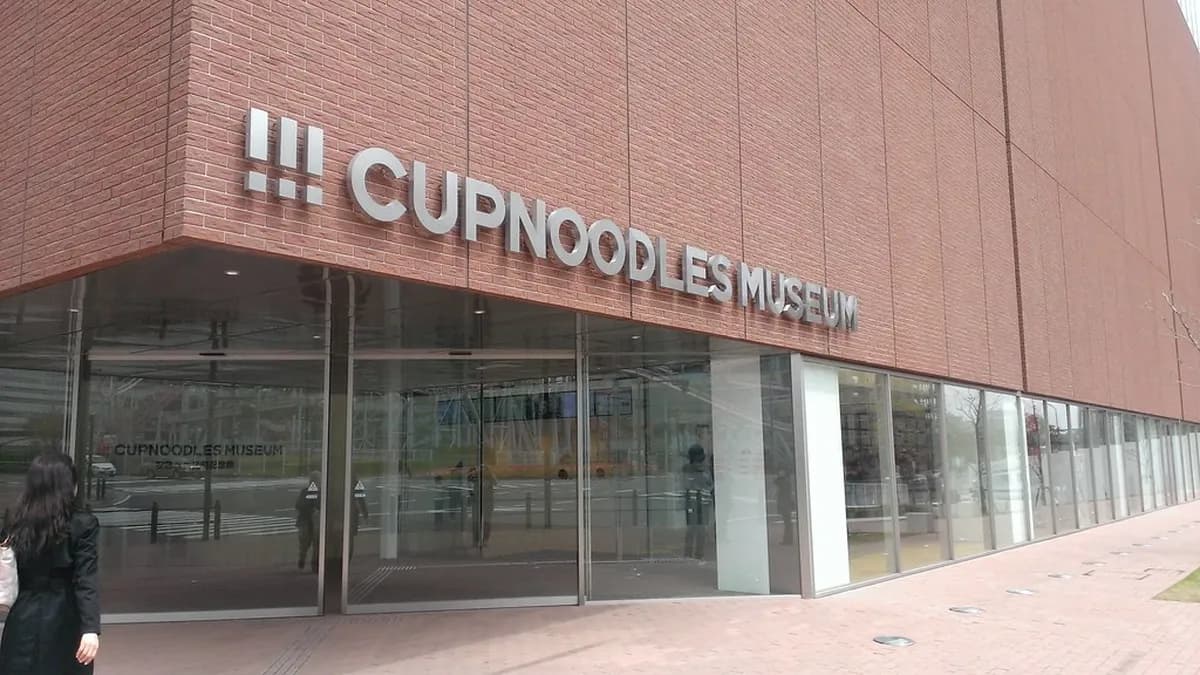
Cup Noodles Museum Yokohama: Ultimate Visitor Guide 2026
Make your own Cup Noodles in Yokohama: how to reserve the workshops, age and height rules, vegetarian options and what the Noodles Bazaar offers.
On this page
Yokohama offers many unique sights, but few capture the imagination like the Cup Noodles Museum Yokohama in the Minato Mirai waterfront district.
The four-story building celebrates Momofuku Ando's 1958 invention through interactive exhibits and two hands-on workshops where you actually make instant ramen.
This guide covers everything that matters for a 2026 visit: workshop reservation strategy, age and height rules, the vegetarian situation in the Noodles Bazaar, and the smartest way to combine the museum with nearby attractions.
Whether you arrive solo, with kids, or as a foodie chasing the origins of the world's most exported Japanese food product, the practical playbook below will save you time on the ground.
What is the Cup Noodles Museum Yokohama?
The museum is officially called the Momofuku Ando Instant Ramen Museum
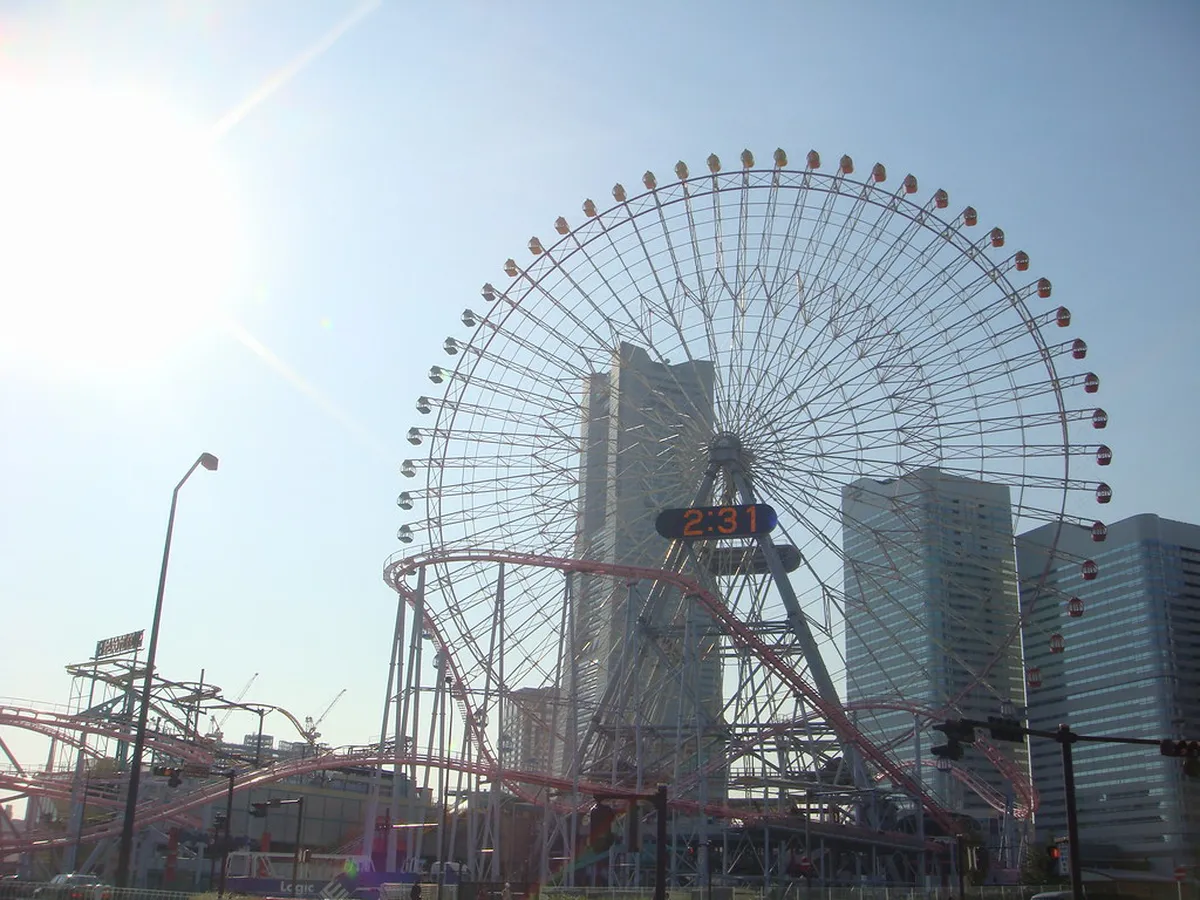
and opened in 2011 as a tribute to creative thinking rather than a corporate brand showcase. The minimalist interior was designed by art director Kashiwa Sato, who also created the Uniqlo identity, and it deliberately strips away clutter so the exhibits and visitor-made cups become the color in the room. You will find it among the top Yokohama attractions for its blend of education, food, and hands-on play.The four floors layer differently. The ground floor holds the museum shop and ticket desks, the second floor covers history and the Creative Thinking exhibits, the third floor houses both workshop factories, and the fourth floor combines the Noodles Bazaar food court with the Cup Noodles Park play area. Most visitors spend two to three hours here, longer if both workshops are booked back to back. It stands as a landmark in the Yokohama Minato Mirai area, overlooking the harbor and the giant Cosmo Clock 21 Ferris wheel.
It is worth knowing there is a second Cup Noodles Museum in Ikeda, Osaka, the original 1999 site near the Ando family home. The Osaka location is free to enter and focuses more heavily on the founder's biography, while the Yokohama site is the larger, more design-driven experience with the full Noodles Bazaar food court. If you are choosing between them on a Japan trip, Yokohama is the stronger pick for families and first-time visitors; Osaka rewards deep ramen-history fans who already plan to spend time in Kansai.
The Story of Momofuku Ando and Instant Ramen History
The narrative begins with Ando inventing the world's first instant ramen in 1958 at the age of 48, working alone in a backyard wooden shed in Ikeda. The museum displays a full-scale replica of that shed to underline the point that breakthrough ideas do not need expensive labs. He invented Cup Noodle thirteen years later in 1971 after watching American buyers break his Chicken Ramen into cups and pour hot water on it, an observation that reframed packaging as the product.
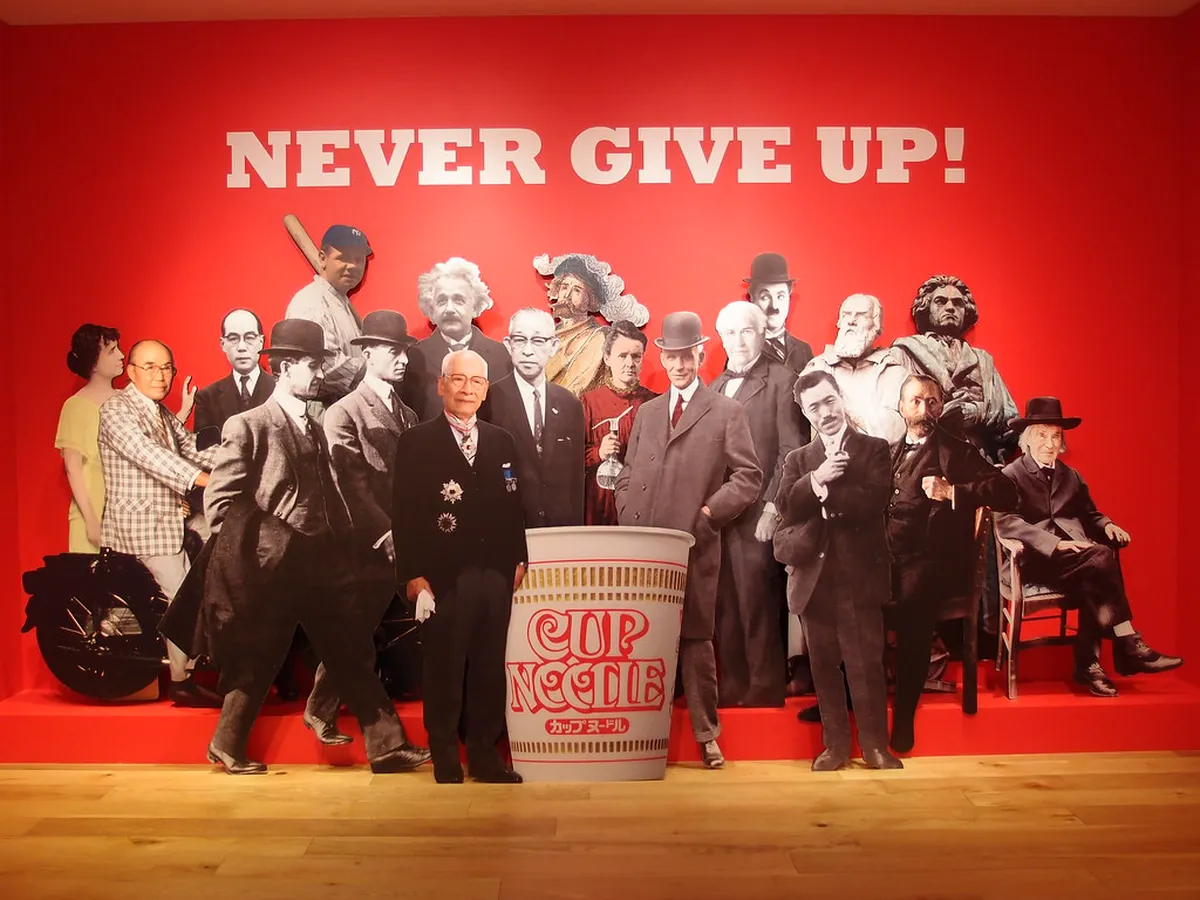
The Instant Noodles History Cube is the most photographed exhibit, a glowing wall holding over 3,000 product packages arranged chronologically from that first 1958 Chicken Ramen pack outward. You can trace flavor evolution by decade and by country, including the regional variants Nissin makes for Brazil, Mexico, Hungary, and India. One side display shows "Space Ram," the vacuum-packed, thicker-broth noodles flown on the 2005 Space Shuttle Discovery mission with astronaut Soichi Noguchi.
The Creative Thinking section is the one most rushed-through guides skip, and it is worth ten quiet minutes. Six walk-in boxes each illustrate one of Ando's principles, including "Find a hint," "Look from many angles," "Catch a chance you can't see," and "Don't follow the status quo." Each box uses shadows, mirrors, or scale tricks to make the idea physical rather than wall-text, so non-Japanese readers can absorb the lesson without translation. The exhibit is genuinely the philosophical centre of the museum, and skipping it reduces the visit to a workshop with a gift shop.
My CupNoodles Factory: Designing Your Own Cup
The My CupNoodles Factory is the iconic activity: you draw on a blank cup with markers, choose one of four soup bases, and pick four toppings from twelve options, yielding more than 5,000 possible combinations. Staff guide you to a hand-cranked machine where the cup is inverted over the noodles rather than dropping noodles into the cup, a small detail that mirrors the original 1971 manufacturing innovation. The finished cup is heat-sealed and slipped into an inflatable carrying pouch with a shoulder strap, which doubles as a souvenir.
The fee is 500 yen per cup on top of the 500 yen general admission, payable at the activity entrance. There is no age limit, which makes it the default choice for toddlers and grandparents. The whole process takes about 45 minutes from queue entry to sealed cup, and the finished noodle is shelf-stable for several weeks, so you can carry it home as a gift if you avoid checked luggage that gets crushed.
Crowd management matters here. My CupNoodles Factory is easier to access than Chicken Ramen Factory, but you still need a time slot. The safest route is to buy an entrance ticket bundled with My CupNoodles Factory use through Lawson Ticket or the official ticket flow; otherwise, collect a same-day numbered ticket at the museum when it opens at 10:00. Weekends, school holidays, and rainy days can exhaust the day's tickets by lunchtime, so secure the slot before you start the history floor.
General admission is ¥500 for adults — high school students and younger enter free. The museum shop on the ground floor is accessible without a ticket and stocks Yokohama-exclusive souvenirs not sold elsewhere.
Chicken Ramen Factory: Hand-Making Noodles from Scratch
For a deeper experience, the Chicken Ramen Factory teaches you to make noodles from wheat flour through to the flash-fry step that defined Ando's original invention. Participants knead, roll, steam, and flash-fry the dough wearing a provided apron and bandana that you keep as a souvenir. The workshop runs 90 minutes and is strictly limited to participants aged 6 and older, with younger children unable to enter even as observers.
The 2026 fee is 600 yen for elementary school students and 1,200 yen for junior high school students and older. The session must be reserved in advance, either through the museum's official online system or at a Lawson convenience-store Loppi ticket machine inside Japan. Weekend sessions and the afternoon slots fill weeks ahead in peak season, so book the moment your travel dates are confirmed. Walk-ins are not accepted because the flash-fry timing is shared across the group.
The takeaway is more substantial than the cup version: a small bag of your hand-cut noodles plus a full package of factory Chicken Ramen. Pair this workshop with the My CupNoodles Factory in the same visit if you have time, since the two demonstrate different sides of the invention story, the noodle itself and the packaging idea that globalised it.
Workshop Comparison: Which Factory Should You Book?
If you can only do one workshop, the decision usually comes down to age in your group, time, and reservation flexibility. Use the comparison below to pick before you arrive.
- My CupNoodles Factory: 500 yen, 45 minutes, no age limit, same-day numbered ticket only, finished cup is portable.
- Chicken Ramen Factory: 600 yen for elementary school students or 1,200 yen for junior high school students and older, 90 minutes, age 6 and older only, advance reservation required, hands-on flash-fry process.
- Best for toddlers and mixed-age groups: My CupNoodles, because there is no minimum age and the activity stays under an hour.
- Best for tweens, teens, and foodie adults: Chicken Ramen, because the dough work and flash-fry are the only place in Japan you can replicate Ando's 1958 technique.
- Best if you forgot to reserve: My CupNoodles, since Chicken Ramen sessions essentially never have walk-in availability.
Doing both is realistic in a three-hour visit if your Chicken Ramen slot is in the morning. Book the Chicken Ramen Factory online first, anchor your arrival around that time, then collect the My CupNoodles numbered ticket on the way in.
Every stall in the Noodles Bazaar uses animal-based broth, including seemingly vegetarian bowls. This also applies to the four soup bases in the My CupNoodles Factory. Vegetarians should eat before visiting and treat the Bazaar as a coffee stop.
Noodles Bazaar: Tasting Flavors from Around the World
The Noodles Bazaar on the fourth floor is styled like a Southeast Asian night market, with eight stalls each serving a different international noodle dish in tasting-sized portions. The lineup rotates but typically includes Italian pasta, Chinese lan zhou lamian, Vietnamese pho, Thai tom yum kung noodles, Indonesian mi goreng, Malaysian laksa, Korean cold naengmyeon, and Kazakh lagman. Each bowl is 500 yen, which lets a couple sample three or four dishes for the price of a normal lunch.
Seating is communal and the room is loud and warm, which suits the food-court atmosphere. Pair the savory bowls with the cup-noodle-flavored soft-serve ice cream from the dessert stall, which is unironically good and only sold here. This area is a highlight for anyone exploring the Yokohama food guide scene for unusual eats.
One critical warning the museum prints in small text but every vegetarian visitor needs in bold: every stall in the Noodles Bazaar uses animal-based broth, including the pasta and the seemingly plant-based bowls. The same is true of the four soup bases in the My CupNoodles Factory; vegetable toppings do not change the broth. Visitors avoiding meat, pork, seafood, or animal-derived extracts should eat before arriving and treat the Bazaar as a coffee-and-ice-cream stop. There are plenty of meat-free options in the surrounding World Porters mall and Queen's Square food courts.
| Activity | Fee | Age / requirement | Duration |
|---|---|---|---|
| General admission | ¥500 adults; free ≤ high school | All ages | Self-guided |
| My CupNoodles Factory | +¥500 | No age limit; same-day numbered ticket | ~45 min |
| Chicken Ramen Factory | +¥600 (elementary) / ¥1,200 (others) | Age 6+; advance reservation required | 90 min |
| Cup Noodles Park | +¥500 per slot | Age 3–elementary; 90 cm min height | 30 min slot |
Cup Noodles Park and Interactive Exhibits for Kids
Cup Noodles Park is a 30-minute indoor playground that turns the manufacturing process into a soft-play obstacle course: children "become" noodles travelling from kneading to drying to packaging through ball pools, climbing nets, and a tube slide that mimics the flash-fry conveyor. Access is restricted to children from age 3 through elementary school with a strict 90cm minimum height, measured at the entry gate without exceptions. The session is exactly 30 minutes and tickets are sold per slot at the fourth-floor counter, separate from general admission.
Two practical traps are worth flagging. First, accompanying adults must enter and supervise inside the play area, which is awkward for a solo parent with both a toddler under 90cm and an older child who qualifies. Many in this situation simply skip the park. Second, slot tickets sell out on weekends almost as fast as the My CupNoodles tickets, so collect both at the same time when you arrive.
Beyond the park, the Creative Thinking Boxes mentioned earlier act as the museum's best free interactive content for older children and teens, and they are open-access without any ticket. Plan to spend 20 minutes there between scheduled workshop slots. This museum is one of the strongest options when exploring Yokohama with kids, especially on a rainy or hot summer day.
Essential Planning: Tickets, Reservations, and Pricing
General admission is 500 yen for adults; high school students and younger enter free. Workshops are paid separately on top: 500 yen for My CupNoodles, 600 yen or 1,200 yen for Chicken Ramen depending on age, and 500 yen for Cup Noodles Park. Cash and major IC cards are useful at the ticket desk, and credit cards are taken at the gift shop. Book Chicken Ramen slots through the Official Reservation Guide as soon as your dates are firm.
Opening hours are 10:00 to 18:00 with last admission at 17:00, and the museum is closed every Tuesday, or the following day when Tuesday is a national holiday. It also closes over the year-end and New Year holiday period, so always verify the official calendar before booking winter train tickets. Workshops do not run during severe-weather closures, even if your wider Yokohama itinerary can still continue indoors.
The ground-floor museum shop is genuinely worth a stop and is accessible without a ticket, useful if you only have 20 minutes before a Minato Mirai dinner. Yokohama-exclusive items rotate seasonally but typically include Cup Noodle-shaped erasers and washi tape, miniature acrylic keychains styled as flavour packets, a limited-run "Space Ram" capsule replica, plush noodle blocks, and souvenir tins of the original Chicken Ramen with packaging unavailable in supermarkets. These are not sold at the Osaka location or in the airport gift channels, so they are real one-off souvenirs.
How to Get to the Museum in Yokohama
The museum sits at 2-3-4 Shinko, Naka-ku, Yokohama, directly next to the World Porters shopping mall. The closest train stop is Minatomirai Station or Bashamichi Station, each an eight-minute walk along well-signed pedestrian routes. Most travelers find that getting to Yokohama from Tokyo takes 30 to 45 minutes; the Tokyu Toyoko Line from Shibuya runs direct onto the Minatomirai Line, so a single train from Tokyo lands you a few hundred meters away.
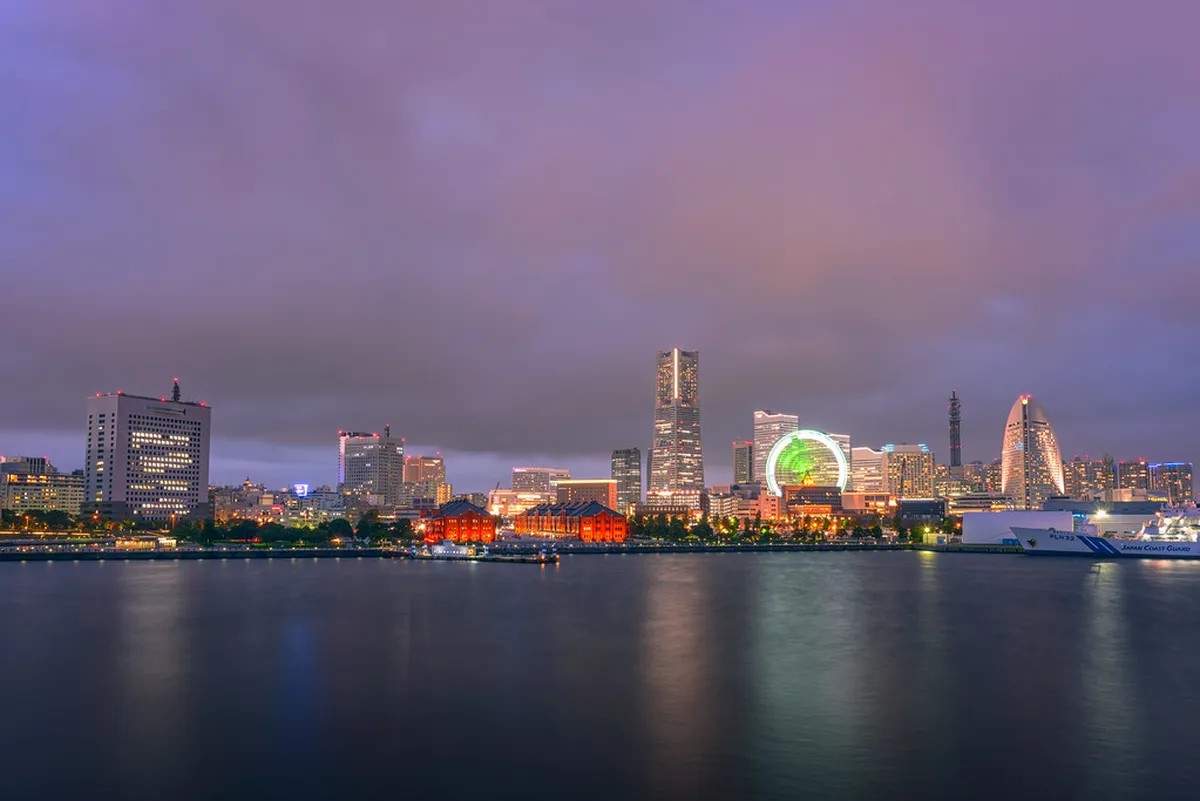
For a more scenic approach, walk 12 minutes from Sakuragicho Station along the Kishamichi Promenade, a former railway bridge now restored as a waterfront pedestrian path with views of the Nippon Maru sailing ship and the Cosmo Clock Ferris wheel. The "Akai Kutsu" retro loop bus stops directly in front of the museum and is a low-cost way to combine sightseeing with transit if you have a one-day Minato Mirai bus pass.
Drivers can use the on-site parking garage, but spaces are limited and the Minato Mirai road grid is congested on weekends. Public transit is almost always the better choice. Pair the museum with the nearby Red Brick Warehouse for shopping and seasonal events, or the Yokohama Cosmo World amusement park five minutes away on foot, and you have a complete half-day itinerary in Minato Mirai.
Combine this with our main Yokohama attractions guide for a fuller itinerary.
For related Yokohama deep-dives, see our Things to Do in Yokohama with Kids and Yokohama Cosmoworld Guide guides.
Frequently Asked Questions
Do I need a reservation for the Cup Noodles Museum Yokohama?
General admission usually does not require a reservation, but the workshops are very popular. You should book the Chicken Ramen Factory and My CupNoodles Factory in advance through the official site. Same-day numbered tickets are available at the door but often sell out quickly. Check the Yokohama itinerary for more planning tips.
Are there vegetarian options at the museum?
Unfortunately, the museum does not offer vegetarian soup bases or noodle dishes in the bazaar. All flavors contain animal products like chicken, pork, or seafood extracts. This applies even if you choose only vegetable toppings at the My CupNoodles Factory. Visitors with strict dietary needs should plan to eat at nearby restaurants in Minato Mirai.
How much does it cost to make your own cup noodles?
Creating your own cup at the My CupNoodles Factory costs 500 yen per cup. This fee is in addition to the 500 yen museum admission for adults. The Chicken Ramen Factory workshop is more expensive at 1,000 yen per person. High school students and younger children enjoy free admission to the museum itself.
A visit to the Cup Noodles Museum Yokohama offers much more than just a quick snack history.
It is a place where creativity meets culinary tradition in a way that delights visitors of all ages.
Make sure to check the CUP NOODLES MUSEUM YOKOHAMA Official Site for the latest hours.
Your trip to Minato Mirai will be incomplete without seeing this iconic landmark of Japanese innovation.
Free: The Yokohama Essentials guide
Top things to do, where to stay, a perfect day plan, getting around, and the best time to go — a Yokohama mini-guide you can take offline.
You might also like

Continue reading
More guides you'll find useful


