Yokohama Minato Mirai Guide: 10 Essential Things to Do
Plan your trip with our Yokohama Minato Mirai guide. Discover 10 top attractions, including the Cup Noodles Museum, Red Brick Warehouse, and expert transit tips.
On this page
Yokohama Minato Mirai Guide: 10 Essential Things to Do
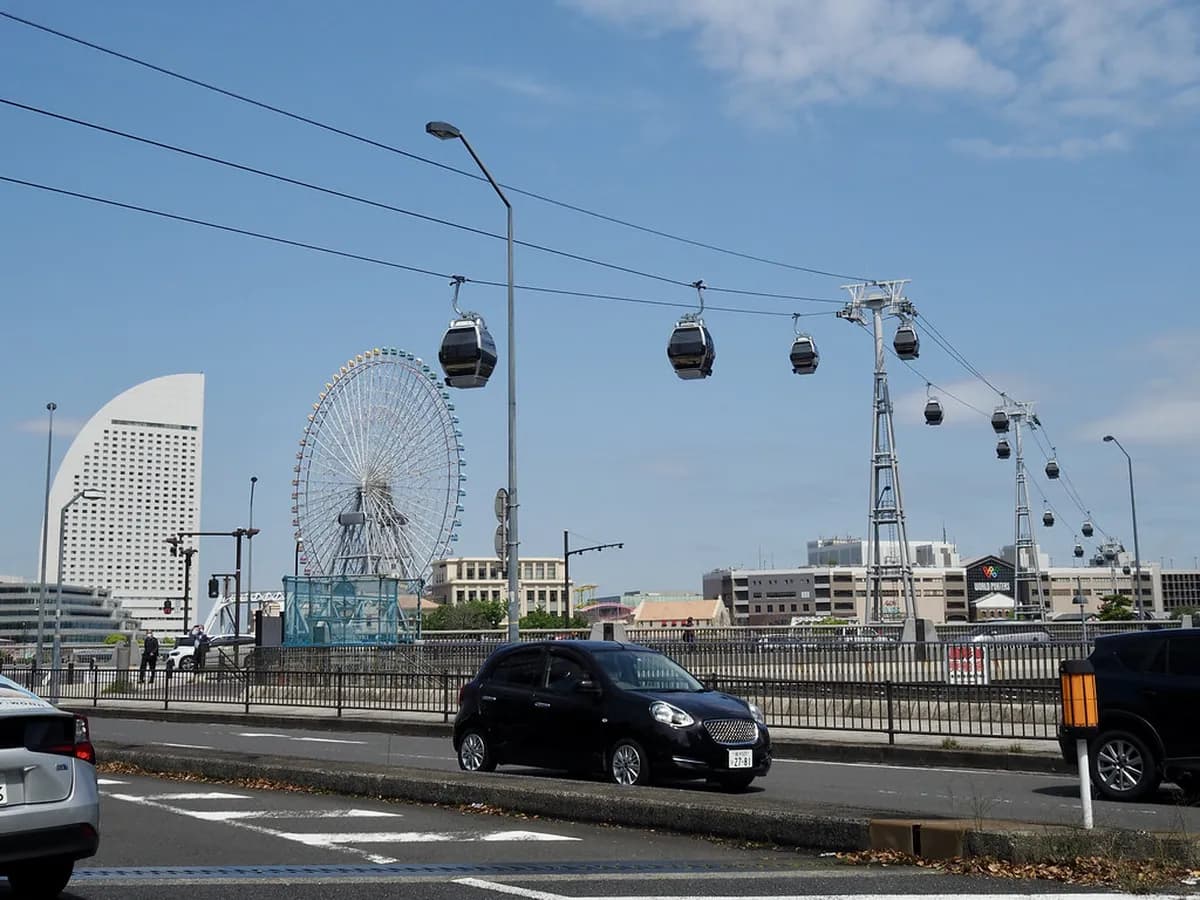
Yokohama Minato Mirai 21 is the redeveloped waterfront district of Japan's second-largest city, built on reclaimed shipyard land in the late 1980s. The skyline that resulted, anchored by Landmark Tower and the Cosmo Clock 21 Ferris wheel, has become the postcard image of modern Yokohama.
The district is compact enough to walk in a single day yet dense with museums, harbor views, and historic buildings. Most attractions sit within a fifteen-minute walk of each other along the bay.
This guide covers the ten landmarks that justify the trip, including the Cup Noodles Museum, the cheapest transit options from central Tokyo, and the practical details (booking windows, photo angles, rainy-day routes) that the official tourism pages leave out. From ramen culture echoing what you'll find in Sapporo to architectural marvels rivaling those across Japan, Minato Mirai stands as a beacon of modern Japan.
Free: The Yokohama Essentials guide
Top things to do, where to stay, a perfect day plan, getting around, and the best time to go — a Yokohama mini-guide you can take offline.
Minato Mirai 21 Access and Transportation
The district has two practical entry stations. Minatomirai Station on the private Minatomirai Line drops you directly under Queen's Square, while Sakuragicho Station on the JR Negishi Line sits on the southern edge near Cosmoworld. Either works for a day visit; pick by which end of the district your first stop is on.
From Tokyo, the fastest path is the JR Tokaido or Yokosuka Line to Yokohama Station, then one transfer to the Minatomirai Line. Read how to get to Yokohama from Tokyo for the full route breakdown including night-bus and Shinkansen alternatives.
Once inside the district, walking beats local transit. Elevated walkways link Yokohama Station, Queen's Square, the Red Brick Warehouse and Yamashita Park without a single road crossing. The Sea Bass water taxi (700 yen one way) is the scenic alternative and useful if you finish at Yamashita Park and want to skip the return walk.
| Origin | Line | Time | Fare (2026) |
|---|---|---|---|
| Shibuya | Tokyu Toyoko Line | ~30 min | 310 yen |
| Tokyo Station | JR Tokaido Line | ~25 min | 480 yen |
| Shinagawa | JR Keihin-Tohoku | ~25 min | 300 yen |
| Shinjuku | Shonan-Shinjuku Line | ~35 min | 580 yen |
Yokohama Landmark Tower and Sky Garden
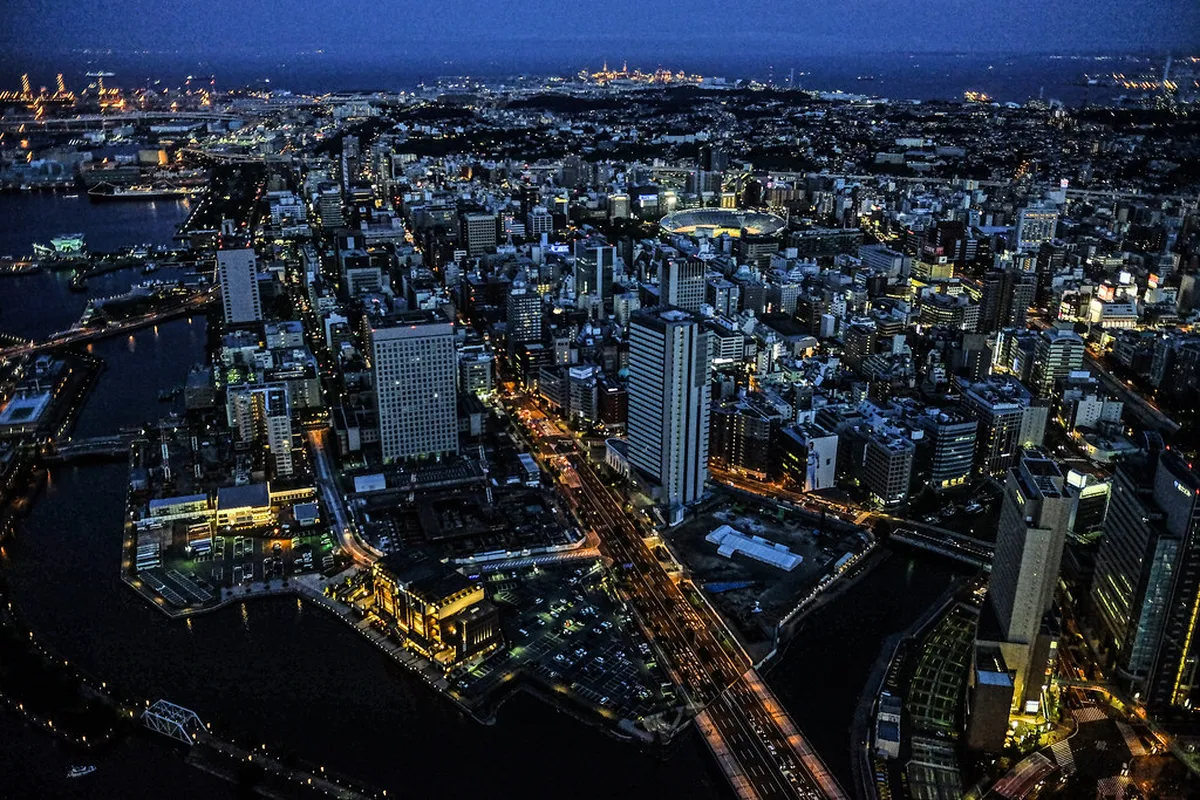
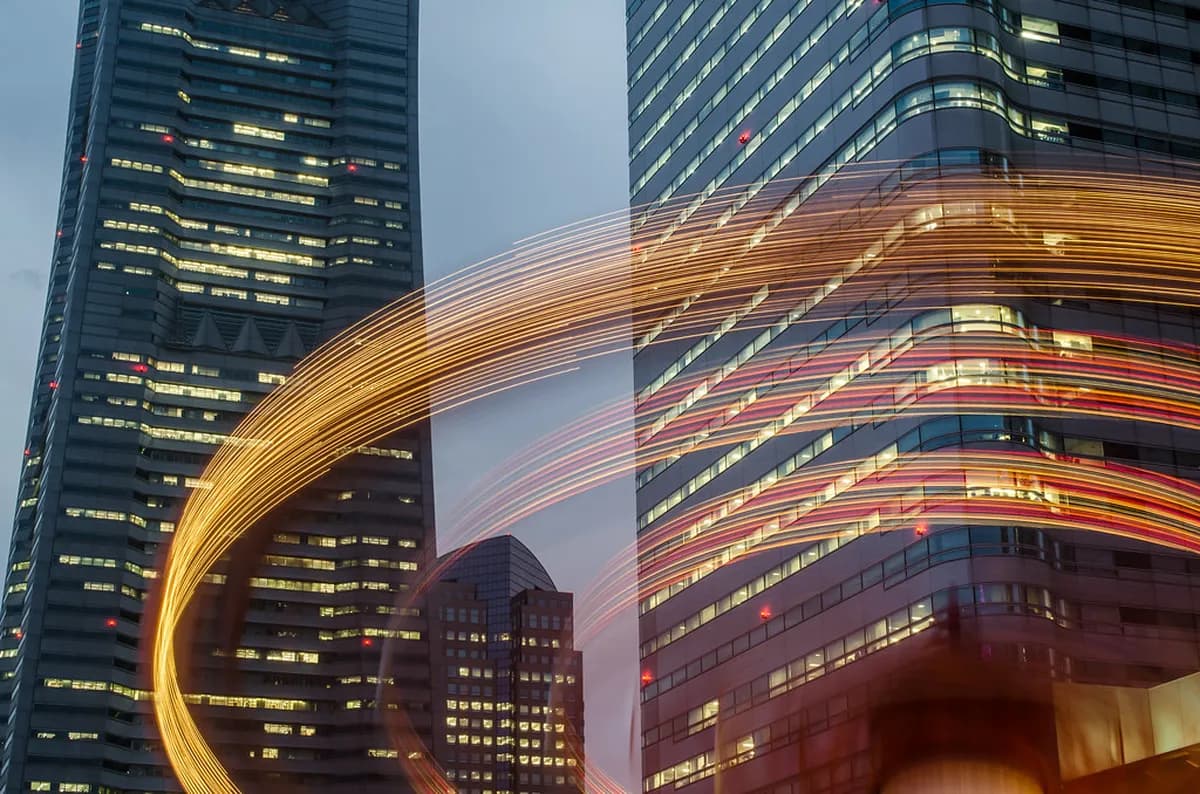
The Yokohama Landmark Tower rises 296 metres over the bay and held the title of tallest building in Japan from 1993 until 2014. Its 69th-floor Sky Garden observation deck remains one of the highest publicly accessible viewpoints in the country.
The elevator climbs at 750 metres per minute, which still ranks among the world's ten fastest. The 360-degree deck looks east across Tokyo Bay, south to the Miura Peninsula, and west to Mount Fuji on clear winter mornings. Tickets are 1,000 yen for adults in 2026.
Arrive at Landmark Tower Sky Garden 40 minutes before sunset to catch both the daylight Mount Fuji silhouette and the city light-up. Even on weekends you can usually walk straight to the window — far less crowded than Tokyo Skytree.
Compared with Tokyo Skytree or Shibuya Sky, Sky Garden trades headline altitude for crowd-free viewing — even on weekends you can walk straight to the window. Arrive forty minutes before sunset to catch both the daylight Fuji silhouette and the city light-up.
Cup Noodles Museum Yokohama
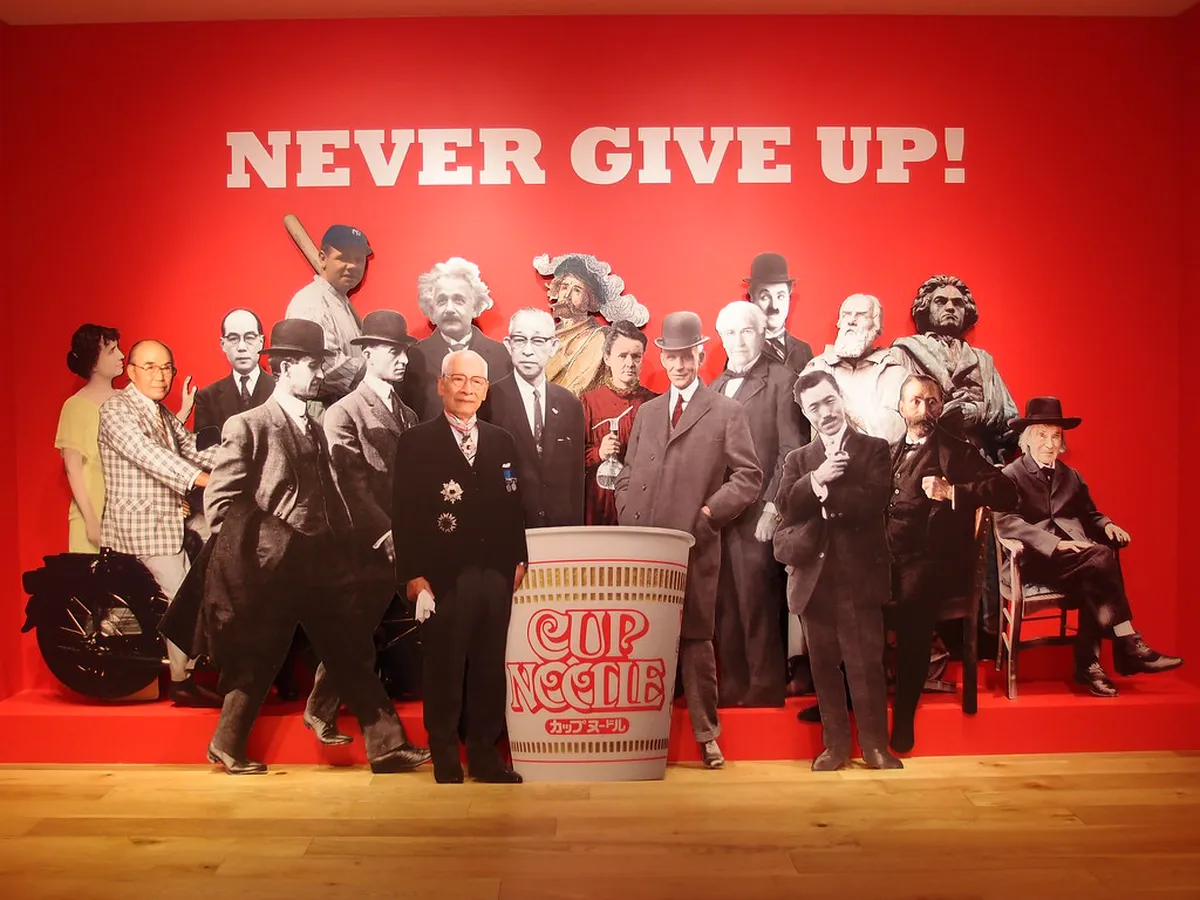
The Cup Noodles Museum Yokohama is a four-storey design museum dedicated to Momofuku Ando's 1958 invention of instant ramen. Admission is 500 yen, and children under high-school age enter free.
The main draw is the My Cup Noodle Factory, where you decorate a paper cup, choose one of four soups and four toppings from twelve options, and watch the cup sealed and packaged in front of you. The factory costs an extra 500 yen per cup. Slots open 30 days ahead on the official site and the weekend morning sessions typically sell out within three days of release — book through the Cup Noodles Museum reservation system before you leave home.
If reservations are full, the walk-in Chicken Ramen Factory (a separate 1,000-yen workshop where you knead and fry your own noodles) sometimes has same-day availability after 14:00. The fourth-floor Cupnoodles Park, a netted indoor playground, is the most underrated kid attraction in the district.
Yokohama Red Brick Warehouse (Akarenga)
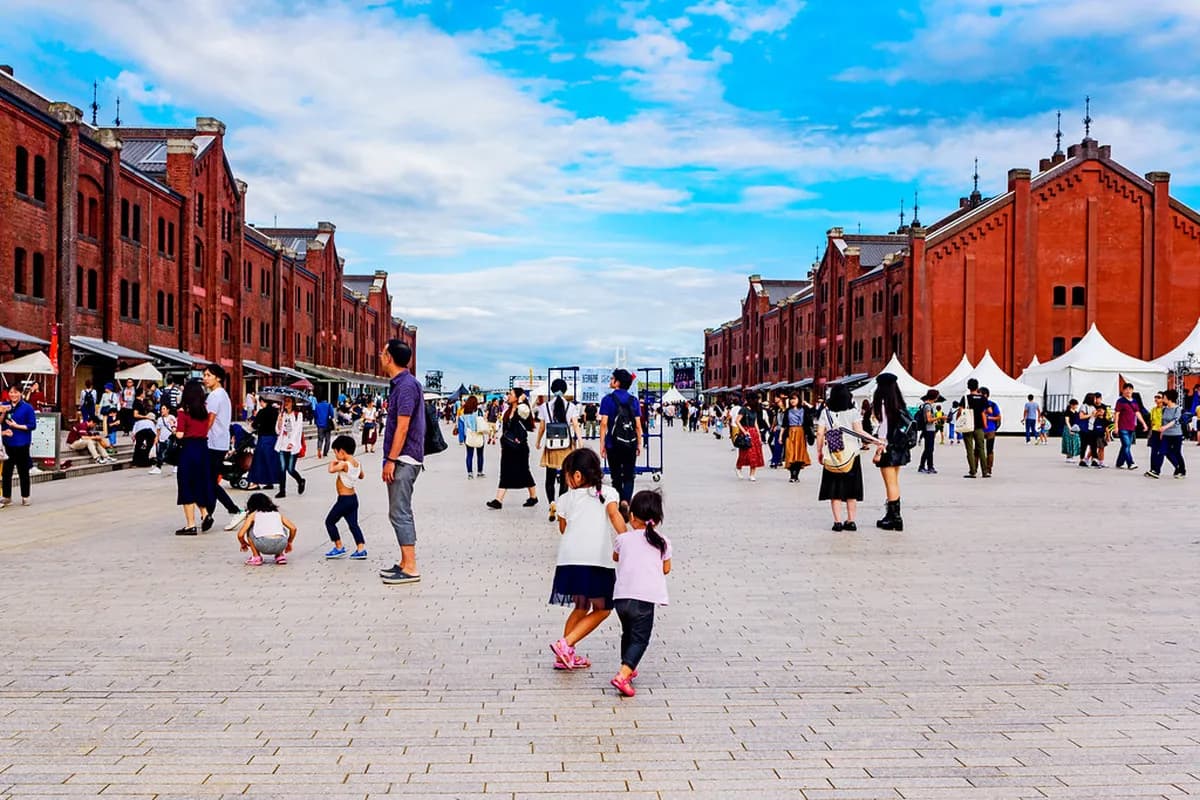
The two surviving brick warehouses, completed in 1911 and 1913 as the city's customs inspection houses, sit on the harbour between Osanbashi Pier and Cosmoworld. Read our Yokohama Red Brick Warehouse guide for the full shop-by-shop breakdown.
The buildings are worth a visit year-round, but the open plaza between them is what makes the warehouse a repeat destination. The seasonal event calendar is dense: a Strawberry Festival in February, Flower Garden in spring, Oktoberfest in October, and the Christmas Market with a 10-metre Tannenbaum tree and mulled wine huts from late November through Christmas Day. Entry to the markets costs 500 yen and includes a souvenir mug.
Inside the warehouses, the curation skews towards independent Japanese makers — leather workshops from Kuramae, ceramics from Mashiko, and a permanent Glass Studio Bull where you can watch blowing demos. Restaurants on the second floor of Warehouse 2 face the harbour and are the easiest mid-range dinner reservation in the district.
Yokohama Cosmoworld and Cosmo Clock 21
Cosmoworld is unusual among Japanese amusement parks: it has no perimeter fence and charges no entry fee. You walk in, buy 100-yen ride tickets at machines, and pay only for what you ride. Most attractions cost 300 to 800 yen each. Our Yokohama Cosmoworld guide lists every ride and height limit.
The 112-metre Cosmo Clock 21, the centrepiece, was the world's tallest Ferris wheel from 1989 to 1992 and still doubles as the largest digital clock on the planet. A single rotation takes 15 minutes (900 yen) and the night light-up changes colour every minute on the hour.
If you are not riding, the park is still worth the ten-minute walk-through for the photo angle on the wheel from the Kokusai-bashi bridge. The Vanish coaster, which appears to plunge into a pool of water before re-emerging, is the most photographed thrill ride and runs until 21:00 on weekends.
The Osanbashi Pier and Yamashita Park
The Osanbashi Yokohama International Passenger Terminal is the cruise terminal designed by Foreign Office Architects to resemble a whale's back. Its rooftop, called Kujira no Senaka ("whale's back"), is a free public plaza of undulating wood decking and grass. It is open 24 hours and never crowds.
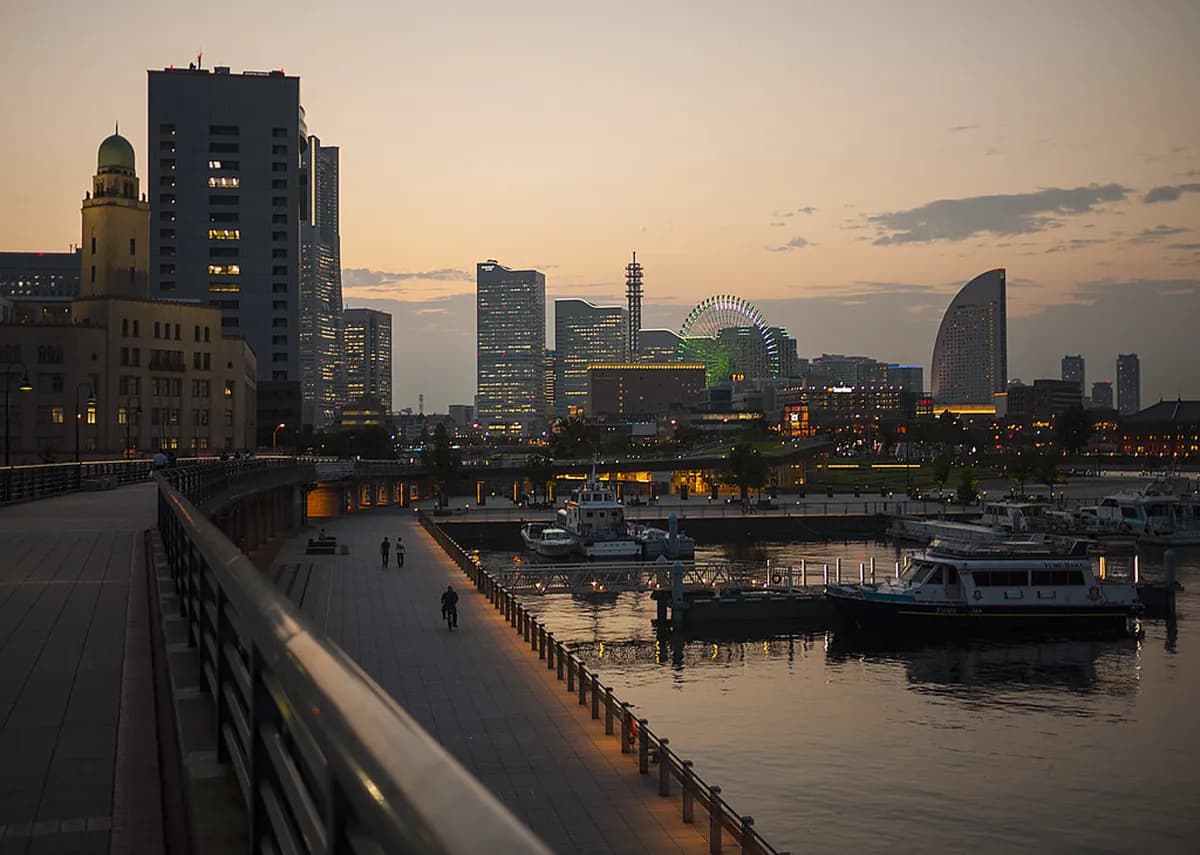
Photographers head here for one specific shot: the night skyline of Landmark Tower, the InterContinental sail-shaped hotel, and Cosmo Clock 21 framed together. The angle from the pier's western tip captures all three with the harbour reflecting in the foreground — impossible from any street-level spot. Bring a tripod; the official rule is no commercial setups but personal tripods are tolerated until 22:00.
A five-minute walk south sits Yamashita Park, Japan's first seaside park, laid out in 1930 on rubble from the 1923 Great Kanto Earthquake. The retired NYK liner Hikawa Maru, which carried Charlie Chaplin to Yokohama in 1932, is permanently moored along the seawall and open as a museum ship (300 yen). The engine room and first-class smoking lounge are the standout exhibits.
Sankeien Garden and Traditional Culture
Sankeien sits 30 minutes by bus from Yokohama Station, on the city's southern coast. The travel time is the reason most day-trippers skip it — and the reason it stays uncrowded. Our Sankeien Garden Yokohama guide covers transit, bloom timing, and the easiest bus stop to get back to Minato Mirai from.
The trade-off is worth it for one reason: the garden contains seventeen relocated historic buildings, ten of which are designated Important Cultural Properties. The three-storey pagoda from Kyoto's Tomyo-ji temple (1457) and the Rinshunkaku villa from the Kii Tokugawa clan are the only Edo-period structures you can see this close to Tokyo without travelling to Nikko or Kyoto.
Visit in late March for cherry blossoms, mid-June for hydrangeas, or mid-November for maple leaves. The teahouse Kakushokaku serves a 700-yen matcha-and-wagashi set on the lake-edge tatami room — the best-value tea ceremony in greater Tokyo.
Shin-Yokohama Ramen Museum
The Shin-Yokohama Ramen Museum sits a ten-minute Shinkansen-line ride north of Minato Mirai, at Shin-Yokohama Station. It is technically a food court rather than a museum: nine regional ramen shops sit inside a recreated 1958 Tokyo back-alley set, lit to dusk, with a working bathhouse facade and analogue clocks.
The point of difference from the Cup Noodles Museum is simple — Cup Noodles is interactive and creative, Shin-Yokohama is about eating. Consult our Yokohama food guide to pick which shops are worth queueing for. Order the mini-bowl size (around 600 yen versus 1,100 for a full bowl) so you can try three styles in one visit; Sumire's miso ramen from Sapporo and Komurasaki's tonkotsu from Kumamoto are the consistent crowd favourites.
- Which museum should you choose?
- Cup Noodles Museum: interactive workshops, design-focused, kid-friendly (book ahead)
- Ramen Museum: nine regional ramen shops in a 1958 streetscape, walk-in, foodie-focused
- Best for families: Cup Noodles
- Best for solo travellers and food tourists: Shin-Yokohama Ramen Museum
Minato Mirai 21 Hotels and Convention Facilities
Three hotels define the upscale tier. Yokohama Royal Park Hotel occupies floors 52 to 67 of Landmark Tower — every room sits above 200 metres. InterContinental Yokohama Grand is the sail-shaped tower on the harbour and the most photographed exterior in the district. Hyatt Regency Yokohama is the newest, opened 2020, and sits closest to the Red Brick Warehouse. Read where to stay in Yokohama for the full price comparison.
Hotel rates in Minato Mirai can triple during events at Pacifico Yokohama (Tokyo Game Show, CP+ in February, major medical congresses). If you see no availability under 30,000 yen, check the Pacifico event calendar before searching again on alternative dates.
Mid-range options cluster around Sakuragicho Station: the Daiwa Roynet and Richmond Hotel chains both run properties under 12,000 yen per night for a double. For weekend visits, book at least three weeks ahead — Yokohama draws Tokyo weekenders and rooms move fast.
Pacifico Yokohama, the convention complex on the north end of the district, hosts the Tokyo Game Show overflow, CP+ (Japan's largest camera show in February), and major medical congresses. Hotel rates inside the district can triple during these weeks; if you see a date with no availability under 30,000 yen, check the Pacifico event calendar before re-trying.
Essential Tips for Planning Your Yokohama Visit
The best time to visit Yokohama is mid-April for cherry blossoms along Sakura-dori, or mid-November when Cosmoworld's illumination layers over autumn colour at Sankeien. Summer humidity is real, but the sea breeze keeps the waterfront five degrees cooler than central Tokyo. Winter is the quietest tourist season and the only time Fuji is reliably visible from Sky Garden.
Wear shoes you can walk eight kilometres in — a full district loop from Yokohama Station through Cosmoworld, Red Brick, Osanbashi and back covers exactly that. The pedestrian "Kishamichi" promenade between Sakuragicho and Cosmoworld crosses three historic railway bridges and is the prettiest stretch.
Pair this trip with the Yokohama Chinatown dinner detour — the south gate is a twelve-minute walk from Yamashita Park and the area peaks for atmosphere after 18:00 when the lanterns light up.
Best Photo Spots Compared
Four spots in the district produce the postcard shots. Each has a different best time and angle, so the choice depends on what you want in the frame.
- Sky Garden, Landmark Tower 69F: 360-degree elevated view, best 30 minutes before sunset for combined Fuji silhouette and city light-up. Indoor, weather-proof, 1,000 yen.
- Osanbashi Pier rooftop (Kujira no Senaka): the only spot to frame Landmark Tower, InterContinental and Cosmo Clock together in one shot. Best at night, free, tripod-friendly until 22:00.
- Kokusai-bashi bridge: classic Cosmo Clock 21 close-up with the wheel filling the frame. Best at 19:00 on the colour-changing hour. Free, no tripod room.
- Rinkai Park (north side): the wide-angle skyline shot used by NHK weather broadcasts. Two-kilometre walk from Minatomirai Station, sunrise is the only quiet window.
Rainy Day Itinerary for Minato Mirai
The district is unusually rain-resistant. Covered walkways link Yokohama Station, Queen's Square, Landmark Plaza and the Mark Is shopping centre — you can move between the four without an umbrella. Build a wet-weather day around the indoor anchors.
Start at the Cup Noodles Museum for the morning factory slot (book ahead). Walk five minutes under cover to the Yokohama Air Cabin gondola station, ride the 630-metre line over the harbour to Sakuragicho (1,000 yen one way, glass cabins are heated). From Sakuragicho, cross via Landmark Plaza's elevated mall to Sky Garden for the lunch view, then descend to the Nissan Global Headquarters Gallery — a free, climate-controlled showroom with rotating concept cars that few tourist guides mention. Finish at the Red Brick Warehouse via the underground passage from Bashamichi Station. Total outdoor exposure: under five minutes.
See our Yokohama attractions guide for the broader city overview.
For related Yokohama deep-dives, see our Things to Do in Yokohama Chinatown and Yokohama Red Brick Warehouse Guide guides.
Frequently Asked Questions
How do I get from Tokyo to Minato Mirai?
You can take the JR Tokaido or Yokosuka Line from Tokyo Station to Yokohama Station in about 30 minutes. From there, transfer to the Minatomirai Line for a quick two-stop ride to the heart of the district. It is one of the easiest day trips from the capital.
Is the Cup Noodles Museum in Yokohama worth it?
Yes, the museum is highly recommended for its interactive My Cup Noodle Factory workshop and creative exhibits. It offers a unique hands-on experience that you cannot find elsewhere. Be sure to book your factory slot in advance to ensure entry.
How much time do you need in Minato Mirai?
A full day is ideal to see the major highlights like the Landmark Tower, Red Brick Warehouse, and Cup Noodles Museum. If you want to include Sankeien Garden or the Ramen Museum, consider staying overnight. Check the best time to visit Yokohama for seasonal events.
Can you walk from Yokohama Station to Minato Mirai?
Yes, you can walk from Yokohama Station to the Minato Mirai area in about 15 to 20 minutes. The route takes you through modern shopping complexes and over scenic pedestrian bridges. It is a pleasant walk if the weather is clear and mild.
Yokohama Minato Mirai 21 stands as a premier destination for anyone looking to experience the modern side of Japan. From its towering skyscrapers to its historic red brick warehouses, the district offers a diverse range of activities.
Whether you are a food lover, a photography enthusiast, or a family with children, there is something here to capture your interest. Use this guide to plan your route and make the most of your time in this beautiful port city.
The area continues to evolve with new attractions and events scheduled throughout 2026 and beyond. Start planning your visit today to see why this waterfront gem is a favorite for both locals and international travelers.
Free: The Yokohama Essentials guide
Top things to do, where to stay, a perfect day plan, getting around, and the best time to go — a Yokohama mini-guide you can take offline.
You might also like

Continue reading
More guides you'll find useful