21 Top Yokohama Attractions You Must Visit in 2026
Discover the best Yokohama attractions in 2026 — from Sankeien Garden and Chinatown to the Cup Noodles Museum. Includes prices, hours, access tips, and a helpful FAQ.
On this page
Yokohama attractions rank among the most rewarding day-trip experiences you can have from Tokyo in 2026. Located 28 minutes south of Shibuya by Tokyu Toyoko express, this port city blends serene Japanese gardens, world-class museums, and the largest Chinatown in Asia into a compact waterfront setting you can largely cover on foot. This guide ranks the 21 best Yokohama attractions with current prices, opening hours, and access directions, then closes with a practical section on how long to stay, where to base yourself, and which sights to skip in bad weather. Hours and admission fees cited below were cross-checked against the official Yokohama City Tourism Association and the Japan National Tourism Organization Yokohama guide. For a turn-by-turn route, pair it with our Yokohama itinerary for 2026.
1. Stroll Through the Serene Sankeien Garden
Sankeien is a 175,000-square-meter landscape garden and one of the most peaceful Yokohama attractions. Spread across rolling hills around a central pond, the grounds contain 17 historic buildings relocated from Kyoto, Kamakura, and other cities, including a three-story pagoda and several Edo-period tea houses. Cherry blossoms blanket the outer garden in late March, while autumn maples peak in late November.
Visitor details (2026): Open daily 9:00–17:00 (last entry 16:30). Admission 900 yen adults, 200 yen children. Access from Negishi Station (JR Keihin-Tohoku Line) via the bus to Honmoku Sankeien-mae (10 minutes). For the full route plus tea-house stops, see our Sankeien Garden guide.
Sankeien Garden is busiest on cherry-blossom weekends (late March–early April). Arrive before 10:00 on weekdays for the quietest visit; the last entry is at 16:30.
2. Immerse Yourself in the Cup Noodles Museum Yokohama
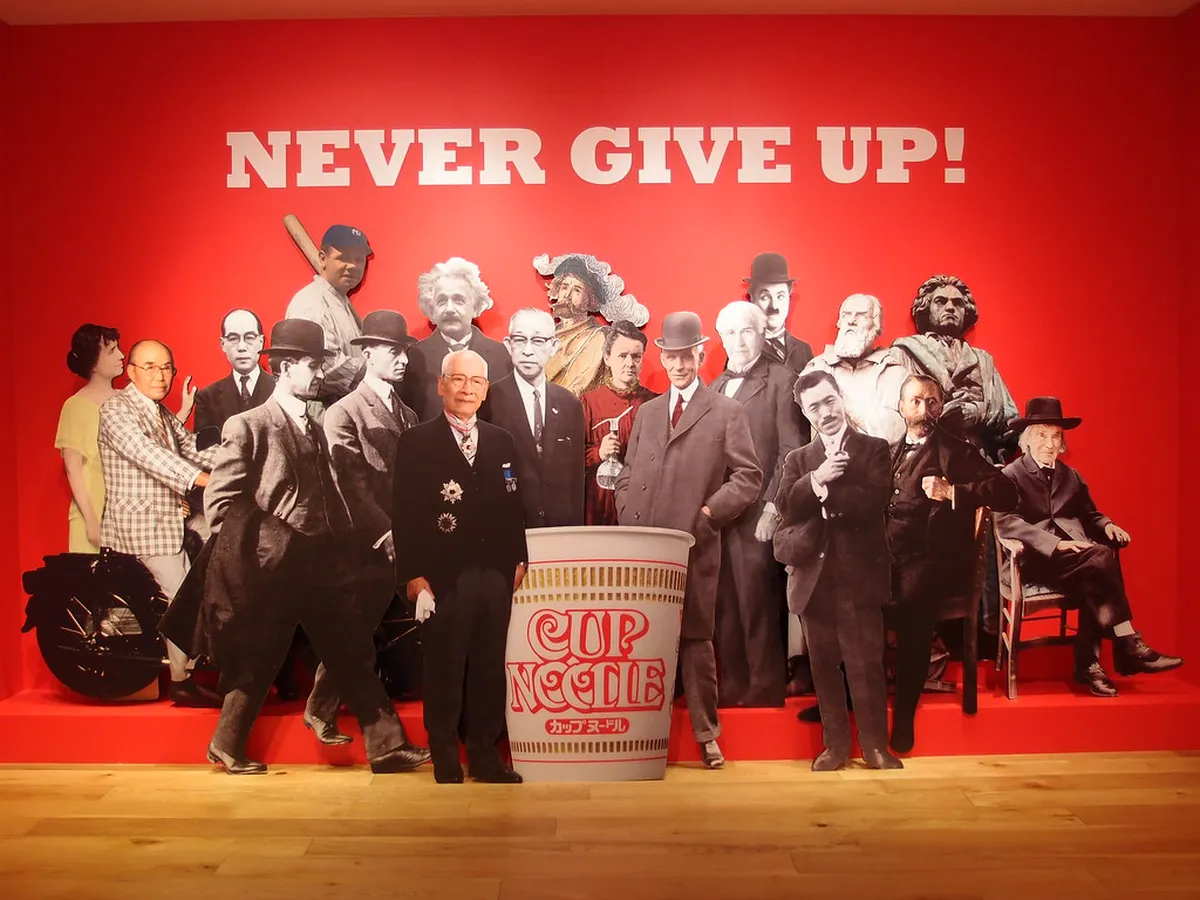
The Cup Noodles Museum tells the story of Momofuku Ando, the inventor of instant ramen, through creative exhibits that trace the evolution of one of the world's most consumed foods. The highlight for most visitors is the My Cup Noodles Factory on the third floor, where you design your own cup packaging and pick from four soup bases and 12 toppings to create a one-of-a-kind souvenir. Downstairs, the Noodles Bazaar recreates an Asian night market with miniature bowls from eight countries for 400 yen each.
Visitor details (2026): Open 10:00–18:00 (last entry 17:00), closed Tuesdays and year-end holidays. General admission 500 yen adults; the My Cup Noodles Factory costs an additional 500 yen per cup, payable in cash at the vending machine. A 5-minute walk from Minato Mirai or Bashamichi Station. Full timing and reservation tips in our Cup Noodles Museum guide.
3. Explore the Historic Yokohama Red Brick Warehouse
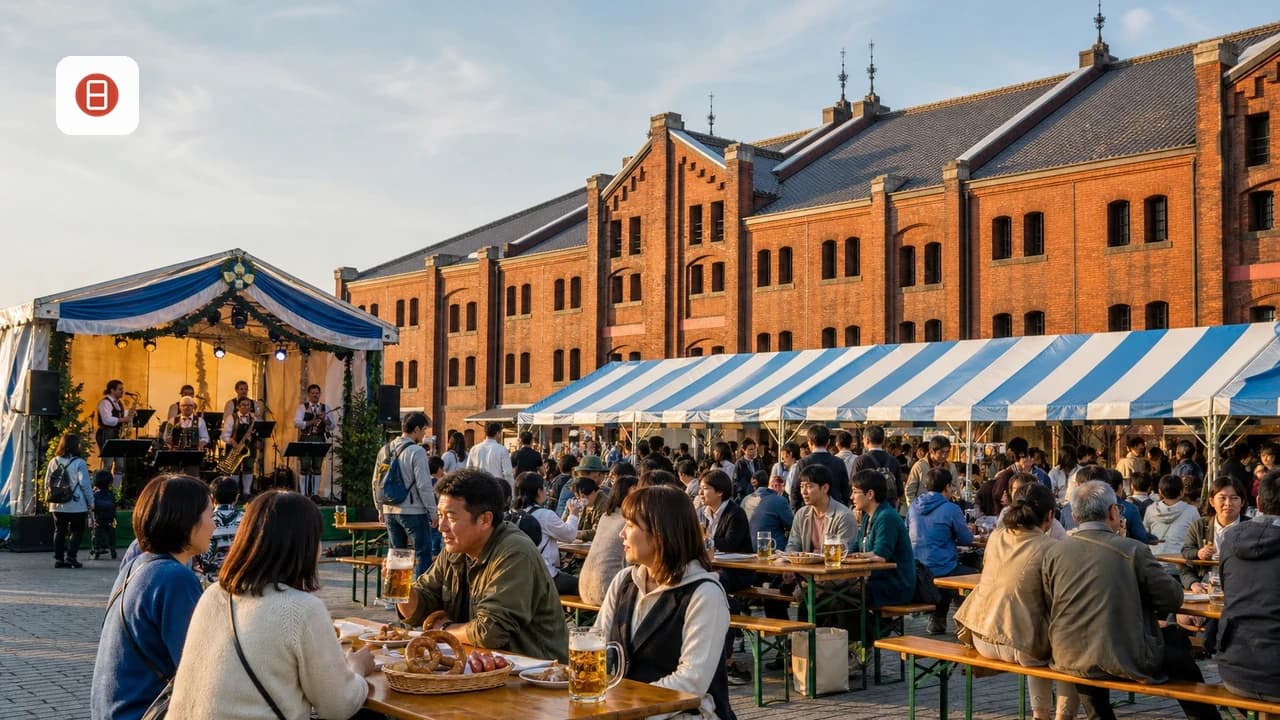
The Yokohama Red Brick Warehouse (Akarenga Soko) consists of two restored early-1900s customs warehouses that now house over 50 shops, restaurants, and event spaces. Warehouse No. 1 hosts rotating art exhibitions and a small theatre, while Warehouse No. 2 focuses on fashion boutiques and international dining. The open plaza between the buildings transforms seasonally — a beer garden in summer, Oktoberfest in autumn, and a Christmas market with an ice-skating rink from late November through Christmas Day.
Visitor details (2026): Warehouse No. 1 open 10:00–19:00; Warehouse No. 2 open 11:00–20:00. Free admission to the buildings; event tickets vary. A 6-minute walk from Bashamichi Station (Minatomirai Line). Visit after dusk when the brick facades are lit against the harbor — see our Red Brick Warehouse guide for opening event dates.
4. Ride the Cosmo Clock 21 Ferris Wheel for Panoramic Views
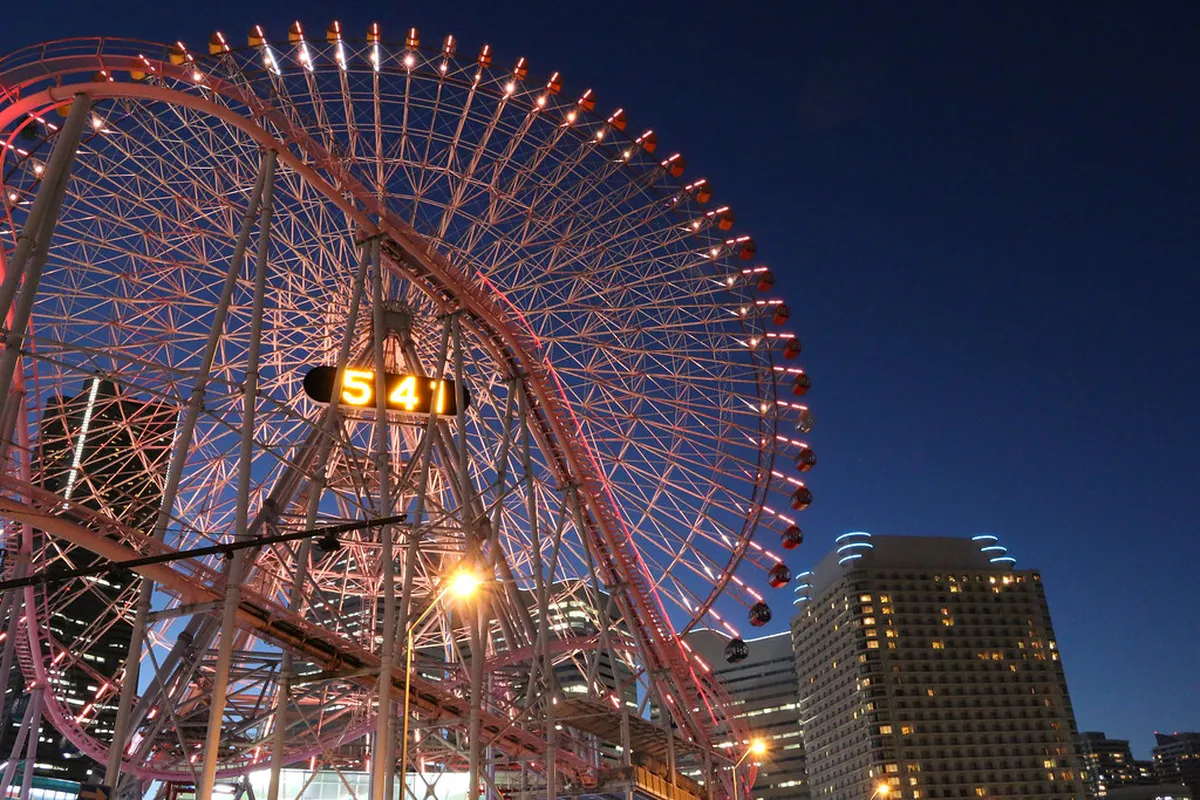
Standing 112.5 meters tall inside the Cosmo World amusement park, the Cosmo Clock 21 was once the tallest Ferris wheel on Earth and remains one of Yokohama's most recognizable landmarks. A single rotation takes about 15 minutes, with sweeping views of the Minato Mirai skyline, Yokohama Bay Bridge, and on clear winter mornings Mount Fuji. At night, the wheel runs a synchronized LED light show visible across the waterfront.
Visitor details (2026): Cosmo World open 11:00–21:00 weekdays, 11:00–22:00 weekends (hours vary seasonally). Park entry free; the Ferris wheel costs 900 yen per person. Directly adjacent to Minato Mirai Station. Ride at sunset (16:30–17:30 in winter, 18:30–19:30 in summer) for the best photographs. Full ride list in our Cosmo World guide.
5. Discover Marine Life at Yokohama Hakkeijima Sea Paradise
Hakkeijima Sea Paradise is a 24-hectare island complex that combines four aquarium zones, an amusement park with roller coasters, and a waterfront shopping mall. The Aqua Museum houses over 120,000 marine creatures across 700 species, including whale sharks and beluga whales. The Dolphin Fantasy pavilion features an arched underwater tunnel, while the Fureai Lagoon lets visitors touch sea otters, penguins, and small sharks.
Visitor details (2026): Open 10:00–17:00 weekdays, 10:00–19:00 weekends and holidays (extended summer hours). One-day aquarium pass 3,300 yen adults, 2,000 yen children. Reach the island via the Seaside Line monorail to Hakkeijima Station (about 35 minutes from Yokohama Station). Budget a full half-day if you ride the coasters as well.
6. Wander Through Yokohama Chinatown, the Largest in Asia
Yokohama Chinatown spans roughly 500 meters and contains around 600 shops and restaurants, making it the largest Chinatown in Asia. The district is anchored by 10 ornate Chinese gates, with the Zenrin-mon (Gate of Goodwill) on the main boulevard the most photographed. Street stalls sell steamed pork buns (nikuman) for around 400 yen, pan-fried dumplings from 500 yen, and boba tea from 350 yen. For a sit-down meal, Heichinrou, established in 1884, is the oldest Chinese restaurant in Japan and still serves Cantonese classics.
The area peaks during Chinese New Year (mid-February 2026) and the Mid-Autumn Festival, when parades, lion dances, and lantern displays fill the streets. Walk-in only — most restaurants do not take reservations for groups under six. Directly accessible from Motomachi-Chukagai Station (Minatomirai Line). See our Yokohama Chinatown guide for a stall-by-stall food crawl.
7. Visit the NYK Hikawa Maru and Yokohama Port Museum
The NYK Maritime Museum and the neighboring Hikawa Maru ocean liner together tell the story of Yokohama's rise as Japan's gateway to the world. The land-based museum displays intricate ship models, navigational instruments, and multimedia exhibits about the Nippon Yusen Kaisha shipping line. Just steps away, the Hikawa Maru itself — a beautifully preserved 1930 ocean liner that once sailed the Yokohama–Seattle route — opens for self-guided tours of first-class cabins, engine room, and bridge.
Visitor details (2026): Hikawa Maru open 10:00–17:00 (last entry 16:30), closed Mondays. Admission 300 yen adults, 100 yen children, or a 500-yen combo with the NYK Museum. Moored at Yamashita Park, 3 minutes from Motomachi-Chukagai Station.
8. Taste Regional Ramen at Shin-Yokohama Ramen Museum
Shin-Yokohama Ramen Museum is the world's first food-themed amusement park and one of the most distinctive Yokohama attractions in 2026. The basement levels recreate a 1958 Tokyo streetscape complete with dim lighting, retro signage, and authentic shoten storefronts. Nine ramen shops — each representing a different regional style from across Japan — serve mini-sized bowls (around 500–900 yen) so you can sample multiple varieties in one visit. Upstairs, the gallery traces the history of instant and fresh ramen.
Visitor details (2026): Open 11:00–21:00 daily (last entry 20:00). Admission 450 yen adults; ramen bowls purchased separately at each shop. A 5-minute walk from Shin-Yokohama Station (JR Yokohama Line / Shinkansen) — making it the easiest stop if you are arriving on the bullet train. More food picks in our Yokohama food guide.
9. Enjoy Shopping and Dining at Minato Mirai 21
Minato Mirai 21 is Yokohama's modern waterfront district and the commercial heart of the city. The area is anchored by the 296-meter Yokohama Landmark Tower, whose 69th-floor Sky Garden observatory offers panoramic views for 1,000 yen. Below, the MARK IS and Queen's Square shopping complexes contain hundreds of stores, a cinema, and restaurants. The waterfront promenade connecting the district to the Red Brick Warehouse is one of the most pleasant walks in the city.
Visitor details (2026): Most shops open 10:00–20:00; restaurants stay open until 22:00. Landmark Tower Sky Garden open 10:00–21:00 (until 22:00 on Saturdays). Access via Minato Mirai Station, a 3-minute ride from Yokohama Station on the Minatomirai Line. The neighborhood is managed by the Minatomirai 21 development association, whose official Minato Mirai 21 site publishes the latest store directory and event calendar. Full neighborhood walkthrough in our Minato Mirai guide.
10. Admire Art at the Yokohama Museum of Art
The Yokohama Museum of Art, designed by architect Kenzo Tange, houses a permanent collection of over 13,000 works spanning modern and contemporary art from the late 19th century to the present. Key holdings include works by Picasso, Cezanne, Dali, and prominent Japanese artists including Isamu Noguchi. The museum's soaring atrium, with its symmetrical concrete arches, is an architectural landmark in its own right. Following its 2026 reopening after a multi-year refurbishment, the galleries now feature improved natural lighting and bilingual signage throughout.
Visitor details (2026): Open 10:00–18:00 (last entry 17:30), closed Thursdays. General admission 500 yen adults; special exhibitions price separately. A 5-minute walk from Minato Mirai Station.
11. Step Aboard the Hikawa Maru, a Historic Ocean Liner
The Hikawa Maru deserves its own spotlight beyond the NYK Museum entry. Nicknamed the "Queen of the Pacific," this Art Deco vessel completed 238 trans-Pacific voyages between 1930 and 1960, carrying passengers including Charlie Chaplin on three separate crossings. The restored first-class dining room and cabins showcase 1930s luxury, while the engine room gives a raw look at the machinery that powered ocean travel. The open deck offers postcard-worthy views of Yokohama Marine Tower and the Bay Bridge.
Visitor details (2026): Admission 300 yen, or 500 yen as a combo with the NYK Maritime Museum. Open 10:00–17:00, closed Mondays. Photography is allowed throughout except in the temporary exhibits below deck.
12. Find Peace at the Yokohama English Garden
The Yokohama English Garden is home to over 2,200 varieties of roses, making it one of the most impressive rose collections in the Kanto region. The garden is divided into themed areas — the Rose and Clematis Garden, the Rose and Grass Garden, and the Rose and Shrub Garden — each designed in an English cottage style with arched trellises and winding pathways. Peak rose season runs from mid-May through early June, when the garden hosts special illumination events and workshops.
Visitor details (2026): Open 10:00–18:00 (March–November), 10:00–17:00 (December–February). Admission 500–1,200 yen for adults, varying by bloom intensity (highest 18 May – 7 June 2026). Free shuttle bus from Yokohama Station West Exit (Hamadara-mae stop), running every 15 minutes.
13. Catch a Show at the Yokohama Noh Theater
Noh is a 650-year-old form of Japanese musical drama performed with elaborate masks and slow, deliberate movements. The Yokohama Noh Theater (Yokohama Nohgakudo), near Sakuragicho, is one of the few dedicated Noh stages in the Kanto region open to casual visitors. Performances typically run 2–3 hours and pair a main Noh play with a shorter Kyogen comedy interlude — most theatres now provide English program leaflets. The theater also hosts beginner-friendly workshops where visitors can try on Noh masks and learn basic movements.
Visitor details (2026): Performance schedules vary; check the official calendar in advance. Tickets 2,000–6,000 yen depending on seating. A 7-minute walk from Sakuragicho Station.
The Cosmo Clock 21 Ferris wheel suspends operation when wind speeds exceed 20 m/s, and the Cosmo World park is closed most Thursdays in the off-season. Check the official calendar before visiting on a Thursday in February or June.
14. Explore the Kirin Yokohama Beer Village
Kirin's Yokohama brewery offers a free 80-minute guided tour that walks visitors through the complete beer-making process — from raw barley and hops to fermentation, filtration, and bottling. The tour concludes with a tasting session where adults can sample up to three freshly brewed glasses of Kirin Ichiban Shibori and other seasonal varieties. Non-drinkers and children receive complimentary soft drinks. The on-site Kirin Beer Port restaurant serves dishes specifically paired with Kirin beers.
Visitor details (2026): Tours run Wednesday–Monday at set times; advance online reservation in English is required and slots fill 4–6 weeks ahead in cherry-blossom season. Free admission. Access via Namamugi Station (Keikyu Line), a 10-minute walk.
15. Discover Local Crafts at Yokohama Craft Road
Yokohama Craft Road is a charming district in the Naka-ku area where artisan workshops and galleries showcase traditional Japanese craftsmanship — handmade pottery, blown glass, indigo-dyed textiles, and intricate wood carvings. Many of the workshops offer hands-on experiences: try a 30-minute pottery wheel session from 2,500 yen, or a glass-blowing demonstration from 3,500 yen. The area is also known for its independent cafes, making it easy to spend a leisurely half-day browsing and creating.
You can often meet the artisans themselves and learn about their techniques, which adds a personal dimension to souvenir shopping. Most studios require advance booking via Instagram DM — same-day walk-ins are rare on weekends.
16. Experience the Night View from Yokohama Marine Tower
Yokohama Marine Tower stands 106 meters tall and was originally built in 1961 to celebrate the centennial of Yokohama's port opening. After a major renovation that finished in 2022, the tower reopened with a modernized observation deck at 94 meters offering 360-degree views of the harbor, Chinatown, and the Minato Mirai skyline. The tower is particularly popular at night, when the illuminated cityscape creates one of the most romantic views in the Kanto region. The ground floor now houses a small craft-beer bar with rotating taps from Kanagawa breweries.
Visitor details (2026): Open 10:00–22:00 daily (last entry 21:30). Admission 1,000 yen adults, 500 yen children. A 1-minute walk from Motomachi-Chukagai Station. For more after-dark ideas, see Yokohama nightlife.
17. Enjoy a Relaxing Cruise on Yokohama Bay
Several operators run sightseeing cruises from Osanbashi Pier and Yamashita Park, ranging from 40-minute harbor loops to 2-hour dinner cruises. The Royal Wing, Yokohama's largest restaurant ship, serves a Chinese banquet while circling the bay past the Bay Bridge and Minato Mirai skyline. For a budget-friendly option, the Sea Bass water bus connects Yokohama Station to Minato Mirai and the Red Brick Warehouse for just 700 yen one-way, providing scenic harbor views without a hefty price tag.
Visitor details (2026): Short cruises start around 1,500 yen; dinner cruises run 8,000–15,000 yen per person. The Sea Bass departs from Yokohama Station East Exit. Opt for a sunset departure (around 17:00 in winter, 19:00 in summer) when golden light reflects off the harbor.
18. Take a Guided Walking Tour with a Local Expert
Guided walking tours led by local experts are one of the most efficient ways to cover multiple Yokohama attractions in a single outing. Popular routes include a Chinatown food crawl (approximately 3 hours, from 5,000 yen), a Minato Mirai architecture walk, and a Yamashita Park heritage trail covering the port's role in opening Japan to international trade. Several operators now offer private tours that can be customized to your interests, from street photography walks to craft-beer tasting tours.
If you only have one day, a 3-hour morning tour beats trying to read every museum placard yourself — local guides know which Chinatown stalls are run by third-generation families and which Akarenga shops change stock weekly.
19. Explore at Your Own Pace with a Half-Day Tour
If you prefer flexibility, half-day tours let you cover the headline sights without a rigid schedule. Most half-day itineraries include Chinatown, the Red Brick Warehouse, and one museum or garden, with a knowledgeable guide offering commentary along the way. Prices typically start at 8,000 yen per person for a group tour, 20,000 yen for a private guide. The format works well for first-time visitors who want orientation before exploring independently in the afternoon. See our Yokohama itinerary 2026 for a free DIY alternative.
20. Visit Yamashita Park for a Waterfront Stroll
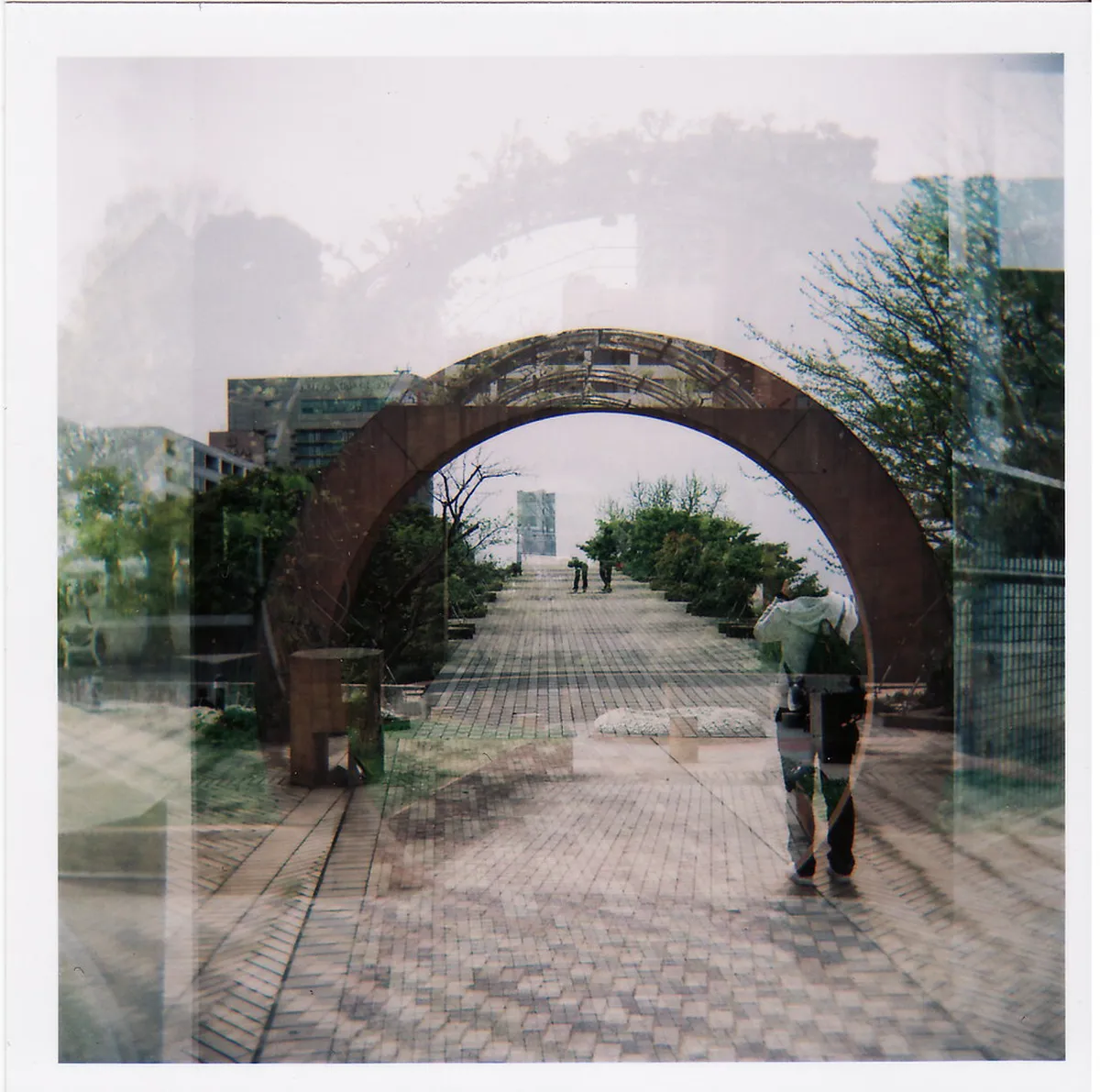
Yamashita Park stretches 700 meters along the waterfront and is the first seaside park ever built in Japan, opened in 1930 on land reclaimed from rubble after the Great Kanto Earthquake. The park connects many of Yokohama's top attractions — the Hikawa Maru is moored at its north end, the Marine Tower rises at its south, and Chinatown sits one block inland. Rose beds bloom from May through June, and the bronze "Red Shoes" statue near the central fountain is one of the city's most photographed monuments. Admission free, open 24 hours, no closures.
Yamashita Park is the natural starting point for a walking tour of the waterfront. From here you can reach the Marine Tower, Hikawa Maru, Chinatown, and Osanbashi Pier without taking another train.
21. Walk the Full Minato Mirai Loop for Free
Most guides hand you a list of paid attractions and skip the cheapest highlight: the 4.5-km waterfront loop from Yamashita Park, through Osanbashi Pier's rooftop deck (free, 24h), past the Red Brick Warehouse, around Kishamichi Promenade, ending at Cosmo World. It takes 70–90 minutes at a relaxed pace and delivers every postcard view in this guide without a single ticket. Osanbashi's wooden deck offers the best free vantage of Landmark Tower and the cruise terminal, especially at blue hour (16:30–17:30 in winter).
Pair the loop with the Akaikutsu sightseeing loop bus when your legs give out — it stops every 10–15 minutes along the same corridor for a flat 220 yen, or 500 yen for an all-day pass.
| Attraction | Admission (adults) | Hours | Closed |
|---|---|---|---|
| Sankeien Garden | 900 yen | 09:00–17:00 | Open daily |
| Cup Noodles Museum | 500 yen | 10:00–18:00 | Tuesday |
| Cosmo Clock 21 Ferris Wheel | 900 yen | 11:00–21:00/22:00 | Some Thursdays |
| Yokohama Marine Tower | 1,000 yen | 10:00–22:00 | Open daily |
| Landmark Tower Sky Garden | 1,000 yen | 10:00–21:00 | Open daily |
| Hikawa Maru | 300 yen | 10:00–17:00 | Monday |
How Long Do You Need in Yokohama?
Most first-time visitors over-pack their day. The honest matrix: 4–5 hours is enough for the Chinatown plus Minato Mirai loop with one short museum stop; one full day covers Chinatown, Red Brick Warehouse, Cup Noodles Museum, Yamashita Park, and a sunset Ferris wheel ride; two days unlock outliers like Sankeien Garden (eastern Honmoku) and Hakkeijima Sea Paradise (southern peninsula), both 30–35 minutes from the core.
If your trip from Tokyo is fixed at one day, drop Hakkeijima and Sankeien rather than rushing them — they each deserve 3+ hours including transit and lose their character if you sprint through. See Yokohama day trip from Tokyo for a tight one-day route, or our 2026 itinerary for a two-day plan.
Where to Stay in Yokohama
The best base depends on your purpose. Minato Mirai puts you next to Landmark Tower, the Ferris wheel, and the Red Brick Warehouse — ideal for couples and waterfront views (InterContinental, Yokohama Bay Hotel Tokyu). Motomachi-Chukagai sits at Chinatown's doorstep with cheaper guesthouses and easy access to Yamashita Park. Yokohama Station itself wins for transfers if you are mixing the city with Hakone, Kamakura, or further Shinkansen travel — but it has the least atmosphere.
Avoid Shin-Yokohama unless you are arriving by Shinkansen with one early-morning departure; it is the brewery and ramen district, not the sightseeing core. Full neighborhood comparison in our where to stay in Yokohama guide.
Best Time to Visit Yokohama in 2026
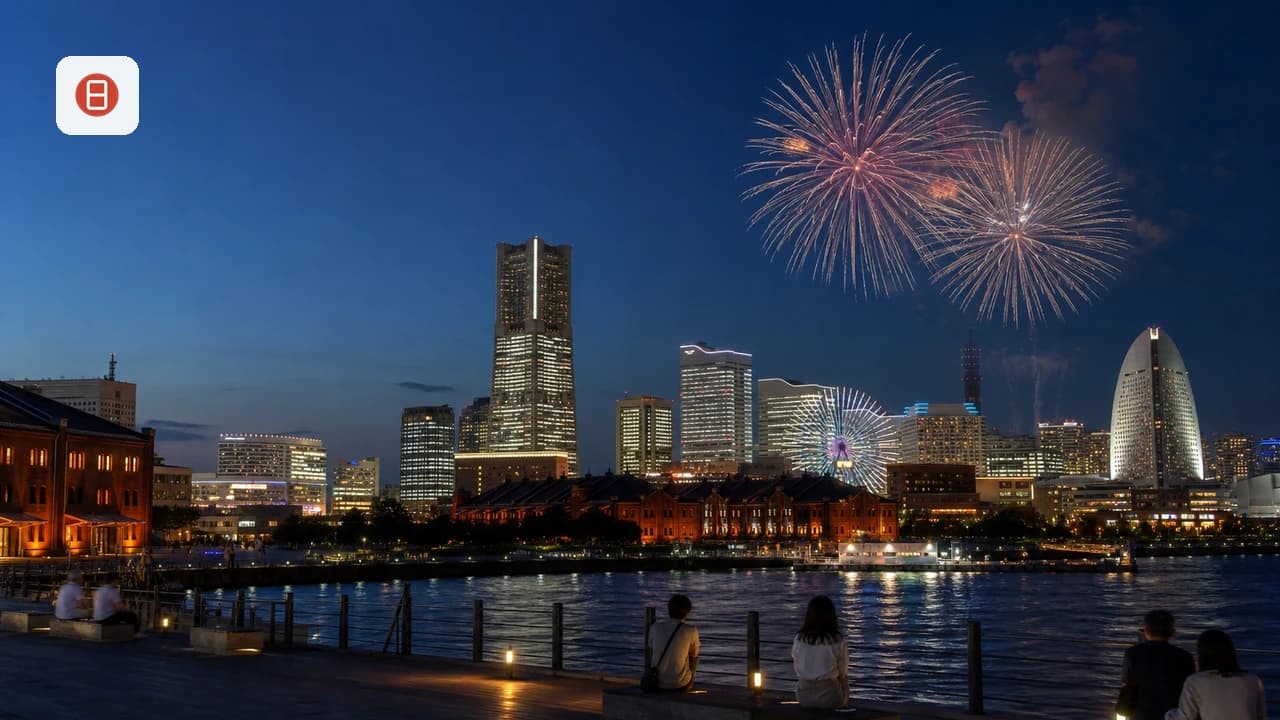
Late March through early April delivers cherry blossoms along the Ooka River and in Sankeien Garden. Mid-May through early June is peak rose season at the English Garden and Yamashita Park. Late July hosts the Yokohama Sparkling Twilight fireworks (16–17 July 2026 schedule pending confirmation). Late November brings maple foliage at Sankeien, and the Red Brick Warehouse Christmas market runs roughly 27 November – 25 December.
Summer is hot and humid (average 28°C with high humidity) and overlaps typhoon season in September. Winter is mild for Japan (5–12°C) with the clearest Mount Fuji visibility from the Ferris wheel and Landmark Tower. Full month-by-month breakdown in our best time to visit Yokohama guide.
Rainy-Day and Typhoon-Season Alternatives
September brings the heaviest rain in Yokohama, with average rainfall above 200 mm and occasional typhoon closures of outdoor attractions. The good news: the city's geography rewards bad-weather visitors. The Cup Noodles Museum, Shin-Yokohama Ramen Museum, Yokohama Museum of Art, Hikawa Maru, NYK Maritime Museum, and Landmark Tower Sky Garden are all fully indoor. Chinatown is still walkable under an umbrella — most restaurants are sub-100-meter dashes apart — and the underground Queen's Square corridor links Minato Mirai Station directly to MARK IS without surfacing.
Skip Sankeien, Hakkeijima Sea Paradise's outdoor coasters, the Cosmo Clock Ferris wheel, and the Marine Tower observation deck in heavy rain — visibility drops to under 2 km and the wheel suspends operation above 20 m/s winds. Convenience-store umbrellas at Yokohama Station run 700 yen; bring your own if travelling from Tokyo.
How to Get Around Yokohama
Yokohama's compact waterfront layout means you can reach most attractions on foot or with short train rides. The Minatomirai Line connects Yokohama Station to Minato Mirai, Bashamichi, and Motomachi-Chukagai stations in under 10 minutes, covering the core sightseeing zone. The JR Keihin-Tohoku and Negishi Lines link Yokohama Station to Sakuragicho, Kannai, and Ishikawacho — useful stops for Chinatown and the Noh Theater. For a scenic option, the Akaikutsu sightseeing loop bus runs from Sakuragicho through Minato Mirai, Red Brick Warehouse, Chinatown, and Yamashita Park for a flat 220 yen per ride, or free with a Yokohama one-day pass at 500 yen.
From Tokyo, the fastest route is the Tokyu Toyoko Line express from Shibuya Station to Yokohama Station in 28 minutes (480 yen), continuing directly onto the Minatomirai Line. The JR Tokaido Line from Tokyo Station reaches Yokohama in 25 minutes (480 yen). For visitors arriving by Shinkansen, Shin-Yokohama Station connects to Yokohama Station via the Yokohama Municipal Subway Blue Line in 11 minutes. Full transport breakdown in how to get to Yokohama from Tokyo.
Browse the Yokohama attraction directory for individual visitor guides, access details, and practical tips.
Going deeper on this theme? Our 10 Best Yokohama Events and Festivals for a 2026 Trip guide covers it in detail, with the practical planning this page leaves out.
Frequently Asked Questions About Yokohama Attractions
How do I get from Tokyo to Yokohama?
The fastest option is the Tokyu Toyoko Line express from Shibuya, reaching Yokohama Station in 28 minutes for 480 yen. From Tokyo Station, the JR Tokaido Line takes 25 minutes for 480 yen. Both routes accept Suica or Pasmo IC cards; only the JR route is covered by the Japan Rail Pass.
Is one day enough to see the top Yokohama attractions?
One full day covers 5–7 major attractions in the Minato Mirai and Chinatown area, including the Cup Noodles Museum, Red Brick Warehouse, Chinatown, and Yamashita Park. If you want to visit Sankeien Garden or Hakkeijima Sea Paradise — both located outside the core area — plan for a second day or a focused half-day trip.
What is the best time of year to visit Yokohama?
Spring (late March through May) and autumn (October through November) offer the most pleasant weather. Cherry blossoms peak in late March to early April, and the Garden Necklace Yokohama flower festival runs from March through June 2026. Summer brings festivals and fireworks but can be hot and humid. Winter is mild compared to northern Japan, and the Red Brick Warehouse Christmas market (late November to 25 December) is a major draw.
Are Yokohama attractions covered by the Japan Rail Pass?
The Japan Rail Pass covers JR trains to and within Yokohama (Keihin-Tohoku, Negishi, and Tokaido Lines), but it does not cover the Minatomirai Line (a private railway) or the Tokyu Toyoko Line. For unlimited local transport, consider the Yokohama 1-Day Pass (820 yen) covering municipal buses and the subway, or the Minato Burari Ticket (500 yen) for buses in the sightseeing zone.
What are the must-try foods in Yokohama?
Yokohama is famous for three food experiences: Chinatown street food (steamed pork buns, dumplings, and Peking duck), the Shin-Yokohama Ramen Museum for regional ramen styles from across Japan, and the Cup Noodles Museum where you can create your own custom instant noodle cup. Beyond these, the waterfront area offers excellent seafood, and local craft breweries are growing in popularity.
Is Yokohama suitable for families with children?
Yokohama is one of the most family-friendly destinations near Tokyo. The Cup Noodles Museum, Cosmo World amusement park, and Hakkeijima Sea Paradise all cater to children with interactive exhibits and rides. Yamashita Park provides open space for kids to run, and Chinatown's street food makes for easy, kid-friendly dining. Most attractions offer discounted admission for children under 12. See things to do in Yokohama with kids.
From serene Japanese gardens to world-class museums and vibrant entertainment districts, Yokohama attractions deliver something for every traveler in 2026. Whether you spend a single action-packed day or a relaxed weekend exploring this dynamic port city, the combination of culture, food, and waterfront beauty makes Yokohama one of the best side trips from Tokyo.
Explore More Yokohama Guides
Deep-dive guides for every part of a Yokohama trip — from where to stay and what to eat, to getting around, neighborhoods, seasonal timing, and full itineraries.
Where to Stay
- Areas to Stay in Yokohama (2026)
- Family Hotels in Yokohama
- Tips and Areas for Hotels in Yokohama 2026
- Budget Accommodation Options in Yokohama
- Areas to Stay in Yokohama
Food & Drink
- Restaurants in Yokohama 2026
- Cup Noodles Museum Yokohama
- Things to Do in Yokohama Chinatown
- Yokohama Food Guide
- 6 Essential Insights into Yokohama Iekei Ramen
- Yokohama Street Food Guide
Getting Around & Practical
- 9 Essential Ways to Navigate Yokohama
- How to Get to Yokohama from Tokyo
- Yokohama Airport Transfer Options for Haneda and Narita
- Yokohama Transit Pass Guide
Neighborhoods & Districts
- Noge District Yokohama Guide
- Sankeien Garden Yokohama Guide
- Yokohama Minato Mirai Guide
- Yokohama Neighborhoods Guide
- Yokohama Red Brick Warehouse Guide
- Yokohama Station Area Guide
Itineraries & Trip Planning
- How Many Days in Yokohama? 13 Essential Planning Tips
- Is One Day Enough in Yokohama? A 1-Day Planning Guide
- Is Yokohama Worth Visiting? Honest 2024 Travel Guide
- One Day in Yokohama Itinerary
- Yokohama 2 Day Itinerary
- Yokohama Day Trip From Kamakura
- Yokohama Day Trip From Tokyo
- Yokohama Itinerary 2026
- Yokohama vs Tokyo
Best Time & Seasonal
Things to Do & Attractions
- Free Things to Do in Yokohama
- Rainy Day Things to Do in Yokohama
- 12 Romantic Things to Do in Yokohama for Couples
- Yokohama Cosmoworld Guide
- 12 Essential Yokohama Hidden Gems and Travel Tips
- Yokohama
- Spots in Our Yokohama Shopping Guide
- Things to Do in Yokohama with Kids
Plan Your Japan Trip
Free: The Yokohama Essentials guide
Top things to do, where to stay, a perfect day plan, getting around, and the best time to go — a Yokohama mini-guide you can take offline.
You might also like


Continue reading
More guides you'll find useful