

Yokohama Red Brick Warehouse: Free Entry, Access & Hours 2026
Visit the Yokohama Red Brick Warehouse: free admission to both buildings, a 6-minute walk from Bashamichi Station, plus 2026 events, shops & dining.
On this page
The Yokohama Red Brick Warehouse, known locally as Aka-Renga Soko, is the most photographed waterfront landmark in Kanagawa and one of Japan's clearest examples of industrial heritage reused as a public space. Two preserved Meiji-era customs warehouses now hold roughly fifty shops, two dozen restaurants, a 300-seat hall, and a plaza that hosts the city's biggest seasonal festivals. Admission to both buildings is free year-round, and the complex stays open 365 days a year.
The site sits on Shinko Pier in the heart of the Minato Mirai district, six minutes on foot from Bashamichi Station. This guide covers what to see in each building, the 2026 event calendar, station-by-station access, photography angles, on-site amenities most other guides skip, and the walking route that connects the warehouse to Yamashita Park and Chinatown in under twenty minutes.
What is the Yokohama Red Brick Warehouse?
Aka-Renga Soko is a two-building cultural and commercial complex on Shinko Pier. Building No. 1 (the smaller, southern building) hosts art exhibitions, the Akarenga Hall performance space, and craft-focused retail. Building No. 2 (larger, to the north) is the shopping and dining hub, with three floors of boutiques, food stalls, and harbor-view restaurants. A wide brick plaza between them serves as the open-air event venue.
The buildings face Yokohama Bay, with Cosmo World's giant Ferris wheel and the Minato Mirai skyline directly across the water. The setting is what makes the complex distinctive: industrial Meiji brickwork in the foreground, post-1990s glass towers in the background, and working harbor traffic in between. This contrast is the reason the warehouse appears in almost every Yokohama travel reel.
Inside, the original iron freight elevators, exposed riveted beams, and arched windows have been kept intact during the 2002 restoration and a quieter 2022 re-tenanting that swept in new boutique food operators. The warehouse is a natural anchor for anyone planning a day trip from Tokyo because it bundles shopping, dining, history, and waterfront views into one walkable block.
The History of Aka-Renga Soko: From Customs to Culture
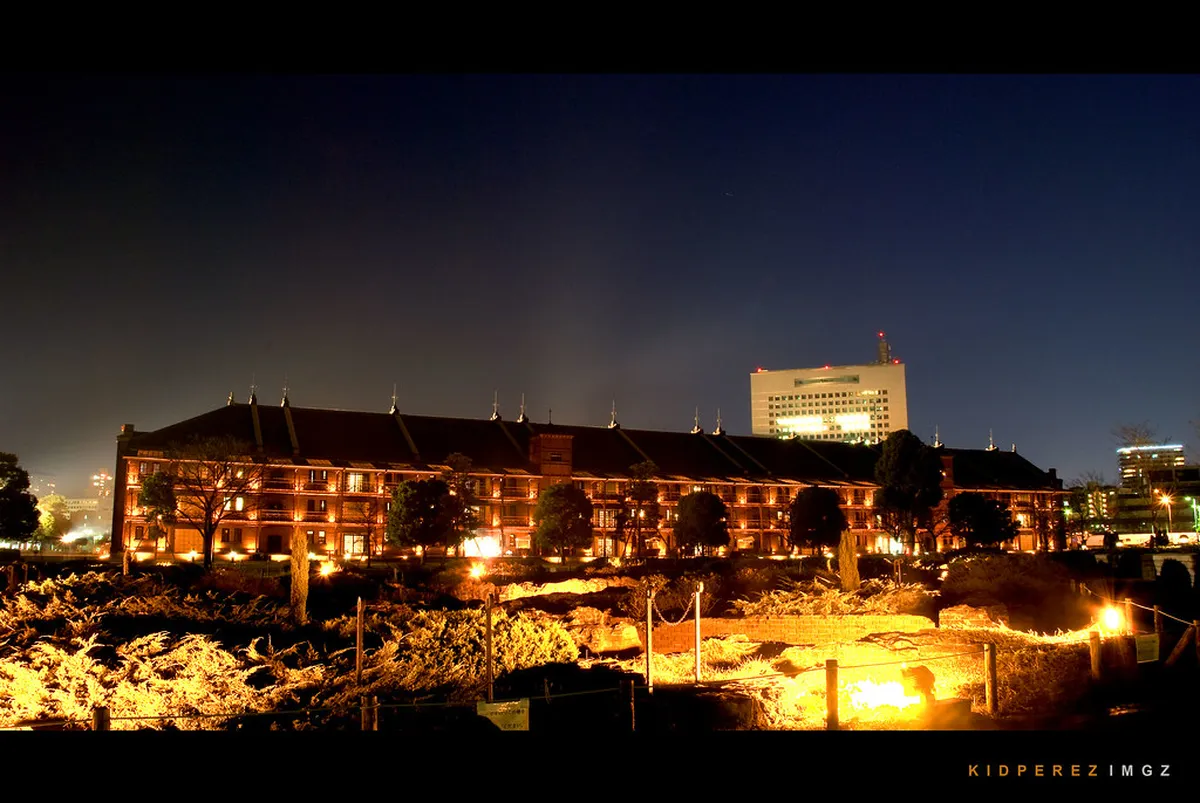
The warehouses were commissioned by Japan's Ministry of Finance during the late Meiji Era to handle the rapidly growing volume of foreign goods entering through Yokohama Port. Building No. 2 opened in 1911 and Building No. 1 in 1913. The architect, Yorinaka Tsumaki, equipped them with the country's first freight elevators, fire sprinklers, and steel-reinforced brick construction, all radical for the time.
Both buildings survived the 1923 Great Kanto Earthquake that flattened most of central Yokohama, though Building No. 1 lost its northern third and was later rebuilt to a shorter footprint. During and after World War II, the structures served as a Japanese army supply depot and then as a U.S. military port headquarters until 1956. They were returned to Japanese civilian control and left largely dormant for the next thirty years.
The City of Yokohama acquired the site in 1992 and ran a decade-long restoration that retained over 80% of the original brick. The complex reopened to the public in April 2002 as a commercial and cultural facility, deliberately positioned as the centerpiece of the Minato Mirai 21 waterfront redevelopment. It is now treated as a model nationally for adaptive reuse of industrial heritage.
Building No. 1: A Hub for Arts and Events
Building No. 1 is the cultural side of the complex and is the quieter of the two. The third floor is occupied by Yokohama Akarenga Hall, a 300-seat performance venue that programs theater, contemporary dance, and small classical concerts most weekends. Tickets usually run 3,000 to 6,000 yen and sell directly via the official site. The second floor hosts free or low-cost (around 500 yen) rotating exhibitions from local artists and design schools.
The ground floor is the craft retail level. Stalls here favor traditional Japanese stationery, ceramics from Mashiko and Hagi, indigo-dyed textiles, and small-batch lacquerware. Prices typically fall between 500 and 5,000 yen, which makes Building No. 1 the better stop if you are hunting for thoughtful gifts rather than fashion items.
- Akarenga Hall on the third floor for live performances; check the official schedule one to two weeks before your visit.
- Second-floor exhibition space, usually free to walk through, occasionally ticketed for headline shows.
- Ground-floor craft shops for stationery, ceramics, and Yokohama-themed prints in the 500 to 5,000 yen range.
Building No. 2: Premium Shopping and Waterfront Dining
Building No. 2 is the larger, retail-heavy half. The ground floor leads with the Japan Department Store, which curates regional snacks, sake, and crafts from all 47 prefectures and is the single best stop for souvenirs you cannot find at a standard mall. Sugi Bee Garden, a few doors down, sells fruit-infused honey flights you can taste before buying; jars start around 1,200 yen.
The second floor is lifestyle and fashion: leather goods from Tokyo-based makers, handmade jewelry, and several "Yokohama Red" themed boutiques that stock items exclusive to this complex. The third floor is restaurants, with around a dozen sit-down options ranging from 2,000 yen ramen sets to 6,000 yen seasonal kaiseki menus. Most third-floor restaurants have outdoor balcony seats facing the harbor — these go fast at sunset, so reserve ahead or arrive by 17:00.
If you only have time for one quick bite, the ground-floor food stall area added during the 2022 re-tenanting has Yokohama beer, soft serve from a Hokkaido dairy, and a sausage counter that's reliably good for under 1,500 yen. For deeper dining ideas in the wider district, see our Yokohama food guide.
- Japan Department Store on the ground floor for regional sake, snacks, and crafts (300 to 3,000 yen).
- Sugi Bee Garden honey tastings, ground floor.
- Third-floor harbor-view restaurants — reserve a balcony table for sunset (2,000 to 6,000 yen per person).
The Event Plaza: Yokohama's Premier Festival Grounds
The brick plaza between the two buildings is the most active outdoor event space in Yokohama. It runs continuously through the year, with a rolling calendar of food festivals, beer events, and seasonal markets that draw crowds from across Kanto. Most plaza events are free to enter; food and drink are paid via a refundable cup-and-coin system (typically a 1,000 yen cup deposit you reclaim at the end).
The headline event is the Yokohama Christmas Market in late November through Christmas Day. A skating rink replaces part of the plaza, a 10-meter Christmas tree anchors the center, and around 30 wooden chalets sell German-style mulled wine, sausages, and ornaments. Entry is around 500 yen on weekends. The Oktoberfest in early October mirrors the format with German beers and live oompah bands. Summer brings the Frühlings Fest in May and a Burger Championship in early June; spring delivers the Flower Garden installation in late March through mid-April.
The Christmas Market sells timed weekend entry slots and the rink queue can hit 45 minutes after 16:00 on Saturdays. Visit on a weekday between 14:00 and 16:00 to avoid the after-work surge. Slots release on the official site — book ahead for December weekend visits.
Crowd intensity matters: the Christmas Market sells timed weekend entry slots, and the queue for the rink can hit 45 minutes after 16:00 on Saturdays. The best workaround is a weekday visit between 14:00 and 16:00, before the after-work surge. Cross-reference with our best time to visit Yokohama if you are timing your trip around a specific festival, and check the official Yokohama Red Brick Warehouse event calendar for confirmed dates, ticketed-slot releases, and weather cancellations.
| Season | Event | Dates (approx.) | Entry |
|---|---|---|---|
| Spring | Flower Garden | Late March – mid-April | Free |
| Summer | Beer & wine festivals | July – August | Free (drinks paid) |
| Autumn | Yokohama Oktoberfest | Early October | Free (drinks paid) |
| Autumn | Burger Championship | Early June | Free |
| Winter | Christmas Market + skating rink | Late Nov – 25 Dec | ~500 yen weekends |
Essential Visitor Information: Hours, Access, and Parking
Building No. 1 is open 10:00 to 19:00; Building No. 2 runs 11:00 to 20:00 for shops, with restaurants serving until 23:00 — confirmed against the operator's hours and the Yokohama City Tourism Association visitor pages. The plaza is accessible 24 hours but events have their own hours. Admission to both buildings is free; only specific hall performances, ticketed exhibitions, and a few major plaza events charge for entry.
The closest station is Bashamichi on the Minatomirai Line, a flat six-minute walk via the brick-paved Kishamichi Promenade. Sakuragicho Station on the JR Negishi Line and the Yokohama Municipal Subway is a 15-minute walk through Minato Mirai with views of Cosmo World en route. Coming from Tokyo, the Tokyu Toyoko Line runs direct to Minatomirai Station (about 35 minutes from Shibuya) — see our notes on traveling from Tokyo to Yokohama for IC card and pass options.
Parking is available in the Akarenga Parking lot directly under the complex (260 yen per 30 minutes, capped around 2,000 yen for the day). Spaces fill by 12:00 on weekends. Drivers are usually better off parking at the larger Minato Mirai or Queen's Square garages and walking in. The complex is fully wheelchair accessible: elevators serve every floor of both buildings and ramped entries replace stairs at all main doors.
Photography Guide: Best Spots for the Iconic Red Bricks
The warehouse is one of Japan's most photogenic urban subjects because of the brick-versus-glass contrast and the open sight lines across the harbor. The single best architectural shot is from the third-floor outdoor terrace at the north end of Building No. 2, which frames Building No. 1 against the Minato Mirai skyline. Blue Hour, roughly 25 minutes after sunset, is when the warm facade lights kick on while the sky still holds blue — the most flattering five minutes of the day.
For wide shots of both buildings together, walk to the far end of Shinko Pier (north side) and shoot back south. Sunrise around 05:30 in summer gives you a near-empty plaza and a warm-on-cool palette. After rain, the brick plaza reflects the facade lights and is worth a tripod stop after 19:00.
- Third-floor terrace of Building No. 2 for harbor and skyline framing during Blue Hour.
- North end of Shinko Pier for a full two-building wide shot with the Bay Bridge behind you.
- Kishamichi Promenade, the elevated brick path from Bashamichi, for symmetrical leading-line shots toward the warehouse.
- Plaza ground level after rain, after 19:00, for facade reflections.
On-Site Amenities and Practical Services Most Guides Skip
The warehouse functions almost like a small civic facility, and a handful of free amenities save time and money but rarely make it into other guides. Free Wi-Fi (network name "YOKOHAMA") works in both buildings without registration. Coin lockers sit on the ground floor of both buildings — small lockers are 300 yen, large lockers 600 yen, and they accept luggage up to roughly carry-on size, useful if you arrived directly from Haneda or Narita and want to walk Minato Mirai before checking into a hotel.
Building No. 2 has a free baby room with diaper-change tables and a private nursing room on the second floor, plus a multipurpose toilet on every level. ATMs that accept foreign cards (7-Eleven and Yucho) are inside the ground-floor convenience corner. A small first-aid station is staffed during plaza event hours. For winter visits, both buildings keep climate control at around 22°C, which makes the warehouse a reliable warm-up point between outdoor stops in the Minato Mirai district.
One often-missed routing option: the Sea Bass passenger boat docks at Akarenga Pier on the north side of the complex and runs roughly every 15 to 20 minutes to Yokohama Station East Exit (about 10 minutes, 700 yen) or Yamashita Park (5 minutes, 500 yen). It is faster than walking back to Sakuragicho and gives you a free harbor cruise in the process.
Free Wi-Fi (network "YOKOHAMA") works throughout both buildings without registration. Coin lockers on the ground floor (300–600 yen) accept carry-on-sized luggage — useful if you arrived from Haneda or Narita before hotel check-in. ATMs accepting foreign cards are in the ground-floor convenience corner.
First-Time Visitor Plan: How to Do It in One Trip
If this is your first visit, the warehouse is easy to fold into a single Minato Mirai afternoon. Admission to both buildings is free year-round, so the only spending is on shops, food, and any ticketed plaza event. The fastest arrival is Bashamichi Station on the Minatomirai Line, a flat six-minute walk along the brick-paved Kishamichi Promenade. Most visitors need two to three hours to browse both buildings and grab a meal; add time if you are visiting during a seasonal festival.
Start in Building No. 2 for shopping and harbor-view dining, cross the plaza to Building No. 1 for crafts and exhibitions, then leave by the Sea Bass passenger boat from Akarenga Pier — about five minutes to Yamashita Park or ten minutes to Yokohama Station East Exit, which doubles as a short harbor cruise.
Nearby Attractions: Exploring the Minato Mirai Waterfront
The warehouse pairs naturally with several attractions within a 15-minute walk. Heading north, the Cup Noodles Museum is six minutes on foot across Shinko Park and works well for families. Continue another five minutes to reach Yokohama Cosmo World, where the 112-meter Cosmo Clock 21 Ferris wheel gives the cleanest aerial view of the warehouse you can get without a drone.
Heading south, the waterfront walk to Yamashita Park takes about ten minutes along Kokusai-Odori. From the park, it is a further ten-minute walk to Yokohama Chinatown for dinner. This south-to-north sequence — Chinatown lunch, Yamashita Park, warehouse afternoon, Cosmo World ride at dusk — packs the major Minato Mirai sights into one efficient day.
Use our Yokohama attractions hub to plan the rest of your trip, and see our Things to Do in Yokohama with Kids and Yokohama Cosmoworld Guide guides for related deep-dives. Refer to the Yokohama Red Brick Warehouse Official Site for live event listings and the Hello! Tokyo Tours blog for current festival reviews.
Frequently Asked Questions
Is there an entrance fee for the Yokohama Red Brick Warehouse?
Entry to both Building Number One and Building Number Two is completely free for all visitors. However, certain special events in the plaza or art exhibitions in the hall may require a ticket. You can find more details on current event pricing in our Yokohama attractions guide.
How much time should I spend at the Red Brick Warehouse?
Most visitors find that two to three hours is sufficient to explore the shops and enjoy a meal. If you are attending a seasonal festival or taking many photos, you might want to stay longer. The waterfront location makes it easy to linger and enjoy the atmosphere.
What are the best things to buy at the warehouse?
Look for unique items like 'Akarenga' themed stationery and local crafts at the Japan Department Store. Sugi Bee Honey and various regional snacks are also very popular choices for souvenirs. The boutiques offer high-quality fashion and accessories that are often exclusive to this location.
Is the Yokohama Red Brick Warehouse open every day?
Yes, the complex is generally open 365 days a year, including weekends and public holidays. Some individual shops or restaurants may have occasional closing days for maintenance. It is always a good idea to check the official website before visiting during major holidays like New Year's.
The Yokohama Red Brick Warehouse is a must-visit destination that perfectly bridges the city's past and present. From its rich history as a customs house to its current status as a cultural hub, it offers endless discovery. You can spend an entire day enjoying the shops, food, and stunning waterfront scenery of Minato Mirai. We hope this yokohama red brick warehouse guide helps you make the most of your next trip to Japan.
Free: The Yokohama Essentials guide
Top things to do, where to stay, a perfect day plan, getting around, and the best time to go — a Yokohama mini-guide you can take offline.
You might also like


Continue reading
More guides you'll find useful


