Yokohama: The Nightlife Guide
Discover the best Yokohama nightlife. A complete guide featuring must-visit clubs, bars, and late-night hotspots for 2025. Start planning your night out!
On this page
Yokohama's nightlife in 2026 splits cleanly between two worlds: the polished waterfront of Minato Mirai with its skybars and bay cruises, and the back-alley izakaya warrens of Noge and Isezakicho where the city's port-town personality still runs the show. Unlike Tokyo's Shinjuku or Shibuya, the scene here is walkable, less rushed, and noticeably cheaper — most nights end before the last train at 00:30, which actually keeps prices and crowds in check.
This guide focuses on what people actually do after dark: which district to base yourself in, what each costs, how late venues stay open, and which neighborhoods first-timers should approach with a bit of context. For daytime planning, pair it with our broader guide to things to do in Yokohama and the Yokohama itinerary.
Best Nightlife Districts in Yokohama at a Glance
Yokohama's nightlife concentrates in five districts, each with a distinct vibe. Knowing which one you're after saves you a confused 20-minute walk under the Keikyu tracks.
- Noge (野毛) — over 600 tiny izakayas, standing bars and snack bars packed into a few blocks behind Sakuragicho Station. Cheap, loud, very local. Best for bar-hopping.
- Minato Mirai — high-rise skybars, hotel lounges, and bay-view cocktail bars. Polished, photo-friendly, the most expensive option (cocktails 1,800–2,500 yen).
- Kannai / Bashamichi — jazz clubs, live houses, and historic Western-style bars dating to the port-opening era. Quieter, sit-down, 30s–50s crowd.
- Isezakicho (伊勢佐木町) — long covered shopping arcade that turns into bars, clubs and a small red-light fringe after 22:00. More edge than Noge.
- Chinatown (Yokohama Chukagai) — late-night dining rather than bars; most restaurants serve until 22:00–23:00, a few ramen and dim sum spots run past midnight.
| District | Vibe | Budget per person | Best for |
|---|---|---|---|
| Noge | Local izakaya, standing bars | 4,000–6,000 yen | Bar-hopping, first-timers |
| Minato Mirai | Skybars, hotel lounges | 8,000–12,000 yen | Bay views, couples |
| Kannai / Bashamichi | Jazz clubs, live houses | 6,000–9,000 yen | Music lovers |
| Isezakicho | Clubs, late-night bars | 5,000–8,000 yen | Dancing, late nights |
| Chinatown | Late-night dining | 3,000–5,000 yen | Post-midnight food |
Noge: The City's Real Drinking District
Noge is the answer to "where do locals actually go." A five-minute walk from Sakuragicho Station, the district is a grid of alleys lit by red lanterns, with bars often holding only six to eight seats. Standing bars (tachinomi) charge 300–600 yen per drink, full izakayas run 2,500–4,000 yen per person including food, and yokocho-style strips like Noge Koji let you table-hop without committing to a single venue.
Most Noge venues open around 17:00 and close between 23:00 and 01:00. Cash is still common in older shops, though IC card payments and PayPay have spread quickly since 2024. Expect an otoshi (compulsory appetizer seating charge) of 300–600 yen per person at most izakayas.
Reliable starting points: Noge Hino (a horseshoe-counter izakaya famous for hormone yakiniku), Bar Noble (an old-school cocktail bar from 1971 still helmed by master Yamada), and Tachinomi Suzuki for cheap sake flights. Most Noge venues open around 17:00 and close between 23:00 and 01:00. Cash is still common in the older shops, though IC card payments and PayPay have spread quickly since 2024.
Yokohama's Jazz Heritage and Where to Hear It
Yokohama is the birthplace of jazz in Japan. American sailors brought records and instruments through the port in the 1920s, and after WWII the Honmoku district hosted live clubs catering to US Navy personnel — that lineage is why the city still has more serious jazz rooms per capita than anywhere outside Tokyo. Most SERP guides skip this entirely, which is a mistake: a single 2,500–4,000 yen ticket buys you two sets in a 40-seat room with players who tour internationally.
Three venues anchor the modern scene. Motion Blue Yokohama in the Akarenga Red Brick Warehouse is the polished sister of Tokyo's Blue Note (8,000–12,000 yen, jacket-friendly). Airegin in Kannai is the listening-room purist's pick, running since 1969, cash only, two sets nightly at 19:30 and 21:00. Dolphy in Noge is the smallest and cheapest at 2,000 yen, a converted apartment with a Steinway and an audience that does not talk during solos.
Skybars and Cocktail Lounges with a Bay View
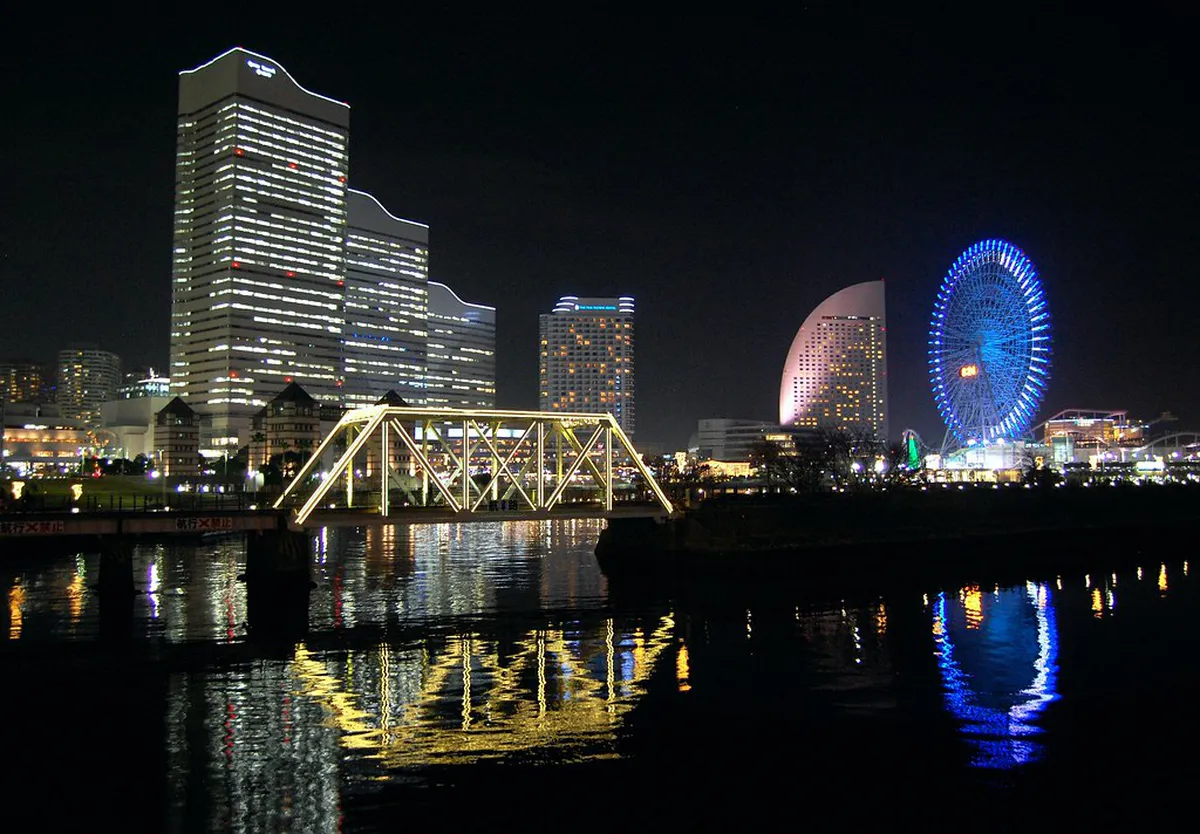
If the point of the evening is the view, three venues consistently deliver. The Sirius Sky Lounge on the 70th floor of Yokohama Royal Park Hotel inside Landmark Tower is the highest — 296 meters, full-window panorama, cocktails 2,200–2,800 yen with a 1,500-yen table charge after 20:00 (waived for hotel guests). The Marine Tower Bar, recently reopened after the 2022 renovation, sits at 100 meters with a smaller, quieter room and cheaper drinks (cocktails from 1,800 yen). For something more intimate, Bar Bar Bar on the InterContinental's 30th floor faces the Cosmo Clock 21 Ferris wheel directly — book a window seat in advance.
Dress code at all three is "smart casual" in practice: no shorts, no flip-flops, no visible activewear. Reservations are not required mid-week but are essential on Friday, Saturday, and the Yokohama fireworks nights in late July and early August.
Clubs, Live Houses and Late-Night Dancing
Yokohama's club scene is smaller than Tokyo's but more affordable, with cover charges typically 2,000–3,500 yen including one drink. The longest-running room is Club Lizard in Isezakicho, a basement venue that books house, techno and bass nights from 22:00 to 05:00 on weekends. Yokohama Bay Hall hosts touring rock and indie acts in a 1,500-capacity warehouse near Bashamichi. For Latin and salsa, Club Mistral near Kannai runs free lessons before the floor opens at 21:00.
Live houses (small live-music venues) cluster in Noge and Kannai. Thumbs Up books soul, funk and Japanese jazz-fusion almost nightly; ticket prices run 3,000–5,000 yen with a one-drink minimum (600–800 yen). Most live houses have a strict no-talking-during-sets rule that surprises first-time visitors.
Late-Night Eats: Where to End the Night
After 23:00, kitchens close fast outside the major hubs. Chinatown is the most reliable rescue: Eishinkan and Junkeihanten serve dim sum and noodles until 01:00, while a handful of street stalls along Chukagai Odori run until the last train. In Noge, Aoba and Yoshimuraya keep their ramen counters open past midnight — Yoshimuraya is the original Iekei (家系) shop, the chunky pork-broth style that defines Yokohama ramen.
For a sit-down meal closer to dawn, the 24-hour Sukiya and Matsuya branches near Yokohama Station handle the post-club crowd, and the conveyor-belt sushi at Sushiro Yokohama West Exit runs until 23:00. Avoid the bay-area restaurants after 22:00; most are kitchen-closed by then.
Last Train, Taxis, and How to Get Home
Yokohama has no all-night subway service. The last Minatomirai Line from Motomachi-Chukagai is around 00:15. Taxi queues at Yokohama Station west exit run 20–30 minutes between 00:30 and 01:30 on Fridays and Saturdays — the east exit (Sogo side) is usually faster. GO and DiDi rideshare apps often beat the queue.
This is the single most-asked practical question and most guides bury it. The last JR Negishi Line train from Sakuragicho toward Yokohama Station runs at approximately 00:25 on weekdays and 00:35 on Saturdays. The last Minatomirai Line from Motomachi-Chukagai is around 00:15. After that, your options are a taxi (Yokohama Station to Minato Mirai runs 1,500–2,200 yen; to Noge is 1,200–1,800 yen) or waiting until the first trains start around 04:35.
Unlike Tokyo, Yokohama has no all-night subway service. Taxi queues at Yokohama Station's west exit can run 20–30 minutes between 00:30 and 01:30 on Fridays and Saturdays; the east exit (Sogo side) is usually faster. GO and DiDi rideshare apps work reliably and often beat the queue.
Costs, Cover Charges and the Otoshi Question
A first-time mistake at Yokohama izakayas is being surprised by the otoshi (お通し), a small appetizer charged 300–600 yen per person that arrives unrequested and is non-refusable. It functions as a seating charge. Skybars and hotel lounges replace this with a "table charge" or "cover charge" of 1,000–2,000 yen after a certain hour — always printed on the menu, but usually only in Japanese. Ask "cover charge arimasu ka?" before sitting if you want to confirm.
A realistic per-person budget for one night: 4,000–6,000 yen for a Noge bar crawl with food, 8,000–12,000 yen for a Minato Mirai skybar evening with two drinks, and 6,000–9,000 yen for a jazz club set plus dinner. Tipping is not practiced and rounding up is unnecessary.
Safety, Red-Light Pockets and What to Avoid
Yokohama is overwhelmingly safe at night, with violent crime statistics lower than most Western cities. The one area worth knowing about is the southern fringe of Isezakicho and the small Koganecho strip beneath the Keikyu tracks. Following a major cleanup in 2005, the district is now mostly converted into artist studios, but a handful of street-level touts still operate after 23:00. Ignore touts in suits on Isezaki-Chojamachi corner offering "free drinks" or "girls bars" — these are bottakuri (rip-off) bars that produce inflated bills.
The rule used by locals: never enter a bar where the price is not displayed at the entrance, and never follow someone from the street to an unmarked door. Stick to venues with signage, menus, or a Google listing, and you will not encounter problems.
Minato Mirai's Illuminated Waterfront After Dark
The waterfront promenade between Sakuragicho Station and the Akarenga Red Brick Warehouse stays lit until 23:00, with the Cosmo Clock 21 Ferris wheel rotating until 22:00 (23:00 on weekends). A one-loop ride costs 900 yen and gives a 15-minute aerial view of the entire bay. Below it, the Kishamichi Promenade — a converted 19th-century railway bridge — is one of the city's best free night-photography spots.
For a different angle, the Royal Wing dinner cruise departs Yamashita Pier at 19:00 and 20:50 nightly, running 90 minutes for 2,800 yen entry (food extra). A cheaper option is the Sea Bass water taxi, which makes its last run at 20:30 and connects Yokohama Station, Minato Mirai, and Yamashita Park for 700 yen per leg.
LGBTQ Nightlife in Yokohama
Yokohama's LGBTQ scene is small compared to Tokyo's Shinjuku Ni-chome but more relaxed and less segregated. Most queer-friendly venues cluster in Kannai and Noge — Bar Acceptance in Kannai is the longest-running mixed-crowd bar (open from 20:00, no cover, drinks 700–1,000 yen). Pride events run in mid-October as part of Yokohama Rainbow Pride. Visitors report no issues at mainstream venues; same-sex couples are not unusual in Noge or Minato Mirai.
Cruising Through Daikoku Parking Area's Car Scene
For something genuinely unique to Yokohama, the Daikoku Parking Area on the Bayshore Route is an informal weekend meetup for Japan's modified-car community. Custom JDM builds, classic Skylines and drift cars gather here from roughly 22:00 Friday and Saturday. Access requires a car or rideshare — there is no train — and parking is free but requires entering the expressway system (Bayshore Route, exit 大黒PA). The scene is photographer-friendly but informal; the meetups are not officially sanctioned, so attendance varies week to week.
Yokohama's nightlife rewards visitors who pick a district and dig in rather than trying to do all five in one evening. For most first-timers, Noge for the bars and a single jazz set at Airegin or Dolphy is the strongest single-evening combination. Pair it with a daytime visit to the main Yokohama attractions and you have a full 24 hours that captures the city's port-town character.
For up-to-date opening hours, ticket prices, and seasonal event calendars in Yokohama, consult the Yokohama City Tourism Association and the official Japan National Tourism Organization Yokohama pages — both are kept current by their respective tourism authorities.
Free: The Yokohama Essentials guide
Top things to do, where to stay, a perfect day plan, getting around, and the best time to go — a Yokohama mini-guide you can take offline.
You might also like


Continue reading
More guides you'll find useful