10 Best Day Trips From Kanazawa: A Complete Travel Guide (2026)
Discover the 10 best day trips from Kanazawa, including Shirakawa-go, Takayama, and hidden onsen gems. Includes transport tips, costs, and expert itineraries.
On this page
Kanazawa sits at the center of one of Japan's most rewarding regions. Within two hours in any direction you can reach UNESCO heritage villages, world-class dinosaur fossils, steaming onsen gorges, and Sea of Japan cliffs. This guide was refreshed in May 2026 to reflect the Hokuriku Shinkansen extension and updated bus schedules.
The city works brilliantly as a multi-day base. Use the Kanazawa transport guide to understand your pass options before you arrive, since the right pass can save ¥10,000 or more across several day trips. Pair your excursions with a solid Kanazawa itinerary to balance city sights with regional escapes.
The ten destinations below are ranked roughly by popularity but each suits a different traveler. Every entry covers how to get there, what to budget, the best time to visit, and at least one tip that most guides skip.
Using Kanazawa Station as Your Base
Kanazawa Station splits into two sides with very different purposes. The East Gate handles local city buses and the Ishikawa Railway. The West Gate is where highway buses depart for mountain destinations including Shirakawa-go and Takayama — you buy those tickets at the highway bus ticket counter on the west concourse, not from the driver.
The Hokuriku Shinkansen now runs all the way to Tsuruga, which opened in March 2024. This means Fukui (25 min, ¥2,910 reserved) and Tsuruga (50 min, ¥4,310 reserved) are dramatically faster than they were before. The standard JR Pass covers these Shinkansen legs. However, the private Nohi Bus to Shirakawa-go and the Ishikawa Railway to Tsurugi are not covered by the JR Pass.
For visitors doing multiple Shinkansen day trips, the Hokuriku Arch Pass (¥27,000 for 7 days in 2026) covers the entire Hokuriku Shinkansen corridor plus limited express trains, making it more economical than buying individual tickets. Check whether you qualify — it is sold only to foreign visitors arriving on a temporary visitor visa.
Always arrive at the highway bus platforms at least 30 minutes before departure. Seats are reserved and sell out on weekends and public holidays, especially during autumn foliage season (late October to mid-November) when Shirakawa-go and Takayama buses fill up days in advance.
The Nohi Bus to Shirakawa-go departs from Kanazawa Station West Gate (Platform 2) — not the East Gate where city buses leave. Buy tickets at the highway bus counter inside the West concourse, not from the driver.
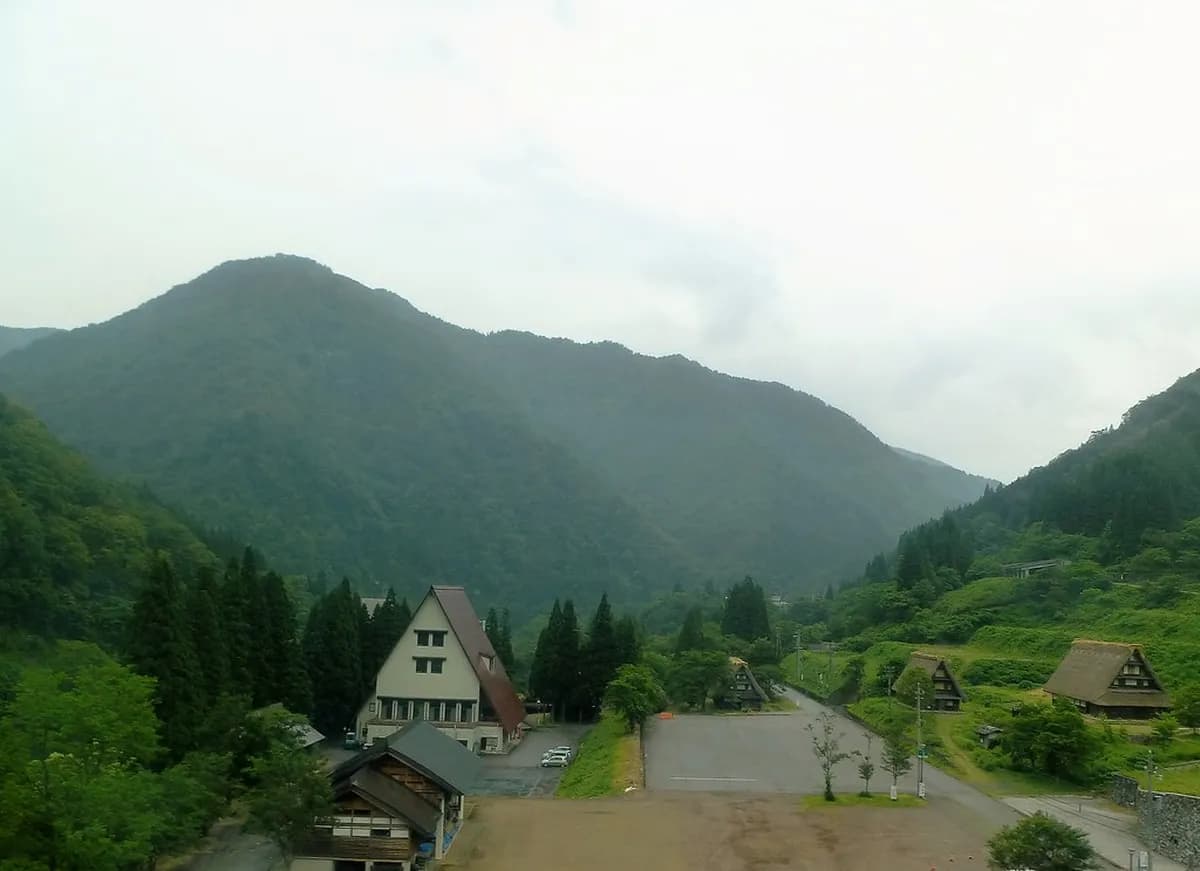
Shirakawa-go and Gokayama: UNESCO Heritage Villages
These two mountain village clusters share the same UNESCO World Heritage designation but deliver very different experiences. Shirakawa-go (specifically the Ogimachi hamlet) is the famous one — a large, heavily visited open-air village with a hilltop viewpoint, museum farmhouses charging ¥300–¥600 entry, and a well-signposted walking loop. On busy autumn weekends the main street can feel like a theme park by mid-morning.
The Gokayama villages are 40 minutes further into the mountains and split into two tiny hamlets: Ainokura and Suganuma. Together they contain fewer than 30 gassho-zukuri farmhouses and almost no crowds. The Ainokura folklore museum (¥300) is staffed by villagers. There is no convenience store. This is the version travelers remember more fondly.
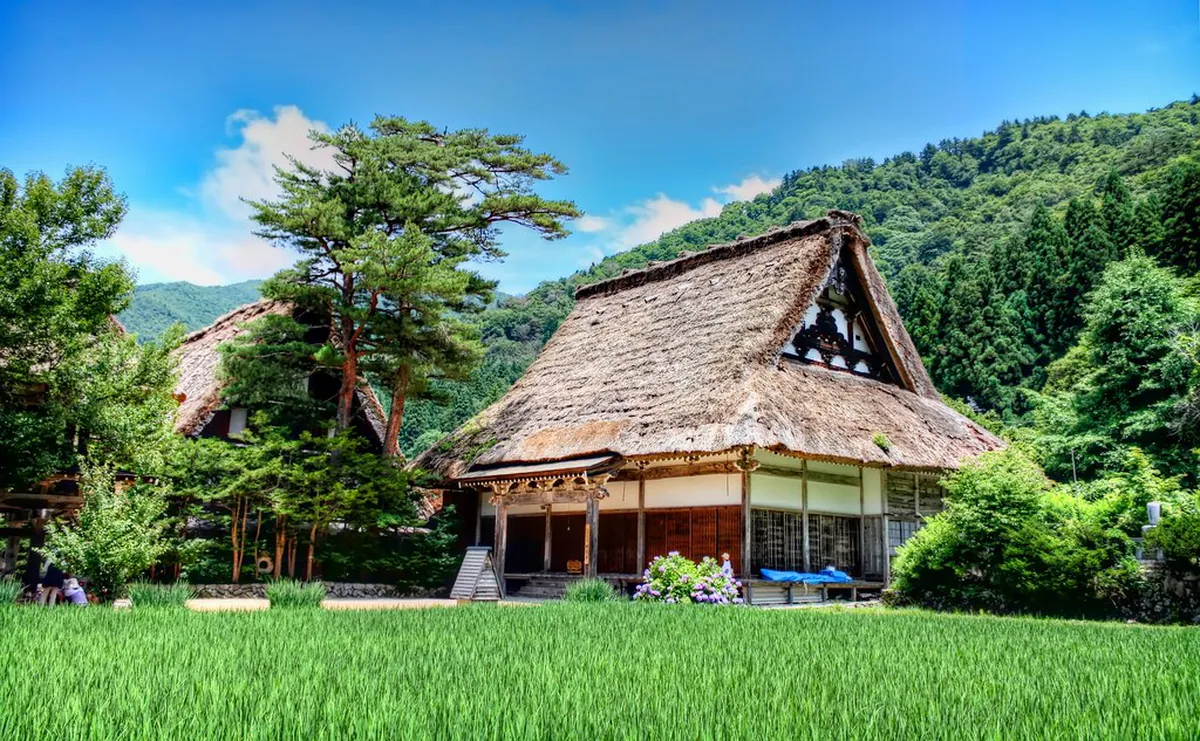
How to get there: Nohi Bus departs from Kanazawa Station West Gate (Platform 2) daily at 08:25, 10:25, and 12:15. The journey to Shirakawa-go takes 75 minutes and costs ¥2,600 one-way. To reach Gokayama, board the same bus and stay on for the additional 40 minutes to Ainokura (¥3,300 one-way). A round-trip "World Heritage Bus" pass covering both villages costs ¥6,500 and is worth buying if you plan to visit both in one day.
Best season: Mid-January to mid-February for the illumination events, mid-October to mid-November for autumn leaves and snow-capped roofs. Summer (June–August) is quieter than most people expect.
Pro tip: The Shiroyama Viewpoint above Ogimachi closes to non-shuttle visitors by 11:00 AM on busy days as the village shuttle fills up. Walk up before 09:00 for the best photos and an empty trail. If you want the quiet of Gokayama but the bus schedule doesn't work, the village has a small minibus (Kaetsunobus) connecting from Johana Station on the JR Johana Line — a back-route no highway bus guide mentions.
| Destination | Travel time | One-way cost | JR Pass valid? |
|---|---|---|---|
| Toyama | 20 min (Shinkansen) | ¥3,060 reserved | Yes |
| Fukui | 25 min (Shinkansen) | ¥2,910 reserved | Yes |
| Kaga Onsen | 27 min (Ltd Express) | ¥1,830 unreserved | Yes |
| Shirakawa-go | 75 min (Nohi Bus) | ¥2,600 | No |
| Takayama | 2 hr (Hida Ltd Express) | ¥5,610 reserved | Yes |
| Tsurugi | 30 min (JR + Ishikawa Rwy) | ¥470 | Partial (JR only) |
Takayama: The Little Kyoto of the Japan Alps
Takayama's Sanmachi Suji district is one of the best-preserved Edo-period merchant quarters in Japan. The three parallel lanes are lined with sake breweries, miso shops, lacquerware galleries, and museums. Unlike Kyoto, the scale here is human-sized — you can cover the core historic district on foot in three hours without feeling rushed.
The morning markets (Jinya-mae and Miyagawa) run every day from 07:00 to 12:00 and sell vegetables, pickles, local crafts, and fresh tofu. Arriving by 08:30 lets you browse while the market is still setting up and local residents are still shopping, before tour buses arrive around 10:00.
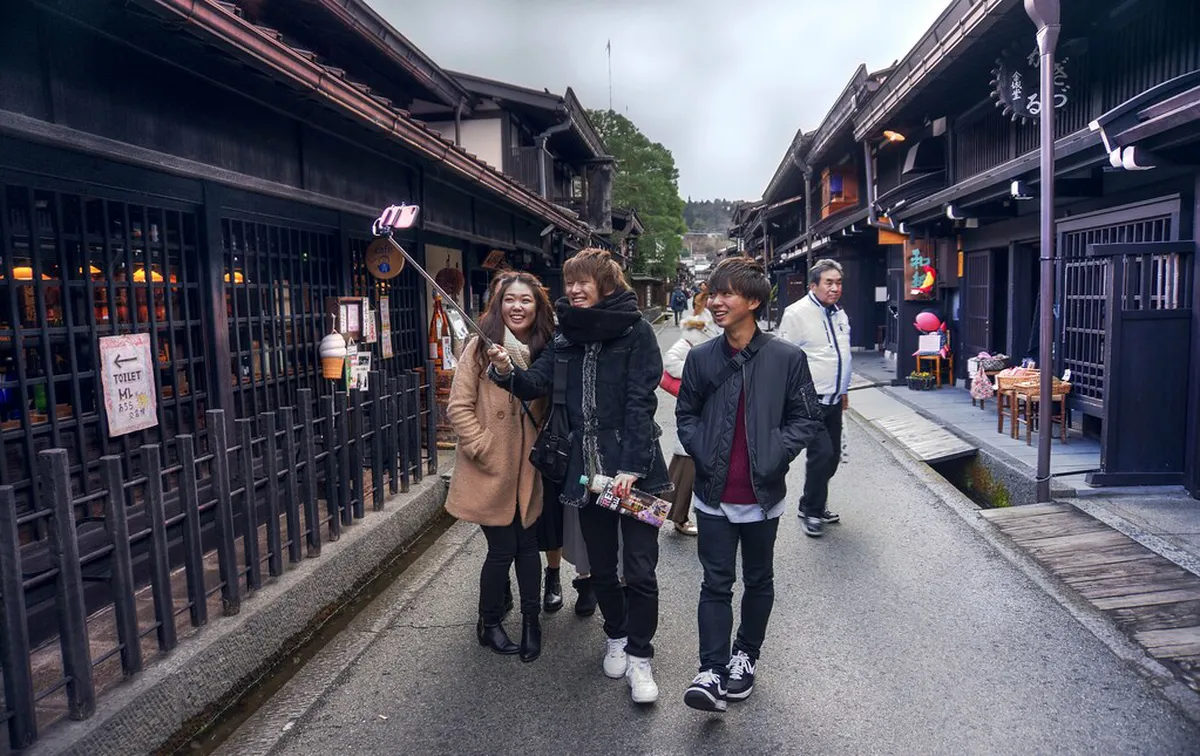
How to get there: The Hida Limited Express from Kanazawa takes 2 hours and costs ¥5,610 reserved (JR Pass valid). Nohi Bus from the West Gate takes 2 hours 15 minutes and costs ¥3,500 one-way — slightly cheaper but less comfortable. The first train departs around 07:00 and the last return train leaves Takayama around 18:00, giving you a comfortable 8-hour window.
Best season: Late April (Sanno Matsuri spring festival) and early October (Hachiman Matsuri autumn festival) are iconic but hotels fill up months in advance. November for autumn leaves is spectacular and slightly less crowded. March for snow-covered streets is underrated.
Pro tip: Hida beef nigiri (¥800–¥1,200 per piece) is sold at market stalls, not restaurants — buy two pieces and eat standing rather than sitting down to a full meal, which saves ¥2,000 and lets you try more of the market.
The Fukui Prefectural Dinosaur Museum requires timed-entry reservation on the official website. Walk-ins are turned away once the day's quota fills — book at least one week ahead on weekends and school holidays.
Fukui: Dinosaurs, Zen Temples, and Castle Ruins
Fukui Prefecture has produced more dinosaur fossil species than anywhere else in Japan, and the Fukui Prefectural Dinosaur Museum in Katsuyama is built directly over the dig sites. The museum holds over 40 full-skeleton mounts and a working excavation pit where visitors can watch paleontologists at work. It is genuinely world-class — not a children's science center but a serious research museum with English explanations throughout.
Eiheiji Temple is 30 minutes from Fukui Station and is one of the two main training temples of Soto Zen Buddhism, founded in 1244. With over 70 wooden buildings arranged up a forested hillside, it remains an active monastery. You walk through corridors connecting the prayer halls in near-silence. The contrast with the dinosaur museum makes for a surprisingly well-balanced day.
How to get there: Hokuriku Shinkansen from Kanazawa to Fukui takes 25 minutes and costs ¥2,910 reserved (JR Pass valid). From Fukui Station, take the Echizen Railway to Katsuyama (50 min, ¥750) then a 15-minute bus to the museum. For Eiheiji, take the Echizen Railway Katsuyama/Eiheiji Line to Eiheiji-guchi Station (27 min, ¥560) then a connecting bus. Total budget for the full day: ¥7,000–¥9,000 including transport and museum entry (¥730 adults).
Best season: Any season. The museum is entirely indoors so rain days are ideal. Eiheiji is stunning in autumn and winter when snow settles on the cedar roofs.
Pro tip: The Dinosaur Museum requires timed entry reservation on the official website (dinosaur.pref.fukui.jp). Book at least one week ahead on weekends and during school holidays. Walk-ins are turned away once the day's quota fills — every competitor article mentions this destination but almost none warn about the booking requirement explicitly enough.
Tsuruga: A Historic Port Town on the Sea of Japan
Tsuruga was one of Japan's major ports for centuries, and the evidence is visible in the unusually grand Kehi Jingu Shrine, whose 11-meter wooden Torii gate is one of Japan's three great wooden torii. The shrine grounds include a pine forest and a free museum covering the port town's history as an entry point for Korean and Chinese cultural exchange.
The town center also has an unexpected pop-culture angle: the Galaxy Express 999 anime creator Leiji Matsumoto was born here, and bronze statues of characters from the series stand along "Symbol Road" between the station and the port. It is a quirky 20-minute walk worth doing before or after the shrine.
How to get there: Hokuriku Shinkansen from Kanazawa to Tsuruga takes 50 minutes and costs ¥4,310 reserved (JR Pass valid). The total round-trip transport budget is around ¥8,600. Kehi Jingu is a 20-minute walk from the station or a 5-minute taxi.
Best season: Spring for cherry blossoms in the shrine forest. Autumn for clear coastal light. Avoid during mid-August Obon when the town gets crowded by domestic tourists.
Pro tip: Tsuruga's fish market area near the port sells incredibly fresh crab at lower prices than Kanazawa's Omicho Market. Between November and March when snow crab season is open, walk the port area near Iroha-machi for lunch before heading to the shrine.
Kaga Onsen: Yamashiro, Yamanaka, and the CAN Bus Loop
Kaga Onsen is not a single town but a cluster of four distinct hot spring villages — Yamashiro, Yamanaka, Awazu, and Katayamazu — connected by the CAN Bus loop route. Each has its own character. Yamashiro has the most impressive public bathhouses, including Ko-soyu with its locally hand-painted tile walls and a rooftop rest area. Yamanaka sits along a forested gorge and is famous for lacquerware.
The Kakusenkei Gorge walking trail in Yamanaka is the single best short hike in the Kaga area. The 1-km route follows the river between the Kurotani and Kohrogi Bridges, passing cedar trees, wooden footbridges, and a small Basho museum. The gorge is at its best in mid-November for autumn leaves and in January for frost-covered rocks.
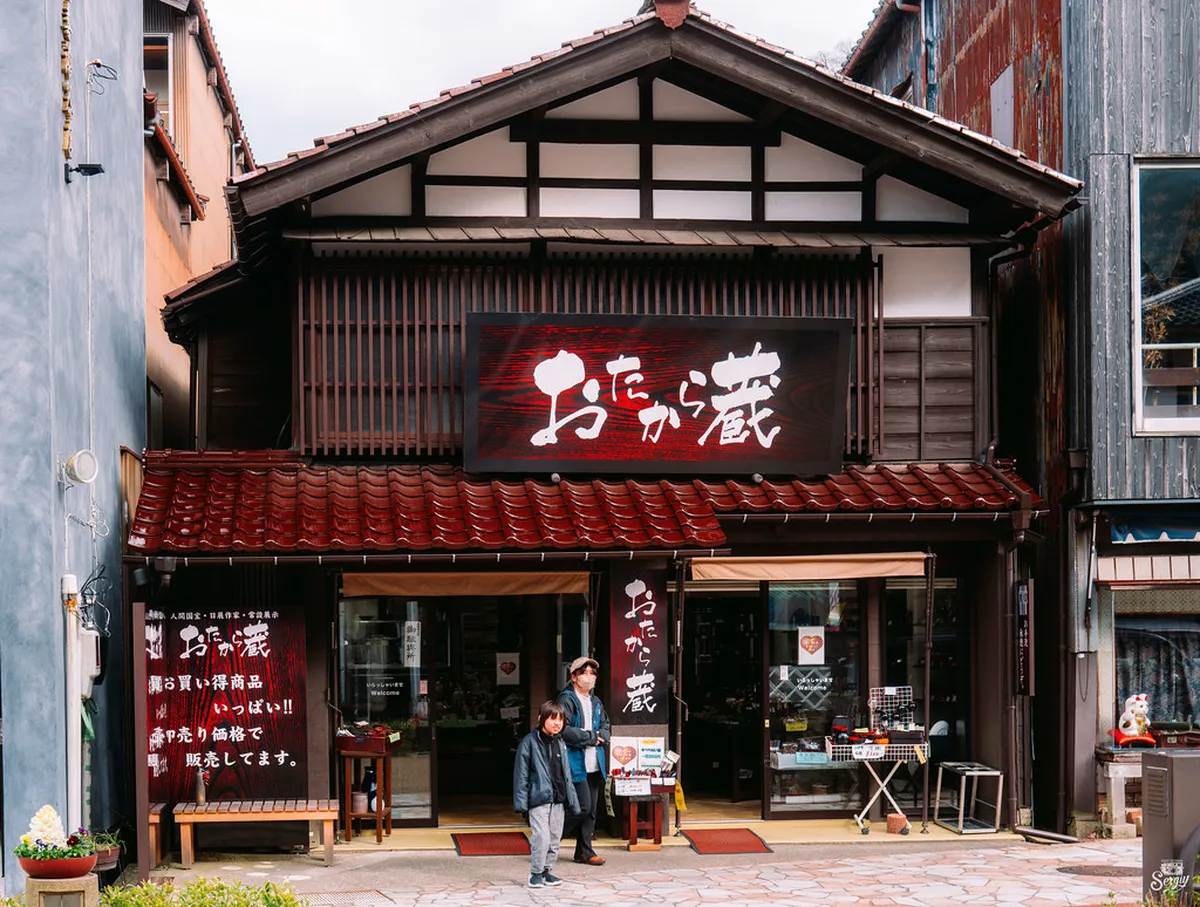
How to get there: JR Thunderbird Limited Express from Kanazawa to Kaga Onsen Station takes 27 minutes and costs ¥1,830 unreserved (JR Pass valid). From Kaga Onsen Station the CAN Bus loop departs every 30 minutes and costs ¥220 per ride or ¥820 for an all-day pass. Yamashiro Onsen is 15 minutes from the station on the loop; Yamanaka is 30 minutes.
Best season: Any season for onsen, but November for the gorge and March when the plum trees bloom near Yamashiro are particularly good.
Pro tip: Awazu Onsen, the smallest of the four towns, is home to Hoshi Ryokan — often cited as the second-oldest hotel in the world, operating since 718 CE. You do not have to stay to see it. The lobby is open to curious visitors and the building is worth 15 minutes of your time. The Natadera Temple nearby was carved directly into a clifface over centuries and has cave entrances, hidden bell towers, and a pagoda that most day-trip lists overlook in favor of the larger onsen towns.
Yuwaku Onsen: Kanazawa's Closest Mountain Retreat
Yuwaku is the easiest onsen escape from Kanazawa — a 40-minute bus ride into the Kanazawa foothills. The town was a favorite retreat of artists and intellectuals in the Taisho era, and it retains a quiet, slightly literary atmosphere that feels distinct from the more commercial onsen towns further south.
Two museums in town are covered by the Kanazawa City Cultural Pass (¥500 for adults, available at the Tourist Information Center inside the station): the Yumeiji Kaikan art museum and the Yuwaku Edomura outdoor folk museum. Edomura reconstructs a late-Edo village with original buildings moved from across the Kaga region. If you already have the Cultural Pass for Kanazawa's city museums, it extends to Yuwaku — no additional payment needed.
How to get there: Bus #12 from Stop 7 at the East Gate of Kanazawa Station, departing hourly. Journey time is 40 minutes, cost is ¥480 one-way. Check the last return bus time when you arrive — it is typically around 19:30 but varies by day. The stop number is critical: Stop 7 is the local bus platform on the East side, not the highway bus West Gate.
Best season: Late July and August for the traditional ice house (himuro) where snow is stored from winter. Spring for green moss along the walking paths to the shrine.
Pro tip: The public bathhouse (Sogo Yuami-dokoro) charges ¥300 entry and is open 07:30–22:00. It is far cheaper than the ryokan baths and uses the same spring water. Sit at the small coffee shop Cafe Lente on the main street afterwards for the local specialty, a hot milk drink served with locally gathered honey — a detail no larger guide seems to mention.
Tojinbo Cliffs and Awara Onsen
Tojinbo is a 1-km stretch of basalt sea cliffs on Fukui's coast, formed by volcanic activity roughly 12 million years ago. The hexagonal columns were designated a UNESCO Geopark site in 2009. The cliffs are dramatic at any tide but most striking at sunset when the columns turn orange above a churning sea. The main cliff path is flat and wide, accessible to most mobility levels.
Awara Onsen is 15 minutes inland from the cliffs and works well as a base. The town has a free footbath by the station, a small geisha district, and several public bathhouses. Coming here for a mid-day soak before walking the cliffs in the late afternoon is a better sequence than the reverse, as the light on the cliffs is much better after 15:00.
How to get there: JR Thunderbird from Kanazawa to Awara Onsen Station takes 34 minutes and costs ¥2,490 unreserved (JR Pass valid). From Awara Onsen Station, buses to Tojinbo run approximately every 30–40 minutes and cost ¥600 one-way. Total round-trip budget: ¥6,500–¥7,500 including transport and cliff-area snacks.
Best season: Late April to early May for calm seas and clear skies. September and October for dramatic wave conditions. Winter storms make the cliffs spectacular but paths can be slippery.
Pro tip: The tourist shops near the cliff edge close by 17:00 and the bus frequency drops to hourly after 16:00. Plan your last bus back to Awara Onsen before 17:30 or you will face a ¥2,000 taxi instead.
Toyama: Glass Art, Canal, and the Tateyama Gateway
Toyama is only 20 minutes from Kanazawa on the Hokuriku Shinkansen (¥3,060 reserved, JR Pass valid), making it the fastest day trip on this list. The city has reinvented itself around glass art and urban waterways, and the results are genuinely impressive. Kengo Kuma's Toyama Glass Art Museum sits inside the same building as the city library — a light-filled timber-and-glass structure that is worth seeing even if you skip the permanent collection.
The Toyama Canals run through the historic warehouse district of Sogawa, where old sake breweries now hold cafes and galleries. The Kansui Park Starbucks on the waterfront is frequently cited as one of the most beautifully located coffee shops in Japan, with floor-to-ceiling windows overlooking the canal and the distant Tateyama Alps.
How to get there: Hokuriku Shinkansen from Kanazawa to Toyama, 20 minutes, ¥3,060 reserved (JR Pass valid). The Glass Art Museum is a 10-minute walk from Toyama Station. Trams (¥210 flat fare) connect the station to the canal district in 15 minutes.
Best season: Clear days in autumn and winter when the Tateyama peaks are snow-capped and visible from the canal. Summer works fine indoors at the museum. Toyama is also the gateway to the Tateyama Kurobe Alpine Route (April–November), but that warrants a full day on its own, not combined with city sightseeing.
Pro tip: The Glass Art Museum is closed on the first and third Wednesday of each month. Double-check before you go. The permanent collection is free but special exhibitions cost ¥1,800 — worth paying if the show features contemporary work, as the building alone justifies the visit.
Wakura Onsen: Luxury Soaking on the Noto Peninsula
Wakura Onsen is set on a narrow promontory jutting into Nanao Bay on the Noto Peninsula. The hot springs here have been active for over 1,200 years and are strongly saline — the water warms the skin noticeably faster than freshwater baths. According to local legend, the springs were discovered by a fisherman watching a heron heal its injured leg in the warm water.
The Soyu public bathhouse (¥400, open 07:00–21:00) is on the waterfront and has large windows facing the bay. It is a legitimate luxury experience for a fraction of the hotel spa price. Free foot baths are scattered around the harbor area — the one near the fishing pier has the best views of the boats and the Noto shoreline.
How to get there: JR Nanao Line Limited Express from Kanazawa to Wakura Onsen Station takes 55 minutes and costs ¥1,680 unreserved (JR Pass valid). The station is a 5-minute walk from the bathhouses. Alternatively, the sightseeing train "Hananokai" runs on select weekends — check the JR West schedule for 2026 dates.
Best season: Autumn and winter for the clearest sea views and quietest crowds. Spring (April–May) for calm seas. Note that parts of the Noto Peninsula are still undergoing recovery from the January 2024 earthquake — check local tourism advisories before visiting outlying areas of the peninsula, though Wakura Onsen itself is fully open in 2026.
Pro tip: Nanao Bay is famous for blowfish (fugu) from December to February. The local restaurants near the harbor serve fugu hotpot (¥4,000–¥6,000 per person) without the Tokyo markup. This is one of the few places on a day trip from Kanazawa where you can eat fugu at a reasonable price without making a reservation weeks in advance.
Tsurugi: A Hidden Gem in Hakusan City
Tsurugi sits at the base of Mount Hakusan — one of Japan's three sacred mountains — and combines spiritual atmosphere with local sake culture in a way that feels completely unlocked by tourism. The town has two sake breweries open for free tastings, a historic soy sauce brewery, and Kinken-gu Shrine, which is one of the oldest shrines in Ishikawa Prefecture.
The walking route from Tsurugi Station to Kinken-gu is about 1.5 km and takes 20 minutes at a comfortable pace. The path passes the old sake warehouses on Honmachi Street before arriving at the shrine precinct, where several 300-year-old cedar trees form a canopy over the approach path. The shrine itself is free to enter and rarely has more than a few visitors at any time.
How to get there: Take the Hokuriku Line (JR) from Kanazawa to Nomachi Station (15 min, ¥190), then transfer to the Ishikawa Railway to Tsurugi Station (15 min, ¥280). Total journey time is about 30 minutes, total cost is ¥470 each way. Note the Ishikawa Railway portion is not covered by the JR Pass — pay the ¥280 segment separately at the gate.
Best season: Late October to mid-November for autumn foliage along the approach path to the shrine. March and April when snow still caps Hakusan in the background while the valley has already thawed.
Pro tip: Bring cash. Neither sake brewery accepts cards. Niizawa Jozo, the smaller of the two breweries on Honmachi, does not appear in any major guidebook — the proprietor pours generous free samples and sells limited local labels not available in Kanazawa's city shops.
Pass Comparison: JR Pass vs. Hokuriku Arch Pass vs. No Pass
Choosing the right rail pass before your trip can save a significant amount on day-trip costs. The standard JR Pass covers Shinkansen and JR Limited Express trains, which means it is valid for Toyama, Fukui, Tsuruga, Awara Onsen, Kaga Onsen, and Wakura Onsen. It does not cover the Nohi Bus to Shirakawa-go and Takayama, or the Ishikawa Railway to Tsurugi.
The Hokuriku Arch Pass (7 days, ¥27,000 in 2026) covers everything the JR Pass does in this region plus the JR bus to certain routes, and crucially it includes the Tokyo–Kanazawa and Kanazawa–Osaka Shinkansen segments. If you are entering from Tokyo or exiting to Osaka as part of a larger trip, the math often favors the Arch Pass over the standard JR Pass. It is sold only to foreign visitors at major JR ticket offices and certain travel agencies overseas.
If you are only doing two or three day trips, no pass may be the cheapest option. The Fukui Shinkansen round-trip (¥5,820 reserved) plus the Kaga Onsen train round-trip (¥3,660) totals ¥9,480 — versus a 7-day JR Pass at roughly ¥50,000. Run the numbers for your specific itinerary before purchasing.
The Kanazawa City Cultural Pass (¥500 for adults, ¥250 for children) covers entry to Kanazawa city-run museums and extends to select day-trip attractions including both museums at Yuwaku Onsen. Pick it up at the tourist information counter inside Kanazawa Station's East Gate.
Choosing Based on Your Travel Style
First-time visitors to the region should prioritize Shirakawa-go and Gokayama above anything else. The combination of a world heritage site, mountain scenery, and living village architecture is impossible to replicate elsewhere in the Hokuriku region. Go on a weekday morning in late October for the best experience.
Families with children will get the most out of Fukui. The Dinosaur Museum sustains the attention of both young children and adults, and the Echizen Railway ride from Fukui to Katsuyama is itself a pleasant journey through rice paddies and small towns. The interactive dig experience inside the museum is available in English.
Travelers looking for relaxation over sightseeing should choose between Yuwaku (closest, cheapest), Kaga Onsen (most variety, best gorge walk), and Wakura Onsen (best sea views, best seafood). Rainy days are ideal for any of the three — a hot bath is better in cold, grey weather. Avoid onsen towns on Japanese public holidays, particularly Golden Week (late April to early May) and Silver Week (mid-September), when the public baths queue for over an hour.
Frequently Asked Questions
Can I visit Shirakawa-go and Takayama in one day from Kanazawa?
While technically possible via organized bus tours, it is not recommended for independent travelers. You will only spend about 90 minutes in each location, which isn't enough to see the museums or enjoy a meal.
Is the JR Pass valid for day trips around Kanazawa?
Yes, the JR Pass covers the Shinkansen to Toyama, Fukui, and Tsuruga. However, it does not cover the private highway buses to Shirakawa-go or the local Ishikawa Railway to Tsurugi.
What is the closest onsen town to Kanazawa for a quick trip?
Yuwaku Onsen is the closest and most accessible hot spring retreat. You can reach it in about 50 minutes using a local city bus from the main station for a very low price.
Kanazawa is much more than just a city of samurai and gardens. By venturing out on these day trips, you gain a deeper understanding of the Hokuriku region's soul. Whether you choose the mountains or the sea, these excursions will be the highlight of your Japanese adventure.
After a long day of exploring, remember to check out the best restaurants in Kanazawa for a rewarding meal. If you haven't booked your base yet, look at where to stay in Kanazawa to ensure easy station access. Safe travels as you discover the incredible variety of central Japan in 2026.
Free: The Kanazawa Essentials guide
Top things to do, where to stay, a perfect day plan, getting around, and the best time to go — a Kanazawa mini-guide you can take offline.
You might also like


Continue reading
More guides you'll find useful