Yokohama Food Guide: 12 Must-Try Dishes and Places (2026)
Discover the best of Yokohama's culinary scene, from Chinatown street food to the original Spaghetti Napolitan. Plan your foodie trip with our expert guide.
On this page
12 Best Things to Eat in Yokohama (2026)
Yokohama earned its food reputation the hard way: as Japan's first treaty port in 1859, it became the laboratory where Chinese cooks, French chefs, English bakers, and American soldiers all bumped into local palates. The result is a city where a single afternoon can move you from a Showa-era hotel dining room into a Cantonese banquet hall and onto a Taiwanese shaved-ice counter without changing trains.
This guide ranks the 12 dishes that genuinely define the city in 2026, each with a recommended spot, current pricing in USD equivalents, opening hours, and the closest station. We have organised the picks the way locals eat them, from signature ramen and birthplace Yoshoku to Chinatown street food and dessert. Whether you are here for a yokohama day trip from tokyo or a full long weekend, the list below covers the high-frequency must-tries first and the niche modern trends last.
Pricing tiers throughout use $ (under 1,200 yen), $$ (1,200 to 3,000 yen), $$$ (3,000 to 7,000 yen), $$$$ (7,000 yen plus). Most spots are clustered along the Minatomirai Line between Yokohama Station and Motomachi-Chukagai, so you can walk the whole route in one ambitious day if you pace yourself.
Free: The Yokohama Essentials guide
Top things to do, where to stay, a perfect day plan, getting around, and the best time to go — a Yokohama mini-guide you can take offline.
1. Sanmamen: The Signature Yokohama Ramen
Sanmamen is the dish nobody outside Kanagawa knows about and every Yokohama local defends. The base is a clear soy-sauce broth, the topping is a thick starchy gravy of stir-fried bean sprouts, cabbage, pork, and kikurage mushrooms, and the noodles sit somewhere between standard ramen and chukamen in thickness. Gyokuran-tei near Kannai Station is the textbook reference: a bowl runs roughly 1,000 to 1,400 yen ($), and the shop opens 11:00 to 21:00 most days with an occasional Wednesday closure.
At Iekei shops, customise your bowl with three options: aji (flavour strength), abura (oil level), and katasa (noodle firmness). For your first bowl, order "futsuu, futsuu, katame" — standard flavour, standard oil, firm noodles — then adjust on subsequent visits.
How to eat it correctly: attack the vegetable gravy first while it still crunches, then push it down into the soup so the starch loosens and coats the noodles. Skipping this step is the most common mistake first-timers make. For the wider ramen story, the Shin-Yokohama Ramen Museum is a 20-minute train ride away and worth pairing with this bowl.
2. Gyu-nabe: Yokohama's Traditional Beef Hot Pot
Gyu-nabe is the direct ancestor of sukiyaki, born in Yokohama in the 1860s when the Meiji Restoration legalised beef eating and the foreign settlement created the demand. Araiya near Bashamichi Station has served it since 1895 in private tatami rooms; dinner sets run 4,500 to 9,000 yen ($$$ to $$$$) depending on the beef grade. Service runs roughly 11:30 to 22:00 and details are catalogued at https://www.tabiulala.com/en/yokohama/spot298/.
The eating ritual matters here and distinguishes gyu-nabe from modern sukiyaki. The thinly sliced beef is simmered in a miso-based warishita (not soy plus sugar as in Tokyo-style sukiyaki), then dipped in a small bowl of raw egg that is never used as a cooking liquid, only as a final coating to cool the meat and add richness. Order the lunch set if budget is tight: it covers the same beef and the same egg ritual for under 3,000 yen.
3. Spaghetti Napolitan: A Hotel New Grand Original
Spaghetti Napolitan was invented in the late 1940s at the Hotel New Grand by second head chef Shigetada Irie, who watched US occupation officers eating boiled pasta with ketchup and decided to do it properly with onions, peppers, ham, and a long-reduced fresh-tomato sauce. The Coffee House inside the hotel still serves the original recipe at roughly 2,300 to 3,200 yen ($$ to $$$), open daily 10:00 to 21:00 directly opposite Yamashita Park.
Access is a five-minute walk from Motomachi-Chukagai Station on the Minatomirai Line. Aim for late afternoon: the harbour-side windows catch sunset light and the lunch queue has cleared by 15:00. Order it with a cream soda for the full Showa-era set piece, and pair the visit with the yokohama red brick warehouse guide shopping area five minutes north.
4. Seafood Doria: The Birth of Japanese Rice Gratin
Seafood doria is the other Hotel New Grand invention, created in 1930 by Swiss-born first head chef Saly Weil for a guest who arrived sick and asked for something "soft and easy to eat." Weil built a butter-rice base, topped it with béchamel, shrimp, mushrooms, and cheese, and ran it under a salamander grill. The dish became the template for every Japanese family doria sold in supermarkets today.
The Coffee House serves it for 2,800 to 3,500 yen ($$$), available 11:00 to 21:00. Ask for it slightly under-browned if you prefer the béchamel loose rather than set; the kitchen will accommodate. This is the highest-impact 30-minute lunch in the city for travellers tracking Yoshoku origins, and it pairs naturally with the next dish on this list.
5. Pudding à la Mode: A Showa-Era Classic
Pudding à la mode was assembled in the early 1950s at the Hotel New Grand for the American officers' wives who lived in the requisitioned hotel after the war and wanted a dessert that "looked like home." The result is a firm caramel custard arranged in a long glass boat with melon, banana, cherries, whipped cream, and a scoop of vanilla ice cream. The custard is deliberately stiffer than modern Japanese purin so it holds the glass on its side.
Find it at the same Coffee House for roughly 1,800 to 2,500 yen ($$), served all day until 21:00. The dessert is large enough to share between two, and the staff will bring an extra spoon without comment. For travellers building a full afternoon, this is the right closing course after the doria.
6. Kiyoken Shumai: Yokohama's Most Famous Souvenir
Kiyoken has sold its pork-and-scallop shumai since 1928, and the recipe was engineered specifically to taste good cold so it could survive the long train ride out of Yokohama Station in a bento box. A 15-piece "Shiumai Bento" runs about 950 yen ($) and is sold at red Kiyoken stands across the station from roughly 6:00 to 22:00 depending on the platform.
The bento includes a tiny ceramic soy-sauce bottle shaped like a child's head, called Hyochin-chan, which collectors keep as a quiet Yokohama souvenir. If you are eating on the train, the bento is intentionally engineered to be eaten with chopsticks one-handed; the rice block is shaped so it never tips. For a hot, sit-down version, the Kiyoken main store next to the station's east exit serves freshly steamed shumai sets for 1,100 to 1,800 yen.
7. Yokohama Iekei Ramen: The Rich Pork-Bone Legend
Iekei was invented in 1974 by Minoru Yoshimura at Yoshimura-ya, a ten-minute walk from Yokohama Station West Exit. The broth fuses tonkotsu and shoyu, the noodles are short, thick, and straight from Sakai Seimen, and standard toppings are spinach, chashu, and three sheets of nori. Expect 900 to 1,400 yen ($) for a bowl; the shop opens 11:00 to 22:00 and closes Mondays.
The ordering ritual is where most tourists get caught flat-footed. At the ticket machine you choose the bowl, then the counter staff ask three customisations in rapid Japanese: aji (flavour strength: usu-me, futsuu, koi-me), abura (oil level: sukuna-me, futsuu, oo-me), and katasa (noodle firmness: yawarakame, futsuu, katame, barikata). The locked-in Iekei answer is "futsuu, futsuu, katame" for your first bowl, then dial up koi-me and oo-me only if you can handle salt. Free white rice is included; tear a sheet of nori, dunk it in the broth, and wrap it around a mouthful of rice as the locals do.
Sanmamen vs. Iekei: Which Ramen Should You Choose?
The two local ramen styles solve different problems. Sanmamen is the daytime, vegetable-forward bowl; Iekei is the post-work, salt-loaded fuel bowl. Use the table below to pick.
| Feature | Sanmamen | Iekei |
|---|---|---|
| Broth | Clear shoyu | Opaque tonkotsu-shoyu |
| Noodles | Medium chukamen | Short, thick, straight |
| Toppings | Vegetable gravy, pork | Spinach, nori, chashu |
| Price | 900–1,400 yen | 900–1,400 yen |
| Best for | Lighter Kannai lunch | Heavy dinner near Yokohama Station |
If you only have one ramen meal, Iekei is the more uniquely Yokohama experience and the bowl Tokyo cannot replicate. The history of both styles is documented at the cup noodles museum yokohama and the Shin-Yokohama Ramen Museum on the north side of the city.
8. Igirisu Pan: The Legacy of Yokohama's English Bread
Uchiki Pan has baked Igirisu Pan, a tall pull-apart white loaf using natural hop yeast, since 1888 in the Motomachi shopping street. The founder learned the recipe from English baker Robert Clarke at the original Yokohama Bakery, and the technique has not changed in 138 years. A full loaf is 800 yen ($), individual rolls 200 to 400 yen, and the shop is open 9:00 to 19:00, closed Mondays.
Buy the loaf whole if you can, because the popular sizes routinely sell out by 14:00. Eat it the local way: toasted thick, lightly buttered, with a thin layer of marmalade. The bakery sits five minutes from Motomachi-Chukagai Station and slots naturally between the Hotel New Grand and a Chinatown afternoon.
9. Yokohama Chinatown Street Food: Nikuman and Beyond
Chinatown street food is the dish category travellers most often get wrong, because the photogenic panda-shaped buns and the all-you-can-eat halls are precisely the things to avoid. The reliable benchmarks are Edosei (giant nikuman for 600 yen $), Roushuki for pan-fried xiaolongbao (1,000 yen for six, $), and Koteki for shanghai-style soup dumplings (1,200 yen, $). Most stalls run 10:00 to 20:00 with later closes on weekends.
Three navigation rules. First, enter via Zenrin-mon Gate for street food and via Choyo-mon Gate for sit-down banquets, because the stall density splits cleanly along this axis. Second, ignore any stall without a visible queue of Japanese customers at lunch hour. Third, peel the paper from the bottom of a nikuman, not the top, so the steam vents away from your face. Our yokohama chinatown guide maps the side alleys that hold the best-value family kitchens.
10. Japan's First Ice Cream: The Story of Aisukurin
Japan's first ice cream was sold in Yokohama in 1869 by Fusazo Machimura at a price equivalent to a half-month rent, which is why it stayed a curiosity for decades. The modern recreation at Bashamichi Ice on the historic Bashamichi street uses the original 1869 formula: egg yolk, milk, and sugar with no cream and no churning, producing a texture closer to a dense sorbet than to modern gelato. A single scoop is 400 to 500 yen ($), the shop runs 11:00 to 18:00.
The flavour is markedly less sweet than contemporary Japanese soft-serve and the egg note is unmistakable. It is the right palate cleanser between a Chinatown lunch and a Motomachi shopping stop, and it slots into a wider yokohama itinerary through the city centre.
11. Yokohama Craft Beer: Japan's Brewing Pioneer
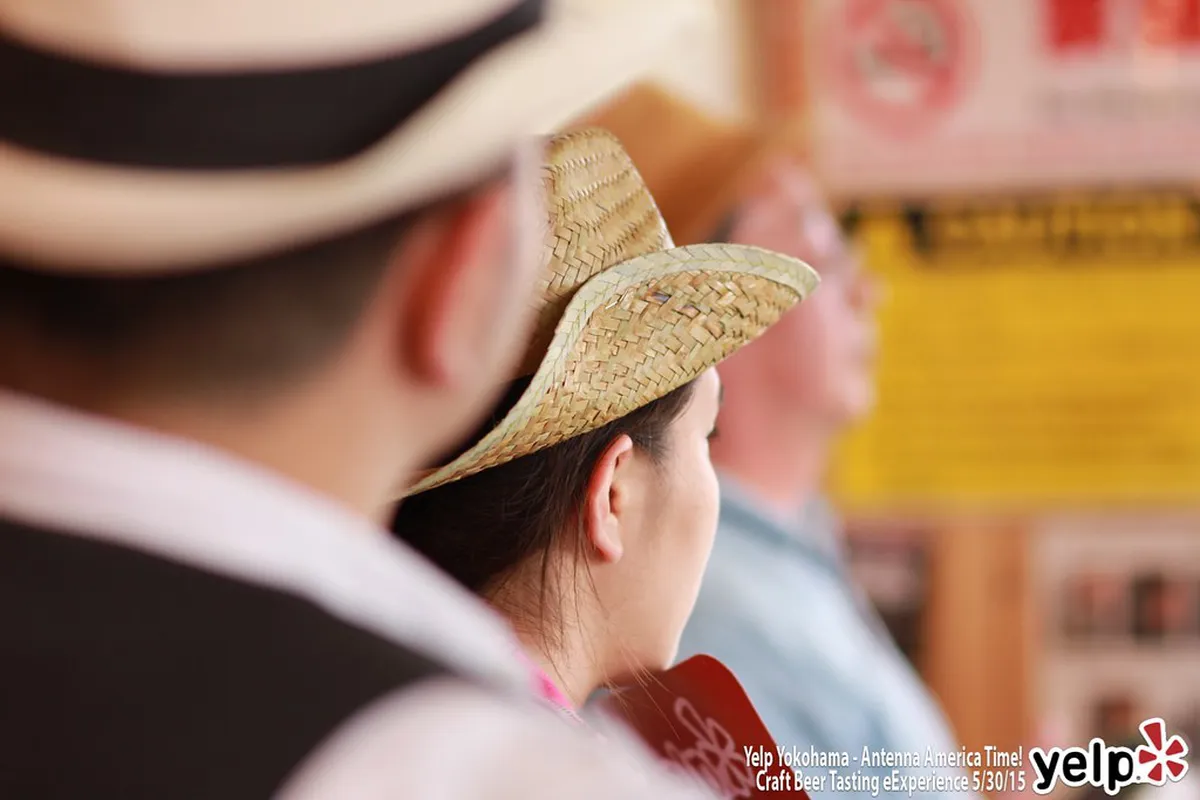
Yokohama was the site of Japan's first commercial brewery, founded by Norwegian-American William Copeland in 1869; the modern craft-beer scene traces directly back to that legacy. Yokohama Brewery in the Naka Ward pours its core Yokohama Lager, Pilsner, and Alt for 900 to 1,400 yen a pint ($), and the taproom restaurant runs 11:00 to 23:00, ten minutes on foot from Sakuragicho Station.
The pairing rule is simple: lager with shumai, pilsner with Iekei, and alt with gyu-nabe. The brewery offers a 1,500-yen four-glass flight that lines up cleanly against a plate of fried potatoes. For travellers who do not drink, the on-tap craft ginger ale is house-made and worth the stop.
12. Best Places to Eat in Yokohama Chinatown
For sit-down meals in Chinatown, four names dominate the 2026 local rankings. Hong Kong Dim Sum Restaurant Saiyuki (149-1-4 Yamashitacho, 10:00 to 22:00) leads on dim sum: order the pork crepe in glutinous-rice skin and the spicy shrimp wontons for roughly 4,000 to 6,000 yen per person ($$$). Chinese Restaurant Jukeihanten Shinkan is the reference for Sichuan, with mapo tofu and dan dan noodles in the 3,000 to 5,000 yen range ($$$).
Manchinro Main Store, operating since 1892, is the heritage Cantonese choice for banquet-style meals starting around 8,000 yen per person ($$$$). Daichinro New Store covers Beijing duck and northern dishes at 5,000 to 8,000 yen ($$$). All four take same-day reservations by phone and accept credit cards. Newer to the scene and worth a stop on the dessert end: MeetFresh on the main Chukagai-odori serves Taiwanese taro-ball shaved ice for 800 to 1,200 yen ($), and YGF Malatang lets you build a customised hotpot bowl by weight for 1,500 to 2,500 yen ($$).
Dietary Restrictions and Practical Eating Tips
Yokohama is more accommodating than most Japanese cities for non-standard diets, but you still need to plan. Vegetarians should target Saiyuki (vegetable dim sum on request), MeetFresh (entirely meat-free), and the Igirisu Pan plus marmalade route through Motomachi. Strict vegans are best served by the Buddhist-leaning shojin-ryori counters inside Chinatown, several of which carry English menus marking dashi-free options.
Gluten-free is the harder constraint because soy sauce, ramen, shumai wrappers, and bread are all out. Workable options are Bashamichi Ice (gluten-free by recipe), Yokohama Brewery's grilled potato and edamame menu, and gyu-nabe at Araiya if you ask the staff to skip the warishita reduction (the kitchen will substitute a plain dashi base for an extra 300 yen). Halal travellers should head to the dedicated halal Chinese restaurants on the Choyo-mon Gate side, which Chinatown's tourist office now maps in a free leaflet.
Most Chinatown street stalls remain cash-only in 2026 despite the push for IC-card payments. The busiest queue window is Saturday 12:00–14:00. The Hotel New Grand restaurants accept walk-ins on weekdays but require reservations on weekends.
Final practical points: most Chinatown stalls are cash-only despite the 2025 push for IC-card payments, the busiest queue window is Saturday 12:00 to 14:00, and the Hotel New Grand restaurants accept walk-ins on weekdays but require reservations on weekends. Build the route from Yokohama Station south toward Motomachi-Chukagai so you finish at sunset by the harbour.
See our Yokohama attractions guide for the broader city overview.
For related Yokohama deep-dives, see our Things to Do in Yokohama Chinatown and Cup Noodles Museum Yokohama guides. Planning the trip itself? Start with how to get to yokohama from tokyo and the yokohama minato mirai guide.
Frequently Asked Questions
What food is Yokohama most famous for?
Yokohama is most famous for its unique fusion of Chinese and Western cuisines. Key dishes include Sanmamen ramen, Gyu-nabe beef hot pot, and Spaghetti Napolitan. The city is also widely known for its iconic Kiyoken pork dumplings.
Where is the best street food in Yokohama Chinatown?
The best street food is found along the main Chukagai-odori street and its immediate side alleys. Look for stalls selling Nikuman pork buns and pan-fried xiaolongbao. Edosei is a highly recommended spot for high-quality steamed buns.
Is Yokohama Chinatown worth visiting for foodies?
Yes, it is absolutely worth visiting as it is the largest Chinatown in Japan with over 500 establishments. Foodies can enjoy everything from cheap street snacks to high-end Cantonese banquets. It offers a culinary variety you cannot find elsewhere.
Yokohama remains one of the most exciting food destinations in Japan because of its unique historical narrative. By trying these twelve dishes, you will experience the city's transformation from a small fishing village to a global metropolis. From the rich broths of the ramen shops to the elegant desserts of Yamashita Park, there is something for every palate.
We hope this guide helps you navigate the diverse flavors and historic landmarks of this beautiful port city. Don't forget to check our other resources, such as the yokohama itinerary, to round out your trip. Safe travels and enjoy your culinary journey through the streets of Yokohama.
Free: The Yokohama Essentials guide
Top things to do, where to stay, a perfect day plan, getting around, and the best time to go — a Yokohama mini-guide you can take offline.
You might also like
Continue reading
More guides you'll find useful