Getting Around Naha, Okinawa: Transportation Guide & Costs
Yui Rail, buses, taxis or a rental car? See which transportation fits a 3-day Naha trip, with costs, and why most travelers skip the car in 2026.
On this page
Naha is the gateway to Okinawa and surprisingly easy to navigate once you know which mode fits which trip. The Yui Rail monorail handles the core tourist axis from the airport through Kokusai Dori up to Shuri, while local buses fill in everything off that line. For most travelers in 2026, a mix of monorail rides, walking, and the occasional taxi covers a three-day visit without ever needing a rental car.
This guide breaks down each transport option by cost, speed, and best use case, including the small frictions guidebooks often skip: how bus payment actually works, where IC cards fall short, what happens after the monorail closes, and how to deal with luggage between hotels. If you are still mapping out your stops, the Naha attractions guide pairs well with this page for sequencing your days.
Naha Transport at a Glance: Quick Comparison
Most visitors stick to two or three modes during a typical trip. The table below gives you a rough sense of when each option earns its keep, with 2026 fares as a reference point.
| Mode | Fare (2026) | Best For | Limitation |
|---|---|---|---|
| Yui Rail monorail | ¥230–380 per ride; ¥800 day pass | Airport transfers, central sights along the rail corridor | Runs only 06:00–23:30; one line only |
| City bus | Flat ¥240 inside central Naha | Tomari Port, Naminoue Beach, west side neighborhoods | Distance-based fares on routes outside centre |
| Taxi | Base ¥600; cross-town ¥1,000–1,800 | After monorail closes, heavy rain, luggage | 20% surcharge 22:00–05:00 |
| Rental car | ¥4,500–8,000 per day | North Okinawa, Churaumi Aquarium, remote capes | Traffic peaks 07:30–09:30 and 17:00–19:00 |
| CHURACHARI share-cycle | ¥165 per 30 min | Kokusai Dori, Tsuboya, coastal flat stretches | Steep climbs toward Shuri require e-assist |
- Yui Rail monorail — 230 to 380 yen per ride; 800 yen day pass. Fastest along the airport to Shuri corridor; runs roughly 06:00 to 23:30. Best for airport transfers and most central sights.
- City bus — flat 240 yen inside central Naha, distance-based further out. Slower than the monorail but reaches every neighborhood. Best for Tomari Port, Naminoue Beach, and the residential west side.
- Taxi — base fare 600 yen, typical cross-town ride 1,000 to 1,800 yen. Worth it after the monorail stops, in heavy rain, or with luggage and tired kids in tow.
- Rental car — 4,500 to 8,000 yen per day plus parking. Overkill inside Naha, essential for Churaumi Aquarium, the Kerama-bound ferries aside, and remote capes.
- Walking and share-cycle — free or 165 yen per 30 minutes on CHURACHARI. Best for Kokusai Dori, Tsuboya, and the arcade between Makishi Market and Heiwa Dori.
Overview of Naha’s Transportation Landscape
Naha is a compact city built around a single transit spine. The Yui Rail runs from Naha Airport in the southwest, threads through the commercial center at Kencho-mae and Makishi, and climbs east to Tedako-Uranishi via Shuri. Almost every major tourist site sits within a ten-minute walk of one of its stations, which is why so many short-stay visitors never need anything else. For comparison with systems in Tokyo and Osaka, Naha's transit is notably simpler. From Naha, day trips across the broader Okinawa prefecture require buses or rental cars.
Buses pick up where the rail does not reach. Naminoue Beach, Tomari Port for the Kerama Islands, and the southern war memorial sites all require buses or taxis. The Naha Bus Terminal, immediately south of Asahibashi station, is the central hub for both city loops and the limousine coaches that head north to Onna and Motobu.
Fare systems are mostly unified now. Suica, Pasmo, ICOCA, and the local OKICA all tap on the Yui Rail and on city buses inside central Naha. Distance-based suburban buses still favor OKICA or cash, which catches a lot of travelers off guard during day trips.
The Yui Rail: Naha’s Efficient Monorail System
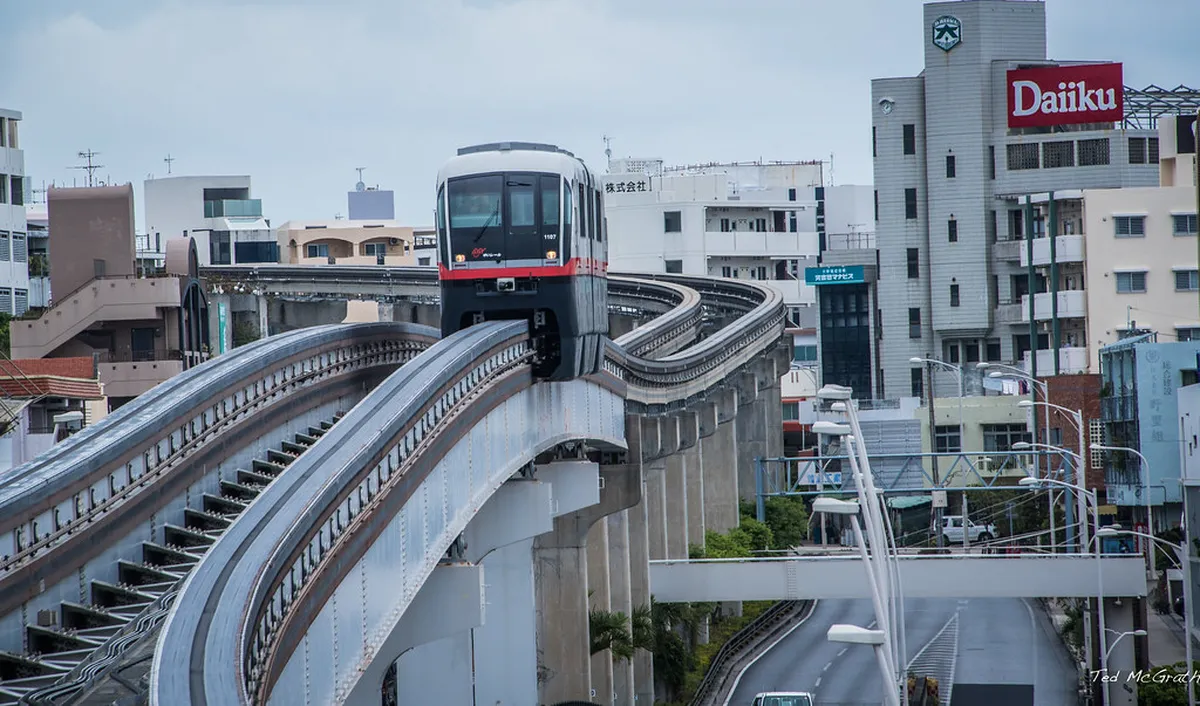
The Okinawa Urban Monorail, locally called the Yui Rail, is the city’s pride and the single best tool for tourists. Two-car trains glide above the traffic every 8 to 15 minutes, and the full 19-station line runs about 40 minutes end to end. Standard fares are distance-based, starting at 230 yen for a short hop and topping out at 380 yen for the airport-to-Tedako run.
For most itineraries, the 800 yen 24-hour pass pays for itself in three rides. A 1,400 yen 48-hour version exists for longer stays, and both are sold from any station vending machine in English. Key tourist stops are Naha Kuko (the airport), Asahibashi (bus terminal), Kencho-mae (Kokusai Dori’s west end), Makishi (the market and east end of Kokusai Dori), Omoromachi (DFS and museums), and Shuri for Shuri Castle.
Accessibility is genuinely good: every station has elevators, tactile paving, and step-free access onto the platform, and the trains have wheelchair spaces near the doors. Strollers fit easily outside the 07:30 to 09:00 commuter peak. Check the Yui Rail official site for live timetables, the latest fare table, and elevator outage notices.
Navigating Naha by Local and Express Bus
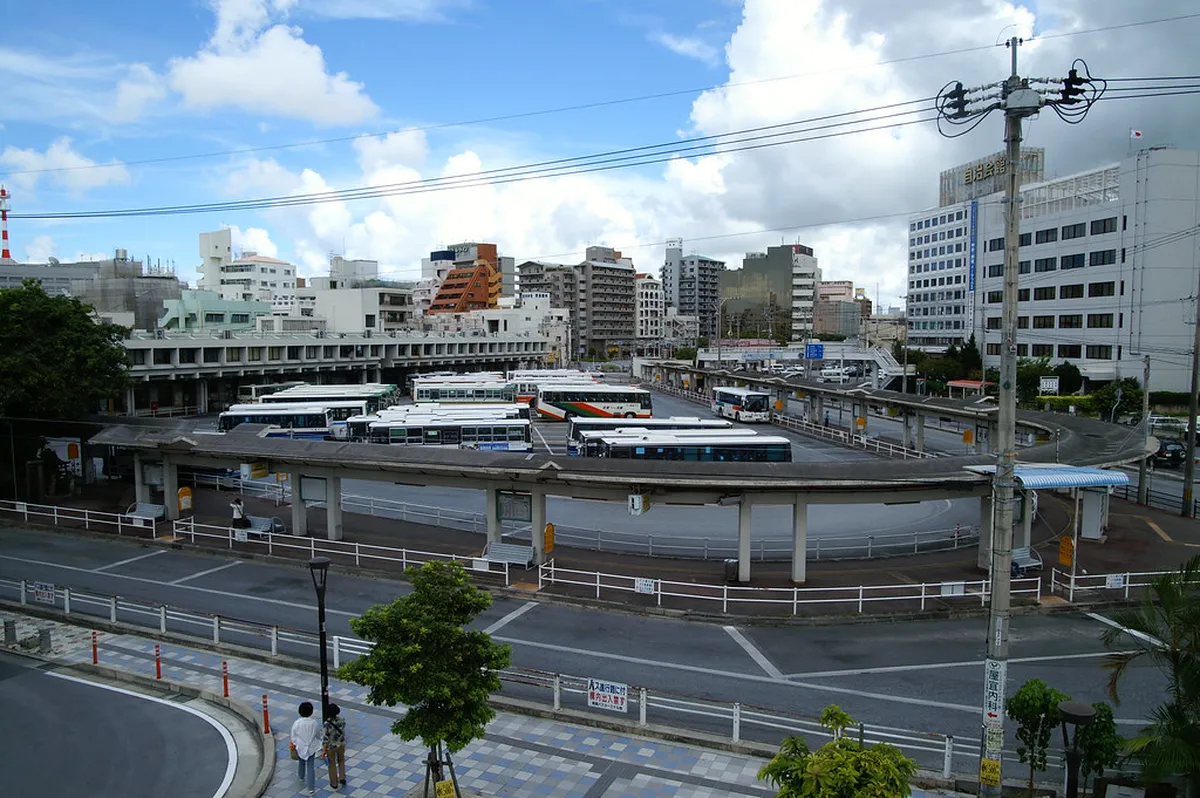
Buses look intimidating but cover everything the monorail misses. Inside central Naha, most routes (the 1, 2, 3, 5, 6, 9, 10, 11, 12, 14, 15, 17, and 20) charge a flat 240 yen no matter how far you ride. Step into anything numbered above 20, or any “express” route heading out of the city, and you switch to the distance-based system that trips up most first-timers.
The Naha Bus Terminal next to Asahibashi station is the launching point for express coaches to the Churaumi Aquarium (route 117), American Village in Chatan (route 120), and the Kadena/Onna corridor. Google Maps has accurate real-time data for almost every Naha route in 2026 and is the only timetable tool you need. For multi-day exploring beyond the city, the Okinawa Bus Pass at 2,500 yen for one day or 5,000 yen for three days unlocks unlimited rides on most local lines.
Here is exactly how to ride a Naha bus without stress:
- Board through the rear door. On distance-based routes, take a small paper ticket from the machine by the door. The number on it tells the fare display which zone you boarded in.
- Stay seated until your stop. Press the yellow button to signal. On flat-fare central routes, no ticket is needed.
- Watch the front fare display as you near your stop. Find your ticket number across the top and read your fare in the row below.
- Pay at the front when getting off. Drop ticket plus exact coins into the box, or tap your IC card on the reader. The machine next to the driver makes change for 1,000 yen notes only, so break larger bills before boarding.
IC Cards, OKICA, and Paying for Transit
The Yui Rail 24-hour pass costs ¥800 and pays for itself in just three rides. Buy it at any station vending machine using the English-language menu — no registration required.
Payment is where Naha quietly differs from Tokyo or Osaka. Since 2020, mainland IC cards (Suica, Pasmo, ICOCA, Toica, Manaca, Kitaca, SUGOCA, nimoca, and Hayakaken) all work on the Yui Rail, and as of the 2024 system upgrade they also work on every Naha city bus and most Okinawa Bus and Ryukyu Bus Kotsu services within central Naha. For 90 percent of visitors, the Suica or Welcome Suica already in your phone wallet is all you need.
OKICA is the local Okinawan card and still earns its place for two reasons. It is the only IC card that gives you transfer discounts (around 50 yen off when you change between two buses within 60 minutes), and it remains the smoothest option on long-distance suburban routes where mainland cards still occasionally misread. You can buy an OKICA at the Naha Bus Terminal counter or any Yui Rail station for a 500 yen refundable deposit plus your initial top-up.
If you arrive without an IC card and do not want one, cash works everywhere. Just remember the bus fare box only accepts coins and 1,000 yen notes, never 5,000 or 10,000 yen bills. Yui Rail vending machines accept all denominations and have an English mode on every screen.
Taxis, Rideshare, and Late-Night Travel
Taxis are plentiful and cheap by Japanese standards. The 2026 base fare is 600 yen for the first 1.75 kilometers, then about 80 yen per additional 365 meters. A typical ride between any two points inside central Naha runs 800 to 1,500 yen, and the airport to Kokusai Dori costs 1,500 to 2,000 yen depending on traffic. Late-night and early-morning rides (22:00 to 05:00) carry a 20 percent surcharge.
Rideshare apps are useful but work differently from the West. Uber and DiDi both operate in Naha, but neither runs private drivers; they dispatch licensed taxis with the meter still running. The benefit is an English-language interface, saved destinations, and credit card payment without language friction. GO is a third option locals use that often has the most cars on screen during peak demand.
This matters most after the Yui Rail’s last train, which leaves the airport around 23:30 and Shuri around 23:42. After that, taxis are the only realistic way back to your hotel from the Sakurazaka or Matsuyama nightlife districts. Cabs queue at the east end of Kokusai Dori near Mitsukoshi, at the Tenbusu plaza, and along the Asahibashi side of the bus terminal. A red light in the windshield means available; green means occupied.
Renting a Car, Parking Reality, and Bicycles
Renting a car unlocks the rest of Okinawa, but it is honestly a poor choice for the city itself. Toyota Rent a Car, Times Car, OTS, and Nippon Rent-a-Car all operate near the airport with free shuttles to their depots, and an economy car runs 4,500 to 6,000 yen per day with the standard insurance bump. You will need an International Driving Permit (Geneva 1949 convention) issued before you fly; Japan does not honor ordinary foreign licenses on their own.
Driving inside Naha itself is the part guidebooks gloss over. Highway 58 along the coast and Route 330 inland both crawl during the 07:30 to 09:30 and 17:00 to 19:00 peaks, and many central streets are one-way and barely two cars wide. Hotel parking, when it exists, runs 1,000 to 1,800 yen per night. Coin lots near Kokusai Dori charge 200 to 400 yen for the first hour and cap around 1,500 yen for 24 hours, but they fill up by mid-morning on weekends. The pragmatic move is to rent your car only on the day you head north and return it before re-entering the city.
For shorter hops, the CHURACHARI share-cycle network has electric bikes at 165 yen per 30 minutes, with docking ports near most hotels and along the Naminoue Beach promenade. It is a pleasant way to reach nearby beaches on flat coastal stretches, though the inland climbs toward Shuri are steep enough that the e-assist matters.
Exploring Naha on Foot: Best Walkable Areas
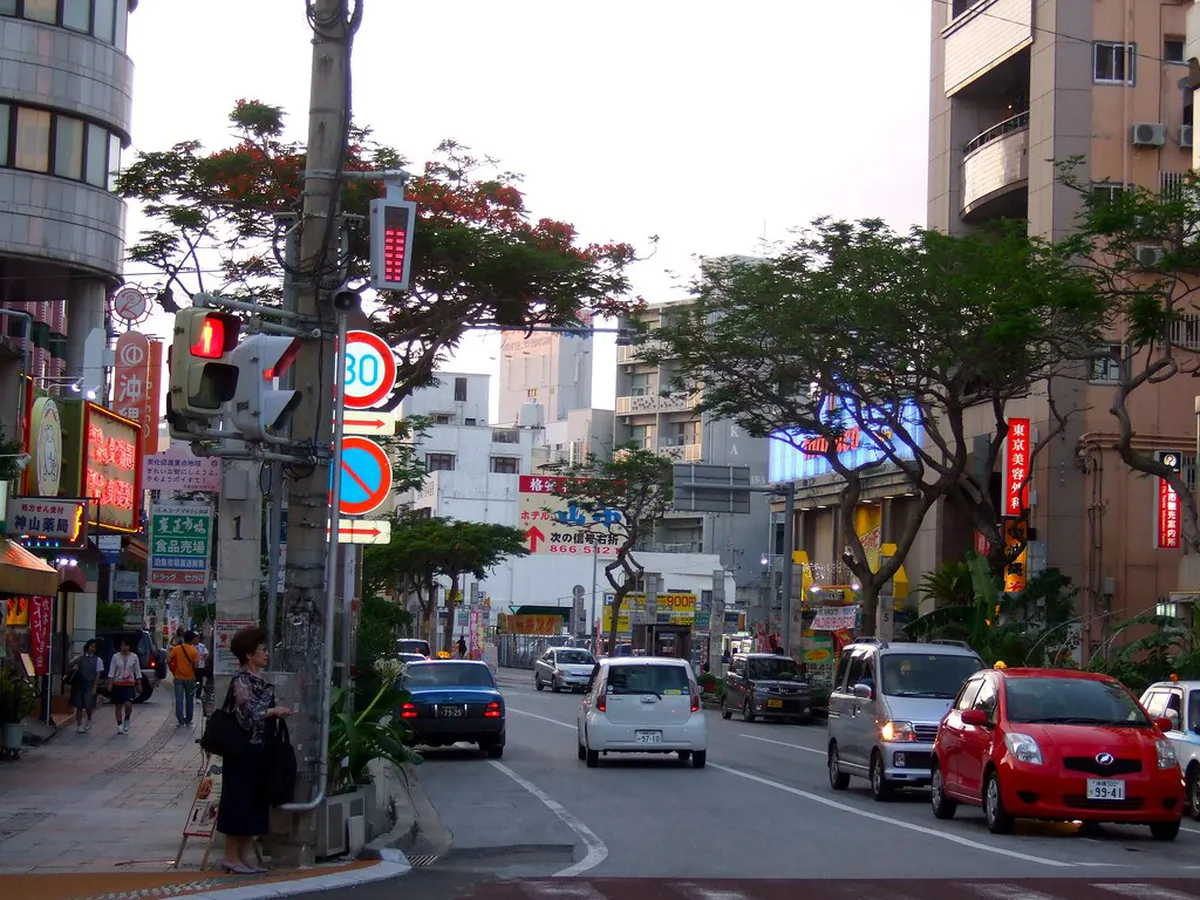
Walking is often the fastest way between adjacent districts and is genuinely how locals move around the center. The 1.6-kilometer length of Kokusai Dori takes about 25 minutes end to end, and the parallel arcades a block south, including the Makishi Public Market covered streets, are roofed against both sun and the regular afternoon rain showers.
The Tsuboya Pottery District east of Heiwa Dori rewards walkers with stone-paved lanes, kilns, and small studios that no bus serves. Plan around 90 minutes for a loop that includes the Tsuboya Pottery Museum, then doubles back through the Sakaemachi Market for lunch. Sturdy shoes matter on the older basalt slabs, especially when wet.
For longer walks, the route from Kencho-mae station along Asahibashi to Tomari Port is flat and takes 25 minutes, and from there it is another 20 minutes along the seawall to Naminoue Beach and Shrine. Pedestrian crossings are frequent, drivers yield reliably, and almost every intersection in central Naha now has English signage.
From Naha Airport, and Onward to the Rest of Okinawa
Naha Airport (OKA) is unusually well connected. The Yui Rail platform sits inside the domestic terminal on the second floor and reaches Kencho-mae in 13 minutes for 270 yen. The first train leaves the airport around 06:00 and the last around 23:30. For groups of three or more, a taxi to a Kokusai Dori hotel comes out at roughly the same per-person cost as the monorail and saves the luggage drag.
Heading north, limousine buses (Yanbaru Express and Airport Shuttle Bus) run from the airport directly to Onna resorts, Nago, and the Churaumi Aquarium with under-floor luggage holds and reserved seating. Tickets are 2,000 to 2,500 yen one way and bookable online. For day-trippers, the local 117 express from the Naha Bus Terminal is cheaper but slower and far less luggage-friendly. Our day trips from Naha guide breaks down which trips actually justify the early start.
Tomari Port (Tomarin) is the gateway to the Kerama Islands and sits a flat 1.2-kilometer walk from Miebashi station, or 800 yen by taxi. Ferries to Tokashiki, Zamami, and Aka leave year-round, with the high-speed Queen Zamami booking out a week ahead in summer.
Luggage, Hands-Free Travel, and Practical Tips
Bags are the silent friction point of any Naha trip. Coin lockers cluster at Naha Kuko, Asahibashi, Kencho-mae, Makishi, and Shuri stations, with small lockers at 400 yen, mediums at 500 yen, and large suitcase-sized at 700 to 800 yen for 24 hours. The Naha Bus Terminal has a staffed left-luggage counter that accepts oversized bags the lockers cannot fit, open 07:00 to 21:00.
For arrivals, Yamato Transport’s takkyubin hands-free service will move suitcases from the airport to your hotel by next morning for around 1,800 to 2,500 yen per bag. The counter is on the arrivals floor at OKA. The same service runs in reverse the night before your flight, which spares you wheeling luggage onto a peak-hour monorail. Where you base yourself shapes how much of this you need; the where to stay in Naha guide flags hotels right above monorail stations.
Naha city buses only accept coins and ¥1,000 notes — never ¥5,000 or ¥10,000 bills. Break larger notes at a convenience store before boarding to avoid being stuck at the fare box.
A few smaller tips that pay off: download the Yui Rail and Google Maps tiles offline before you arrive, keep a 1,000 yen note in your wallet at all times for bus fare boxes, and avoid Highway 58 between 17:00 and 19:00 if you have a flight to catch. Rainy season runs roughly mid-May through late June and typhoon risk peaks August to early October; both can shut down ferry services to the Kerama Islands without much warning, so build a buffer day into your Naha itinerary if you are pinning a specific island visit.
Frequently Asked Questions
Does Suica work for the monorail in Naha?
Yes, major Japanese IC cards like Suica and Pasmo now work on the Yui Rail monorail. You can simply tap your card at the ticket gates for easy entry. This makes traveling between the airport and downtown very convenient for tourists. Check our Naha itinerary for the best stops along the line.
How do I get from Naha Airport to the city center?
The Yui Rail monorail is the fastest way to reach the city center from Naha Airport. It takes about 13 minutes to reach the Prefectural Office Station near Kokusai Dori. Taxis are also available outside the terminal for a more direct door-to-door service.
Is it easy to get around Naha without a car?
Yes, Naha is very accessible without a car thanks to the monorail and extensive bus network. Most major tourist attractions and shopping districts are within walking distance of transit stops. A car is only necessary if you plan to explore the northern parts of Okinawa.
How much is a taxi from Naha Airport to Kokusai Dori?
A taxi ride from Naha Airport to the Kokusai Dori area usually costs between 1,500 and 2,000 yen. The price can vary slightly depending on traffic conditions and the exact location of your hotel. Most rides take approximately 15 to 20 minutes under normal conditions.
Naha rewards travelers who match the right transport to each leg of the day. The Yui Rail handles the airport, Kokusai Dori, and Shuri at minimal cost; buses unlock everything else; taxis cover the gap after midnight; and a rental car is worth its keep only on the day you actually leave the city. Pair this guide with the Naha 3-day itinerary and you have everything you need to move through Okinawa’s capital like someone who has been here before.
See our Naha attractions guide for the broader city overview.
For related Naha deep-dives, see our where to stay in Naha and day trips from Naha.
Free: The Naha Essentials guide
Top things to do, where to stay, a perfect day plan, getting around, and the best time to go — a Naha mini-guide you can take offline.
You might also like

Continue reading
More guides you'll find useful