

Glover Garden Nagasaki Guide: History, Views, and Tips
Plan your visit to Glover Garden in Nagasaki with our guide to Meiji-era history, Thomas Glover's legacy, Madame Butterfly connections, and practical travel tips.
On this page
Glover Garden stands as a testament to the opening of Japan to the Western world. This open-air museum sits on the lush Minamiyamate hillside overlooking the historic Nagasaki harbor. Our comprehensive glover garden nagasaki guide helps you navigate the steep slopes and rich history of this site. You will discover how a Scottish merchant helped transform a nation during the Meiji Restoration.
The park features several Western-style residences that once housed influential foreign merchants and their families. Each building offers a unique look at the fusion of British colonial and traditional Japanese architecture. Lush gardens and stone paths connect these historic homes across a sprawling landscape. Modern travelers come here for both the historical education and the stunning panoramic views.
Exploring this site requires some planning due to the vertical nature of the hillside location. Many visitors miss the smaller details like the hidden heart stones or specific museum exhibits. This guide ensures you see every highlight while making the most of your time in the city. Prepare to step back in time as you walk through the oldest wooden Western-style house in Japan.
Must-See Glover Garden Attractions
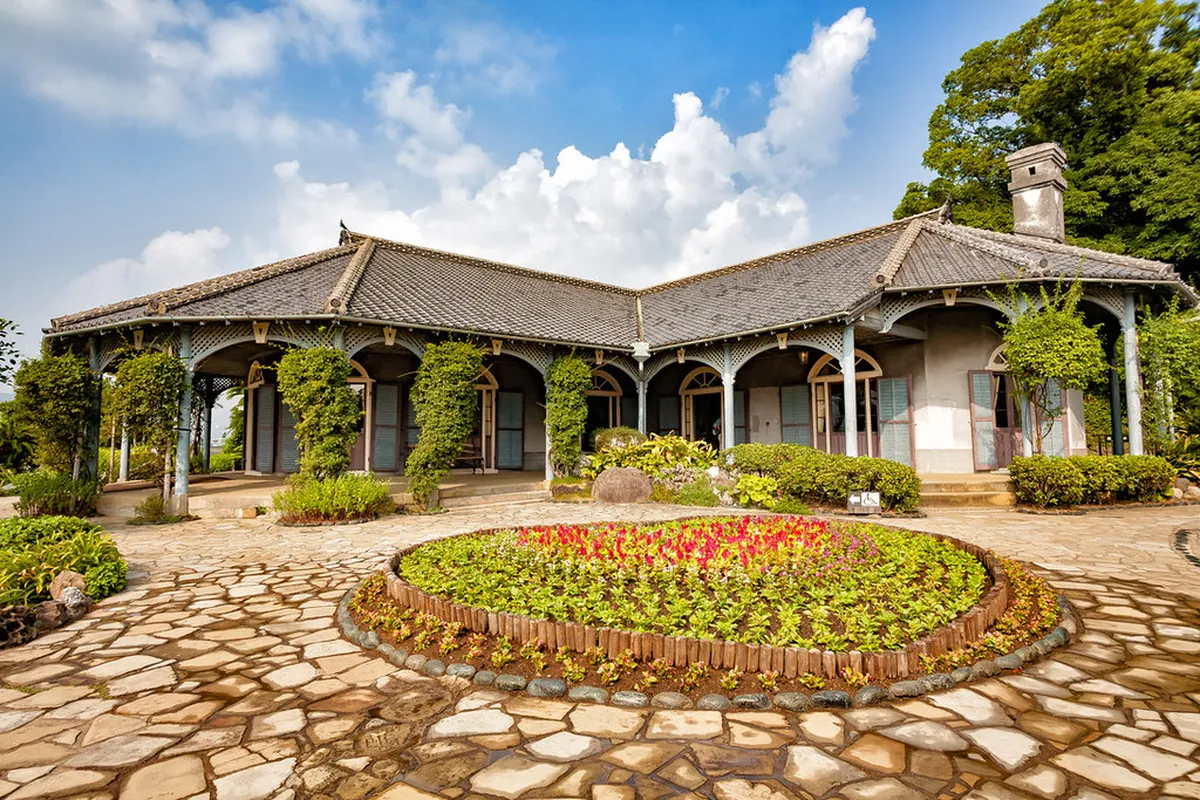
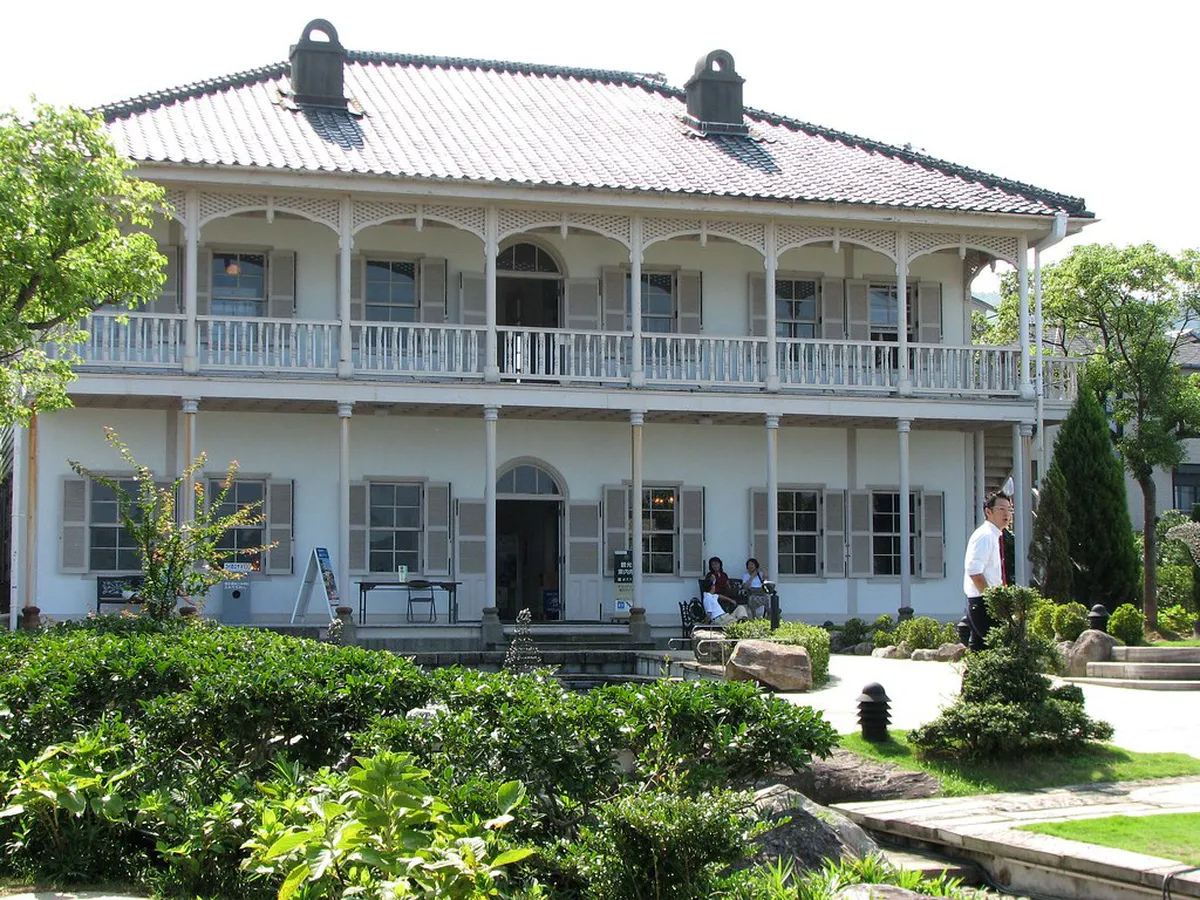
The Mitsubishi Second Dock House sits at the highest point of the park and offers incredible scenery. Walking out onto the second-floor balcony provides a clear view of the massive Mitsubishi shipyards across the water. This building originally served as a rest house for ship crews while their vessels underwent repairs. It is one of the best spots for photography within the entire garden complex.
Searching for the two heart-shaped stones embedded in the stone pavement is a popular local legend. Couples often hunt for these stones because finding them is said to bring good luck in love. One stone lies near the Glover House, while the other is located closer to the exit gates. Keep your eyes on the ground as you explore the many Nagasaki Attractions: Top 20 in 2026 scattered throughout the park.
The statues of Miura Tamaki and Giacomo Puccini celebrate the connection between Nagasaki and the opera Madame Butterfly. Miura was a world-famous Japanese soprano who gained fame for her portrayal of the lead character, Cio-Cio-San. The statues stand near the harbor overlook, providing a dramatic backdrop for these cultural icons. Visitors often pause here to reflect on the artistic legacy that links Japan to the global stage.
The Historical Significance of the Foreign Settlement
Nagasaki was one of only five Japanese ports opened to foreign trade in 1859. The Minamiyamate area became a designated foreign settlement where merchants from Europe and America could live. This neighborhood served as a vital hub for the exchange of goods, technology, and political ideas. The stories of traders like Thomas Glover shaped this era's history. You can still feel the international atmosphere while exploring these Nagasaki landmarks today.
Foreign merchants brought modern industrial techniques that accelerated Japan's transition into a global power. The settlement was a place where traditional Japanese culture met the rapidly changing world of the 19th century. Diplomats and businessmen gathered here to discuss the future of the nation during the Bakumatsu period. These interactions laid the groundwork for the Meiji Restoration and the modernization of Japanese society.
Preserving these buildings allows the city to maintain its identity as a crossroads of East and West. Most of the homes in the garden were relocated from their original locations elsewhere in Nagasaki to prevent their destruction. The city government created this open-air museum in 1974 to protect these architectural treasures. Understanding that each building was moved — sometimes from the opposite end of the city — helps you appreciate the deliberate curation behind the layout.
Thomas Glover: The Merchant Who Shaped Modern Japan
Use the Glover Sky Road hillside elevator from Ishibashi tram station to enter the garden from the top and walk downhill. This approach saves considerable energy and lets you reach the best harbor views at the Mitsubishi Second Dock House while you're still fresh.
Thomas Blake Glover arrived in Nagasaki from Fraserburgh, Scotland at the young age of 21. He quickly established himself as a successful merchant and a key figure in the local foreign community. Glover played a secret role in supporting the rebellious Satsuma and Choshu clans against the Tokugawa Shogunate. He smuggled weapons and arranged for Japanese students to study modern technology in Great Britain.
His business ventures went far beyond simple trade and extended into heavy industry and manufacturing. Glover helped found the shipyard that would eventually become the global giant known as Mitsubishi. He also introduced the first steam locomotive to Japan and helped open Japan's first modern coal mine at Takashima (today known as Gunkanjima). His influence is even felt in the beverage industry, as he helped establish the Japan Brewery Company — the forerunner of Kirin Beer.
Despite his immense success, Glover remained deeply connected to his adopted home of Nagasaki. He married a Japanese woman named Tsuru Awajiya and lived in his hillside residence until his death. The Japanese government awarded him the Order of the Rising Sun in 1908, making him the first foreigner to receive this honor. His life story remains a central pillar of the historical narrative found within the garden grounds.
Architecture and Design of the Glover Residence
The Glover House is famous for being the oldest surviving wooden Western-style building in Japan. Constructed in 1863, it features a distinctive clover-shaped floor plan visible from above — the shape that gave the garden its name. The design blends British colonial styles with Japanese roof tiles decorated with demon-headed finials to ward off evil spirits. This architectural fusion represents the collaborative spirit of the early foreign settlement period.
Look closely and you will notice that the house appears Western at a glance but rests on a foundation of boulders and uses traditional Japanese post-and-beam framing. Stone-floored verandas, latticed arches, and French windows sit on top of construction methods the local carpenters knew well. This combination of Western aesthetics and Japanese craftsmanship is what makes the residence genuinely unusual — it is not a copy of a European house, it is something new.
The house was officially designated as a UNESCO World Heritage site in 2015. It is part of the 'Sites of Japan's Meiji Industrial Revolution' listing alongside 23 other locations across eight prefectures. The UNESCO listing recognizes Nagasaki's shipbuilding heritage as integral to Japan's rapid industrialization. Visitors in 2026 will find the building in excellent condition following recent preservation work.
Other Notable Buildings in the Garden
The Alt House, built around 1865 for British tea merchant William Alt, showcases high Victorian taste with a stone veranda and Tuscan-style columns. It is constructed from local stone rather than timber, giving it a noticeably heavier, more formal feel than the Glover residence. The Ringer House next door was built for Frederick Ringer in the same era. Its foundation stones were reportedly brought from Vladivostok, a detail that reflects how connected Nagasaki's merchant community was to ports across the entire Pacific Rim.
The Former Walker House, built in 1883, once belonged to the president of the Nagasaki District Court. It represents the later Victorian period when Western-style architecture had become fashionable among both foreign and elite Japanese residents. Each of these houses was relocated to Glover Garden from a different part of Nagasaki, so the park is effectively a curated anthology of the city's foreign-settlement era rather than a single original estate.
Comparing these residences side by side reveals the economic gulf between the merchants who built them. The Glover and Alt houses project wealth and permanence; the Ringer House is modest by comparison. Walking through all three in sequence is one of the best ways to understand the social hierarchy of the 19th-century foreign community in Nagasaki culture.
Cultural Connections: Madame Butterfly and Opera History
Glover Garden is often associated with the tragic story of the opera Madame Butterfly. While the story is fictional, many believe the setting was inspired by the hills of Nagasaki. The garden features several tributes to the opera, including a prominent statue of the soprano Miura Tamaki. She is depicted in her famous role, looking out over the harbor toward her lost love.
The connection to the opera has made the garden a popular destination for music lovers worldwide. Giacomo Puccini, the composer, never actually visited Japan but used photographs and research materials for his score. Glover's own marriage to a Japanese woman named Tsuru Awajiya, set against the backdrop of rapid Westernization, mirrors themes the opera later dramatized. A second statue dedicated to Puccini stands near the Miura Tamaki memorial, with a butterfly perched on his left shoulder.
The two statues together form one of the more photographed corners of the park. Many visitors enjoy listening to recordings of the opera while sitting in the garden's quiet corners. The blend of music, history, and scenery creates a deeply emotional experience for many travelers.
Harbor Views and the Best Photography Spots

The Mitsubishi Second Dock House terrace is the single best viewpoint in the park. From here you can see the Giant Cantilever Crane at the Mitsubishi shipyards directly across the harbor — a working industrial landmark that has stood since 1909. Late afternoon light is ideal: the low sun reflects off the water and throws warm shadows across the Western-style facades below. Arrive around 16:00 and you will have the best combination of light and manageable crowds.
The veranda of the Glover Residence itself offers a slightly lower vantage point but frames the harbor between the garden's trees. This is the spot most associated with the Madame Butterfly story, and it photographs well at any time of day. A third worthwhile angle is the stone terrace between the Alt House and Ringer House, which gives an unobstructed view south toward the harbor mouth. None of these require a wide-angle lens — a standard phone camera captures the scene effectively.
Late afternoon around 16:00 is the best time for photography at Glover Garden — the low sun reflects off the harbor and casts warm light across the Western-style facades. The winter illumination event (late November through late December) extends closing hours to around 21:00.
Spring cherry blossoms (late March to early April) add color to the foreground of any harbor shot. The winter illumination event, typically running from late November through late December, lights the entire hillside after dark and makes the UNESCO buildings glow against the night sky. If you visit during this period, stay past the standard 18:00 closing time — hours extend to around 21:00 during the event.
Nagasaki Traditional Performing Arts Center
The Nagasaki Traditional Performing Arts Center is located near the exit of Glover Garden. This museum houses the elaborate floats used in the city's most famous annual event. The Nagasaki Kunchi Festival Guide: 9 Essential Planning Tips explains the deep roots of this colorful autumn celebration. Seeing the massive dragon floats up close allows you to appreciate the incredible craftsmanship involved.
A large screen in the center plays videos of past festival performances throughout the day. The footage captures the energy and excitement of the teams as they navigate the city streets. You can see the ornate umbrellas and costumes that represent different neighborhoods in Nagasaki. This exhibit provides a wonderful cultural contrast to the Western-style homes found in the main garden.
The festival itself has been held for nearly 400 years at the Suwa Shrine. It reflects the city's unique history by incorporating Dutch and Chinese cultural elements into the show. The museum is the best place to learn about these traditions if you cannot visit in October. Admission to this center is included with your standard ticket to Glover Garden.
Getting There and Practical Visitor Information
The garden has two separate entrances, and choosing the right one changes your entire experience. The main lower entrance is a short uphill walk from the Oura-Tenshudoshita tram stop (green line, tram 5). You will pass the historic Oura Cathedral Nagasaki Guide: History, Visiting Tips & UNESCO location on your way — it is worth a five-minute stop. The second option is to alight at Ishibashi station, the green line terminus, and take the Glover Sky Road — a hillside elevator system that runs up the exterior of the ridge and deposits you near the back entrance at the top. Using the Sky Road to enter from the top and walk downhill is the single most practical routing for the site.
This downhill approach — take the Sky Road up, enter at the back, descend through the main houses toward the lower exit — saves considerable energy on a steep hillside. You arrive fresh at the Mitsubishi Second Dock House, get the panoramic views first, then drift downward past the Glover Residence, Alt House, Ringer House, and Walker House in a natural sequence. The vertical elevator and moving walkways inside the park are a second option if you use the lower entrance, but the Sky Road eliminates most of the uphill walk entirely.
| Visitor Type | Admission Fee |
|---|---|
| Adults | ¥620 |
| High school students | ¥310 |
| Junior high / elementary students | ¥180 |
| Preschool children | Free |
Admission is 620 yen for adults, 310 yen for high school students, and 180 yen for junior high and elementary students. The park opens daily at 8:00 and closes at 18:00, with last admission at 17:40. Hours extend to 21:00 during summer evenings (mid-July to early October) and during the winter illumination period. The Nagasaki 1-day itinerary pairs this garden naturally with Oura Cathedral and Dejima, all within a short walk or tram ride of each other. Check the Google Maps location for precise directions from each tram stop.
Is Glover Garden Worth Visiting?
For visitors interested in how modern Japan came to be, Glover Garden is essential. The combination of UNESCO-listed architecture, harbor panoramas, and a direct human story in Thomas Glover puts it in a different category from most open-air museums. You get history, views, and a genuine narrative — not just preserved facades. Two hours is a realistic minimum; photographers should add another 30 minutes.
The 620-yen admission is on the higher side for a garden in Japan, but the Performing Arts Center is included and the views alone justify the entry for most people. Families will find the open grounds manageable, and the Glover Sky Road makes the site workable for travelers with limited mobility. Some steeper side paths do exist, but the main circuit through the key houses is accessible via elevators and walkways.
The site complements other Nagasaki landmarks like Dejima and the Peace Park perfectly — together they span Nagasaki's three defining historical chapters: the Dutch trading era, the Meiji industrial opening, and the atomic bomb aftermath. Most visitors leave with a clearer picture of why this city sits apart from every other destination in Japan.
Frequently Asked Questions
How much time do I need to visit Glover Garden?
You should plan to spend about two hours exploring the grounds. This allows enough time to see the major houses, find the heart stones, and visit the Performing Arts Center. If you enjoy photography, consider adding an extra 30 minutes to your Nagasaki Itinerary for First-Timers in 2026 for harbor views.
Is Glover Garden accessible for travelers with disabilities?
Yes, the park is largely accessible thanks to a system of vertical elevators and moving walkways. These features allow visitors to reach the top of the hill without climbing stairs. Some smaller side paths may still be difficult, but the main route through the historic houses is manageable.
What is the best time of day to visit for photos?
Late afternoon is the ideal time for photography at Glover Garden. The setting sun casts a warm glow over the Western-style buildings and the harbor below. You can capture the iconic Giant Cantilever Crane at the shipyards across the water with the best possible lighting during this window.
Are there places to eat inside the garden?
The Jiyu-tei Restaurant is located within the park and serves coffee and light meals in a historic setting. It was originally one of the first Western-style restaurants in Japan. Sitting by the window with a view of the garden provides a very relaxing break during your tour.
Glover Garden is more than just a collection of old houses on a hill. It is a living monument to a time of radical change and international cooperation. The stories of Thomas Glover and his peers come alive as you walk through these preserved halls. Your visit will provide a window into the soul of a city that has always looked toward the horizon.
From the hidden heart stones to the UNESCO-listed architecture, there is something for everyone here. The panoramic views of Nagasaki harbor remain some of the best in all of Japan. We hope this guide helps you have a memorable and efficient trip to this historic treasure. Enjoy your journey through the fascinating history of the Minamiyamate hillside.
Free: The Nagasaki Essentials guide
Top things to do, where to stay, a perfect day plan, getting around, and the best time to go — a Nagasaki mini-guide you can take offline.
You might also like


Continue reading
More guides you'll find useful


